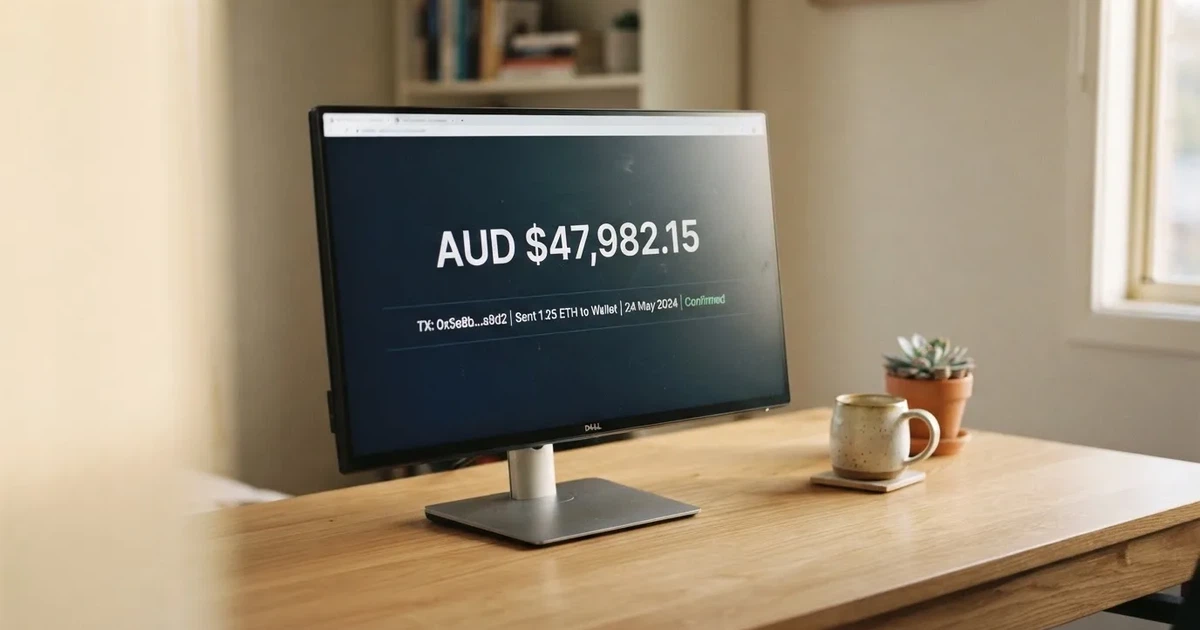
What an “anonymous crypto casino” actually looks like in Australia
 Available in US
Australia runs online casino games and online pokies as a prohibited product. The Interactive Gambling Act 2001 says so in plain terms, and the Australian Communications and Media Authority has spent the better part of a decade turning that prohibition into a list of named operators and blocked websites. A crypto deposit does not move a casino off that list; if anything, it puts it on it twice, because the credit-card and digital-currency ban for licensed wagering has applied since 11 June 2024. The honest framing of “anonymous crypto casino Australia” is therefore the marketing word, the ACMA record, and the reader’s own bankroll.

Current as of 23 September 2026 and cross-checked against the ACMA register of formal warnings and the June 2026 blocking round as reported by trade media.
Table of Contents
- The legal frame the marketing word sits inside
- What the player-protection system does and does not cover
- What “anonymous” actually means on a blockchain
- The ACMA record, brand by brand
- The crypto payment rail in one paragraph
- What changes once the site is blocked
- What to weigh if a reader still decides to play
- Where to get help
- Frequently asked questions
The legal frame the marketing word sits inside
The Interactive Gambling Act 2001, strengthened by the Interactive Gambling Amendment Act 2017, makes it an offence to provide online casino games, online pokies or in-play betting to a person physically in Australia. No state or territory licenses these products. Wagering on races and sport placed before the event is the part of the market that does get licensed, and in practice most of those licenses sit with the Northern Territory Racing and Wagering Commission — a body that, according to ABC reporting from April 2026, regulates 52 online bookmakers including Sportsbet, Bet365 and Ladbrokes, holds no full-time staff and meets once a month in Darwin.

That is the gap anonymous offshore casinos sit in. The ACMA’s job is to investigate breaches, issue formal warnings to named operators, and ask Australian internet service providers to block the worst offenders. The Act targets the provider, not the punter: a person clicking through to one of these sites is not prosecuted. What the player does lose is the surrounding safety net — no Australian consumer protection, no local complaints body, no recourse if a withdrawal is refused. The Act also gave the ACMA a teeth it did not have before: by the figures reported in June 2026, 1,751 illegal gambling and affiliate marketing websites had been blocked since the first blocking request in November 2019, and more than 230 unlicensed gambling services had left the Australian market since enforcement was strengthened in 2017. A balance left on a blocked site is, in practice, gone.
This figure highlights the scale of the trend. Spread across roughly seven and a half years, the ACMA’s blocking cadence works out to around 233 sites blocked per year, or close to one every working day. The November 2019 starting point also marks the period in which crypto-only casino brands multiplied offshore — meaning the regulator has spent the entire window in which this product grew trying to make it harder to reach from an Australian IP.
What the ACMA actually publishes
A formal warning under the Interactive Gambling Act is a published notice naming the corporate entity, the brand and the date. It is not a quiet letter. The ACMA has issued them across many of the same operators more than once: Dama N.V. was warned in May 2022 covering six brands (Bambet, Dazard, Level Up, Rocketplay, Wild Tornado and Cobra Casinos), then again in March 2025 over Woo Casino and in May 2025 over Spirit Casino. Consolutetish S.R.L. took a warning in July 2025 over National Casino and Bizzo Casino, the latter having already been warned in 2022 under TechSolutions. Bamboo Media was warned in July 2025 over Ignition Casino. The pattern that emerges is corporate reshuffling around the same product, not different products appearing.
More recent entries on the register: a formal warning to Pulsup Ltd over RocketPlay in March 2026, a formal warning to Ryker B.V. over Jackbit and CasinOK in April 2026, a warning to Sterplay Holding Ltd over Casino Intense in April 2025, a warning to EOD Code SRL over Instant Casino in February 2025, and the Hollycorn N.V. warning over Sky Crown and Blue Leo that goes back to September 2022. Eleven of the brands named below appear on this register; the only thing they have in common is that the ACMA has already had to write their parent company a letter about it.
The June 2026 blocking round
The 12-domain blocking round reported on 26 June 2026 — 7Signs, ChromaBet, Donbet, Duospin, Freshbet, Slots Gem, Jacks Club, Lucky Start, Pointsbetz, Spinrise, Vinyl Casino and Wildsino — sat at the tail end of a long enforcement pattern, not the start of one. Reading those names is reading the inventory of what the ACMA judges worth the cost of asking ISPs to act.
What the player-protection system does and does not cover
Australian-licensed wagering services have a layer of mandatory player protection on top of the licensing regime. The 24/7 National Gambling Helpline is 1800 858 858, with web chat at Gambling Help Online — both free and confidential. BetStop, the National Self-Exclusion Register, has been live since August 2023 and binds every Australian-licensed online and phone wagering service to honour a self-exclusion request. Minimum age is 18.
None of this extends to an offshore anonymous crypto casino. BetStop cannot tell a Curacao-licensed operator to close an account, because the operator is not connected to the register. The helpline will still take the call, but the practical tools behind the call are the Australian ones. That distinction is the reason the question of whether an offshore site has a “responsible gaming” page of its own is, in the Australian context, an answer about marketing rather than about recourse.
The payment ban that pulls credit cards and crypto into the same bucket
Since 11 June 2024, credit cards, credit-related products and digital currency have been banned as payment for licensed online wagering in Australia. The penalty for an operator that takes them is up to A$247,500. The legal deposit routes that survive are debit card, bank transfer, PayID, Osko and BPAY. The reason this distinction matters is simple: a site asking an Australian for a credit card or a crypto deposit is, by definition, not operating under the Australian rules. The payment method itself, on the licensed side of the line, was already removed.
The 2026 reform — the Interactive Gambling Amendment (Gambling Reform) Bill, which passed Parliament on 19 August 2026 — layers advertising and inducement measures on top of the existing prohibition. Those measures commence on 1 January 2027, so on a page dated 2026 they are law with a start date, not yet in force. What is in force today is the prohibition, the ACMA’s blocking power, the formal-warning register and the payment ban.
What “anonymous” actually means on a blockchain
Crypto is the payment rail these offers are built on, so it is worth being precise about what it does and does not hide. Two networks dominate the discussion.
The Bitcoin network was created on 3 January 2009, when the pseudonymous Satoshi Nakamoto mined the genesis block, after the white paper appeared on a cryptography mailing list on 31 October 2008. Nakamoto’s real identity remains unknown. A new block is added roughly every 10 minutes on average, and the mining reward halves every 210,000 blocks until a total of 21 million bitcoin have been issued, expected around the year 2140. The Bitcoin Cash project forked from Bitcoin on 1 August 2017 at block height 478,558, with a larger block size limit (8 megabytes at launch, raised to 32 megabytes in 2018) and confirmations described by the project as taking minutes. Both Bitcoin and Bitcoin Cash secure their ledgers with SHA-256 proof-of-work mining.
Ethereum launched on 30 July 2015 with Vitalik Buterin as its primary creator, and switched its consensus mechanism from proof-of-work to proof-of-stake in an upgrade called “The Merge” on 15 September 2022. A new Ethereum block now appears roughly every 12 seconds.
The relevance to anonymity is the property everyone reaches for first: a wallet does not carry a name. What it does carry is a public address, and every transaction ever made from that address is permanently visible on the ledger. “Pseudonymous” is the more accurate word than “anonymous” for this arrangement. The address is the identifier, and the identifier does not need to be broken — it needs to be linked. Several things link it: an exchange that ran KYC when the user bought the coin, an IP address recorded at a node, a withdrawal to a bank account under the user’s name. A casino that pays out in crypto is moving the link one step further down the chain, not breaking it. The casino itself, if asked later, hands over what its own database already has: deposit addresses, withdrawal addresses, timestamps, and the email address the player used to register.
That is the limit of the marketing word. Crypto changes the payment rail. It does not change the casino’s books, the casino’s servers, or the casino’s willingness to answer a subpoena.
What AUSTRAC requires of the Australian end of the rail
The Australian end is governed by AUSTRAC under the AML/CTF Act. Any business providing a digital currency exchange service to Australian customers — including exchanging cryptocurrencies such as Bitcoin Cash for fiat — must register with AUSTRAC as a Digital Currency Exchange provider, regardless of where the business is incorporated. Operating unregistered is a criminal offence. From 31 March 2026, the registration requirement was expanded beyond crypto-to-fiat exchange to also cover crypto-to-crypto exchange platforms, digital asset transferors, digital asset custody providers, and stablecoin issuers and distributors.
The practical upshot is that the on-ramp and off-ramp — the part where Australian dollars become bitcoin and bitcoin becomes Australian dollars — is regulated, named, and reportable. The middle of the chain is the unregulated part, and that is also the part that gets the marketing word attached to it.
The tax position no one asks about until the ATO does
The ATO classifies crypto assets such as bitcoin as property, not money or foreign currency. Most disposals — selling for AUD, swapping for another crypto, or spending it — are CGT events. A capital gain on a personal use asset is disregarded, but only if the asset cost A$10,000 or less to acquire; an asset held as an investment sits outside that exemption, and losses on personal use assets are disregarded as well, meaning such a loss cannot be used to offset other capital gains or carried forward. A 50% CGT discount applies to crypto assets held longer than 12 months; from 1 July 2027 that flat discount is replaced by CPI indexation of the cost base plus a 30% minimum tax rate on net capital gains. The disposable parts of a crypto-funded casino session are, on the ATO’s view, three or four CGT events in a row. “Check with the ATO” is the model’s only honest closing line here, and the point of saying so is that the word “anonymous” is not in the tax form.
The cost side H2 Gambling Capital puts a number on
H2 Gambling Capital’s 2025 report estimates that Australians lose about A$3.9 billion a year to illegal gambling sites, and that the share of gambling going through legal channels fell from 74% in 2021 to 64%. The legal-channel decline is what offshore crypto casinos are growing into, and the A$3.9 billion figure is the size of that growth. This calculation shows the extent of the impact: every dollar spent on an anonymous offshore site is a dollar that left the Australian consumer-protection system, and the average spend across that figure is the implicit spend per punter that the regulator is trying to claw back.
The ACMA record, brand by brand
The eleven brands below are not a recommendation. Each one is named because the ACMA has published a formal warning about it in connection with offering prohibited online casino services to Australians. The “Subject support” column records whether the topic of this page — anonymous play via crypto — is something sources we could verify mention about that specific brand. An em dash means we found no verifiable source either way.
| Brand | ACMA action and date | Operator named by the ACMA | Subject support |
|---|---|---|---|
| RocketPlay | Formal warning, March 2026 | Pulsup Ltd (RocketPlay) | — |
| Level Up Casino | Formal warning, May 2022 | Dama N.V. | — |
| Woo Casino | Formal warning, March 2025 | Dama N.V. | Crypto accepted, per general listings |
| Spirit Casino | Formal warning, May 2025 | Dama N.V. | — |
| National Casino | Formal warning, July 2025 | Consolutetish S.R.L. | Crypto accepted, per general listings |
| Bizzo Casino | Formal warning, July 2025 (also 2022) | Consolutetish S.R.L. (earlier TechSolutions) | — |
| Ignition Casino | Formal warning, July 2025 | Bamboo Media | — |
| Instant Casino | Formal warning, February 2025 | EOD Code SRL | — |
| Jackbit | Formal warning, April 2026 | Ryker B.V. | — |
| Casino Intense | Formal warning, April 2025 | Sterplay Holding Ltd | — |
| Sky Crown | Formal warning, September 2022 | Hollycorn N.V. | — |
A row of em dashes is itself a finding: the verifiable record on whether these specific brands handle crypto in a way that adds any layer of anonymity beyond what a regular offshore casino offers is thin. The marketing pages that surface in search results are not the source we are quoting from here, which is why only two brands in the table carry a “listings-only” note.
RocketPlay
Pulsup Ltd received the formal warning in March 2026 covering Rocketplay.com.au, and Dama N.V. — the long-running corporate vehicle for this brand family — was warned over the same domain in May 2022. Two warnings separated by four years, two different registered entities, the same product. The brand is one of the better-known names in the Curacao offshore stable, and the ACMA record on it is the longest in this set.
Level Up Casino
The May 2022 Dama N.V. warning covered Level Up alongside five other Dama brands in one notice — the batch-warning pattern the ACMA uses when the operator runs a portfolio. Level Up has not surfaced on a more recent register entry, which is a thinner data point than it sounds: the ACMA’s recent process has been to warn the corporate entity rather than each brand.
Woo Casino
The Dama N.V. warning in March 2025 covered Woo Casino alongside Spirit Casino, with the ACMA naming the brands separately from the entity. Public listings of Woo Casino describe it as a crypto-friendly brand, which is the subject of this page to the extent that any specific casino is. The warning itself is about the offering of prohibited services, not about the payment method.
Spirit Casino
Woo Casino’s twin on the May 2025 warning. Listed in the same notice, same operator, same date. No verifiable record of anything that lifts the “anonymous crypto” framing above what the rest of the Dama portfolio offers.
National Casino
Consolutetish S.R.L. was warned over National Casino in July 2025, and the brand shows up in general listings as a crypto-friendly casino. The corporate vehicle is a different entity from the older National Casino operators, which puts this brand in the same reshuffling pattern the ACMA’s register describes in general.
Bizzo Casino
The Consolutetish warning in July 2025 named Bizzo Casino alongside National Casino, and the brand had already been the subject of a 2022 formal warning to TechSolutions (CY) Group Limited and TechSolutions Group N.V. Two warnings, two operators, three years apart. That is the kind of history that makes the ACMA register a useful document, and it is the same kind of history the prohibition exists to produce.
Ignition Casino
Bamboo Media took the formal warning in July 2025 over Ignition Casino. The brand has long been one of the better-known offshore names aimed at Australian-facing traffic.
Instant Casino
EOD Code SRL was warned over Instant Casino in February 2025. The brand is one of the more aggressive advertisers of fast-payout crypto rails in the offshore space, which is the context the warning sits inside, not the reason the warning was issued.
Jackbit
Ryker B.V. was warned over Jackbit in April 2026, with CasinOK named in the same notice. A relatively recent entry on the register and one of the brands marketed heavily on crypto-only play.
Casino Intense
Sterplay Holding Ltd was warned over Casino Intense in April 2025. One of the smaller brands in this set by traffic, but the corporate entity is the one the ACMA named.
Sky Crown
Hollycorn N.V. took the warning over Sky Crown and Blue Leo Casino in September 2022. The earliest warning in this set, and the data point that anchors the entire register: 2017 reform, then four years of formal warnings, then the June 2026 blocking round that closed out the report this page is built around.
The crypto payment rail in one paragraph
The argument an anonymous crypto casino page typically makes is that paying in Bitcoin, Bitcoin Cash or Ethereum removes the player’s name from the transaction. Half of that is right: the on-chain transfer itself does not carry a name. The other half is wrong in three places. AUSTRAC requires the Australian on-ramp to register and report; the casino’s own database keeps the deposit and withdrawal addresses, the timestamps and the email address; and the address itself, once any of those links exists, becomes the link. None of this is a reason not to use crypto — it is the reason to use the word “pseudonymous” instead of “anonymous”. The marketing copy uses the more flattering word, and the ACMA register does not care which word the player believed.
What changes once the site is blocked
The blocking request an ISP receives from the ACMA is the practical end of the matter. The player’s account still exists on the casino’s servers, the balance — if there is one — is still on it, and the casino has no obligation to refund it. That is the consumer-protection side of the prohibition made concrete: blocking is the regulator’s tool, not the player’s. The 1,751 sites blocked since November 2019 each made that transition at some point between an open page and a 403-style error, and the per-year rate of around 233 sites is the cadence the ACMA is on. From a player’s perspective the takeaway is that any site on this page is plausibly one blocking round away from being unreachable from an Australian IP.
The voluntary exit that the ACMA also publishes
The 230-plus unlicensed services that have left the Australian market since 2017 include both blocking outcomes and voluntary exits. Some operators pulled out after a formal warning, some after a blocking request, and some without a public reason. The point for a reader is that “the site is still up” is not the same as “the site is operating with permission” — most of the 230 were up until they were not.
Why no AU-licensed operator is in the table
There is no Australian-licensed online casino to put in this table. Online casino games and online pokies cannot be licensed anywhere in Australia under the Interactive Gambling Act 2001. The Northern Territory Racing and Wagering Commission, which does license online bookmakers, is not in the online casino business. Every row above is an offshore operator; every licence any of them displays sits in a jurisdiction outside Australia, and the ACMA register is what an Australian reader gets instead of a local licence check.
What to weigh if a reader still decides to play
The decision a reader makes after this page is theirs, and the page is not in the business of making it for them. What the page is in the business of is naming what is and is not actually anonymous about the offer. Pseudonymous on the chain. Identified in the casino’s database. Regulated at the Australian on-ramp. Exposed to the ATO on disposal. None of that is true of an Australian-licensed wagering service, and all of it is true of the eleven brands above.
Two practical questions cut the rest. First, what does the player expect to happen if the ACMA asks the casino’s ISP to block the site next month? The site’s own answer is the marketing page; the regulator’s answer is the register. Second, what does the player expect to happen at tax time, given that the ATO treats the disposal as a CGT event? Those two answers are the difference between an offer and an outcome.
The single sentence the page wants to leave with the reader: the word “anonymous” describes a marketing image, not a property the chain enforces, and the ACMA register is the document that describes the property the player actually has.
Where to get help
Gambling Help Online runs 24/7 with chat. The National Gambling Helpline is 1800 858 858, free and confidential. BetStop, the National Self-Exclusion Register, binds Australian-licensed online and phone wagering services; an offshore anonymous crypto casino is not connected to BetStop, which is itself a reason the helpline exists. None of this is an instruction, and all of it is on the page so the reader does not have to find it under stress.
Frequently asked questions
Does paying with cryptocurrency actually make an online casino account anonymous?
No. The wallet address is pseudonymous — not tied to a name on the chain itself — but every deposit and withdrawal is permanently recorded on the ledger, and the casino’s own database keeps the email address, timestamps and address history. Once any of those links to a real-world identity (an AUSTRAC-registered exchange, a bank withdrawal, an IP log), the address is no longer anonymous.
Is buying or holding cryptocurrency itself legal in Australia?
Yes. AUSTRAC regulates the on-ramps and off-ramps through the AML/CTF Act, requiring any business providing a digital currency exchange service to register as a Digital Currency Exchange, but owning and holding crypto as an individual is not prohibited. The ATO treats crypto assets as property.
What does AUSTRAC require of a business that exchanges crypto for money in Australia?
Registration as a Digital Currency Exchange provider under the AML/CTF Act, regardless of where the business is incorporated; operating unregistered is a criminal offence. From 31 March 2026 the requirement was expanded to cover crypto-to-crypto exchange platforms, digital asset transferors, custody providers, and stablecoin issuers and distributors.
Can a crypto casino trace a wallet address back to a real identity later?
A casino can trace the address through its own records — what was deposited, when, from which external address — and hand that information to whoever asks. Tracing an address back to a real identity beyond the casino’s own records typically relies on external links: a KYC-compliant exchange the player used, an IP address logged at a node, or a withdrawal to a bank account under the player’s name. The chain itself is pseudonymous, not anonymous.
Is a crypto casino any more legal in Australia than one that takes card payments?
No. The Interactive Gambling Act 2001 prohibits providing online casino games to a person in Australia; the payment method does not change that. The 11 June 2024 ban on credit cards, credit-related products and digital currency as payment for licensed online wagering reinforces the same point from the payments side: a site asking an Australian for a credit card or a crypto deposit is operating outside the Australian rules.
Does an anonymous-sounding crypto casino still fall under the Interactive Gambling Act 2001?
Yes. The IGA targets the provider and the product, not the marketing language or the payment rail. The ACMA has issued formal warnings over eleven brands in this set alone, and the June 2026 blocking round covered twelve more. The product is what the regulator acts on, and the product is prohibited regardless of how the site describes itself.
Prepared by the Casino VIP Info editorial staff.