The Best Australian Online Casino in 2026: Eleven ACMA-Warned Brands and the Real Choice Between Them
 Available in US
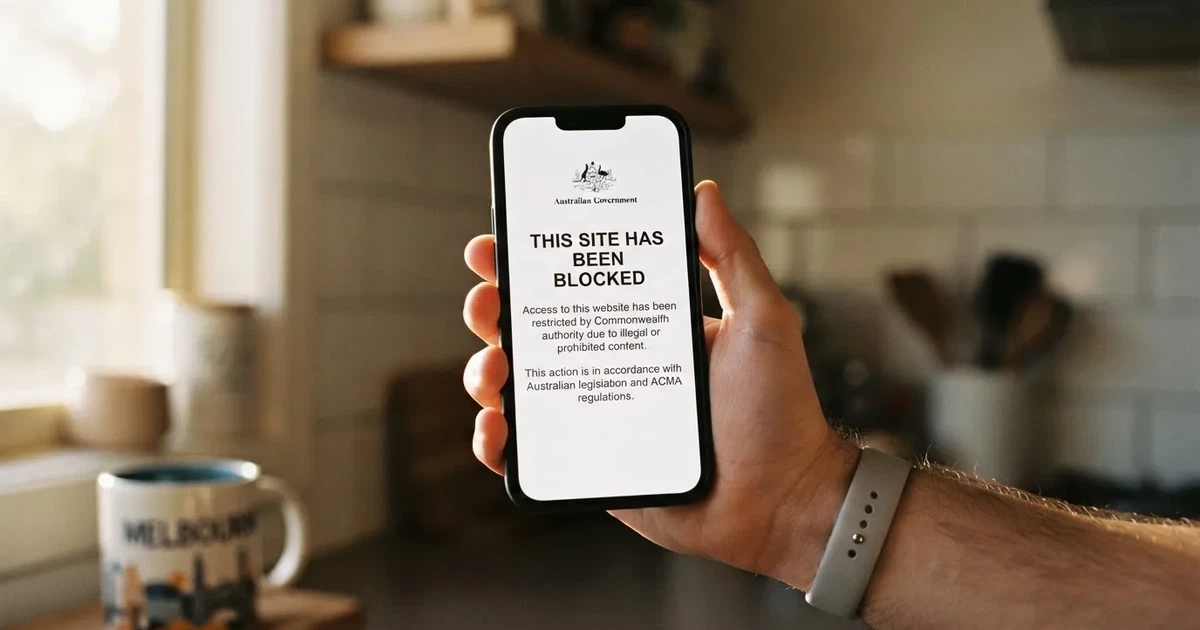
Looking for the best Australian online casino is a category that does not exist, and any honest answer has to say so up front. No online casino is licensed to take an Australian player, anywhere in the country, under any state or territory regulator. Every brand walked through below holds a formal warning from the Australian Communications and Media Authority for offering prohibited services, and the offshore licences those sites display do not authorise Australian play. What “best” can still mean in a market shaped that way is the subject of the next several thousand words.

Updated as of 23 September 2026 · cross-checked against the ACMA formal-warning register and the ACMA’s published blocking notices.
Table of Contents
- Money in, money out: what the payments question actually looks like here
- What “bonus” and “free spins” actually mean on prohibited sites
- Mobile, app, or browser
- New casinos: what “new” actually means here
- What “best” can mean when nothing is licensed
- Fundamentals of the landscape before the comparison
- The prohibition and what it does to a player
- Where responsible play sits in this picture
- The eleven ACMA-warned brands
- The blocking arithmetic, in one band
- Common questions
Money in, money out: what the payments question actually looks like here
The payments question is the most concrete one a reader brings, and it is also the one most reshaped by prohibition. For licensed Australian wagering — racing, sport, keno, lotteries — the deposit methods are debit card, BPAY, bank transfer and PayID or Osko. Credit cards, credit-related products and digital currency were banned as payment for that licensed wagering on 11 June 2024, with penalties up to A$247,500 for operators who breach the rule.
For the unlicensed offshore sites this page covers, no such consumer-facing rule applies. They accept what their home jurisdiction and processor allow: card payments through offshore networks that Australian banks may or may not honour, e-wallets that may or may not have an Australian facing, and increasingly cryptocurrency. The interesting question is what sits behind those rails when an Australian customer uses them — and that is where Australian banks, not the offshore operator, get a vote.
PayID and Osko, on the licensed side, are nearly instant. With Osko, a transfer between participating Australian banks arrives in under a minute, 24/7 including weekends, whether addressed to a BSB and account number or to a PayID. Over 100 Australian financial institutions offer PayID-based instant transfers, and more than 25 million PayID identifiers had been registered on Australia’s New Payments Platform as of April 2025. The New Payments Platform itself has been accessible to the public since 13 February 2018, and its participants must keep monthly outages to no more than two minutes.
AP+, the merged entity that runs PayID, Osko and BPAY after the 2021 ACCC authorisation, is a non-profit whose 13 shareholders include the Reserve Bank of Australia and the country’s major banks. The rails are solid. They are also, by design, not the rails an offshore casino can plug into without the customer’s bank noticing. Paying to a PayID shows the name of the account holder before the transfer is sent, and AP+ warns that being asked to transfer money to a PayID on an illegal gambling site almost certainly means a scam site. That warning matters because the name check is one of the few friction points an Australian customer gets on the way in.
An Australian bank cannot stop a customer from typing in a BSB and account number for an offshore payee. The protection sits earlier, at the bank’s own card and wallet blocks, or later, when the customer tries to dispute a withdrawal that never arrived. BPAY, the bill-payment rail in online banking, has operated since 18 November 1997 and is offered by more than 140 Australian banks and financial institutions; the payer enters a Biller Code and a Customer Reference Number printed on the bill. BPAY was launched in 1997 and is owned equally, via parent company Cardlink Services Limited, by Australia’s four major banks: ANZ, Commonwealth Bank, National Australia Bank and Westpac. An offshore casino that displays a BPAY biller code is presenting a payment method the right product does not use, and that mismatch is one of the small tells.
Digital wallets add a second layer of friction an offshore site often forgets to mention. Apple Pay, Google Pay and Samsung Pay transactions accounted for around 45% of all card payments in Australia by number at the end of 2025. Apple does not charge consumers for using Apple Pay in stores, online or in apps; any surcharge comes from the merchant’s card-processing fees, not from Apple. Transaction limits and PIN requirements for Apple Pay purchases are set by the card issuer or merchant, not by Apple itself. That detail matters because the card-issuer’s settings — not the wallet’s, not the merchant’s — are what decide whether an Apple Pay tap to an offshore casino gets through.
The Reserve Bank of Australia’s July 2025 review proposes removing surcharges only on eftpos, Mastercard and Visa transactions, explicitly leaving American Express outside the scope of the proposed surcharge ban. Amex traditionally issues cards and processes transactions itself as a three-party scheme, distinct from the four-party model Visa and Mastercard run; American Express was established in 1850 as a freight-forwarding company and later became a card issuer, launching its first charge card on 1 October 1958. For an Australian customer paying a merchant that surcharges Amex, the surcharge is the merchant’s choice, not the network’s, and that fact is unchanged by the proposed reform.
AUSTRAC’s threshold-transaction-report rule, which requires reporting of transfers of A$10,000 or more, applies only to physical cash; ordinary electronic bank transfers are not subject to that per-transaction reporting requirement, regardless of the amount sent. The rule has no bite on a bank transfer to an offshore casino. What does fire, in practice, is the customer’s own bank’s fraud-monitoring systems, and those are the actual gatekeepers for ordinary-sized transactions.
| Payment Method | Status for Licensed Wagering | Status for Offshore Sites |
|---|---|---|
| Debit Card | Allowed | Varying acceptance; often blocked |
| Bank Transfer | Allowed | Limited by bank fraud monitoring |
| PayID / Osko | Allowed | Not supported (scam risk) |
| BPAY | Allowed | Not supported (scam risk) |
| Crypto | Banned | Commonly accepted |
The pattern is the same across the three banks. The block operates at card level on the Betting/Casino Gambling MCC, it covers digital wallets that ride the card rails, it is reversible but only after a delay, and the bank is honest that it is not airtight. The blocks do not reach cryptocurrency transfers, money sent via an intermediary, or transactions through offshore payment processors that do not register under the gambling MCC. The block is a fence around the most-used rail, not around the destination.
What “bonus” and “free spins” actually mean on prohibited sites
The bonus and free-spin question does not behave on prohibited offshore sites the way it behaves in markets where online casino play is licensed. What “aussie casino bonuses” or “aussie casino signup bonus” or “free spins” usually refers to, on a licensed product, is an offer regulated in shape: maximum bonus amount, wagering multiple, expiry, game weighting, maximum cashout, and a right of complaint to a named regulator if the operator breaks its own published terms. None of those exist on a site that has been formally warned by the ACMA for offering prohibited services to Australians. The bonus is whatever the operator’s terms page says it is, and the operator’s terms page is the only complaint body.
What this page will not do is print any code, link, or specific offer detail. Every source for those details on the brands below was affiliate marketing material, and no offer described by such a source has been verified against a regulator’s register. The next few paragraphs describe the shape an offer takes — qualitatively, from what ACMA-warned operators’ own marketing uses — so a reader who meets one elsewhere recognises it for what it is.
A “deposit match” bonus, in this market, usually means the operator credits the customer’s account with a percentage of the deposit, credited as bonus funds that cannot be withdrawn until a wagering multiple is met. The multiple, where it is disclosed at all, is the only number that tells the reader what the offer really costs. Industry norms on offshore sites sit high compared with what licensed markets tolerate, often several times the deposit. The reader’s working question is not “how much bonus can I get?” but “how many times the bonus do I have to wager before any winnings are mine?” — and the second question has a much less cheerful answer than the first.
Free-spin packages are presented as a count of spins on a named slot, with the wagering multiple applied to anything the spins win. The marketing language — “free” — collapses the moment the reader looks at the terms. Winnings from the spins are bonus funds, they carry the same multiple, and any cap on the maximum cashable amount shrinks the headline number further. A “100 free spins” line that converts into A$12 of bonus funds under a 40× multiple is a different offer than the page selling it suggests.
No-deposit bonuses and no-deposit codes are the offer shape most prone to the gap between marketing and reality. The headline is “play without depositing”; the small print is a maximum cashout cap that can be as low as a few times the no-deposit amount, a wagering multiple on anything won, and game-weighting rules that exclude most of the lobby. A reader who only reads the headline gets the impression of a free trial; a reader who reads the terms gets the impression of a heavily restricted teaser.
The reason this page treats bonuses as background reading only is not that the offer shapes are unusual — they are common across unlicensed markets — but that no Australian body stands behind the offer’s terms. A reader who disagrees with how a bonus was settled has, in practical terms, no Australian recourse. The bonus page on the operator’s site is the contract, and the operator is also the adjudicator.
Mobile, app, or browser
Mobile casino play, on a regulated product, means a downloaded app from an Australian app-store channel, a browser-based mobile site built to current web standards, or both. The Australian-facing app stores do not list unlicensed offshore casino apps; the major app stores’ own policies exclude them. What an Australian customer actually meets, when an ACMA-warned brand offers “aussie casino app” or “aussie mobile casino”, is a mobile browser version of the offshore site, sometimes wrapped in a downloadable web app that the reader installs from the brand’s own page rather than from the App Store or Google Play.
The browser version, judged purely on what the technology can do, is generally close to the desktop version in scope: same lobby, same banking page, same bonus terms, same live-dealer tables if the brand offers them. The differences are layout-driven rather than scope-driven — touch targets sized for a finger, menus collapsed into a hamburger, payment forms tuned for mobile keyboards. None of that is what the page is about, because the legal and consumer-protection picture does not change between desktop and mobile. The warning applies to the operator, not to the device.
The thing the page does not do, and the reason it is a deliberate omission, is name an app to install. Apple and Google both operate policies that exclude unlicensed gambling apps from their Australian storefronts, and the apps that do exist for these brands are typically sideloaded from the brand’s own page or distributed through channels the app stores have removed. Installing one puts the reader outside the app-store consumer protections they would otherwise have: refund handling, removal of malware if a download is later found to be malicious, and the standard sandbox that isolates the app from the rest of the device.
The mobile question, in this category, is therefore less about whether the site works on a phone — they all do — and more about what happens when the reader sidesteps the app store to get there. The friction is the friction the prohibition creates. The technology is incidental.
New casinos: what “new” actually means here
A “new aussie online casino” is not a fresh Australian-licensed product. It is a newer offshore site that has opened to the global market, with the same legal status as the older ones: not licensed to take Australian players, and reachable only until the ACMA acts on it. Some of the newer offshore brands offer fresher-looking lobbies, newer game libraries, and bonus shapes aimed at a customer base that has already heard of the older names. The brand’s age does not change the prohibition, the lack of Australian consumer protection, or the ACMA’s authority to direct Australian ISPs to block the site.
What “new” can do, on the marketing side, is delay the ACMA notice. A site that opened this year has not yet been on the ACMA’s radar long enough to attract a formal warning or a blocking request. That delay is not the same as safety; it is the absence of action. The ACMA acts on investigation outcomes, complaints, intelligence from AUSTRAC and the consumer-protection bodies, and the operator’s own visibility to Australian payment processors. A brand whose first six months are quiet looks “new” because the regulator has not yet picked it up, not because it offers something the regulator approves of.
The other thing “new” can mean is rebranding: the same operator group opens a new domain under a new name after the old one is blocked. The ACMA’s blocking register, taken as a whole, shows that this happens often enough to be the rule rather than the exception. A reader who finds a “new” site with no ACMA notice yet is seeing the start of that cycle, not the end of it. The site’s novelty is not a feature in the reader’s favour; it is a position in the regulator’s queue.
For a reader, the practical conclusion is that age on the page is a poor proxy for safety off it. An older ACMA-warned site has at least been looked at, even if the outcome was a warning rather than a block. A “new” site has not. The reader’s preference, if the reader is making one, should not run on which domain launched most recently.
What “best” can mean when nothing is licensed
This section examines the eleven brands the ACMA has formally warned for offering prohibited services in Australia. Rather than a ranking or a recommendation, it details the dates and operators associated with these warnings. This breakdown provides a clearer view of the regulatory history for each brand, allowing readers to understand the risks involved before engaging with any of these sites.
The landscape at a glance
| Brand | ACMA action and date | Operator named by the ACMA | Cross-listed by |
|---|---|---|---|
| RocketPlay | Formal warning, March 2026; earlier warning to Dama N.V., May 2022 | Pulsup Ltd (RocketPlay) | One industry listing |
| Level Up Casino | Formal warning, May 2022 | Dama N.V. | One cross-reference |
| Woo Casino | Formal warning, March 2025 | Dama N.V. | — |
| Spirit Casino | Formal warning, May 2025 | Dama N.V. | — |
| National Casino | Formal warning, July 2025 | Consolutetish S.R.L. | ACMA, AUSTRAC, BetStop |
| Bizzo Casino | Formal warning, July 2025; earlier warning to TechSolutions, 2022 | Consolutetish S.R.L. | One industry listing |
| Ignition Casino | Formal warning, July 2025 | Bamboo Media | — |
| Instant Casino | Formal warning, February 2025 | EOD Code SRL | One payments listing |
| Jackbit | Formal warning, April 2026 | Ryker B.V. | — |
| Casino Intense | Formal warning, April 2025 | Sterplay Holding Ltd | AUSTRAC, BetStop, other listings |
| Sky Crown | Formal warning, September 2022 | Hollycorn N.V. | — |
The table is a record, not a ranking. None of the brands in it holds an Australian licence, and none can lawfully take an Australian deposit. The pattern that emerges from reading across the rows is that several operators appear under more than one brand — Dama N.V. alone runs three of the rows, and two of those rows (Woo Casino and Spirit Casino) are warnings over the same operator in successive months. That repetition is the marketing pattern behind the warning list: the offshore operator group is the unit of enforcement, even though each brand is marketed separately.
A column that looks thin in a table like this is the column readers most want to be full. The “Cross-listed by” column is populated only for brands where other listings — payment processors, self-exclusion registers, industry directories — name the brand independently of the ACMA’s own register. A populated cell means the brand appears on more than one authoritative source; an em dash means the brand appears only on the ACMA’s own register, which is a thinner paper trail than the alternatives. That asymmetry is the table’s quietest point: brands with cross-listings are brands whose existence is corroborated outside the regulator’s record; brands without cross-listings exist only because the regulator named them.
What a shortlist could even look like here
Building a shortlist from this table is the move a reader is most likely to want to make, and it is the move this section is most careful not to make. A shortlist implies that one of the eleven is a better choice than another, and the ACMA’s record does not support that distinction — the regulator names each one for the same reason: offering prohibited services to Australians. The differences between the rows are the names of the operators behind them, the dates the ACMA chose to publish each warning, and whether the brand appears in any other public register. Those differences do not make one brand safer than another.
What a shortlist can honestly do, if a reader insists on one, is filter by recency of warning — a fresher warning may indicate a brand the ACMA only just turned its attention to, while an older warning may indicate a brand the regulator has been watching for longer. That filter changes the table’s shape, not its meaning: every row still describes a brand the regulator has acted against, and the row’s age does not change the prohibition. The reader’s preference, if any, is a preference between equally prohibited options.
The reason a shortlist is not built here is also why the comparison runs on what the ACMA’s record itself supports. The comparison is not “which brand pays out fastest” or “which has the lowest wagering multiple” — those comparisons are the substance of a licensed-market review. In this market, the comparison is “which regulator has looked at which brand, when, and what other registers corroborate the brand’s existence.” That is the comparison that returns a useful answer. Everything else returns a marketing line.
Fundamentals of the landscape before the comparison
The comparison the eleven brands support — operator, date, cross-listing — runs on top of a market structure the comparison itself does not describe. Three facts frame every row of the table, and the rest of this section walks through them so the comparison has somewhere to sit.

The first is prohibition. Online casino games and online pokies are prohibited for anyone in Australia under the Interactive Gambling Act 2001 as amended by the Interactive Gambling Amendment Act 2017. No state or territory issues a licence for them; the Northern Territory Racing and Wagering Commission regulates 52 of Australia’s online bookmakers — including Sportsbet, Bet365 and Ladbrokes — but only for wagering, with the commission operating with no full-time staff and meeting once a month in Darwin. Casino play is not licensed anywhere in the country. The prohibition is the rule; offshore operation is the exception the ACMA acts against.
The second is enforcement. The ACMA investigates, issues formal warnings, and directs Australian internet service providers to block illegal sites. According to the ACMA as reported in June 2026, a total of 1,751 illegal gambling and affiliate marketing websites had been blocked since the first blocking request in November 2019, and more than 230 unlicensed gambling services had left the Australian market since enforcement was strengthened in 2017. In a round reported on 26 June 2026 the ACMA asked Australian ISPs to block 12 more illegal gambling websites: 7Signs, ChromaBet, Donbet, Duospin, Freshbet, Slots Gem, Jacks Club, Lucky Start, Pointsbetz, Spinrise, Vinyl Casino and Wildsino. The ACMA’s pace is steady, and the cumulative total moves every quarter.
The third is the player-protection gap. The individual player is not prosecuted under the Interactive Gambling Act 2001 — the law targets the provider — but an offshore casino gives no Australian consumer protection, no complaints body, and no recourse if a withdrawal is refused. BetStop, the National Self-Exclusion Register, binds only Australian-licensed online and phone wagering services; an offshore casino is not connected to it. The National Gambling Helpline 1800 858 858 is free, 24/7, with chat at Gambling Help Online. The safety net on this side of the prohibition sits with the customer, not with the regulator.
H2 Gambling Capital’s 2025 report estimates that Australians lose about A$3.9 billion a year to illegal gambling sites, and that the share of gambling going through legal channels fell from 74% in 2021 to 64%. The decline is the wrong way around for a regulator that wants legal channels to grow. The prohibition and the unauthorised offshore market are the same fact from two angles: the prohibition is what the regulator enforces, and the unauthorised offshore market is what the prohibition drives Australians into.
The prohibition and what it does to a player
The Interactive Gambling Act 2001 (IGA), strengthened by the Interactive Gambling Amendment Act 2017, makes it an offence to provide online casino games, online pokies or in-play betting to a person in Australia. The Act targets the provider, not the player — no Australian has been prosecuted for placing a bet with an offshore site — but the architecture of the prohibition shapes what a player experiences at every other step.

The IGA was amended in 2023 to ban credit cards, credit-related products and digital currency as payment for Australian-licensed online wagering services, with penalties up to A$247,500 for the operator. The amendment took effect on 11 June 2024 and shaped the licensed side of the market. On the offshore side, no such rule applies, and the offshore operator is free to ask for whatever its payment processor accepts. The licensed-side ban is a signpost that shows where the regulator draws the line — and the offshore side of the line is exactly where the ACMA’s enforcement happens.
The Interactive Gambling Amendment (Gambling Reform) Bill 2026 passed Parliament on 19 August 2026. Its advertising and inducement measures commence on 1 January 2027 — law with a start date, not yet in force. The Bill’s purpose is to extend the prohibition’s reach to inducements — bonus advertising, “free” offers, sign-up credits — that have been the offshore operators’ main way of pulling Australian customers in. The Bill’s commencement date is the date its advertising measures become operative, and that date has not arrived on the page the reader is reading.
The blocking arithmetic, taken across the ACMA’s full register, runs from the first blocking request in November 2019 to the June 2026 reported total of 1,751 sites. The reader’s working number from those two facts is the rate at which the ACMA has been adding to the block list. Across roughly six and a half years, the band sits between roughly 250 and 290 sites a year, or about 22 a month — the band depends on whether the reader measures to the start or the end of June 2026. The rate is the regulator’s enforcement speed, not a forecast; the ACMA does not commit to a target, and the band is the page’s read of the cumulative total against the elapsed time. What the band tells the reader is that the ACMA’s block list has been growing at a steady pace, with the front of the queue turning over faster than the back.
Where responsible play sits in this picture
The prohibition creates the responsible-gaming picture by deciding what is and is not part of the regulated safety net. BetStop, the National Self-Exclusion Register, is the headline Australian instrument — live since August 2023, free, and binding on every Australian-licensed online and phone wagering service. A customer who registers with BetStop is excluded from every connected Australian-licensed product at once, and the exclusion cannot be lifted before its chosen term expires. BetStop is the instrument the offshore sites cannot connect to, because they are not licensed and so are not bound by the register.
The National Gambling Helpline, 1800 858 858, is free, 24/7, and routes callers to Gambling Help Online for chat-based support. The helpline is the part of the safety net that does not depend on the prohibition’s logic; it serves anyone with a gambling concern, whether the gambling itself is licensed, unlicensed, online, or in person. For an Australian whose concern has started to feel compulsive or stressful, the helpline is the route that costs nothing, asks nothing about the legality of the gambling in question, and connects to counselling rather than enforcement.
The other side of the responsible-gaming picture is the bank-level gambling block described in the payments section above. Westpac’s card-level block, ANZ’s app-toggled block with its 48-hour cooling-off, and Commonwealth Bank’s CommBank-app lock all give the Australian customer a working lever independent of the offshore site. None of the blocks is airtight — the banks warn that some gambling transactions will slip through and some non-gambling transactions may be wrongly blocked — but each is a lever the customer can pull before the offshore site can take the deposit.
What the prohibition does to responsible play, in short, is split it in two. The Australian-regulated side has BetStop, the helpline, and the bank blocks working in concert. The offshore side has none of those instruments by default, because the offshore site is not connected to any of them. The reader who has decided to engage with an offshore site anyway has the bank block as the most reliable Australian-facing lever; the reader who has decided the prohibition is a reason not to engage has BetStop and the helpline as the supports that follow that decision.
Tax sits on the responsible side of the picture too, for completeness. Gambling winnings of a recreational player are not assessable income under section 6-5 of the ITAA 1997, and losses are not deductible, unless the person carries on a business of gambling. That is the model the ATO publishes, not a personal view, and anyone whose circumstances look different from the recreational-player model should check with the ATO before relying on it.
The eleven ACMA-warned brands
Each section below carries the brand name, the ACMA’s record on it, and what the page can and cannot say from its sources. The brands are listed in the order the ACMA’s record supplies them, not in any ranking order, and each closes on the page’s own read of the brand’s record. None of these verdicts is a recommendation to play; the prohibition stands, and the bank blocks are the working lever regardless of which brand a reader is weighing.
RocketPlay: same operator, two warnings, a new name on the front
Pulsup Ltd was the operator the ACMA named over RocketPlay in March 2026, but RocketPlay had already appeared in the ACMA’s record earlier — Dama N.V. was the operator behind the May 2022 formal warning that also covered Bambet, Dazard, Level Up, Rocketplay, Wild Tornado and Cobra Casinos. Two operators, four years apart, the same brand. The first warning put RocketPlay on the register; the second warning, to a different operator group, suggests the brand changed hands without the ACMA’s interest in it cooling.
What the page can say is the public-facing shape of the brand from the ACMA’s record; what it cannot say is anything about how RocketPlay handles a withdrawal today, because no Australian register has tested that question and the brand is not covered by any Australian consumer-protection body. The single cross-listing is in other industry directories, which name the brand for the payment methods it advertises rather than for any regulator’s endorsement; that is the limit of what an outside reader can verify.
The verdict on RocketPlay is that it is the clearest example on the list of a name that has travelled across operator groups while the ACMA’s interest in it has stayed constant. Two warnings, two operators, four years apart. The brand did not stop being warned about just because the entity behind it changed.
Level Up Casino: the original Dama N.V. warning
Level Up Casino appeared in the same May 2022 Dama N.V. warning as RocketPlay — one formal warning, six brands, one operator. The ACMA named Level Up Casino as part of Dama N.V.’s offering of prohibited services to Australians. The brand is one of the older warnings on this list, predating the 2025 and 2026 actions by several years, which means the ACMA’s first published notice on Level Up Casino is now several years old.
The cross-reference that appears for Level Up Casino in the table is a single listing on a Westpac page that names the operator as part of its gambling-block description of merchant category codes. That is a thin cross-listing — a bank naming the brand as the kind of merchant its card block targets, rather than a register endorsing the brand — and the page reads it as such.
The verdict on Level Up Casino is that the brand’s warning is older than most of the others on the list, which is not the same as the brand being safer. An older warning is a warning the regulator published longer ago. The operator behind it, Dama N.V., is the same operator behind two fresher warnings on this list, and the cluster is the unit the ACMA has been acting on.
Woo Casino: fresh warning, no cross-listings
Dama N.V. was the operator the ACMA named over Woo Casino in March 2025. This is a fresher warning than the May 2022 Dama N.V. warning — three years later, the same operator group, a different brand. Woo Casino carries no cross-listings in the material available here; the only public register that names it is the ACMA’s own.
That absence is information, not silence. Woo Casino’s existence outside the ACMA’s record is not corroborated by any other register this page consults. The brand may appear on payment-processor blacklists, self-exclusion registers, or industry directories this page has not searched; the page does not assert that it does not. The page does assert that, in the material it has, Woo Casino’s paper trail is the regulator’s warning, and only the regulator’s warning.
The verdict on Woo Casino is that a fresh warning, with no other register naming the brand, is the leanest record on this list. The reader who treats the absence of cross-listings as information rather than as absence of information sees a brand whose only public Australian-facing record is the warning itself.
Spirit Casino: another Dama N.V. brand, two months later
The ACMA named Dama N.V. over Spirit Casino in May 2025, two months after the same operator was warned over Woo Casino. Two brands, one operator, two consecutive months. The pattern is the operator group’s marketing: the same operator surfaces under fresh brand names, each of which is a separate marketing surface to attract Australian customers and a separate warning when the ACMA catches up.
Spirit Casino, like Woo Casino, carries no cross-listings in the material this page has. The page reads the absence the same way: a brand whose only public Australian-facing register entry is the ACMA’s warning, with no other authority listing it.
The verdict on Spirit Casino is that the brand’s warning is best read as part of the Woo Casino warning — same operator, two months apart. The reader who weighs one over the other is weighing two surfaces of the same enforcement action, not two independent ones.
National Casino: the warning with the most cross-listings
Consolutetish S.R.L. was the operator the ACMA named over National Casino in July 2025. National Casino is also one of two brands the ACMA acted on in the same July 2025 action — the other being Bizzo Casino. Both warnings name the same operator on the same date, which means the regulator’s July 2025 action covered both brands in one motion.
What sets National Casino apart in the table is the cross-listings column. Three other registers name the brand independently: the ACMA’s own register, AUSTRAC’s threshold-transaction-report materials, and BetStop, the National Self-Exclusion Register. BetStop’s appearance here is particularly pointed — BetStop binds only Australian-licensed online and phone wagering services, so a brand’s appearance on BetStop would, on a licensed product, indicate a connected self-exclusion offer. National Casino is not connected to BetStop in that way; what the cross-listing actually shows is that the brand is named on materials that orbit the same regulated space, not that the brand is itself part of it.
The verdict on National Casino is that the brand has the broadest public register paper trail on this list, and the paper trail still does not authorise Australian play. The reader who treats a wider register presence as a softer signal is reading the registers as endorsements, which they are not.
Bizzo Casino: a second warning, four years apart
Consolutetish S.R.L. was the operator the ACMA named over Bizzo Casino in July 2025 — but Bizzo Casino had already appeared in the ACMA’s record in 2022, when TechSolutions (CY) Group Limited and TechSolutions Group N.V. were warned over the same brand. Two operators, two warnings, the same brand. The pattern matches RocketPlay’s: a brand that has changed operator groups while the ACMA’s interest in it has not changed.
Bizzo Casino’s cross-listing is in other industry directories — the brand appears on materials that are not regulator registers but that name it for the payment and bonus shapes the brand markets. That cross-listing tells the reader the brand is visible in the marketing ecosystem; it does not tell the reader anything about how the brand settles a withdrawal dispute, because no Australian body tests that.
The verdict on Bizzo Casino is that the brand’s warning history is the second clearest example on the list of a name that has stayed on the ACMA’s record across operator changes. The brand’s existence on multiple marketing directories does not weaken that record; it confirms that the marketing surfaces are still active while the regulator’s interest persists.
Ignition Casino: fresh warning, single-operator file
Bamboo Media was the operator the ACMA named over Ignition Casino in July 2025. This is a single-operator, single-brand warning — Bamboo Media has not appeared in the ACMA’s record for any other brand in the material this page has. Ignition Casino carries no cross-listings in the material the page has consulted.
The absence of other operators or brands on the same warning is the cleanest pattern this list shows. The reader who treats that cleanliness as a softer signal is reading it wrong; a single-operator warning is just a warning that names one operator instead of several.
The verdict on Ignition Casino is that it is the brand on this list with the thinnest surrounding record — one operator, one warning, no cross-listings. The reader who weighs thinness against thickness is still weighing one warning against another, and the prohibition is the same in both cases.
Instant Casino: a warning with one payment cross-listing
EOD Code SRL was the operator the ACMA named over Instant Casino in February 2025. The brand carries one cross-listing: a payments-related listing that names the brand alongside the PayID ecosystem. That listing is the closest the brand comes to being named on a register that is also relevant to how an Australian customer might try to pay it.
The cross-listing matters because the payments question is the one an Australian customer faces first. A brand that appears on a payments-related listing has been visible enough to the payments side of the market to be named on it; that visibility is independent of the ACMA’s record, even if both records describe the same brand.
The verdict on Instant Casino is that the brand’s cross-listing is in the right column for the reader’s actual decision: payments. The reader who weighs payment visibility against regulator visibility is still comparing one warning with one listing, neither of which authorises Australian play.
Jackbit: a brand new enough to have only one warning
Ryker B.V. was the operator the ACMA named over Jackbit in April 2026, alongside CasinOK. Jackbit carries no cross-listings in the material this page has. The warning is also one of the most recent on the list, which means the brand is at the early edge of the regulator’s attention rather than the long-standing edge.
The “newer warning = newer attention” read is the only honest read of a recent action. The reader should not treat recency as a proxy for either severity or leniency; the ACMA does not rank its own warnings, and the date on each one is the date the regulator chose to publish it, not a measure of how seriously it took the brand.
The verdict on Jackbit is that the brand is among the freshest on the list — one warning, no other register names it, and the warning is recent enough that the reader meets it at the start of the regulator’s attention rather than the middle.
Casino Intense: a warning with three cross-listings
Sterplay Holding Ltd was the operator the ACMA named over Casino Intense in April 2025. Casino Intense carries three cross-listings — AUSTRAC, BetStop, and other industry directories — which puts it in the same register-paper-trail tier as National Casino. The breadth of cross-listings here is the same breadth as on National Casino, with a different mix of registers.
AUSTRAC’s listing of Casino Intense is part of the threshold-transaction-report materials, which is the same kind of cross-listing National Casino carries. BetStop’s appearance is the same kind of cross-listing as well — a brand named on materials orbiting the regulated space rather than a brand actually inside it. The third cross-listing, in industry directories, is the kind of marketing-ecosystem visibility that Bizzo Casino also has.
The verdict on Casino Intense is that the brand’s cross-listings are wider than the warning itself suggests, but the warning is still the only regulator action on the brand. The reader who reads cross-listings as endorsements is reading the registers as something they are not.
Sky Crown: the oldest warning on the list
The ACMA named Hollycorn N.V. over Sky Crown in a formal warning published in September 2022, alongside Blue Leo. Sky Crown is the oldest brand on this list — the warning predates the 2025 and 2026 actions by three to four years. The brand carries no cross-listings in the material this page has, which is unusual for a brand that has been on the register this long.
A brand with no cross-listings after three to four years on the register is a brand whose visibility outside the regulator’s record has not grown. That is information about the brand’s marketing reach, not about how the regulator treats it; the ACMA’s warning stands regardless of how many other registers have picked the brand up.
The verdict on Sky Crown is that the brand is the list’s oldest warning, with the thinnest surrounding record. The reader who weighs age against thickness is still weighing one warning against the absence of cross-listings, neither of which authorises Australian play.
The blocking arithmetic, in one band
To put a single number on the ACMA’s blocking pace: the first blocking request was in November 2019, and the cumulative total reported on 26 June 2026 was 1,751 illegal gambling and affiliate marketing websites blocked. The elapsed time is roughly six years and seven months, or about 79 months. The arithmetic gives the reader between roughly 250 and 290 sites a year, or about 22 a month — the band depends on whether the reader measures to the start or the end of June 2026.
The band is a rate, not a target. The ACMA does not commit to a yearly or monthly count, and the cumulative total moves every quarter as new rounds are reported. What the band tells the reader is the speed at which the regulator has been adding to the block list — fast enough that a brand which has been visible to Australian customers for a few months has a reasonable chance of being on a future block list, slow enough that a brand which has just opened has a window before the ACMA acts. The window is not the brand’s safety; it is the brand’s position in the regulator’s queue.
Common questions
Is any online casino actually licensed to take Australian players?
No. The Interactive Gambling Act 2001 prohibits online casino games and online pokies for anyone in Australia, and no state or territory issues a licence for them. Offshore sites display licences issued by other jurisdictions; those licences do not authorise Australian play, and the ACMA has warned or blocked the operators behind every brand walked through above. The only Australian-licensed online gambling is wagering on racing and sport, lotteries and keno, none of which is online casino.
What does “best” mean when every option is offshore and unlicensed?
It can only mean which warning-listed operator has the cleanest public record — by which cross-listings name it, how recent the ACMA’s action is, and whether the operator group has been warned under more than one brand. “Best” cannot mean “safest to play at” because no Australian regulator approves any of them. The honest ranking is the ACMA’s record itself, in the table above.
How does the ACMA decide which offshore casino sites to warn or block?
The ACMA investigates complaints, intelligence from AUSTRAC, signals from consumer-protection bodies, and the operator’s visibility to Australian payment processors. A formal warning usually comes first; on a second strike, the ACMA directs Australian ISPs to block the site. The pace across the ACMA’s blocking register is roughly 250 to 290 sites a year since November 2019, with new rounds reported quarterly.
Can an offshore casino register a .com.au address and call itself Australian?
No. The .com.au domain is restricted to verified Australian presence, and an offshore operator cannot meet that requirement. Brands using .com.au addresses in this market are doing so under a registration the operator’s offshore status cannot satisfy, which is one of the signals the ACMA acts on. A .com.au address on an offshore casino is the operator misrepresenting where it is, not a sign the operator is local.
What legal alternative exists for an Australian who wants a casino night at home?
None licensed, in the online casino sense. The legal alternatives are racing and sports wagering through an Australian-licensed bookmaker, lotteries and keno through state-run operators, and a visit to a licensed land-based casino. None of these is online casino play. The reader who wants a casino experience at home has the wagering and lottery products on the licensed side, and no online casino version of them under Australian law.
Published by the Casino VIP Info team.