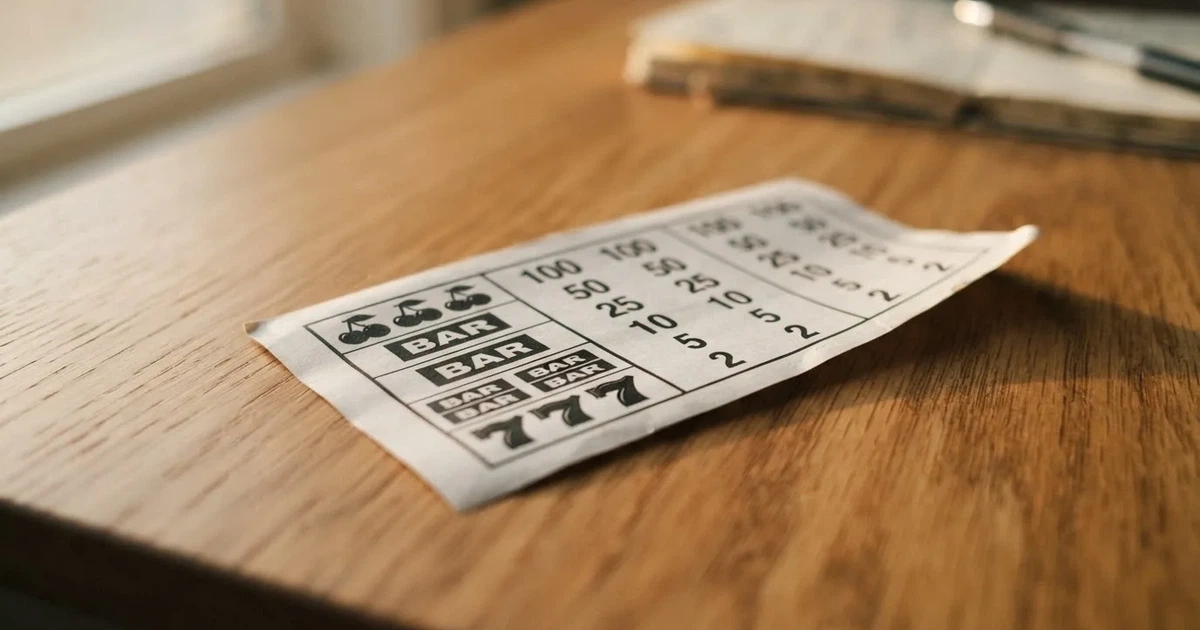
A Reader’s Guide to 7-Reel Slots in Australia: What the Format Is, Why the Market Looks the Way It Does, and Which Offshore Sites the ACMA Has Warned
 Available in US
23 September 2026 — data current as verified against the Australian Communications and Media Authority’s published enforcement record.
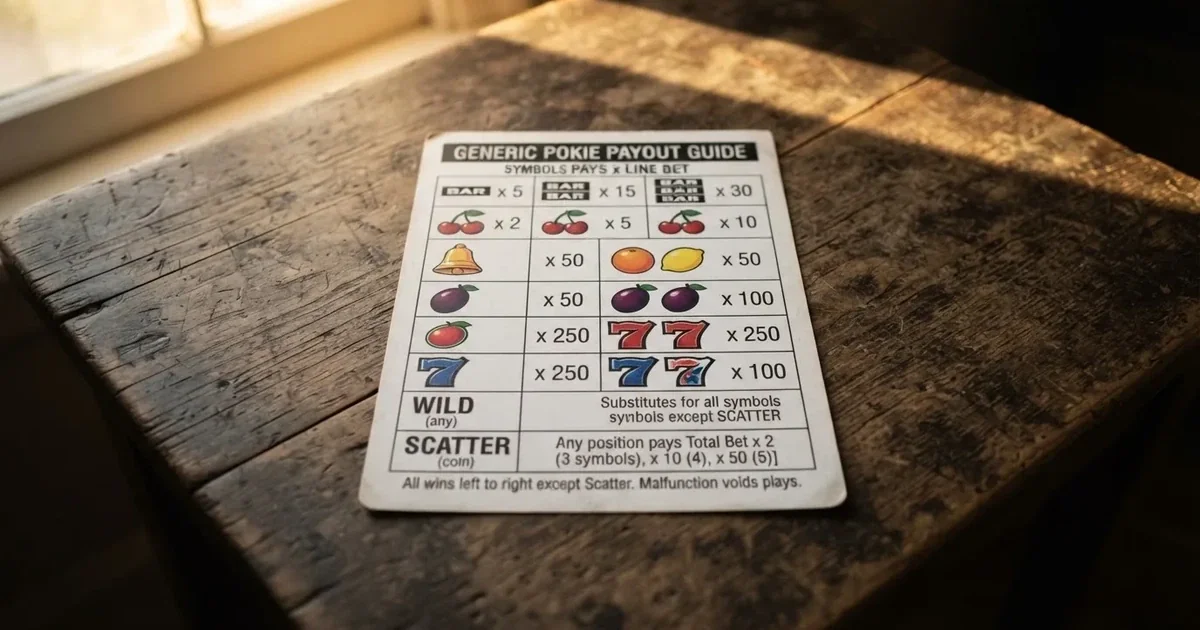
The seven-reel slot is a real machine, a smaller format than the five-by-three video slot that dominates online lobbies, and an unusual one to find compared with the three-reel classics in Australian pubs and clubs. Searching for it as an online player runs into the same wall every other online casino product runs into: under the Interactive Gambling Act 2001, online casino games and online pokies are prohibited services in Australia, and no state or territory issues a licence for them. The format itself exists, but the legal route to play it for real money from Australia does not.
The page that follows closes that gap honestly. It walks through what a seven-reel layout actually is, why the game math sits where it does, where the same machine does sit in Australian venues, and what the ACMA has been doing to the offshore operators that target Australians anyway. Eleven brands appear in the comparison later on; every one of them has been formally warned by the ACMA for offering prohibited services to Australian customers, and that warning is the only thing any of them share with the rest of this page.
Table of Contents
- The Brands the ACMA Has Warned, and Why That Is the Comparison
- What “Seven-Reel Slot” Actually Means as a Format
- Where the Format Already Sits in Australia
- Why No Australian Site Can Offer Online Casino Games or Pokies
- What the ACMA Has Actually Said About Each Brand
- How Often the ACMA Is Actually Blocking Sites
- What Offshore Sites Actually Cost an Australian Player
- Player Protection Routes That Actually Work in Australia
- What the Bonus Section in This Market Would Normally Cover
- The Game Math Behind a Seven-Reel Layout
- Where the Other Games on the Same Site Sit
- What This Page Does Not Recommend
- Frequently Asked Questions
The Brands the ACMA Has Warned, and Why That Is the Comparison
Eleven offshore casino brands appear in the table below. Each has received a formal warning from the Australian Communications and Media Authority under the Interactive Gambling Act 2001 for offering online casino games or online pokies to people in Australia. The column order was chosen to make a single point: that none of these brands is licensed in Australia, that every one of them has been named by the regulator doing the warning, and that the operator named behind the brand sometimes changes from one warning to the next.

| Brand | ACMA action and date | Operator named by the ACMA | Subject support |
|---|---|---|---|
| RocketPlay | Formal warning, March 2026 | Pulsup Ltd | — |
| Level Up Casino | Formal warning, May 2022 | Dama N.V. | — |
| Woo Casino | Formal warning, March 2025 | Dama N.V. | — |
| Spirit Casino | Formal warning, May 2025 | Dama N.V. | — |
| National Casino | Formal warning, July 2025 | Consolutetish S.R.L. | — |
| Bizzo Casino | Formal warning, July 2025 (earlier 2022) | Consolutetish S.R.L. (earlier TechSolutions) | — |
| Ignition Casino | Formal warning, July 2025 | Bamboo Media | — |
| Instant Casino | Formal warning, February 2025 | EOD Code SRL | — |
| Jackbit | Formal warning, April 2026 | Ryker B.V. | — |
| Casino Intense | Formal warning, April 2025 | Sterplay Holding Ltd | — |
| Sky Crown | Formal warning, September 2022 | Hollycorn N.V. | — |
The brands are not ranked. They are not endorsed. No bonus terms are listed because the only sources for them were affiliate marketing pages, and no operator listed above carries an Australian licence for the product they are selling. Several of them — Dama N.V. most prominently — appear in the table more than once under different brand names, which is the pattern the ACMA’s enforcement record tends to take: one corporate owner, several skins, each picked up in turn.
The verdict the table supports is the only verdict the table can support. None of these is a place an Australian should play. The comparison itself is the comparison.
What “Seven-Reel Slot” Actually Means as a Format
The number on a slot machine is the count of vertical reels the symbols ride on, and that count changes a lot about how the game plays. Charles Fey’s late-nineteenth-century machine used three reels and five symbols (horseshoes, diamonds, spades, hearts and the Liberty Bell), with three bells in a row paying the top prize of ten nickels. That three-reel shape held for most of a century. Bally’s 1963 Money Honey was the first slot with a bottomless hopper and automatic payout of up to 500 coins without an attendant. The first video slot machine arrived in 1976 from Fortune Coin Co. in Kearny Mesa, California. The shift from mechanical to electronic reel logic meant a designer was no longer constrained by the size of a physical drum, and reel counts climbed.

Modern video slot machines can use five or more reels with fifty or more symbols per reel, producing odds as high as 300 million to one against a top combination. A classic mechanical three-reel machine with about ten symbols per reel offers roughly 1,000 possible combinations. The seven-reel layout sits between those two poles. Fewer combinations than a five-by-three video slot with a long symbol strip, more combinations than a three-reel classic. The reels themselves are usually electronic on a seven-reel game — a true seven-reel mechanical cabinet exists but is rare — so what the player sees on screen is a digital rendering of seven vertical strips of symbols stopping at random.
Two consequences follow from the layout. First, a seven-reel game usually has more paylines than a five-reel video slot, because each added reel creates new ways symbols can line up across adjacent reels. Designers compensate by changing the symbol count per reel or by weighting the strips so most outcomes are misses and the visible top combinations are genuinely rare. Second, the visible top prize on a seven-reel layout often looks larger than a comparable five-reel game, because the math requires more frequent losses to fund it. The volatility tends to read higher; the long-run payback does not necessarily move with it. Payback percentages on these games are set by the designer and the host venue, not by the reel count.
In the United States, state regulation sets minimum slot machine payout percentages that vary by jurisdiction: Nevada requires at least 75%, Mississippi at least 80%, New Jersey at least 83%. Australia has no equivalent minimum for the offshore products in scope on this page, because no regulator in Australia has approved them.
Where the Format Already Sits in Australia
The seven-reel format is unusual in Australian venues, where the dominant slot cabinet is the five-reel video slot and the older three-reel mechanical machine is still common in hotels and clubs. New South Wales legalised slot machines in 1956, and by 2010 Australia operated an estimated 97,103 gaming machines outside casinos — a per-capita rate about five times that of the United States. Outside casinos, the count of pokies-style slot machines by state runs to 87,298 in New South Wales (June 2023), 26,380 in Victoria (2021–22), 21,122 in Queensland (October 2023), 11,672 in South Australia (September 2023) and 3,587 in the ACT (November 2023). Almost all of those are five-reel video or three-reel mechanical cabinets. A genuine seven-reel cabinet in an Australian venue is not the standard product.
What that means for someone searching the term is straightforward. The format exists, the equipment is unusual on this side of the market, and the online version of the format is not available through any Australian-licensed channel. The remaining sections of this page set out the legal frame that produces that gap, what the offshore product on the other side of it actually costs a player, and what to do if the search has been driven by something more than curiosity.
Why No Australian Site Can Offer Online Casino Games or Pokies
The Interactive Gambling Act 2001, strengthened by the Interactive Gambling Amendment Act 2017, makes it an offence to provide online casino games, online pokies or in-play betting to a person in Australia. No state or territory issues a licence for these products, and the IGA targets the provider rather than the individual player — Australians are not prosecuted for playing, but the offshore operator offering the game is breaking Australian law by offering it. What is licensable in Australia is wagering on races and sport placed before the event, lotteries and keno; in practice, online wagering on sport and racing is licensed by the Northern Territory Racing and Wagering Commission, which regulates 52 of Australia’s online bookmakers, including Sportsbet, Bet365 and Ladbrokes. The NTRWC has no full-time staff and meets once a month in Darwin, which is a structural detail rather than a regulatory weakness — the federal prohibition is what closes the online casino market.
The Interactive Gambling Amendment (Gambling Reform) Bill 2026 passed Parliament on 19 August 2026. Its advertising and inducement measures commence 1 January 2027, so the law exists but is not yet in force on a 2026 page. The reform tightens what licensed wagering operators can advertise; it does not open the door to online casino games.
Enforcement runs through the Australian Communications and Media Authority. The ACMA investigates complaints, issues formal warnings to operators, and can direct Australian internet service providers to block illegal sites. According to the ACMA as reported in June 2026, a total of 1,751 illegal gambling and affiliate marketing websites had been blocked since the first blocking request in November 2019, and more than 230 unlicensed gambling services had left the Australian market since enforcement was strengthened in 2017. In a single round reported on 26 June 2026 the ACMA asked Australian ISPs to block 12 more: 7Signs, ChromaBet, Donbet, Duospin, Freshbet, Slots Gem, Jacks Club, Lucky Start, Pointsbetz.com, Spinrise, Vinyl Casino and Wildsino.
H2 Gambling Capital’s 2025 report estimates that Australians lose about A$3.9 billion a year to illegal gambling sites, and that the share of gambling going through legal channels fell from 74% in 2021 to 64%. The size of the offshore market is the reason the enforcement record fills up the way it does.
The eleven brands in the comparison table all sit on the prohibited side of that line. None of them is licensed in Australia. Each has been formally warned by the ACMA. An offshore site gives no Australian consumer protection, no complaints body and no recourse if a withdrawal is refused, and it can be blocked with a balance still on it.
What the ACMA Has Actually Said About Each Brand
The brands in the comparison table are listed in the order they appear there. The notes below record what the ACMA itself published: the warning, the operator named behind it, and the date. Where the same operator appears under more than one brand, the pattern is part of the record.
RocketPlay. The ACMA issued a formal warning in March 2026 to Pulsup Ltd over Rocketplay.com.au. The same brand was the subject of an earlier formal warning in May 2022 to Dama N.V. Two operators, two warnings, the same product offered to Australians.
Level Up Casino. The ACMA issued a formal warning in May 2022 to Dama N.V., covering six casino brands: Bambet, Dazard, Level Up, Rocketplay, Wild Tornado and Cobra Casinos.
Woo Casino. The ACMA issued a formal warning in March 2025 to Dama N.V. The Dama N.V. cluster of warnings continues to grow.
Spirit Casino. The ACMA issued a formal warning in May 2025 to Dama N.V., the third Dama brand in this table and the second warning of 2026 at that point.
National Casino. The ACMA issued a formal warning in July 2025 to Consolutetish S.R.L. The July 2025 round also caught Bizzo Casino under the same operator name.
Bizzo Casino. The ACMA issued a formal warning in July 2025 to Consolutetish S.R.L. Bizzo Casino had already been the subject of a 2022 formal warning to TechSolutions (CY) Group Limited and TechSolutions Group N.V. — the operator behind the brand has changed.
Ignition Casino. The ACMA issued a formal warning in July 2025 to Bamboo Media.
Instant Casino. The ACMA issued a formal warning in February 2025 to EOD Code SRL.
Jackbit. The ACMA issued a formal warning in April 2026 to Ryker B.V., covering both Jackbit and CasinOK.
Casino Intense. The ACMA issued a formal warning in April 2025 to Sterplay Holding Ltd.
Sky Crown. The ACMA issued a formal warning to Hollycorn N.V. over its Sky Crown and Blue Leo casino services, published in September 2022.
The pattern is the point. The ACMA warns an operator, the operator changes its corporate shell or its domain, the warnings fill up the next round. A reader looking at this table in 2026 is looking at eleven brands and roughly seven different operators, and the regulator has named all of them.
How Often the ACMA Is Actually Blocking Sites
The arithmetic the page owes the reader is the rate at which new sites are being added to the blocking list. The ACMA reported in June 2026 that 1,751 illegal gambling and affiliate marketing websites had been blocked since the first blocking request in November 2019. From November 2019 to June 2026 is about six and a half years, or roughly 78 months. 1,751 divided by 78 is about 22.4 sites per month across the full period. The pace is not flat: single rounds ask ISPs to block 12 sites at a time, and the round reported on 26 June 2026 alone added 12.
The blocking rate matters because it is the only figure that quantifies the supply side of this market. The H2 Gambling Capital estimate of A$3.9 billion a year in losses gives the demand side. The blocking rate is what shows the regulator catching up. State it as a band with its condition rather than as a single number: averaging the running total across the full period gives roughly 22 sites a month; recent rounds clear 12 at a time, and the ACMA’s published running total grows with each one.
The point for a reader is not the precise figure. The point is that the enforcement has been continuous rather than one-off, and that the brands an Australian might encounter today are themselves part of a longer sequence.
What Offshore Sites Actually Cost an Australian Player
An offshore casino operating outside the Interactive Gambling Act does not become safer because the marketing looks familiar. Three structural costs fall on the player rather than the operator.
The first is recourse. An Australian-licensed wagering operator answers to an Australian regulator, sits within an Australian complaints framework, and can be required to pay a disputed withdrawal. An offshore operator answers to whatever regulator licensed the platform, often Curaçao or Anjouan, and the complaints path runs through that regime. Where the regulator is weak, the path is weak.
The second is payment. Credit cards, credit-related products and digital currency are banned as payment for licensed online wagering in Australia since 11 June 2024, with penalties up to $247,500 for operators. Legal deposit routes for licensed wagering are debit card, bank transfer, PayID/Osko and BPAY. A site asking an Australian for a credit card or a crypto deposit is operating outside the Australian rules. The licensed channel closes off the cards; the offshore channel accepts them.
The third is blocking. The ACMA can ask Australian ISPs to block a site, and the block takes effect even if the player still has a balance on it. An Australian who deposits on an offshore site and asks for a withdrawal after the site has been added to the blocking list has no obvious way back to the operator. This is not a hypothetical. The blocking list grew from zero in November 2019 to 1,751 by June 2026, and several of the brands in the comparison table have been on it.
Tax sits on top of all three. Gambling winnings of a recreational player are not assessable income under section 6-5 of the ITAA 1997, and losses are not deductible, unless the person carries on a business of gambling. For the audience this page is built for — someone searching for a format rather than running a gambling operation — winnings stay outside the tax system and losses stay non-deductible. The ATO is the place to confirm the position for any specific case.
Player Protection Routes That Actually Work in Australia
Player protection in Australia is built around the licensed wagering channel and the help services that sit beside it, not around the offshore product. Three pieces matter.
BetStop, the National Self-Exclusion Register, has been live since August 2023. A person who registers with BetStop is excluded from Australian-licensed online and phone wagering services for a period of their choice. The exclusion binds licensed operators. An offshore casino is not connected to BetStop and is not bound by it — registering with BetStop does not stop a deposit at an offshore site, and the offshore site does not see the registration.
The National Gambling Helpline at 1800 858 858 is free, confidential and available 24/7, with chat at Gambling Help Online. The service is set up for anyone whose gambling is causing harm, regardless of whether the gambling happens through a licensed or an offshore channel. The line and the chat are the right first call if play has started to feel compulsive or stressful.
The minimum age for any gambling product in Australia is 18. The offshore operators in the comparison table do not enforce that check from inside Australia, and an Australian under 18 encountering one of these sites is not in a position the licensed channel would have allowed.
What the Bonus Section in This Market Would Normally Cover
A page on a format that is prohibited for sale in Australia does not owe the reader a bonus walk-through. The reason is mechanical. A bonus at an offshore site is a marketing offer from a site operating outside Australian consumer protection, and the wagering requirements, max-cashout caps and game-weighting rules that would normally be the meat of a bonus section here are not published by any regulator the reader can take a complaint to.
For background: a real-money bonus offer typically takes a deposit, applies a wagering multiple to either the deposit, the bonus, or both, restricts which games count toward clearing, and caps what can be withdrawn from the bonus balance. The shape of the offer and the conditions attached vary widely between operators and are not standardised in any jurisdiction the offshore brands in this comparison sit within.
The H2 Gambling Capital 2025 figure of A$3.9 billion in annual losses to illegal sites is the relevant comparator for any bonus discussion. The total is the size of the outflow to operators outside the Australian rules; the bonus terms are the mechanism the operators use to keep a share of it. None of it is enforceable against an Australian player.
The Game Math Behind a Seven-Reel Layout
The numbers on a slot’s paytable are an output, not an input. Designers choose the symbol count per reel, the symbol weights, the number of paylines and the payout for each combination, then back-solve for the long-run return to player. A seven-reel game has more positions across the visible reel strips than a five-reel game, which raises the combinatorial space, but the designer can lower the symbol weights or restrict the paylines to bring the return back to the same range as a comparable five-reel game.
The slot math that does carry across formats is the house edge. A slot with a 95% return to player is a 5% house edge on every dollar that passes through it; the reel count changes the shape of the variance, not the long-run take. Modern video slots are advertised with high-volatility profiles because the hit frequency is low and the top combinations are rare, which is the math consequence of running many symbols per reel and weighting the strips for a few big outcomes rather than many small ones. A seven-reel layout sits naturally in that high-volatility space because the symbol count and the line count push the math in that direction.
A few adjacent numbers for context, because they sharpen what “long-run take” actually means. The house edge in baccarat is 1.06% on the Banker bet, 1.24% on the Player bet and 14.36% on the Tie. With optimal strategy, blackjack’s house edge is about 0.28% under liberal Las Vegas Strip rules (dealer stands on soft 17, double on any two, double after split, resplit aces, late surrender) and about 0.43% under Atlantic City rules. In craps the Pass/Come bet has a house edge of 1.41%, Don’t Pass/Don’t Come 1.36%, Any Craps 11.11%. A slot’s house edge typically sits above all of these. The reason slot revenue dwarfs table game revenue in any venue that offers both is the hold per spin multiplied by the spins per hour.
The house always has an edge. A reader who walks into any slot session with that as the starting line — any format, any reel count — is reading the machine the way it reads them.
Where the Other Games on the Same Site Sit
The eleven brands in the comparison are online casinos rather than slot-only products, and the games on their lobbies extend well beyond the seven-reel slot the reader came in looking for. A short note on the other table games the ACMA-warned operators host, because a reader comparing the brands by what is on them is comparing the wrong thing and should at least know what is on them.
Baccarat has a disputed origin story — some accounts place it in nineteenth-century France, others trace it to Italy at the end of the fifteenth century during the reign of King Charles VIII, with David Parlett considering the game Macao its immediate precursor. Punto banco, the variant most played today, was developed in Havana during the 1940s; the casino banks the game at all times and plays out both hands by fixed drawing rules, unlike variants where players choose. Chemin de fer, French for “railway,” is a two-player baccarat variant that emerged from baccarat banque in the late nineteenth century and is named for being quicker to play than the original. Cards two through nine count at face value, ten/J/Q/K count as zero, aces count as one, with hand totals taken modulo 10; punto banco is dealt from a shoe of six or eight decks. Under section 66 of the NSW Casino Control Act 1992, a casino operator must not permit a game such as baccarat to be played unless the game and its rules are approved by the regulator, and the operator must make a copy of the approved rules available to patrons on request. Crown Melbourne offers three baccarat variants — Traditional Baccarat, Crown Baccarat and 2 to 1 Baccarat — as approved table games regulated by the Victorian Gambling and Casino Control Commission, which replaced the VCGLR as Victoria’s casino regulator on 1 July 2022.
Blackjack’s immediate predecessor was the English game vingt-un; a related game called veintiuno was described in Miguel de Cervantes’ Rinconete y Cortadillo, written around 1601-1602, and formal rules for the game were published in Britain in 1800. According to card historian Thierry Depaulis, the game was renamed “blackjack” around 1899, with prospectors during the Klondike Gold Rush of 1896-99 credited with giving it its modern name. Number cards count as their number, jack/queen/king count as 10, an ace counts as 1 or 11, a starting two-card total of 21 is a “blackjack” or “natural” and is the strongest hand; the dealer must keep drawing until reaching 17 or higher, with some rule sets requiring the dealer to also hit on a “soft 17.” Established variants include Spanish 21 (played without 10s but with liberal player-favourable rules), Double Exposure Blackjack (both dealer cards dealt face-up), Blackjack Switch (players can swap cards between two hands) and Super Fun 21 (up to four splits). In Victoria, the Casino Control Act 1991 requires the VGCCC to approve any rules for table games, including blackjack, and any change to those rules, before they are introduced at the Melbourne casino. The VGCCC’s public log of approved changes at Crown Melbourne includes renaming the “Perfect Pairs” side bet to “Crown Pairs” on 23 December 2024 and introducing a “Free Bet” option with a new “Pot of Gold” side bet on 25 March 2024.
None of these table games is available through an Australian-licensed online channel, and the offshore brands in the comparison table are not the legal route to any of them. The math on each is included here as a reference for the same reason the slot math is — the house edge is the comparison that matters, and it sits where the rules put it.
What This Page Does Not Recommend
The page has not recommended a brand, an offer or a route to play a seven-reel slot for real money from Australia. That is the page working as intended. The Interactive Gambling Act 2001 closes the legal channel, the ACMA’s enforcement record names the offshore operators that target Australians anyway, and the player protection regime — BetStop, the National Gambling Helpline, the 18-year minimum age — sits on the licensed side of the line. Recommending an offshore operator would be recommending a route that is prohibited under Australian law and that exposes the player to the structural costs in the section on what an offshore site costs an Australian.
For a reader whose interest in the seven-reel format is the format itself — how it differs from a five-reel video slot, where it sits in the longer history of the machine, what the paytable shows — the earlier parts of the page are the answer. For a reader who has been searching the term because online gambling has started to feel less like entertainment and more like a habit, the right next step is the National Gambling Helpline at 1800 858 858 or the chat at Gambling Help Online, both free, confidential and available around the clock.
Frequently Asked Questions
What makes a 7-reel slot different from a standard five-reel video slot?
A seven-reel slot has seven vertical reels of symbols rather than the five common in modern video slots, which usually produces more paylines and rarer top combinations. The reel count changes the shape of the variance — volatility tends to read higher — but the long-run payback is set by the designer and is not necessarily different from a comparable five-reel game.
Can 7-reel slot machines be found in licensed Australian pubs and clubs?
Almost all slot cabinets in Australian hotels and clubs are five-reel video slots or three-reel mechanical machines; a genuine seven-reel cabinet in an Australian venue is unusual. Outside casinos, the count runs to 87,298 pokies-style machines in NSW, 26,380 in Victoria, 21,122 in Queensland, 11,672 in South Australia and 3,587 in the ACT.
Do 7-reel slots typically pay out differently than newer five-reel formats?
The long-run return to player is set by the designer and does not move with the reel count; a slot with a 95% return is a 5% house edge regardless of format. Seven-reel games usually show rarer top combinations and a higher-volatility profile, which means longer losing streaks between wins and bigger outcomes when they land.
Is a 7-reel slot online the same game as a 7-reel machine on a casino floor?
The math — symbol weights, paylines, return to player — can be the same, but the regulatory frame around the two is not. A venue cabinet in Australia sits inside an Australian regulatory regime; an offshore online casino offering the same game to Australians does not, and the ACMA has issued formal warnings to operators offering prohibited services to Australian customers.
Are 7-reel slots for real money available legally from an Australian-based site?
No. The Interactive Gambling Act 2001 makes online casino games and online pokies prohibited services in Australia, and no state or territory issues a licence for them. What is licensable is wagering on races and sport placed before the event, lotteries and keno. The Australian-licensed channel does not offer online casino games or online pokies.
Is reel count still a useful way to compare volatility between older and newer slots?
Reel count is one input to volatility but not a clean proxy for it; a five-reel video slot with fifty-plus symbols per reel can be far more volatile than a seven-reel game with a tighter symbol strip. The published hit frequency and the spread of the paytable are more useful comparisons than the reel count alone.
Prepared by the Casino VIP Info editorial staff.