
Curaçao licence, Australian players: what the regulator does and does not cover
A Curaçao licence is one of the most common badges in offshore online casino marketing. It does not, on its own, give an operator any standing to take bets from a person in Australia. Under the Interactive Gambling Act 2001, no operator anywhere in the world may offer online casino games, online pokies or in-play wagering to Australians — whatever licence the site displays at the bottom of its homepage. The Australian Communications and Media Authority has spent the past several years acting on that rule, with formal warnings, blocking requests and a tally of illegal services that has climbed past 1,750 websites since November 2019.
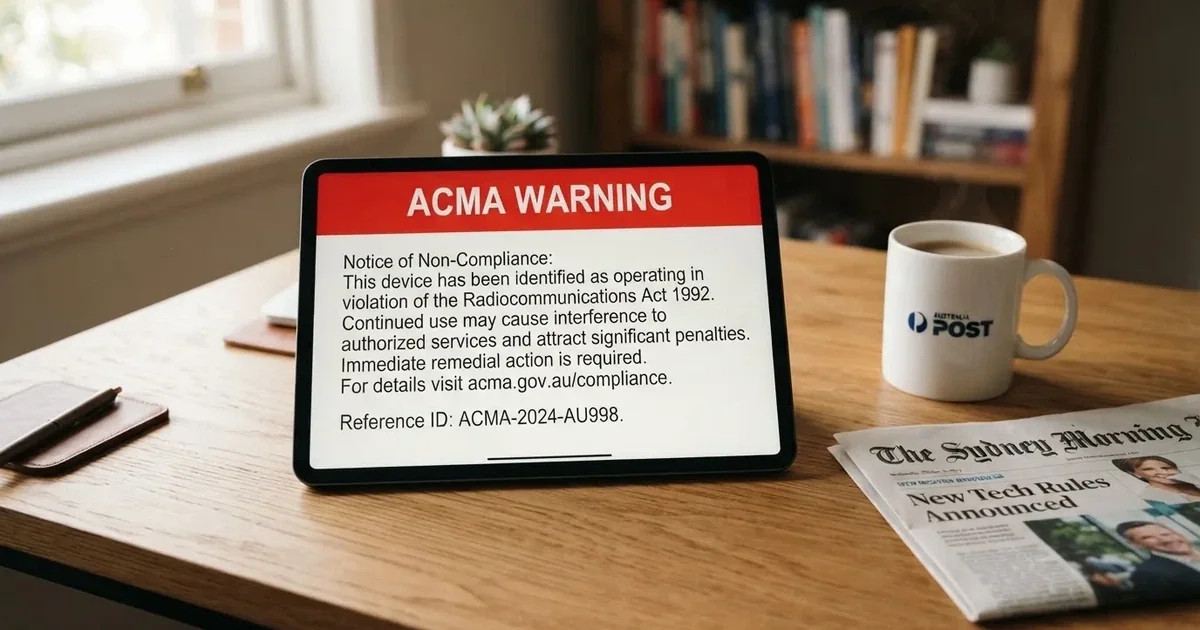
This page is the consequence of that gap between the licence a brand advertises and the law that applies where the player sits. It walks the reader through what a Curaçao licence actually authorises, what the IGA actually prohibits, which brands the ACMA has named in formal warnings, what the bank’s gambling block does at the card level, and what self-exclusion actually binds in Australia. The frame is that the licence is real, the prohibition is real, and a reader holding the two in mind makes better decisions about where they put money.
Currency stamp: data current as of 29 October 2026, checked against the ACMA’s published formal warning register and the Reserve Bank of Australia’s payment-cost review.
Table of Contents
- What a Curaçao licence authorises, and what it does not
- The Interactive Gambling Act, and what it actually prohibits
- The ACMA’s enforcement record
- The blocking rate: a band, not a single number
- The brands the ACMA has named
- Banking blocks at the card level
- Digital wallets and credit cards
- PayID, Osko and the bank-transfer routes
- Where Australian player protection actually binds
- The mechanics of a single enforcement round
- What a reader comparing options actually chooses between
- Tax and the recreational player
- Reading the table in practice
- The limits of this page
- Frequently asked questions
What a Curaçao licence authorises, and what it does not
A Curaçao gaming licence is issued under the National Ordinance on Games of Chance (LOK), which took effect in late 2024 and replaced the older master-licence / sub-licence structure. The regulator is the Curaçao Gaming Authority (CGA), with day-to-day supervision through the Curaçao Gaming Control Board. For an operator, the licence authorises it to run an online casino from Curaçao and to accept customers from jurisdictions that themselves permit that. The licence does not travel. A licence granted in Willemstad buys nothing in Canberra, nor does it buy clearance from the ACMA.

The application fee is €4,592 for both business-to-consumer and business-to-business licences. The annual B2C fee runs €47,450 — a €24,490 National Treasury charge plus a €22,960 CGA supervisory fee. The annual B2B fee is ANG48,000 with no monthly charge. Those numbers matter because they explain why so many operators cluster around this licence: it is cheaper than most European alternatives, and the application is comparatively light. The cheaper end of a market tends to attract volume, and volume in this market is largely operators that the IGA prohibits from serving Australians in the first place.
The AML/CFT regime sits on the National Ordinance on Identification (LID, PB 2017 no. 92) and the National Ordinance on Unusual Transactions (LMOT, PB 2017 no. 99); licensed operators must report unusual transactions through the goAML portal set up under PB 2020 no. 157. A licence holder under LOK is meant to file those reports. Australian consumer law is a separate question entirely, and a reader in Australia has no Australian complaints body to take a Curaçao-licensed brand to.
A useful framing: a Curaçao licence is a permission to operate from Curaçao, not a permission to operate toward Australia. Marketing language that conflates the two is the source of most of the misunderstanding this page exists to clear up.
The Interactive Gambling Act, and what it actually prohibits
The Interactive Gambling Act 2001 — the IGA — was strengthened by the Interactive Gambling Amendment Act 2017 and updated again by amendments in 2023. The core prohibition is that it is an offence to provide a prohibited interactive gambling service to a person physically in Australia. A “prohibited interactive gambling service” covers online casino games, online pokies and in-play betting on sport. Lotteries, keno and pre-event wagering on races and sport are licensable, and in practice the Northern Territory Racing and Wagering Commission is the regulator most online wagering brands sit under — 52 bookmakers, including Sportsbet, Bet365 and Ladbrokes, licence in the Territory for tax reasons. The NTRWC runs on a part-time board that meets once a month in Darwin.

Minimum age is 18. The IGA targets the provider, not the player. An Australian who places a bet with an offshore site is not committing an offence, but is also outside the protection of Australian consumer law, outside the reach of any Australian complaints body, and exposed to the simple risk that the site can be blocked by an ISP with a balance still held in the account.
The 2026 reform: the Interactive Gambling Amendment (Gambling Reform) Bill 2026 passed Parliament on 19 August 2026. Its advertising and inducement measures commence on 1 January 2027. A 2026 page is reading a bill that is law with a future start date — not yet in force on this page.
The ACMA’s enforcement record
The ACMA’s main tool is the formal warning — a written notice that names the operator and the brand, gives the facts, and warns that further action will follow if the service continues. The formal warning is then published on the ACMA website. From there, the ACMA can ask Australian ISPs to block the offending domain at the network level. Blocking requests have run into the thousands over the past several years.
The headline figure from the round reported on 26 June 2026: a total of 1,751 illegal gambling and affiliate marketing websites had been blocked since the first blocking request in November 2019. More than 230 unlicensed gambling services had left the Australian market since enforcement was strengthened in 2017. The ACMA does not catch every operator and the operator base shifts as fast as the warnings do — what the 1,751 number really tells a reader is the breadth of the problem rather than its end.
In the same round reported on 26 June 2026, the ACMA asked ISPs to block 12 more websites: 7Signs, ChromaBet, Donbet, Duospin, Freshbet, Slots Gem, Jacks Club, Lucky Start, Pointsbetz, Spinrise, Vinyl Casino and Wildsino. The block list is a moving target, and a site named in it may reappear at a new domain within weeks. The enforcement is real; it is also playing whack-a-mole against a market that respawns faster than the ACMA can publish warnings.
H2 Gambling Capital’s 2025 report estimates Australians lose about A$3.9 billion a year to illegal gambling sites. The share of gambling going through legal channels fell from 74% in 2021 to 64% in 2025 — a ten-point drop in four years. Those numbers, taken together, are the clearest summary of why this page exists: offshore sites are not a small tail of the Australian market. They are roughly a third of what Australians actually spend on gambling.
The blocking rate: a band, not a single number
The blocking figures in this section are estimated from ACMA reporting, as the authority does not publish a single monthly average.
Total blocked sites since first blocking request: 1,751. First blocking request: November 2019. Round-up date for the count: 26 June 2026.
The straight-line average works out to roughly 26 websites blocked per month across the 80 months between November 2019 and July 2026. That is a band, not a rate — the ACMA does not publish monthly data, so the average conceals the lumpy cadence of actual enforcement rounds. Some months carry a dozen new blocks; some carry none. The headline from the most recent round, 12 websites, sits close to that long-run average; earlier rounds have been heavier and lighter.
The honest framing for a reader: over the past seven years the ACMA has been adding illegal gambling domains to its blocking list at a rate of roughly two dozen per month on average, with the monthly figure varying widely. The first blocking request was November 2019; by mid-2026 the running total had reached 1,751 blocked domains.
Two conditions belong with that band. First, a single brand can sit on multiple domains, so the 1,751 number counts websites rather than operators. Second, blocked domains come back under new names; the ACMA does not always net the new domain against the old one. The blocking rate measures enforcement output, not the size of the offshore market or the share of Australians still using it. A reader who wants to know the latter should look at the H2 Gambling Capital estimate — about A$3.9 billion a year in losses to illegal sites, with legal-channel share at 64% — rather than at the blocking list.
The brands the ACMA has named
The table below lists eleven brands that the ACMA has acted against under the Interactive Gambling Act 2001. Each entry names the operator the ACMA identified and the date the warning was published. The brand is not a recommendation; the list is a record of enforcement, compiled from what the ACMA itself published.
| Brand | ACMA action and date | Operator named by the ACMA | Subject support |
|---|---|---|---|
| RocketPlay | Formal warning, March 2026 | Pulsup Ltd (RocketPlay); earlier Dama N.V., May 2022 | listings-only |
| Level Up Casino | Formal warning, May 2022 | Dama N.V. | listings-only |
| Woo Casino | Formal warning, March 2025 | Dama N.V. | no data |
| Spirit Casino | Formal warning, May 2025 | Dama N.V. | no data |
| National Casino | Formal warning, July 2025 | Consolutetish S.R.L. | listings-only |
| Bizzo Casino | Formal warning, July 2025 | Consolutetish S.R.L.; earlier TechSolutions, 2022 | listings-only |
| Ignition Casino | Formal warning, July 2025 | Bamboo Media | no data |
| Instant Casino | Formal warning, February 2025 | EOD Code SRL | listings-only |
| Jackbit | Formal warning, April 2026 | Ryker B.V. | no data |
| Casino Intense | Formal warning, April 2025 | Sterplay Holding Ltd | listings-only |
| Sky Crown | Formal warning, September 2022 | Hollycorn N.V. | no data |
Dama N.V. shows up four times in this list — Level Up and Rocketplay in 2022, then Woo Casino in March 2025 and Spirit Casino in May 2025. A single operator with four brands named in formal warnings over four years is the kind of pattern the ACMA’s enforcement is meant to surface. Bizzo Casino has the longest trail: TechSolutions in 2022, then Consolutetish S.R.L. in July 2025. A reader looking at this table should read the operator column as the more stable identifier — brands can be relaunched under new names, but the corporate entity behind them tends to recur.
Three of these brands carry no data on payment method support at all. The “no data” column is not a finding about the brand — it reflects the fact that no input gave reliable figures on what payment methods these brands support. Where the column reads “listings-only”, that is the same limitation, written differently: a source carried a mention without the kind of structured detail that would let a reader act on it. A reader who needs to know whether a brand accepts a particular deposit method is best served by checking the brand’s own current terms page, not by extrapolating from a 2025 warning.
The takeaway from the table is enforcement, not ranking. Each row is a brand the ACMA has named. None of them is presented as a place to play — the Interactive Gambling Act 2001 prohibits the service they offer to Australians, and that is the ACMA’s reason for warning them in the first place.
Banking blocks at the card level
The clearest practical limit on what an Australian can put through an offshore casino sits at the bank. Two of the major banks have published gambling blocks that work at the merchant category code level — the network-level tag that says “this transaction is a gambling transaction” — rather than at the brand level.
Westpac’s gambling block refuses authorisation of transactions registered under the merchant category code ‘Betting/Casino Gambling’ on eligible personal credit and debit cards. ANZ’s block, activated in the ANZ app, blocks gambling transactions made through a digital wallet such as Apple Pay on an eligible card, not just on the physical card itself. Once ANZ’s block is on, removing it again requires a 48-hour waiting period, and the bank warns that not all gambling transactions will be blocked and that some non-gambling transactions might be blocked in error.
The 48-hour cooling-off is the part a reader is most likely to underestimate. Switching the block off is not a single tap; it is a deliberate cooling-off period that the bank imposes so that a moment of impulse does not become a full afternoon at the tables. The bank’s own caveat — that not all gambling transactions will be blocked — is the other part worth reading carefully. A card-level block is a filter on the MCC, not a blacklist of every gambling operator, and an MCC-mismatched transaction can still go through.
Digital wallets and credit cards
The Interactive Gambling Act 2001 as amended in 2023 prohibits Australian-licensed online wagering services from accepting payment by credit card or other credit-related products. That rule applies to licensed operators; the offshore brands the ACMA has named are outside it, but the same payment rails are still subject to bank-level gambling blocks and to the credit-card ban where the bank is Australian.
Apple Pay, Google Pay and Samsung Pay together accounted for around 45% of all card payments in Australia by number by the end of 2025. That share is large enough that a gambling block working at the physical card level is, in practice, a gambling block working on roughly half of all card transactions — because those transactions run through the card number on file at the wallet, not through a separate instrument. ANZ’s published statement is the cleanest of the bunch: the block catches Apple Pay transactions on an eligible card, not just transactions with the physical card. Westpac’s published language is narrower — it speaks of the merchant category code on the underlying card.
Apple’s own position is that it does not charge fees to consumers for using Apple Pay in stores, online or in apps; any surcharge comes from the merchant’s card-processing fees, not from Apple. Apple also states that transaction limits and PIN requirements for Apple Pay purchases are set by the card issuer or merchant, not by Apple. The bank’s block is what governs a gambling transaction through Apple Pay, not Apple’s settings.
American Express sits slightly outside the Reserve Bank of Australia’s July 2025 review on surcharging. The review proposes removing surcharges only on eftpos, Mastercard and Visa card transactions and explicitly leaves American Express outside the scope of the proposed surcharge ban. Amex is a three-party scheme that issues cards and processes transactions itself, and the RBA’s review treats it as a different network. A reader using an Amex card for a deposit will find a different surcharge structure and, where the bank has a gambling block, will find the same MCC-level filter on the transaction.
PayID, Osko and the bank-transfer routes
The payment routes most relevant to a licensed Australian wagering service — and the routes an offshore brand will sometimes try to redirect a customer toward — are PayID, Osko and BPAY. All three sit inside Australian Payments Plus (AP+).
Osko is the instant transfer product: a bank transfer between participating Australian banks arrives in under a minute, 24/7 including weekends, whether it is addressed to a BSB and account number or to a PayID. PayID is the addressing layer that lets a transfer be sent to a phone number, email or ABN instead of a BSB and account number, with the name of the account holder shown before the transfer is sent. AP+ warns that being asked to transfer money to a PayID on an illegal gambling site almost certainly means a scam site — the PayID naming convention is a built-in scam filter that an offshore brand tends not to satisfy.
PayID is available at over 100 Australian financial institutions. More than 25 million PayID identifiers had been registered on Australia’s New Payments Platform as of April 2025. The New Payments Platform itself went live to the public on 13 February 2018, is owned by New Payments Platform Australia Ltd (a non-profit whose 13 shareholders include the Reserve Bank and the major banks), and participants must keep monthly outages to no more than two minutes. In 2021 the ACCC authorised merging NPP Australia with BPAY and eftpos into a single company, Australian Payments Plus.
BPAY is the bill-payment service in online banking: the payer enters the Biller Code and the Customer Reference Number (CRN) printed on the bill. It has operated in Australia since 1997, is available in the online banking of over 140 banks and financial institutions and is offered by over 95,000 businesses. It is run by Australian Payments Plus.
AUSTRAC’s threshold-transaction-report rule — transfers of A$10,000 or more — applies only to physical cash. Ordinary electronic bank transfers are not subject to that per-transaction reporting requirement, regardless of the amount sent. The rule does not create a reporting obligation on a punter transferring A$10,000 to a bookmaker; it is a rule about cash, not about NPP transfers.
Where Australian player protection actually binds
The honest answer is short: it does not bind offshore operators. BetStop — the National Self-Exclusion Register, live since August 2023 — binds Australian-licensed online and phone wagering services. An offshore casino is not connected to it, and a player who has self-excluded through BetStop cannot rely on the same protection extending to a Curaçao-licensed brand.
The National Gambling Helpline is 1800 858 858, free, 24/7, with chat at Gambling Help Online. A reader worried about their own play, or about someone else’s, will find both routes staffed around the clock. The helpline is the part of Australia’s player-protection infrastructure that does not depend on which licence the operator holds — it is available regardless of where the bets are placed.
A useful framing for a reader weighing options: Australian protection is layered. The IGA prohibits the service. The ACMA warns and blocks. The banks block at the card level. BetStop binds licensed operators. The helpline is the layer that catches whoever the others do not.
The mechanics of a single enforcement round
A formal warning is not a quiet letter. The ACMA’s process is visible: it investigates, it issues a written formal warning naming the operator and the brand, it publishes the warning on its website, and from there it can ask Australian ISPs to block the offending domain. The blocks are technical rather than legal — they remove one route for Australian customers to reach the site, but they do not change the brand’s right to operate from Curaçao.
The pace is the part a reader should keep in mind. In March 2025 the ACMA warned Dama N.V. over Woo Casino; in May 2025 it warned Dama N.V. again, this time over Spirit Casino. In February 2025 the ACMA warned EOD Code SRL over Instant Casino. In April 2025 it warned Sterplay Holding Ltd over Casino Intense. In July 2025 the ACMA warned Bamboo Media over Ignition Casino and Consolutetish S.R.L. over National Casino and Bizzo Casino. In March 2026 the ACMA warned Pulsup Ltd over Rocketplay.com.au. In April 2026 the ACMA warned Ryker B.V. over Jackbit and CasinOK.
That sequence — the ACMA warning a brand, then warning a successor or sibling brand under the same operator a few months later — is the pattern most worth noticing. Dama N.V. has been on the receiving end of warnings in 2022, March 2025 and May 2025. TechSolutions was warned in 2022 over Bizzo; in July 2025 the ACMA warned Consolutetish S.R.L. over the same brand. The operator column in the table is the part that surfaces this pattern, because the brand can change while the operator stays.
What a reader comparing options actually chooses between
The choice a reader is making is not “which Curaçao-licensed casino is best”. The Interactive Gambling Act 2001 prohibits the offering of online casino games to Australians; the ACMA enforces that prohibition; and an offshore casino is not bound by Australian consumer law, by BetStop, or by the Australian bank’s gambling block (although the bank block may stop the transaction at the card level anyway).
A reader weighing options is weighing, in practice:
- a licensed Australian wagering service, which sits under the IGA’s wagering carve-out, accepts PayID/Osko/BPAY and debit-card deposits, is bound by BetStop for self-exclusion, and is regulated by the NTRWC or another state body;
- an offshore Curaçao-licensed casino, which the ACMA has been warning and blocking for years, is not bound by BetStop, and gives no Australian consumer protection if a withdrawal is refused.
The trade is real. A reader who wants pre-event wagering on races or sport, with Australian recourse if something goes wrong, sits in the licensed wagering column. A reader who wants online casino games or pokies has no Australian-licensed option, and the offshore alternative is exactly what the ACMA has spent the past seven years blocking at a running total of 1,751 websites.
Tax and the recreational player
Gambling winnings of a recreational player are not assessable income under section 6-5 of the Income Tax Assessment Act 1997, and losses are not deductible — unless the person carries on a business of gambling. The line between “punter” and “professional gambler” is not a clean one and the ATO is the only body that can give a definitive answer on it. The plain-language framing for most readers is that winnings are tax-free and losses are out-of-pocket, with the caveat that a reader whose gambling is at a scale that looks like a business should check with the ATO.
This is the part of the page where Australian spelling matters. The IGA is a statute; a licence is a noun; the verb is spelled with an s. The currency is A$ before the number, and the date format is the Australian one.
Reading the table in practice
The table in the brands section is a record, not a ranking. The ACMA’s enforcement record is what it is. Each row is a brand the ACMA has named, with the date the warning was published and the operator the ACMA identified. A reader scanning it should look at three things:
- the date column, to see how current the warning is. A March 2026 warning is a current record; a September 2022 warning is older and the brand may have changed hands, been rebranded, or simply gone quiet;
- the operator column, to see the corporate name behind the brand. Where the same operator name recurs across multiple rows, the pattern is the ACMA’s reason for surfacing it;
- the subject support column, to see what could be verified about payment method support. “No data” means the inputs did not carry that information; “listings-only” means a source carried a mention without enough structured detail to act on.
The “no data” cells are not findings about the brands themselves. They are findings about the inputs to this page. The audit reading the table does not gain information from a row that says “no data” three times in a row; it gains information from the row that says “listings-only” with sources listed. The honest use of the table is to treat the ACMA action column as the load-bearing data and the rest as supporting material.
The limits of this page
The numbers in this page are the numbers research gave. Where the ACMA publishes monthly block counts, this page does not have them, and the blocking rate is given as a band with its condition rather than as a single figure. Where a brand’s payment methods are not stated by a structured source, this page does not fill them in from general knowledge. Where the ACMA’s formal warning register does not name a brand, this page does not name one either.
A reader looking for a brand-by-brand payout speed comparison, a wagering breakdown, or a list of bonus terms will not find those here. They are not in the inputs; an editor cannot supply them out of general knowledge without inventing figures. The page’s job is to describe the regulatory frame, the enforcement record, and the practical mechanics of placing money with an offshore site — and to be honest about the limits of what it can say.
The Curaçao licence is real. The IGA prohibition is real. The ACMA enforcement record is real. The bank-level gambling block is real. The page has not invented a single number, and where a number is missing, the page has said so rather than rounding to a plausible figure.
Frequently asked questions
Does a Curaçao gaming licence give an operator any legal standing to serve Australian players?
No. A Curaçao gaming licence authorises an operator to run an online casino from Curaçao; it does not authorise it to offer prohibited interactive gambling services to a person physically in Australia. The Interactive Gambling Act 2001 prohibits that offering, regardless of which offshore licence the operator holds.
What changed when Curaçao’s National Ordinance on Games of Chance took effect?
The LOK replaced Curaçao’s older master-licence / sub-licence structure. The Curaçao Gaming Authority became the regulator, with day-to-day supervision through the Gaming Control Board. The application fee is €4,592 for both B2C and B2B licences; the B2C annual fee is €47,450 and the B2B annual fee is ANG48,000.
Who is the regulator behind a Curaçao gaming licence?
The Curaçao Gaming Authority (CGA), with day-to-day supervision through the Curaçao Gaming Control Board. The CGA is the body that grants the licence, collects the supervisory fee and receives AML/CFT reports filed under the National Ordinance on Identification and the National Ordinance on Unusual Transactions.
Does the ACMA treat a Curaçao-licensed site any differently from an unlicensed one?
No. The IGA’s prohibition applies to the service offered to Australians, not to the licence held by the operator. The ACMA has issued formal warnings over Curaçao-licensed brands including RocketPlay, Bizzo, Sky Crown and others on the same basis as it warns unlicensed brands: because the service is prohibited for Australian customers.
Can an Australian pursue a dispute against a Curaçao-licensed operator through an Australian regulator?
No. An offshore operator is outside the reach of Australian consumer law and outside the jurisdiction of Australian regulators. A withdrawal refused by an offshore brand has no Australian complaints body to escalate to. A reader who wants Australian recourse needs an Australian-licensed wagering service.
How does a Curaçao licence differ from the licences held by Australian land-based casinos?
A Curaçao licence is an offshore online gaming licence granted by the CGA. Australian land-based casino licences are granted by state and territory regulators — for example, the Victorian Commission for Gambling and Liquor Regulation, the NSW Casino Control Authority, the Queensland Office of Liquor and Gaming Regulation. The land-based licences cover physical premises in Australia; the IGA separately prohibits online casino games regardless of any offshore licence.