
Fast withdrawal casino Australia 2026: the speed question, the legality question, and why they are the same question
Withdrawal speed at an Australian-facing online casino is a real, measurable thing — a number of minutes or hours between hitting “cash out” and the money landing somewhere usable. It is also, in this market, a question the operator’s own marketing has every reason to flatter. A site that promises instant payouts is selling certainty it cannot actually underwrite, and a player who takes that promise at face value finds out what “fast” meant to it the first time a withdrawal gets held for review. This page is about the gap between the advertised figure and the real one, who closes it, and what the closing costs an Australian who plays on a site the regulator has already said is not lawful for them. Fast withdrawal casino Australia 2026 — More on this topic at casino vip .

Data current as of 29 October 2026. Operator status cross-checked against the Australian Communications and Media Authority’s formal warning register.
Table of Contents
- What “fast withdrawal” means on an Australian-facing site
- Who gets to advertise “fast withdrawal” in Australia
- Where the speed claim actually comes from
- What “no verification” actually changes
- What the ACMA has actually done
- The brands the ACMA has named — and what each warning covered
- What the speed picture looks like for these brands
- How payment methods shape the wait
- What an Australian player can actually do with a payout request
- Where the responsibility for the speed claim sits
- The offshore option has no Australian consumer protection
- A note on the credit-card ban and the digital-wallet question
- Why this list will keep getting longer
- Tax, winnings and the Australian position
- A practical reading of the eleven brands on the register
- Where the speed story ends
- Frequently asked questions
What “fast withdrawal” means on an Australian-facing site
Every advertised payout time has two stages, and a page that treats them as one is already misleading the reader. The first stage is the operator’s internal review — the queue of withdrawal requests, the identity-check reruns, the bonus-wagering audits, the source-of-funds paperwork. The second stage is the rail: how the approved money then moves from the operator’s wallet to the player’s. Each stage has a different set of actors, a different clock and a different failure mode.

Crypto-funded cashouts collapse the second stage almost entirely. A Bitcoin transfer settles after a small number of network confirmations, and on a quiet network that can be minutes; on a congested one it stretches to hours and occasionally longer. The first stage still belongs to the casino. Players who came in for “instant withdrawal crypto casino” often discover, on the first real request, that the speed they were sold was the network’s, not the operator’s.
Card and bank-transfer payouts in Australia move on rails that were built for non-gambling purposes. Osko, which sits on the New Payments Platform, settles a transfer between participating banks in under a minute, 24 hours a day, weekends included, and a PayID-initiated transfer shows the recipient’s name before the customer hits send. Neither of those facts makes an offshore casino’s withdrawal fast. They make the rail ready when the operator finally releases the funds, and the rest is the operator’s own queue.
The fastest advertised times therefore describe a happy case: identity verified in advance, no bonus to clear, no recent deposit that needs provenance, and a rail that does its part. Miss one of those conditions and the figure on the homepage stops being a number the player can rely on.
Who gets to advertise “fast withdrawal” in Australia
No one, lawfully. The Interactive Gambling Act 2001, in the form it has taken since the 2017 amendments, makes it an offence to supply online casino games or online pokies to a person physically in Australia. The amendment that mattered closed the “click-to-cancel” loophole and gave the Australian Communications and Media Authority the investigative and blocking powers it uses today. What can be licensed in Australia is wagering on races and sporting events placed before the event, lotteries and keno — the Northern Territory Racing and Wagering Commission regulates fifty-two of the licensed online bookmakers, and they handle racing and sport, not casino tables or slots.
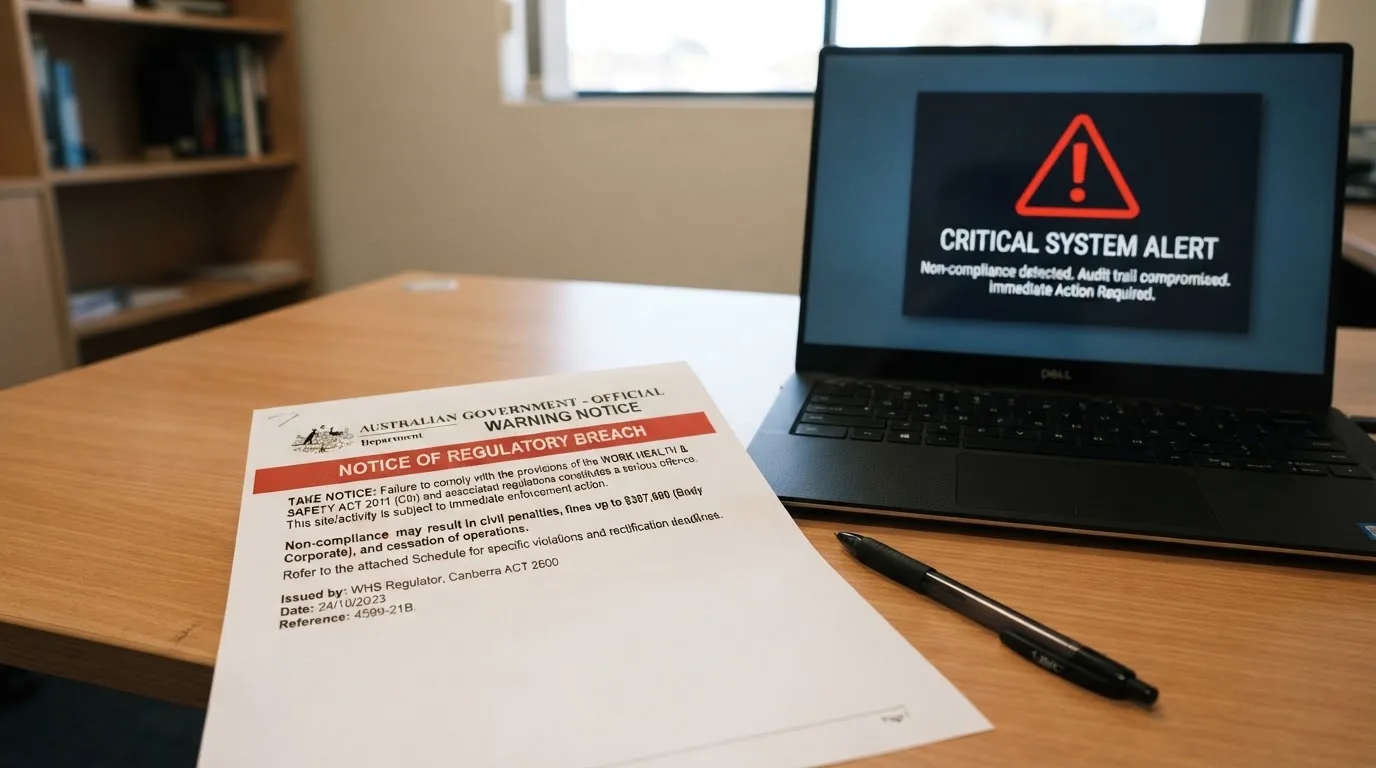
A site offering an Australian player a withdrawal, fast or otherwise, is operating outside that frame. The licence it displays at the footer — Curaçao, Anjouan, Costa Rica — is a commercial licence issued by a foreign regulator that does not cover Australian residents as customers. It is not a work of fiction, exactly; it is a piece of paperwork addressed to a different jurisdiction. The Australian player who reads it as protection is reading the wrong document.
This is the part of the page that seasoned Australian readers will already know, and it is also the part they want the page to dance around so the operator list below can keep its shape. The page does not dance. The operator list below is not a recommendation and not a comparison of who pays fastest — it is the list of brands the ACMA has formally warned under the Interactive Gambling Act, written down so a reader can recognise the names that get advertised to them in any order and see what the regulator has already said about each.
Where the speed claim actually comes from
A withdrawal advertised as fast typically skips extra manual review only once the operator has already confirmed identity checks are on file. The first cashout is the slow one — every operator runs the same paperwork on it, even the ones whose homepage shows a fifteen-minute timer. After that, the file is “warm” and the operator’s queue lets a subsequent request through without rechecking, which is the moment the advertised time starts to match reality.
A few mechanics worth naming, because the marketing language about them is misleading:
- Instant vs manual approval. “Instant withdrawal” describes the operator’s internal ledger entry — the moment the request leaves the pending queue. It says nothing about how soon the money is spendable.
- E-wallets and crypto. E-wallets and crypto usually receive the operator’s instant-release decision faster than a bank account does, because there is no intermediary bank on the receiving side applying its own screening. The operator’s approval time is the same.
- Bonus-gated withdrawals. Almost every deposit bonus ties the cashout to a wagering requirement, and most operators withhold withdrawals until that requirement is cleared. A “fast withdrawal” advertised on the same page as a deposit bonus is talking about the cashout that happens after the bonus clears, not before.
- Limits and per-request caps. A site offering “instant withdrawals” usually attaches that offer to a maximum amount — the fast lane is for small wins, and a large cashout goes back to manual review by policy.
- Cooling-off and verification windows. Some operators insert a mandatory delay on first withdrawals regardless of the documents already on file, on the grounds that the deposit needs another day to settle. It is a deliberate friction, not a processing limitation.
The combined effect: the figure on the homepage describes a flow that has been stripped of everything that would slow it down. In practice, a player meets those friction points at the worst possible moment — when the withdrawal is large, recent, or tied to a bonus that has not been cleared.
What “no verification” actually changes
The phrase “fast withdrawal no verification casino” is doing two jobs at once. It is selling the speed, and it is selling the absence of a check. Neither part survives contact with the operator’s own process.
A site that lets a player deposit and play without identity documents will still run the checks at withdrawal time — the moment the operator has money it might send out, it wants to know whose account the money came from, where it came from, and whether the player is on any list it cannot pay. Skipping verification at deposit and running it at withdrawal is the standard pattern, and the player who thought they had skipped it discovers otherwise on the first request. The speed promise survives only in the sense that the documents were sent once, early, and the queue no longer has to fetch them.
The crypto-only version of the same claim — that a Bitcoin payout needs no review — runs into a second limit. The network is faster than a bank, but the operator’s own risk and compliance team applies to Bitcoin withdrawals the same AML logic it applies to everything else, and that logic has its own queue. A player who sees a “no KYC” promise and treats it as “no queue” has misread the page.
The honest read: a small crypto withdrawal at a casino that has already verified the account and has no active bonus requirement is the closest thing to instant the offshore market reliably delivers. Everything else is a slower version of the same thing.
What the ACMA has actually done
The Australian Communications and Media Authority is the regulator named in the Interactive Gambling Act. It investigates complaints, issues formal warnings to operators, and asks Australian internet service providers to block illegal sites at the DNS level. By the ACMA’s own reporting, 1,751 illegal gambling and affiliate marketing websites had been blocked since the first blocking request in November 2019, and more than 230 unlicensed gambling services had left the Australian market since enforcement was strengthened in 2017. The pace of that blocking has been uneven, and the cumulative figure has been built across six and a half years rather than concentrated in any one round. Across that span, the regulator is averaging roughly 265 blocks a year — a number that would have been almost unbelievable in 2019, when the first batch was a much smaller and slower affair.
The latest round, reported on 26 June 2026, asked Australian ISPs to block another twelve sites in one batch: 7Signs, ChromaBet, Donbet, Duospin, Freshbet, Slots Gem, Jacks Club, Lucky Start, Pointsbetz, Spinrise, Vinyl Casino and Wildsino. Twelve at a time, against a backlog that keeps producing new entries. The blocking round itself is a useful piece of context for any list of “fast withdrawal” brands an Australian player is being marketed to — a name on a casino comparison page in mid-2026 is, statistically, a name the regulator is also looking at.
The formal-warning process is a separate track from blocking. A formal warning is a written record the ACMA publishes, naming the operator behind the brand and the specific section of the Interactive Gambling Act it considers breached. A warning is not a fine and is not a prosecution; it is the regulator saying, in writing, that it has reached a view on the operator’s conduct. A repeat warning to the same operator is, in practice, the regulator saying the first one did not change the conduct.
A handful of operator names appear more than once in that register, and the pattern is worth naming. Dama N.V. was warned in May 2022 across six casino brands (Bambet, Dazard, Level Up, Rocketplay, Wild Tornado and Cobra Casinos), then warned again in March 2025 over Woo Casino and in May 2025 over Spirit Casino. Consolutetish S.R.L. was warned in July 2025 over National Casino and Bizzo Casino; Bizzo had already been the subject of a 2022 formal warning to TechSolutions (CY) Group Limited and TechSolutions Group N.V. — the same brand, a different operating company, the same regulator’s view. Reading those entries together is what the regulator’s register is for.
The brand-by-brand list below is drawn from that register, and the criteria for being on it are the formal warning, not the payout speed. The page does not rank them by withdrawal time. No Australian-facing site in this list, fast or slow, is a lawful place for an Australian resident to play.
The brands the ACMA has named — and what each warning covered
The table below is not a comparison. It is the ACMA’s formal-warning register, transposed into a format a reader can scan. The “ACMA action” column is the warning the regulator itself has published, the “operator named” column is the legal entity the regulator named when it issued that warning, and the last column lists the independent listings and registers where the brand appears (a banking blocklist, a payment-method directory, an industry trade index). Where research carries no such listing, the cell is left blank.
| Brand | ACMA action and date | Operator named by the ACMA | Subject support |
|---|---|---|---|
| RocketPlay | Formal warning, March 2026 (current operator Pulsup Ltd); earlier Dama N.V. warning, May 2022 | Pulsup Ltd; earlier Dama N.V. | Gambling Insider lists the brand |
| Level Up Casino | Formal warning, May 2022 | Dama N.V. | Westpac’s gambling-block merchant list mentions the brand |
| Woo Casino | Formal warning, March 2025 | Dama N.V. | — |
| Spirit Casino | Formal warning, May 2025 | Dama N.V. | — |
| National Casino | Formal warning, July 2025 | Consolutetish S.R.L. | Listed by the ACMA, AUSTRAC register entries, BetStop |
| Bizzo Casino | Formal warning, July 2025 (current operator Consolutetish S.R.L.); earlier TechSolutions warning, 2022 | Consolutetish S.R.L.; earlier TechSolutions (CY) Group Limited and TechSolutions Group N.V. | Gambling Insider lists the brand |
| Ignition Casino | Formal warning, July 2025 | Bamboo Media | — |
| Instant Casino | Formal warning, February 2025 | EOD Code SRL | EcoPayz directory, PayID merchant directory |
| Jackbit | Formal warning, April 2026 | Ryker B.V. | — |
| Casino Intense | Formal warning, April 2025 | Sterplay Holding Ltd | AUSTRAC register entries, BetStop, Gambling Insider |
| Sky Crown | Formal warning, September 2022 | Hollycorn N.V. | — |
Eleven named brands, four operators behind them, and a regulator that has come back to the same operators more than once across the four years the register has been public. A reader looking at any of these on a comparison page in 2026 is looking at a brand whose own regulator has formally warned it about offering the product the page is offering to compare. The fast-withdrawal claim, where it appears in their marketing, is layered on top of a product the Australian regulator has already assessed.
The entries on the list that carry a second listing — the ACMA’s own affiliate-marketing page, AUSTRAC’s industry register, BetStop, the gambling-block merchant lists — are not endorsements. They are evidence that the brand is being treated, by Australian systems other than the ACMA, as an entity that needs to be tracked. The pages with no such listing are simply the ones the listing organisations have not yet got round to adding.
What the speed picture looks like for these brands
None of the brands in the ACMA register publishes, in a verifiable form, the median time from withdrawal request to funds received. They publish intervals — “up to 24 hours”, “instant after approval”, “1–3 business days” — that no third party audits. Affiliate comparison pages that report numbers on their behalf are quoting the brand’s own marketing, not an independent measurement.
What the published figures share is the pattern. A first withdrawal takes 24 to 72 hours while the operator’s review queue runs for the first time on this account; a subsequent withdrawal, with the verification file already on record and no bonus outstanding, is reported in minutes for crypto and same-day for e-wallets. Card withdrawals are the slowest of the three because the receiving bank and the issuing network add their own screening on top of the operator’s release.
Across the eleven brands, the published intervals do not differ enough to matter in a comparison — they all sit inside the same envelope. What differs, between this brand and the next one on the list, is the operator behind it and the regulator’s view of that operator. Dama N.V., which sits behind four of the eleven, has been told by the ACMA to stop what it is doing more than once. Hollycorn N.V., behind Sky Crown, was warned in 2022 and the formal-warning page is still the public record. A player who treats those distinctions as fine print is missing the only piece of information on the page that is not the operator’s own.
How payment methods shape the wait
The rail the player chooses for cashout determines the second stage of the speed picture. The first stage — the operator’s own review — is exactly the same. Any difference the player notices between methods is on the rail side, not the operator side.
Crypto is the fastest rail for an approved withdrawal, in the sense that a Bitcoin transfer settles after a small number of network confirmations and on a quiet network that is minutes rather than hours. The catch is that “quiet” is not a fixed property of the network — congestion slows confirmation for everyone, including this player. The operator does not control the network and will not compensate for its delay.
E-wallets are second-fastest on the receiving side, because there is no intermediary bank applying its own screening. Skrill and Neteller withdrawals are typically credited the moment the operator releases the funds; the player still sees an “operator processing” delay before that moment, and the e-wallet does not shorten it.
Card withdrawals are slower, because the receiving bank and the card network each run their own screening on the incoming credit. A Visa or Mastercard cashback to an Australian debit card usually clears within one to three business days once the operator has released it. Amex sits outside the proposed Reserve Bank surcharge ban and outside the speed comparison in any practical sense — it is rare at offshore casinos in the first place.
PayID and Osko, which make Australian bank transfers settle in under a minute, are not generally offered as a withdrawal method by the brands on this list. They are the rails an Australian would use to deposit to a licensed wagering service, where the credit-card ban and the prohibition on unlicensed casino play do not apply.
What an Australian player can actually do with a payout request
The player who has decided to play on one of these sites anyway — and the page is not in the business of pretending that decision is hypothetical — faces a payout process that looks like this in practice.
The first withdrawal triggers the operator’s full review. Identity documents are requested, usually via the account dashboard, and the review team cross-checks them against the deposit trail. Source-of-funds questions come at this stage for larger amounts or for deposits that did not match the registered name. The whole process is asynchronous — the player uploads a document, the reviewer looks at it during business hours, the reviewer asks for a second document, and so on. In a benign case this takes 48 to 72 hours. In a less benign one it takes a week and a second round of questions.
The second and subsequent withdrawals are faster, because the verification file is already on the operator’s side. The operator’s queue releases the request, often within minutes, and the rail takes over. Crypto and e-wallet players see the funds arrive the same day. Card and bank-transfer players wait one to three business days for the receiving bank.
The point at which the process breaks down is the moment something has changed since the last successful withdrawal. A new payment method added to the account, a bonus claimed and not yet cleared, a deposit made from a different bank account than the one on file, a withdrawal amount larger than the per-request cap — each of these resets part of the review and slows the request. The marketing language about “instant withdrawals” does not survive any of them.
Where the responsibility for the speed claim sits
The honest read of an advertised payout time is that it is a marketing figure tied to a single, narrow happy path: verification on file, no bonus outstanding, no recent change to the account, withdrawal below the per-request cap, on a rail that does its part. The publisher of the figure is the operator, the operator’s incentive is to make the figure look as generous as possible, and the player’s incentive is to take it literally. The asymmetry is the design.
The independent evidence that any of these figures holds up under anything other than the happy path is thin. Affiliate comparison pages report the same numbers the operators publish; player forums report the long-tail cases where the numbers did not hold, but they are anecdotes and the operators are not bound by them. The brand a player is considering does not have an audit report the player can read, and the licence it displays at the footer is not the licence the player is operating under as an Australian resident.
The offshore option has no Australian consumer protection
A player who is paid late by an Australian-licensed wagering service has a complaint body to go to. The Northern Territory Racing and Wagering Commission, the state regulators and the industry’s own ADR schemes all sit on the Australian side of the transaction. A player who is paid late by one of the brands on the ACMA’s warning list has none of that. The licence is foreign, the operator’s own terms give it wide discretion on withdrawal review, and the Australian courts are a slow and expensive route to a remedy in a foreign currency.
BetStop, the National Self-Exclusion Register that has been live since August 2023, binds only Australian-licensed online and phone wagering services. An offshore casino is not connected to it, and a player who has self-excluded through BetStop and then deposits at one of the offshore brands is gambling on the offshore brand’s own self-exclusion system, which is the offshore brand’s own choice to honour. The National Gambling Helpline on 1800 858 858 is free, 24/7, with chat at Gambling Help Online, and is the right call regardless of which platform the issue is on.
A note on the credit-card ban and the digital-wallet question
Australian-licensed online wagering services cannot accept payment by credit card or by credit-related products, a rule that has been in force since 11 June 2024 and carries penalties of up to $247,500 for operators who breach it. The rule constrains digital wallets linked to a credit account as well — Apple Pay or Google Pay funded from a credit card inherit the restriction. The licensed Australian bookmakers work around it by accepting debit cards, bank transfers, PayID, Osko and BPAY. The brands on this page, none of which is licensed in Australia, do not work around it because the rule does not apply to them.
For an Australian funding one of these offshore sites, the practical consequence is the opposite. A debit-card deposit will succeed because the issuer’s gambling block, where it is switched on, runs at the merchant category code level — Westpac’s gambling block refuses authorisation of transactions registered under the merchant category code for “Betting/Casino Gambling”, ANZ’s gambling block extends to a digital wallet such as Apple Pay on an eligible card and Commonwealth Bank’s gambling lock works the same way through the CommBank app. A credit card, including a credit-funded wallet, will succeed in the same way because the offshore site is not subject to the Australian ban and the card-issuer’s own gambling block is the only thing in the way. The two rule sets are about different actors, and the offshore site sits on the side that has fewer of them.
Why this list will keep getting longer
The twelve sites blocked in the June 2026 round are the latest batch in a programme that has been running for more than six years. The pace of new blocks tracks the pace at which new brands enter the market, which is the pace at which an offshore operator can register a new domain, lease a Curaçao sub-licence, and start advertising to Australian email addresses. A list of “fast withdrawal” sites in mid-2026 is a snapshot of a moving population; a list of brands the ACMA has acted against is a snapshot of a moving population with a different lead time.
The 2026 reform package — the Interactive Gambling Amendment (Gambling Reform) Bill 2026, which passed Parliament on 19 August 2026 — adds advertising and inducement measures that commence on 1 January 2027. It is law with a start date, not law in force on this page’s data. The blocking round that closed in June 2026 was conducted under the regime as it stood at the time of the round, and the next batch will be too, until the new year.
Tax, winnings and the Australian position
Gambling winnings of a recreational Australian player are not assessable income, and losses are not deductible. The position rests on section 6-5 of the Income Tax Assessment Act 1997 and on the ATO’s longstanding view that gambling is not a carrying-on of a business for the vast majority of players. A player who bets professionally, files business activity statements and treats gambling as a trade is in a different position, and the ATO’s guidance on that is the right place to look first.
The offshore site does not change that. A payout received from a Curaçao-licensed brand in Bitcoin is still, for an Australian resident whose gambling is recreational, not assessable income and not a deduction source. The conversion to Australian dollars at the point of receipt is what the ATO calls the taxable-event point — for a recreational player, it is also the point at which nothing further is owed.
A practical reading of the eleven brands on the register
A player reading the table above is reading eleven warnings, four operators behind them, and a regulator that has come back to the same operators more than once. The honest summary, brand by brand, comes down to the ACMA’s view in each case — what the regulator said it was doing, and what the regulator’s record says about whether that view stopped.
RocketPlay is the brand with the most recent formal warning on the list — March 2026, naming Pulsup Ltd as the current operator. An earlier Dama N.V. warning from May 2022 covered Rocketplay alongside five other brands, which means the brand has been on the regulator’s record across two operating companies and four years. The withdrawal-speed story on its marketing pages is no different in shape from the others; the regulatory story is the longest on the list.
Level Up Casino sits in the May 2022 Dama N.V. batch, named alongside Bambet, Dazard, Rocketplay, Wild Tornado and Cobra Casinos. The brand’s own marketing surface has not been the subject of a separate formal warning; what the regulator named in 2022 was the operator, and the operator ran six brands in the same letter.
Woo Casino was added to the Dama N.V. warning list in March 2025, almost three years after the first batch. The regulator’s return to the same operator in 2025 is the only data point that matters beyond the warning itself.
Spirit Casino sits alongside Woo Casino as the second Dama N.V. warning in 2025, dated May 2025. The pairing tells a reader that the ACMA’s view of Dama N.V. has not changed in three years.
National Casino and Bizzo Casino were both named in the same July 2025 warning to Consolutetish S.R.L. Bizzo had already been the subject of an earlier 2022 warning to TechSolutions — the same brand, a different operating company, the same regulator’s view. National Casino has one entry; Bizzo has two entries against two operators, which is the cleaner signal on the list that the brand has outlasted a regulator warning.
Ignition Casino sits with the July 2025 warning to Bamboo Media. It is the only brand on the register attributed to Bamboo Media, which limits what can be inferred about the operator beyond this one warning.
Instant Casino was named in a February 2025 warning to EOD Code SRL, and the brand is one of the more heavily marketed “fast withdrawal, no verification” names in the offshore space. The February 2025 warning is the regulator’s view of that marketing.
Jackbit sits with the April 2026 warning to Ryker B.V., the second-most-recent warning on the list after RocketPlay. A single warning, no prior record on this register.
Casino Intense was named in the April 2025 warning to Sterplay Holding Ltd and appears in the AUSTRAC industry register and on BetStop, which are independent listings rather than regulator actions.
Sky Crown is the oldest entry on the table — the September 2022 warning to Hollycorn N.V., which also covered Blue Leo. Three years and counting since the formal warning, no second warning on the register.
Where the speed story ends
An advertised payout time is a marketing number, and an Australian-facing casino is, by the regulator’s own view, an unlawful place for the Australian resident to play. Those two facts sit on top of each other on this page, and they do not cancel each other out. A player who takes the fast-withdrawal claim at face value is making a bet on an operator that has chosen to operate outside the regime that gives an Australian player any recourse when the bet goes wrong. The speed figure is, in that sense, the wrong question. The right question is what recourse the player has when the speed does not hold, and the answer for every brand on this list is: less than the marketing implies.
Frequently asked questions
What typically makes one casino’s withdrawal process faster than another’s?
The operator’s internal review queue. Every advertised payout time describes the moment the operator releases the request — identity checks already on file, no bonus to clear, no recent change to the account, withdrawal below the per-request cap. The receiving rail does its part after that, with crypto and e-wallets faster than cards, but the operator’s queue is where the time actually goes. Miss one of those conditions and the figure on the homepage stops being the figure the player will see.
Does a crypto casino process a fast withdrawal without any manual review at all?
No. The crypto rail is faster than a card on the receiving side because there is no intermediary bank applying its own screening, and the network settles after a small number of confirmations. The operator’s own risk and compliance review still runs on every withdrawal, regardless of the rail, and that review has its own queue. A Bitcoin payout at a casino that has already verified the account and has no active bonus is the closest thing to instant the offshore market reliably delivers; everything else is a slower version of the same thing.
Is there a maximum withdrawal amount that still qualifies for fast processing?
Most operators that advertise instant withdrawals attach the offer to a per-request cap. Above that cap, the request goes back to manual review regardless of how clean the account file is, and the advertised time no longer applies. The cap is usually published in the cashier or in the bonus terms, and it is the figure that determines whether a particular cashout gets the fast lane or the slow one.
Why might a withdrawal that is usually fast suddenly take longer?
Something has changed on the account since the last successful cashout. A new payment method added, a bonus claimed and not yet cleared, a deposit made from a different bank account than the one on file, a withdrawal amount larger than the per-request cap — each of these resets part of the review and slows the request. The marketing language about instant withdrawals assumes none of those conditions is true, and the player usually meets them at the worst possible moment. See also Payout Percentage and the Australian Casino Market in 2026 .
Do identity checks completed earlier speed up a later withdrawal request?
Yes, decisively. The first withdrawal is the slow one because the operator runs the full review for the first time on this account — documents cross-checked against the deposit trail, source-of-funds questions for larger amounts. The second and subsequent withdrawals, with the verification file already on the operator’s side, are faster because the operator’s queue no longer has to fetch and re-check the documents. The advertised time starts to match reality from the second request onwards, not the first.