
What Booming Games-powered online casino play in Australia actually looks like in 2026
There is a strange shape to a search for “Booming Games casinos Australia” in 2026. The first page looks busy — brand names, bonus percentages, deposit buttons, reviews. The whole frame sits on top of a single, often unspoken premise: that somewhere inside that page of results, an Australian punter will find a casino licensed to take their money and pay it back. That premise is wrong. The Interactive Gambling Act 2001 prohibits the supply of online casino games and online pokies to anyone in Australia, and no state or territory issues a licence for them. The brands that headline this search sit on that prohibition — that is the entire shape of the market, and the page below is built around it.
A reader who only wants a place to play tonight will find nothing useful here, because there is no legal place. A reader who wants to understand what Booming Games actually is as a studio, why their names keep surfacing in casino marketing aimed at Australians, what the Australian Communications and Media Authority has done about it, and how to think clearly about the offers that do appear — that reader is in the right place.
Current as of 29 October 2026 against the ACMA’s published list of formal warnings and blocking actions.
Table of Contents
- The shape of the market
- What the law says, and what it costs the player
- How offshore casinos try to bank Australian players
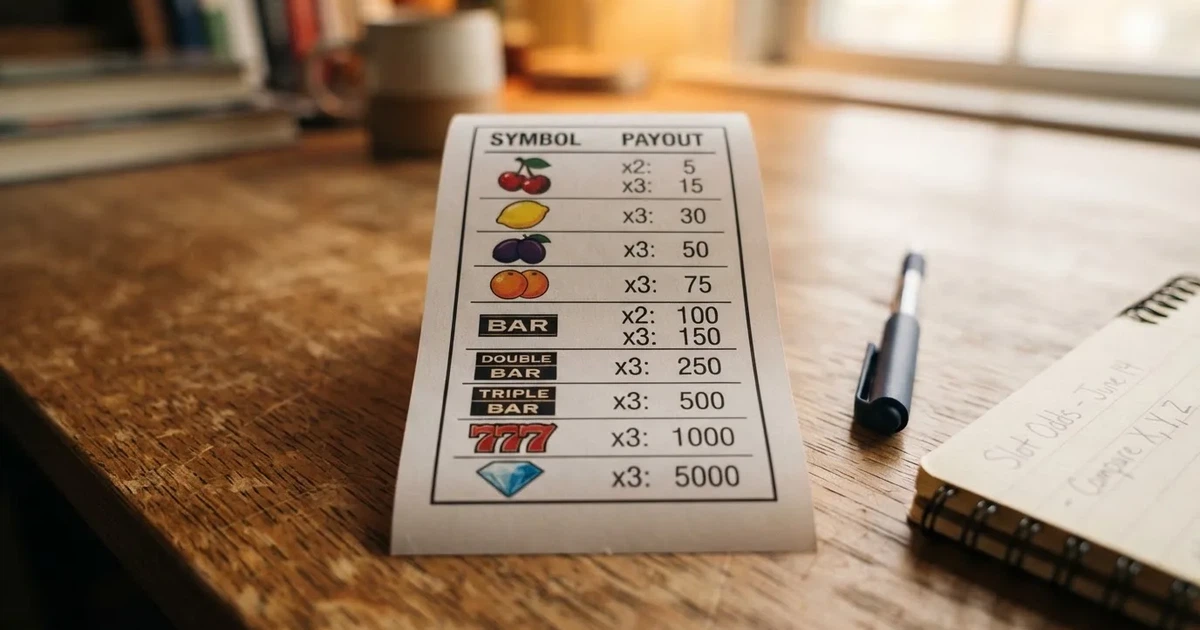
- Reading a Booming Games paytable
- The blocked-and-warned landscape
- Comparing the offer side
- The offer, the cost, and the calculation
- How a reader navigates this market
- Frequently asked questions
The shape of the market
Why this search returns anything at all
Online casino play for real money is prohibited for Australian customers, yet the search engines keep serving up casinos carrying Booming Games content. The reason is jurisdictional: a site licensed in Curaçao or Malta can technically accept Australian traffic; the law that stops that traffic is Australian, and the operator is not within easy reach of it. The Australian Communications and Media Authority’s response has been enforcement rather than prosecution of the player. The authority has issued formal warnings against individual operators and asked Australian internet service providers to block their domains. The catalogue of those actions is, in effect, the working list of brands an Australian player would otherwise encounter.

According to the ACMA as reported in June 2026, a total of 1,751 illegal gambling and affiliate marketing websites have been blocked since the first blocking request in November 2019, and more than 230 unlicensed gambling services have left the Australian market since enforcement was strengthened in 2017. That is the scale of the issue: enforcement works in volume, slowly, brand by brand and domain by domain.
A useful way to read the number is as a blocking rate over the period it covers. Between November 2019 and June 2026, the ACMA moved from one blocking request to 1,751 — roughly 200 to 270 sites a year depending on which months are counted. The rate itself is less interesting than the fact that the curve never flattens: each round is published as a list, the next one is a fresh list, and the operators whose domains fall off keep coming back under new names.
The H2 Gambling Capital 2025 estimate puts Australian losses to illegal gambling sites at about A$3.9 billion a year.
| Channel | 2021 Share | 2025 Share |
|---|---|---|
| Legal | 74% | 64% |
The same report notes that the share of gambling going through legal channels fell from 74% in 2021 to 64%. Legal channels grew; illegal channels grew faster. Booming Games sits firmly inside that faster-growing channel.
What Booming Games actually is
Booming Games (Malta) Limited is a slot studio headquartered in Malta. It is not an operator, runs no casino, takes no deposits. It supplies games to operators under a B2B licence. The studio’s own About page describes it as founded “nearly a decade ago” by a group of friends aiming to become one of the finest slot providers in the iGaming industry, without naming an exact founding year. It releases four new games per month, and the company lists maximum-win figures of 5,000× stake on Tasty Rush Sweet Spots and Regal Coins Hold and Win, and 6,000× stake on Henhouse Hustle: Hold and Win.
The licences the studio itself holds tell the story of who it is allowed to sell to. Booming Games holds a Malta Gaming Authority B2B licence (MGA/B2B/459/2018), a UK Gambling Commission account (account #57254), and approvals from Sweden’s Spelinspektionen, Ontario’s AGCO, and regulators in Romania, Denmark, Greece, Belgium, Germany and Brazil. None of those jurisdictions is Australia. None of those approvals authorises the supply of online casino games to Australians. The studio is well-regulated for the markets it serves; it has no Australian counterpart.
The honest reading is that Booming Games is one of many studios whose games appear on offshore sites that accept Australian traffic. The studio does not need to do anything wrong for an Australian-facing casino to do something illegal — the breach sits with the operator, not the supplier. That distinction matters for any reader trying to think clearly about which side of a transaction is responsible.
Other studios in the same stream
Booming Games is not alone in this position. Several studios supply content to the same offshore operators that turn up in Australian-facing marketing, and their profiles sharpen the picture.
Aristocrat Leisure Limited is the obvious Australian reference point: an Australian gambling-machine manufacturer with its administrative and research headquarters in North Ryde, listed on the ASX in 1996 under the ticker ALL. The 2025 numbers are A$6.30 billion in revenue, A$1.55 billion in normalised net profit after tax and amortisation, and 7,400 employees. Aristocrat is described as the largest gambling-machine manufacturer in Australia and the second-largest slot-machine manufacturer worldwide, behind International Game Technology. Its regulated online real-money arm, Aristocrat Interactive, was formed in April 2024 from the Anaxi unit combined with the NeoGames acquisition (roughly US$1 billion) and its subsidiaries Aspire Global, BtoBet and Pariplay. The point worth keeping: Aristocrat’s online play sits inside licensed overseas jurisdictions; the company does not run a real-money online casino for Australians either.
1spin4win is a smaller and more recent slot provider, founded in 2021 by a group of iGaming professionals, headquartered at Scharlooweg 39 in Willemstad, Curaçao, and licensed there. Its portfolio spans more than 190 online slots, and the company reports more than 1,000 partnerships with online casinos and aggregators. Total bet sum grew 46% in the first half of 2025 against the first half of 2024. None of that licensing or growth includes an Australian real-money channel.
Betsoft was founded in 2006 and runs a catalogue of more than 200 RNG games spanning slots, table games, video poker and specialty titles. It lists RNG certification from Quinel and Gaming Labs International and operating compliance with Italy’s ADM, plus more than 500 operator partnerships across regulated markets in Europe, Scandinavia, Latin America and Africa. As with the others, the licensing footprint does not extend to Australia.
These profiles say the same thing in slightly different ways: technically sophisticated, properly licensed for the markets they serve, and not licensed for Australian real-money play.
What the law says, and what it costs the player
The Interactive Gambling Act 2001 in plain English
The Interactive Gambling Act 2001, strengthened by the Interactive Gambling Amendment Act 2017, makes it an offence to provide online casino games, online pokies or in-play betting to a person in Australia. No state or territory issues a licence for those services. What is licensable is wagering on races and sport placed before the event, lotteries and keno. In practice, online bookmakers — Sportsbet, Bet365, Ladbrokes are the well-known names — are licensed in the Northern Territory. The Northern Territory Racing and Wagering Commission regulates 52 of those online bookmakers; the commission has no full-time staff and meets once a month in Darwin. The arrangement works for sports betting because the territory’s tax regime suits the operators; it does not produce casino licences, because no Australian jurisdiction will issue one.
Minimum age for gambling in Australia is 18. Gambling winnings of a recreational player are not assessable income, and losses are not deductible, unless the person carries on a business of gambling. The Australian Taxation Office treats the casual punter’s result as a private windfall or a private loss; the basic rule is in section 6-5 of the Income Tax Assessment Act 1997.
What the ACMA does about it
The ACMA investigates, issues formal warnings, and directs Australian internet service providers to block illegal sites. The pattern of action is consistent: a formal warning to the company behind a brand, then a blocking request to ISPs if the service stays accessible to Australians. In a single round reported on 26 June 2026, twelve more illegal gambling websites were referred for blocking: 7Signs, ChromaBet, Donbet, Duospin, Freshbet, Slots Gem, Jacks Club, Lucky Start, Pointsbetz, Spinrise, Vinyl Casino and Wildsino. The list is read end-to-end and not weighed; what matters is the cumulative total of 1,751 since November 2019.
The formal-warning side of the ledger is what a reader trying to assess an offshore brand will actually meet. Some warnings are recent and still active; some cover brands that have since closed, been sold or resurfaced under a different company. A warning is not a charge sheet — it is a notice that further action will follow if the service does not stop serving Australians. It is the most reliable signal the ACMA publishes about an offshore brand.
The 2026 reform, the Interactive Gambling Amendment (Gambling Reform) Bill 2026, passed Parliament on 19 August 2026. Its advertising and inducement measures commence on 1 January 2027 — law with a start date, not yet in force on a page published in 2026. The practical effect on a reader using the page today is small, but the direction is clear: inducements aimed at Australians are tightening.
The cost of offshore play to the person paying it
The legal regime targets the provider, not the player. An Australian who opens an account at an offshore casino carrying Booming Games titles is unlikely to be prosecuted. What the player gives up is the entire consumer-protection layer that a licensed wagering service in Australia is required to provide.
There is no Australian complaints body to approach if a withdrawal is refused. There is no Australian regulator to call. If the site disappears — and a blocked domain sometimes leaves balances behind — there is no place to file a claim. The credit-card ban and the crypto ban that apply to Australian-licensed online wagering from 11 June 2024 do not stop an offshore casino from accepting either; they just remove the operator’s lawful exit from the Australian payments system. The fact that an offshore site asks for a credit card or a crypto deposit is itself the marker that the site is not operating within Australian rules. The penalty for the operator under those rules is up to A$247,500 per breach; the cost to the player is whatever is on the balance when the site stops paying out.
How offshore casinos try to bank Australian players
The payment page as a tell
Payment pages at offshore casinos are designed to look ordinary. The clue is in what they accept. Australian-licensed wagering is prohibited from taking credit cards, credit-related products and digital currency as payment; the legal deposit routes are debit card, bank transfer, PayID/Osko and BPAY. A payment page offering only crypto, or front-loading a credit-card option, is signalling that the operator does not sit inside the Australian framework.
Booming Games-powered play is, on the payment side, purely informational in Australia: there is no licensed local product to bank into or out of. Any number an offshore operator publishes about deposit times, payout speeds, withdrawal limits or bonus cash-out conditions has been generated for a global customer base, with an Australian-facing page wrapped around it. The numbers are real for somebody; they are not specifically verified for an Australian player at an Australian address, because no Australian regulator is asking the operator to verify them.
What bonus terms look like from the outside
A bonus at an offshore casino is, on paper, the same kind of offer a reader would find at any international online casino: a match on the first deposit, free spins on a featured slot, sometimes a no-deposit offer to start the account. The terms attached are where the offer starts to cost what it appears to be worth.
A wagering requirement — a multiple of the bonus that has to be turned over before any winnings can be withdrawn — is standard. A cashout cap on winnings from a no-deposit bonus is standard. A list of excluded games, time limits on the bonus, and maximum stake limits during wagering are all standard. None of these terms is unusual in the global offshore market. What is unusual is that an Australian player cannot read those terms against an Australian complaints process if the operator refuses to pay. The same offer is more expensive to the same reader once the consumer-protection layer is removed, because the reader has paid the bonus’s real cost without retaining any of the upside of regulation.
The calculation the page is built around — what the offer costs in real time and real money — sits in the section below. The point of stating it here is that a bonus is not a discount; it is a trade, and the trade is between the operator and the player under rules the operator writes.
Mobile access, and what an “app” actually is
For Booming Games-powered play, the mobile experience is, again, purely background: there is no licensed Australian product to install, no app store listing for it, and no Australian-licence badge that an app could carry. An offshore casino offering a “mobile app” is usually one of three things: a downloadable APK file from the operator’s own site, an HTML5 mobile site reached through the phone’s browser, or an iOS / Android app from a third-country store. None of those is regulated by an Australian authority. None of them carries Australian consumer protection. The convenience of a mobile install does not change the underlying regulatory situation.
Booming Games’ own catalogue is HTML5, which means the games themselves run in a phone’s browser without an app. The “app” side of the marketing belongs to the operator, not the studio.
Reading a Booming Games paytable
What a paytable generally shows
For Booming Games-powered play, a paytable is a reference card built into each title. It sets out the symbol values, the win lines, the special-symbol behaviour and the feature triggers. The mechanics do not change based on where the game is hosted: a paytable published in the studio’s own marketing describes the same game an offshore casino would offer.
A standard 5-reel slot’s paytable lists each symbol and its payout for three, four and five of a kind on a payline. Wilds substitute for other symbols. Scatters typically pay anywhere on the reels and often trigger a free-spins round when enough of them land at once. Bonus symbols open the named feature round — a Hold and Win mechanic, a wheel bonus, a pick-em game, depending on the title. The maximum-win figure on the studio’s marketing is the cap the title is designed around; it is not a payout expectation.
A useful comparison is with another studio’s published numbers. Betsoft’s Good Girl Bad Girl 2, for instance, has a published RTP of 96.22%, “Very High” volatility and a 15.59% hit rate, played on 5 reels and 20 paylines. Betsoft’s The Slotfather, live since 13 December 2012, has a published RTP of 95.69%, “Medium” volatility and an 8.17% hit rate, played on 5 reels and 30 paylines. Booming Games does not publish the same figures on every title; what is generally true across the genre is that the RTP, volatility class, hit rate and maximum win are the four numbers to look for when comparing two slots from different studios.
The detail worth holding onto: the paytable is where the game lives. The marketing around it is decoration. A reader who has not looked at the paytable has not read the game.
What “no-data” means on a particular title
Where a specific RTP or volatility figure is missing from research, the page does not invent it. Most Booming Games titles sit in that gap: the studio publishes maximum-win figures for some titles and does not publish a full RTP/volatility profile on every release. A reader who wants the figure for a specific game should look at the studio’s own game page or the operator’s information panel for that title. Where neither side publishes the number, the number is genuinely not in the public record, and “no data” is the right answer rather than a guessed one.
The blocked-and-warned landscape
The table of brands
The brands the ACMA has warned or blocked are the brands an Australian player would actually meet in this search. The list is not a recommendation and not a ranking; it is what the regulator itself has published as the working set of prohibited operators.
| Brand | ACMA action and date | Operator named by the ACMA | Studio support in listings |
|---|---|---|---|
| RocketPlay | Formal warning, March 2026; earlier warning to Dama N.V., May 2022 | Pulsup Ltd (Rocketplay) | — |
| Level Up Casino | Formal warning, May 2022 | Dama N.V. | Listed as a Wazdan partner in Wazdan’s own listings |
| Woo Casino | Formal warning, March 2025 | Dama N.V. | — |
| Spirit Casino | Formal warning, May 2025 | Dama N.V. | — |
| National Casino | Formal warning, July 2025 | Consolutetish S.R.L. | Listed as a Betsoft and Pragmatic Play partner in those studios’ listings |
| Bizzo Casino | Formal warning, July 2025; earlier warning to TechSolutions, 2022 | Consolutetish S.R.L. | — |
| Ignition Casino | Formal warning, July 2025 | Bamboo Media | — |
| Instant Casino | Formal warning, February 2025 | EOD Code SRL | — |
| Jackbit | Formal warning, April 2026 | Ryker B.V. | — |
| Casino Intense | Formal warning, April 2025 | Sterplay Holding Ltd | Listed as a 1spin4win partner in that studio’s listings |
| Sky Crown | Formal warning (Hollycorn N.V., date as published) | Hollycorn N.V. | — |
The same name appearing twice on this list is not a duplication. Some brands have been warned more than once, often because they changed hands — Dama N.V. held RocketPlay until 2022 and the licence moved; TechSolutions held Bizzo until 2022 and it moved; the pattern is consistent across the offshore market, where brand shells change operators and the licence change is what triggers the second warning.
What the absence of a brand means
Brands not on this list are not, by that fact alone, licensed in Australia. The list reflects ACMA action, not ACMA endorsement. A clean name on the ACMA register simply means no enforcement step has been published yet against that operator, for the activities covered by the IGA. It does not mean the operator has any right to take an Australian deposit; under the IGA, no operator does. A reader who treats the ACMA list as a whitelist will draw the wrong conclusion.
A useful parallel: an offshore casino can hold a Curaçao licence, a Malta Gaming Authority B2B licence, a Kahnawake licence, or any combination of the three — none of which authorises service to Australians. The licence a site displays is the licence for its home jurisdiction. It says nothing about the legal position of an Australian customer.
How to read the table beside the prose
The table above names the brands and the operators behind them; the prose beside it is the consumer side of the same data. A brand being on the table is a regulatory fact, not a verdict on whether the brand is honest. Some warned operators pay out without drama and move on; some are uncontactable after a withdrawal request. The ACMA’s action does not distinguish between the two — it is concerned with whether the operator is offering prohibited services to Australians, not with the operator’s record on payments once it does.
The right way to use the table is to recognise the names that recur (Dama N.V. and Consolutetish S.R.L. each appear under several brands) and to understand what that pattern means: the operator behind the brand matters more than the brand itself, because the operator is the legal entity the ACMA has named. A punter using a new brand from an operator already on the table is, in regulatory terms, dealing with the same entity under a different label.
Comparing the offer side
What a fair comparison would weigh
For Booming Games-powered play, a fair comparison weighs what the reader can actually verify, which in Australia is very little. The three columns that survive scrutiny are: whether the operator is on the ACMA’s published warning or blocking list, whether the operator accepts payments the Australian framework permits for licensed wagering, and whether the operator holds any of the licences the studio itself holds for the studio’s regulated markets.
Everything else — bonus size, free-spin count, payout speed, VIP tiers — is operator marketing and is not independently verifiable for an Australian customer. The comparison is therefore short and the conclusion is therefore narrow. The page does not rank brands on offer quality, because no Australian-licensed product exists to rank.
The blocking rate as a working number
The blocking rate over the period the ACMA has been actively enforcing against offshore sites sits between roughly 200 and 270 sites a year, depending on the months counted, with November 2019 as the start and 1,751 sites as the published total in June 2026. The band — rather than a single figure — is the honest reading of the data: the rate has moved up and down by year, with some enforcement rounds blocking several dozen sites at once and other rounds lighter.
What the band says, in practical terms, is that the regulator clears the easy targets quickly. Domains that are unambiguously offering prohibited services to Australians get referred for blocking on a known timetable. Domains that hide behind affiliate marketing, mirror their content or change names mid-cycle take longer. The blocking rate is not a forecast for any single brand; it is a measure of how often the regulator’s published output arrives.
What a comparison cannot do here
A comparison cannot tell a reader which of the eleven brands above is the “best” one to play at, because none of them is licensed to take an Australian deposit. The honest comparison is the negative one: which brands an Australian would meet on a search, what the ACMA has done about each, and what the practical cost of engaging with any of them is. A reader using this page as a buying guide is reading the wrong page; a reader using it to understand the shape of the market is reading the right one.
The offer, the cost, and the calculation
What a bonus is actually worth
A bonus at an offshore casino converts a deposit into something that looks larger and behaves smaller. The conversion happens in three places: the wagering requirement, the game-weighting table, and the cashout cap. Each reduces what the reader keeps.
The wagering requirement is the multiple of the bonus (or the bonus plus deposit, depending on the site) that has to be turned over before any winnings are withdrawable. A 35× bonus requirement on a A$100 bonus means A$3,500 of qualifying bets before withdrawal. A 50× requirement is A$5,000. The lower the multiple, the cheaper the bonus is in expectation, because each dollar of turnover carries an edge.
The game-weighting table assigns different contribution rates to different games. Slots almost always contribute 100%; table games and live casino often contribute 10% or less, sometimes nothing. The result is that a “35× bonus” wagered on slots clears in A$3,500 of slot turnover and wagered on roulette clears in A$35,000 of roulette turnover, if roulette contributes 10%. The headline multiple is honest only for the games it was written against.
The cashout cap is the most punitive term of the three. A “max cashout A$100” on a no-deposit bonus means the player can win anything the bonus generates but can withdraw only A$100 of it. The cap is what makes a no-deposit bonus almost always a negative-sum product for the player; the studio and the operator have already priced the bonus against the cap.
Blocking rate as the page’s calculation
The page’s information-gain calculation sits where the data carries enough weight to support it: the running total of blocked sites and the date of the first blocking request. Between November 2019 and June 2026, the ACMA moved from one blocking request to 1,751. That works out to roughly 200 to 270 sites blocked per year over the period, depending on which months of which year are counted and on whether the published total is taken as of June 2026 or a later cutoff. The band — not a single figure — is the honest answer, because the ACMA publishes its totals in rounds, and the rate depends on which rounds fall inside which calendar year.
The calculation matters because it makes the enforcement story numerical rather than anecdotal. A reader who has only ever seen one ACMA blocking round in their feed does not have the scale; a reader who has the band has a sense of how often the regulator publishes, and how much the total moves each time.
Why the calculation is a statistical estimate
The blocking rate is a count over time. It says nothing about any single brand’s chance of being blocked next. It is also a count of blocking requests, not of unique operators; some operators are blocked under multiple domains, and the same brand may have been warned, blocked and re-allowed under a different domain within the same period. The band is the right shape because the underlying data is uneven.
For a reader trying to assess an individual brand: the relevant figure is not the annual blocking rate but the date of the brand’s own warning, the operator behind it, and whether the brand has resurfaced under a different licence since. That data is in the table above, row by row.
How a reader navigates this market
The legal frame, in one sentence
No state or territory of Australia licences an online casino or an online pokie; the Interactive Gambling Act 2001 prohibits the supply of such services to Australians; the ACMA enforces against the operator, not the player. Anything else said about this market sits inside that frame.
What the player protection layer looks like
For wagering that is licensed in Australia, the player is inside a regime. BetStop, the National Self-Exclusion Register, has been live since August 2023 and binds every Australian-licensed online and phone wagering service. A punter who self-excludes is locked out of every Australian-licensed product simultaneously; the punter is not locked out of an offshore casino, because the offshore casino is not connected to BetStop.
The National Gambling Helpline is 1800 858 858, free, available 24 hours a day, with chat through Gambling Help Online. The helpline and the chat service are designed for the people inside the licensed regime, but they take calls from anyone, including readers who have already been playing offshore and want to stop. The line is staffed for help, not for enforcement; nothing said on the line is shared with a regulator.
Where the offshore sites fail the same test
None of these protections follow an Australian player to an offshore site. There is no Australian complaints body for an offshore dispute. There is no Australian self-exclusion that covers an offshore casino. There is no Australian regulator to call when a withdrawal stalls. The protections are real for the wagering the law permits, and they are absent for the wagering the law prohibits.
For a reader using this page as background rather than as a buying guide: the practical question is whether the offshore offer, after all the consumer-protection costs, is worth what the reader pays for it. The page above has not been written to argue that it is, because the arithmetic and the law point the other way.
A short list of what an Australian reader can actually do
The licensed wagering market in Australia is real, even if it does not include online casino games. Sports and racing wagering through Sportsbet, Bet365, Ladbrokes and their peers is licensed, regulated, and inside the consumer-protection regime. Lotteries and keno are licensed at state level. For casino-style play, the licensed Australian options are pubs and clubs with poker machines, which are state-regulated and which carry their own consumer-protection regime. None of those is a Booming Games site. They are what is legal, and they are the only places where the player protection layer is in place.
For a reader who has been playing offshore and wants to stop: BetStop for self-exclusion from Australian-licensed wagering, and the National Gambling Helpline on 1800 858 858 or via Gambling Help Online for confidential support around the clock. Both are free. Neither requires the reader to have been playing legally.
Frequently asked questions
Is Booming Games itself an operator?
No. Booming Games (Malta) Limited is a slot studio. It designs and releases games; it does not run casinos, take deposits or pay out winnings. The brand sits behind an MGA B2B licence (MGA/B2B/459/2018), a UK Gambling Commission account, and approvals from regulators in Sweden, Ontario, Romania, Denmark, Greece, Belgium, Germany and Brazil. The studio sells to licensed operators; it does not serve Australian customers directly.
Can Booming Games titles be played for real money at any licensed Australian casino?
No. The Interactive Gambling Act 2001 prohibits the supply of online casino games and online pokies to Australians, and no state or territory issues a licence for those services. The only Australian-licensed wagering online is on races and sport placed before the event, plus lotteries and keno. Booming Games titles are not inside that set.
How does a Booming Games slot differ from other studios’ games in its paytable?
The mechanics are the standard 5-reel, multi-payline structure used across the iGaming industry: symbol values, wild substitution, scatter-triggered free spins, named bonus rounds, and a published maximum win. The studio’s own marketed maximum-win figures run at 5,000× stake on Tasty Rush Sweet Spots and Regal Coins Hold and Win, and 6,000× stake on Henhouse Hustle: Hold and Win. Different studios publish different RTP, volatility and hit-rate figures — Betsoft’s Good Girl Bad Girl 2 sits at 96.22% RTP and “Very High” volatility, while The Slotfather sits at 95.69% RTP and “Medium” volatility — but the underlying paytable mechanics are similar across the genre.
Does Booming Games operate its own casino, or license its games to other operators?
Booming Games licenses its games to other operators. The studio runs four releases a month and lists partnerships through aggregators rather than running its own casino. Any site a reader meets that carries Booming Games titles is an operator the studio has licensed into its catalogue; the operator, not the studio, is the entity the ACMA names when it acts.
Why do offshore casinos highlight Booming Games as a selling point to Australian visitors?
The short reason is that the name signals a recognised, properly-licensed studio to a customer who is being asked to trust an offshore site on little else. Highlighting Booming Games shifts the conversation from the operator’s licence to the studio’s, and the studio’s licence is more reassuring to a reader than the operator’s. The shift is also a way for the operator to brand around a prohibited product — the name of a studio carries less regulatory weight than the name of the casino, but it carries enough to make a search result look more credible. The mark of a well-licensed studio does not change the legal position of an Australian customer.
Is it legal for a site to offer Booming Games games for real money to people in Australia?
No. The Interactive Gambling Act 2001 makes the supply of online casino games and online pokies to a person in Australia an offence; the obligation sits with the provider, not the player. The site doing the offering is the entity the law targets. Australian players are not prosecuted for using such sites, but they have no Australian consumer protection, no Australian complaints body, and no way to recover a balance if a site stops paying out or disappears after a blocking request.