
Instant PayID Withdrawal Real Money Australia: What the Speed Promises Hide
A real-money PayID withdrawal is supposed to be the cleanest part of any online casino session in Australia. The win lands, the cash-out button is pressed, the funds arrive in a personal bank account within sixty seconds through the New Payments Platform. No card numbers, no waiting three business days, no missing reference codes. From the player’s side, the promise is genuine: PayID, operated by Australian Payments Plus and running on the Reserve Bank’s NPP, does settle near-instantly across more than 100 Australian financial institutions. The sixty-second arrival is real.
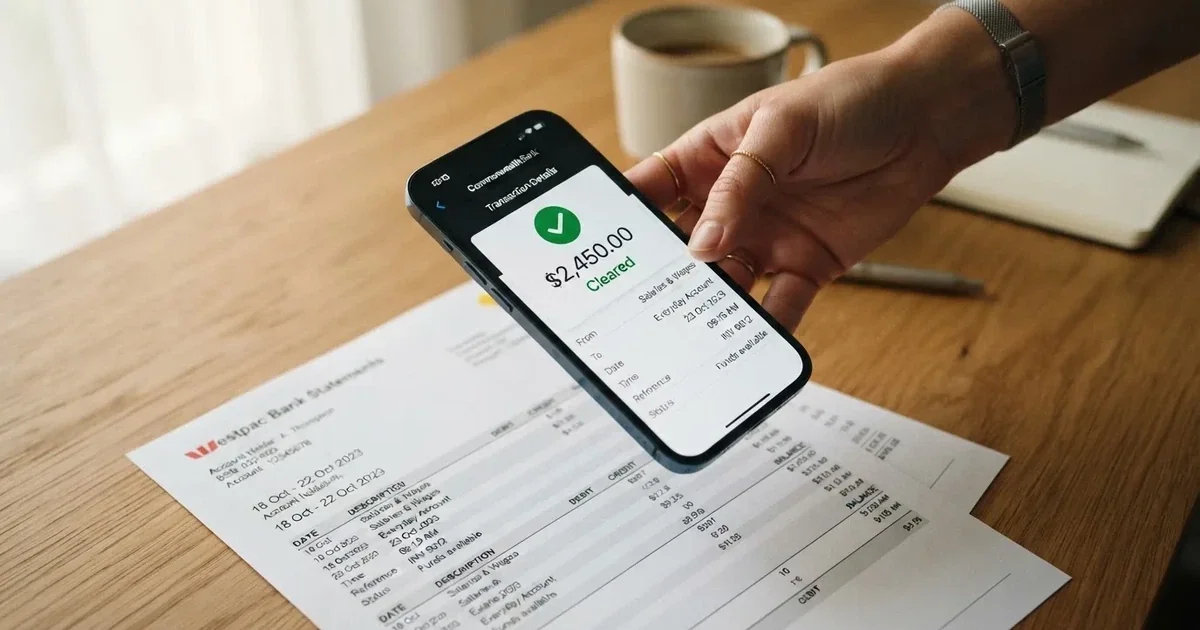
What the marketing copy elides is the part that runs upstream of that settlement. Online casino games cannot be licensed anywhere in Australia. The Interactive Gambling Act 2001, as tightened by the 2017 amendments, makes it an offence to provide prohibited interactive gambling services to a person physically in Australia, and no state or territory regulator issues the kind of licence an online casino would need. Every offshore brand that advertises instant PayID withdrawals to Australian players is offering them precisely because no Australian licence is on offer. Speed of payout is not a substitute for a legal basis to play, and the cash-out stage is the moment that basis is most visible.
Current as of 29 October 2026. Licence claims and ACMA enforcement figures verified against the Australian Communications and Media Authority’s formal warning register and the public blocking record.
Table of Contents
- What the Law Actually Says About a PayID Cash-Out From an Online Casino
- Where the ACMA’s Blocking Record Actually Stands
- Responsible Play: Where the Speed Promise Becomes a Spending Trap
- How a PayID Withdrawal Actually Settles — and What Slows It Down
- The Blocking-Rate Arithmetic
- Eleven Brands the ACMA Has Formally Warned
- The Wider Payment Picture Behind the Withdrawal
- What a Real-Money PayID Withdrawal Reveals About the Operator
- The Australian Reform Timeline That Frames All of This
- What a Reader Comparing These Brands Should Actually Take Away
- Frequently Asked Questions About Instant PayID Withdrawals in Australia
What the Law Actually Says About a PayID Cash-Out From an Online Casino
The Interactive Gambling Act 2001 targets the provider, not the player. An individual Australian who places a real-money bet on an offshore casino is not personally prosecuted — there is no queue of recreational punters before a magistrate for using PayID to fund a blackjack hand. The statute aims at the operator: it is an offence to supply a prohibited interactive gambling service to someone in Australia, where “prohibited” covers online casino games, online pokies and in-play sports betting. Wagering on races and sporting events placed before the event is the carve-out, and that is what the Northern Territory Racing and Wagering Commission licenses — 52 online bookmakers including Sportsbet, Bet365 and Ladbrokes, supervised by a commission with no full-time staff that meets monthly in Darwin.
The carve-out is narrower than the casual reader assumes. A sports bettor using PayID at a licensed Australian bookmaker is operating inside the law. A casino player using PayID at an offshore site is not, regardless of what licence the offshore site displays in its footer — Curaçao, Anjouan, Kahnawake, none of them extend legal cover to a recipient in Australia. The ACMA has issued formal warnings to the operators behind 11 of the brands discussed further down, and several of those operators have been warned more than once.
The consequence shows up not at the deposit box but at the withdrawal. A licensed Australian bookmaker must pay out winnings through routes the regulator accepts: debit card, BPAY, bank transfer or PayID/Osko. An offshore casino decides for itself. When a withdrawal is slow, partially paid, voided for a “bonus abuse” rule the player never saw, or refused outright because the operator has simply stopped paying, the player has no Australian complaints body to approach, no BetStop exclusion that binds the operator, and no enforceable right that an Australian court will recognise against an entity it does not regulate.
Where the ACMA’s Blocking Record Actually Stands
The ACMA’s enforcement lever is not prosecution. It is referral to Australian internet service providers for blocking under section 313 of the Telecommunications Act 1997, paired with formal warnings to the operators behind the offending sites. Both are running, and the cumulative numbers tell the story more sharply than any single round does.

A total of 1,751 illegal gambling and affiliate marketing websites had been blocked since the first blocking request in November 2019, as reported in June 2026. More than 230 unlicensed gambling services had withdrawn from the Australian market entirely since enforcement was strengthened in 2017. The June 2026 round alone added twelve names to the block list — 7Signs, ChromaBet, Donbet, Duospin, Freshbet, Slots Gem, Jacks Club, Lucky Start, Pointsbetz, Spinrise, Vinyl Casino and Wildsino — each named in the same public notice. The blocking request is the visible enforcement, but the quieter figure is the 230 services that left without needing the block, deterred by the threat of one.
H2 Gambling Capital’s 2025 estimate puts Australian losses to illegal sites at roughly A$3.9 billion a year, with the share of gambling going through legal channels falling from 74% in 2021 to 64%. The slide is the trend line that matters. As legal channels shrink their share, offshore operators expand theirs, and PayID is one of the payment rails they use to make the deposit and the withdrawal feel local.
Responsible Play: Where the Speed Promise Becomes a Spending Trap
The dangerous phrase in the marketing is “instant.” It collapses the natural pause that any gambling session should include — the moment between a win and a withdrawal where the player can decide that this is enough. An instant PayID settlement removes that pause by design. The credit is in the bank account within a minute, and the bank balance has been refreshed in time for the player to send it straight back. The transaction settles before the impulse to re-deposit has cooled.
This pattern is hardest on players who started the session on a no-deposit bonus. The bonus may have produced a withdrawal in the first place — and the first cash-out can arrive fast precisely because the operator wants the player to believe winnings are easy here — but the moment cleared funds are sitting in the bank, the operator’s next offer arrives. A “reload” matched at 100%, a “free spins” pack tied to the next deposit, an SMS with a one-tap link to a tailored bonus. Each offer is structured to convert the withdrawal into the next deposit, and the speed of PayID is what makes the conversion frictionless.
BetStop, the National Self-Exclusion Register, has been live since August 2023, but it binds only Australian-licensed wagering services. An offshore casino is not connected to it, and an exclusion registered there will not stop an offshore brand from accepting PayID deposits from the same player. The National Gambling Helpline on 1800 858 858 is free, runs 24/7 and offers chat at Gambling Help Online; these are the supports that do apply, regardless of which brand is in use. Anyone chasing a real-money withdrawal after a no-deposit bonus round is exactly the player those supports are built for.
How a PayID Withdrawal Actually Settles — and What Slows It Down
PayID is a routing convenience, not a settlement guarantee. The transfer still has to clear through the casino’s own payment processor, through the operator’s internal anti-fraud and anti-money-laundering checks, and through the receiving bank’s PayID lookup. When all three layers cooperate, the money arrives in well under a minute — Osko by Australian Payments Plus advertises sub-minute settlement 24/7, including weekends and public holidays, whether the transfer is addressed to a BSB and account number or to a PayID.
The slowdown is almost always on the operator’s side. Three things control the actual payout time on an offshore casino:
- Identity verification, completed once. The first withdrawal triggers a Know Your Customer check — a copy of a photo ID, sometimes a recent utility bill or bank statement, occasionally a selfie with the document held in frame. Once the check has been passed at one casino under the same operator group, subsequent withdrawals at sister brands usually skip it. Where the operator does not share data across brands — and most groups do not, because they are not the same legal entity — each new brand is a fresh check.
- Bonus-to-cash conversion. A withdrawal of bonus credit is not a withdrawal of real money. The wagering requirement has to be cleared first, the maximum cash-out cap has to be respected, and some games count only partially toward turnover. A “real money” PayID withdrawal of winnings earned on bonus funds can be refused if the conversion was not properly completed, and the dispute happens at the cash-out screen, not at the bank.
- Internal processing windows and manual approval. Even when identity is verified and the balance is real money, some operators route the first withdrawal past a manual approval queue that runs only on business hours. A weekend withdrawal can sit in “pending” until Monday morning local time, regardless of what the cashier page advertises.
The bank side, by contrast, is reliable. PayID shows the account holder’s name before the transfer is sent, which is the check that protects against scams and mistaken payments. With more than 25 million registered PayIDs in Australia as of April 2025, the rail is in routine use across the major banks.
The Blocking-Rate Arithmetic
From the first ACMA blocking request in November 2019 to the June 2026 round, the running total reached 1,751 blocked sites — a span of roughly 79 months. That works out to about 22 sites blocked every month on average over the entire enforcement period, or one every thirty-odd hours. The band is the meaningful number, not the precise figure: at the steady pace the ACMA has set, an Australian reader can expect a fresh public blocking round roughly every few weeks, with the long-term average sitting near twenty-two per month when measured from the start of enforcement. The pace has not slowed since 2019, and the June 2026 round of twelve names in a single notice is closer to the recent norm than to an outlier.
Eleven Brands the ACMA Has Formally Warned
Each brand below is listed because the ACMA itself issued a formal warning about it for offering prohibited interactive gambling services to Australians. The brand write-ups describe what the ACMA published, not a recommendation to play. No brand on this list is lawful for an Australian resident to use for online casino games or online pokies, regardless of what licence appears in its footer.
| Brand | ACMA action and date | Operator named by the ACMA | Subject support |
|---|---|---|---|
| RocketPlay | Formal warning, March 2026 (earlier warning to Dama N.V., May 2022) | Pulsup Ltd (Rocketplay) | — |
| Level Up Casino | Formal warning, May 2022 | Dama N.V. | listings-only (Westpac) |
| Woo Casino | Formal warning, March 2025 | Dama N.V. | — |
| Spirit Casino | Formal warning, May 2025 | Dama N.V. | — |
| National Casino | Formal warning, July 2025 | Consolutetish S.R.L. | listings-only (AUSTRAC, Wikipedia) |
| Bizzo Casino | Formal warning, July 2025 (earlier warning to TechSolutions, 2022) | Consolutetish S.R.L. | — |
| Ignition Casino | Formal warning, July 2025 | Bamboo Media | — |
| Instant Casino | Formal warning, February 2025 | EOD Code SRL | listings-only (ecoPayz, PayID) |
| Jackbit | Formal warning, April 2026 | Ryker B.V. | — |
| Casino Intense | Formal warning, April 2025 | Sterplay Holding Ltd | listings-only (AUSTRAC, ITnews, NAB) |
| Sky Crown | Formal warning, September 2022 | Hollycorn N.V. | — |
The column on PayID support tells its own story. Out of eleven brands the ACMA has warned, research found a PayID reference for Instant Casino alone — and that reference came from listings pages, not from the operator confirming PayID payouts directly. The speed that is supposed to be the selling point is the one feature the brands do not advertise with any documentation. An Australian player reading the column should treat the silence as the data.
RocketPlay
RocketPlay is the most recently named on the list: the ACMA issued a formal warning to Pulsup Ltd in March 2026 over RocketPlay. The earlier operator entity, Dama N.V., was already the subject of a 2022 warning that covered six brands at once, RocketPlay among them. Two warnings, four years apart, against the same Australian-facing brand suggest an operation that has continued through operator swaps and rebrandings — exactly the pattern that makes the ACMA’s enforcement harder to stick and exactly the pattern that an Australian player should read as a signal of instability, not persistence. Public documentation of the brand’s payment rails does not mention PayID.
Level Up Casino
The May 2022 ACMA warning covered Level Up as one of six Dama N.V. brands named in a single notice. The brand surfaces in Westpac’s gambling-block documentation as a merchant whose transactions are declined when the cardholder has the gambling block switched on, which is the closest the bank-side infrastructure comes to confirming the brand operates in the Australian deposit space. That is not a compliment. The block exists precisely because enough cardholders were trying to transact with the brand for the bank to write code against it. The brand offers no information on PayID availability for Australian players.
Woo Casino
The ACMA formally warned Dama N.V. over Woo Casino in March 2025, two and a half years after the same operator had been warned over the earlier six-brand cluster. The repeat warning matters: the operator did not change its offering, did not exit the Australian market, and was named again. An Australian player using Woo Casino in 2026 is transacting with an operator the regulator has already told, in writing, that what it is doing is unlawful. There is no evidence of PayID support in the brand’s banking disclosures.
Spirit Casino
Spirit Casino received its formal warning in May 2025, again against Dama N.V., making it the third brand in this list under that operator group. The Dama N.V. cluster is large enough, and warned often enough, that it has become a useful case study: when one corporate entity accumulates warnings across multiple brands, the question for the player is not which brand to choose but whether the operator group has any path to a clean Australian offering, and the answer the ACMA’s record supplies is that it does not. Australian players will find no confirmation of PayID integration at this casino.
National Casino
The ACMA warned Consolutetish S.R.L. over National Casino in July 2025, alongside Bizzo Casino. National Casino appears in AUSTRAC and Wikipedia listings as part of the same operator group, which gives the brand a public-paper trail but not a lawful basis for Australian casino play. The legal status does not change with the corporate footprint, only the paperwork that an investigator could pull if a withdrawal dispute ever escalated. The brand’s banking pages are silent on PayID, and external listings provide no further clarity.
Bizzo Casino
Bizzo carries two warnings: the July 2025 warning to Consolutetish S.R.L. and an earlier 2022 warning to TechSolutions (CY) Group Limited and TechSolutions Group N.V. Two operators, two dates, one brand — exactly the corporate rotation that the ACMA’s blocking process is built to follow but cannot always keep up with in real time. An Australian player who opens an account at Bizzo under either operator is transacting with an entity the regulator has already documented, twice. PayID is absent from the list of payment methods the operator publicly discloses.
Ignition Casino
The ACMA formally warned Bamboo Media over Ignition Casino in July 2025. Ignition has historically been marketed to Australian poker and casino players through affiliate channels that route around geo-restrictions. The warning is recent and the brand is still being named in new enforcement rounds, which means the operator has not taken the cleanest available exit — closing to Australian customers entirely. No mention of PayID appears in the operator’s payout or banking information.
Instant Casino
Instant Casino received its formal warning from the ACMA in February 2025, against EOD Code SRL. Of the eleven brands in this comparison, Instant Casino is the one for which research surfaces a PayID reference at all, and that reference comes from listings pages rather than operator confirmation. The single confirmed data point is also the brand that has been formally warned most recently before the mid-2025 cluster — a useful reminder that “instant” in the brand name and “instant” in the actual payout are two different things, and that the ACMA has already named the first as a prohibited service.
Jackbit
The ACMA warned Ryker B.V. over Jackbit in April 2026, the same notice that also named CasinOK. April 2026 is the most recent enforcement action in this list outside of RocketPlay, and the brand is also one of the more aggressive in marketing crypto deposits — a payment route that is banned for Australian-licensed wagering under the credit and digital currency restrictions, and that adds a layer of irreversibility on top of the offshore-operator risk. No PayID support is documented for the brand.
Casino Intense
Sterplay Holding Ltd received a formal ACMA warning over Casino Intense in April 2025. The brand surfaces in AUSTRAC, ITnews and NAB documentation — three different institutional footprints, none of them a regulatory endorsement. NAB’s gambling-block feature, like Westpac’s, declines transactions at the merchant-category-code level when the cardholder has the block on. The block is a sign of operational scale in the Australian market, not a sign of legitimacy. No PayID support is documented for the brand beyond listings.
Sky Crown
The ACMA’s warning to Hollycorn N.V. over Sky Crown is the oldest in the list, dated September 2022, and it was issued alongside a parallel warning over Blue Leo. Three years on, the same operator group is still running casino services to Australian customers through a network of brands. The Hollycorn cluster — Sky Crown, Blue Leo and the surrounding brands — is the case study for the limits of the formal-warning lever: it does not compel an exit, it documents one. No PayID support is documented for the brand.
The Wider Payment Picture Behind the Withdrawal
The marketing line is “instant PayID withdrawal.” The accurate line is “withdrawal through a payment rail that is genuinely instant, on a casino product that is not lawfully offered to Australians, paid by an operator the ACMA has already named.” PayID itself is not the issue. PayID is one of the cleanest retail payment systems in the world: same-name verification before the transfer is sent, sub-minute settlement through Osko 24/7, available through more than 100 Australian financial institutions, built into the online banking apps every Australian already uses. Twenty-five million PayIDs are registered in Australia. The rail works.
What the rail cannot do is change the legal status of what the transfer pays for. Credit cards and credit-related products have been banned as a payment method for Australian-licensed online wagering since 11 June 2024, with penalties up to A$247,500 for operators that breach the rule. Legal deposit routes are debit card, bank transfer, PayID/Osko and BPAY. None of those restrictions apply at an offshore casino, because the offshore casino is not licensed in Australia and the Australian rules do not bind it. The player does not get the consumer protection of the legal channel and does not get the speed advantage of an exclusive fast rail either — the speed is the same PayID rail everyone else uses.
Westpac’s gambling block works at card level, declining transactions registered under the merchant category code for betting and casino gambling when the cardholder has the block active. ANZ’s block does the same and extends to digital-wallet transactions on eligible cards — Apple Pay, Google Pay, Samsung Pay — with a 48-hour cooling-off period if the player wants to remove the block again. By the end of 2025, mobile wallets accounted for around 45% of all card payments in Australia by number. The bank-side blocks are catching up to that share, and an Australian player who has turned a gambling block on will find that several of the brands in the ACMA-warned list decline at the card layer before the PayID layer is even reached.
Apple Pay itself does not add a surcharge for using it in stores, online or in apps; any merchant fee on a transaction comes from the merchant’s own card-processing arrangement, not from Apple. Transaction limits and PIN requirements on Apple Pay are set by the card issuer or the merchant, not by Apple. The Reserve Bank’s July 2025 review proposes removing surcharges on eftpos, Mastercard and Visa transactions and leaves American Express outside the proposed ban — useful context for understanding which card networks the cost conversation actually applies to, and a reminder that the cheapest payment route on the legal side is not necessarily the same as the fastest on the illegal side.
What a Real-Money PayID Withdrawal Reveals About the Operator
The withdrawal screen is the operator’s most honest moment. The deposit screen is engineered to feel frictionless — instant PayID in, the balance credited, the player inside the lobby in under a minute. The withdrawal screen has to confront the operator’s actual policy, and that is where the marketing wording meets the small print.
A real-money withdrawal is the cleanest case. The player deposited real money, played with real money, has a real-money balance above the minimum cash-out threshold, has completed identity verification, and is requesting a PayID transfer to a bank account in their own name. The PayID rail will settle the transfer in under a minute once the operator releases the funds. The operator is the variable. Some release within minutes; some hold for “internal review” of 24 to 72 hours on the first withdrawal; some process on business hours only and leave weekend withdrawals pending until Monday; some decline the withdrawal entirely once identity verification reveals an Australian address, citing a clause buried in the terms of service.
A bonus-funded withdrawal is messier. Bonus credit cannot be withdrawn as real money until the wagering requirement has been cleared. The cleared real-money balance is what can be withdrawn, subject to a maximum cash-out cap on winnings from no-deposit bonuses that some operators set low enough that the cleared balance after wagering is well below what the bonus page implied. A PayID transfer of real money is the final step of a chain that started at the bonus offer, and the chain has more links than the marketing page shows.
The minimum balance threshold is the most underrated specification on the withdrawal page. Many operators set a minimum PayID cash-out of A$50 to A$100, and some set higher. A player who cleared a no-deposit bonus of A$20 with a 50x wagering requirement has technically played through A$1,000 of wagering, but the resulting real-money balance may still be below the minimum cash-out threshold — at which point the entire playthrough has produced a withdrawal the player cannot actually request.
The Australian Reform Timeline That Frames All of This
The 2026 calendar is a busy one for Australian gambling regulation, and a reader looking at a PayID withdrawal in 2026 is looking at it against a moving backdrop. The Interactive Gambling Amendment (Gambling Reform) Bill 2026 passed Parliament on 19 August 2026. Its advertising and inducement measures commence on 1 January 2027 — law with a start date, not yet in force at the time of writing. The credit card ban for licensed online wagering has been in force since 11 June 2024. The Interactive Gambling Act 2001 itself, as amended by the Interactive Gambling Amendment Act 2017, has been the foundation of the offshore-blocking regime for the better part of a decade.
What changes between now and the 2027 advertising commencement is the surface layer, not the legal foundation. The advertising and inducement measures will tighten what licensed Australian operators can offer as bonuses and what inducements they can extend to existing customers. Offshore operators are not bound by those measures and will continue to advertise bonuses and inducements regardless. The cleaner air on the legal side will, if anything, make the illegal side louder — louder marketing, more aggressive affiliate channels, faster-looking PayID withdrawals to compensate for the visible tightening on the licensed side. A reader comparing the two sides in 2026 should expect that asymmetry to widen into 2026+1.
What a Reader Comparing These Brands Should Actually Take Away
The single fact that cuts across every brand in this comparison is the legal one, and it is the one the marketing copy is built to obscure. Online casino games and online pokies cannot be licensed in Australia. There is no regulator to appeal to if a withdrawal is refused, no complaints body to escalate to, no court that will enforce an offshore operator’s payout promise against a player in Australia. The speed of PayID is real, the speed of an offshore casino’s first withdrawal may be real, and the speed of a refused withdrawal at the cash-out screen is also real — and the last of those three is the one that determines what an Australian player actually keeps.
The eleven brands above share that legal exposure and differ mostly in the corporate paperwork. A repeat warning against the same operator group is a stronger signal than a single warning. A brand that appears in the merchant-category-code gambling blocks at major Australian banks is a brand that enough Australian cardholders have tried to use for the bank to write code against it. A brand with no PayID documentation in the listings pages is not a brand that is keeping its payment support secret — it is a brand that has not bothered to publish it.
The reader who lands on this page is, in most cases, looking for one of three things. They are looking for a fast way to get a win out. They are looking for a way to tell whether a particular brand will actually pay them. They are looking for reassurance that the speed on the cashier page is real. The honest answer to all three is the same: PayID is the fast part. The legal status of the operator, and the operator’s own withdrawal policy, are the slow parts. The first is settled by statute. The second is what an Australian player cannot verify in advance and cannot enforce afterwards. The page is, in the end, a comparison of eleven brands that the ACMA has already compared against the Interactive Gambling Act 2001 and found in breach — and that finding is the comparison a reader actually needs.
Frequently Asked Questions About Instant PayID Withdrawals in Australia
Is it legal for an online casino to pay out real money through PayID to a player in Australia?
No. Under the Interactive Gambling Act 2001, no operator may provide a prohibited interactive gambling service — which covers online casino games and online pokies — to a person in Australia. The PayID rail is irrelevant to the legal status; what matters is whether the casino product on offer is licensed at all, and no Australian licence exists for online casino games.
What is the difference between withdrawing bonus credit and withdrawing real money through PayID?
Bonus credit cannot be withdrawn until the wagering requirement has been cleared. The cleared real-money balance is what becomes withdrawable, subject to any maximum cash-out cap on bonus-derived winnings. A PayID transfer of real money is the final step after that conversion, not a way around it.
Does a no-deposit bonus balance need to be converted before a real-money PayID withdrawal is possible?
Yes. A no-deposit bonus is bonus credit from the moment it is credited. Until the wagering requirement is met, the balance is not real money and is not withdrawable through PayID or any other rail. The minimum cash-out threshold may still apply even after the requirement has been cleared.
What identity documents are usually required before a first real-money PayID withdrawal?
Operators typically ask for a government-issued photo ID, a recent utility bill or bank statement showing the player’s name and address, and sometimes a selfie holding the ID. The first withdrawal triggers the check; subsequent withdrawals at the same operator usually skip it. Sister brands under the same operator group generally do not share verification data, so each new brand is a fresh check.
Is there a minimum real-money balance needed before a PayID withdrawal can be requested?
Yes. Most operators set a minimum PayID cash-out between A$50 and A$100, sometimes higher. A player who has cleared the wagering requirement on a small no-deposit bonus may end up with a real-money balance below the threshold, in which case the entire playthrough has produced a withdrawal the player cannot actually request.