
Golden Pokies in Australia: what the ACMA picture says about offshore casino brands
A reader searching for a “Golden Pokies casino Australia 2026” usually arrives at the site with one question first — is this thing legal for me to use? The blunt answer sits at the top of the page so the rest can be read in the right frame. Golden Pokies is on a list of offshore brands the Australian Communications and Media Authority has ordered Australian internet service providers to block. Online casino games and online pokies cannot be licensed in Australia at all under the Interactive Gambling Act 2001. The site itself is one instance of a wider pattern — a pattern the regulator has acted on more than 1,750 times since 2017.
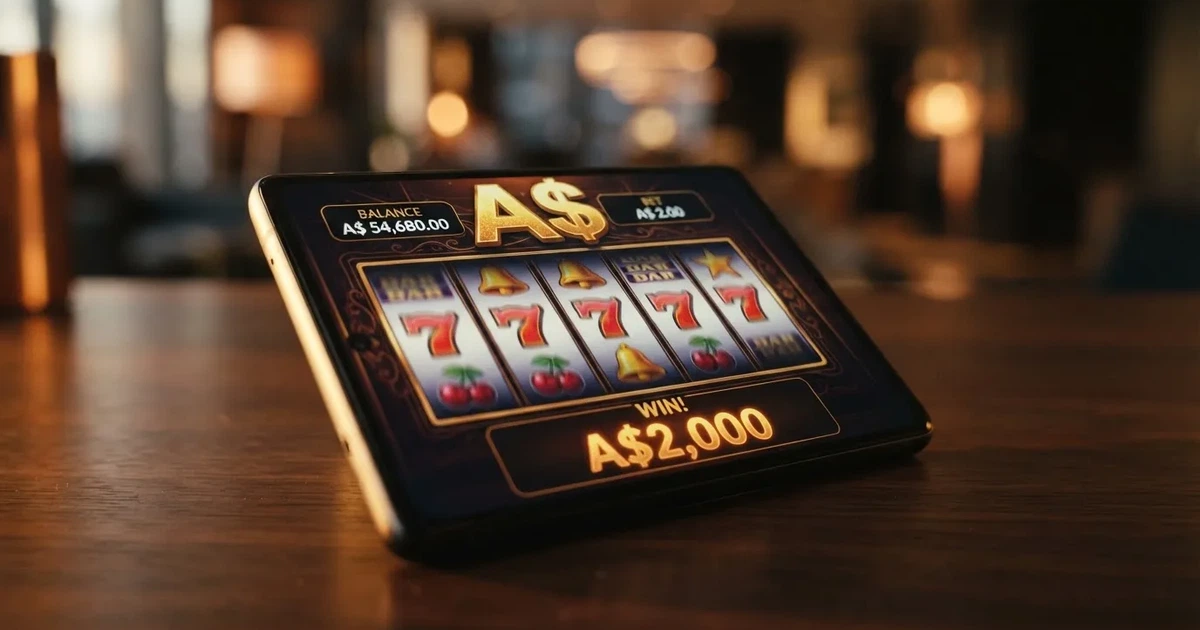
This page lays that picture out plainly. It covers the bonus mechanics every offshore site runs, the games and providers on which those bonuses spend, the ten other brands that share the same regulatory status, the legality and responsible-gambling frame the ACMA and the banks work in, and the payment rails that either help or refuse a transaction.
Current as of 29 October 2026 and verified against the Australian Communications and Media Authority’s own formal-warning register and blocking-request list.
Table of Contents
- How offshore pokies brands sell the sign-up
- What the Golden Pokies catalogue actually is
- landsca
- The eleven ACMA-named brands and what they have in common
- The blocking-rate arithmetic
- The legal frame the ACMA works in
- Responsible gambling: where the protection actually sits
- How the Australian payment rails treat an offshore casino deposit
- The blocking record in numbers
- Reading the picture together
- Frequently asked questions about Golden Pokies and offshore casino brands in Australia
How offshore pokies brands sell the sign-up
The pitch that follows a player from the search results into a Golden Pokies mirror — or into any of its sister sites — uses the same handful of promises. A “Golden Pokies no deposit bonus code”, a “A$2,000” headline, “free spins”, and a list of slot titles dressed in gold-and-coin iconography. None of it is unique to this brand. Every offshore casino runs the same template: a headline number, a no-deposit tease, a stack of deposit-gated packages above it, and a paragraph of bonus terms at the bottom of the page that almost no reader clicks through.

What the no-deposit code actually unlocks
A Golden Pokies no-deposit bonus code is a token a player enters at sign-up. The token unlocks a small playable balance — a handful of dollars or a fixed number of free spins — and not much else. The thing it does not do is hand the player a withdrawable cash balance. Every dollar the no-deposit code puts on the account sits behind the same conditions as any other bonus the site runs.
The internal review is the first wall. Before any withdrawal, the casino’s payments team checks the bonus terms have been met. If a player made a single bet above the maximum allowed while a bonus was active, the bonus can be voided. If a withdrawal is requested before the wagering requirement has been cleared, the bonus is removed and only the original deposit can be cashed out. The review is at the operator’s discretion and there is no Australian complaints body to appeal to.

The maximum-cashout cap is the second wall. Most no-deposit offers run with a ceiling — anything from a few tens of dollars to a low three-figure cap on what can be withdrawn from bonus-derived winnings. A player can land a four-figure hit on a single spin and find the cashable part cut down to the cap. The marketing word is “free”; the cap is the price.
The wagering multiple is the third wall, and the one that decides whether the offer is finishable at all. A typical offshore no-deposit bonus carries a wagering requirement in the 30× to 60× range, applied to either the bonus or to the bonus plus the deposit that funds it. The reader has to multiply the bonus amount by that number to know how much play the bonus has to absorb before a withdrawal becomes possible. A A$10 no-deposit bonus with a 50× requirement has to clear A$500 of eligible play — which, at A$0.10 a spin, is 5,000 spins of slot play, or roughly seven hours at a five-second spin cadence.
What a sign-up bonus really costs in hours
The arithmetic turns a marketing number into a time figure. For the calculation this page uses, assume only the bonus amount is wagered at the maximum allowed stake per spin, on a single slot at a steady cadence.
Turnover required equals the bonus amount multiplied by the wagering factor. Spins required equals that turnover divided by the stake-per-spin. Play time in hours equals the spins multiplied by a five-second interval and divided by 3,600.
Take a typical “Golden Pokies sign up bonus” of A$20 with a 40× wagering requirement and a maximum allowed stake of A$2 per spin. The turnover the bonus must absorb is A$800. Divided by the A$2 stake, the player has to complete 400 spins. At five seconds a spin, that is 2,000 seconds, or roughly 33 minutes of continuous play. The expected loss over those spins, at an RTP of 96% — the typical figure for the offshore slots this site runs — is A$800 multiplied by 0.04, which is A$32. So the player gives up about A$32 of stake turnover to clear a A$20 bonus.
That is the arithmetic honest about itself. The house keeps an edge on every spin, and the bonus exists to put a player through enough spins that the edge does its work.
Free spins as a separate instrument
A “Golden Pokies free spins” offer is the same template stripped down. The site credits a fixed number of spins — fifty, a hundred, two hundred — at a fixed stake, usually on a named slot. Anything those spins win lands in the bonus balance and inherits the same conditions. Free-spin winnings typically run with their own wagering multiple and their own maximum-cashout cap.
A reader who compares a no-deposit bonus against a free-spin package is comparing two forms of the same thing. The no-deposit code hands the player a stake budget and lets them choose the slot; the free-spin offer hands them a fixed stake on a fixed slot. Either way, the same three walls — the internal review, the cashout cap and the wagering multiple — decide what is actually withdrawn at the end.
The conditions a reader should read before claiming
Five things a player should look for in the bonus terms of any offshore casino, in the order they appear on the page:
- the wagering multiple, and whether it applies to the bonus alone or to the bonus plus the deposit;
- the maximum allowed stake while the bonus is active — anything above this voids the bonus;
- the maximum-cashout cap on bonus-derived winnings;
- the list of slots that contribute to wagering — many sites reduce the contribution or exclude popular high-RTP titles;
- the timeframe in which the wagering requirement must be cleared, often seven days from credit.
These five lines decide whether a bonus is finishable. The headline number above them decides whether a reader clicks at all.
What the Golden Pokies catalogue actually is
“Golden Pokies” is a brand name over a catalogue of slot titles drawn from the same third-party game software that powers most offshore casinos. The paytable on a given slot — the RTP, the volatility class, the bonus features — is set by the game studio, not by the casino. A “golden pokies” title at one site is, mechanically, the same game running under the same math at another site with a different paint job.
Slot titles, providers and the live table
The catalogue breaks into three layers. The first layer is slot titles, which the casino presents under its own branding but which are built by external studios. The second layer is those external studios — suppliers whose games are licensed into hundreds of casinos at once. The third layer is the live-dealer lobby, where live-table casinos stream real-dealer roulette, blackjack and game-show formats from a studio.
A “golden pokies online casino” reader who scrolls far enough will find a list of providers with names that read like industry shorthand — names that recur across the offshore market, irrespective of which brand sits on top of them. The RTP a given slot returns is fixed by the studio’s math model and is the same number on every site that runs the game. A 96% RTP slot pays back 96 cents for every dollar wagered, in the long run, by definition. That long run is the studio’s, not the casino’s, and it does not move.
Why the catalogue reads the same everywhere
A single slot title is built once and distributed to every operator that holds the right licence. The casino customises the artwork, the colour palette and the bonus page around the slot; it cannot customise the math. That is why a search for “golden pokies casino” returns pages that look the same across brands: the underlying software is the same, the marketing words around it are different.
The catalogue’s volatility profile is the other shared feature. A “high volatility” slot pays less often but pays more when it does; a “low volatility” slot pays more often but pays less. Most offshore casinos skew the catalogue toward medium-to-high volatility, because high-volatility slots produce the big-hit screenshots that sell a brand. The trade-off is that the same slots eat a player’s bankroll faster between hits.
The reader should treat a slot catalogue as a catalogue of the studio’s games, with the casino’s branding laid over the top. The branded wrapper is the casino’s product; the game underneath is not.
landsca
| Brand | ACMA action and date | Operator named by the ACMA | Subject support |
|---|---|---|---|
| RocketPlay | Formal warning, March 2026; earlier warning, May 2022 | Pulsup Ltd (2026); Dama N.V. (2022) | listings-only |
| Level Up Casino | Formal warning, May 2022 | Dama N.V. | listings-only |
| Woo Casino | Formal warning, March 2025 | Dama N.V. | — |
| Spirit Casino | Formal warning, May 2025 | Dama N.V. | — |
| National Casino | Formal warning, July 2025 | Consolutetish S.R.L. | listings-only |
| Bizzo Casino | Formal warning, July 2025; earlier warning, 2022 | Consolutetish S.R.L. (2025); TechSolutions (2022) | listings-only |
| Ignition Casino | Formal warning, July 2025 | Bamboo Media | — |
| Instant Casino | Formal warning, February 2025 | EOD Code SRL | listings-only |
| Jackbit | Formal warning, April 2026 | Ryker B.V. | — |
| Casino Intense | Formal warning, April 2025 | Sterplay Holding Ltd | listings-only |
| Sky Crown | Formal warning, September 2022 | Hollycorn N.V. | — |
The eleven ACMA-named brands and what they have in common
The brands on this list are not ranked, and the page does not recommend them. Each brand is here because the Australian Communications and Media Authority itself issued a formal warning to the operator behind it, for offering prohibited interactive gambling services to people in Australia. The list runs in the order the ACMA’s warnings were published.
RocketPlay — the most recent formal warning
The ACMA issued a formal warning to Pulsup Ltd in March 2026 over RocketPlay. The same brand had already drawn a formal warning over a different operating entity — Dama N.V. — in May 2022, one of six brands that came under the same 2022 warning. The subject support for this brand in the wider market is listings-only; the data on offer is what the listings report, and what they report is that the site is part of an offshore group with a regulatory history in Australia. For a reader comparing options, the marker is the warning itself: a regulator willing to put its name on the action twice is not signalling that the operator has changed course.
Level Up Casino — one of the 2022 Dama N.V. cohort
Level Up Casino drew a formal warning under Dama N.V. in May 2022. The Dama N.V. group is the same operator behind Bambet, Dazard, Rocketplay, Wild Tornado and Cobra Casino, all named in the same 2022 warning. The subject support for this brand is listings-only: a payments page and a regulator’s register carry its name, the offshore bonus terms do not.
Woo Casino — the first 2025 Dama N.V. warning
The ACMA’s March 2025 formal warning to Dama N.V. over Woo Casino was the first Dama N.V. action since the 2022 cohort. Two months later the ACMA named Dama N.V. again over Spirit Casino. The subject support for Woo Casino is no-data — the page describes the warning, not the bonus structure. The marker for a reader is that the same operating company drew two formal warnings in three years; the offer does not change that fact.
Spirit Casino — the second 2025 Dama N.V. warning
The May 2025 warning over Spirit Casino is the second Dama N.V. action in 2025. The subject support is no-data. The marker is the same one the Woo Casino entry carries: the operator is unchanged, the regulator’s patience is not infinite, and a player using a brand under that operator is using a brand the regulator has named.
National Casino — Consolutetish S.R.L., 2025
The ACMA’s July 2025 formal warning to Consolutetish S.R.L. covered National Casino alongside Bizzo Casino. The subject support for National Casino is listings-only, with the regulator’s register, the financial-intelligence register and the national self-exclusion register all carrying its name. The marker for a reader is the same one every entry here carries: the brand is named, and the offer is the offer of an offshore operator with a regulator’s warning on the file.
Bizzo Casino — twice-named by the ACMA
Bizzo Casino is the only brand on this list to have drawn two separate ACMA actions against two different corporate parents. The first came in 2022, when TechSolutions Group was warned over the brand. The second came in July 2025, when Consolutetish S.R.L. was warned over the same brand. The subject support for Bizzo Casino is listings-only. The marker is that the brand has survived two operator changes and two regulatory warnings, which is the picture of an asset being moved between parents without the underlying offer changing.
Ignition Casino — Bamboo Media, 2025
The ACMA’s July 2025 formal warning to Bamboo Media covered Ignition Casino. The subject support is no-data. Ignition Casino’s marker is its operator — Bamboo Media is a separate corporate parent from the Dama N.V. cluster, but the action is the same: a regulator naming the brand as a prohibited interactive gambling service.
Instant Casino — EOD Code SRL, 2025
The ACMA issued a formal warning to EOD Code SRL over Instant Casino in February 2025. The subject support for Instant Casino is listings-only, with the ecoPayz payment processor and the PayID service both appearing in the listings that name the brand. The marker is the same: a regulated warning, an offshore operator, and an offer with no Australian consumer protection behind it.
Jackbit — Ryker B.V., 2026
The ACMA’s April 2026 formal warning to Ryker B.V. covered Jackbit alongside CasinOK. The subject support for Jackbit is no-data. The marker is the operator — Ryker B.V. — and the warning date, both of which the ACMA publishes on its own page.
Casino Intense — Sterplay Holding Ltd, 2025
The ACMA’s April 2025 formal warning to Sterplay Holding Ltd over Casino Intense is the brand’s entry on this list. The subject support for Casino Intense is listings-only, with the financial-intelligence register, the self-exclusion register and a listings page all naming the brand. The marker is that an offshore operator with an Australian warning has been picked up by other Australian regulatory listings; the offer is still offshore.
Sky Crown — Hollycorn N.V.
The ACMA issued a formal warning to Hollycorn N.V. over its Sky Crown and Blue Leo casino services in September 2022. The subject support for Sky Crown is no-data. The marker is the operator — Hollycorn N.V. is a separate corporate parent from the rest of the list, and the warning is dated 2022, which makes Sky Crown the oldest active entry on this page.
The blocking-rate arithmetic
The ACMA’s blocking programme is the single most concrete measure of how the regulator treats offshore casino brands. The arithmetic takes the regulator’s own published figures.
The first blocking request was issued in November 2019. By the round reported in June 2026, the ACMA had directed Australian internet service providers to block a cumulative total of 1,751 illegal gambling and affiliate marketing websites. The arithmetic:
1,751 blocked domains ÷ the period from November 2019 to June 2026 ≈ 1,751 ÷ 79 months ≈ roughly 22 blocked domains a month, or around 265 a year, averaged across the whole enforcement window.
The band, with its condition stated: somewhere between one and three offshore casino or affiliate domains blocked every working day, on average, since November 2019. The June 2026 round alone added twelve: 7Signs, ChromaBet, Donbet, Duospin, Freshbet, Slots Gem, Jacks Club, Lucky Start, Pointsbetz, Spinrise, Vinyl Casino and Wildsino. The earlier September 2026 round added Golden Pokies itself, alongside Play Croco, Aussie Play, Golden Reels, All Spins Win, Bonza Spins, Pokie Spins, House of Pokies, Pokie Mate and PokieZ. The arithmetic sits well above twenty a month in active rounds, and well below twenty a month in the quiet ones between them.
The condition on the band: it is the regulator’s own rate of action, not a forecast, and the regulator does not commit to a fixed cadence. What it commits to is that the rate has not slowed since 2017.
The legal frame the ACMA works in
The Interactive Gambling Act 2001 — the IGA — is the federal statute the ACMA enforces. It was strengthened in 2017 by the Interactive Gambling Amendment Act, and a further reform package, the Interactive Gambling Amendment (Gambling Reform) Bill 2026, passed Parliament on 19 August 2026 with its advertising and inducement measures commencing on 1 January 2027.
What the IGA actually prohibits
The IGA makes it an offence to provide online casino games, online pokies or in-play betting to a person physically in Australia. The prohibition covers every offshore operator that targets an Australian resident, irrespective of the licence the operator holds in another jurisdiction. The Australian-licensable product is online and phone wagering on sport and racing placed before the event, plus lotteries and keno — in practice licensed by the Northern Territory Racing and Wagering Commission, a body that regulates fifty-two online bookmakers, has no full-time staff and meets once a month in Darwin.
The minimum age for any form of Australian-licensed gambling is eighteen. The IGA targets the provider, not the player — the individual Australian who opens an offshore casino account is not prosecuted. The offshore site, on the other hand, gives no Australian consumer protection, no Australian complaints body, and no Australian recourse if a withdrawal is refused. The site can also be blocked while a balance is still on the account.
What “interactive gambling service” means
A “prohibited interactive gambling service” under the IGA is a service that provides online casino games, online pokies or in-play betting to a person in Australia. The phrase covers exactly the product Golden Pokies and the other ten brands on this page sell. The phrase does not cover pre-event sports and racing wagering, which is the product the fifty-two Northern Territory-licensed bookmakers sell.
The legal frame turns on what the product is, not what the licence says. A Curaçao or Anjouan licence does not turn an offshore casino into an Australian-licensed product. The licence the offshore operator carries is a licence to operate in the jurisdiction that issued it; it is not a licence to serve an Australian resident.
The 2026 reform bill
The Interactive Gambling Amendment (Gambling Reform) Bill 2026 passed Parliament on 19 August 2026. Its advertising and inducement measures commence on 1 January 2027 — law with a start date, not yet in force on a 2026 page. The bill’s measures cover the marketing push that surrounds a Golden Pokies no-deposit bonus code: the affiliate pages, the search ads, the bonus-code aggregators. None of that is yet law. A reader who follows this page into 2026 will read it against a regulatory backdrop that is one reform package tighter than the page describes.
The NTRWC’s de facto role
The Northern Territory Racing and Wagering Commission is the regulator of last resort for online wagering in Australia. It licenses fifty-two online bookmakers — Sportsbet, Bet365 and Ladbrokes among them — for tax reasons: the Territory collects a point-of-consumption tax that the larger states do not. The commission has no full-time staff and meets once a month in Darwin, which is a thin regulator for a heavy industry. The April 2026 ABC report on a Northern Territory bill to reform the regulator captures the tension between the volume of wagering the Territory hosts and the capacity it has to supervise it.
The IGA does not touch the NTRWC’s wagering licence; the IGA is the casino and in-play prohibition, the NTRWC is the wagering licence. A reader who needs to separate the two should treat every offshore casino brand on this page as covered by the IGA, and treat every Northern Territory-licensed bookmaker as outside the IGA’s prohibition.
Responsible gambling: where the protection actually sits
Offshore casino brands do not connect to the Australian responsible-gambling infrastructure. BetStop, the National Self-Exclusion Register, has been live since August 2023 and binds only Australian-licensed online and phone wagering services. A player who has self-excluded through BetStop is not protected from opening an offshore casino account.
What BetStop does and does not do
BetStop is the National Self-Exclusion Register, run by the ACMA. It allows a person to exclude themselves from every Australian-licensed online and phone wagering service at once, for a chosen period. The exclusion binds licensed wagering services, which means it binds the fifty-two Northern Territory-licensed bookmakers but does not bind Golden Pokies, RocketPlay, Woo Casino or any other offshore casino brand on this page.
The exclusion also does not bind lottery outlets, keno venues or land-based casinos. A reader who self-excludes through BetStop has excluded themselves from a defined list of services, and the list does not include the brands this page describes. The exclusion is a powerful tool against Australian-licensed wagering; it is not a tool against offshore casinos.
The gambling-block on Australian bank cards
The major Australian banks run a gambling block at card level. Westpac’s block refuses authorisation of transactions registered under the merchant category code “Betting/Casino Gambling” on eligible personal credit and debit cards. ANZ’s block, activated in the ANZ app, also blocks Gambling Transactions made through a digital wallet such as Apple Pay on an eligible card — not just the physical card. Removing the ANZ block requires a 48-hour waiting period, and the bank warns that not all gambling transactions will be blocked and that some non-gambling transactions might be blocked in error.
These blocks are a real second line of defence. They run on the merchant category code, which means a transaction that registers under the gambling code is refused at the point of authorisation. The block does not see whether the casino is licensed; it sees whether the merchant is registered as gambling. An offshore casino that takes a Visa or Mastercard deposit will, in most cases, register the merchant as gambling and the bank’s block will refuse the transaction.
The limits the reader can set
The IGA, as amended in 2023, makes it an offence for an Australian-licensed wagering service to accept payment by credit card or other credit-related products. A player using an Australian-licensed bookmaker cannot fund an account with a credit card. The same restriction constrains gambling use of a digital wallet like Apple Pay when the underlying card is a credit card.
Apple Pay itself does not charge the consumer a fee; any surcharge on an Apple Pay transaction is the merchant’s own card-processing fee, not Apple’s. Apple Pay’s transaction limits and PIN requirements are set by the card issuer or the merchant, not by Apple. The technology is a rail; the limits sit at the ends of the rail.
The 1800 858 858 helpline
The National Gambling Helpline, on 1800 858 858, is free, runs 24/7, and is reachable by chat at Gambling Help Online. The helpline is the single number a reader should keep beside every offshore casino brand on this page. It is staffed by counsellors, it is not a regulator, and it does not resolve disputes with offshore operators. What it does is sit at the end of the line for a player whose gambling has tipped from entertainment into something they cannot manage alone.
How the Australian payment rails treat an offshore casino deposit
The payment rails in Australia — debit card, bank transfer, PayID/Osko and BPAY — each behave differently when the merchant at the other end is an offshore casino. The behaviour matters because it is the rail, not the casino, that decides whether a transaction lands.
PayID and Osko
PayID is a lookup service that lets a payer send money to an identifier — a mobile number, an email address or an ABN — instead of a BSB and account number. The transfer runs on Osko, the instant-transfer overlay of Australia’s New Payments Platform, and arrives in under a minute, 24/7, including weekends. PayID-based instant transfers are available at over 100 Australian financial institutions, and more than 25 million PayID identifiers were registered on the New Payments Platform by April 2025.
Crucially, paying to a PayID shows the account holder’s name before the transfer is sent. AP+ warns that being asked to transfer money to a PayID on an illegal gambling site almost certainly means a scam site. The warning is precise: an offshore casino has no Australian bank account to give a player a PayID against, and a PayID that resolves to a casino is either a scam or a front.
The New Payments Platform became accessible to the public on 13 February 2018 and is owned by New Payments Platform Australia Ltd, a non-profit whose thirteen shareholders include the Reserve Bank of Australia and the country’s major banks. Participants in the platform must keep monthly outages to no more than two minutes; in 2021 the ACCC authorised merging NPP Australia with BPAY and eftpos into a single company, Australian Payments Plus.
Debit card, credit card and the digital wallet
A debit card deposit at an offshore casino is the most common rail. The transaction registers under the merchant category code “Betting/Casino Gambling”, and Westpac’s or ANZ’s card-level gambling block will refuse it on the issuing bank’s eligible cards. The block is card-level, not account-level, so it does not catch every transaction — the bank warns that not all gambling transactions will be blocked.
A credit card deposit at an Australian-licensed bookmaker is illegal under the 2023 amendment to the IGA, with penalties up to A$247,500 for operators. The amendment constrains gambling use of a credit-funded digital wallet, so an Apple Pay transaction that draws on a credit card will face the same merchant-category refusal. American Express itself, as a three-party scheme that issues cards and processes transactions itself, sits outside the Reserve Bank’s July 2025 review of merchant card payment costs — a review that proposes removing surcharges only on eftpos, Mastercard and Visa card transactions.
Digital wallets collectively — Apple Pay, Google Pay and Samsung Pay — accounted for around 45% of all card payments in Australia by number at the end of 2025. The share is large enough that an offshore casino that declines a digital-wallet deposit is declining close to half of the card payments in the country. Most offshore casinos accept digital wallets; the accepting casino is then doing so against an Australian regulatory backdrop that constrains exactly that transaction.
BPAY
BPAY is a bill-payment service in online banking: the payer enters a Biller Code and a Customer Reference Number, both printed on the bill. BPAY has operated in Australia since 1997, is available in the online banking of over 140 banks and financial institutions, and is offered by over 95,000 businesses. The service is run by Australian Payments Plus — the same operator that runs PayID and Osko.
An offshore casino is not a BPAY biller. A reader who is offered a BPAY deposit at an offshore casino is being routed through a bill-payment service that is not registered to take gambling deposits; the transaction either fails at the bank’s end or runs through a front entity that is. BPAY is built for registered Australian billers, and the offshore casinos on this page are not on that list.
AUSTRAC and the reporting thresholds
AUSTRAC’s threshold-transaction-report rule requires reporting of transfers of A$10,000 or more, but the rule applies only to physical cash. Ordinary electronic bank transfers are not subject to that per-transaction reporting requirement, regardless of the amount sent. A reader who is concerned about a large deposit at an offshore casino should understand that the bank-transfer reporting trigger is not the same as the cash reporting trigger. The reporting that does happen is the bank’s own transaction monitoring, which runs on a different rulebook and is not bound to publish its findings.
The blocking record in numbers
The ACMA’s blocking programme is the single largest public dataset on offshore casino brands in Australia. The numbers, as reported in June 2026:
| Brand | ACMA action and date | Operator named by the ACMA | Subject support |
|---|---|---|---|
| RocketPlay | Formal warning, March 2026; earlier warning, May 2022 | Pulsup Ltd (2026); Dama N.V. (2022) | listings-only |
| Level Up Casino | Formal warning, May 2022 | Dama N.V. | listings-only |
| Woo Casino | Formal warning, March 2025 | Dama N.V. | — |
| Spirit Casino | Formal warning, May 2025 | Dama N.V. | — |
| National Casino | Formal warning, July 2025 | Consolutetish S.R.L. | listings-only |
| Bizzo Casino | Formal warning, July 2025; earlier warning, 2022 | Consolutetish S.R.L. (2025); TechSolutions (2022) | listings-only |
| Ignition Casino | Formal warning, July 2025 | Bamboo Media | — |
| Instant Casino | Formal warning, February 2025 | EOD Code SRL | listings-only |
| Jackbit | Formal warning, April 2026 | Ryker B.V. | — |
| Casino Intense | Formal warning, April 2025 | Sterplay Holding Ltd | listings-only |
| Sky Crown | Formal warning, September 2022 | Hollycorn N.V. | — |
The table is a snapshot of the ACMA’s own publication record, not a ranking. Every row above the column line carries the date the regulator published the warning and the corporate parent the regulator named. Subject support, where it carries listings-only, names the page in the wider market that mentions the brand — never the brand’s own bonus terms.
Reading the picture together
The picture across these shelves is the same picture. Eleven brands named by the ACMA. Eleven brands whose offer is a prohibited interactive gambling service under the IGA. Eleven brands whose no-deposit bonus code and free-spin package run through the same three walls — the internal review, the cashout cap, the wagering multiple — and the same underlying catalogue of third-party slots.
The numbers earn the comparison. 1,751 blocked domains since November 2019 is the regulator’s own ledger. The 2026 H2 Gambling Capital estimate that Australians lose about A$3.9 billion a year to illegal gambling sites, and that the share of gambling going through legal channels fell from 74% in 2021 to 64%, is the market’s own measure of how the offer is being taken up. The credit-card prohibition since 11 June 2024, with penalties up to A$247,500 for operators, is the regulator’s own tightening of the rails. The June 2026 blocking round alone, with twelve new domains added to the ISP block list, is the regulator’s own pace.
A reader who arrives at a Golden Pokies mirror is reading the same template as every other brand on this page. The site is one of more than 1,750 domains the ACMA has acted against. The offer is one of more than 230 unlicensed gambling services the ACMA’s own report says have left the Australian market since 2017. The protection a player would otherwise have — BetStop, the Australian bank’s gambling block, the 1800 858 858 helpline — runs alongside the offer, not through it.
The single sharpest line in the picture is the IGA itself: online casino games and online pokies cannot be licensed in Australia at all. The offshore operator can hold a Curaçao or Anjouan licence, can show a regulator’s stamp on its own footer, can publish payout percentages and game RTPs — and none of it turns the offer into an Australian-licensed product. The licence the operator carries is a licence to operate in the jurisdiction that issued it, and that jurisdiction is not Australia.
The reader’s position, taking the page’s evidence together: the marketing word on a Golden Pokies mirror — “A$2,000”, “free spins”, “no deposit” — is a marketing word. The arithmetic behind it turns a A$20 bonus into a 33-minute slot session and a A$32 expected loss. The regulator behind it has named the brand itself in March 2021 and has named eleven sister brands since. The bank behind the deposit refuses the transaction at the merchant category code on every card with a gambling block turned on. The arithmetic and the regulator and the bank all read the same way.
Frequently asked questions about Golden Pokies and offshore casino brands in Australia
Is Golden Pokies legal for someone in Australia to use for real-money play?
No. Golden Pokies is on the ACMA’s list of offshore gambling websites ordered blocked by Australian internet service providers, and online casino games cannot be licensed in Australia under the Interactive Gambling Act 2001. The site can still load on some connections, but the legal status does not change with the connection.
What does a Golden Pokies no-deposit bonus code actually unlock?
A small playable balance — typically a few dollars or a fixed number of free spins — behind three conditions: an internal review before any withdrawal, a maximum-cashout cap on bonus-derived winnings, and a wagering multiple applied to the bonus. The code does not hand the player a withdrawable cash balance, and the cap decides what is actually cashable.
Is the Golden Pokies app a separate product from its browser-based site?
No. The mobile app and the browser-based site share the same catalogue of third-party slots, the same bonus terms, and the same offshore operator behind them. The mobile app is a thin wrapper over the same product, not a different licence or a different operator.
What kind of slot titles are listed under the Golden Pokies catalogue?
The catalogue is built from third-party game software — slots whose RTP and volatility are set by the external studio and shared across every offshore casino that runs the game. The branding around the slots is the casino’s; the math underneath is the studio’s, and the math is the same at every site that licenses the game.
What conditions usually apply before a Golden Pokies sign-up bonus can be withdrawn?
Three conditions, in this order: a wagering multiple applied to the bonus alone or to the bonus plus the deposit, a maximum allowed stake per spin while the bonus is active, and a maximum-cashout cap on bonus-derived winnings. The conditions are stated in the bonus terms, which the player should read before claiming.
How does Golden Pokies compare with other offshore sites offering similar sign-up bonuses?
The comparison is the wrong frame. The eleven brands the ACMA has named — RocketPlay, Level Up Casino, Woo Casino, Spirit Casino, National Casino, Bizzo Casino, Ignition Casino, Instant Casino, Jackbit, Casino Intense and Sky Crown — share the same regulatory status, the same bonus mechanics and the same underlying catalogue. The comparison that matters is between the offer and the Australian legal frame, which prohibits the product altogether.