
First deposit bonuses at online casinos offered to Australian players in 2026
A first deposit bonus is the offer an online casino makes to a new account on the first money it sends in — typically a percentage match of that deposit, sometimes with free spins attached, occasionally a small cash credit that follows after the deposit clears. Search phrases around “casino first deposit bonus” or “online casino first deposit bonus” return shortlists and review pages for offshore brands, the same brands the ACMA has been warning and blocking for years. The page that follows is not a shortlist. It is a map of what those search results are offering Australians and why none of those offers stands up in Australian law. First deposit bonuses at online casinos offered to Australian players… — More on this topic at casino vip .

Last verified 29 October 2026 against the ACMA register of blocking requests and formal warnings, plus the public-facing material of the affected operators’ payment providers.
Table of Contents
- The legal landscape for any first deposit bonus in Australia
- How the ACMA enforcement record reads
- What a first deposit bonus costs the player who reads the small print
- Responsible gambling tools Australians can actually use
- The payment rails for an Australian player
- How often the ACMA has actually had to block
- The brands the ACMA has named, side by side
- The reform that lands in 2027
- What a reader looking for a first deposit bonus in Australia should actually do
- Reading a first deposit bonus offer before claiming it
- The tax note
- Frequently asked questions
The legal landscape for any first deposit bonus in Australia
The Interactive Gambling Act 2001, tightened by the Interactive Gambling Amendment Act 2017, makes it an offence to provide online casino games, online pokies and in-play betting to a person physically in Australia. No state or territory issues a licence for any of those products. What the Act does licence is wagering on racing and sport placed before the event, lotteries and keno, and the only product an Australian-facing site can offer a first-time deposit bonus on is wagering — sports, racing, or a lottery ticket — and even there the bonus mechanic is tightly constrained.

Three things follow for a reader looking for this type of offer.
| Product | Status | Licensed in Australia |
|---|---|---|
| Online casino / pokies | Prohibited | No |
| In-play sports betting | Prohibited | No |
| Pre-match sports / racing | Legal | Yes |
| Lotteries and Keno | Legal | Yes |
First, the casino brands that surface in search are operating outside Australian law whatever their licence page says. A Curaçao e-gaming certificate displayed by a casino is a statement about where the company is incorporated, not about a right to take Australian players. The licence referred to as “Curaçao” by those sites is the regulator for the operator, not a pass to serve Australian residents.
Second, the individual player is not the target of the Act. The IGA targets the provider, which is why the headlines around Australian online gambling policy refer to enforcement against operators, not to prosecution of customers. That distinction is not a defence for the player, because an offshore casino gives no Australian consumer protection, no local complaints body and no recourse if a withdrawal stalls — and if the ACMA blocks the domain, the balance can sit unredeemed on it.
Third, what the Act does allow Australian residents to do is play wagering services licensed in Australia, primarily by the Northern Territory Racing and Wagering Commission. That commission regulates 52 of Australia’s online bookmakers, including Sportsbet, Bet365 and Ladbrokes, runs on a tax-base licence model, has no full-time staff and meets once a month in Darwin. Sports and racing bonuses offered by those brands are the only first deposit bonus structure operating within Australian law.
How the ACMA enforcement record reads
The Australian Communications and Media Authority investigates, issues formal warnings and directs Australian internet service providers to block illegal gambling and affiliate marketing sites. According to the ACMA as reported in June 2026, 1,751 illegal gambling and affiliate marketing websites had been blocked since the first blocking request in November 2019, and more than 230 unlicensed gambling services had left the Australian market since enforcement was strengthened in 2017. A round reported on 26 June 2026 added another 12: 7Signs, ChromaBet, Donbet, Duospin, Freshbet, Slots Gem, Jacks Club, Lucky Start, Pointsbetz.com, Spinrise, Vinyl Casino and Wildsino.
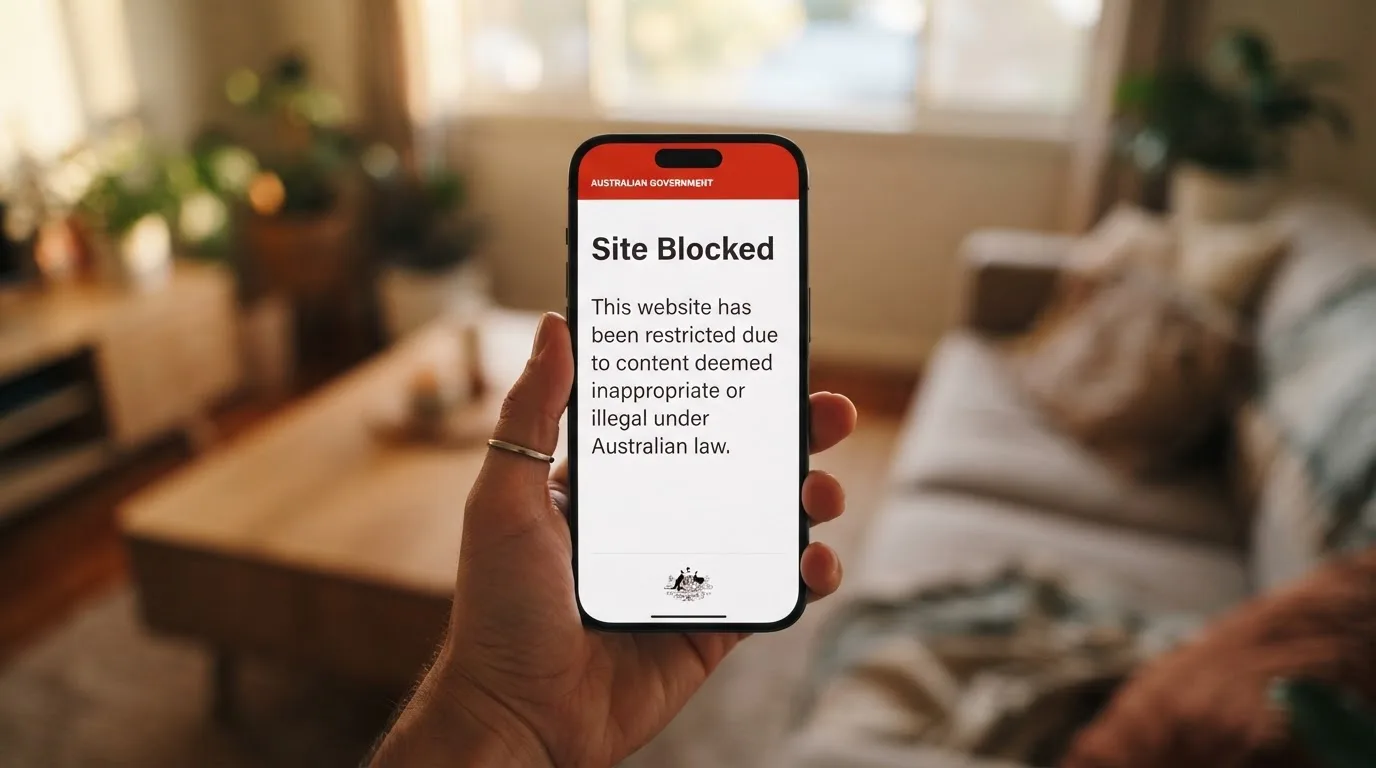
The blocking register is the visible spine of the enforcement story. The formal-warning register is the more revealing one, because a formal warning names the operator company and the brand under the same document. A brand that surfaces in this register once has been the subject of an investigation that ended in a written statutory warning — not a customer complaint, not a media report, but a regulator’s note that the operator is offering prohibited interactive gambling services to Australians.
The relevant warnings over the brands discussed on this page, in chronological order:
- May 2022 — Dama N.V. over six brands: Bambet, Dazard, Level Up, Rocketplay, Wild Tornado and Cobra Casinos.
- September 2022 — Hollycorn N.V. over Sky Crown and Blue Leo.
- February 2025 — EOD Code SRL over Instant Casino.
- March 2025 — Dama N.V. over Woo Casino.
- April 2025 — Sterplay Holding Ltd over Casino Intense.
- May 2025 — Dama N.V. over Spirit Casino.
- July 2025 — Bamboo Media over Ignition Casino, and Consolutetish S.R.L. over National Casino and Bizzo Casino. Bizzo Casino had already been the subject of a 2022 warning to TechSolutions (CY) Group Limited and TechSolutions Group N.V.
- April 2026 — Ryker B.V. over Jackbit and CasinOK.
- March 2026 — Pulsup Ltd over Rocketplay.com.au.
A reader should note what the list actually contains. Three of the warnings over the brands on this page name the same operator — Dama N.V. — over a four-year span and a portfolio of more than eight brands. That pattern matters more than the count of warnings. It says something about how the operator registers new domains in response to blocking requests, and it says something about the cost of doing that against an enforcement regime that does not appear to slow down.
What a first deposit bonus costs the player who reads the small print
A first deposit bonus is rarely what its headline line presents. Three cost lines recur in the small print of offers across the offshore brands the ACMA has warned, and they apply even where the headline percentage is generous.
The wagering requirement. Most first deposit bonuses carry a wagering multiple — the bonus amount (or sometimes the deposit plus bonus) must be staked that many times before any winnings convert to withdrawable cash. Multiples of 35x to 50x are common; some packages run higher. A bonus of A$200 at a 40x multiple means A$8,000 in placed bets before the winnings release. The bonus is not a credit of A$200. It is a credit of A$200 on the terms that A$8,000 must pass through the games first.
The game weighting. Slots typically count 100% towards the wagering requirement; table games and many live casino products count less, often 10% or zero. A reader who plays blackjack to clear a slots-weighted bonus will clear about a tenth of the requirement per dollar wagered, which stretches the A$8,000 figure out by an order of magnitude.
The cap and the time limit. Most packages cap the maximum convertible winnings from the bonus — typical caps run between 5x and 10x the bonus amount. The cap is rarely advertised in the headline. Most packages also impose a use-by window, often seven to thirty days; an unused bonus expires.
The arithmetic of clearing a bonus is roughly the arithmetic of expected loss on the required turnover, and the casino’s house edge sits inside it. A reader who wants to know what an offer is worth in real money should treat the headline number as the ceiling and the small print as the floor.
Responsible gambling tools Australians can actually use
A first deposit bonus sold by an offshore casino offers no responsible gambling infrastructure to the player who takes it. The tools that follow are the ones available to an Australian reader regardless of what the search-result page suggests.
BetStop, the National Self-Exclusion Register, has been live since August 2023. It binds Australian-licensed online and phone wagering services only — an offshore casino is not connected to it. Registering on BetStop does not stop an offshore casino from accepting deposits, because the offshore operator has no obligation to consult the register and no technical integration with it. What BetStop does is close off the legal channels, so the registered person is not placing bets with Sportsbet, Bet365, Ladbrokes or any other licensed Australian bookmaker for the period of the exclusion.
Bank-level gambling blocks are a more direct lever for an Australian account holder. Westpac’s gambling block works at card level — it refuses authorisation of transactions registered under the merchant category code “Betting/Casino Gambling” on eligible personal credit and debit cards. ANZ’s gambling transaction block, activated in the ANZ app, also blocks gambling transactions made through a digital wallet such as Apple Pay on an eligible card, not just the physical card; once turned on, removing it again requires a 48-hour waiting period. The same kind of card-level block exists at Commonwealth Bank via the CommBank app, with the bank warning that it cannot guarantee all gambling-related purchases will be stopped. The bank warning matters: merchant category codes do not always match the actual nature of a transaction, and an offshore casino may not register under the gambling MCC at all.
The National Gambling Helpline is 1800 858 858, free and 24/7, with chat at Gambling Help Online. A first deposit bonus problem is rarely a single offer, and a phone call is a single action a reader can take this week.
The payment rails for an Australian player
The search phrase “first deposit bonus casino” implies that the deposit will go somewhere. The practical question is what happens to the money if the bonus is claimed, and what happens to the winnings if any are won.
Card rails and credit restrictions
The Interactive Gambling Act as amended in 2023 bans credit cards and credit-related products as payment for Australian-licensed online wagering. The ban constrains gambling use of linked digital wallets as well — paying through Apple Pay on a credit card is still paying by credit card. Where the offer is wagering rather than casino, the licensed bookmaker will refuse the credit route and the deposit simply will not go through. Apple itself sets transaction limits and PIN requirements through the card issuer or merchant, and Apple does not charge consumer fees for using Apple Pay anywhere; any surcharge comes from the merchant’s card-processing fees. By the end of 2025, Apple Pay, Google Pay and Samsung Pay collectively accounted for around 45% of all card payments in Australia by number.
American Express sits outside the proposed Reserve Bank surcharge ban being consulted on in the RBA’s July 2025 review, which proposes removing surcharges only on eftpos, Mastercard and Visa card transactions. Amex’s three-party scheme — it issues cards and processes transactions itself rather than through the four-party Visa/Mastercard network — has been the structure since its first charge card on 1 October 1958.
For an offshore casino, the credit ban does not bind. The offshore casino will accept credit cards and crypto, which are precisely the markers that the casino is operating outside Australian rules.
Bank transfer and PayID
For wagering, Osko by Australian Payments Plus settles bank transfers between participating Australian banks in under a minute, 24/7 including weekends, addressed either to a BSB and account number or to a PayID. Paying to a PayID shows the name of the account holder before the transfer is sent — Australian Payments Plus warns that being asked to transfer money to a PayID on an illegal gambling site almost certainly means a scam site. PayID-based instant transfers are available at over 100 Australian financial institutions.
Australia’s New Payments Platform became accessible to the public on 13 February 2018 and is owned by New Payments Platform Australia Ltd, a non-profit company whose 13 shareholders include the Reserve Bank of Australia and the country’s major banks. More than 25 million PayID identifiers had been registered by April 2025. Participants in the platform must keep monthly outages to no more than two minutes; in 2021 the ACCC authorised merging NPP Australia with BPAY and eftpos into a single company, Australian Payments Plus.
BPAY
BPAY is a bill-payment service in online banking: the payer enters the Biller Code and the Customer Reference Number printed on the bill. It has operated since 1997 — launched 18 November 1997 — and is available in the online banking of over 140 banks and financial institutions, offered by over 95,000 businesses. It is run by Australian Payments Plus, the same operator as PayID and Osko, and is owned equally via parent company Cardlink Services Limited by Australia’s four major banks: ANZ, Commonwealth Bank, National Australia Bank and Westpac. The September 2021 ACCC authorisation merged BPAY Group, eftpos and NPP Australia under Australian Payments Plus.
BPAY and PayID are bill-payment and instant-transfer rails. They are not payment methods on an offshore casino. If a casino in the ACMA’s warning register asks an Australian player to deposit via PayID into a personal account, that is the warning Australian Payments Plus is publishing.
Reporting thresholds
AUSTRAC’s threshold-transaction-report rule, which requires reporting of transfers of A$10,000 or more, applies only to physical cash. Ordinary electronic bank transfers are not subject to that per-transaction reporting requirement, regardless of amount. A reader who hears that “large” gambling transfers get reported to AUSTRAC should know that the report threshold sits on cash-in-hand, not on the debit card or the PayID.
How often the ACMA has actually had to block
The blocking-rate calculation is the simplest arithmetic on this page and the one most readers do not see. The first blocking request the ACMA issued was in November 2019. By June 2026, the running total of blocked sites was 1,751.
That works out to roughly 1,751 sites over 80 months, or around 22 sites blocked per month on average over the life of the regime. The annual rate has not been even. The early years were lighter; enforcement was strengthened in 2017, and the post-2017 cadence is where most of the 1,751 figure sits. A single round in June 2026 added 12, which is well under the monthly average but well within the typical round size — rounds of 10 to 25 sites are common in the published record.
The honest way to state this is as a band rather than a single number. Roughly 22 blocked sites per month over the full regime; perhaps a third of that per month if the reader wants the steady-state post-2017 pace; and a single blocking round can drop a dozen names in one day. The point for a reader is that the ACMA’s blocking register is not a static list — it is a running log, and the names in it are a snapshot, not a closed set. A casino that is not on today’s register can be on it next quarter.
The brands the ACMA has named, side by side
The list below carries no bonus terms. Every brand in the list has been the subject of an ACMA formal warning for offering prohibited interactive gambling services to Australians; the bonus packages affiliate pages describe for these brands were not the basis for inclusion and are not relied on here. The only source for any offer on these brands was affiliate marketing material, which the ACMA’s own warnings make the wrong place to start.
| Brand | ACMA action and date | Operator named by the ACMA | Subject support |
|---|---|---|---|
| RocketPlay | Formal warning, March 2026; earlier Dama N.V., May 2022 | Pulsup Ltd | listings-only (Gamblinginsider.com) |
| Level Up Casino | Formal warning, May 2022 | Dama N.V. | listings-only (Westpac.com.au) |
| Woo Casino | Formal warning, March 2025 | Dama N.V. | — |
| Spirit Casino | Formal warning, May 2025 | Dama N.V. | — |
| National Casino | Formal warning, July 2025 | Consolutetish S.R.L. | listings-only (acma.gov.au, austrac.gov.au, betstop.gov.au) |
| Bizzo Casino | Formal warning, July 2025; earlier TechSolutions, 2022 | Consolutetish S.R.L. | listings-only (Gamblinginsider.com) |
| Ignition Casino | Formal warning, July 2025 | Bamboo Media | — |
| Instant Casino | Formal warning, February 2025 | EOD Code SRL | listings-only (Ecopayz.com, Payid.com.au) |
| Jackbit | Formal warning, April 2026 | Ryker B.V. | — |
| Casino Intense | Formal warning, April 2025 | Sterplay Holding Ltd | listings-only (austrac.gov.au, betstop.gov.au, Gamblinginsider.com) |
| Sky Crown | Formal warning, September 2022 | Hollycorn N.V. | — |
A reader looking at this table should note the operator pattern. Dama N.V. appears three times across four years and eight brands. Consolutetish S.R.L. carries two. Hollycorn N.V. and Bamboo Media each carry one. The brand is a marketing skin; the operator is the company that the regulator addresses. A casino with a different logo on a different domain, run by the same operator company, sits inside the same enforcement frame.
The “Subject support” column reflects where these brands appear in material outside the ACMA’s own register — payment-provider pages, public-facing responsible-gambling directories, industry listings. Three of the eleven carry no such third-party reference at all, which is its own observation. An offshore brand can be entirely self-referential: its terms, its licence page, its reviews.
RocketPlay
The ACMA’s March 2026 warning to Pulsup Ltd over Rocketplay.com.au is the most recent action on this list. The earlier Dama N.V. warning from May 2022 covered the brand under a different operator entity, which is the kind of change the ACMA’s enforcement record documents at the operator level rather than the brand level. The payment-method material for the brand is sparse — the only third-party source is Gamblinginsider.com’s industry listing, which is not a verification of any offer.
Level Up Casino
Level Up Casino was named in the May 2022 warning to Dama N.V. alongside five other Dama brands — Bambet, Dazard, Rocketplay, Wild Tornado and Cobra Casinos. The Westpac gambling-block page references this category of merchant in its merchant category code description, which is what makes the warning meaningful at the bank level rather than only at the regulator level. The block on Westpac cards applies to the MCC, not the brand.
Woo Casino
Woo Casino is a March 2025 Dama N.V. warning. No third-party listing outside the ACMA register; the brand is not on the payment-provider pages or the responsible-gambling directories the ACMA works with. The brand is the brand, and the operator is Dama N.V. — the same operator that already absorbed a May 2022 warning over six sibling brands.
Spirit Casino
Spirit Casino carries the May 2025 Dama N.V. warning. No third-party listing. The pairing of Woo Casino (March 2025) and Spirit Casino (May 2025) inside a single ten-week window from the same operator is the kind of cadence that suggests the operator is treating the ACMA warnings as a cost of doing business rather than a signal to leave the Australian market.
National Casino
National Casino sits under the July 2025 warning to Consolutetish S.R.L., alongside Bizzo Casino. National Casino surfaces in third-party material from the ACMA itself, from AUSTRAC and from BetStop — three of the public-facing Australian responsible-gambling institutions. That third-party visibility is not a defence; it is the responsible-gambling infrastructure documenting an offshore casino as one of the brands Australians have reported problems with.
Bizzo Casino
Bizzo Casino’s July 2025 warning to Consolutetish S.R.L. was the second formal warning on the brand — the first was a 2022 warning to TechSolutions (CY) Group Limited and TechSolutions Group N.V. Two warnings across three years on the same brand, through different operator entities, is the kind of pattern that says the brand is not the problem and the underlying operation is not the problem either — what survives is the commercial proposition, and the commercial proposition is the part that pulls Australians in.
Ignition Casino
Ignition Casino carries the July 2025 Bamboo Media warning. No third-party listing. A casino targeting Australians through an Australian-facing affiliate programme and named in an ACMA warning under an operator company that the regulator has to write to by name is the case where the ACMA warning is not a footnote.
Instant Casino
Instant Casino is the February 2025 EOD Code SRL warning. Third-party material from Ecopayz.com and Payid.com.au shows up alongside the ACMA register — payment providers and instant-transfer rails have a stake in the offshore gambling market, and their pages are where an Australian player might first meet the brand. The Australian Payments Plus warning about PayID on illegal gambling sites applies directly here.
Jackbit
Jackbit is the April 2026 Ryker B.V. warning, paired with CasinOK. No third-party listing. The pairing of two brands in one warning under one operator is the same shape as the Dama N.V. and Consolutetish S.R.L. pairings — one operator, multiple skins.
Casino Intense
Casino Intense is the April 2025 Sterplay Holding Ltd warning. Third-party material includes AUSTRAC, BetStop and Gamblinginsider.com — a wider footprint than most brands on this list, and the AUSTRAC and BetStop references in particular are the responsible-gambling and reporting infrastructure pointing at a brand Australians have had problems with.
Sky Crown
Sky Crown sits under the Hollycorn N.V. warning from September 2022, paired with Blue Leo. No third-party listing. Hollycorn is one of the more persistent operators on this list and the September 2022 warning predates most of the others by years.
The reform that lands in 2027
The Interactive Gambling Amendment (Gambling Reform) Bill 2026 passed Parliament on 19 August 2026. Its advertising and inducement measures commence 1 January 2026. The Bill is law with a start date — it is not in force on an 2026 page. A reader who is following the policy landscape should track what the inducement measures actually cover; an 2026 reader cannot rely on them yet. The honest position is that the search results for “first deposit bonus casino australia” in 2026 sit under the regime that has been enforced since 2017, not the one that takes effect from 1 January 2026.
What a reader looking for a first deposit bonus in Australia should actually do
There is no first deposit bonus for online casino games, online pokies or in-play betting that an Australian resident can lawfully claim. The search phrase returns offers from offshore operators, and the ACMA has named most of them. The legitimate routes for an Australian who wants to place a bet on a first deposit are wagering services licensed by the Northern Territory Racing and Wagering Commission — sports, racing, lotteries — where the bonus mechanic exists but operates inside the credit ban, the responsible-gambling infrastructure and the Australian consumer protection regime.
If the reader’s interest is the bonus itself rather than the betting, the realistic questions are whether the licensed bookmaker offers a first deposit match on a sport or race the reader is interested in, what the wagering multiple is, and what the maximum convertible winnings are. Those three numbers decide what the bonus is worth.
If the reader has been clicking through to offshore casinos and feels the experience getting away from them, BetStop, the bank-level gambling blocks and the National Gambling Helpline are the three levers that work. None of them require the offshore casino’s cooperation, and the bank-level block in particular closes the merchant category code that most of these brands register under.
Reading a first deposit bonus offer before claiming it
Five lines of small print determine what a first deposit bonus is actually worth. They appear, with variations, across nearly every offer an Australian reader will encounter.
The wagering multiple — the number of times the bonus amount (or the deposit plus bonus) must be staked before the winnings release.
The game weighting — what counts towards the wagering requirement and at what percentage. Slots typically 100%, table games often 10% or zero.
The maximum convertible winnings — the cap on what can be withdrawn from the bonus even after the wagering requirement is met.
The time window — the period within which the wagering requirement must be cleared; unused bonuses expire.
The deposit method restriction — whether the bonus is available on every deposit route or only on selected ones, and whether e-wallet deposits (which often do not trigger the bonus at all) are excluded.
If any of these five lines is missing from the offer page, the offer is not the offer. If the offer page asks for a credit card or a crypto deposit, the operator is outside Australian rules.
The tax note
Gambling winnings of a recreational player are not assessable income (section 6-5 ITAA 1997) and losses are not deductible, unless the person carries on a business of gambling. That is the model the ATO publishes; the reader’s actual position depends on their circumstances and on the ATO’s view of what they did with the money. The honest advice is to keep records and to check with the ATO or a tax adviser before claiming anything on a return.
Frequently asked questions
What is a first deposit bonus, as distinct from a no-deposit bonus?
A first deposit bonus is a credit attached to the first money a new account sends in — typically a percentage match of the deposit, sometimes with free spins. A no-deposit bonus is a small credit or spin package for opening an account without paying anything in. Both carry the same kind of small print — a wagering multiple, a game weighting, a cap, a time window — but the no-deposit version caps the winnings harder because the operator is not receiving a deposit against the credit.
Do first deposit bonuses usually carry wagering requirements?
Yes, almost always. A wagering requirement is the multiple of the bonus amount (or the deposit plus bonus) that must be staked before winnings convert to withdrawable cash. Multiples between 35x and 50x are common; some offers run higher. A first deposit bonus with no wagering requirement exists, but it is the exception rather than the rule, and the headline percentage on those offers is usually smaller.
Is it legal for an online casino to offer Australians a first deposit bonus?
No, not for online casino games, online pokies or in-play betting. The Interactive Gambling Act 2001, as amended in 2017, makes it an offence to provide those products to a person physically in Australia. What is licensable in Australia is wagering on racing and sport placed before the event, lotteries and keno — and the first deposit bonus mechanic on those products exists only at Australian-licensed operators, primarily those licensed by the Northern Territory Racing and Wagering Commission. See also What a high roller casino with bonus really looks like from inside… .
Can a first deposit bonus be withdrawn immediately after it is credited?
Almost never. A first deposit bonus is a credit on terms — typically a wagering multiple, a game weighting, a maximum-convertible-winnings cap and a use-by window. The bonus itself sits in a separate balance that cannot be withdrawn until the wagering requirement is met, and the winnings from the bonus are capped at the figure in the small print. “Withdrawable” at the moment of credit is not a feature of the product.
What should someone read before accepting a first deposit bonus offer?
Five lines: the wagering multiple, the game weighting, the maximum convertible winnings, the time window, and the deposit method restriction. If any of those is missing, or if the deposit method is a credit card or crypto on a brand the ACMA has warned, the offer is not the offer it appears to be. The ACMA’s register of formal warnings is the public list of operators that have been written to under the Interactive Gambling Act; a brand on it is operating outside Australian law whatever its licence page says.