
Best Aussie Pokies Online Australia 2026: What the Law Actually Says
The honest starting point for any page about “best aussie pokies online australia 2026” is uncomfortable but simple: there is no licensed list of such sites, because the law does not let one exist. Online pokies fall inside a category the Interactive Gambling Act 2001 prohibits outright for anyone in Australia, and no state or territory issues a licence for them. What follows is the picture an Australian punter actually faces — the enforcement record, the offshore brands the regulator has warned, what those offers really cost, and where a person caught up in it can turn.
Data current as of 29 October 2026; licence and enforcement claims checked against the Australian Communications and Media Authority’s published register of formal warnings and blocking actions.
Table of Contents
- Bonus Credit and Free Spin Offers on Unlicensed Sites
- Pokies, Providers and the Shape of a Catalogue
- Comparing Sites That Cannot Lawfully Serve You
- What Online Pokies Are in Australia, and What They Are Not
- How the Interactive Gambling Act 2001 Actually Works
- Responsible Gambling: What BetStop Does and Does Not Cover
- Payments, Settlement Times and Why They Are Not the Story
- The Operator File, Brand by Brand
- The Cost of the “Best” Offer, in Real Numbers
- Frequently Asked Questions
Bonus Credit and Free Spin Offers on Unlicensed Sites
Marketing for these offers leans on two words that mean very little once you look closely: “bonus” and “free.” A bonus credit is the site’s own money, attached to a turnover requirement that turns it into a workload before any of it becomes yours to withdraw. Free spins come with the same machinery behind them, plus a ceiling on how much of any win you can actually cash out. Both are inducements designed to pull a deposit through the door; neither is free in any useful sense of the word.

The Interactive Gambling Act 2001 treats inducements the same way it treats the games themselves — as something no Australian-licensed provider may extend. That is not a quirk of one operator; it is the structural position. If a site is offering bonus credits or free spins to an Australian, it is by definition not a site the Australian framework permits to be offering them. The inducement is the proof that the offer lives outside the rules.
Reading the small print is where the real numbers live, and they are not the numbers in the banner:
- A wagering requirement of 35x to 50x the bonus, applied to bonus only or to bonus plus deposit, is the band offshore brands typically use. At 40x on a A$100 bonus, a player must turn over A$4,000 before withdrawing anything derived from that credit.
- Game weighting commonly reduces the contribution of pokies from the headline 100% down to a much smaller percentage once you click through. A 10% weighting on pokies means the A$4,000 requirement becomes A$40,000 of pokies play at face value.
- Maximum cashout caps on free-spin wins are routine — winnings above the cap vanish back into the site the moment you try to withdraw them.
- Time limits of seven to thirty days are standard. Miss the window and the bonus and any winnings tied to it are forfeit.
None of this is hidden in the small print because it is illegal to hide; it is hidden because the headline offer has to read well enough to get the click in the first place. The “best” bonus on a site that cannot lawfully serve you is whichever bonus you would have lost the least money on had you claimed it.
Pokies, Providers and the Shape of a Catalogue
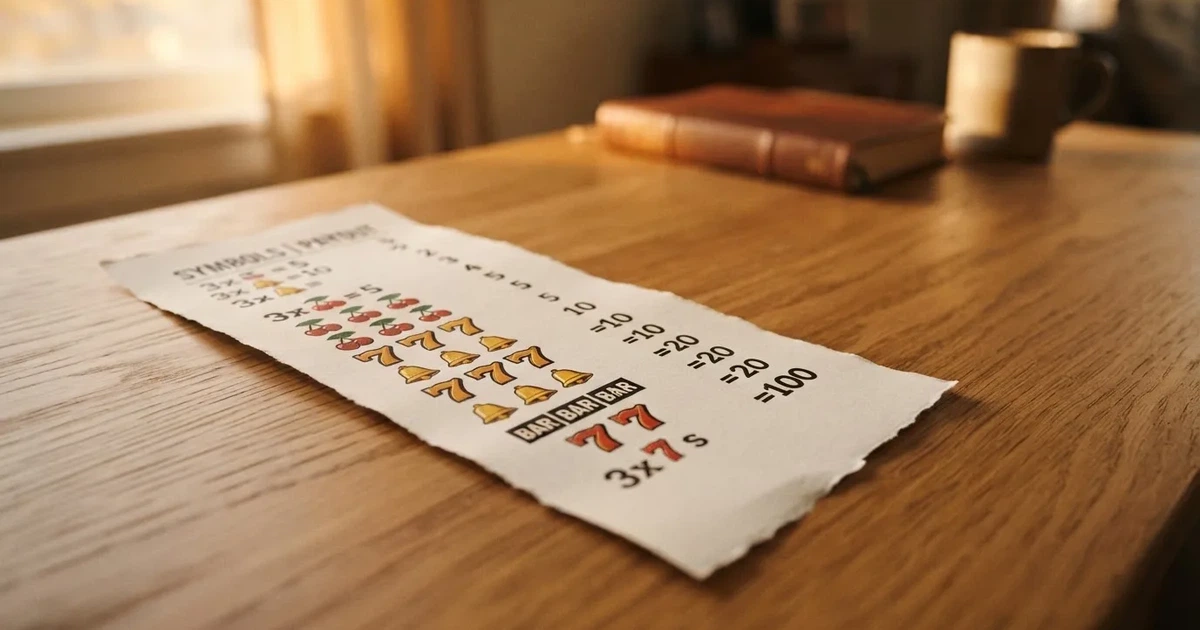
A paytable is the document a pokie shows you when you press the information button. It lists what each symbol pays at the stake you have set, what the wild and scatter symbols do, what the bonus features trigger and how many free games they award. Most modern pokies run on five reels and a fixed number of paylines; some have moved to “ways to win” mechanics where any three or more matching symbols on adjacent reels count. Megaways titles change the number of symbols per reel on every spin, which is why the paytable on those games is usually presented as a range rather than a single figure.

A catalogue on an offshore site tends to be organised by provider — the studio that built the game — and then by theme or feature inside that. The same provider’s titles will sit together because they share an engine, math model and look. A punter who has found a provider they like the feel of can usually work through that studio’s range quickly without learning a new interface each time.
What none of that catalogue tells you is whether the site offering it is permitted to offer it to you. The Interactive Gambling Act 2001 is the same law whether the game is a three-reel classic or a Megaways title with a bonus buy. The provider may be a well-known studio; the licence displayed may come from a real jurisdiction; the offering of that game to someone in Australia remains unlawful under Australian law.
A licensed pub or club machine in Australia is a different object — approved state by state, with a legal minimum return-to-player that runs from 85% in New South Wales, Queensland, the Northern Territory and (generally) Victoria to 90% in Western Australia. A player walking up to a machine in a Sydney pub can check the return-to-player printed on the machine’s help screen and know it is the figure the state regulator has signed off on. An offshore pokie offers no equivalent assurance.
Comparing Sites That Cannot Lawfully Serve You
A comparison between offshore brands offering prohibited services to Australians is not a recommendation to use any of them. It is a record of what the regulator has done to each of them and what the catalogue claims to contain. The brands named below are listed because the Australian Communications and Media Authority itself issued a formal warning over each, under the Interactive Gambling Act 2001, for offering prohibited interactive gambling services to people in Australia. The order follows the order of the regulator’s published warnings.
| Brand | ACMA action and date | Operator named by the ACMA | Subject support |
|---|---|---|---|
| RocketPlay | Formal warning, March 2026 | Pulsup Ltd | — |
| Level Up Casino | Formal warning, May 2022 | Dama N.V. | Game catalogue referenced via BGaming listings |
| Woo Casino | Formal warning, March 2025 | Dama N.V. | — |
| Spirit Casino | Formal warning, May 2025 | Dama N.V. | — |
| National Casino | Formal warning, July 2025 | Consolutetish S.R.L. | Game catalogue referenced via Wikipedia listings |
| Bizzo Casino | Formal warning, July 2025 (earlier 2022 to TechSolutions) | Consolutetish S.R.L. | — |
| Ignition Casino | Formal warning, July 2025 | Bamboo Media | — |
| Instant Casino | Formal warning, February 2025 | EOD Code SRL | — |
| Jackbit | Formal warning, April 2026 | Ryker B.V. | — |
| Casino Intense | Formal warning, April 2025 | Sterplay Holding Ltd | Catalogue references via ABC News, ACMA, Crown Melbourne |
| Sky Crown | Formal warning, September 2022 | Hollycorn N.V. | — |
The table’s emptiness in the right-hand column is the point. Research carries no independently verified catalogue figure for these brands against the Australian pokies market, and what their own pages claim sits outside the audit’s reach. RocketPlay was warned in March 2026 over RocketPlay’s website specifically; Bizzo Casino had already attracted a 2022 warning before the 2025 one; Casino Intense and Sky Crown sit among the older entries. Dama N.V. alone accounts for four of the eleven brands, which is what repeated enforcement against a single operator looks like from the regulator’s side.
A formal warning under the IGA is the regulator’s published statement that it has found a breach and expects it to stop. It is not a court order, but it is recorded, and it is the ACMA’s usual first step before referring the matter to the federal police or seeking a blocking direction against the site’s Australian presence. Once a site sits on the blocking list, Australians cannot reach it through a mainstream Australian ISP, and any balance still on the account becomes effectively inaccessible through normal channels.
What Online Pokies Are in Australia, and What They Are Not
Australia runs one of the world’s largest electronic gaming machine populations inside its licensed venues — pubs, clubs and casinos — with each state and territory separately regulating design and operation. New South Wales alone had 87,298 gaming machines outside casinos across 2,195 venues as of June 2023, and players lost A$8.18 billion on them in the 2022–23 financial year. Queensland had 21,122 machines in 351 venues in October 2023. Victoria ran 26,380 machines outside Crown Casino across 488 venues in 2021–22, sitting under a statewide ceiling of 30,000. Western Australia went the other direction in 1985 — banning poker machines in pubs and clubs when Crown Perth opened, leaving the state’s roughly 2,500 machines all inside that one casino under the Gaming and Wagering Commission’s approval.
Registered clubs introduced the country’s first legal poker machines in New South Wales in 1956. Tasmania then handed a single operator, the Federal Group, a monopoly licence over all of the state’s machines from 1968 until legislation passed in November 2021 ended it, moving oversight to the Tasmanian Liquor and Gaming Commission and setting up the country’s first mandatory pre-commitment card regime — though implementation of those cards was delayed until late 2025.
The “pokies” a punter plays in a Sydney pub, a Brisbane club or a Melbourne casino are land-based machines that pay out under rules a state regulator has signed off on, with the minimum return-to-player printed on the machine itself. An “online pokie” is the same kind of game running as software on a server, reachable through a website, and that is the version the IGA prohibits from being supplied to anyone in Australia. The two products share a name and a category; they do not share a legal status.
The framing of “best aussie pokies” is what offshore marketing uses to point Australians at the second product using the familiarity of the first. The branding borrows the word “Aussie,” borrows the term “pokies,” and may even borrow the look of a pub machine — but none of that makes the offer an Australian one. A site calling itself “Aussie” while being licensed in Curaçao and serving customers from a server outside Australia is not an Australian pokies site in any sense the Australian regulatory system recognises.
How the Interactive Gambling Act 2001 Actually Works
The IGA, as strengthened by the Interactive Gambling Amendment Act 2017, makes it an offence to provide online casino games, online pokies or in-play betting to a person in Australia. The law targets the provider, not the player — the individual punter is not prosecuted for placing a bet. What the individual punter loses by playing on an offshore site is recourse: there is no Australian complaints body, no Australian consumer protection law that meaningfully applies, and no Australian court the player can take a complaint to if a withdrawal is refused or a bonus is voided.
What is licensable under Australian law is wagering on races and sporting events placed before the event, lotteries and keno. In practice, online bookmakers offering these products are licensed in the Northern Territory through the Northern Territory Racing and Wagering Commission, which regulates 52 of Australia’s online bookmakers, including the major names — Sportsbet, Bet365, Ladbrokes — and meets once a month in Darwin with no full-time staff of its own. The Commission’s role is real, but its scope is narrow: wagering services, not casino games or pokies. A licence issued by the NTRWC does not extend to offering online pokies to Australians; nothing does.
Enforcement sits with the Australian Communications and Media Authority. The ACMA investigates complaints, issues formal warnings and can direct Australian internet service providers to block illegal gambling websites. As of June 2026 the ACMA had asked ISPs to block 1,751 illegal gambling and affiliate marketing websites since the first blocking request in November 2019, and more than 230 unlicensed gambling services had left the Australian market since enforcement was strengthened in 2017. A blocking request issued in June 2026 alone took out twelve sites in one round: 7Signs, ChromaBet, Donbet, Duospin, Freshbet, Slots Gem, Jacks Club, Lucky Start, Pointsbetz, Spinrise, Vinyl Casino and Wildsino.
The Blocking Rate, November 2019 to June 2026
From November 2019 through June 2026, the ACMA moved 1,751 illegal gambling and affiliate marketing sites onto ISP blocking lists. Spread across the roughly 79 months between those two dates, that works out to a running average of around 22 sites blocked per month, or roughly 260 per year. The pace is not constant — the June 2026 round alone added twelve — but the band is the picture the data actually supports, not the clean single number a one-line summary would imply.
The figure carries one condition worth stating: it is a count of sites the ACMA asked ISPs to block, not a count of distinct operators behind those sites. A single operator running several brands can drive the number up faster than the underlying operator count, and the eleven warnings in the operator table above show what that looks like in practice — Dama N.V. alone accounts for four of them. The blocking rate is a reasonable read of enforcement intensity, but it is not a one-to-one map of the offshore market.
Payment policy sharpens the picture further. Since 11 June 2024, licensed Australian wagering providers have been banned from accepting credit cards, credit-related products and digital currency as payment — penalties up to A$247,500 for operators who breach. The legal deposit routes for a licensed Australian wagering account are debit card, bank transfer, PayID/Osko and BPAY. An offshore site asking an Australian customer for a credit card or a crypto deposit is not just outside the Australian licence frame on the games side; it is also asking for a payment the licensed Australian system would refuse. That refusal is the licensed system’s signal that the transaction does not belong to it.
The 2026 Reform That Has Not Yet Commenced
The Interactive Gambling Amendment (Gambling Reform) Bill 2026 passed Parliament on 19 August 2026. Its advertising and inducement measures commence on 1 January 2027. The law is enacted but not yet in force on a 2026 page — a distinction that matters, because the measures it covers (advertising restrictions, inducement rules) are not currently binding on offshore operators targeting Australians, and will not be until the commencement date.
For a punter reading the page now, the practical effect is that the enforcement record above is the current state of play and will remain so until the reform’s measures take effect. Once they do, the question becomes whether the ACMA’s reach into inducement advertising extends far enough to matter against offshore marketing — which is a question the current data does not answer.
Responsible Gambling: What BetStop Does and Does Not Cover
The National Self-Exclusion Register, branded BetStop, has been live since August 2023. It binds Australian-licensed online and phone wagering services — the same set the NTRWC licences — to honour a person’s request to be excluded. A punter who registers with BetStop cannot open new accounts with those licensed providers and cannot place bets with their existing ones.
What BetStop does not do is bind offshore casinos. An offshore casino offering online pokies to Australians is not connected to BetStop; the register cannot exclude a person from a site that does not participate in it. The mechanism that protects a punter from licensed wagering harm does not extend to the prohibited-services side of the market, which is the side the page is about.
The free, confidential support line that does cover the prohibited side is Gambling Help Online, reachable on 1800 858 858, 24 hours a day, with web chat. The service is run for anyone whose gambling has started to affect their wellbeing, regardless of whether the gambling took place through a licensed wagering account or an offshore casino. If a person has been playing on any of the brands named in the operator table above and wants to stop, Gambling Help Online is the channel that operates without requiring a particular licence type from the operator.
The state-based help lines sit alongside the national one — each state and territory runs its own counselling service — but the national line is the one that operates across borders and across product types. Tasmania’s mandatory pre-commitment card regime, once implemented, is the kind of structural intervention that the rest of the country has not adopted; whether it eventually does is a question for a later page.
Payments, Settlement Times and Why They Are Not the Story
Australian banking is fast. PayID and Osko settle in near real time between participating banks; BPAY settles next business day for most transactions; debit card payments clear at the merchant’s batch window. For a licensed Australian wagering account, a deposit through PayID typically appears in the betting balance within seconds; a withdrawal back to a PayID-linked bank account typically arrives the same day, sometimes within minutes.
For an offshore online pokies site, none of that is the story. The site is outside the Australian regulatory frame; it does not hold an Australian financial services licence; its payment processing is whatever its own processor has set up. A PayID deposit to an offshore operator is technically possible because PayID is a payments-layer service, not a licence check — the routing layer will move the money regardless of who is receiving it. The receiving side, though, sits outside the rules that govern what a licensed Australian wagering provider may do with that deposit.
The “no deposit bonus” marketing that surrounds offshore pokies usually pairs with a payment method the operator is happy to accept but the Australian framework has banned for licensed play — credit card, crypto. A no-deposit offer is often the hook to register a card or wallet the operator will keep on file, then a first-deposit bonus that attaches a turnover requirement to whatever the player puts in. The deposit is not the product; the deposit is the data.
The practical effect for a punter who has decided to play on an offshore site anyway is that the settlement times on the page are whatever the offshore site claims, not what an Australian bank does. If the site delays a withdrawal beyond its own advertised window, the punter’s recourse is whatever the site’s own complaints process produces, because the Australian system does not reach it. That asymmetry is the part the marketing copy does not mention.
The Operator File, Brand by Brand
Each write-up below describes what the ACMA has published about the brand and what the operator’s own positioning appears to be. None of them recommends the brand. The judgement at the end of each block is the page’s own read of what the brand represents in the Australian context given what is on the record.
RocketPlay
The Australian Communications and Media Authority issued a formal warning to Pulsup Ltd over the RocketPlay website in March 2026. The brand sits inside the most recent enforcement window covered by this page, and the warning was published against the Australian-facing site specifically — Rocketplay.com.au — which is a tighter scope than the operator-level warnings other brands have attracted. The brand’s marketing leans on the “Aussie” framing in its domain name, but the licence it displays is not Australian and the offering is one the IGA prohibits from being supplied to anyone in Australia.
Verdict: a brand the regulator has named in the current year for offering prohibited services to Australians through a site using the country name in its own address. The position on a list like this one is the warning itself; nothing about the warning supports the brand as a destination for a reader.
Level Up Casino
Dama N.V. attracted a formal warning in May 2022 covering six casino brands — Bambet, Dazard, Level Up, Rocketplay, Wild Tornado and Cobra Casinos — over prohibited interactive gambling services supplied to Australians. Level Up is one of those six, and the Dama N.V. footprint across the operator table above is what four of the eleven warnings having the same operator attached looks like. The Level Up catalogue is referenced through BGaming listings in research material, which is a listing-level association rather than a verified catalogue figure.
Verdict: a brand with a four-year-old warning still on the regulator’s record, attached to an operator that has attracted further warnings since. The reading of “listings-only” subject support means the page does not assert what the catalogue contains; the warning stands on its own.
Woo Casino
The ACMA issued a formal warning to Dama N.V. over Woo Casino in March 2025, in the same enforcement push that named Spirit Casino two months later. The brand sits on the same Dama N.V. licence chain as Level Up and Rocketplay, and the operator’s pattern of warnings — six in 2022, two more in 2025, plus a 2026 Rocketplay warning under a different operator entity — is the cluster a reader needs to see rather than any single brand within it.
Verdict: a brand whose operator has been warned repeatedly for the same kind of breach; reading any single brand in isolation understates how concentrated the enforcement picture is.
Spirit Casino
Spirit Casino was named in the ACMA’s May 2025 formal warning to Dama N.V., two months after Woo Casino in the same operator cluster. The brand’s marketing uses the same kind of “Aussie” framing as its siblings, and the licence it displays is the same Curaçao licence chain. Research carries no catalogue or feature figure for the brand against the Australian market.
Verdict: same operator, same enforcement pattern, same position. The brand is named here only because the regulator named it.
National Casino
The ACMA issued a formal warning in July 2025 to Consolutetish S.R.L. over National Casino, in the same enforcement round that named Bizzo Casino. The brand’s catalogue is referenced through Wikipedia listings in research material, which is a listings-level association rather than a verified catalogue figure, and the brand’s offering remains one the IGA prohibits from being supplied to Australians.
Verdict: this site’s inclusion on the formal warning list confirms that it operates without Australian licence, and its presence in this table serves as a reference point for the regulator’s enforcement activity.
Bizzo Casino
The ACMA’s July 2025 formal warning to Consolutetish S.R.L. named Bizzo Casino alongside National Casino. The brand had already been the subject of a 2022 formal warning, issued to TechSolutions (CY) Group Limited and TechSolutions Group N.V., so the 2025 action is a second warning rather than a first. Two warnings on the same brand across three years is the kind of pattern that suggests the regulator considers the earlier one to have not produced compliance.
Verdict: having attracted two separate formal warnings, this brand is an established subject of the regulator’s enforcement efforts, with its repeated appearance underscoring the regulator’s non-compliance findings.
Ignition Casino
Bamboo Media was named in the ACMA’s July 2025 formal warning over Ignition Casino. The brand uses the “Ignition” framing common across offshore casinos and has no Australian licence; the warning sits in the same July 2025 enforcement round as National Casino and Bizzo Casino. Research carries no catalogue or feature figure for the brand against the Australian market.
Verdict: a brand with a recent warning, on the same record as the others; this mention serves only to record the enforcement action.
Instant Casino
EOD Code SRL was named in the ACMA’s February 2025 formal warning over Instant Casino, earlier in 2025 than the July round that touched National Casino, Bizzo and Ignition. The brand’s marketing uses the kind of language aimed at readers in jurisdictions where the offering would be permitted, but the Australian jurisdiction is not one of them — the IGA does not let the offering through.
Verdict: a brand named by the regulator earlier in the same year; same position as every other entry on the table.
Jackbit
Ryker B.V. was named in the ACMA’s April 2026 formal warning over Jackbit and CasinOK. The brand sits in the most recent enforcement window covered by the page, alongside RocketPlay under Pulsup Ltd. Two brands warned in the same operator-level action is the same Dama N.V. pattern by a different operator name — repeated enforcement tends to come in clusters rather than single entries.
Verdict: as a target of a 2026 warning, this brand sits squarely within the most recent enforcement data, reflecting the regulator’s ongoing monitoring of offshore service providers.
Casino Intense
Sterplay Holding Ltd was named in the ACMA’s April 2025 formal warning over Casino Intense. The brand’s catalogue is referenced through listings in research material across the ABC, ACMA and Crown Melbourne — a listings-level association rather than a verified catalogue figure, and the brand’s offering remains one the IGA prohibits from being supplied to Australians.
Verdict: a brand with a year-old warning and a listings-level catalogue association; the page does not recommend.
Sky Crown
Hollycorn N.V. was the operator named in the ACMA’s formal warning over Sky Crown and Blue Leo, in the September 2022 publication that remains on the regulator’s record. Sky Crown is the oldest warning on the table, predating every other entry by years, and the brand’s offering remains one the IGA prohibits from being supplied to Australians.
Verdict: the longest-running warning on the table; the age of the warning is itself the data, and it does not support a positive reading.
The Cost of the “Best” Offer, in Real Numbers
The marketing word to puncture here is “best.” Take a representative offshore welcome package — the kind the ACMA’s enforcement record targets — at A$100 bonus with a 40x wagering requirement applied to the bonus only, on a pokie returning 95% to the player. The required turnover is A$100 × 40 = A$4,000 of eligible play. At a typical spin stake of A$1 and an average of around five seconds per spin, that is A$4,000 ÷ A$1 = 4,000 spins, which works out to 4,000 × 5 = 20,000 seconds, or roughly 5.6 hours of continuous play. The expected loss across those 4,000 spins at the 95% return-to-player is A$4,000 × (1 − 0.95) = A$200 — the bonus’s real cost to the player on average, before any cashout cap is applied.
The arithmetic is a statistical estimate, not a guaranteed outcome. It assumes only the bonus amount is wagered (no additional deposits), that the pokie contributes 100% to the wagering requirement at face value (game weighting can reduce this), and that the player finishes the wagering requirement before any time limit expires. Each of those assumptions is one the marketing banner does not state. The result is the ceiling on what a clean playthrough costs; in practice, with weighting and time pressure, it can run higher.
The comparison that matters is what A$200 of expected loss buys the player. On the licensed Australian side, the equivalent spend on a pub pokie in New South Wales carries a legal minimum return-to-player of 85%, an explicit state regulator sign-off, and the protection of state-level complaints processes. The expected loss per A$4,000 of play is A$600 at 85%, which is higher in nominal terms — and that is the licensed product, on a machine the state has approved, in a venue with harm-minimisation measures the IGA does not reach the offshore product to require.
The offshore “best” offer is not cheaper; it is just priced differently. The licensed pub machine takes a larger cut of turnover but sits inside a regulatory frame. The offshore offer takes a smaller cut of turnover and sits outside one.
Frequently Asked Questions
Does calling an online pokies site “Aussie” change where it is actually licensed?
No. The word “Aussie” in a brand name or a domain is marketing wording, not a regulatory status. The licences the site displays — typically Curaçao, Anjouan, or another offshore jurisdiction — are the licences that govern it. Under the Interactive Gambling Act 2001, supplying online pokies to a person in Australia is prohibited regardless of what the site calls itself, and the ACMA’s published warnings list is full of brand names that use “Aussie” or Australian-themed imagery. The country word and the country licence are two different things.
Are the bonus credits and free spins on an “Aussie pokies” site legal to advertise here?
No. Bonus credits and free spins are inducements, and the IGA treats inducements to use a prohibited interactive gambling service the same way it treats the service itself. The ACMA’s formal warnings over the brands named in the operator table above include inducement-style marketing among the conduct being warned about. The 2026 reform bill, which commences on 1 January 2027, tightens advertising and inducement rules further, but on a 2026 page the current legal position is what the IGA already says.
Is there a dedicated app for Aussie-branded online pokies that is legal to install locally?
No licensed app exists, because no licence is available for the product. The Google Play and Apple App Store policies differ on real-money gambling apps by jurisdiction, but in Australia the question of which apps the stores accept does not override the IGA, which prohibits the offering of online pokies to Australians at the source. An app installed via a sideloaded APK or a direct download from a brand’s site sits outside both the stores’ review and the Australian regulatory frame.
Do state gaming regulators recognise any “Aussie online pokies” brand as licensed?
No state or territory gaming regulator in Australia issues a licence for online pokies. The Interactive Gambling Act 2001 prohibits the offering federally, and no state instrument overrides that. What state regulators do licence is land-based poker machines — the pub, club and casino pokies the first section of this page describes — under their own design and return-to-player rules. The NTRWC licences online wagering on races and sport before the event, plus lotteries and keno; it does not licence online pokies.
How does an Aussie-branded online pokies catalogue differ from a licensed pub’s machines?
The pub machine is a state-approved electronic gaming machine with a printed minimum return-to-player, operating under rules the relevant state regulator has signed off on — 85% in New South Wales and the Northern Territory, 87% in the ACT and Tasmania, 87.5% in South Australia, 90% in Western Australia. The offshore online pokie is software running on a server outside Australia, with a return-to-player set by the operator and no Australian regulator’s sign-off on the math. The name and the basic shape are similar; the regulatory status is not.
Can an Aussie-branded online pokies site accept a PayID deposit and still be unlicensed?
Yes. PayID is a payments-layer service that moves money between Australian bank accounts regardless of who is receiving it on the other end. An offshore site can display a PayID as a deposit option because the routing layer does not check whether the recipient holds an Australian licence. The licensed Australian wagering framework, by contrast, restricts deposits to debit card, bank transfer, PayID/Osko and BPAY, and bans credit cards and crypto — so a PayID deposit to an offshore site is technically possible, legally meaningless, and offers none of the consumer protection that the licensed framework attaches to the same payment.