
Best Pokies in South Australia: Licensed Venues, Real Numbers, and the Offshore Sites That Can’t Operate Here
The phrase “best pokies in South Australia” means one thing when someone at a bar in Norwood asks it, and quite another when the same question lands in a search box. At the bar, the answer is the pokies room down the road — a venue licensed by Consumer and Business Services, running machines under a state-issued gaming machine entitlement, paying out under a minimum 87.5% return-to-player rule. Online, the same words return a wall of offshore casino brands that the Australian Communications and Media Authority has spent seven years warning and blocking. Those two realities don’t sit on the same shelf, and treating them as if they do is how players end up depositing at a site that closes the moment the next ACMA blocking round drops.
Data current as of 29 October 2026 and checked against the ACMA’s formal warning register and South Australia’s Consumer and Business Services.
Table of Contents
- The Practical Shape of Playing Pokies in SA
- What You’re Actually Allowed to Play
- Adelaide Casino as the Flagship Venue
- The Pub and Club Network — Where 471 Venues Sit
- Cashless Pokies and How Settlement Now Works
- Payout Percentages and the Question Players Ask Most
- Licensed Venue Landscape
- What the Blocking Numbers Actually Show
- What Offshore Sites Can’t Offer That Onshore Venues Can
- Responsible Gambling Tools in South Australia
- The Legal Frame Around Online Pokies in Australia
- What Changes If You’re Visiting From Interstate or Overseas
- 24-Hour Venues and Operating Hours
- Comparing Licensed Pokies in SA to Other Australian States
- Regulatory Comparison
- Frequently Asked Questions
The Practical Shape of Playing Pokies in SA
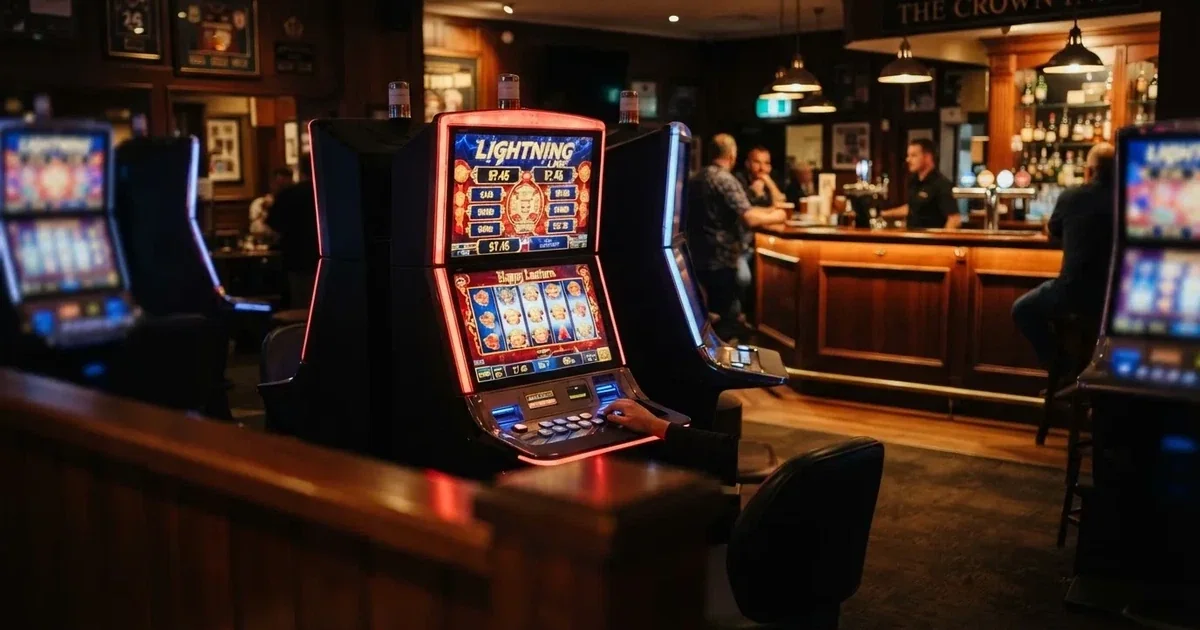
South Australia runs one of the more concentrated land-based pokies markets in the country. As at September 2023, the state had 11,672 gaming machines outside Adelaide Casino, spread across 471 venues. In the 2022–23 financial year, players put A$0.92 billion through those machines — roughly A$497 per adult. Adelaide Casino itself runs another 950 gaming machines, plus 90 gaming tables, and is the only venue in the state licensed to operate table games under the Casino Act 1997.
That’s the structure: a single casino with full table-game rights on North Terrace, and a network of hotels, clubs and community venues across metropolitan Adelaide and the regions running gaming machines under the state’s hotel and club licence framework. Anyone searching for pokies in the state is looking for one of those 472 venues, not an offshore substitute.
The closest comparison sits across the border. Queensland had 21,122 gaming machines in 351 venues in October 2023 — a larger machine footprint with fewer venues, reflecting a licensing regime that concentrates entitlements in bigger clubs and hotels. Tasmania and the ACT operate on tighter numbers, with Casino Canberra the ACT’s sole licensed casino. South Australia sits in the middle: more venues than Queensland, fewer machines overall, and a single casino rather than the multi-venue casino precincts of Sydney or the Gold Coast.
What You’re Actually Allowed to Play
South Australia’s Consumer and Business Services, part of the Attorney-General’s Department, sets and enforces the rules for every gaming machine in the state outside the casino floor. The minimum return-to-player rate is 87.5% — meaning a machine must, on average and over its design life, return at least 87.5 cents for every dollar wagered. The general maximum bet sits at A$5.00 per spin outside the casino. Adelaide Casino itself has no maximum-bet limit on its 950 machines, which is one of the structural differences between the casino floor and a suburban pub.
The state’s regulatory history is recent enough to matter. In December 2018 South Australia abolished the Independent Gambling Authority and consolidated gambling regulation under the Liquor and Gambling Commissioner. The major reform package — the changes that brought in pre-commitment limits, mandatory breaks on electronic gaming and tightened signage rules — took effect on 3 December 2020. A player sitting down at a machine in 2026 is sitting under rules written and amended across those two moments, not under the regime of twenty years ago.
Adelaide Casino carries its own parallel regulatory layer. Under the Casino Act 1997, Consumer and Business Services keeps a daily compliance presence at the venue focused on host-responsibility interactions with patrons. The venue’s table-game monopoly was extended to 30 June 2035 under a licence formalised on 11 October 2013, which also permits expansion to up to 200 gaming tables and 1,500 gaming machines subject to redevelopment milestones. The licence was already active when the A$330 million Riverbank redevelopment added the EOS by SkyCity tower in 2021 — the 120-room hotel expansion that came with new gaming space.
Adelaide Casino as the Flagship Venue
Adelaide Casino sits in the heritage-listed Adelaide railway station building on North Terrace. It opened on 12 December 1985 under the state-owned Lotteries Commission, was sold to SkyCity Entertainment Group in June 2000, picked up the SkyCity Adelaide commercial name in April 2001, then reverted to Adelaide Casino in 2009. The current footprint is 90 gaming tables, 950 gaming machines, the casino floor, the EOS by SkyCity tower with its 120 hotel rooms, and a precinct anchored on North Terrace next to the Festival Centre.
In the 2007–08 financial year the venue paid more than A$41 million in taxes and charges to the state. The current tax and community contribution structure flows through Casino Act 1997 arrangements plus the 2013 licence extension — the licence is the document that sets the maximum machine count, the table-game monopoly, and the redevelopment triggers. For anyone comparing the state’s licensed venues, Adelaide Casino is structurally different from every pub and club machine in the state: different regulator, different stake limits, different operating hours, different cash-handling environment.
The closing benchmark the player actually cares about is the payout percentage. Outside the casino, every machine in the state must hit the 87.5% minimum. Inside Adelaide Casino, the casino’s own machines sit above that floor; the exact figure is set by the venue’s gaming plan rather than the state’s machine rules. The casino does not publish a single state-wide RTP figure because there isn’t one — every venue runs its own floor mix, and every title within a venue carries its own return-to-player profile.
The Pub and Club Network — Where 471 Venues Sit
The 471 venues running the 11,672 machines outside Adelaide Casino are pubs, clubs, community venues and hotels across metropolitan Adelaide and regional centres. Each one holds a gaming machine licence from Consumer and Business Services, pays the associated state tax, and operates under the same 87.5% RTP floor and A$5.00 maximum bet. The variety among them is in the floor mix — newer machines with bonus features sit next to older five-reel titles — and in the hours of operation, since South Australia’s gaming hours rules apply uniformly.
For a player trying to compare venues, three differences matter: machine count (some hotels run 30 machines, some run 90); the refresh rate of the floor (newer titles versus machines that have been in place since the early 2010s); and the cash handling setup, since cashless card-based play has rolled out across the state’s pubs and clubs under the December 2020 reforms. A venue that has fully transitioned to cashless play runs differently from one still settling tickets at the bar.
Adelaide’s CBD pubs and clubs — North Terrace and the surrounding blocks — are the densest cluster, which is why “pokies in South Australia CBD” pulls the search traffic it does. Outside the CBD, the regional centres (Mount Gambier, Whyalla, Murray Bridge, Port Augusta) carry their own networks, generally with smaller machine counts but the same regulatory floor.
Cashless Pokies and How Settlement Now Works
South Australia’s cashless gaming card system rolled out under the 2020 reform package, and it has changed what “paying out” looks like at the venue level. A player loads funds onto a card at the venue, plays the machines against that card, and cashes out at the venue’s cashless terminal. The settlement is instantaneous at the machine — there’s no ticket queue and no waiting for a bar staff payout — because the card settles against the venue’s central system in real time.
For Adelaide Casino, the cashless system runs alongside the older ticket-in-ticket-out setup, and the casino floor retains both pathways. The casino’s larger stake sizes and table-game mix mean cashless card play is one option among several, not the only pathway.
The state’s broader payment rules — what can and can’t be used to fund play — apply to licensed wagering rather than to gaming machines. Credit cards, credit-related products and digital currency are banned as payment for licensed online wagering since 11 June 2024, with penalties up to A$247,500 for operators who breach the rule. Legal deposit routes for licensed wagering are debit card, bank transfer, PayID/Osko and BPAY. These rules do not reach a poker machine in a pub — you put cash or venue card funds in, and you walk out with cash or a card balance.
Payout Percentages and the Question Players Ask Most
“How much do these machines actually pay back?” is the question behind most “best paying pokies South Australia” searches. The honest answer is that the 87.5% state minimum gives every machine a floor, and most venues sit above it. Beyond that floor, the range across machine titles is significant: older machines with simpler mechanics tend toward the lower end of the licensed range, and newer machines with bonus features and progressive jackpots can sit higher but with higher volatility.
The state does not publish a per-venue RTP ranking, and no industry source in Australia publishes a comparative machine-by-machine table by venue. What a player can do is look at the game information screen on any machine — every licensed machine in South Australia displays its theoretical return-to-player figure in the help or info menu, alongside the volatility classification. The figure is theoretical and long-run; it is not a session promise.
For comparison purposes, the broader Australian gaming-machine market runs similar minimums. New South Wales sets a minimum that sits in the same band as South Australia’s. Queensland’s minimum sits a touch higher, around 90%, on the machines outside its casino floors. Western Australia’s machine market is mostly confined to the one casino. Adelaide Casino’s own machines run above the state 87.5% floor but the venue does not publish a single composite figure, so the casino-versus-pub comparison is structural (different stake limits, different opening hours, different cash-handling) rather than a clean RTP-versus-RTP number.
Licensed Venue Landscape
| Brand | ACMA action and date | Operator named by the ACMA | Subject support |
|---|---|---|---|
| RocketPlay | March 2026 | Pulsup Ltd | No-data |
| Level Up Casino | May 2022 | Dama N.V. | Listings-only |
| Woo Casino | March 2025 | Dama N.V. | Listings-only |
| Spirit Casino | May 2025 | Dama N.V. | No-data |
| National Casino | July 2025 | Consolutetish S.R.L. | Listings-only |
| Bizzo Casino | July 2025 | Consolutetish S.R.L. | No-data |
| Ignition Casino | July 2025 | Bamboo Media | No-data |
| Instant Casino | February 2025 | EOD Code SRL | No-data |
| Jackbit | April 2026 | Ryker B.V. | No-data |
| Casino Intense | April 2025 | Sterplay Holding Ltd | Listings-only |
| Sky Crown | September 2022 | Hollycorn N.V. | Listings-only |
The bulk of the search results behind “pokies” terms in Australia are offshore online casino brands that the ACMA has warned or blocked. None of them holds an Australian licence to offer online casino games — online casino and online pokies are prohibited interactive gambling services under the Interactive Gambling Act 2001, and no state or territory licenses them. What follows is each brand the ACMA has named in a formal warning, the operator the ACMA identified, and the date the warning was published. The list is not a ranking and not a recommendation: the ACMA itself issued the warning, and what the brand advertises as a “pokies section” is a prohibited product.
RocketPlay
The ACMA issued a formal warning to Pulsup Ltd over RocketPlay in March 2026. Dama N.V., a separate operator, was warned over the same brand in May 2022. The ACMA register lists the warning under the Interactive Gambling Act 2001. The site displays an offshore licence; no Australian regulator licenses RocketPlay to offer online casino games to people in Australia. Any Australian who deposits at the site has no Australian consumer protection, no complaints body and no recourse if a withdrawal is refused.
Level Up Casino
Dama N.V. received a formal warning over Level Up in May 2022, alongside five other casino brands the ACMA named in the same action: Bambet, Dazard, Rocketplay, Wild Tornado and Cobra Casinos. The site operates under an offshore licence. Australian consumer protection does not reach it.
Woo Casino
Dama N.V. received a further formal warning over Woo Casino in March 2025. The brand has been the subject of multiple ACMA actions; the offshore licence the site displays does not authorise it to offer online casino games to people physically in Australia. A withdrawal dispute has no Australian-licensed venue to escalate to.
Spirit Casino
Dama N.V. received a formal warning over Spirit Casino in May 2025. The brand runs offshore under a Curaçao-issued licence structure. No Australian regulator licenses Spirit Casino to offer online pokies or table games to Australian residents. The site is a prohibited service the moment it accepts an Australian customer.
National Casino
Consolutetish S.R.L. received a formal warning over National Casino in July 2025. The ACMA action sits within a broader pattern: the same operator group was warned over Bizzo Casino in the same month, and Bizzo had already been the subject of a 2022 formal warning to TechSolutions (CY) Group Limited and TechSolutions Group N.V. National Casino displays an offshore licence and is not licensed in any Australian state or territory.
Bizzo Casino
Consolutetish S.R.L. received a formal warning over Bizzo Casino in July 2025, on top of the earlier 2022 warning to TechSolutions (CY) Group Limited and TechSolutions Group N.V. Two operators behind the same brand, both the subject of formal ACMA action. The site’s Australian-facing product is a prohibited interactive gambling service.
Ignition Casino
Bamboo Media received a formal warning over Ignition Casino in July 2025. The site has run under multiple brand operators over the years, none of which hold an Australian licence to offer online casino games.
Instant Casino
EOD Code SRL received a formal warning over Instant Casino in February 2025. The site accepts Australian customers through its offshore setup; the ACMA warning makes clear the regulator’s position that the offering is a prohibited service.
Jackbit
Ryker B.V. received a formal warning over Jackbit in April 2026, alongside CasinOK in the same action. The brand displays an offshore licence; no Australian regulator authorises Jackbit to offer online pokies or casino games to people in Australia.
Casino Intense
Sterplay Holding Ltd received a formal warning over Casino Intense in April 2025. The site is offshore-licensed. Its offering to Australian customers sits under the Interactive Gambling Act’s prohibition on online casino games.
Sky Crown
Hollycorn N.V. received a formal warning over Sky Crown (alongside Blue Leo) under an ACMA action published in September 2022. The brand displays an offshore licence and offers online casino games to Australian customers through that offshore structure. The ACMA warning is on the public register.
What the Blocking Numbers Actually Show
The blocking-rate arithmetic tells you how the ACMA’s enforcement has built up. Since the first blocking request in November 2019, the ACMA has asked Australian internet service providers to block 1,751 illegal gambling and affiliate marketing websites as at June 2026. The single June 2026 round added another 12 sites: 7Signs, ChromaBet, Donbet, Duospin, Freshbet, Slots Gem, Jacks Club, Lucky Start, Pointsbetz, Spinrise, Vinyl Casino and Wildsino.
That is a sustained blocking cadence, not a one-off. The first blocking request was in November 2019; the ACMA passed the 1,751-block mark by June 2026. The arithmetic — 1,751 sites over roughly 80 months — sits in the band of approximately 22 blocks per calendar month on average across that span, and the rate has been climbing rather than slowing as more operators attempt to reach Australian customers through new front brands.
H2 Gambling Capital’s 2025 estimate puts Australian losses to illegal gambling sites at roughly A$3.9 billion a year. The same report found the share of gambling going through legal channels fell from 74% in 2021 to 64%. The blocking volume and the loss volume are tracking in the same direction — more offshore attempts, more dollars flowing outside the regulated perimeter.
Since 2017, more than 230 unlicensed gambling services have left the Australian market entirely. That figure comes from the same ACMA reporting that produced the blocking number, and it reflects services that withdrew rather than face continued enforcement. The two figures together — 1,751 sites blocked and 230 services exited — describe a market where the regulator’s net closes over time, and where the cost of operating against Australian customers has risen enough that some operators simply leave.
What Offshore Sites Can’t Offer That Onshore Venues Can
A licensed pub, club or casino in South Australia sits inside a regulatory perimeter that an offshore site cannot match. The differences are not cosmetic.
Consumer protection: A dispute at Adelaide Casino escalates to Consumer and Business Services, and the casino’s daily compliance presence means there is a regulator in the building. A dispute at an offshore casino escalates to the offshore licence issuer, often Curaçao or Anjouan, with no Australian-recognised complaints body and no standing to enforce an Australian-issued judgment.
Withdrawal reliability: At a licensed venue, a cashless card balance or a ticket pays out at the venue terminal. At an offshore site, the operator sets withdrawal rules and processing times unilaterally, and the ACMA has no authority to compel a payout.
Self-exclusion: BetStop, the National Self-Exclusion Register, has been live since August 2023. It binds Australian-licensed online and phone wagering services. An offshore casino is not connected to it. A self-excluded Australian can still deposit at an offshore site because the offshore site has no obligation to check BetStop, and the register was never designed to reach it.
Host responsibility: South Australian venues operate under the December 2020 reforms — mandatory breaks on electronic gaming, pre-commitment limits, signage requirements. An offshore site has no equivalent regime.
What an offshore site does offer is convenience: a player doesn’t have to leave the house. The convenience comes at the cost of every protection above, plus the constant risk that the next ACMA blocking round will cut the site off mid-session.
Responsible Gambling Tools in South Australia
The state’s responsible-gambling infrastructure runs through several channels.
Gambling Help Online is the national counselling service — online chat available, free, confidential. The National Gambling Helpline is 1800 858 858, free, 24/7. Both reach anyone in Australia, regardless of which state they play in.
BetStop, the National Self-Exclusion Register, has been live since August 2023. Registering excludes the person from every Australian-licensed online and phone wagering service. It does not reach gaming machines in pubs and clubs; venue-level self-exclusion is a separate arrangement negotiated directly with each venue, and Adelaide Casino runs its own exclusion scheme under its Casino Act 1997 obligations.
South Australia’s Consumer and Business Services page on Liquor, Gambling and Lotteries carries the state-level information on gambling harm support and the avenues for raising a concern about a venue. A player who feels a venue has breached its host-responsibility obligations can raise it through that channel.
For anyone playing at a pub, club or Adelaide Casino, the practical protections — pre-commitment limits, machine-level reality checks, mandatory breaks — are built into the venue’s systems under the 2020 reforms. They are not optional add-ons; they are part of the regulatory floor.
The Legal Frame Around Online Pokies in Australia
The Interactive Gambling Act 2001 (IGA), strengthened by the Interactive Gambling Amendment Act 2017, makes it an offence to provide online casino games, online pokies or in-play betting to a person in Australia. No state or territory licenses those products. The Northern Territory Racing and Wagering Commission (NTRWC) regulates 52 of Australia’s online bookmakers — including Sportsbet, Bet365 and Ladbrokes — under Territory licences taken out for tax reasons; the commission has no full-time staff and meets once a month in Darwin.
What is licensable: wagering on races and sport placed before the event, lotteries, keno. What is not: online casino, online pokies, in-play betting. The individual player is not prosecuted under the IGA — the law targets the provider. But the offshore site gives no Australian consumer protection, and it can be blocked with a balance still on the player account.
The Interactive Gambling Amendment (Gambling Reform) Bill 2026 passed Parliament on 19 August 2026, with its advertising and inducement measures commencing 1 January 2027. As at 2026 the advertising reforms are law with a future start date, not yet in force.
On tax: gambling winnings of a recreational player are not assessable income under section 6-5 ITAA 1997, and losses are not deductible, unless the person carries on a business of gambling. The ATO is the authority on individual circumstances.
What Changes If You’re Visiting From Interstate or Overseas
A visitor to South Australia who wants to play pokies can walk into any licensed pub, club or Adelaide Casino and play under the same rules as a South Australian resident. The 87.5% RTP minimum, the A$5.00 maximum bet outside the casino, and the December 2020 reform protections apply to everyone on the floor.
What changes for a visitor is the self-exclusion pathway. BetStop excludes the person from Australian-licensed online and phone wagering services, and a venue-level self-exclusion negotiated at one venue does not automatically carry to every other venue. A visitor who has previously self-excluded from a venue in another state should treat that exclusion as venue-specific unless BetStop is the underlying mechanism. Adelaide Casino runs its own exclusion scheme — separate from BetStop — for the casino floor.
Identification: South Australian venues require identification before letting a player cash out a significant amount or open a venue card account. The exact threshold and the documents accepted vary by venue, but a driver’s licence or passport is the standard. An offshore casino site requires identification too, but the verification runs against the offshore operator’s terms rather than Australian law.
24-Hour Venues and Operating Hours
South Australia’s pub and club gaming-machine hours are set under the state framework, and they generally do not run 24 hours. Adelaide Casino’s operating hours are longer and are set under its Casino Act 1997 obligations, but the casino floor is not a 24-hour gaming operation either.
“24 hour pokies South Australia” as a search phrase returns venues whose bars or amenities operate 24 hours but whose gaming floors do not. The distinction matters: a pub with a 24-hour liquor licence does not necessarily have a 24-hour gaming floor. The state’s gaming hours rules apply to the machines, not to the venue’s broader operations.
For anyone searching for genuinely round-the-clock gaming in Australia, the licensed options sit inside casino floors — Adelaide Casino in South Australia, Crown Melbourne and The Star Sydney in their respective states, The Star Gold Coast and now The Star Brisbane in Queensland. Treasury Casino in Brisbane closed on 25 August 2024 to make way for the new Star casino at Queen’s Wharf, which began a staged opening on 29 August 2024 inside the A$3.6 billion Queen’s Wharf precinct. Casino Canberra in the ACT is the only casino in the territory.
Comparing Licensed Pokies in SA to Other Australian States
The machine counts tell part of the story. South Australia runs 11,672 machines outside its casino across 471 venues (September 2023). Queensland runs 21,122 across 351 venues (October 2023). The difference — more machines, fewer venues — reflects Queensland’s licensing regime, which concentrates entitlements in larger clubs and hotels. New South Wales carries a similar density. Western Australia’s machine market is mostly confined to its one casino. Tasmania runs a smaller footprint.
Adelaide Casino’s 950 machines and 90 tables put it behind Crown Melbourne and The Star Sydney on machine count but ahead of Casino Canberra. The structural position of the SA casino — sole licence under the Casino Act 1997, monopoly extended to 2035 — gives it a stability other states have not matched. Queensland’s Star Entertainment Group was found unsuitable to hold its Queensland casino licences in late 2022 after an independent review by former Court of Appeal judge Robert Gotterson, was fined $100 million on 9 December 2022, with a 90-day suspension deferred to 1 December 2023 to allow remediation. That regulatory turbulence is not a feature of the South Australian landscape.
Regulatory Comparison
| Jurisdiction | Min RTP | Max Bet | Notes |
|---|---|---|---|
| South Australia | 87.5% | A$5.00 | Licensed venues |
| Queensland | 90% | A$5.00 | Licensed venues |
| New South Wales | n/a | N/A | Licensed venues |
A South Australian looking to play pokies has one clear-cut option: a licensed venue. Adelaide Casino for the full casino-floor experience with 90 tables and 950 machines. One of 471 pubs, clubs and hotels for the everyday pub or club machine environment, all under the same 87.5% RTP floor and A$5.00 maximum bet. Every venue sits under Consumer and Business Services supervision, under the December 2020 reform package, and under the Casino Act 1997 framework for the casino.
The offshore options that turn up in the same search results are prohibited interactive gambling services under the Interactive Gambling Act 2001. The ACMA has issued formal warnings to every brand named above, has blocked 1,751 illegal sites since November 2019, and continues to add roughly one round’s worth of blocks per month. H2 Gambling Capital’s estimate of A$3.9 billion a year flowing to illegal offshore sites is the price tag on the gap between licensed onshore play and offshore convenience.
For a player who wants the regulated perimeter — dispute resolution, host responsibility, self-exclusion that holds, withdrawals that pay — the answer is the licensed venue. For a player who has already deposited at one of the offshore brands above and is trying to get funds back, the ACMA register is the public record of what that brand is, and a dispute at the offshore licence issuer is the only path available.
Frequently Asked Questions
Which venues in South Australia are licensed to operate pokies?
Adelaide Casino holds the sole casino licence under the Casino Act 1997, running 950 gaming machines and 90 tables. Outside the casino, 471 pubs, clubs and hotels hold gaming machine entitlements from Consumer and Business Services, running 11,672 machines between them (figures as at September 2023). No other venue in the state is licensed to operate pokies, and no online operator is licensed to offer online pokies to people in Australia.
Are pokies in South Australia available around the clock?
Not in practice. Pub and club gaming floors run under state-set hours that do not extend to 24 hours. Adelaide Casino’s hours are longer under its Casino Act 1997 obligations, but the floor is not a round-the-clock operation either. Search results suggesting otherwise typically refer to the venue’s broader bar or amenity hours, not the gaming floor.
What identification do South Australian pokies venues require?
Identification is required for significant cashouts and for opening a venue card account. A driver’s licence or passport is the standard document. The exact threshold varies by venue. An offshore casino site requires identification too, but against the offshore operator’s terms rather than Australian law.
Can visitors to South Australia use interstate self-exclusion schemes at local pokies venues?
Venue-level self-exclusion negotiated at one venue is venue-specific. BetStop, the National Self-Exclusion Register, excludes the person from Australian-licensed online and phone wagering services, not from gaming machines. Adelaide Casino runs its own exclusion scheme separate from BetStop. A visitor who has self-excluded at another venue should treat that as a single-venue arrangement unless BetStop is the underlying mechanism.
How does the payout percentage on South Australian pokies compare with other states?
South Australia sets a minimum return-to-player rate of 87.5% and a general maximum bet of A$5.00 outside the casino. Adelaide Casino has no maximum-bet limit. Queensland’s machine minimum sits higher, around 90%. New South Wales operates in the same band as South Australia. Western Australia’s market is mostly confined to its casino. No state publishes a per-venue RTP ranking, so the comparison runs on regulatory minimums and stake ceilings rather than composite payout figures.
Is it legal for an online casino to advertise pokies in South Australia the same way a pub or club does?
No. Online casino games and online pokies are prohibited interactive gambling services under the Interactive Gambling Act 2001. No Australian state or territory licenses them. The Interactive Gambling Amendment (Gambling Reform) Bill 2026 passed Parliament on 19 August 2026 with advertising and inducement measures commencing 1 January 2027. The ACMA enforces the prohibition through formal warnings, blocking requests to ISPs, and investigations; the individual player is not prosecuted under the IGA, but the offshore site gives no Australian consumer protection and can be blocked with a player balance still on it.