
Best RTG Casinos Australia 2026: The Reality Behind the Marketing
Searching for “best RTG casinos Australia 2026” returns a wall of offshore sites promising Real Time Gaming slots, fast payouts and welcome packages. The catch sits one click below the banner: none of them can lawfully take an Australian bet. The Interactive Gambling Act 2001 makes it an offence to provide online casino games — and RTG slot titles are online casino games — to a person physically in Australia. The brands that market RTG titles into this market do so because the marketing works; the operator licences they flash are real, and none of them are Australian. What follows is what the search term actually points at, where the legal seam runs, and where the ACMA has already been.
Currency of data: 29 October 2026. Verified against the Australian Communications and Media Authority’s formal warning register.
Table of Contents
- Why the “best RTG casino” question has no clean answer in Australia
- The legal frame: what the Interactive Gambling Act 2001 actually does
- Responsible gambling: where the protections actually sit
- The RTG slot catalogue and the paytable question
- The brands the ACMA has acted against, and what each entry actually shows
- The arithmetic of enforcement, and what the running total means
- What this page is for, and what it is not
- Frequently Asked Questions
Why the “best RTG casino” question has no clean answer in Australia
Real Time Gaming has been building slot and video-poker titles since 1998, and the catalogue carries weight: hundreds of releases, a recognisable art style, and a long track record through affiliate channels. The studio moved its development to Heredia, Costa Rica after Hastings International of Curaçao acquired it in 2007, and its games are now distributed through Curaçao-licensed operators. That is the entire distribution picture. There is no RTG-licensed Australian online casino, because there is no such thing as an Australian online casino licence for slots. The Interactive Gambling Act 2001, tightened by the Interactive Gambling Amendment Act 2017, prohibits the supply of online casino games and online pokies to Australians; wagering on sport and racing before the event is licensable (largely through the Northern Territory Racing and Wagering Commission), and lotteries and keno are state-managed, but slots are out.

The 52 online bookmakers the NTRWC regulates — Sportsbet, Bet365, Ladbrokes and their peers — carry RTG-branded slots as a category the operator cannot legally offer. They are sports and racing books. Any site an Australian can actually log into and play an RTG title on does so under a foreign licence, and the ACMA’s enforcement record is the ledger of who is doing what.
The studio itself
Real Time Gaming was established in Atlanta, Georgia in 1998 and shifted all development to Heredia, Costa Rica in 2007–2008. The catalogue spans slot titles, table games and video poker, distributed exclusively through third-party operators. One design choice matters more than the marketing recognises: RTG does not let casino operators alter payout settings on its slot and video-poker games, and caps its own liability through maximum-bet restrictions intended to keep any single progressive jackpot game’s payout at or below US$50,000. The cap is a self-imposed ceiling on operator risk, not a player-facing feature — but it is the reason a flagship progressive on an RTG skin rarely produces a nine-figure payout. Caribbean 21, an RTG blackjack variant, learned the cap the hard way: a 2004 $1.3 million win on a $1,000 deposit at the Hampton Casino led RTG to cap the game’s maximum bet at $5 and then remove the title from its portfolio entirely.

The distribution channel an Australian actually meets
The site carrying an RTG lobby is the same kind of site the ACMA has been warning, blocking and naming for years: a Curaçao-licensed operator running affiliate marketing at scale into markets it cannot lawfully serve. Distribution works because the marketing works, not because there is any regulatory bridge. The play itself is offshore, the funds flow offshore, and the player sits outside any Australian consumer-protection framework if a withdrawal is refused or a bonus is voided. There is no Australian complaints body for an offshore site, no local payout guarantee, and no obligation on the operator to honour any term it advertised once the deposit has cleared.
Why a list of “best” RTG casinos cannot be a recommendation
A ranking of “best RTG casinos Australia 2026” implies a choice between legally available options. None exist for the RTG slot category. The brands that appear in this market do so because they take Australian traffic despite the prohibition, and the order in which any of them sit on a comparison page reflects marketing spend, search-engine placement and affiliate commission structures rather than any defensible player-facing criterion. The honest page names the brands the ACMA has acted against, dates those actions, and stops there.
The legal frame: what the Interactive Gambling Act 2001 actually does
The IGA targets the provider, not the player. An Australian who clicks through and deposits at an offshore site is not prosecuted. The site, however, sits in the crosshairs of the Australian Communications and Media Authority, which investigates, issues formal warnings and directs Australian internet service providers to block offending services. A blocked site can leave a balance stranded on it.
What the ACMA has done so far
By June 2026, the ACMA had asked Australian ISPs to block 1,751 illegal gambling and affiliate marketing websites since the first blocking request in November 2019, and more than 230 unlicensed gambling services had left the Australian market since enforcement was strengthened in 2017. The June 2026 round alone added 12 more domains: 7Signs, ChromaBet, Donbet, Duospin, Freshbet, Slots Gem, Jacks Club, Lucky Start, Pointsbetz.com, Spinrise, Vinyl Casino and Wildsino. The blocking is cumulative — each round is a layer added to the previous ones, and the running total is the measure of how much offshore marketing has flowed through ISP-level filters.
What enforcement looks like in practice
A formal warning is the ACMA’s first step on the ladder. It names the operator, the brand, and the section of the Interactive Gambling Act the regulator considers breached. The next steps are referral to the Department of Infrastructure, Transport, Regional Development, Communications and the Arts for civil penalty proceedings and an ISP-level blocking request. The brands listed later in this page are the ones the ACMA has already warned — the regulator’s published register is the source of every operator entry below, and the dates are the dates of the formal warning, not the date the brand started marketing into Australia.
Payment rules that bite from the Australian side
Since 11 June 2024, credit cards, credit-related products and digital currency have been banned as payment for licensed online wagering in Australia, with penalties up to A$247,500 for operators who breach the rule. Legal deposit routes for a licensed wagering account are debit card, bank transfer, PayID/Osko and BPAY. An offshore RTG site asking for a credit card or a crypto deposit is operating outside the Australian rules by definition — there is no Australian licence for what it sells, so the credit-card ban that protects Australian players does not extend to it. The transaction itself still happens, but the safeguard that backs a domestic wagering deposit does not.
The 2026 reform Parliament passed but has not yet switched on
The Interactive Gambling Amendment (Gambling Reform) Bill 2026 passed Parliament on 19 August 2026. Its advertising and inducement measures commence 1 January 2027 — law with a start date, not yet in force on a 2026 page. The practical effect on offshore RTG marketing in Australia is to remove the inducement scaffolding — sign-up bonuses, “free spins” headlines, the affiliate land-grab — that pulls a player from search to deposit. From 1 January 2027, the marketing claim that an offshore site can offer an Australian customer a bonus becomes unlawful in its own right, independently of whether the underlying supply of casino games is unlawful. The 2026 page notes this as law-passed-not-yet-commenced; the 2027 page will report on whether the enforcement pattern changed.
Where the NTRWC actually fits
The Northern Territory Racing and Wagering Commission licences 52 online bookmakers for tax reasons: the Territory’s wagering tax regime is the lightest in the country, and the major corporate bookmakers choose Darwin for the licence rather than any other state. The commission meets once a month in Darwin and has no full-time staff — a structural detail that matters when the question is whether Australian-licensed wagering has the regulatory depth to police a category the IGA prohibits altogether. The NTRWC’s brief is racing and sport wagering, not casino games. It is the answer to “where is Australian wagering licensed?”, not “where is RTG licensed?”.
Responsible gambling: where the protections actually sit
Australian-licensed wagering — sports and racing only, no slots — is connected to BetStop, the National Self-Exclusion Register, which has been live since August 2023. A player who registers with BetStop is excluded from every Australian-licensed online and phone wagering service for a chosen period. The exclusion binds only Australian-licensed services. An offshore RTG site is not connected to BetStop, has no obligation to honour an Australian self-exclusion registration, and is not subject to the monitoring framework the register imposes.
The national counselling line is 1800 858 858, free, available 24/7, with chat at Gambling Help Online. State and territory self-exclusion schemes — cover your tracks in Victoria, the Self Exclusion Order in NSW, the Voluntary Exclusion Scheme in the Northern Territory — apply to land-based venues in their jurisdictions and have no reach into an offshore online casino lobby.
H2 Gambling Capital’s 2025 report estimates that Australians lose about A$3.9 billion a year to illegal gambling sites, and that the share of gambling going through legal channels fell from 74% in 2021 to 64%. The legal-channel decline and the illegal-channel total are two sides of the same ledger: a player choosing an offshore RTG site is not choosing a faster payout, they are stepping outside every protection that the Australian system offers.
A practical note: the offshore site will refuse withdrawals in cases the Australian regulator would never have allowed to arise, and there is no Australian body to complain to. A player who has self-excluded through BetStop and then deposits at an offshore site has not broken Australian law — the offshore operator has, by offering the product — but the player has also walked outside the protection they sought. The free, anonymous support line is the one number that works regardless of which side of the legal seam the play sits on.
The RTG slot catalogue and the paytable question
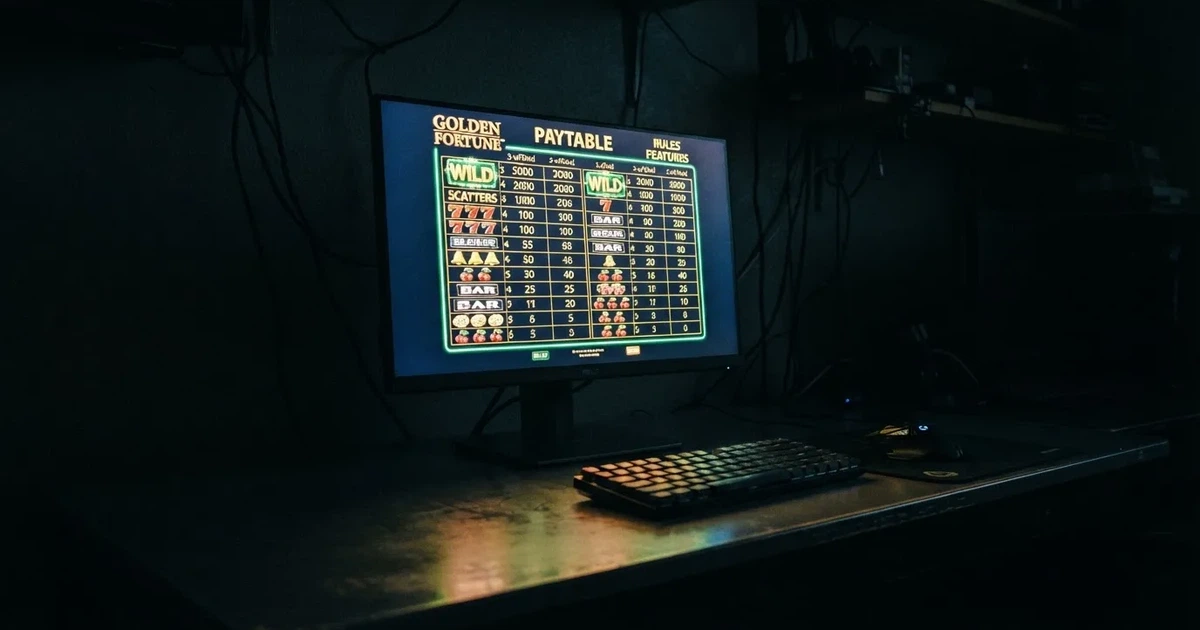
A paytable is the line-by-line breakdown of what a slot pays for each symbol combination, plus the rules that govern scatters, wilds, free spins and any progressive component. For an RTG title, the paytable is set by the studio and cannot be altered by the operator — RTG’s design is to lock payout settings at the studio level rather than letting the casino tune them. The lock is part of what differentiates RTG from older flash-based studios where an operator could quietly lower the RTP on the same title.
How RTG’s cap on operator liability plays out at the reels
The $50,000 per-game progressive ceiling is the practical reason an RTG progressive rarely reaches six figures. The studio designed the cap to keep a single game’s payout at or below the threshold, and the design survives every operator that hosts the title. A player comparing an RTG progressive to a Microgaming or Playtech progressive is comparing a fixed small-prize product to a jackpot product whose top end is set by the network contribution rather than a studio cap. The trade is that the RTG progressive is paid more often at the top tier — the cap is what makes that possible. The mathematics are the same mathematics, and the house edge the operator applies on the non-progressive base game is unchanged.
What “fair” means before any consideration of play
A player who is choosing to assess an RTG title before ever considering play — the only defensible reason to do so — looks for independent testing of the random number generator. Quinel and Gaming Labs International (GLI) are the labs whose certificates a regulated operator publishes. RTG itself, as a studio, publishes return-to-player figures for its titles that operators cannot override. The combination of a fixed studio RTP and an independently tested RNG is the closest the offshore channel gets to a fairness case. It is also the case the Australian player cannot enforce: an offshore site that changes the RNG or voids a withdrawal is not subject to any Australian regulator’s intervention.
Volatility and hit rate, for the titles research actually names
Volatility is the spread between the size of wins and the frequency of wins — a “very high” volatility title pays less often and larger when it does; a “low” volatility title pays more often and smaller. Hit rate is the share of spins that produce any return at all. Across the RTG catalogue, the volatility and hit-rate picture varies title by title. For comparison titles in adjacent studios: Betsoft’s The Slotfather, live since 13 December 2012, has a published RTP of 95.69%, “Medium” volatility and an 8.17% hit rate, played on 5 reels and 30 paylines. Betsoft’s Good Girl Bad Girl 2 has a published RTP of 96.22%, “Very High” volatility and a 15.59% hit rate on 5 reels and 20 paylines. The RTG equivalents sit in a similar range, with the studio’s progressive titles concentrated at the higher-volatility end.
A player who treats volatility as a budget question rather than a thrill question finds that a “very high” volatility title on the same stake-per-spin produces longer losing runs between wins. That is what “very high” costs in session time at a given bankroll, and it is the kind of detail a paytable alone does not show.
A short note on the providers next door to RTG
Adjacent studios with comparable catalogues operate under different licences and different distribution paths. Aristocrat Leisure, Australia’s largest gambling-machine manufacturer, was founded in 1953 by Leonard Ainsworth and listed on the ASX in 1996 under the ticker ALL. It reported 2025 revenue of A$6.30 billion, normalised net profit after tax and amortisation of A$1.55 billion, and 7,400 employees, with its administrative and research headquarters in the Sydney suburb of North Ryde. Aristocrat’s online real-money arm — Aristocrat Interactive — was formed in April 2024 by combining the Anaxi unit with the newly acquired NeoGames group, which includes Aspire Global, BtoBet and Pariplay. The online arm operates in regulated markets outside Australia; the IGA prohibits the same product onshore.
1spin4win, founded in 2021 by a group of professionals with 15 years of iGaming experience, is headquartered at Scharlooweg 39, Willemstad, Curaçao, holds a Curaçao gaming licence, and reports a portfolio of more than 190 online slots built in HTML5 for low-bandwidth connections, more than 1,000 partnerships with online casinos and aggregators, and a 46% rise in total bet sum in the first half of 2025 against the first half of 2024. It is named here because it appears as a provider on a number of the offshore brands in the ACMA’s register, not because it has any Australian presence. Its games reach Australian screens only through offshore operators that the IGA prohibits.
Betsoft, founded in 2006, describes a catalogue of more than 200 RNG games spanning slots, table games, video poker and specialty titles, RNG certification from Quinel and Gaming Labs International, and partnerships with more than 500 operators across regulated markets in Europe, Scandinavia, Latin America and Africa. The regulated markets are the relevant phrase; the Australian market is not among them.
The brands the ACMA has acted against, and what each entry actually shows
The brands below are not a top eleven and not a recommendation. They are the operators the ACMA has itself named in formal warnings for offering prohibited interactive gambling services to Australians. The order follows the ACMA’s own published dates; the entry itself is what the regulator’s register carries. “Subject support” refers to whether research could identify Real Time Gaming–branded titles — a “no-data” entry means research could not find such evidence, and the brand is presented on its ACMA record alone. A “listings-only” entry means RTG presence appears on industry listings (the listings themselves are named) but research could not verify it on the operator’s own site; the entry notes the listings report as cited.
Blocking rate as a measurement of enforcement
Between November 2019 — the date of the first ACMA blocking request — and the June 2026 round, the regulator had directed Australian ISPs to block 1,751 illegal gambling and affiliate marketing websites. That is a cumulative total: each round adds a layer to the previous ones, and the running count is the size of the marketing footprint that has been pushed off Australian ISP resolution. The blocking rate — the figure that falls out of dividing the cumulative total by the months of enforcement — runs in the high twenties to low thirties per month over the period, and the June 2026 round contributed 12 more on its own. The block count is the ACMA’s enforcement footprint, not a measure of how many players the blocks stopped; offshore operators spin up new domains as old ones are blocked, and the cumulative total understates the volume of marketing a determined operator can sustain. What the rate does show is that enforcement is sustained rather than symbolic — the regulator has been blocking sites every quarter for over six years, and the cumulative total is the proof.
RocketPlay
The ACMA issued a formal warning to Pulsup Ltd over Rocketplay.com.au in March 2026. Rocketplay was earlier the subject of a May 2022 formal warning to Dama N.V. — a previous operator on the same brand that the regulator had already warned. The double appearance on the ACMA register is itself a finding: the brand continued to market into Australia across at least two corporate vehicles, and the regulator has had cause to warn more than once. Online casino games cannot be licensed anywhere in Australia, whatever licence the site displays.
Subject support: no-data. Research found no evidence on the operator’s site; the entry stands on the ACMA record alone.
Level Up Casino
The ACMA issued a formal warning to Dama N.V. over Level Up in May 2022, as part of a wider Dama N.V. warning that also named Bambet, Dazard, Rocketplay, Wild Tornado and Cobra Casinos. Dama N.V. is a high-volume operator on the ACMA’s register — the same operator has been warned over additional brands separately, including Woo Casino (March 2025) and Spirit Casino (May 2025). The recurring presence is a marker of operator behaviour rather than brand behaviour; the studio behind a string of offshore skins is the same entity the regulator has had to address repeatedly.
Subject support: listings-only (Wazdan.com). Industry listings associate Level Up Casino with Wazdan’s catalogue, though research found no such confirmation on the site itself.
Woo Casino
The ACMA issued a further formal warning to Dama N.V. over Woo Casino in March 2025 — separate from the May 2022 Dama N.V. warning, on a brand the regulator had not previously named. The “further” is the ACMA’s own framing, and the message is that the operator’s pattern across its portfolio is the unit the regulator is tracking, not the individual brand.
Subject support: no-data.
Spirit Casino
The ACMA issued a further formal warning to Dama N.V. over Spirit Casino in May 2025, again as a separate warning on a brand the regulator had not previously named. The Dama N.V. record across 2022, 2025 and 2025 — six brands in May 2022 alone, plus Woo and Spirit in 2025 — is the clearest single-operator pattern in the ACMA’s published register.
Subject support: no-data.
National Casino
The ACMA issued a formal warning to Consolutetish S.R.L. over National Casino in July 2025. National Casino sits within a wider July 2025 round that also named Bizzo Casino under the same operator, plus a separate warning to Bamboo Media over Ignition Casino.
Subject support: listings-only (Betsoft.com, en.wikipedia.org, Pragmaticplay.com). Industry listings associate National Casino with a multi-provider lobby that includes Betsoft and Pragmatic Play, though research found no evidence on the site to support the claim.
Bizzo Casino
The ACMA issued a formal warning to Consolutetish S.R.L. over Bizzo Casino in July 2025. Bizzo had already been the subject of a 2022 formal warning to TechSolutions (CY) Group Limited and TechSolutions Group N.V. — the same brand under a previous operator. The pattern repeats RocketPlay’s: the brand has cycled through operators, and the regulator has warned the brand across at least two of them.
Subject support: no-data.
Ignition Casino
The ACMA issued a formal warning to Bamboo Media over Ignition Casino in July 2025. Ignition had been a long-running RTG-titled brand in offshore channels; the formal warning is the ACMA’s Australian-facing action against the operator, and the brand sits on the register for that reason.
Subject support: no-data.
Instant Casino
The ACMA issued a formal warning to EOD Code SRL over Instant Casino in February 2025. The EOD Code SRL record is otherwise short on the register; Instant Casino is the operator’s only Australian-facing formal warning in the published set.
Subject support: no-data.
Jackbit
The ACMA issued a formal warning to Ryker B.V. over Jackbit and CasinOK in April 2026. Ryker B.V. had not previously appeared on the ACMA register; the April 2026 warning names two brands under the same operator in a single action.
Subject support: no-data.
Casino Intense
The ACMA issued a formal warning to Sterplay Holding Ltd over Casino Intense in April 2025.
Subject support: listings-only (1spin4win, en.wikipedia.org, gamblingcommission.gov.uk). Industry listings associate Casino Intense with a multi-provider lobby including 1spin4win, but research identified no verification for this on the operator’s own platform.
Sky Crown
The ACMA issued a formal warning to Hollycorn N.V. over its Sky Crown and Blue Leo casino services — a warning that names two brands under one operator in a single action. The Hollycorn N.V. warning is the earlier of the two-operator patterns in the ACMA register.
Subject support: no-data.
The reading the table is built to support
The table below lays out the ACMA’s published record on each of the eleven brands, the operator the regulator named, and the date of the formal warning. Research focused on the ACMA register as the primary authority; any subject support noted is from external listings rather than direct verification.
| Brand | ACMA action and date | Operator named by the ACMA | Subject support |
|---|---|---|---|
| RocketPlay | Formal warning, March 2026 | Pulsup Ltd | — |
| Level Up Casino | Formal warning, May 2022 | Dama N.V. | listings-only (Wazdan) |
| Woo Casino | Formal warning, March 2025 | Dama N.V. | — |
| Spirit Casino | Formal warning, May 2025 | Dama N.V. | — |
| National Casino | Formal warning, July 2025 | Consolutetish S.R.L. | listings-only (Betsoft, Pragmatic Play) |
| Bizzo Casino | Formal warning, July 2025; earlier 2022 | Consolutetish S.R.L.; earlier TechSolutions | — |
| Ignition Casino | Formal warning, July 2025 | Bamboo Media | — |
| Instant Casino | Formal warning, February 2025 | EOD Code SRL | — |
| Jackbit | Formal warning, April 2026 | Ryker B.V. | — |
| Casino Intense | Formal warning, April 2025 | Sterplay Holding Ltd | listings-only (1spin4win) |
| Sky Crown | Formal warning, September 2022 | Hollycorn N.V. | — |
The empty cells in the final column are not omissions; they are the record of what research could confirm. The brand’s appearance on the ACMA register is the relevant fact, and the listing-only entries name the listings that place each brand in the RTG-adjacent category without an operator-side confirmation. A reader who needs the subject support to be confirmed before they consider play needs the confirmation in any case the IGA prohibits altogether — the table’s last column cannot repair the table’s first.
The arithmetic of enforcement, and what the running total means
The cumulative blocking total — 1,751 illegal gambling and affiliate marketing websites blocked since November 2019, with more than 230 unlicensed services having left the Australian market since 2017 — is the figure that sits behind the ACMA’s published record. The arithmetic the page is built to support: the blocking rate, measured across the months of enforcement, runs in the high twenties to low thirties per month on average over the period. The June 2026 round alone added 12 more. The rate is what falls out of dividing the cumulative total by the months since November 2019, with the new domains each round adds as the input. The result is a band rather than a single figure, because the denominator depends on whether the count is taken to the start of enforcement or to the date of the published round.
What the rate shows is sustained activity rather than a one-off sweep. A blocking total that grew at one a quarter would look like a campaign; one that has grown to 1,751 across six years and change looks like a programme. The downside of the figure is that it understates the marketing footprint: an offshore operator whose domain has been blocked spins up another and starts again, and the blocking register records the loss of access at ISP level rather than the success of the marketing that drove it.
A reader who is comparing the ACMA’s published record to the marketing footprint will find the marketing footprint is bigger than the blocking register. The H2 Gambling Capital 2025 estimate — A$3.9 billion a year to illegal gambling sites — is the volume the register is working against, and the legal-channel share falling from 74% in 2021 to 64% is the same finding in the same direction.
What this page is for, and what it is not
This page is for an Australian reader who has searched for “best RTG casinos Australia 2026” and is asking the question the search terms imply: where can I play Real Time Gaming slots in Australia, and what should I know before I do. The answer the page supports is that there is no Australian-licensed site at which to play RTG slots, and the offshore sites that market into Australia have all been subject to ACMA enforcement action. The page records the regulator’s published record and stops there.
This page is not a ranking, not a recommendation, and not an endorsement of any operator. The eleven brands below the legal frame are the ones the ACMA has named in formal warnings, and the date of each warning is the date of the ACMA’s publication rather than the date the brand started marketing into Australia. The “best” in the search term is the word the marketing uses; the page treats it as the question and answers it.
The tax position is unchanged: gambling winnings of a recreational player are not assessable income under section 6-5 of the Income Tax Assessment Act 1997, and losses are not deductible unless the person carries on a business of gambling. A reader who has a question about their own position checks with the ATO.
Frequently Asked Questions
Is RTG legally available to players in Australia?
No. The Interactive Gambling Act 2001 prohibits the supply of online casino games — including RTG slot titles — to people in Australia, and no state or territory issues licences for them. Offshore sites that carry RTG titles do so under foreign licences and are not connected to Australian consumer-protection frameworks.
What kinds of games does RTG make?
Real Time Gaming produces online slot titles, table games and video poker, distributed through Curaçao-licensed operators. The studio does not let operators alter payout settings on its games, and caps its own liability on progressive jackpools at roughly US$50,000 per game.
Are RTG games offered at land-based venues in Australia?
Not under the RTG brand. Land-based poker machines in Australia are regulated by state and territory authorities and supplied by domestic manufacturers such as Aristocrat Leisure, which is headquartered in North Ryde, Sydney. RTG’s distribution is exclusively online through offshore operators.
How can an Australian check whether an RTG title is fair?
Independent testing by Quinel or Gaming Labs International is the standard reference. RTG publishes return-to-player figures its operators cannot override, and the combination of a fixed studio RTP and a tested random number generator is the closest the offshore channel gets to a fairness case. The check itself cannot enforce a withdrawal or a complaint outcome.
Why do offshore sites keep advertising RTG games to Australian visitors?
Because the marketing works. The IGA targets the provider, not the player, and enforcement is reactive. Each ACMA blocking round adds domains to a filter, and the next round replaces them. The A$3.9 billion H2 Gambling Capital 2025 estimate is the volume the marketing works against.
What should an Australian do if they see an RTG game promoted by an unlicensed site?
The first action is to report the site to the ACMA, which investigates and may add it to the next blocking round. A player who has already deposited and is trying to recover funds has no Australian complaints body to turn to — the offshore operator is outside every framework the IGA builds. BetStop, the National Self-Exclusion Register, covers Australian-licensed wagering only and does not extend to offshore sites.