
Live Dealer Casinos in Australia: The Honest Short Answer
Anyone typing “live dealer casino online Australia” into a search bar is hoping for a list. The honest short answer is that no such list exists, because the Interactive Gambling Act 2001 makes it an offence to provide an online casino game to a person in Australia, and live dealer blackjack, roulette and baccarat are exactly what that prohibition covers. The page below does not dress up a workaround. It sets out what the law allows, what the Australian Communications and Media Authority has been doing about the offshore sites that ignore it, and what an Australian reader can actually do if the goal is real-time table play with a real dealer.
Data current as of 29 October 2026, checked against the ACMA’s published register of blocking requests and formal warnings.
Table of Contents
- What a Live Dealer Casino Actually Is
- Bonuses and Promotional Inducements on Live Dealer Tables
- The Specifics of Live Baccarat, Blackjack and Roulette
- Live Dealer Casinos Featuring Cryptocurrency
- Responsible Gambling Tools an Australian Reader Can Use
- What the ACMA Has Done About Offshore Live Dealer Sites
- A Comparison of the Featured Brands
- What Australian Law Actually Allows
- What an Australian Reader Can Actually Do
- What the Data Adds Up To
- Closing Position
- Frequently Asked Questions
What a Live Dealer Casino Actually Is
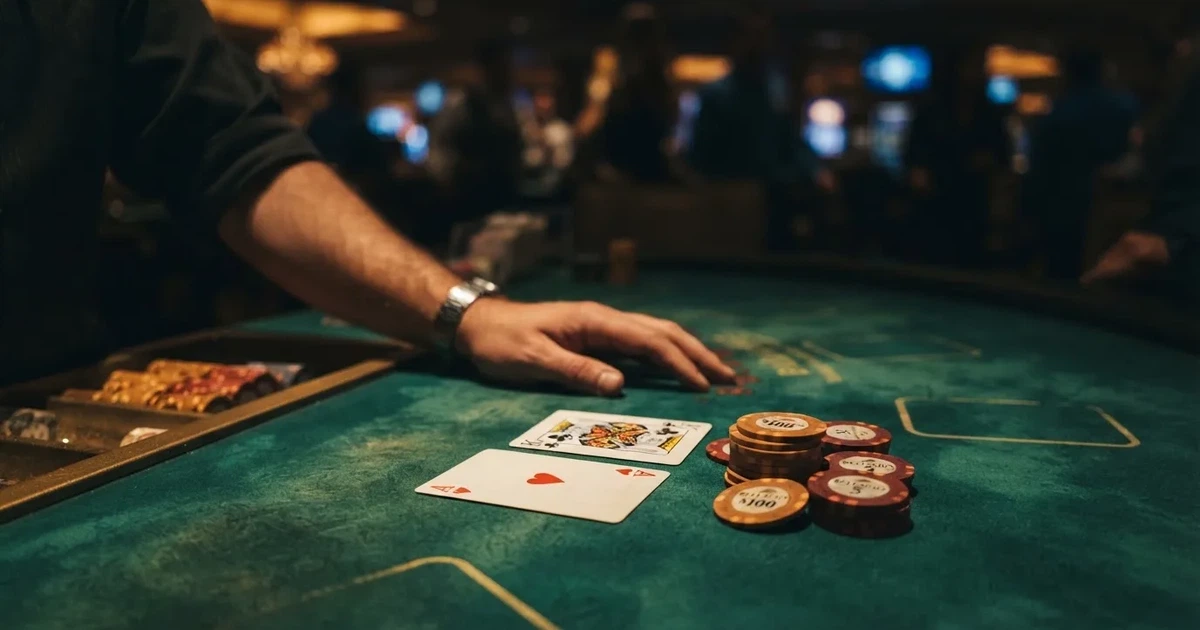
A live dealer casino streams real-time action from a studio or a land-based casino floor and uses optical camera recognition to read what the dealer does. A card leaving the shoe, a roulette wheel settling on a number, a chip stack being moved — each physical event is read by sensors and turned into the data that drives the player’s screen. The dealer is a person, the cards are real, the shoe holds six or eight decks, and the player watches through a video feed rather than trusting a random-number generator.

Three games carry almost the entire live dealer catalogue: baccarat, blackjack and roulette. Baccarat is the simplest of the three to read at speed, which is part of why it dominates the Asian-facing studios in particular. Blackjack brings the largest range of side bets and rule variants — Spanish 21, Double Exposure, Blackjack Switch and Super Fun 21 are all standard fare. Roulette is roulette. Beyond those three, the studios run game-show formats (Dream Catcher, Crazy Time, Monopoly Live) that borrow a roulette-style wheel but layer on bonus rounds, and a handful of regional variants such as Andar Bahar and Teen Patti aimed at the subcontinental market.
Evolution runs the dominant live-casino studio network. The company was founded in 2006, hit 100 live tables at its Riga base in 2013 — at that point the largest single-site casino operation in Europe — opened a Malta studio in 2014, and absorbed NetEnt in December 2020. It now owns the NetEnt, Red Tiger, Big Time Gaming, Nolimit City and Ezugi studio brands alongside its own catalogue, and reports that more than 700 gambling platforms worldwide carry its live tables, streamed 24 hours a day from studios across Europe, North America and Asia. Pragmatic Play Live runs a credible second network with similar 24/7 coverage.
The key thing for an Australian reader is that none of this changes who is allowed to take the bet. The studio operator and the platform that reskins it are both upstream of the question; the question is whether the platform offers the game to someone in Australia. The law targets that offer.
Bonuses and Promotional Inducements on Live Dealer Tables
A live dealer welcome bonus is, structurally, the same beast as a slot welcome bonus: a headline number, a multiplier you must “wager” before you can withdraw, and a list of games that count at 100%, 50%, 10% or 0% toward clearing that multiple. The marketing wraps it in “free” and “reward” and the fine print sits somewhere below the fold. Read the fine print, because the fine print is the offer.

The first thing to look for is the playthrough multiple, sometimes called the wagering requirement. A 100% match bonus of A$200 with a 35x playthrough on the bonus means A$7,000 of total bets must be placed before any withdrawal — bonus plus the winnings made from it. The same A$200 with a 50x playthrough pushes the required turnover to A$10,000. The difference looks modest on the page; it is not modest in the time it takes to clear it, and it is significant in the expected cost, because the house edge is working on every dollar of that turnover, not just on the bonus.
The second thing is game weighting. Live dealer games rarely contribute at 100% to clearing a bonus. The common pattern is slots at 100%, live dealer at 10-20%, and a small list of high-RTP games excluded entirely. A 35x playthrough that the marketing copy assumes is being cleared on slots becomes, at 10% weighting, an effective 350x on the live tables. The bonus that looked generous on the headline is a grind that would not pay out before the expiry clause kicks in.
The third thing is the cap. A maximum-bet rule — typically A$5 or A$10 per hand or spin while a bonus is active — is not a suggestion. Breach it and the bonus is voided, the winnings from it are confiscated, and the player is back to their deposit balance. A game-restriction clause that excludes live dealer tables entirely from the wagering requirement is the bluntest version of the same move: the bonus is real, the live tables the player actually wanted to use are not eligible, and the deposit has to sit on a roulette variant the player did not pick.
Then come the soft traps. A bonus that expires in seven days puts a timer on the playthrough that the headline does not advertise. A maximum-cashout clause caps the winnings from bonus play at a multiple of the bonus, so a A$200 bonus with a 5x max-cashout pays out at most A$1,000 of bonus-derived winnings regardless of what actually happened on the table. A “sticky” bonus that cannot be withdrawn at all only returns the winnings; the bonus itself is forfeit on cashout. None of these are unusual. They are the standard furniture of the offshore live dealer bonus, and they are the reason the same A$200 read on two different pages can produce two very different outcomes.
The cost of clearing a bonus is not the bonus. It is the expected loss over the required turnover at the game’s house edge. A bonus with a 35x playthrough on A$200, played entirely on a 1.06% house-edge baccarat Banker bet, costs roughly A$74 in expected loss over the A$7,000 of action. On a 1.41% craps Pass Line, the same turnover costs about A$99. On a 0.28% blackjack under liberal Las Vegas Strip rules, it costs about A$20. The bonus pays A$200; what it actually costs depends on the table it is cleared on, and the table it is cleared on is itself controlled by the weighting clause the marketing copy glossed over. That arithmetic is the real review of a live dealer bonus, and almost no affiliate page on the open web does it for the reader.
The Specifics of Live Baccarat, Blackjack and Roulette
Baccarat is the simplest game on the live floor to learn and one of the hardest to leave, because the house edge on the two sensible bets is so small that the player’s money lasts. On the Banker bet the edge is 1.06%, on the Player bet 1.24%, and on the Tie bet it is 14.36% — which is why no one who has read the page plays the Tie. Punto banco, the variant most casinos deal today, was developed in Havana in the 1940s and the casino banks both hands; the player does not draw, does not stand, and does not decide anything other than which of the three bets to place. Cards 2-9 count at face value, 10/J/Q/K count as zero, aces count as one, and hand totals are taken modulo 10. The shoe holds six or eight decks.
Chemin de fer, the older French two-player variant whose name literally means “railway,” is rare in Australia. A handful of VIP rooms in the larger Melbourne and Sydney houses run it on request, and the standard rules let the players take turns banking the game and dealing the cards rather than the house. Crown Melbourne runs three baccarat variants — Traditional Baccarat, Crown Baccarat and 2 to 1 Baccarat — each approved by the Victorian Gambling and Casino Control Commission, which took over from the VCGLR on 1 July 2022.
Blackjack is the game a reader is most likely to play. Under liberal Las Vegas Strip rules — dealer stands on soft 17, double on any two cards, double after split, resplit aces, late surrender — the house edge sits around 0.28% with optimal strategy. Under Atlantic City rules it is about 0.43%. Optimal strategy is not a vague goal; it is a chart that says what to do with every possible player hand against every possible dealer up-card. The dealer must hit until reaching 17; some rule sets require the dealer to hit on a “soft 17” (an ace counted as 11). The strongest starting hand is the “blackjack” or “natural” — an ace and a ten-valued card on the first two cards, paid at 3:2 rather than 1:1.
The history sits further back than most players realise. The game’s predecessor was the English game vingt-un; Cervantes described a related game called veintiuno around 1601-1602 in a passage of Rinconete y Cortadillo. Card historian Thierry Depaulis places the rename to “blackjack” around 1899, with prospectors of the Klondike Gold Rush of 1896-99 credited with giving it the modern name. The standard side bets — Perfect Pairs, 21+3, Insurance — sit on top of the base game and pay at much wider house edges; the main bet is the only one a strategy chart is built for.
In Victoria, the Casino Control Act 1991 requires the VGCCC to approve any rules for table games and any change to those rules before they go live at the Melbourne casino. The VGCCC’s public log of approved changes at Crown Melbourne records the renaming of “Perfect Pairs” to “Crown Pairs” on 23 December 2024 and the introduction of a “Free Bet” option with a new “Pot of Gold” side bet on 25 March 2024. In NSW, section 66 of the Casino Control Act 1992 sets the equivalent rule: a casino operator must not permit baccarat or any other game to be played unless the game and its rules are approved, and a copy of the approved rules must be available on request.
Roulette carries a heavier house edge than baccarat or blackjack — 2.70% on a single-zero European wheel, 5.26% on a double-zero American wheel — and the live dealer studios offer both. The variants with side-bet-heavy layouts such as Lightning Roulette or Immersive Roulette pay out multipliers on straight-up numbers, but the multipliers come out of a reduced overall payout pool and the house edge is wider than the base game. Craps is rarer on the live network but appears on the bigger Evolution and Pragmatic Play catalogues; the Pass/Come line carries a 1.41% edge, Don’t Pass/Don’t Come 1.36%, and the proposition bets like Any Craps run to 11.11%.
Live Dealer Casinos Featuring Cryptocurrency
A reader searching specifically for a “live dealer bitcoin casino” or a “bitcoin live dealer casino” is asking a narrower question than the headline suggests. The live dealer catalogue at the major studios — Evolution, Pragmatic Play Live, Ezugi — accepts whatever currency the platform reskins it in. The crypto question is at the deposit and withdrawal layer, not the game layer: does the platform let the player fund an account in BTC, ETH, USDT or another token, and does the live dealer session settle in that same token or only after a conversion to fiat on the way in or out?
Two structural points matter. The first is that the same offshore platform that takes Bitcoin also takes Visa, Mastercard, a handful of e-wallets and often a bank transfer. Crypto is not the brand’s identity; it is one rail among several, and the rail the Australian player is being asked to use is the one with the least recourse if something goes wrong. The second is the Australian rule: under the Interactive Gambling Act amendments that took effect on 11 June 2024, credit cards, credit-related products and digital currency are banned as payment for licensed online wagering, with penalties up to A$247,500 for the operator. The ban applies to licensed wagering, which is sports and race betting. The offshore live dealer site is not licensed wagering; the ban does not bind it. What it does bind is any Australian-licensed platform, so a reader who deposits Bitcoin into a Tabcorp or Sportsbet account will be turned away. The crypto acceptance on the offshore site is not, on its own, a marker of either quality or danger — it is a payment-rail fact that the site’s compliance team chose to wire up.
A separate point sits underneath this. The crypto deposit that an Australian player sends to an offshore live dealer site is, from the perspective of the site’s home regulator, a normal commercial transaction. From the perspective of the AUSTRAC reporting regime, it is a transfer of value out of Australia into an entity that is not an Australian reporting entity, and the exchange used to acquire the crypto in the first place is the layer AUSTRAC regulates. The player is not committing an offence by sending it. The platform is committing an offence under the IGA by accepting the bet, and the player’s deposit is at the platform’s discretion the moment it clears. There is no chargeback on a Bitcoin transaction. There is no Australian complaints body to escalate to. There is no BetStop registration that will block the account, because BetStop is wired only into Australian-licensed services.
This is the trade-off. A crypto-friendly offshore live dealer casino gives the player faster deposits, smaller minimums, and the privacy of a wallet-to-wallet transfer. It also gives the player no Australian consumer protection, no path back if the withdrawal stalls, and a balance that the ACMA can ask an Australian ISP to make unreachable at any time. The reader who values privacy and accepts the risk takes the crypto route knowingly. The reader who values recourse stays on a licensed Australian platform — which, for live dealer games, means land-based.
Responsible Gambling Tools an Australian Reader Can Use
BetStop — the National Self-Exclusion Register — has been live since August 2023 and binds every Australian-licensed online and phone wagering service. The registration is free, can be done online in a few minutes, and takes effect across every licensed operator simultaneously. A person who registers cannot open a new account with an Australian-licensed bookmaker while the exclusion is active, and existing accounts are closed. BetStop does not bind offshore casinos. Registering with BetStop does not, on its own, stop an Australian resident from creating an account at an offshore live dealer site; the offshore site is not connected to the register and has no way to check it. What it does stop is the licensed side of the person’s gambling — sports, race betting, lotteries, keno — and it is the only national self-exclusion mechanism that covers Australian-licensed services.
The National Gambling Helpline on 1800 858 858 is free, available 24/7, and connects to Gambling Help Online, which carries live chat and counselling. Financial Counselling Australia and the state-based problem gambling services — BreakEven in NSW, Gambler’s Help in Victoria, Gambling Help in Queensland and the equivalents elsewhere — provide free face-to-face and phone support. None of these services can stop an offshore account, but they can support the person who wants to.
For the Australian licensed side, the standard responsible-gaming controls are deposit limits, loss limits, session time limits, reality checks and self-exclusion, all wired into the platform by the licensing condition. The Northern Territory Racing and Wagering Commission oversees 52 of Australia’s online bookmakers — Sportsbet, Bet365 and Ladbrokes among them — licensed in the Territory for tax reasons; the commission has no full-time staff and meets once a month in Darwin. The thinness of that oversight is the background to the 2026 NT reform bill reported in April, but the bill is a Territory-internal restructuring, not a national change to the consumer-protection regime.
The deeper point for a reader who has been playing offshore live dealer tables is that the standard responsible-gaming controls — deposit caps, loss limits, session timeouts, time-out periods of 24 hours to six weeks, full self-exclusion of six months or more — are set by the offshore operator’s own house rules, not by an Australian condition. The site has no obligation to honour a limit a player set themselves, no obligation to enforce a cool-off period, and no obligation to act on the signs of harm a licensed platform is trained to flag. The Australian Gambling Research Centre has documented the pattern; the ACMA’s enforcement record against offshore sites that target Australian customers is the regulatory response. None of this is news the player wants to hear, and all of it is what the page is for.
What the ACMA Has Done About Offshore Live Dealer Sites
The ACMA enforces the Interactive Gambling Act by investigating complaints, issuing formal warnings to operators and directing Australian internet service providers to block illegal services. The cumulative blocking figure reported in June 2026 stood at 1,751 illegal gambling and affiliate marketing websites blocked since the first blocking request in November 2019, with more than 230 unlicensed services having left the Australian market since enforcement was strengthened in 2017.
Put another way: in roughly six and a half years, the ACMA has asked Australian ISPs to block an average of around 269 sites per year, or about 22 sites per month. The figure varies year to year, but the rate never falls to zero, because the supply of new offshore casino brands opening is itself high, and the ACMA’s blocklist is one round at a time. A blocking rate of 22 sites per month is roughly the pace a serious reader should expect going forward, not the pace of a single crackdown.
The most recent blocking round reported on 26 June 2026 added twelve more sites to the list: 7Signs, ChromaBet, Donbet, Duospin, Freshbet, Slots Gem, Jacks Club, Lucky Start, Pointsbetz.com, Spinrise, Vinyl Casino and Wildsino. Earlier rounds through 2024 and 2025 added dozens more. The sites are not picked at random; the ACMA prioritises those most visibly marketed to Australian customers and those against which complaints have been received. A site that names Australia in its deposit page, advertises in Australian dollars, or runs an “.com.au” redirect is a fast-tracked target.
The ACMA’s formal warnings are the other arm of enforcement. A formal warning is published on the regulator’s website, names the operator company behind the brand, and gives the public record of the regulator’s view. The warnings below relate specifically to offshore operators offering live dealer casino games to Australian customers.
RocketPlay
The ACMA issued a formal warning to Pulsup Ltd over Rocketplay.com.au in March 2026. An earlier formal warning over the Rocketplay brand was issued to Dama N.V. in May 2022, covering six casino brands in total: Bambet, Dazard, Level Up, Rocketplay, Wild Tornado and Cobra Casinos. The site presents itself as a multi-provider casino with live dealer tables from Evolution and Pragmatic Play. Online casino games cannot be licensed anywhere in Australia, whatever licence the site displays in its footer. For a reader who wants a real-money live dealer table under Australian consumer law, the lawful alternatives are the pokies venues and the land-based casinos covered below. For a reader who has weighed the offshore trade-off and accepts it, RocketPlay is one of the more visible Dama N.V. assets, and the regulator has now named the same brand twice.
Level Up Casino
The ACMA’s May 2022 formal warning to Dama N.V. covered Level Up alongside the five other brands listed above. Level Up has been listed on the BGaming provider’s roster of partner sites, which is the only third-party verification available. There is no Australian licence and there cannot be. A reader who plays at Level Up is playing at an offshore site that the ACMA has formally named, and the balance sits outside Australian consumer protection.
Woo Casino
Dama N.V. picked up another formal warning over Woo Casino in March 2025. Woo runs an Evolution-led live dealer catalogue and advertises a VIP tier aimed at high-volume players. The formal warning is on the ACMA’s register, and any balance on the site sits outside Australian consumer protection. The honest case for Woo is the same as the honest case for any other Dama N.V. property: the live studio content is real, the licensing behind the site is not Australian, and the ACMA has now had to name the operator twice.
Spirit Casino
A further Dama N.V. formal warning was issued over Spirit Casino in May 2025. Spirit runs the same Evolution + Pragmatic Play live dealer catalogue as the other Dama N.V. assets. The ACMA has named the operator twice across its stable. For a reader who treats the offshore route as a transaction and is comfortable with the lack of recourse, Spirit is part of the same Dama N.V. cluster that has now been warned in 2022, 2025 and 2026.
National Casino
In July 2025 the ACMA issued a formal warning to Consolutetish S.R.L. covering both National Casino and Bizzo Casino. National Casino appears on the Wikipedia entry for online casino as a representative offshore brand. No Australian licence exists and none can. The ACMA has now formally warned the operator.
Bizzo Casino
The ACMA’s July 2025 warning to Consolutetish S.R.L. covered Bizzo Casino alongside National Casino. Bizzo had already been the subject of a 2022 formal warning to TechSolutions (CY) Group Limited and TechSolutions Group N.V., so the brand has been warned twice. The July 2025 action named the parent of the current operating entity, not the 2022 entity. The site carries a live dealer catalogue and accepts Australian customers. None of that changes the underlying position.
Ignition Casino
In July 2025 the ACMA issued a formal warning to Bamboo Media over Ignition Casino. Ignition runs a poker-and-casino catalogue and a live dealer section of its own. The ACMA has named the operator, and an Australian balance at Ignition is unprotected by Australian law.
Instant Casino
In February 2025 the ACMA issued a formal warning to EOD Code SRL over Instant Casino. Instant is one of the more aggressive marketers of the offshore live dealer set, with a homepage that runs bonus terms ahead of any responsible-gaming language. The ACMA’s February 2025 warning is on the regulator’s register.
Jackbit
In April 2026 the ACMA issued a formal warning to Ryker B.V. over Jackbit and CasinOK. Jackbit is a crypto-led casino and sportsbook that runs live dealer tables through Evolution and Pragmatic Play. The April 2026 warning named the operator. A crypto-funded balance at Jackbit is, on top of the standard offshore risk, also unrecoverable through any Australian channel.
Casino Intense
In April 2025 the ACMA issued a formal warning to Sterplay Holding Ltd over Casino Intense. Casino Intense has been listed by the ABC, the ACMA’s own register and Crown Melbourne’s terms as one of the offshore brands targeting Australian customers. The April 2025 warning is on the public record.
Sky Crown
The ACMA issued a formal warning to Hollycorn N.V. over its Sky Crown and Blue Leo casino services, recorded in a September 2022 ACMA PDF publication. Sky Crown has been a familiar name on the Australian-facing affiliate market through 2023 and 2024. The 2022 warning is the most recent formal action on the regulator’s public register.
A Comparison of the Featured Brands
The table below uses the ACMA’s own register as the single source. Each row is a brand the regulator has formally named; each cell carries the date and the operator company the warning named. The “subject support” column records what third-party listings say about the brand’s live dealer catalogue. Where the brand carries no listing data of that kind, the cell is left blank rather than invented. A blank cell is information — it tells the reader the brand has no third-party footprint of that kind on the open web.
| Brand | ACMA action and date | Operator named by the ACMA | Subject support |
|---|---|---|---|
| RocketPlay | Formal warning, March 2026 | Pulsup Ltd | — |
| Level Up Casino | Formal warning, May 2022 | Dama N.V. | Listed on Bgaming.com |
| Woo Casino | Formal warning, March 2025 | Dama N.V. | — |
| Spirit Casino | Formal warning, May 2025 | Dama N.V. | — |
| National Casino | Formal warning, July 2025 | Consolutetish S.R.L. | Listed on en.wikipedia.org |
| Bizzo Casino | Formal warning, July 2025 | Consolutetish S.R.L. | — |
| Ignition Casino | Formal warning, July 2025 | Bamboo Media | — |
| Instant Casino | Formal warning, February 2025 | EOD Code SRL | — |
| Jackbit | Formal warning, April 2026 | Ryker B.V. | — |
| Casino Intense | Formal warning, April 2025 | Sterplay Holding Ltd | Listed on Abc.net.au, acma.gov.au, Crownmelbourne.com.au |
| Sky Crown | Formal warning, September 2022 | Hollycorn N.V. | — |
Every row above is a brand the ACMA itself has named. The table is not a comparison of quality; it is a record of who has been the subject of what action, and in what order. The pattern it shows is that Dama N.V. accounts for three of the eleven warnings and the same brand has been re-warned, and that the second half of 2025 and the first half of 2026 are the busiest warning period in the ACMA’s recent record. None of the brands listed here are licensed in Australia, and the offshore licence each one displays in its footer is from a jurisdiction that does not provide Australian consumer recourse.
What Australian Law Actually Allows
The Interactive Gambling Act 2001, as amended by the Interactive Gambling Amendment Act 2017, prohibits the provision of online casino games, online pokies and in-play betting to a person in Australia. The prohibition sits on the provider, not the player: an Australian resident who logs into an offshore live dealer site is not committing an offence under the Act, but the offshore operator offering the game to that person is committing one. The Act is enforced by the ACMA through formal warnings, blocking requests to ISPs, and civil penalty proceedings in the Federal Court.
What is licensable in Australia is wagering on racing and sport placed before the event, lotteries and keno. The practical licensing hub is the Northern Territory, whose Racing and Wagering Commission oversees 52 online bookmakers — Sportsbet, Bet365 and Ladbrokes included — for tax reasons rather than consumer-protection reasons; the commission is a small body that meets once a month in Darwin and has no full-time staff. State and territory regulators handle the lotteries and keno licences within their borders. Minimum age across the board is 18.
Payment rules for the licensed side tightened on 11 June 2024. Credit cards, credit-related products and digital currency are now banned as a payment method for licensed online wagering in Australia, with penalties up to A$247,500 for any operator that accepts them. The lawful deposit routes for a Tabcorp or Sportsbet account are debit card, bank transfer, PayID/Osko and BPAY. The ban does not bind the offshore live dealer site, but the offshore site accepting credit cards and crypto is operating outside the Australian regime and has no obligation to honour the deposit cap or the loss limit that the Australian-licensed platform would.
The 2026 reform picture is the Interactive Gambling Amendment (Gambling Reform) Bill 2026, which passed Parliament on 19 August 2026 and contains advertising and inducement measures that commence on 1 January 2027. The bill is law with a start date; on a page written in 2026, it is not yet in force. A reader who reaches this page in early 2027 will be reading under the new rules; a reader who reaches it before 1 January 2027 is not.
The tax position is straightforward for a recreational player: gambling winnings are not assessable income under section 6-5 of the ITAA 1997, and losses are not deductible. The position changes if the ATO treats the gambling as a business — model only, and any reader whose gambling income or losses cross into serious money should check the position with the ATO directly rather than rely on a summary in a casino review.
What an Australian Reader Can Actually Do
Three paths are open to an Australian resident who wants a real-time table game with a real dealer. Each carries a different trade-off, and the right one depends on what the reader is actually trying to do.
Play live dealer games at a land-based casino. Crown Melbourne, Crown Sydney, The Star Sydney, The Star Gold Coast, Treasury Brisbane, Adelaide Casino and the casino floor at Lasseters in Alice Springs all run live baccarat, blackjack and roulette. Crown Melbourne’s baccarat variants — Traditional Baccarat, Crown Baccarat and 2 to 1 Baccarat — are approved by the Victorian Gambling and Casino Control Commission, and the equivalent regulator in each state has approved the local casino’s table game rules under the relevant Casino Control Act. The NSW Casino Control Act 1992 requires the operator to make a copy of the approved rules available on request. This is the only path in Australia under which a live dealer table can be played at the same house edge and with the same consumer recourse that the licensed online wagering market provides.
Play pokies at a licensed club, pub or casino. Pokies are the other side of the IGA’s permitted list: electronic gaming machines are licensed state by state and run under each state’s gaming-machine control regime. The New South Wales Registered Clubs Act 1976 and the equivalent legislation in Victoria, Queensland and the other states set the machine caps, the maximum stake, the return-to-player percentage and the responsible-gaming controls. A live dealer table is not available in this setting, but the broader licensed-gambling floor is.
Use BetStop and the National Gambling Helpline if the goal is to stop. BetStop binds Australian-licensed online and phone wagering services and closes the licensed side of an Australian resident’s gambling. The National Gambling Helpline on 1800 858 858 is free, 24/7, and connects to Gambling Help Online’s chat service. The state-based services — BreakEven, Gambler’s Help, Gambling Help — provide free face-to-face support. None of these services reach an offshore live dealer site, but each is the right place for an Australian resident who has decided the table play is no longer wanted.
A reader who is not in Australia, who is reading this page from outside the country, is outside the scope of the IGA and the ACMA’s blocking list. The offshore brands exist for that reader. The page is not for them.
What the Data Adds Up To
The cumulative blocking figure as of June 2026 — 1,751 websites blocked since November 2019 — divided across the roughly 78 months from the first blocking request to that reporting date gives a long-run blocking rate of about 22 sites per month, with the rate varying year to year as the ACMA’s enforcement priorities shift. The 12-site round reported on 26 June 2026 is close to the long-run average. The pattern the data carries is not the picture of a regulator that has chased the offshore sites to ground; it is the picture of a regulator that issues a steady monthly drumbeat of blocks while new offshore brands continue to open, and that has cumulatively named dozens of operators in formal warnings alongside the blocking programme.
The other figure the page rests on is the loss number: H2 Gambling Capital’s 2025 estimate that Australians lose about A$3.9 billion a year to illegal gambling sites, and that the share of gambling going through legal channels fell from 74% in 2021 to 64%. The first figure is the size of the offshore market as the analyst estimates it. The second is the share it has taken from the licensed channels over four years. Both are estimates, and both are the only quantification of the offshore trade available at the scale the regulator’s register records.
The third figure worth keeping is the operator count: 52 online bookmakers licensed in the Northern Territory, plus the licensed wagering operators in the other states and territories, plus the licensed land-based casinos. The number of Australian-licensed live dealer operators is zero. The number of ACMA-warned offshore operators that offer live dealer tables to Australian customers is, on the regulator’s register, in double digits. The mismatch between the two numbers is the structural feature of this market, and the structural feature does not move on the strength of one bonus promotion or one affiliate review.
Closing Position
A reader who came to this page looking for a shortlist of live dealer casinos to play at from Australia will leave without one. The page is not the only review that has reached that conclusion — the ACMA’s own enforcement record, the IGA’s text, and the absence of any Australian state or territory licence for online casino games all reach the same place. What the page adds is the comparison: which offshore brands the ACMA has formally named, when, and under what operator company; what the live dealer catalogue at the major studios actually contains; what a real bonus term looks like once the weighting clause and the expiry are accounted for; what recourse an Australian balance has at each step; and what the lawful paths are.
For a reader who has weighed those points and decided the offshore route is the route they want, the brands above are the ones the ACMA has publicly named. The reader’s own position on the trade-off is the part of the decision the page cannot make for them.
For a reader who wants a real-time table with a real dealer and is in Australia, the land-based casinos in Melbourne, Sydney, the Gold Coast, Brisbane, Adelaide and Alice Springs are the only option under Australian law, and Crown Melbourne’s three baccarat variants and the equivalent tables at the other licensed houses are the live dealer product that the Australian regulators have approved.
For a reader who has decided the gambling is no longer wanted, BetStop and the National Gambling Helpline on 1800 858 858 are the right starting points, and they cost nothing to use.
Frequently Asked Questions
How many live tables did Evolution operate from its Riga studios by 2013?
Evolution reached 100 live tables at its Riga studios in 2013, which at the time was described as the largest single-site casino operation in Europe. The company was founded in 2006 by Jens von Bahr and Fredrik Österberg, opened a Malta studio in 2014, completed its acquisition of NetEnt on 1 December 2020, and now reports that more than 700 gambling platforms worldwide carry its live casino games. The Evolution Group also owns the NetEnt, Red Tiger, Big Time Gaming, Nolimit City and Ezugi studio brands.
Does a live dealer casino accept cryptocurrency deposits?
Many offshore live dealer casinos accept Bitcoin, Ethereum, USDT and other tokens at the deposit layer, and the major studios — Evolution, Pragmatic Play Live, Ezugi — settle the live dealer game in whatever currency the platform reskins it in. From an Australian reader’s position, the payment rules that took effect on 11 June 2024 ban digital currency as a payment method for licensed online wagering in Australia, with penalties up to A$247,500 for operators. The ban applies to licensed wagering services. An offshore live dealer site accepting crypto is operating outside the Australian regime and the deposit has no Australian consumer recourse if it goes wrong.
Is it legal for a live dealer casino to accept Australian players?
No. Under the Interactive Gambling Act 2001, providing an interactive casino-style gambling service — including online blackjack, roulette and other live-casino-style games — to a person in Australia is a prohibited interactive gambling service. No state or territory in Australia issues a licence for it. The prohibition targets the provider, not the player, but the ACMA enforces it through formal warnings, blocking requests to Australian ISPs and civil penalty proceedings in the Federal Court. An Australian resident playing at an offshore live dealer site is playing at an unregulated venue.
What responsible-gambling tools should a live dealer casino site provide?
The standard controls on an Australian-licensed platform are deposit limits, loss limits, session time limits, reality checks, time-outs of 24 hours to six weeks, full self-exclusion of six months or more, and access to the National Gambling Helpline on 1800 858 858. BetStop, the National Self-Exclusion Register, has been live since August 2023 and binds every Australian-licensed online and phone wagering service simultaneously. None of these tools bind an offshore live dealer site. The site has no obligation to honour a limit the player set themselves, and BetStop does not reach it. The licensed Australian controls cover the licensed side only.
What is usually attached to a live dealer casino welcome bonus?
The standard attachment is a wagering or playthrough requirement — a multiple of the bonus that must be turned over before the bonus and any bonus-derived winnings can be withdrawn — and a weighting clause that says which games count toward clearing that multiple at what rate. Live dealer games are commonly weighted at 10-20%, while slots are commonly weighted at 100%, so a bonus that looks generous on the headline becomes a much heavier grind on the live tables. A maximum-bet rule during bonus play, a max-cashout cap, an expiry clause and a sticky-bonus clause are also standard. The cost of clearing the bonus is not the bonus itself; it is the expected loss over the required turnover at the game’s house edge, and that cost depends on the table the bonus is cleared on.
Can Australians find a shortlist of licensed live table games anywhere other than online?
Yes — at Australia’s licensed land-based casinos. Crown Melbourne, Crown Sydney, The Star Sydney, The Star Gold Coast, Treasury Brisbane, Adelaide Casino and Lasseters in Alice Springs all run live baccarat, blackjack and roulette. Crown Melbourne offers three baccarat variants approved by the Victorian Gambling and Casino Control Commission. The NSW Casino Control Act 1992 requires the operator to make a copy of the approved rules available to patrons on request. These are the only settings in Australia under which a live dealer table game can be played at the same house edge and with the same consumer protection that Australian law provides to a licensed gambling product.