
Most trusted online casino Australia 2026: what trust actually buys an Australian player
Every “most trusted online casino Australia” ranking the search results turn up is built from player reviews, payout-speed tests and licence-page screenshots. None of those signals answer the question an Australian punter actually has: whether the site can lawfully serve them at all. The honest reading of the phrase, as it sits in 2026, is that offshore reputation and Australian legality are different questions entirely, and the answer to the second one is set by statute rather than by review aggregators. This page is the consequence of that gap — what each trusted-looking signal does and does not cover, what the Australian Communications and Media Authority has already done about the brands named below, and what changes when the regulator finishes a round.

The data below is current as of 29 October 2026 and was checked against the Australian Communications and Media Authority’s published formal-warning register.
Table of Contents
- What an offshore “trusted casino” ranking is actually ranking
- The four trust signals a “most trusted” ranking uses, and what each one covers
- Reading the brands the ACMA has acted against
- How fast the ACMA has been moving, and what the rate implies
- The legal frame, written for an Australian player
- Where Australian banks have already moved on the player side
- PayID, Osko and the practical mechanics of the rails the regulator approves
- What the regulator’s own register says about the brands above
- Responsible gambling: what an Australian player actually has access to
- The reputational layer, examined honestly
- What changes in 2026 and what does not
- What an Australian player should actually do with this page
- Operator-by-operator notes
- Where this leaves the phrase
- Frequently asked questions
What an offshore “trusted casino” ranking is actually ranking
The phrases most often searched alongside this phrase — most trusted online casino, most trusted online casinos, trusted casino Australia real money — all share a working assumption that does not survive contact with the Interactive Gambling Act 2001. The assumption is that a foreign licence, a clean reputation and a long payout track record combine into a lawful product. In Australia, they do not. Online casino games, online pokies and in-play betting are prohibited interactive gambling services; no state or territory issues a licence for them. What the Northern Territory Racing and Wagering Commission (NTRWC) does licence is online wagering on races and sport placed before the event, which is a different product sold by a different set of brands. The NTRWC looks after fifty-two of those online bookmakers, including Sportsbet, Bet365 and Ladbrokes, has no full-time staff and meets once a month in Darwin. The committee-room regulator of one market is being asked, in a “trusted casino” ranking, to cover a market it does not regulate.
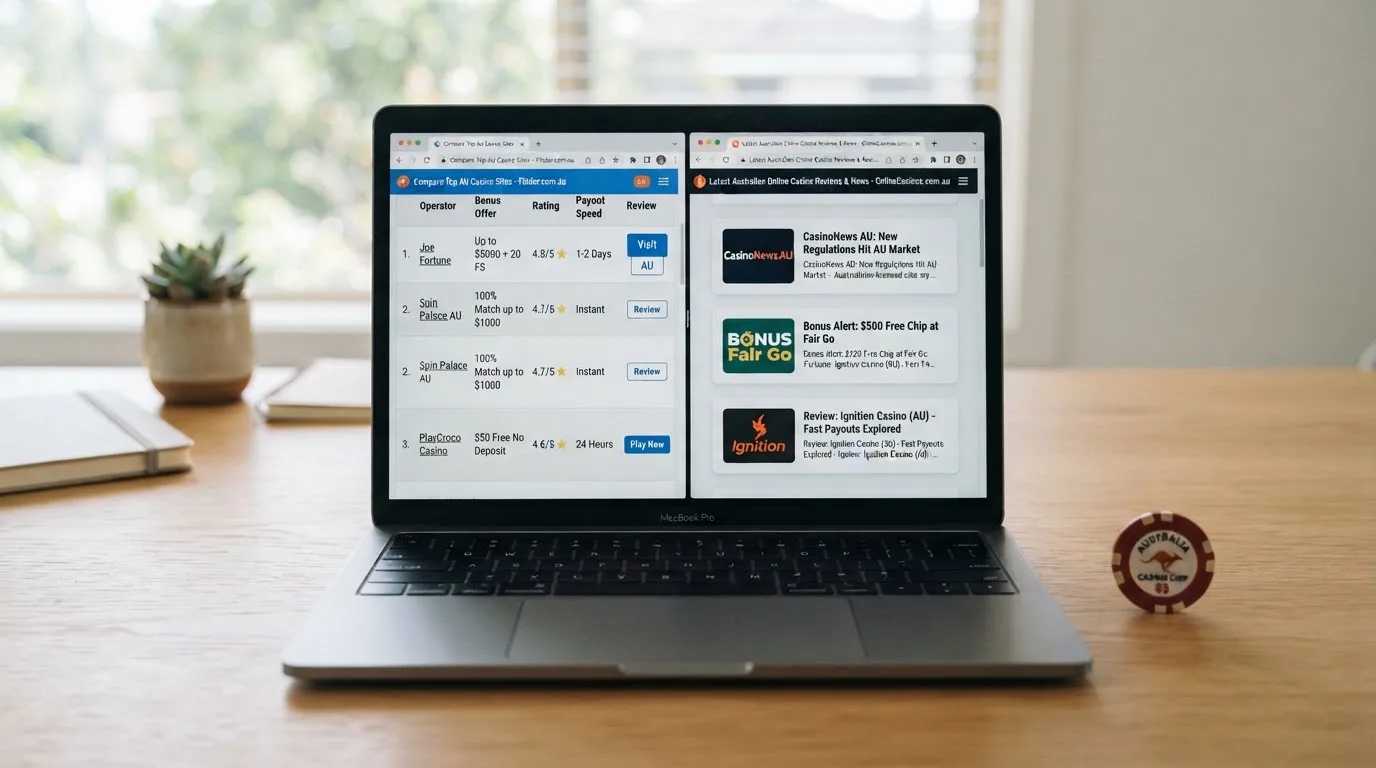
A trusted-casino list built from player reviews is ranking one thing — service quality, withdrawal behaviour, dispute handling against a foreign operator — and using that ranking as if it implied another. A reviewer who got their money out in two days was not reviewed against the Australian statute. They were reviewed against the operator’s own terms. The same operator can be the highest-rated entry on a ranking site and the subject of an Australian formal warning in the same calendar year. Rocketplay.com.au, operated by Pulsup Ltd, picked up a fresh ACMA formal warning in March 2026, having already been warned under Dama N.V. in May 2022. Both facts live in the public record at the same moment.
The consequence of confusing the two readings is paid out later, when an Australian player tries to withdraw. An offshore site gives no Australian consumer protection, no statutory complaints body and no recourse if a payout is refused. If the regulator blocks the domain mid-session, the balance sitting on it stays where it is. Reputation is forward-looking, built on what the operator did last month; legality in Australia is fixed by statute, and the statute has not moved. A punter who buys a ranking and finds that out at the withdrawal screen has not been misled by the casino — they have been misled by a phrase that put two different kinds of trust into the same sentence.
The four trust signals a “most trusted” ranking uses, and what each one covers
A short list of trust signals recurs across the rankings a search for this term surfaces. Each one has a real job; none of them is the job a reader assumes.
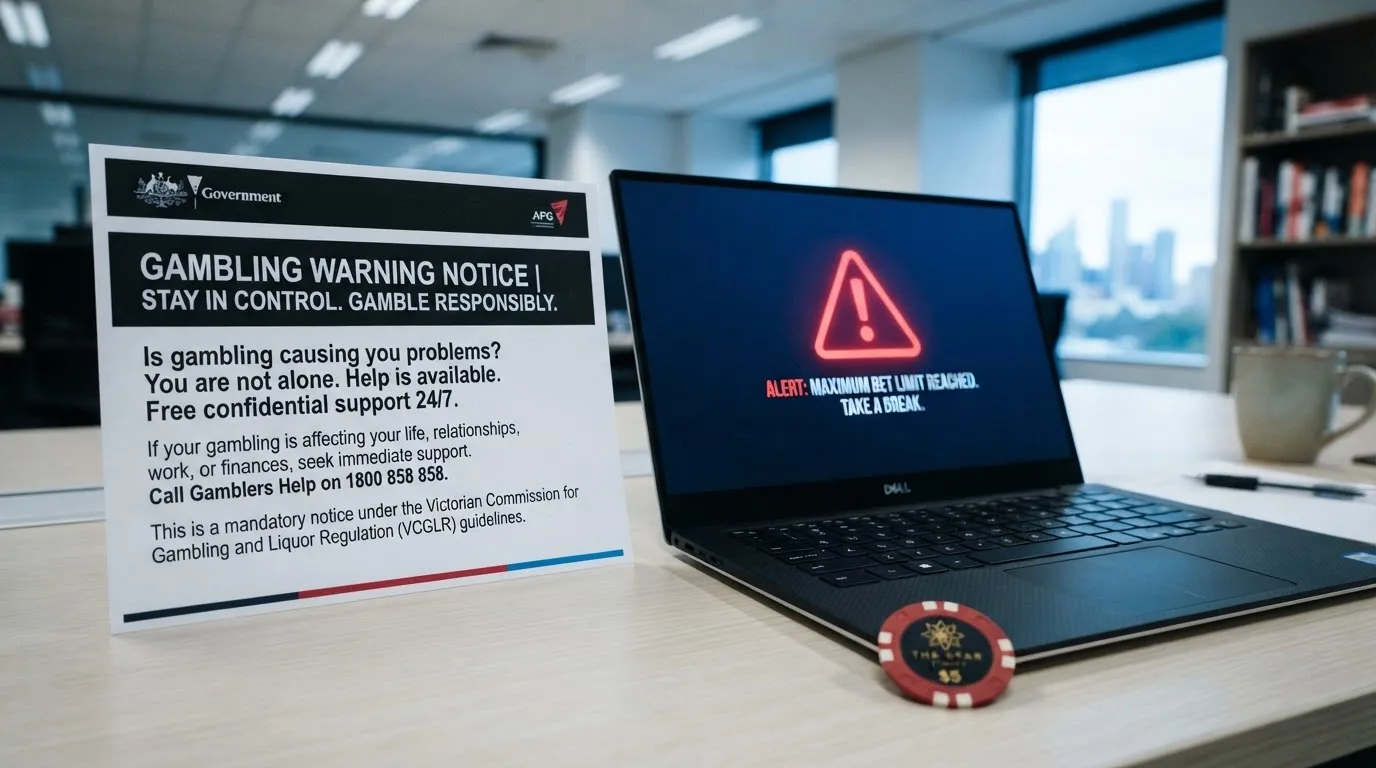
A foreign gambling authorisation is the first. Curaçao, Anjouan, the Malta Gaming Authority and similar bodies issue licences to operators whose customers sit in dozens of countries, including Australia. The licence authorises the operator to take bets from jurisdictions the licence explicitly covers; it does not extend to a country whose own statute prohibits the product. A Curaçao-licensed casino serving an Australian player is operating on the same authority as a Curaçao-licensed casino serving a Dutch player — and the Netherlands, like Australia, runs its own prohibition regime on top. The licence is doing its job; the reader’s assumption about what the job is, is the part that has gone wrong.
Player-review aggregators are the second. Trustpilot, AskGamblers, CasinoGuru and similar sites collect punters’ accounts of how the operator behaved when a withdrawal was requested, a bonus term kicked in, or a dispute opened. These reviews are useful evidence, and they are also the most-cited source for a “most trusted” claim. They do not cover Australian consumer law, because the operator is not subject to it. They cover what the operator did, in the operator’s own jurisdiction, on the operator’s own terms. A four-and-a-half-star aggregate can sit on the same brand that the ACMA has just warned for offering prohibited services to Australians.
Payout-speed benchmarks are the third. A ranking that publishes hours-to-withdrawal, or median payout time, is measuring the operator’s banking plumbing. PayID, Osko, Visa Direct and crypto rails all show up in these comparisons. The figure is real. It also stops being useful the moment the regulator blocks the domain — the speed of a withdrawal that cannot be initiated is zero. Payout-speed is a tie-breaker between equally-legal candidates; on the Australian question, it is noise.
Longevity is the fourth. A site that has been operating for six years, paid out over the period and not been caught up in major scandals reads as evidence of stability. It is, but it is stability in the markets the operator is licensed for. Several of the brands below have run for years in offshore markets while being the subject of repeated ACMA formal warnings for the same conduct toward Australians. Longevity in market A and illegality in market B can be true on the same day.
The point is not that these signals are worthless. They are exactly what they say they are, and a player outside Australia has every reason to weigh them. Inside Australia, they describe an offer the operator is not lawfully making, and the same signals stop being a recommendation and start being a description of how thoroughly a site can run without local regulation.
Reading the brands the ACMA has acted against
The table below lists eleven brands the ACMA has issued formal warnings against for offering prohibited interactive gambling services to Australians. The list is not a ranking and not a recommendation. It is the regulator’s own record, ordered by the date of the most recent action. A reader comparing these names against a “most trusted” ranking elsewhere will find the same brands near the top of both — which is the more useful fact about the phrase.
| Brand | ACMA action and date | Operator named by the ACMA | Subject support |
|---|---|---|---|
| RocketPlay | Formal warning, March 2026 | Pulsup Ltd (Rocketplay.com.au) | listings-only |
| Jackbit | Formal warning, April 2026 | Ryker B.V. | no-data |
| Level Up Casino | Formal warning, May 2022 | Dama N.V. | listings-only |
| Woo Casino | Formal warning, March 2025 | Dama N.V. | no-data |
| Spirit Casino | Formal warning, May 2025 | Dama N.V. | no-data |
| National Casino | Formal warning, July 2025 | Consolutetish S.R.L. | listings-only |
| Bizzo Casino | Formal warning, July 2025; earlier 2022 | Consolutetish S.R.L. (2026); TechSolutions (2022) | listings-only |
| Ignition Casino | Formal warning, July 2025 | Bamboo Media | no-data |
| Casino Intense | Formal warning, April 2025 | Sterplay Holding Ltd | listings-only |
| Instant Casino | Formal warning, February 2025 | EOD Code SRL | listings-only |
| Sky Crown | Formal warning, September 2022 | Hollycorn N.V. | no-data |
Three things the table is doing, that the prose around it has to do as well.
The first is that an ACMA formal warning is not a prosecution. It is a regulatory step the authority takes before an investigation escalates, and it sits on the public register with the operator’s name, the brand name, the date and the statute cited. Repeated warnings against the same operator — Dama N.V. has at least three on this list alone, and a fourth under a successor entity — are a record of conduct, not an isolated event.
The second is the column the table cannot easily show: how a brand can move between operators without changing its skin. Bizzo Casino was warned as a TechSolutions Group brand in 2022 and as a Consolutetish S.R.L. brand in 2025. Same product, same target market, different corporate wrapper. The brand name is the surface; the operator is the entity the regulator names; and the two move together more slowly than the marketing sites suggest.
The third is the gap where research carries no further data on the brand beyond the warning. Where the table reads “no-data” under subject support, the entry means research found no listings-page evidence for the brand beyond the ACMA action itself — no payout-speed benchmark, no licence-page snapshot, no player-review aggregate. Those rows describe the regulator’s record and nothing more.
A reader using the table as a “do not play” list is reading it correctly. A reader using it as a “top 11 trusted” list is reading it as the marketing pages do, and missing the same point.
How fast the ACMA has been moving, and what the rate implies
A regulator that issues formal warnings is doing the slow part of its job. The faster, more visible work is the blocking: asking Australian internet service providers to take illegal sites off the public internet. By the round reported on 26 June 2026, the ACMA had directed the blocking of 1,751 illegal gambling and affiliate marketing websites since the first blocking request in November 2019. In the same period, more than 230 unlicensed gambling services had left the Australian market voluntarily since enforcement was strengthened in 2017.
The arithmetic here is the page’s summary. 1,751 blocks across roughly eighty months, from November 2019 to June 2026, works out to somewhere between twenty and twenty-five blocks a month on average, or about one a working day — but the average hides the way the rate has actually moved. The first round pulled a small initial list and cleared the obvious offenders. Each subsequent round has added a dozen or so sites that have themselves opened, marketed at Australians for a stretch, and then been added to the block list. The result is a treadmill: a steady flow of new sites replacing the ones already blocked, with the total rising because the supply of new entrants has not stopped.
The band’s upper edge — the twenty-five-a-month figure — applies to the busiest stretches of the last two years, when rounds were issued close together and several dozen fresh names went onto the list at once. The band’s lower edge — the twenty-a-month figure — applies across the full 2019-to-2026 window including the slower early rounds. A reader who treats either number as the rate for next month is over-fitting; the regulator publishes round-by-round totals, and the actual monthly figure moves with how many sites the ACMA has been able to investigate and justify in a given period.
What the rate does tell a reader is that the supply side of the equation has not slowed. Offshore operators keep entering the Australian market, the ACMA keeps adding them to the block list, and the names on the formal-warning register keep accumulating. The market is not closing; the regulator is, on a working-day cadence, closing individual doors inside it. A “most trusted online casino Australia” ranking published this month is describing a market whose front door is being blocked twenty-plus times a month, and a reader who treats the ranking as a stable list of long-standing brands is reading yesterday’s view.
The economic figure underneath all of this is H2 Gambling Capital’s 2025 estimate that Australians lose about A$3.9 billion a year to illegal gambling sites. The share of gambling going through legal channels has fallen from seventy-four per cent in 2021 to sixty-four per cent, according to the same report. A regulator that blocks twenty-plus sites a month is closing off individual supply; the demand side of the figure has not been arrested. The block rate is the regulator’s pace, not the market’s.
The legal frame, written for an Australian player
The Interactive Gambling Act 2001, as amended in 2017 and tightened further since, makes it an offence to provide online casino games, online pokies or in-play betting to a person physically in Australia. The offence sits with the provider, not the player. No state or territory licences online casino games; what they licence is wagering on races and sport placed before the event, lotteries and keno, which is the product Sportsbet, Bet365, Ladbrokes and similar brands sell under NTRWC authorisation.
The enforcement chain runs through the ACMA. The authority investigates complaints, issues formal warnings, refers matters for civil penalty proceedings, and directs Australian internet service providers to block illegal sites at the DNS level. The individual player is not prosecuted for using an offshore casino, but the consequences of using one are not theoretical. An offshore operator is not bound by Australian consumer law, not connected to BetStop, and not reachable through any Australian complaints body. A withdrawal refusal goes to the operator’s own dispute process and, failing that, to whatever regulator issued the licence the operator displays. The Australian player cannot block the responsible entity from walking away; the Australian regulator cannot compel a payout from a Curaçao licensee.
The 2026 reform package, the Interactive Gambling Amendment (Gambling Reform) Bill 2026, passed Parliament on 19 August 2026. Its advertising and inducement measures commence on 1 January 2027 — law with a start date, not yet in force on a 2026 page. A reader who has seen this reform described as “the ban on offshore ads” is reading a bill that is real but not yet operative, and any enforcement under it begins in the new calendar year.
Payment rules sit alongside the substantive prohibition. Since 11 June 2024, Australian-licensed online wagering services cannot accept payment by credit card or other credit-related products, with penalties up to A$247,500 for an operator that breaches the rule. The restriction also constrains gambling use of linked digital wallets, because the underlying funding source is still a credit account. Legal deposit routes for licensed wagering — the products the NTRWC actually authorises — are debit card, bank transfer, PayID and Osko, and BPAY. An offshore casino asking for a credit card or a cryptocurrency deposit is operating outside the Australian rules even by payment, and a player funding it through those routes is on the wrong side of both the consumer-protection regime and the bank’s transaction-monitoring regime.
The tax position for the Australian punter is plain enough to state and complicated enough to caveat. Recreational gambling winnings are not assessable income under section 6-5 of the ITAA 1997, and losses are not deductible, unless the person carries on a business of gambling. The line between “punter” and “business” is an ATO question rather than a casino question, and a player whose activity has crossed it needs an actual answer from the ATO rather than a paragraph from a comparison page.
Where Australian banks have already moved on the player side
The bank’s response to gambling-blocked transactions is the most concrete piece of harm-reduction infrastructure a player who has decided to keep playing offshore can run into. Three of the four major Australian banks — Westpac, ANZ and Commonwealth Bank — let customers switch on a gambling transaction block through their mobile banking app. The block works at card level, by refusing authorisation of transactions registered under the merchant category code “Betting/Casino Gambling”. Westpac’s product is described in its own terms as applying to eligible personal credit and debit cards. ANZ’s product extends to digital wallet transactions through Apple Pay or Google Pay on an eligible card — the block sits on the underlying funding source, not on the wallet itself. Commonwealth Bank’s gambling lock, applied through the CommBank app, automatically blocks most gambling transactions, with the same caveat the other two banks carry: not every gambling-related transaction will be stopped, and some non-gambling transactions may be blocked in error.
The 48-hour wait is the part of ANZ’s product that is least often mentioned. Once the block is on, switching it off again takes a 48-hour cooling-off period — a deliberate friction the bank has built into the product, on the assumption that a player who has decided to switch the block off is exactly the player who should not be able to do it instantly. A punter reading the marketing of a “trusted casino” while their own bank’s app is set to refuse the deposit is at the cleanest possible position to see the gap between the two products.
The Reserve Bank of Australia’s July 2025 review of merchant card payment costs proposes removing surcharges only on eftpos, Mastercard and Visa card transactions. American Express is explicitly outside the scope of the proposed surcharge ban — Amex runs a three-party scheme rather than the four-party model Visa and Mastercard use, and the bank said so in its 2025 review. The relevance to offshore gambling is indirect: a player funding an offshore casino through a personal Amex card on the assumption that the RBA’s no-surcharge regime will apply to that transaction is reading the wrong policy. The RBA’s framing is about domestic merchant surcharging, not about whether the deposit clears.
Mobile wallet share is large enough to be worth naming in the same breath. By the end of 2025, Apple Pay, Google Pay and Samsung Pay transactions together accounted for around forty-five per cent of all card payments in Australia by number. The figure is from the Reserve Bank’s own Mobile Payments paper. It does not say forty-five per cent of gambling deposits, because the credit-card prohibition already excludes the wallet’s main funding path for licensed wagering; it says that the wallet is now the default card-payment rail, and any gambling block that works on the underlying card also works on the wallet, which is what ANZ’s product is designed around.
AUSTRAC’s threshold-transaction-report rule — the requirement to report transfers of A$10,000 or more — applies only to physical cash. Ordinary electronic bank transfers are not subject to that per-transaction reporting rule, regardless of the amount sent. A player who has read that AUSTRAC “monitors” large transfers is conflating two regimes: cash transaction reporting and the broader anti-money-laundering obligations on the banks themselves. The banks’ own monitoring does not produce a public report per transfer, but it does produce the kinds of account-review outcomes a player will only find out about by being told.
PayID, Osko and the practical mechanics of the rails the regulator approves
A player looking at an offshore casino and wondering what deposit route an Australian would actually use is reading the wrong rail. PayID, Osko and BPAY are designed for the licensed wagering market — the NTRWC-regulated bookmakers on racing and sport. They are the rails the regulator has decided are appropriate for the product the regulator has decided to authorise. An offshore casino asking for a PayID or Osko deposit is being routed through Australian Payments Plus, the operator of all three; the AP+ page for PayID warns explicitly that being asked to transfer money to a PayID on an illegal gambling site almost certainly means a scam site. The warning is the operator of the rail telling the player that the rail is being misused.
The practical mechanics matter because the marketing copy that surrounds these rails suggests they are interchangeable. PayID-based instant transfers are available at over a hundred Australian financial institutions. With Osko, a bank transfer between participating Australian banks arrives in under a minute, twenty-four hours a day, seven days a week, addressed to either a BSB and account number or a PayID. The user experience is identical for a legitimate bookmaker and an illegal casino, because the rail does not distinguish — the merchant descriptor is what the merchant types in. The player sees the name of the account holder before the transfer is sent. If the name does not match the brand on the site, the player is being asked to transfer to a stranger. AP+’s warning is not a footnote; it is the only piece of protection the rail itself offers.
More than twenty-five million PayID identifiers had been registered on Australia’s New Payments Platform as of April 2025. The New Payments Platform became accessible to the public on 13 February 2018 and is owned by New Payments Platform Australia Ltd, a non-profit company whose thirteen shareholders include the Reserve Bank of Australia and the major banks. Participants in the platform must keep its monthly outages to no more than two minutes — a service-level guarantee the licensed wagering market relies on, and that an offshore casino takes for free. In 2021 the ACCC authorised the merger of NPP Australia with BPAY and eftpos under a single holding entity, Australian Payments Plus (AP+), which now runs PayID, Osko and BPAY together. The rails the licensed market uses are Australian-owned, Australian-operated and Australian-governed; the offshore casino is a customer of those rails at best, and a misuse of them at worst.
BPAY, the third rail in the licensed set, is a bill-payment service rather than a person-to-person transfer. The payer enters a Biller Code and a Customer Reference Number (CRN) printed on the bill. BPAY has operated since 18 November 1997, is available through more than a hundred and forty banks and financial institutions, and is offered by more than ninety-five thousand businesses. It is owned equally, through Cardlink Services Limited, by Australia’s four major banks — ANZ, Commonwealth Bank, National Australia Bank and Westpac. The relevance to offshore gambling is the same as the relevance of PayID and Osko: it is a rail the licensed market uses, and an offshore casino asking for a BPAY payment is asking the payer to use a rail designed for a regulated counter-party in a regulated transaction.
A reader who has followed the rails this far can see why the prohibition is enforced where it is. The block list and the formal-warning register are how the ACMA closes the merchant side. The bank’s transaction block and the gambling lock are how the consumer side closes itself. The payment-rails warning from AP+ is the rail operator telling the consumer which side of the line the rail is on. The system is not airtight — a player with an unblocked card and a fresh email address can still reach an offshore site — but the friction is being added at every level.
What the regulator’s own register says about the brands above
A formal warning under the Interactive Gambling Act 2001 is a public document. It names the operator, the brand, the date and the conduct. Reading across the eleven entries in the table above, three patterns repeat.
The first is operator reuse. Dama N.V. has at least three entries on the table — Level Up Casino in May 2022, Woo Casino in March 2025, Spirit Casino in May 2025 — and an additional earlier warning covering Bambet, Dazard, Rocketplay, Wild Tornado and Cobra Casinos, also in May 2022. Rocketplay.com.au was warned again in March 2026 under Pulsup Ltd, the entity that now operates it. The brand names rotate; the corporate names behind them recur. A reader looking at one of these brands and trying to decide whether the operator is “new” is reading a marketing surface; the regulator’s record reads the corporate entities underneath.
The second is the return visit. Bizzo Casino was warned as a TechSolutions Group brand in 2022 and as a Consolutetish S.R.L. brand in 2025. The same product offered to the same Australian market under a different corporate wrapper, three years later. The regulator’s record carries both warnings; the brand’s marketing pages carry neither. A “trusted” ranking that lists Bizzo Casino without flagging that the brand has been warned twice in three years is making a choice about what to publish.
The third is the breadth of the operator pool. Across the eleven brands, the ACMA has named Curaçao-registered and other offshore-registered entities covering Anjouan, Curaçao, Cyprus and similar jurisdictions. The licence the brand displays on its footer is the licence the operator holds in the regulator’s jurisdiction; it is not a licence to take bets from Australians. The two have never been the same document, and the warnings on the register are the regulator’s record of the gap.
The 26 June 2026 blocking round — the round that brought the total to 1,751 — added 12 more sites: 7Signs, ChromaBet, Donbet, Duospin, Freshbet, Slots Gem, Jacks Club, Lucky Start, Pointsbetz.com, Spinrise, Vinyl Casino and Wildsino. None of those names appear in the formal-warning table above, because the warning register and the blocking register are two different lists; the formal-warning register carries the operators the ACMA has named, and the blocking register carries the sites the ACMA has directed ISPs to take offline. A reader who looks at one register and not the other is reading half the picture.
Responsible gambling: what an Australian player actually has access to
The responsible-gambling infrastructure in Australia is built around the licensed market — the bookmakers on racing and sport that the NTRWC and equivalent state bodies authorise. Offshore casinos are not part of that infrastructure and were never intended to be. A player who has decided to keep playing offshore needs to know what they have access to and what they do not.
BetStop, the National Self-Exclusion Register, went live in August 2023 and binds Australian-licensed online and phone wagering services. A punter who registers with BetStop is excluded from every Australian-licensed wagering product at once; the exclusion periods range from three months to a lifetime. BetStop does not extend to offshore casinos. An offshore operator is not connected to the register, has no obligation to honour an Australian self-exclusion, and may continue to accept deposits from a registered player who has excluded themselves from the licensed market. This is the cleanest single illustration of the consequence this page opens with: an Australian player who uses the protection available to them has used a protection that does not extend to the products they may actually be playing on.
The National Gambling Helpline on 1800 858 858 is free, twenty-four hours a day, seven days a week. The companion service, Gambling Help Online, adds a chat channel and a counselling-referral service. Both are funded to support people who are gambling at licensed Australian operators and people who are gambling offshore; the help is the same regardless of where the gambling happens. The Helpline does not refund losses, cancel a self-exclusion, or compel an offshore operator to pay out a disputed balance. It does what counselling services do: gives the player a human being to talk to about what is happening, with the operator-side limits that are inherent in any non-regulatory service.
The bank’s gambling block is the consumer-side protection that does what BetStop cannot do for offshore play. Westpac, ANZ and Commonwealth Bank all offer a gambling transaction block through their mobile banking app. The block works at card level, by refusing authorisation of transactions under the merchant category code “Betting/Casino Gambling”. ANZ’s product extends to digital-wallet transactions on an eligible card; removing the block requires a 48-hour waiting period. Commonwealth Bank’s product, applied through the CommBank app, is similar in design. Each bank’s product carries the same caveat: not all gambling transactions will be blocked, and some non-gambling transactions may be blocked in error. The block is a friction layer, not a fence; a determined player can route around it. The friction is the point.
A player who has read this section and decided that the licensed market’s protection is incomplete, that the offshore market’s protection is non-existent, and that the bank’s block is the practical limit of the available infrastructure, has reached the same conclusion the rest of the page reaches from a different direction. The licensed market is the part of the offer the regulator has decided to protect; the offshore market is the part the regulator has decided to block; the bank’s app is the layer where the player can opt in to their own block, for whatever product they are using.
The reputational layer, examined honestly
A “most trusted online casino” ranking is a marketing product, not a regulatory one. The sites that publish them are paid by the operators they rank; the rankings themselves are built from review aggregators, payout-speed benchmarks and licence-page screenshots. The marketing language that surrounds them — “tested”, “audited”, “verified” — describes the operator’s compliance with its own regulator, not with the Australian one. The reader who treats the language as covering Australian compliance is over-reading it.
There is a real product underneath the marketing. A Curaçao-licensed casino with a long payout track record, a clean complaint history and a stable operator is a different offer from an unknown casino that opened last quarter. A Dutch or German player, where the offshore product is the lawful product, can weigh those signals honestly and reach a sensible conclusion. The same signals, transplanted into the Australian context, describe an offer that is not lawful to begin with; the comparison being made is between two illegal offers, both of which will be added to the ACMA’s block list when their turn comes.
The reputational layer is also the layer where the consequences of an offshore failure fall hardest. An Australian player who is refused a withdrawal by an offshore operator has the operator’s dispute process to go through, then whatever regulator issued the licence the operator displays. The Australian regulator cannot compel a payout from a foreign licensee; the bank that processed the deposit has no obligation to reverse it once authorised; and the consumer-protection regime that covers every other Australian purchase does not apply. The reputational layer that built the trust in the first place is the layer that does not pay out when the operator fails.
A reader looking for a “most trusted online casino Australia” ranking and finding this page is the reader for whom the reputational layer and the regulatory layer are the same question. The honest answer is that they are not, that offshore reputation does not extend to Australian law, and that the consequence of treating them as the same question is paid out by the player at the withdrawal screen. The brand-by-brand table above is the regulator’s record of the gap. The block rate is the regulator’s pace against it. The bank’s gambling block is the consumer-side layer that actually does something for the player who has decided to keep playing.
What changes in 2026 and what does not
Three things are moving in 2026. The block rate has continued; the 26 June 2026 round was the round that brought the total to 1,751 sites blocked since November 2019. The Interactive Gambling Amendment (Gambling Reform) Bill 2026 passed Parliament on 19 August 2026; its advertising and inducement measures commence on 1 January 2027, which is law with a start date, not law in force. The Reserve Bank’s July 2025 review has continued to be referenced in merchant-surcharge discussion; the proposed surcharge ban covers eftpos, Mastercard and Visa, and explicitly leaves American Express outside the scope.
Three things are not moving. The IGA’s substantive prohibition on online casino games, online pokies and in-play betting has not been amended by the 2026 bill — the bill addresses advertising and inducement, not the underlying product. The NTRWC’s role as the de facto online wagering regulator in Australia, with no full-time staff and a monthly meeting cadence, has not changed. And the bank’s gambling-block products, with their respective caveats and cooling-off periods, are continuing to operate as they did at the start of the year. The substantive position has held; the enforcement pace has continued; the reform package is in transit.
A “most trusted online casino Australia 2026” ranking that does not mention any of this is publishing a partial view. The view it publishes — service quality, payout speed, licence page — is real, and it is also exactly the part of the offer the regulator is not asked to evaluate. The rest is what the rest of this page is for.
What an Australian player should actually do with this page
The page is not a recommendation and the table is not a ranking. A reader using it as either is reading it wrong. The reader the page is for is the reader who has seen a “most trusted online casino Australia” ranking and wants to know what the ranking is actually ranking.
For the reader who has decided to play within the licensed market, the product set is online wagering on races and sport placed before the event, lotteries and keno, offered by brands authorised by the NTRWC and equivalent state bodies. The trust signals that matter on this side of the market are the regulator’s authorisation, the bank’s transaction monitoring, BetStop for self-exclusion, and the consumer-protection regime that covers every other Australian purchase. The marketing comparisons between offshore casinos do not apply, because the comparison is between licensed product A and licensed product B, not between licensed product A and illegal product C.
For the reader who has decided to keep playing offshore, the practical limits are the bank’s gambling block (which they can opt into through their mobile banking app), the AP+ warning about PayID payments to illegal gambling sites (which tells them when they are being routed through a misuse of the rail), and the ACMA’s blocking pace (which tells them how long any given domain is likely to be live). The reputational layer of a “most trusted” ranking does not buy them an Australian consumer-law remedy, does not connect them to BetStop, and does not give them a regulator who can compel a payout from a foreign licensee.
For the reader who has decided to stop, BetStop covers the licensed market and the bank’s gambling block covers the card. The licensed-market exclusion is registered with the operator and honoured by the regulator; the card block is a friction layer that operates regardless of the operator. A reader using both has used what Australia actually offers, and the limits of what Australia offers are the same limits described in the legal frame above.
The page is the consequence of a phrase that puts two different kinds of trust into the same sentence. The honest reading is that they are different sentences, with different subjects, and that an Australian player comparing them is comparing things that do not compare. The rest is the regulator’s record of how often that comparison is being made, and how fast it is being closed off.
Operator-by-operator notes
The brands below appear in the same order as the table above. Each entry reads the regulator’s record and the subject-support data research carries, and stops there. None of them is a recommendation. The point of the group is to put a name, an operator, a date and a fact alongside each brand, so the reader can see the gap between a marketing listing and the regulator’s own file.
RocketPlay
The most recent action against Rocketplay.com.au is the ACMA’s formal warning of March 2026, naming Pulsup Ltd as the operator. The same brand was earlier the subject of the May 2022 warning to Dama N.V. that covered six brands, including Rocketplay alongside Bambet, Dazard, Level Up, Wild Tornado and Cobra Casinos. Research’s subject-support evidence for RocketPlay is limited to listings pages, which means the brand’s marketing surface is on record without the payout-speed or licence-page snapshot a reviewer would normally cite. The brand has moved operator twice in roughly four years and been warned twice in the same period. The marketing surface has not caught up with the regulator’s record.
Jackbit
The ACMA’s formal warning of April 2026 named Ryker B.V. as the operator of both Jackbit and CasinOK. Research carries no listings-page evidence beyond the warning itself. A reader finding Jackbit on a “trusted casino” list and looking up the brand on the ACMA register will find the formal warning dated the same month the ranking was published; the two records sit side by side.
Level Up Casino
Level Up was one of the six Dama N.V. brands covered by the May 2022 ACMA formal warning, alongside Bambet, Dazard, Rocketplay, Wild Tornado and Cobra Casinos. Research’s listings-page evidence places Level Up on Westpac’s merchant-block reference, which is consistent with the brand having transacted with Australian cards in the period the warning covers. There has been no formal warning against the brand in the eighteen months since, and Dama N.V. has moved on to fresh warnings against other brands under the same operator.
Woo Casino
The ACMA’s formal warning to Dama N.V. over Woo Casino was issued in March 2025. It is the second Dama N.V. warning in the table; the brand has no listings-page evidence in research beyond the warning. Woo Casino’s operator history is the same as Level Up’s at the corporate level, which means a reader looking at either brand and reading them as separate operators is reading the brand surface, not the corporate one.
Spirit Casino
Spirit Casino was the subject of the May 2025 ACMA formal warning to Dama N.V., the third Dama N.V. entry in the table within three years. Like Woo Casino, the brand has no listings-page evidence in research beyond the warning. The Dama N.V. cluster — Level Up, Woo Casino, Spirit Casino, and the earlier six-brand batch — is the densest single-operator pattern in the register.
National Casino
The July 2025 formal warning named Consolutetish S.R.L. as the operator. Research’s listings-page evidence for National Casino includes the ACMA’s own register, AUSTRAC’s threshold-transaction-report page and BetStop’s self-exclusion register; each of these pages is the regulator or infrastructure operator naming the brand as the subject of an Australian regulatory action, rather than a marketing listing of the brand itself. The brand’s regulatory exposure is unusually well-documented on the regulator’s own sites.
Bizzo Casino
Bizzo Casino is the brand with the cleanest two-warning history on the register: a 2022 warning to TechSolutions (CY) Group Limited and TechSolutions Group N.V., and a 2025 warning to Consolutetish S.R.L. Three years, two operators, the same brand and the same Australian market. Research’s listings-page evidence places Bizzo Casino on gambling-insider.com. The brand’s marketing pages have continued across the operator change; the regulator’s record has carried both warnings through.
Ignition Casino
The July 2025 ACMA formal warning named Bamboo Media as the operator. Research carries no listings-page evidence for Ignition Casino beyond the warning itself. The brand is one of the two entries in the July 2025 Consolutetish / Bamboo Media round alongside National Casino and Bizzo Casino.
Casino Intense
The April 2025 ACMA formal warning named Sterplay Holding Ltd as the operator. Research’s listings-page evidence places Casino Intense on AUSTRAC’s threshold-transaction-report page, BetStop’s self-exclusion register and gambling-insider.com. The brand’s marketing pages continue; the regulator’s record is the one that has the date and the operator.
Instant Casino
The February 2025 ACMA formal warning named EOD Code SRL as the operator. Research’s listings-page evidence for Instant Casino references ecoPayz and PayID, both of which are payment-rail pages — ecoPayz’s processing terms and PayID’s warning about illegal gambling sites. The payment-rail pages are themselves the regulator-or-infrastructure layer the brand is misusing.
Sky Crown
The ACMA’s formal warning to Hollycorn N.V. covered both Sky Crown and Blue Leo, and is dated September 2022. The same operator runs Blue Leo, which is not in this table but is named in the same warning. Research carries no listings-page evidence for Sky Crown beyond the warning itself. Sky Crown is the oldest entry on the table by formal-warning date; the brand has run for more than three years on the regulator’s register without a further action, which does not mean the regulator has stopped watching, and does not mean the brand has stopped offering to Australians.
Where this leaves the phrase
A “most trusted online casino Australia” ranking is, in 2026, a list of offshore brands whose marketing surfaces have run long enough and clean enough to score well on review aggregators and payout-speed benchmarks. The same brands sit on the ACMA’s register at roughly the rate the regulator can issue formal warnings. The phrase puts the two records into one sentence, and the consequence for an Australian player is that the reputation they are buying is reputation in a market they are not lawfully in.
The block rate — twenty to twenty-five sites a month on average across the last eighty months, more in the busiest stretches — is the regulator’s pace against the supply side. The H2 Gambling Capital figure of A$3.9 billion a year in illegal-market losses is the demand side that has not been arrested. The bank’s gambling block, with its 48-hour cooling-off period and its digital-wallet coverage, is the consumer-side layer that actually does something for an Australian punter who has decided to keep playing. BetStop, the National Self-Exclusion Register, covers the licensed market only and does not extend to offshore casinos. The licensed market is what the regulator has decided to authorise; the offshore market is what the regulator has decided to block; the bank’s app is where the player can opt in to their own friction.
The reform package passed on 19 August 2026 begins its advertising and inducement measures on 1 January 2027. The substantive prohibition on online casino games has not changed. The block rate continues. The brands named above continue. The phrase continues to be searched.
The page is the consequence of the gap, written for the reader who has come in through the phrase and wants to know what the phrase is actually describing. The honest answer is that the phrase describes offshore reputation rather than Australian law, that the regulator’s record is a separate document, and that the gap between the two is where the consequence lands.
Frequently asked questions
Does being called a trusted online casino mean it is legal for a player in Australia to use it?
No. The Interactive Gambling Act 2001 prohibits the provision of online casino games, online pokies and in-play betting to a person in Australia. The licence a casino displays on its footer authorises it in its own jurisdiction; it does not extend to Australia. A trusted reputation is evidence of how the operator treats customers in markets it is licensed for, not of any authorisation to serve Australians.
What does a casino’s overseas gambling authorisation actually cover, and where?
An offshore gambling licence — Curaçao, Anjouan, Malta Gaming Authority and similar — authorises the operator to take bets from the jurisdictions the licence explicitly covers. The jurisdiction list varies by licence type and by operator. Australia is not on that list for an online casino product; the IGA’s substantive prohibition has not been displaced by any offshore licence, and the ACMA’s enforcement record is built on exactly that gap.
How are most trusted online casino rankings usually put together?
Review aggregators, payout-speed benchmarks and licence-page screenshots, weighted by the ranking site’s own scoring method. The inputs describe the operator’s behaviour against its own terms; the Australian legal frame is not one of the inputs. A ranking that does not name the ACMA’s register is publishing the reputational layer without the regulatory one.
Can a casino’s reputation for trustworthiness change without a player noticing?
Yes. Operators move between corporate wrappers — Bizzo Casino was warned under TechSolutions in 2022 and Consolutetish S.R.L. in 2025 — and brands can carry on with the same marketing surface across the change. Dama N.V. has been the named operator on multiple ACMA formal warnings since 2022, across brands that read as separate products. A player who tracks the brand rather than the operator is tracking the marketing surface; the regulator’s record tracks the operator.
What separates a genuinely regulated operator from one that just claims trust on its own website?
A genuinely regulated operator is one the regulator has authorised and continues to oversee, in the jurisdiction whose law the operator is bound by. In Australia, that is the NTRWC and equivalent state bodies for the licensed wagering market; offshore regulators for the offshore market. “Claims trust on its own website” describes the marketing copy every offshore operator runs. The two are not the same, and the only place a player can check the first is the regulator’s own register, not the operator’s footer.
Why might an online casino ranking for Australia still include unregulated offshore sites?
Because the rankings are built from review aggregators and payout-speed benchmarks, which describe how the operator behaves, not whether the operator is authorised to take bets from Australians. The ranking site’s commercial model is paid placement by the operators it ranks. An Australian reader using such a ranking is reading offshore reputation; the Australian regulator’s record is a separate document that has to be checked on its own.