
Real money table games in Australia in 2026: what stands where
Australian players searching for real money casino table games today meet a marketing torrent before they meet the law. Most of what turns up offers tables of one kind or another, accepts Australian dollars, takes Bitcoin, and displays a gambling licence somewhere on its footer. None of that makes it legal in Australia. The Interactive Gambling Act 2001, as tightened by the 2017 amendments, does not license online casino games for Australians — not in any state, not in any territory. Anything offering real money tables to an Australian IP, by any payment rail, sits outside Australian consumer protection by design.
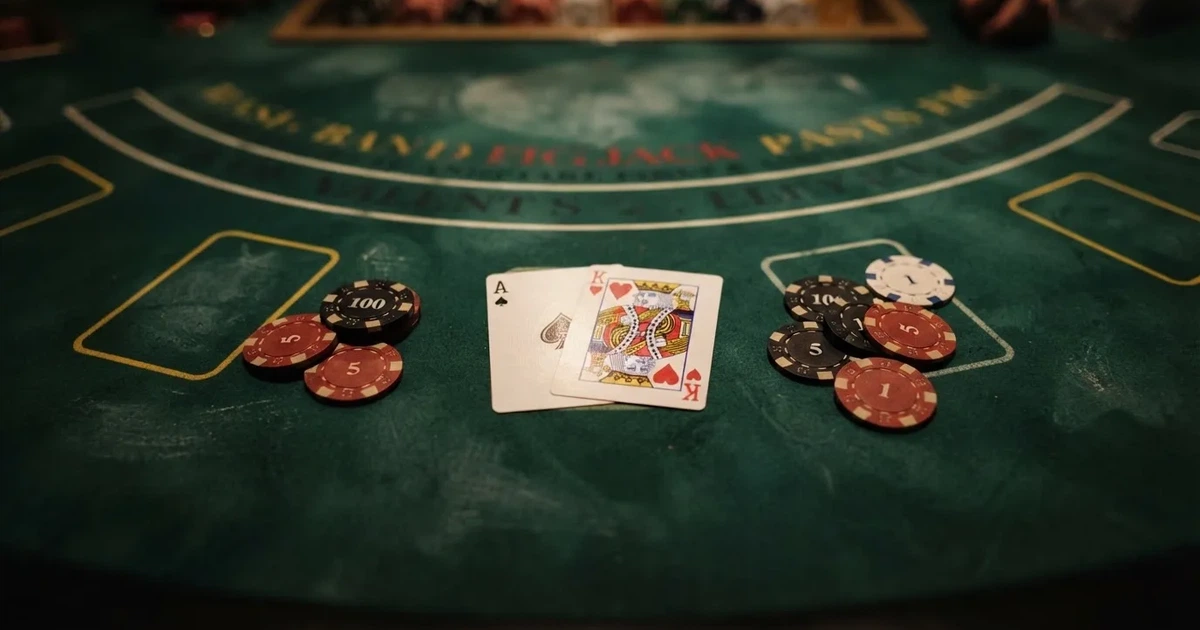
This page lays out the picture in plain language. It walks through what real money table games actually pay (the games themselves, not the marketing), how the law treats them, what tools exist for players who want to step back, and where the tables are physically licensed in Australia. Eleven names the Australian Communications and Media Authority has formally warned over offering prohibited online casino services sit in their own section afterwards, because the ACMA’s own register is the cleanest way to map who has acted against whom, when, and over which operator company. The angle throughout is choice: the paths that exist, the cost each one carries, and who each one actually serves.
Current as of 29 October 2026, cross-checked against the ACMA’s formal warning register and the most recent offshore market estimate.
Table of Contents
- Crypto rails and the offshore table lobby
- Paytables, payouts and what the games actually return
- Eleven names the ACMA has warned: the shortlist
- What counts as a real money table game, and why that matters here
- Fundamentals of the legal frame: prohibition and enforcement
- Where players can turn for help
- Licensed Australian venues where the tables are real
- The enforcement mechanism, brand by brand
- Frequently asked questions
Crypto rails and the offshore table lobby
Crypto casino table games — blackjack, roulette and baccarat played against an offshore operator with a Bitcoin, Ethereum or stablecoin balance rather than a card deposit — share the marketing of the wider offshore casino market but pitch a particular angle: speed. On-chain settlement moves faster than card processing, the marketing says, and the absence of a card-network chargeback layer is sold as anonymity.
That pitch leaves two things out. The rules of the games are identical: the same random number generators sit behind the same interface, the same house edges apply, and the same eight-deck shoe deals the cards. The unit of account does not change the unit of disadvantage. A 1.06% house edge on the baccarat Banker bet is the same number whether the chips in your wallet say AUD, USDT or BTC; the dollar amount you lose scales with the size of your wager, not with the chain it settles on.
The legal picture does not change either. The Interactive Gambling Act 2001 does not care which rail the money rides. An operator serving tables to an Australian IP is providing a prohibited interactive gambling service whether the deposit clears in seconds over the Lightning Network or three business days over SWIFT. Crypto does not turn a prohibited service into a licensed one. A site that asks an Australian for a Bitcoin deposit is operating outside the rules that govern licensed Australian wagering, where credit cards, credit-related products and digital currency have been banned as payment methods since 11 June 2024. The ban was aimed at licensed operators; the offshore sites it cannot reach simply ignore it.
What crypto does change, in practice, is the size of a balance that can vanish when the ACMA asks Australian ISPs to block a domain. A blocking request takes the website offline for Australian customers but does not return funds. With a card deposit, there is at least the possibility of a chargeback; with an on-chain transfer, the funds sit where the keys say they are, and the operator’s custodial wallet is in a jurisdiction the ACMA cannot compel.
The offshore marketing also sells a “privacy” the rails do not deliver. Blockchain is not anonymous, it is pseudonymous: every transaction sits on a public ledger that any chain-analytics firm can read. A wallet that has received funds from a known operator can be tagged. The privacy the marketing sells is privacy from the operator’s own compliance team, not from the analytics firms that already follow the chain.
The offshore table market has learned the rhythm of the blocking cycle and rotates accordingly. When the ACMA blocks a domain, the same operator often reappears under a new skin — sometimes a different corporate name, sometimes a different top-level domain. The names that surface in formal warnings over twelve months are the visible half of a longer catalogue. For an Australian who values Australian consumer protection, the chain a site uses is not where that protection comes from.
Paytables, payouts and what the games actually return
The house edge is the only honest number on a table game’s paytable. It is the percentage of every dollar wagered that the game keeps over the long run — not over a session, not over an evening, but averaged across enough play that the law of large numbers has had its say. The figures below come from the Wizard of Odds house-edge reference, cross-checked against the relevant Wikipedia entries on each game; the spread within a single game (between liberal-rules blackjack and American roulette) is wider than the spread across many of the games outside it.
Blackjack under liberal Las Vegas Strip rules — dealer stands on soft 17, double on any two cards, double after split, resplit aces, late surrender — runs at 0.28%. Atlantic City rules, slightly tighter on a couple of points, push it to about 0.43%. Most Australian venues operate closer to the Atlantic City rule set than the Las Vegas liberal one; the difference is roughly fifteen hundredths of a percentage point of every wager, which compounds over a session. Players using correct basic strategy lose on average less than one per cent of their action over the long run, which is what gives blackjack the lowest published house edge of any table game in regular circulation.
A handful of blackjack variants sit in Australian and international card rooms, and each one shifts the edge. Spanish 21 plays without any 10s but compensates with a long list of player-favourable rules. Double Exposure Blackjack deals both of the dealer’s cards face-up, at a cost to the player. Blackjack Switch lets players swap the top cards between two hands; Super Fun 21 allows up to four splits. The first written reference to anything recognisable as blackjack appears in Miguel de Cervantes’ Rinconete y Cortadillo, written around 1601 to 1602; formal British rules for the English predecessor vingt-un were published in 1800; the modern name dates to roughly 1899, around the Klondike Gold Rush. In standard play, number cards count at face value, jack/queen/king count as ten, an ace counts as one or eleven, and a starting two-card total of twenty-one is called a natural — the strongest hand on the table.
Roulette is where the spread opens up. Single-zero (European) roulette: 2.70%. Double-zero (American) roulette: 5.26% — almost exactly double the house edge, for the same wheel mechanics with one extra pocket. A player who has not checked which wheel they are sitting at is paying for the difference without knowing it. Every land-based Australian casino runs single-zero wheels; some offshore sites default to the American layout because the maths works better for the house. The wheel traces to a gaming wheel invented in 1720 combined with the Italian game Biribi, and has been played in close to its present form in Paris since about 1796.
Baccarat comes in two distinct variants in practice. Punto banco, the form played in casinos from Melbourne to Macau, banks the game permanently under fixed drawing rules — both hands are played out by the dealer, the player does not make a draw decision after the cards are dealt. In an eight-deck shoe the Banker bet carries a 1.06% house edge, the Player bet 1.24%, and the Tie bet runs at 14.4% with an eight-to-one payout or 4.85% with a nine-to-one payout. The Banker bet is the cheapest bet on the table, by enough that flat-betting the Banker is normal play. Chemin de fer, the older French variant where players take turns banking, plays differently; the structure is what gives the game its name (railway), because a turn at the bank moves faster than the original game. Punto banco was developed in Havana in the 1940s; chemin de fer emerged from baccarat banque in the late nineteenth century. Cards 2 through 9 count at face value, 10/J/Q/K count as zero, aces count as one, and hand totals are taken modulo ten.
Craps carries the lowest house edge on the table on its core bet: 1.41% on the Pass line, 1.36% on the Don’t Pass with slightly better odds. The side bets are where the house edge moves up sharply. The Field bet runs at 5.56%, Any 7 at 16.67%, Hard 4 or Hard 10 at 11.11% — figures that should give pause to anyone treating a craps layout as a buffet of bets. The American game developed as a simplification of the English game Hazard, which Bernard de Marigny brought from London to New Orleans around 1805 and which had spread throughout the country by the 1910s.
Keno sits at the other end of the table-game spectrum. House edges of 25% to 29% are typical — closer to a state lottery’s take than a card game’s. It is a numbered-draw game, not a card game in the traditional sense, but it appears in most casino table-game inventories alongside the cards and the wheel. A keno ticket is closer to a scratchie than to a blackjack hand, and the long-run cost reflects that.
| Table Game | House Edge |
|---|---|
| Blackjack (Liberal) | 0.28% |
| Baccarat (Banker) | 1.06% |
| Craps (Pass line) | 1.41% |
| Roulette (Single-zero) | 2.70% |
| Roulette (Double-zero) | 5.26% |
| Keno | 25%–29% |
Eleven names the ACMA has warned: the shortlist
The eleven operators detailed later in this page share one characteristic that no marketing claim or licence badge changes: the Australian Communications and Media Authority has, at a specific date, issued a formal warning over each one for offering prohibited online casino services to Australians. The list is not a ranking and not a recommendation. A formal warning is a regulator’s recorded action, not an endorsement in either direction.
What the list offers is a mapped terrain. Each name has a corporate operator the ACMA named, a date the warning was issued, and — where the ACMA’s action was preceded by an earlier warning over the same brand surface under a different operator company — a paper trail that explains how the same brand can rotate through several operator companies and keep appearing on Australian-facing marketing. Five of the eleven names in this list sit under operator companies that have already absorbed a previous warning over the same brand; the rest are first-time warnings under the operator named.
This is the shortlist the ACMA’s enforcement has built over the past four years, in the order research surfaces them. The full table with operator companies and dates appears in the operator section below; the question this section answers is which way the list tilts. Newer warnings cluster around 2025 and 2026; earlier ones reach back to 2022. The operator companies behind the brands repeat far more often than the brand names do. That repetition is the signal: the offshore table-game market moves through the same small number of operator-company shells, brand surfaces rotate around them, and Australian-facing marketing renews the same pitch under a fresh logo.
What counts as a real money table game, and why that matters here
Real money table games are the category most often described as the casino classic — the felt games with a dealer, a layout and a small set of bets that pay fixed multiples. Card games: blackjack, baccarat, casino poker variants like Three Card Poker or Caribbean Stud, less often pai gow or red dog. Wheel games: roulette, sometimes big six. Dice: craps in most jurisdictions, sic bo in some Asian-flavoured rooms. Numbered-draw games: keno, sometimes.
What they share is the structure: a player sits down at a real or virtual felt, the house deals cards, spins a wheel or rolls dice, and the payoff is decided by the rules of the game and the bets the player has placed. There is no accumulator bonus mechanic, no scatter symbol, no reel set. The “real money” qualifier matters because the same games appear in social-casino and free-play form, where no money changes hands and no Australian licence question arises — the Interactive Gambling Act 2001 targets real-money provision.
What this category excludes is the slot machine (the “pokies” in Australian usage), the video poker terminal and the fixed-odds betting terminal. Each carries a different math model and, in Australia, a different legal frame. Pokies are licensed in clubs and hotels in most states; online pokies fall under the same prohibition as online table games. Video poker and fixed-odds betting terminals do not exist as a category in Australian venues to the extent they do in the United Kingdom.
The category matters for this page because the marketing flood an Australian meets when searching for real money tables is overwhelmingly online, overwhelmingly offshore, and overwhelmingly aimed at table-game players specifically. Slot players have an Australian legal alternative in pubs and clubs; table-game players do not have a comparable online alternative. The result is a gap between what Australians can do legally at home (pokies at the pub, the races, the lottery) and what the offshore market tells them they can do (table games of every variety, on demand). That gap is the structural reason offshore tables have an Australian audience at all.
Fundamentals of the legal frame: prohibition and enforcement
The Interactive Gambling Act 2001, amended into its current shape by the Interactive Gambling Amendment Act 2017, makes it an offence for a corporation to provide certain interactive gambling services to customers physically present in Australia. The categories covered are online casino games (including the table games covered on this page), online pokies and in-play betting on sporting events. Lotteries and wagering on races and sport placed before the event remain licensable; in practice, online wagering in Australia is licensed by the Northern Territory Racing and Wagering Commission, which regulates fifty-two of the country’s online bookmakers — including Sportsbet, Bet365 and Ladbrokes — even though it has no full-time staff and meets once a month in Darwin.

The IGA does not prohibit individual Australians from accessing offshore sites. The offence sits with the provider. An Australian who plays at an offshore casino does not face prosecution, but the offshore site itself sits outside Australian consumer protection: no Australian complaints body, no recourse if a withdrawal is refused, no BetStop binding (BetStop, the National Self-Exclusion Register, only binds Australian-licensed wagering services). If the ACMA blocks the site, the balance still sits in the operator’s account.
Enforcement runs through the ACMA, which investigates complaints, issues formal warnings, and directs Australian internet service providers to block domains. The blocking mechanism operates under amendments that came into force in November 2019; the first formal blocking request was made that month. As of the most recent published reporting on 26 June 2026, the ACMA’s running total is 1,751 illegal gambling and affiliate marketing websites blocked since the first request in November 2019, with more than 230 unlicensed gambling services having left the Australian market since enforcement was strengthened in 2017. The most recent published round added twelve domains in a single announcement: 7Signs, ChromaBet, Donbet, Duospin, Freshbet, Slots Gem, Jacks Club, Lucky Start, PointsBetz, Spinrise, Vinyl Casino and Wildsino.
The financial scale of the offshore market is reported by the most recent offshore market estimate at around A$3.9 billion a year in Australian losses to illegal sites. The same estimate tracks the share of gambling going through legal channels falling from 74% in 2021 to 64% in the 2025 figure — a ten-point swing toward the offshore market that the ACMA’s enforcement has not reversed.
On the tax side of the picture, gambling winnings of a recreational player are not assessable income under Australian tax law (section 6-5 of the ITAA 1997), and losses are not deductible. The exception is when a person carries on a business of gambling; the Australian Taxation Office’s published view treats gambling as a hobby or recreation unless the activity has the structure of a business. The default for a player at the tables is that the win is theirs and the loss is theirs, with no ATO claim on either.
Advertising reform is the next piece of the picture. The Interactive Gambling Amendment (Gambling Reform) Bill 2026 passed Parliament on 19 August 2026; its advertising and inducement measures commence on 1 January 2027. Law with a start date, not yet in force on a 2026 page — but the writing is on the wall for licensed wagering operators and the affiliate marketing that surrounds them. The 2027 measures are aimed at inducements specifically; offshore marketing, which sits outside Australian jurisdiction, is not directly addressed, and the longer-term effect on the offshore market is an open question.
What’s prohibited, and which names sit there
The prohibited category is concrete: online casino games (the table games on this page and the slots that sit alongside them), online pokies, and in-play betting on sport. What is licensable is wagering on races and sport before the event, lotteries and keno. The distinction is what tells an Australian reading a casino’s footer that the licence a Curaçao-registered operator displays is not an Australian licence and gives no Australian protection.
Several of the brand names surfacing in current offshore marketing sit on a list that has been accumulating formal warnings since 2022. The earliest warnings on the list cluster around a small number of operator companies. Dama N.V. absorbed six warnings in May 2022 (Bambet, Dazard, Level Up, Rocketplay, Wild Tornado and Cobra Casinos) and picked up two more in 2025 (Woo Casino in March, Spirit Casino in May). Consolutetish S.R.L. was warned over National Casino and Bizzo Casino in July 2025 — Bizzo had already been the subject of a 2022 warning issued to TechSolutions Group under its earlier operator-company name. Hollycorn N.V. received a warning over Sky Crown and Blue Leo in September 2022. Bamboo Media was warned over Ignition Casino in July 2025; EOD Code SRL over Instant Casino in February 2025; Sterplay Holding Ltd over Casino Intense in April 2025; Ryker B.V. over Jackbit and CasinOK in April 2026; Pulsup Ltd over Rocketplay in March 2026.
The pattern this draws is the picture: offshore table-game brands do not enter and leave the Australian market as independent businesses. They rotate around a small number of operator-company shells, which means an ACMA warning over a brand can be a temporary disruption while the same surface comes back under a fresh corporate banner. A new formal warning on the same brand under a new operator company is part of how the enforcement cycle works, not a contradiction of it.
The arithmetic of enforcement
The arithmetic here is straightforward enough that the conclusion fits in one sentence. From the ACMA’s first blocking request in November 2019 to the running total of 1,751 blocked sites as of June 2026 — a period of roughly six years and seven months — the long-run rate works out to somewhere between twenty-one and twenty-two sites blocked per month, or around two hundred and sixty per year over the lifetime of the regime. The figure flattens the year-on-year variation: individual rounds can block twelve sites in a single announcement or none for months at a stretch. Treated as a band rather than a single rate, the data places the ACMA’s blocking tempo in the low-twenties per month.
That number sits against a market that is growing the other way. The 2025 estimate put losses to illegal sites at A$3.9 billion a year, and the legal-channel share had already fallen ten points between 2021 and 2025. A blocking regime that averages low-twenties sites per month against a market that is growing its offshore share is closing an entry door while the size of the room behind it expands.
Where players can turn for help
Australian player-protection tools sit on top of the legal frame, and most of them bind only Australian-licensed services. The exception worth knowing is the National Gambling Helpline on 1800 858 858 — free, 24/7, with chat at Gambling Help Online — which is open to anyone in Australia, including players using offshore sites. The helpline does not enforce Australian rules; it offers counselling, financial advice and referrals regardless of where the gambling takes place.
BetStop, the National Self-Exclusion Register, has been live since August 2023 and binds Australian-licensed online and phone wagering services. It does not extend to offshore casinos. A player who has self-excluded through BetStop and then plays at an offshore site has not breached their self-exclusion in a way the register can act on, because the offshore site was never part of the register in the first place. The Australian-licensed wagering operators — the bookmakers licensed through the Northern Territory Racing and Wagering Commission and the state-based lottery operators — are bound. Offshore table-game operators are not.
The state-based help services run their own programs in each jurisdiction. The Victorian Responsible Gambling Foundation offers counselling and financial counselling for Victorian players. GambleAware NSW runs the comparable service for New South Wales. Queensland, Western Australia, South Australia, Tasmania, the Australian Capital Territory and the Northern Territory each maintain their own services, all reachable through the national helpline as a single entry point. The services are free, confidential and not bound to a particular operator’s terms.
If the question is whether the offshore site itself will honour a self-exclusion request, the answer in most cases is: ask, and read the small print. Some major offshore brands offer self-exclusion through their own internal processes, and the larger Curaçao-licensed groups have begun publishing responsible-gambling policies. None of these are bound by BetStop; all of them sit outside the Australian regulator’s reach.
Licensed Australian venues where the tables are real
For an Australian who wants to play real money table games under Australian consumer protection, the lawful option is the country’s licensed casino venues — Crown Melbourne in Victoria, The Star Sydney in New South Wales, The Star Gold Coast and Treasury Brisbane in Queensland, the Crown Perth complex in Western Australia, the SkyCity Adelaide licence in South Australia and the Wrest Point / Country Club / Federal complex in Tasmania.
Each venue operates under a state-level casino control act and a state casino regulator. The Victorian Gambling and Casino Control Commission (the VGCCC, which replaced the Victorian Commission for Gambling and Liquor Regulation on 1 July 2022) approves any rule change or new table-game variant before it is introduced in Victoria, under the Casino Control Act 1991; the VGCCC has ruled on amendments to Baccarat, Blackjack and Roulette including new side bets. In New South Wales, Liquor & Gaming NSW — acting under delegation from the NSW Independent Casino Commission since 5 September 2022 — approves the games and rules played at the state’s two casinos; earlier approvals were issued by the Independent Liquor and Gaming Authority under the Casino Control Act 1992. Section 66 of that act requires a casino operator to make a copy of the approved rules available to patrons on request, a quiet guarantee that the rules a player is playing under in NSW are the rules the regulator has signed off on.
Crown Melbourne’s baccarat room offers three variants — Traditional Baccarat, Crown Baccarat and 2 to 1 Baccarat — all approved by the VGCCC. The variants sit on top of the standard punto banco structure (Banker, Player, Tie bets, fixed drawing rules), with the difference between them in payout structure rather than card handling. Blackjack, roulette and the standard set of casino poker variants sit on the same felt at most Australian casino floors.
These are the venues the IGA recognises as the lawful place to play real money table games in Australia. The interactive online equivalent does not exist under Australian law. Anything an Australian sees marketed as an online alternative is offshore, and an offshore site’s terms and conditions will say as much in the small print, alongside a clause that the site makes no representation about its legality in the user’s jurisdiction.
The enforcement mechanism, brand by brand
The eleven brands below are not a ranking. They are not endorsements. They are the names that the ACMA itself has placed on a formal warning, in the order research surfaces them. For each, the section notes the operator company the ACMA named, the date of the formal warning, any earlier action against the same brand under a different operator company, and a verdict that answers a question this page owes the reader — what each entry tells someone comparing options.
RocketPlay: a brand with two operator companies on its warning paper trail
The ACMA issued a formal warning to Pulsup Ltd over Rocketplay in March 2026, in the same wave that has produced most of the recent additions to the register. Rocketplay had already been the subject of a May 2022 formal warning to Dama N.V., which absorbed six brand warnings that month. The dual operator-company history — Pulsup for the .com.au surface, Dama for the international-facing surface — is the typical pattern of an offshore brand rotating between operator companies while keeping the brand name.
Rocketplay carries an Australian-facing website at the .com.au domain, accepts Australian payment methods, and markets in Australian dollars. None of that creates an Australian licence; the ACMA’s warning is on record over both the operator company behind the .com.au surface and the operator company behind the international surface. For a reader reading this section to compare options, the takeaway is not that Rocketplay is different from the rest of the list. It is the list’s clearest example of an operator that has cycled through the formal-warning register twice and kept its marketing running.
Level Up Casino: a 2022 warning and a BGaming listings trace
Level Up Casino was named in the May 2022 ACMA formal warning to Dama N.V., part of the same six-brand group that included Bambet, Dazard, Rocketplay, Wild Tornado and Cobra Casinos. The brand surface has been active in offshore marketing for several years; Level Up appears in the listings pages of software providers such as BGaming, where it is named as a partner of that studio — the kind of supplier listing that tells a reader where the games on the site come from, not anything about an Australian licence.
There is no second formal warning over Level Up under a different operator company on the ACMA’s register at the date of writing. That does not mean the brand has not continued to market in Australia; it means the ACMA has not moved on the brand since 2022. For a reader looking at Level Up alongside the other names in this list, the relevant comparison is the length of the warning paper trail: Level Up’s is short within the list, but a 2022 warning is older than any of the others.
Woo Casino: the earlier of two 2025 Dama N.V. warnings
Woo Casino was named in a March 2025 ACMA formal warning, again issued to Dama N.V. Woo is one of two 2025 Dama warnings; the second, Spirit Casino in May 2025, is covered next. Woo’s appearance under the same operator company that absorbed the May 2022 six-brand warning group is a further instance of the pattern: the operator company holds multiple brand surfaces, and the ACMA’s warnings follow the operator company as much as the brand.
A reader comparing Woo to a brand warned for the first time in 2025 sees the same operator company behind the warning, which means the same legal exposure under Australian law. What changes between brands is the marketing surface — bonus size, game library, payment options — and what does not change is the position outside Australian licensing.
Spirit Casino: the more recent of two 2025 Dama N.V. warnings
Spirit Casino received an ACMA formal warning in May 2025, again issued to Dama N.V. Spirit is the more recent of the two 2025 Dama warnings; it sits in the same month as no other brand in this list, but it shares the operator company with Woo (March 2025) and the original May 2022 six-brand group.
For an Australian player comparing Spirit Casino to the rest of the list, the comparison is the same shape as Woo: same operator company on the warning, same absence of Australian licence, same exposure to the ACMA’s blocking regime. The two 2025 Dama warnings taken together tell a reader that the ACMA’s enforcement against Dama N.V.’s brand portfolio did not stop with the 2022 round; it resumed in 2025 with two new brand surfaces.
National Casino: one of three brands in the July 2025 round
National Casino was named in a July 2025 ACMA formal warning to Consolutetish S.R.L., in the same round that also covered Bizzo Casino and Ignition Casino (under Bamboo Media). National’s appearance on Wikipedia’s list of online casinos reflects the brand’s standing in the offshore market generally; it does not reflect anything about an Australian licence.
Consolutetish S.R.L. is a smaller operator-company footprint than Dama N.V. or Hollycorn N.V., but the warning carries the same regulatory weight. National Casino is outside Australian consumer protection regardless of what licences the operator displays on its site.
Bizzo Casino: the longest operator-company rotation in the list
Bizzo Casino carries the longest operator-company paper trail of any brand on this list. The ACMA issued a formal warning over Bizzo in July 2025 to Consolutetish S.R.L.; an earlier warning had already been issued over the same brand surface in 2022, to TechSolutions (CY) Group Limited and TechSolutions Group N.V. Two operator companies, two formal warnings, the same brand surface in offshore marketing throughout.
The pattern is the same one this section has traced at every operator company so far: brand surfaces rotate around operator-company shells, and the ACMA’s enforcement follows whichever operator company the brand is currently sitting under. For a reader comparing Bizzo to the other names here, the relevant observation is that Bizzo has been the subject of formal warnings from two different operator companies, separated by three years. That makes its position on the list as much about persistence as about any single warning.
Ignition Casino: the third brand in the July 2025 round, under a different operator
Ignition Casino was named in the same July 2025 ACMA formal warning as National Casino and Bizzo Casino, but under a different operator company — Bamboo Media, not Consolutetish S.R.L. The July 2025 round is the largest in the recent ACMA record by brand count: three brands on this list, all warned in the same announcement.
For an Australian reader, Ignition’s appearance on the list is a clear data point: an offshore operator offering real money tables, formally warned under the IGA, and providing no Australian consumer protection. The fact that Ignition sits under a different operator company than National and Bizzo tells the reader that the ACMA’s enforcement in July 2025 reached across at least two operator companies in the same announcement.
Instant Casino: a February 2025 warning under EOD Code SRL
Instant Casino received an ACMA formal warning in February 2025, issued to EOD Code SRL. The February 2025 warning is earlier in the year than the May 2025 Spirit Casino warning and later than none of the warnings on this list at that point. EOD Code SRL is named as the operator company; Instant Casino is the brand surface.
For a reader comparing Instant Casino to other brands warned earlier in 2025, the position is the same as Woo and Spirit: same legal exposure under Australian law, same absence of an Australian licence, same dependence on the operator company’s willingness to honour a withdrawal request. Instant’s mid-February placement makes it one of the earlier 2025 additions to the register.
Jackbit: a 2026 warning under an operator company that also runs CasinOK
Jackbit received an ACMA formal warning in April 2026, issued to Ryker B.V. The same Ryker B.V. was named in the same April 2026 warning over CasinOK — a brand not on this list but worth noting because the operator company behind Jackbit is currently associated with a second brand in the formal-warning register.
Jackbit is a comparatively recent addition to the ACMA’s list. The 2026 date places it in the current year’s enforcement cycle, alongside Rocketplay (March 2026, Pulsup Ltd). For a reader comparing Jackbit to other 2026 entries, the comparison is about how recently the warning was issued and how the operator company has structured the brand surface — both answer the same question the rest of this list answers: what the ACMA’s enforcement has reached, and where the gaps still are.
Casino Intense: the only brand in this list with Australian-context listings traces
Casino Intense received an ACMA formal warning in April 2025, issued to Sterplay Holding Ltd. Casino Intense is the only brand on this list where the listings data names an Australian angle — ABC News reporting, the ACMA’s own register, and Crown Melbourne’s public-facing pages all appear in the brand’s traceable footprint. The brand sits alongside the regulator, the venue and the news cycle in ways the other names on this list do not.
For an Australian reader comparing Casino Intense to the other brands here, the listings footprint is the signal that the brand has been named in contexts where Australian players actually appear — not as a recommendation, but as a name that has been discussed in Australian-facing media and regulator material.
Sky Crown: the oldest formal warning on this list
Sky Crown received an ACMA formal warning to Hollycorn N.V. in September 2022, alongside Blue Leo. The Hollycorn N.V. warning is the earliest formal warning on this list — older than any of the Dama N.V. 2022 warnings, older than any of the 2025 additions, and a marker of how far back the ACMA’s enforcement against Hollycorn’s brand portfolio stretches.
A 2022 warning does not mean the brand has stopped marketing in Australia; the formal warning is a single action, not a continuous enforcement, and an Australian-facing website can stay live outside the ACMA’s reach. For a reader comparing Sky Crown to the more recent entries on this list, the comparison is age of warning: Sky Crown’s paper trail begins in 2022, while several other names on this list are warned in 2025 or 2026. The older the warning, the longer the brand has had to adjust its marketing or its corporate structure.
The mechanism in summary
| Brand | ACMA action and date | Operator named by the ACMA | Subject support |
|---|---|---|---|
| RocketPlay | March 2026; May 2022 | Pulsup Ltd; Dama N.V. | no-data |
| Level Up Casino | May 2022 | Dama N.V. | listings-only (BGaming) |
| Woo Casino | March 2025 | Dama N.V. | no-data |
| Spirit Casino | May 2025 | Dama N.V. | no-data |
| National Casino | July 2025 | Consolutetish S.R.L. | listings-only (en.wikipedia.org) |
| Bizzo Casino | July 2025; 2022 | Consolutetish S.R.L.; TechSolutions | no-data |
| Ignition Casino | July 2025 | Bamboo Media | no-data |
| Instant Casino | February 2025 | EOD Code SRL | no-data |
| Jackbit | April 2026 | Ryker B.V. | no-data |
| Casino Intense | April 2025 | Sterplay Holding Ltd | listings-only (ABC News) |
| Sky Crown | September 2022 | Hollycorn N.V. | no-data |
Frequently asked questions
How does the house edge on blackjack compare with roulette and craps?
Blackjack under liberal rules runs about 0.28%, the lowest published edge of any table game. Single-zero roulette is 2.70%, double-zero 5.26%. Craps sits closer to blackjack on its Pass line at 1.41%, but its side bets move sharply higher — Field at 5.56%, Any 7 at 16.67%.
Are live-dealer table games treated differently from RNG-based ones under Australian law?
No. The Interactive Gambling Act 2001 covers online casino games by category, not by technology. Live-dealer studios streamed over the internet and RNG-driven tables fall under the same prohibition. What matters is whether the service reaches a person physically in Australia, not how the cards are dealt.
What is the difference between American and European roulette in player odds?
One extra zero on the wheel. European roulette has a single zero and a 2.70% house edge; American roulette adds a double zero and runs at 5.26% — almost exactly double. Every other rule, from payouts to bet types, is identical between the two. Licensed Australian venues run single-zero wheels.
Do crypto casino tables use the same rules as standard online tables, just with a different currency?
Yes, on the rules. The same random number generators sit behind the same interfaces, the same shoe deals the cards, the same wheel spins. The unit of account — AUD, USDT, BTC — does not change the house edge. What changes is the deposit rail and the absence of a chargeback layer.
Where can an Australian play real-money table games legally?
At one of Australia’s licensed casino venues — Crown Melbourne, The Star Sydney, The Star Gold Coast, Treasury Brisbane, Crown Perth, SkyCity Adelaide or the Wrest Point / Country Club / Federal complex in Tasmania. Online, no Australian licence covers real-money table games; anything offshore sits outside the Interactive Gambling Act 2001.