
Bitcoin Cash casinos in Australia: the eleven brands the regulator has warned
A reader who searched for a Bitcoin Cash casino in Australia is looking for a place to deposit, spin, and withdraw in BCH — and the first honest sentence this page can offer is that the activity itself sits outside Australian licensing, and the search engine result that put any particular brand in front of the reader was very likely an affiliate page. The brands below are named for one reason: each one has been the subject of a formal ACMA warning under the Interactive Gambling Act 2001. That is the regulator’s own record, not the brand’s marketing, and it is the only public, verifiable trace of who has actually offered what to Australian residents. The page walks through that record, what BCH settles as when it arrives at one of these sites, and the legal frame the player sits inside — and it closes on the practical consequence of all three. Bitcoin Cash casinos in Australia — More on this topic at casino vip .
Data current as of 29 October 2026. Brand and date claims cross-checked against the ACMA’s published formal warning list.
Table of Contents
- What “legality” actually means for a BCH casino in Australia
- Responsible gambling and what an offshore site cannot do for the player
- How Bitcoin Cash behaves as a casino deposit rail
- Comparing the eleven brands the ACMA has warned
- RocketPlay
- Level Up Casino
- Woo Casino
- Spirit Casino
- National Casino
- Bizzo Casino
- Ignition Casino
- Instant Casino
- Jackbit
- Casino Intense
- Sky Crown
- What an offshore brand means in practice
- Closing on the consequence
- Frequently asked questions
What “legality” actually means for a BCH casino in Australia
The Interactive Gambling Act 2001, as tightened by the 2017 amendments, makes it an offence for a provider to offer online casino games, online pokies, or in-play betting to a person physically in Australia. No state or territory issues a licence for it. The Australian-licensable product is wagering on racing and sport placed before the event, lotteries, and keno — in practice licensed by the Northern Territory Racing and Wagering Commission (NTRWC), which oversees 52 online bookmakers including Sportsbet, Bet365 and Ladbrokes, meets once a month in Darwin, and runs on a staff small enough that an ABC reporter described it as a “de facto regulator” in April 2026. The minimum age for any licensed wagering service is 18.
The lawful/licensed distinction is the one that gets lost in marketing copy. A Bitcoin Cash casino can — and the brands on the ACMA list do — display a Curaçao or Anjouan licence badge, and the badge is genuine in the sense that the regulator issued it. The badge is not an Australian licence, because none exists for this product. When the ACMA acts against a brand, it is acting against a provider offering a prohibited service, not against a paperwork irregularity. The individual player is not prosecuted; the IGA targets the provider. That is the law; what the player actually loses by being on the wrong side of it is laid out below in the section on offshore protection.
The enforcement machinery is the ACMA. Its tools are formal warnings, investigations, and written directions to Australian internet service providers to block offending domains at the DNS level. The published figure as of June 2026 is 1,751 illegal gambling and affiliate marketing websites blocked since the first blocking request in November 2019, and more than 230 unlicensed services have left the Australian market since enforcement was strengthened in 2017. The latest published round, reported on 26 June 2026, asked ISPs to block another twelve: 7Signs, ChromaBet, Donbet, Duospin, Freshbet, Slots Gem, Jacks Club, Lucky Start, Pointsbetz.com, Spinrise, Vinyl Casino and Wildsino. The blocking rate is not a single figure — it is the running total divided by the months since November 2019, and that running figure is what the reader needs. From November 2019 to June 2026 is roughly 79 months; 1,751 sites across 79 months works out to an order-of-magnitude figure of around 22 sites a month on average over the whole period, with the rate uneven and rising as enforcement rounds stack. The figure matters less than the direction: the blocking list is not a one-off purge, it is an ongoing pipeline.
Payment rails are part of the legal frame as well. From 11 June 2024, credit cards, credit-related products and digital currency are banned as a way to fund a licensed Australian online wagering account, with penalties up to A$247,500 for the operator. The lawful deposit routes for a licensed bookmaker are debit card, bank transfer, PayID/Osko and BPAY. A site asking an Australian resident for a credit card or a crypto deposit is, by definition, not a licensed Australian wagering service — it is operating outside the rules the IGA sets. A Bitcoin Cash deposit is therefore not a neutral choice between two payment methods; it is a marker that the site is on the offshore side of the line.
H2 Gambling Capital’s 2025 estimate puts Australian losses to illegal gambling sites at around A$3.9 billion a year, with the share of gambling flowing through legal channels falling from 74% in 2021 to 64%. The 10-percentage-point drift in three years is the trend line that frames every blocking round: more spend is finding its way offshore, and the ACMA’s enforcement is partly the regulator catching up to that drift.
Responsible gambling and what an offshore site cannot do for the player
BetStop, the National Self-Exclusion Register, has been live since August 2023. It binds every Australian-licensed online and phone wagering service — the moment a punter registers, the operator must close existing accounts, refuse new ones, and stop marketing. It is the structural answer to the impulse-control side of gambling harm, and it works because every licensed bookmaker is connected to it. None of the eleven brands in the table below is connected to it, because none is an Australian-licensed wagering service. A punter who registers with BetStop and then opens an account with one of these brands is self-excluded from the legal market and active in the illegal one at the same time. The exclusion does not follow them across the offshore boundary.
The same gap applies to deposit limits, timeouts, reality checks and the activity statements that licensed bookmakers must produce. The offshore sites typically offer a self-exclusion button inside their own account tools, and the quality of those tools varies; some are genuine, some are an account-closure button dressed as a responsible-gaming feature. None of them is audited the way an NTRWC-licensed bookmaker’s tools are, and the operator can change the rule at any time without notice. The player protection that an Australian punter takes for granted at a licensed bookmaker is, on an offshore Bitcoin Cash casino, a setting inside one operator’s account dashboard.
Two help lines are independent of any operator. The National Gambling Helpline on 1800 858 858 is free, 24/7, and the same service runs Gambling Help Online with web chat. Both treat the gambling-harm side of the question; neither will tell a caller whether a brand is licensed, because that is a regulatory question for the ACMA. They are worth naming here because the rest of this page is about offshore sites and the reader deserves to know that the safety net sits on the Australian side of the border, not the brand’s.
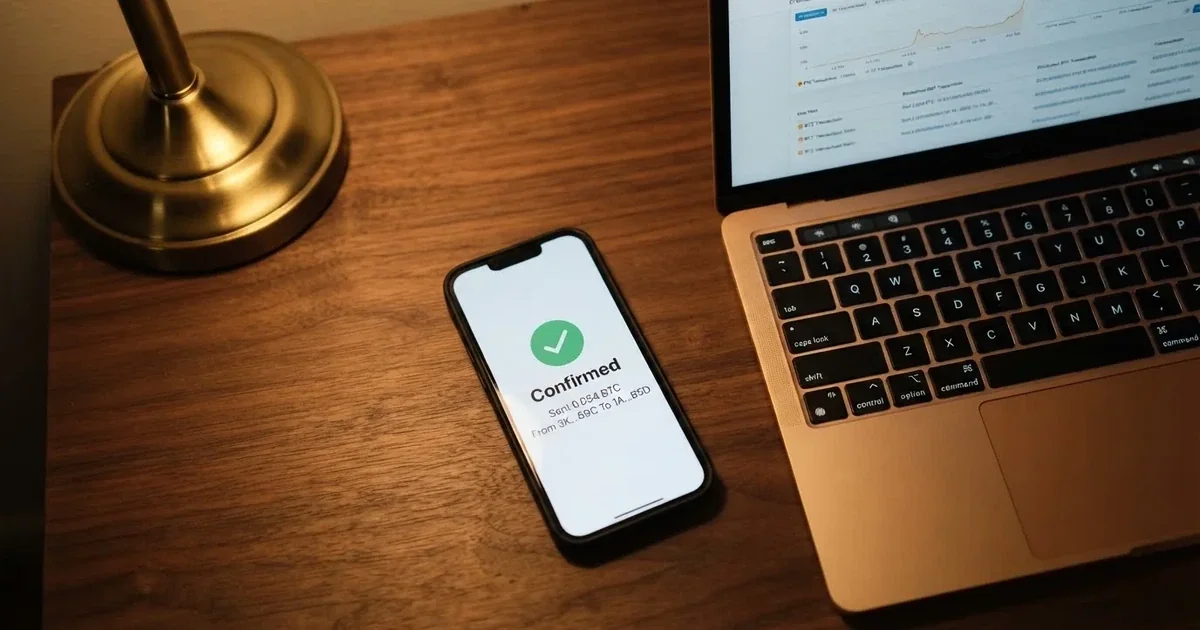
The on-chain side of the responsible-gambling picture is its own thing. Once a Bitcoin Cash payment is confirmed, it cannot be reversed. A punter who deposits with a debit card and regrets it can ask the bank for a chargeback within the scheme rules; the request is not guaranteed but the mechanism exists. With BCH, the moment the network confirms the transaction, the funds are in the casino’s wallet. There is no rail back. The 10-minute target on a new Bitcoin Cash block, like Bitcoin’s, is an average; a confirmation can arrive much sooner or much later with no guaranteed minimum or maximum delay. The speed advantage a crypto deposit offers over a bank transfer runs in one direction only.
How Bitcoin Cash behaves as a casino deposit rail
Bitcoin Cash launched on 1 August 2017 as a hard fork of Bitcoin at block height 478,558, and from that first block it has been a separate chain with its own ledger, its own miners and its own settlement rules. The split matters for one practical reason: a Bitcoin Cash deposit and a Bitcoin deposit are not the same transaction even when the brand uses the same on-ramp. They move on different networks, confirm against different block explorers, and settle into different casino wallets. A player sending BCH to a BTC address, or vice versa, has lost the funds.
The project’s own materials describe transaction fees as “under a penny” and confirmations as taking minutes. The 21-million-coin supply cap, the SHA-256 proof-of-work consensus, and the 10-minute average block target are all carried over from Bitcoin, with the one material change being block size — 8 megabytes at launch in 2017, raised to 32 megabytes in 2018 to keep fees low even when blocks are full. Bitcoin ABC, the first Bitcoin Cash implementation, was led at launch by Amaury Séchet, a former Facebook software engineer, and the project remains a fork in the practical sense that every Bitcoin Cash client descends from a Bitcoin Core codebase.
For a player, the operational difference from Bitcoin comes down to three things. First, fees: a busy Bitcoin mempool can push a single transaction into the tens of dollars in miner fees; a BCH block at 32 MB holds roughly a thousand times more transactions than a 1 MB Bitcoin block, and fees stay low even at high throughput. Second, confirmation: the 10-minute block target is the same as Bitcoin’s, but the mempool is typically less congested, so the wait from broadcast to first confirmation tends to be shorter and more predictable. Third, address format: a BCH address typically begins with “q” or “bitcoincash:” — the legacy Bitcoin address format (starting “1”) will not deliver the funds.
What does not change is that the transaction is on a public blockchain. Anyone with the address can look up the deposit amount, the time it confirmed and the originating wallet. Bitcoin Cash does not anonymise the payment, and “anonymous Bitcoin Cash casino” is a marketing phrase that the ledger itself contradicts. The brand can promise discretion about a customer’s name; it cannot alter what the chain records.
The Australian side of the deposit is its own regulatory question. AUSTRAC requires any business providing a digital currency exchange service — including exchanging cryptocurrencies such as Bitcoin Cash for fiat — to register as a Digital Currency Exchange provider; operating unregistered is a criminal offence. From 31 March 2026, the registration requirement was expanded beyond crypto-to-fiat exchange to also cover crypto-to-crypto platforms, digital asset transferors, digital asset custody providers, and stablecoin issuers and distributors. The Australian on-ramp a player uses to buy BCH in the first place — an exchange, a broker, a P2P desk — sits inside this regime. The casino does not.
The Australian Taxation Office treats crypto assets including Bitcoin Cash as property for capital gains tax purposes, not as money or foreign currency. Most disposals — selling for AUD, swapping for another crypto, or spending BCH at a casino — are CGT events, with gains taxed at marginal rates and a 50% CGT discount available on assets held longer than 12 months. From 1 July 2027, the flat 50% discount is replaced by CPI indexation of the cost base plus a 30% minimum tax rate on net capital gains, so a punter sitting on BCH won at a casino and held into the 2027–28 income year is on a different tax footing from one who sells earlier. The ATO disregards capital gains and losses on personal use assets, but only where the asset cost A$10,000 or less to acquire; a casino bankroll of meaningful size is an investment, not a personal use asset, and the exemption does not apply. A punter who needs precise tax advice needs an Australian tax adviser, not this page.
Comparing the eleven brands the ACMA has warned
The table below lists every brand this page covers, the date the ACMA issued a formal warning, and the operator the ACMA named on that warning. The order is the order in which the formal warning appears on the regulator’s own record; it is not a ranking of any other kind, and a brand’s position here says nothing about games, bonuses or payout times, all of which the research could not confirm from a non-affiliate source. Where research carries no source for the brand accepting Bitcoin Cash specifically, the table uses the no-data marker — the operator is named because the regulator named it, not because this page has verified which coins the cashier supports.
| Brand | ACMA action and date | Operator named by the ACMA | Bitcoin Cash support |
|---|---|---|---|
| RocketPlay | March 2026 | Pulsup Ltd (Rocketplay.com.au) | — |
| Level Up Casino | May 2022 | Dama N.V. | — |
| Woo Casino | March 2025 | Dama N.V. | — |
| Spirit Casino | May 2025 | Dama N.V. | — |
| National Casino | July 2025 | Consolutetish S.R.L. | per listings |
| Bizzo Casino | July 2025 (earlier 2022 to TechSolutions) | Consolutetish S.R.L. | — |
| Ignition Casino | July 2025 | Bamboo Media | — |
| Instant Casino | February 2025 | EOD Code SRL | — |
| Jackbit | April 2026 | Ryker B.V. | — |
| Casino Intense | April 2025 | Sterplay Holding Ltd | — |
| Sky Crown | September 2022 | Hollycorn N.V. | — |
The regulator-side column tells the reader most of what the table can honestly say. Dama N.V. appears three times across three different brands and three different dates — May 2022, March 2025, May 2025 — which is a track record rather than a coincidence: when one operator runs multiple brands, a warning against the operator catches each brand separately. Consolutetish S.R.L. likewise carries two of the brands on the list and was warned over both in the same July 2025 round. Reading the column is the more useful exercise than reading the brand column, because the operator is the legal person the ACMA addresses and a brand that changes hands behind the scenes keeps the same regulator-facing identity.
The “Bitcoin Cash support” column is mostly em dashes because, for most of these brands, no source independent of the brand’s own cashier page or an affiliate listing confirms which coins are accepted. The single entry marked “per listings” — National Casino — reflects that an outside listing noted the brand, not that any independent confirmation was obtained; that is the right way to read it, because listings about a prohibited product are themselves part of the marketing pipeline. The honest reading is that, across this set of eleven, the page cannot confirm Bitcoin Cash acceptance on any brand from a source a reader can cross-check.
RocketPlay
RocketPlay sits at the top of the ACMA list because it carries the most recent action: in March 2026 the regulator issued a formal warning to Pulsup Ltd over Rocketplay.com.au, and an earlier warning to Dama N.V. over the same brand (and five others) had already gone out in May 2022. The brand has been on the regulator’s radar across two operators and four years. BCH support remains unverified independently, so the cashier’s actual coin list is unknown to this page. The product on offer — online casino games and online pokies — cannot be licensed in Australia regardless of which currency it accepts. A reader looking for RocketPlay is looking for an offshore site under active regulator pressure; that is the whole picture the ACMA record gives, and there is no consumer-protection body a player can complain to if a withdrawal stalls or a bonus term is read in a way the punter did not expect.
Level Up Casino
Level Up Casino was the subject of the May 2022 Dama N.V. warning, alongside Bambet, Dazard, Rocketplay, Wild Tornado and Cobra Casinos — six brands under one operator in a single ACMA action. The brand has not been re-warned since, which tells the reader nothing about whether it has stopped offering to Australians; the regulator’s enforcement is selective and the absence of a second warning is consistent with a brand that has slipped below the radar, with a brand that has rebranded, or with a brand that has been left alone for any number of operational reasons. BCH support remains unverified independently. The verdict is the one this page makes about every brand on the list: an offshore casino running on the IGA-prohibited side of the line, with the regulator’s first formal action still on the file.
Woo Casino
Woo Casino drew a fresh Dama N.V. warning in March 2025, separate from the 2022 batch. The fact that Dama N.V. received a second warning three years after the first, for a different brand under the same operator, is the pattern: when an operator has been warned once, the ACMA comes back for the next brand on the same shelf. Bitcoin Cash support is noted per listings — that is, a third-party listing has the brand on a BCH-friendly index, not that the brand’s cashier or an independent audit confirmed the coin. A reader who follows that listing back to the brand is still on the prohibited side of the line. The verdict: an offshore brand under an operator with a two-warning history, and the regulator’s pattern suggests the operator’s portfolio is being watched, brand by brand.
Spirit Casino
Spirit Casino was the second of the two 2025 Dama N.V. warnings, issued in May 2025. The pair — Woo Casino in March, Spirit Casino in May — is the regulator working through Dama N.V.’s portfolio in calendar order. BCH support remains unverified independently. The brand is on the regulator’s record and on the prohibited side of the IGA; that is the picture. The verdict is the same as for Woo Casino, with the additional fact that the May 2025 warning landed in the same round as a wider ACMA pattern of going after operators brand by brand.
National Casino
National Casino carries a July 2025 warning to Consolutetish S.R.L. — the same operator that drew a warning over Bizzo Casino in the same round. National Casino is the only brand on the list where a third-party listing noted the brand on a Bitcoin Cash index, and the page records that fact without promoting it: the listing is not a regulator’s confirmation and is not a substitute for one. The verdict: a brand under an operator who drew two warnings in one round, with the only third-party trace of BCH support on the table, and that trace still sitting on the marketing side of the line.
Bizzo Casino
Bizzo Casino’s record is longer than most on the list. The ACMA issued a July 2025 warning to Consolutetish S.R.L. over Bizzo, and a separate 2022 warning to TechSolutions (CY) Group Limited and TechSolutions Group N.V. had already covered the brand earlier. Two operators, two warnings, two calendar years — the brand has changed hands in the regulator’s eyes, and the regulator has re-engaged each time. BCH support remains unverified independently. The verdict: a brand with a multi-operator, multi-year ACMA file, and the operator-switching is the tell that the brand is treated as a portable asset the operator of the moment rebrands into.
Ignition Casino
Ignition Casino is the second of the two July 2025 warnings and the only Bamboo Media brand on the ACMA list. BCH support remains unverified independently. The product on offer is the same prohibited one — online casino games and online pokies to Australian residents — and Bamboo Media is on the record for offering it. The verdict: a single brand under a single operator with a single warning, and the picture is the page’s standard one.
Instant Casino
Instant Casino carries the February 2025 warning to EOD Code SRL, the earliest of the 2025 actions on this list. BCH support remains unverified independently. The brand sits at the entry point of the 2025 ACMA pattern that runs through the rest of the year. The verdict is the same shape as the rest: offshore brand, prohibited product, regulator warning on file, and no Australian consumer-protection body in the picture.
Jackbit
Jackbit is the second of the April 2026 warnings, alongside CasinOK, both addressed to Ryker B.V. BCH support remains unverified independently. A reader comparing Jackbit to the rest of the list is comparing April 2026 enforcement to earlier years; the regulator is still active, and Jackbit is one of the more recent entries on the file. The verdict: an offshore brand, prohibited product, regulator action in the same calendar year the reader is reading this page.
Casino Intense
Casino Intense carries the April 2025 warning to Sterplay Holding Ltd, the operator named in that action. BCH support remains unverified independently. The brand sits in the middle of the 2025 ACMA cluster. The verdict: an offshore brand on the regulator’s 2025 file, with no Australian consumer-protection mechanism attached.
Sky Crown
Sky Crown is the oldest entry on the table — Hollycorn N.V. was warned in September 2022 over Sky Crown and Blue Leo together. The brand carries the longest gap between warning and the present, and the absence of a more recent ACMA action is consistent with a brand that has rebranded, exited the Australian market, or simply been left alone. BCH support remains unverified independently. The verdict: the regulator’s first formal action on this brand sits four years back, and nothing on the file tells the reader the brand is currently offering to Australians at scale or that it has stopped.
What an offshore brand means in practice
The eleven brands above all share one structural feature: they operate outside the Australian licensing frame, and an Australian resident playing at any of them has no Australian consumer-protection body to complain to if the operator refuses a withdrawal, voids a bonus, or closes an account with a balance in it. The IGA targets the provider, not the player, so the practical consequence of being on the prohibited side is not a prosecution risk; it is a recourse gap. A licensed Australian bookmaker sits inside a complaint process with the NTRWC and an external dispute resolution scheme; an offshore Bitcoin Cash casino does not.
The same gap extends to the funds themselves. A withdrawal blocked at an offshore brand can be appealed to the operator’s own support team and, in some cases, to the Curaçao or Anjouan regulator that issued the licence — but not to an Australian body. The ACMA’s blocking direction can also lock the player out of the brand with a balance still on it, and that balance is then governed by the offshore brand’s terms rather than by any Australian rule. The promotional language that frames these brands as “trusted” is a marketing claim; the regulatory architecture behind it is what an Australian punter is actually trusting.
The Interactive Gambling Amendment (Gambling Reform) Bill 2026 passed Parliament on 19 August 2026. Its advertising and inducement measures commence on 1 January 2027 — law with a start date, not yet in force on a page read in 2026. The bill tightens what licensed operators can offer as inducements; it does not, on the present text, change the offshore side. The reader who is comparing brands today is comparing them against the 2001 Act as amended in 2017 and the 2024 credit-card ban, with the 2026 reform on the horizon.
Closing on the consequence
A reader who came to this page looking for a Bitcoin Cash casino to play at has, by the time they reach this paragraph, the same eleven names they would have found from any affiliate aggregator — but with the ACMA’s own record sitting beside each one, the operator behind each one, the regulatory frame around all of them, and the on-chain mechanics of a BCH deposit laid out in the open. The arithmetic is plain. Bitcoin Cash settles fast and cheap; the same is true of Bitcoin, Litecoin and a dozen other coins that any of these brands would also accept at their cashier. The thing that distinguishes a BCH casino from any other offshore casino is not the rail, it is the operator, and the operator on every name on this list is on the ACMA’s published warning file. A punter who weighs the speed advantage of BCH against the recourse gap of an offshore brand is making the trade-off the page is built around; the rest of the decision is theirs.
Frequently asked questions
Is it legal for a casino site to accept Bitcoin Cash from a player in Australia?
No Australian licence covers online casino games, online pokies or in-play betting, regardless of the payment rail. The Interactive Gambling Act 2001, as amended in 2017, makes the offering itself a prohibited interactive gambling service. Bitcoin Cash is no different from a debit card, a bank transfer or a credit card for this purpose: the site is offering a prohibited product, and the coin does not change that. The ACMA has warned every brand on this page under the IGA.
How is Bitcoin Cash different from Bitcoin for making a casino deposit?
Bitcoin Cash is a separate blockchain that forked from Bitcoin on 1 August 2017 at block height 478,558. The two chains have different addresses, different block explorers and different wallets; sending BCH to a BTC address loses the funds. BCH blocks are 32 MB versus Bitcoin’s 1 MB, so fees stay low even when the network is busy, and the average 10-minute block target usually confirms a deposit faster in practice. Bitcoin and Bitcoin Cash do not interoperate.
Does a Bitcoin Cash withdrawal require the same identity checks as a card withdrawal?
The coin does not change the operator’s KYC rules. Most offshore brands apply the same identity verification — passport, driver’s licence, proof of address — to a Bitcoin Cash withdrawal that they apply to a card withdrawal, because the brand’s own compliance and anti-fraud logic is what drives the check, not the rail. A punter who expects crypto to bypass KYC will, on most of these brands, be asked for documents before the first withdrawal is approved.
Is there a limit on how much Bitcoin Cash can be deposited at once?
There is no protocol-level cap, and no statutory Australian cap on what an offshore site accepts — the credit-card and digital-currency ban from 11 June 2024 applies only to Australian-licensed wagering services, which the brands on this list are not. The operator’s own cashier sets the per-transaction and per-day limits, and those vary by brand and by player history. The on-chain ceiling is effectively the brand’s willingness to credit the account.
What confirms a Bitcoin Cash deposit before it is credited to a casino account?
A new Bitcoin Cash block is added roughly every 10 minutes on average, with the actual delay probabilistic — a confirmation can arrive much sooner or much later. Most casino cashiers credit after one confirmation, some wait for three or six, and a few accept zero-confirmation credits for small deposits. The brand’s cashier page states its own threshold, and the player should read it before sending a larger amount. A confirmed transaction cannot be reversed. See also Casinos that accept ethereum in australia for 2026 .
Can a Bitcoin Cash payment sent to a casino be reversed after it is sent?
No. Once a BCH transaction is confirmed on the blockchain, it is final; there is no chargeback mechanism and no rail back. This is the structural difference from a card payment, where the card scheme’s dispute process can sometimes recover funds, and it is the reason a punter should treat the deposit as spend the moment the casino wallet credits it. The 10-minute target is the time to confirmation, not a window to cancel.