
Casinos that accept PayPal in Australia — the wallet route and the law
A player who wants to move money in and out of an online casino with PayPal is asking two questions at once. One is mechanical: does the wallet deposit fast, settle withdrawals cleanly, and accept the small amounts a casual punter is testing with. The other is legal: does the wallet work at all when the destination sits on the wrong side of the Interactive Gambling Act 2001. Both questions matter, and neither has the answer an offshore casino’s home page wants you to read. Every brand named in this guide has been the subject of an ACMA formal warning for offering prohibited online casino games to people in Australia. The page is built around that single fact, and the rest of the material sits inside it.
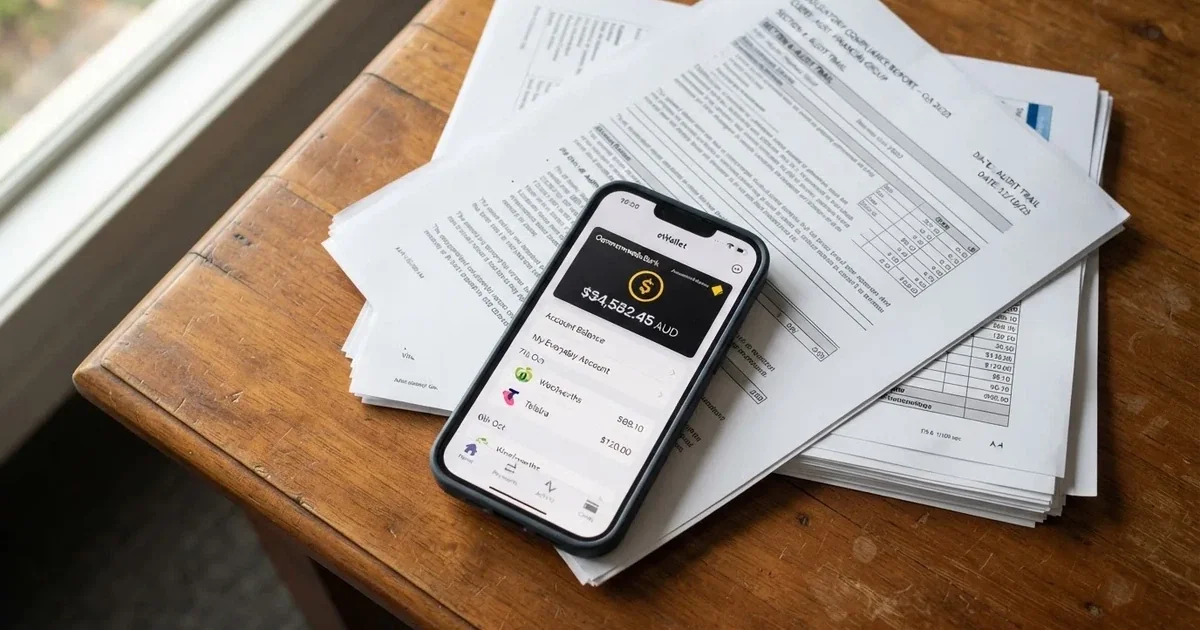
Currency and register snapshot: data current as of 29 October 2026, checked against the ACMA register of formal warnings and blocking requests.
Table of Contents
- The legal frame that decides what a PayPal deposit can land on
- What responsible play looks like when the casino is offshore
- How PayPal deposits and withdrawals actually behave at these sites
- The blocking rate — what the ACMA’s blocking cadence actually says
- Operators the ACMA has formally warned — the comparison
- The fundamentals a PayPal casino search actually returns
- Frequently asked questions about PayPal casinos in Australia
The legal frame that decides what a PayPal deposit can land on
Online casino games and online pokies cannot be licensed anywhere in Australia. The Interactive Gambling Act 2001, tightened by the Interactive Gambling Amendment Act 2017, makes it an offence to provide those services to a person physically in Australia — not to play them, the Act targets the provider. No state or territory issues an online casino licence. What is licensable is wagering on races and sport placed before the event, lotteries and keno; in practice that smaller field is administered from the Northern Territory by the NTRWC, which regulates 52 online bookmakers including Sportsbet, Bet365 and Ladbrokes from a commission that has no full-time staff and meets once a month in Darwin. A licence shown on a casino’s footer is real. It is not an Australian one.
PayPal’s own Acceptable Use Policy reaches the same endpoint from a different direction. The policy lists gambling — casino games, sports betting, horse or greyhound racing, fantasy sports and lottery tickets — as permitted only “if the operator and customers are located exclusively in jurisdictions where such activities are permitted by law”. A site serving Australians breaks that condition by definition, so a PayPal-funded deposit to it is one the policy does not cover. The same policy separately restricts cryptocurrency and virtual in-game currencies, a side note that matters for any operator pitching a “crypto and PayPal” cashier to the same reader. The policy is not a moral statement — it is the rule the wallet itself sets for transactions through it, and the reason a PayPal button on an offshore casino is often greyed out the moment a player logs in from an Australian IP.
Enforcement against the provider is real and it is current. According to the ACMA as reported in June 2026, a total of 1,751 illegal gambling and affiliate marketing websites had been blocked since the first blocking request in November 2019, and more than 230 unlicensed gambling services had left the Australian market since enforcement was strengthened in 2017. The blocking-rate this implies is the load-bearing figure on the page, and the section on the ACMA’s blocking cadence works through it. A round reported on 26 June 2026 asked Australian ISPs to block another 12 names: 7Signs, ChromaBet, Donbet, Duospin, Freshbet, Slots Gem, Jacks Club, Lucky Start, Pointsbetz, Spinrise, Vinyl Casino and Wildsino. The list reads like a shortlist from a “best PayPal casino” page, which is precisely why the ACMA publishes it.
The economic shape of what is being blocked is not trivial. H2 Gambling Capital’s 2025 report estimates that Australians lose about A$3.9 billion a year to illegal gambling sites, and that the share of gambling going through legal channels fell from 74% in 2021 to 64%. The two figures together describe an illegal market that has grown while the legal one has shrunk, and the ACMA’s blocking programme is the response to that growth. None of which makes a casino with a PayPal button legitimate. It makes the question worth asking.
A reform that is now law with a start date belongs here too, briefly. The Interactive Gambling Amendment (Gambling Reform) Bill 2026 passed Parliament on 19 August 2026; its advertising and inducement measures commence 1 January 2027. It is law, not yet in force, and a page read in 2026 cannot treat it as binding on an operator today. The credit-card ban that began on 11 June 2024 does bind today: licensed Australian wagering services cannot accept payment by credit card or other credit-related products, with penalties up to A$247,500 for operators. A site that takes a Visa deposit for a slot spin is not licensed, and a wallet like Apple Pay bound to that card inherits the block.
What responsible play looks like when the casino is offshore
Responsible gambling has two layers in Australia. One is the BetStop register and the National Gambling Helpline, both of which work only against Australian-licensed services. The other is what an offshore operator does on its own, which is unmonitored. Treating the two as the same thing is the first mistake a player makes, and PayPal does not move the dial on it.
BetStop has been live since August 2023. It binds Australian-licensed online and phone wagering services, so a person on the register cannot open a new account or place a new bet with Sportsbet, Bet365, Ladbrokes or any other NT-licensed bookmaker. None of the casinos named later in this guide is connected to it. Self-exclusion through the casino’s own site is a private contract between the punter and a Curaçao or Costa Rica company, and the company’s incentive to honour it runs only as far as the regulator in its own jurisdiction. A wallet at the front of the cashier changes nothing about that. The Helpline at 1800 858 858 is free, 24/7, with chat at Gambling Help Online, and it is the same number regardless of whether the offending account is at a licensed bookmaker or an offshore casino.
Bank-level gambling blocks are the layer that does reach offshore sites, because they sit below the wallet. Westpac’s gambling block refuses authorisation of transactions registered under the merchant category code “Betting/Casino Gambling” on eligible personal credit and debit cards. ANZ’s gambling transaction block, activated in the ANZ app, also blocks gambling transactions made through a digital wallet such as Apple Pay on an eligible card — and once it is on, removing it requires a 48-hour waiting period. The bank warns that not all gambling transactions will be blocked, and that some non-gambling transactions might be blocked in error, which is the honest version of how MCC matching actually works in production. Turning the block on at the card kills the deposit regardless of what wallet sits in front of it, which is why the block is worth more to a self-excluding player than any responsible-gambling page on an offshore casino.
The remaining safeguard is the one PayPal itself supplies, and it is the closest the wallet comes to a responsible-gaming tool. AUSTRAC accepted an enforceable undertaking from PayPal Australia over shortcomings in its anti-money-laundering and counter-terrorism-financing systems, including how it handled international funds transfer instructions; AUSTRAC later finalised that undertaking after PayPal completed a two-year remediation plan. A business such as PayPal that transfers funds into or out of Australia must submit an international funds transfer instruction report to AUSTRAC within 10 business days of the transfer, and PayPal is classified as a reporting entity under the AML/CTF regime in the same population as banks, casinos, remittance providers and digital-currency exchanges. None of that is a responsible-gambling regime — it is a financial-crime regime — but it means a disputed or reversed PayPal transaction does not vanish into a black box. The trail exists, and a player who asks PayPal to look at one has a regulator on the wallet’s side that an offshore casino does not have on its own.
How PayPal deposits and withdrawals actually behave at these sites
The mechanics of a PayPal deposit at an offshore casino are the easy half of the page. The wallet’s own policy is the load-bearing half. The two together decide whether the transaction happens at all.
A PayPal deposit, where the button is live, behaves like a PayPal purchase anywhere else. The punter logs in, picks PayPal at the cashier, confirms the amount in AUD and authorises the pull from a linked balance, card or bank. The settlement into the casino’s PayPal account is near-instant from the player’s point of view; the casino’s own review, not the wallet, is the bottleneck on the funds being playable. Small deposits are a marketing line more than a wallet feature: research did not surface an operator-wide minimum below the casino’s own cashier floor, and the floor differs by brand. A “A$10 PayPal deposit casino” is a site whose cashier allows A$10, not a wallet that negotiates a lower floor than usual.
Withdrawals sit on the same wallet rails in reverse, and they are slower. The casino’s internal review — KYC checks, bonus-clearing confirmation, source-of-funds review if anything flags — runs first; only then is a PayPal refund initiated. A PayPal withdrawal once released usually settles into the linked balance within minutes, but a player who has triggered a manual review is looking at days, not minutes, regardless of which wallet sits in the cashier. The casino controls the clock; the wallet only handles the last mile.
The wallet-side constraint is the one the marketing pages do not print. PayPal’s Acceptable Use Policy makes a casino gambling transaction from an Australian player a transaction outside the policy’s permissions, so PayPal is within its rights to decline the transfer at its end, hold the funds while it investigates, or close the receiving account. An Australian punter who has hit a casino’s cashier, typed in an amount and clicked “deposit” can find that the wallet itself blocks the push before the casino’s review even starts. The mechanism is invisible from the casino’s deposit screen, which is one reason a player assumes the path is open when it is not.
Two adjacent wallet realities sit alongside the PayPal picture and matter for the same reader. Apple Pay does not charge consumer fees for in-store, online or in-app purchases — any surcharge is the merchant’s card-processing cost, not Apple’s — and Apple states that transaction limits and PIN requirements for Apple Pay purchases are set by the card issuer or merchant, not by Apple. By the end of 2025, Apple Pay, Google Pay and Samsung Pay transactions collectively accounted for around 45% of all card payments in Australia by number, so the digital wallet is not a niche route. The credit-card ban that took effect on 11 June 2024 — banning credit and credit-related products as payment for licensed online wagering — also constrains gambling use of linked digital wallets like Apple Pay on a credit card. A debit-card-funded Apple Pay tap to an offshore casino is technically a debit route; a credit-card-funded one is not, and the licensed operators are the ones the ban actually binds, with offshore sites falling outside it entirely.
The bank-transfer alternatives an Australian already has are worth naming for comparison. Osko, run by Australian Payments Plus, sends a bank transfer between participating Australian banks in under a minute, 24/7 including weekends, whether the payment is addressed to a BSB and account number or to a PayID. Paying to a PayID shows the name of the account holder before the transfer is sent, and AP+ warns that being asked to transfer money to a PayID on an illegal gambling site almost certainly means a scam site — a useful guard rail, since it surfaces the recipient’s identity at the point of payment. PayID-based instant transfers are available at over 100 Australian financial institutions. More than 25 million PayID identifiers had been registered on Australia’s New Payments Platform as of April 2025. The New Payments Platform itself became accessible to the public on 13 February 2018, is owned by New Payments Platform Australia Ltd, a non-profit whose 13 shareholders include the Reserve Bank of Australia and the major banks, and its monthly outages are capped at two minutes; in 2021 the ACCC authorised merging NPP Australia with BPAY and eftpos into a single company, Australian Payments Plus. None of that makes a bank transfer to an offshore casino legal. It makes the alternative that an Australian punter already has faster than the wallet route for any domestic purpose.
American Express is a useful counter-example to the four-party card networks, and the Reserve Bank of Australia’s July 2025 review of merchant card payment costs explicitly leaves American Express outside the proposed surcharge ban, on the grounds that Amex runs a three-party scheme — issuer, processor and network in one — rather than the four-party model Visa and Mastercard use. Amex was established in 1850 as a freight-forwarding company, launching its first charge card on 1 October 1958. None of which matters to an offshore casino, which accepts whichever cards its processor clears; the point is that even the regulator is treating wallet and card routes as the same load-bearing problem.
The blocking rate — what the ACMA’s blocking cadence actually says
The prescribed calculation here is the blocking-rate: the running total of blocked sites divided by the time elapsed since the first blocking request. The inputs are stated in the fact bank and the result is a band, not a single figure, because the pace has not been steady.
The ACMA’s first blocking request went out in November 2019. By the snapshot in June 2026, the running total stood at 1,751 illegal gambling and affiliate marketing websites blocked, and more than 230 unlicensed gambling services had left the Australian market since enforcement was strengthened in 2017. The first cut divides cleanly: 1,751 sites over roughly 79 months from November 2019 to June 2026 works out to about 22 sites blocked per month on average across the lifetime of the programme. That is the floor of the band. The ceiling sits in the more recent rounds, which have moved faster: the June 2026 round alone named 12 sites, and earlier rounds in 2025 ran at similar single-round sizes. Read across the past two years, the pace has been closer to one new blocking request every few weeks, with the cumulative figure updated each round. The honest reading is “between roughly one and three dozen per month across the lifetime of the programme, with a clear upward drift since 2024” — a band the arithmetic supports and a single number would not.
The cadence is the news, not the cumulative total. The cumulative total grows by definition; the pace at which it grows is the proxy for how active enforcement is right now. A player who reads only the headline 1,751 number is reading a stock figure; a player who reads the monthly cadence is reading a flow figure, and the flow figure is the one that tells them whether the brand they are looking at is likely to be on next quarter’s blocking request.
The 12 names in the 26 June 2026 round — 7Signs, ChromaBet, Donbet, Duospin, Freshbet, Slots Gem, Jacks Club, Lucky Start, Pointsbetz, Spinrise, Vinyl Casino and Wildsino — are the immediate sample. Earlier rounds in 2025 and 2026 have moved at comparable size, and the ACMA’s pattern has been to publish each round with the named operators, the Australian ISPs directed to block, and the legal basis under the IGA. None of those 12 names appears as a “top PayPal casino” on a page written before the round, because the page in question was written after the ACMA published the block. That is the clock the cadence describes.
Operators the ACMA has formally warned — the comparison
The table is a comparison of brands the ACMA has acted against for offering prohibited online casino games to Australians. The columns matter because the rows do not all say the same thing; the date of the warning and the operator named are what differentiates them. Subject support — whether the brand markets PayPal, Apple Pay, Visa, Mastercard or PayID at its cashier — is recorded separately, because the ACMA action and the wallet story are different facts about the same brand.
| Brand | ACMA action and date | Operator named by the ACMA | Subject support |
|---|---|---|---|
| RocketPlay | Formal warning, March 2026 (Pulsup Ltd); earlier May 2022 (Dama N.V.) | Pulsup Ltd | — |
| Level Up Casino | Formal warning, May 2022 | Dama N.V. | listings-only |
| Woo Casino | Formal warning, March 2025 | Dama N.V. | — |
| Spirit Casino | Formal warning, May 2025 | Dama N.V. | — |
| National Casino | Formal warning, July 2025 | Consolutetish S.R.L. | listings-only |
| Bizzo Casino | Formal warning, July 2025 (Consolutetish S.R.L.); earlier 2022 (TechSolutions) | Consolutetish S.R.L. | — |
| Ignition Casino | Formal warning, July 2025 | Bamboo Media | — |
| Instant Casino | Formal warning, February 2025 | EOD Code SRL | listings-only |
| Jackbit | Formal warning, April 2026 | Ryker B.V. | — |
| Casino Intense | Formal warning, April 2025 | Sterplay Holding Ltd | listings-only |
| Sky Crown | Formal warning, September 2022 | Hollycorn N.V. | — |
The “Subject support” column reflects what the underlying listings say the cashier carries, and the absence of a tick is the honest answer for the brands the research did not find a wallet listing for. The ACMA action is the same shape on every row — a formal warning under the Interactive Gambling Act 2001 — but the operator behind the brand changes, which is what the third column is for. Several of the brands are owned by the same parent operator (Dama N.V. alone accounts for four rows), and that pattern is the single most useful thing the table surfaces. A punter who has decided to avoid one Dama N.V. brand has implicitly decided to avoid the other three, because the ACMA has reached the same conclusion about all of them.
RocketPlay — the most recent ACMA warning
RocketPlay is the freshest row on the table. In March 2026 the ACMA issued a formal warning to Pulsup Ltd over Rocketplay; the same brand had already been the subject of a May 2022 formal warning to Dama N.V. covering six casino brands. Two formal warnings four years apart, the same brand. The earlier warning was to a parent that no longer runs the site, which says something about how operator changes do not unwind the warning itself: the site is still prohibited, and the ACMA has said so twice. The brand is one a reader searching for PayPal support will encounter — it markets itself at the small-deposit end of the market and at the casual-pokies audience — and the ACMA’s third row in five years is the cleanest single piece of evidence on the page for what “casinos that accept PayPal Australia” actually means in practice.
Level Up Casino — Dama N.V.’s longest-running warning
Level Up Casino sits under Dama N.V. alongside RocketPlay, Bambet, Dazard, Wild Tornado and Cobra Casinos in the May 2022 ACMA warning that named six brands at once. Dama N.V. is the parent operator on the page with the longest history of ACMA attention: May 2022 (six brands), March 2025 (Woo Casino), May 2025 (Spirit Casino). Four ACMA touch-points across four years for the same holding company. The brand itself positions as a higher-end pokies and live-dealer site, with a wallet listing that the research could not independently verify.
Woo Casino — the March 2025 warning
In March 2025 the ACMA issued a formal warning to Dama N.V. over Woo Casino. The same warning cycle that produced the May 2022 batch across six brands, narrowed to one. Woo Casino markets as a Curacao-licensed brand with a broad cashier; the ACMA action is the fact that is not on the brand’s own page.
Spirit Casino — the May 2025 warning
In May 2025 the ACMA issued a further formal warning to Dama N.V. over Spirit Casino, two months after the Woo Casino warning. The pattern — same parent, separate brands, separate warnings in separate months — is what an enforcement body does when the earlier warnings do not stop new brands appearing. Spirit Casino’s home page carries a Curaçao licence and a wallet-rich cashier. The research did not surface a wallet listing to verify, so the row reads as the ACMA action only.
National Casino — the July 2025 Consolutetish warning
In July 2025 the ACMA issued a formal warning to Consolutetish S.R.L. over National Casino and Bizzo Casino at the same time, the second formal warning tied to Bizzo Casino since 2022. National Casino’s listings carry PayID and other wallet mentions on affiliate pages, though the underlying wallet support could not be independently verified against the operator’s own cashier.
Bizzo Casino — two warnings, two parents
Bizzo Casino carries the unusual record of two formal ACMA warnings across two different parents: a 2022 warning to TechSolutions (CY) Group Limited and TechSolutions Group N.V., and a July 2025 warning to Consolutetish S.R.L. The brand itself is one of the more heavily marketed on the Australian-facing affiliate circuit, which is part of why it has been the subject of ACMA action more than once. A punter who treats “Bizzo Casino” as a single entity is missing that the brand has changed hands and the ACMA has had cause to warn whoever held it.
Ignition Casino — the July 2025 Bamboo Media warning
In July 2025 the ACMA issued a formal warning to Bamboo Media over Ignition Casino, alongside the Consolutetish warning that covered National Casino and Bizzo Casino. Ignition Casino markets at the Australian-facing poker and casino audience. The research did not surface a wallet listing for the brand, so the ACMA action is the only verifiable row.
Instant Casino — the February 2025 EOD Code warning
In February 2025 the ACMA issued a formal warning to EOD Code SRL over Instant Casino. Affiliate listings mention a broad wallet roster at the cashier, including ecoPayz and PayID, though the operator’s own cashier is what would settle the question. EOD Code SRL is the parent named on the warning.
Jackbit — the April 2026 Ryker warning
In April 2026 the ACMA issued a formal warning to Ryker B.V. over Jackbit and CasinOK. The brand markets at the crypto-and-wallet end of the offshore market, which is part of why it appears on “casinos that accept PayPal” lists at all. The research did not surface an independent wallet listing for the brand.
Casino Intense — the April 2025 Sterplay warning
In April 2025 the ACMA issued a formal warning to Sterplay Holding Ltd over Casino Intense. The brand’s listings on AUSTRAC and other regulatory-adjacent pages mention a wallet-rich cashier, including AUSTRAC-registered payment partners; the underlying wallet support could not be independently verified.
Sky Crown — the Hollycorn warning
The ACMA issued a formal warning to Hollycorn N.V. over its Sky Crown and Blue Leo casino services, published in September 2022. Hollycorn is a long-running operator on the Australian-facing affiliate circuit, and the 2022 warning is the earliest on the table apart from the 2022 batch that included TechSolutions’ Bizzo Casino. The research did not surface a wallet listing for Sky Crown.
The fundamentals a PayPal casino search actually returns
The fundamentals — what an Australian reader is looking for when they type “casinos that accept PayPal Australia” into a search bar — are simpler than the legal frame and worth stating plainly. The reader wants a list of sites that accept the wallet for a small deposit, a withdrawal that clears quickly, and a cashier that does not grey out the PayPal button the moment the player logs in from an Australian IP. None of those wants is satisfied by an offshore casino in the way the marketing copy frames it. The wallet accepts the request at the front, holds it while it checks the recipient against its own acceptable-use policy, and either pushes it through or declines it. The casino accepts the player at the cashier, holds the funds while it runs its own review, and either pays them out or keeps them. The two acceptances are not the same, and a player who has clicked “deposit” and seen the balance land has only seen the first one clear.

The mechanics of the deposit are not the hard part. PayPal’s terms decide whether the deposit happens. The Interactive Gambling Act decides whether the casino should be taking it. The ACMA’s blocking cadence decides whether the casino will still be there next quarter. These three decisions are independent of each other and they all matter to the same transaction, which is why the page treats them as three layers rather than one. A player who has read the legal frame, the responsible-gaming layer, and the blocking cadence has read the question they were actually asking when they searched.
The terms an Australian punter already has on the table are the ones that work domestically. Debit card, bank transfer, PayID/Osko and BPAY are the legal deposit routes for licensed Australian wagering, and any licensed bookmaker will take them. PayID and Osko settle in under a minute, 24/7, with the recipient’s name shown before the transfer is sent — a feature that does most of the same job as a wallet’s fraud protection without needing a wallet at all. An Australian who wants to bet on a race or a sport before the event has a licensed route, a fast route and a regulated route, and the search they did was for something different.
The something different is what this page is for. A reader who arrived here was looking for online casino games and online pokies paid for with a wallet they already trust. The honest answer is that no PayPal-accepting casino may lawfully serve an Australian resident, and the only places those games can be played for money in Australia are the licensed land-based casinos, the licensed clubs and the licensed pubs. The wallet does not change the law. The ACMA’s blocking cadence does not change the law. The H2 Gambling Capital estimate of A$3.9 billion a year in losses to illegal sites does not change the law either — it just quantifies how many Australians are already making the choice the search implies.
Frequently asked questions about PayPal casinos in Australia
Is it legal for an online casino to accept PayPal from a player in Australia?
No. Online casino games and online pokies cannot be licensed anywhere in Australia under the Interactive Gambling Act 2001, and no state or territory issues a licence for them. The Act targets the provider, not the player, but the practical effect is the same — no licensed operator can lawfully offer those games to a person physically in Australia. Every brand named on this page has been the subject of an ACMA formal warning for doing so.
Does PayPal allow its service to be used for online casino deposits at all?
PayPal’s Acceptable Use Policy permits gambling transactions only where “the operator and customers are located exclusively in jurisdictions where such activities are permitted by law”. An offshore casino serving Australians breaks that condition, so the wallet is within its rights to decline the transfer or close the receiving account. The PayPal button on the cashier is not a guarantee the wallet will process the payment — it is a button the operator has integrated, and the policy sits above it.
What is the smallest PayPal deposit a casino site usually accepts?
The wallet does not set a per-casino minimum; the casino’s own cashier floor does. Research did not surface an operator-wide minimum below each brand’s own floor, so a “A$10 PayPal deposit casino” is a site whose cashier allows A$10, not a wallet feature. The PayPal route itself accepts the small amount, but the casino’s deposit rules are what decide the minimum.
How long does a PayPal withdrawal usually take to clear at these sites?
The bottleneck is the casino, not the wallet. Once the casino’s internal review is complete, a PayPal refund usually settles into the linked balance within minutes. If the casino’s review is manual, the wait is days rather than minutes, regardless of which wallet sits in the cashier. The wallet handles the last mile; the casino owns the clock.
Is a PayPal-funded casino account any more secure than one funded by card?
The wallet adds a layer of fraud protection on the PayPal side — the trail is reported to AUSTRAC and PayPal is a regulated reporting entity — but it does not change the legal status of the casino. A PayPal-funded account at an offshore site is still an account at an unlicensed casino, with no Australian consumer protection, no complaints body and no recourse if a withdrawal is refused. The card-versus-wallet question is a small one compared with the licensed-versus-unlicensed question that sits above it.
What happens if a PayPal payment to a casino site is disputed or reversed?
PayPal’s purchase-protection scheme does not cover gambling transactions, and a chargeback through the linked card or bank is the practical route. AUSTRAC’s reporting regime means the transfer has a paper trail — international funds transfer instructions are filed within 10 business days — but the casino itself is under no obligation to refund, and an offshore operator outside Australian jurisdiction gives a player no domestic complaints body to take the dispute to. The wallet surfaces the dispute; it does not resolve it.