
Big Red pokies online Australia: why the offshore pitch does not match the law
The honest answer sits at the top, because the rest of the page only makes sense once it is on the table. A Big Red-style pokies game cannot be legally offered online to a person in Australia. The Interactive Gambling Act 2001 prohibits it; no Australian state or territory licenses an online casino product; every site that advertises one to an Australian visitor is operating outside the local rules, regardless of what licence it displays in the footer. The pub machine is licensed. The online product is not. That gap is the subject of this page.
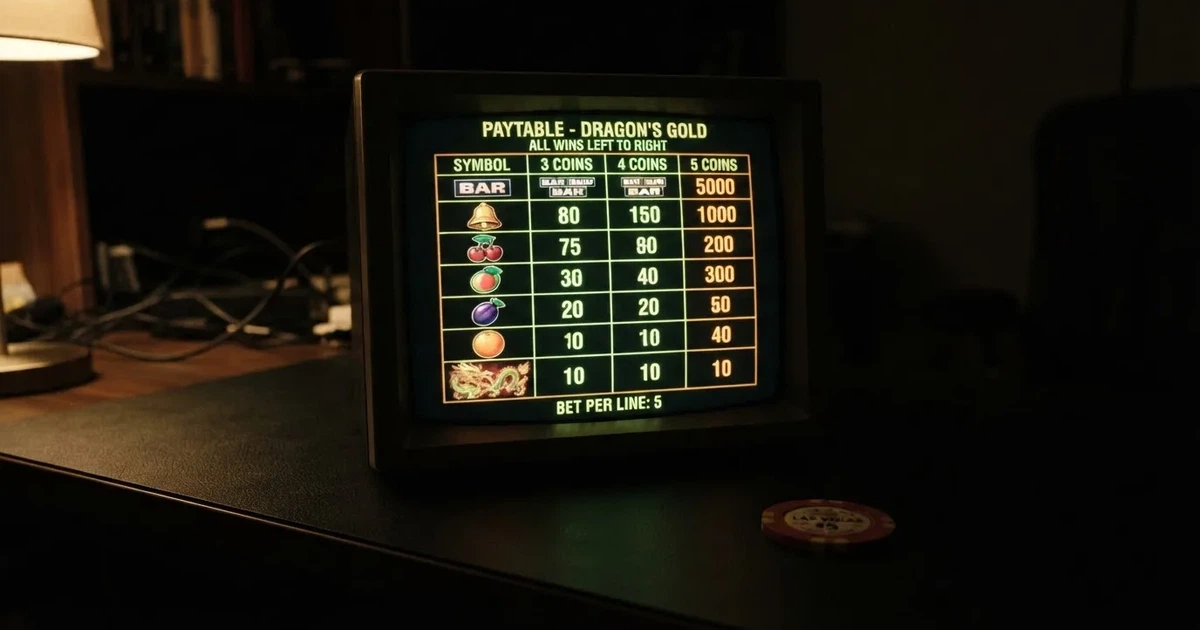
Current as of 29 October 2026, against the ACMA’s published register of formal warnings and blocking actions.
Table of Contents
- The Australian legal frame for Big Red-style pokies online
- The mechanics that make a Big Red-style pokies game what it is
- Responsible gambling for a product the law does not licence online
- What an offshore site advertising Big Red-style pokies actually looks like
- The criteria that actually separate one option from another
- The featured operator set, and what the ACMA record on each one says
- Reading the ACMA’s running total
- What a player who wants the Big Red theme should actually do
- Frequently asked questions
The Australian legal frame for Big Red-style pokies online
What the Interactive Gambling Act 2001 actually prohibits
The Interactive Gambling Act 2001, strengthened by the Interactive Gambling Amendment Act 2017, makes it an offence to provide online casino games, online pokies or in-play betting to a person physically in Australia. Lotteries, keno and pre-event wagering on races and sport are licensable. Everything in a casino floor — table games, slots, pokies in every shape — is not. The IGA targets the provider, not the punter sitting at the other end of the connection, but that detail only protects the player from prosecution, not from a refusal to pay out or a balance left stranded when the site is blocked.
The Interactive Gambling Amendment (Gambling Reform) Bill 2026 passed Parliament on 19 August 2026, with its advertising and inducement measures commencing on 1 January 2027. Law with a start date, not yet in force on a 2026 page — relevant because it sharpens what offshore sites can and cannot say to Australian audiences once it bites, but not a rule that applies today.
How the ACMA enforces it in practice
The ACMA investigates complaints, issues formal warnings to operators and asks Australian internet service providers to block illegal sites. A blocking request under section 313 of the Telecommunications Act 1997 is the lever that turns a warning into something an Australian customer cannot reach. As reported in June 2026, a running total of 1,751 illegal gambling and affiliate marketing websites had been blocked since the first such request in November 2019, and more than 230 unlicensed gambling services had left the Australian market since enforcement was strengthened in 2017. That is the cumulative shape of the regime: a steady drumbeat of formal warnings, followed for the worst offenders by an instruction to the ISPs to make the domain unreachable from inside Australia.
What H2 Gambling Capital puts on the other side of the ledger
H2 Gambling Capital’s 2025 report estimates Australians lose about A$3.9 billion a year to illegal gambling sites, and that the share of gambling going through legal channels fell from 74% in 2021 to 64%. The legal market is shrinking, not because Australians have stopped gambling, but because the spend has migrated offshore into sites the IGA does not licence. That is the cost the ACMA’s blocking list is trying to claw back, and it is also the reason the offshore pitches keep appearing in the first place: a market this large, this willing, and this poorly served by what local law permits, is the market every grey-market casino wants.
The licence in the footer is not the licence it looks like
A Curacao-issued number, an Anjouan registration, a Costa Rica corporate address — these are the licences most offshore sites advertising Big Red-style pokies to Australians display. They are real authorisations in the jurisdictions that issue them, and none of them authorises the service they are selling to a person in Australia. The IGA does not recognise them. The ACMA does not enforce them. A player who has a complaint about a refused withdrawal has no Australian body to take it to, no BetStop binding on the operator, and no path through the Australian Financial Complaints Authority. The footer licence protects the operator’s right to exist somewhere. It does nothing for the customer on the other side of the screen.
The mechanics that make a Big Red-style pokies game what it is
The paytable and the Australian floor machine
A Big Red-style pokies game is, in the language of an Australian pub or club, an Aristocrat-style themed machine: a five-reel video slot built around an outback or native-animal motif, with a free-games feature that pays the heaviest single line in the bonus round, and a base game built around smaller combinations across the themed symbols. The free-games feature is the engine of the theme — the part the marketing copy tends to lead with — and the rest of the paytable is structured around keeping a session alive long enough for it to land.
The land-based machines are state-licensed, separately regulated in every jurisdiction, and the legal minimum return-to-player varies from jurisdiction to jurisdiction: 85% in New South Wales, the Northern Territory and Queensland, 87% in the Australian Capital Territory and Tasmania, 87% at Crown Melbourne in Victoria, 87.5% in South Australia, and 90% in Western Australia. Those are floors, not averages. A venue can run machines well above the floor, and many do, but the floor is the figure the regulator enforces on every approved game on every licensed floor.
New South Wales, Victoria, Queensland — what the numbers look like
New South Wales had 87,298 gaming machines outside casinos across 2,195 venues as of June 2023, with player losses of A$8.18 billion in 2022-23. Queensland had 21,122 gaming machines operating in 351 venues in October 2023. Victoria had 26,380 outside Crown Casino in 488 venues in 2021-22, sitting under a 30,000 statewide limit. Western Australia took a different path entirely: poker machines were banned in pubs and clubs when Crown Perth opened in 1985, and Crown Perth’s own machine count has since grown from about 200 in 1985 to roughly 2,500, all approved by the state’s Gaming and Wagering Commission. Tasmania held the machines under a Federal Group monopoly from 1968; legislation passed in November 2021 ended that monopoly and moved oversight of the machines to the Tasmanian Liquor and Gaming Commission, with mandatory pre-commitment cards planned as nation-leading reform but delayed until late 2025.
In 2020-21 Australians bet almost A$150 billion through gaming machines and lost A$12.18 billion on them, on a base of about 3% of the world’s pub and club poker machines and 0.3% of the global population. That is the volume the offshore pitches are chasing. It is also the volume that explains why every major jurisdiction in the country has its own rules, its own limits, and its own enforcement pattern.
The volatility question, and why older Aristocrat-style themes differ from newer video slots
The older Australian-themed Aristocrat-style machines are typically medium-to-high variance in shape: a base game that pays small combinations often enough to keep a session moving, with a free-games feature that is the dominant share of the long-run return. The newer five-reel video slots that dominate offshore lobbies trend lower in volatility per session — more events, smaller individual outcomes — because they are designed around an autoplay session length rather than a single spin’s punch. A punter moving from a licensed pub machine to an offshore lobby should expect a different rhythm, not a different game. The feature is the same; the pace is not.
This is also why a Big Red-style theme is difficult to evaluate against published RTPs the way a NetEnt or Pragmatic Play title can be evaluated. The land-based machine is licensed at a state-issued floor; the offshore clone, if a clone exists, is licensed nowhere and reports no figure the ACMA enforces. A player looking for the real thing is looking for the licensed floor, not the offshore lobby.
Where Australian-themed pokies machines still sit on a licensed floor
Registered clubs operated Australia’s first legal poker machines from 1956, in New South Wales. The pub and club machine is the home the Big Red theme has occupied for decades, and it remains the home it occupies today. State regulators license the games venue by venue; a punter who wants to confirm a specific theme is on a particular venue’s floor can ask the venue directly, check the regulator’s published game list, or look at Liquor & Gaming NSW, the Victorian Gambling and Casino Control Commission, or the equivalent body in the relevant state. Tasmania’s transition out of the Federal Group monopoly puts that jurisdiction’s machine list under the Tasmanian Liquor and Gaming Commission.
Responsible gambling for a product the law does not licence online
What BetStop covers and what it does not
BetStop, the National Self-Exclusion Register, has been live since August 2023. It binds Australian-licensed online and phone wagering services — the licensed bookmakers regulated by the NTRWC and the state regulators. An offshore casino offering Big Red-style pokies online to an Australian is not connected to BetStop. A self-exclusion registered through BetStop does not stop the offshore sites the ACMA has been blocking; it stops the licensed Australian wagering services the player has chosen to step back from. Both matter, and neither replaces the other.
The Northern Territory Racing and Wagering Commission regulates 52 of Australia’s online bookmakers — including Sportsbet, Bet365 and Ladbrokes — which are licensed in the Territory for tax reasons; the commission has no full-time staff and meets once a month in Darwin. That is the body behind the licensed wagering services BetStop covers, and it is the body that does not, and structurally cannot, reach the offshore casino product.
Help lines and state-level registers
The National Gambling Helpline on 1800 858 858 is free, 24/7, with chat available through Gambling Help Online. State-level self-exclusion registers operate in New South Wales, Victoria, Queensland, Western Australia, South Australia, Tasmania, the Northern Territory and the Australian Capital Territory, and each one is a separate agreement with venues in that jurisdiction. A punter who plays Big Red-style themes at a local venue and wants to step back should register with the state-level register where the venue sits; a punter who wants to step back from licensed online wagering should register with BetStop; neither covers an offshore casino.
The minimum age to gamble in Australia is 18, and that figure is set federally under the IGA and reinforced by every state and territory. An offshore site that takes a deposit from a 17-year-old is breaking Australian law in the same way it is breaking Australian law by offering the casino product in the first place.
What the payment rules tell a player about the operator’s status
Since 11 June 2024, credit cards, credit-related products and digital currency have been banned as payment for licensed online wagering, with penalties of up to $247,500 for operators. The legal deposit routes for licensed Australian wagering are debit card, bank transfer, PayID/Osko and BPAY. A site that asks an Australian player for a credit card number or a crypto deposit is operating outside the Australian rules — not because PayID is “safer” than card, but because the operator willing to take a banned payment route is the same operator willing to take Australian customers on a product the IGA does not permit. The payment screen provides a much faster reality check on the operator’s status than any footer documentation.
What an offshore site advertising Big Red-style pokies actually looks like
The shape of the offer
The offer is built the same way across the grey-market segment. A multi-deposit welcome package — typically labelled as a percentage match on the first deposit, then the second, then the third or fourth — with free spins attached to one or more of those deposits. Wagering requirements sit in the 35x to 50x range on the bonus portion, with a separate playthrough on the free-spin winnings, and a maximum cashout cap that applies to bonus-derived funds. Game weighting reduces the contribution of table games and sometimes live casino to the wagering requirement, with online slots including the Big Red-style theme contributing 100%. The numbers vary; the shape does not. A punter who has seen one of these welcome packages has functionally seen most of them.
The cleaner way to read the shape: the wagering multiple is the actual cost, the maximum cashout cap is the actual ceiling, and the game weighting is the actual restriction. A 100% match up to a stated amount reads as a gift; a 40x playthrough on the bonus amount with a capped cashout reads as a constrained product whose value to the player depends on which game they put it through.
What the ACMA has done to the operators behind those offers
The ACMA’s enforcement pattern across the past four years is the clearest single map of the segment. In May 2022 the ACMA issued a formal warning to Dama N.V. covering six casino brands — Bambet, Dazard, Level Up, Rocketplay, Wild Tornado and Cobra Casinos. The same operator received further formal warnings over Woo Casino in March 2025 and Spirit Casino in May 2025. In July 2025 the ACMA issued formal warnings to Bamboo Media over Ignition Casino and to Consolutetish S.R.L. over National Casino and Bizzo Casino; Bizzo Casino had already been the subject of a 2022 formal warning to TechSolutions (CY) Group Limited and TechSolutions Group N.V. In February 2025 the ACMA issued a formal warning to EOD Code SRL over Instant Casino. In April 2025 the ACMA issued a formal warning to Sterplay Holding Ltd over Casino Intense. The ACMA issued a formal warning to Hollycorn N.V. over its Sky Crown and Blue Leo casino services in September 2022. In March 2026 the ACMA issued a formal warning to Pulsup Ltd over Rocketplay.com.au. In April 2026 the ACMA issued a formal warning to Ryker B.V. over Jackbit and CasinOK.
The pattern: a single offshore operator may own a dozen brands, and the ACMA names the operator, not the brand. A formal warning to Dama N.V. is, in practice, a warning about six casino sites at once. A formal warning to Consolutetish S.R.L. is a warning about two. A punter who sees the same company name on the bottom of three different welcome pages is looking at one customer, not three.
Why a blocking round is not a clean reset
In the round reported on 26 June 2026, the ACMA asked Australian internet service providers to block 12 more illegal gambling websites: 7Signs, ChromaBet, Donbet, Duospin, Freshbet, Slots Gem, Jacks Club, Lucky Start, Pointsbetz.com, Spinrise, Vinyl Casino and Wildsino. A blocked domain is not a gone operator; it is a gone URL. The operator migrates to a fresh domain, the ACMA catches up, and the cycle repeats. The cumulative blocking count — 1,751 websites since November 2019 — is the cumulative footprint of that chase. The 1,751 figure is not the size of the offshore market; it is the size of the work.
A blocking request, from the player’s seat, also does not return any balance the player had on the blocked site. The IGA does not run a refund scheme. A punter who had A$200 on a site the day it was blocked has A$200 the operator can refuse to return, and no Australian complaints body to complain to. That is the practical cost of playing an unlicensed product, and it is the cost a formal warning is meant to warn the operator off creating — not the cost a player should expect to be made whole on.
The criteria that actually separate one option from another
Whether the product is legal in the player’s jurisdiction at all
The first criterion for any Big Red-style pokies option is not the bonus, the wagering multiple, or the game library. It is whether the operator is permitted to offer online casino games to a person in Australia. If the answer is no — and for every offshore casino the ACMA has warned, the answer is no — the rest of the comparison is a comparison between products the player should not be using. The legal question sets the floor; everything else sits above it or does not apply.
The licensed Australian floor, where the Big Red theme actually lives
On a licensed pub or club floor, the relevant criteria are simpler. Is the theme approved by the relevant state regulator — Liquor & Gaming NSW, the Victorian Gambling and Casino Control Commission, the Queensland Office of Liquor and Gaming Regulation, the Tasmanian Liquor and Gaming Commission, or the equivalent body in the relevant jurisdiction? Is the venue registered? Does the venue honour the state self-exclusion register? Does the venue publish its return-to-player figures on the machine? The criteria that matter for a licensed floor are not the criteria that matter for an offshore site, and a comparison that treats them as the same comparison has compared the wrong things.
What the offshore pitch obscures by design
The offshore pitch leans on three things the player cannot check: the published RTP of an offshore slot, the volatility rating the lobby displays, and the operator’s claim to hold a licence that authorises service to Australians. The first is set by the operator and not independently audited for the AU market. The second is a marketing label, not a regulatory finding. The third is the licence the IGA does not recognise. A punter evaluating the offshore pitch against the licensed floor is comparing a labelled product against a regulated one, and the labels are not on equal footing.
The featured operator set, and what the ACMA record on each one says
The brands below are not a ranking and not a shortlist. They are the brands the ACMA has itself named in formal warnings under the Interactive Gambling Act 2001. Each one advertised an online casino product — including pokies themes of the kind described here — to Australian customers. The only reason to list them is that the ACMA listed them, and the page’s job is to record what the regulator has done.
RocketPlay
Pulsup Ltd received a formal warning from the ACMA in March 2026 over Rocketplay.com.au. The same brand had earlier drawn a formal warning when it sat under Dama N.V. in May 2022. The site displays a Curacao-issued licence in its footer; that licence authorises RocketPlay to operate from Curaçao, and does not authorise it to offer online casino games to a person in Australia. The page has no data on whether RocketPlay carries a Big Red-style theme in its library — the listing pages that would carry that figure are the affiliate marketing pages the page does not cite.
The RocketPlay record is the pattern a punter should hold in mind: a single brand can sit under multiple offshore operators in sequence, each one acquiring the customer base the previous one lost to a warning or a blocking round. Such sites often swap their operator details while the service itself remains fundamentally unchanged.
Level Up Casino
Dama N.V. received a formal warning from the ACMA in May 2022, and Level Up was one of the six brands named in that warning. BGaming’s own listings pages show Level Up among the operators carrying BGaming content — the only independently corroborating source for the site’s product composition. The same offshore-operator-under-six-brands pattern as the rest of the Dama N.V. set. Online casino games cannot be licensed anywhere in Australia, whatever licence the site displays.
Woo Casino
Dama N.V. received a further formal warning from the ACMA in March 2025 over Woo Casino — a separate warning from the May 2022 batch, indicating the ACMA treated Woo Casino as an ongoing matter rather than a closed one. The site displays a Curacao-issued licence. Detailed internal data on the site’s exact game library or specific RTP configurations remains unavailable through public, independent sources.
A second formal warning over the same operator is the ACMA’s way of saying the first warning did not produce a change in behaviour. The operator is named twice for the same reason: to escalate the record, not to repeat it by accident.
Spirit Casino
Dama N.V. received a further formal warning from the ACMA in May 2025 over Spirit Casino. The same offshore operator, the same pattern. Specific details regarding this site’s internal game library remain opaque.
Spirit Casino sits two months after Woo Casino in the ACMA’s record, and the proximity is the point: the regulator names Dama N.V. each time one of its brands advertises to Australians, and the ACMA does not treat each brand as a separate customer.
National Casino
Consolutetish S.R.L. received a formal warning from the ACMA in July 2025 over National Casino. The Wikipedia entry on gambling in Australia references National Casino among the offshore brands that have drawn ACMA attention. The site displays a Curacao-issued licence.
National Casino is the other half of the July 2025 Consolutetish S.R.L. warning, alongside Bizzo Casino. Two brands, one operator, one warning — the ACMA names the parent, not the children’s brands, and a punter looking at the two sites side by side is looking at the same customer.
Bizzo Casino
Consolutetish S.R.L. received a formal warning from the ACMA in July 2025 over Bizzo Casino. The same brand had already been the subject of a 2022 formal warning to TechSolutions (CY) Group Limited and TechSolutions Group N.V. Two formal warnings, two different parent operators, the same brand. There is little transparency regarding the site’s specific product lineup from external sources.
A brand that has changed parent operators and kept its ACMA record is a brand that has carried its reputation across the change. The footer documentation is updated, but the regulator’s stance remains firm.
Ignition Casino
Bamboo Media received a formal warning from the ACMA in July 2025 over Ignition Casino. The site displays a licence from a jurisdiction outside Australia. Public, independent verification of the site’s actual game mix or library composition is generally not available.
Ignition Casino is the only brand named in the July 2025 Bamboo Media warning. A single-brand warning is unusual in this segment — most warnings cover two or more — and the ACMA’s decision to issue it that way is itself a piece of the regulator’s record.
Instant Casino
EOD Code SRL received a formal warning from the ACMA in February 2025 over Instant Casino. No independently verifiable data on the site’s product composition is available from sources the page cites.
Instant Casino is the earliest of the four 2025 warnings on this list, and the ACMA record shows the regulator widening the operator-by-operator naming pattern from this point forward.
Jackbit
Ryker B.V. received a formal warning from the ACMA in April 2026 over Jackbit. The same formal warning covered CasinOK — two brands under one operator in one warning. The site displays a licence from a jurisdiction outside Australia.
Jackbit is the most recent formal warning on this page, and it pairs Jackbit with CasinOK in a single action. The ACMA’s pattern of naming two or more brands per warning continues; a punter looking at one of the two is looking at the same customer as the other.
Casino Intense
Sterplay Holding Ltd received a formal warning from the ACMA in April 2025 over Casino Intense. ABC News reporting and the ACMA’s own register, alongside Crown Melbourne’s game documentation, reference Casino Intense among the offshore brands that have drawn regulator attention. No independently verifiable data on the site’s product composition is available from sources the page cites.
Casino Intense is the smallest of the eleven brands by ACMA record — a single formal warning under a single operator — and the operator name appears nowhere else in the regulator’s published actions on this list.
Sky Crown
Hollycorn N.V. received a formal warning from the ACMA over its Sky Crown and Blue Leo casino services, as published in the ACMA’s formal warning PDF of September 2022. The site displays a Curacao-issued licence. No independently verifiable data on the site’s product composition is available from sources the page cites.
Sky Crown is the only brand on this list whose ACMA action is older than the 2024-2026 cluster, and the publication is the ACMA’s formal-warning PDF rather than a press release. The format of the document is the regulator’s standard one; the date on it is the date that matters.
Reading the ACMA’s running total
The arithmetic the page can support
The arithmetic the page can responsibly make is a rate, not a verdict. From the first blocking request in November 2019 to the June 2026 total of 1,751 blocked sites, the rate works out to roughly 260 blocked sites a year across the seven-year span, with material variation year to year — heavier rounds in periods when the ACMA has cleared a backlog of affiliate marketing domains, lighter rounds in periods when the regulator’s bandwidth has gone into formal warnings instead. The band, with the cumulative count as its anchor, is the figure the page can stand behind; a single-year figure depends on which 12-month window the reader picks and how the ACMA categorises each blocking request, and the page does not have that breakdown.
The arithmetic here provides a practical sense of the enforcement scale. A punter who reads “1,751 blocked websites” as a static figure has read the headline but not the rate. The rate is what tells the reader whether the ACMA is catching up, holding steady, or falling further behind.
What the rate does not say
The rate does not say the offshore market is shrinking. The H2 Gambling Capital 2025 figure of A$3.9 billion a year in losses to illegal sites, against the 64% legal-channel share, is the counterweight. The ACMA is blocking more sites each year than it blocked the year before; the offshore market is still attracting more Australian customers than the legal channel serves. The two trends sit beside each other, and the IGA’s frame — block the URL, warn the operator, leave the punter alone — is the reason both trends can be true at once.
What changes when the 2026 reform bites
The Interactive Gambling Amendment (Gambling Reform) Bill 2026 passed Parliament on 19 August 2026. Its advertising and inducement measures commence on 1 January 2027. From that date, the offshore sites’ pitches to Australian customers become a tighter legal target than the pitches themselves were under the original IGA. The block-and-warn pattern the ACMA has been running since 2017 is the regime the new bill sits on top of, and the new bill changes what is allowed in marketing as much as it changes what is allowed in product. A 2026 page cannot speak to enforcement under the new bill, because enforcement under the new bill begins in 2026+1.
What a player who wants the Big Red theme should actually do
The licensed floor is the legal home
The Big Red theme is on licensed pub and club floors across the country, regulated by the relevant state body — Liquor & Gaming NSW in New South Wales, the Victorian Gambling and Casino Control Commission in Victoria, the Queensland Office of Liquor and Gaming Regulation in Queensland, the Tasmanian Liquor and Gaming Commission in Tasmania, the SA Consumer and Business Services in South Australia, the Department of Local Government, Sport and Cultural Industries in Western Australia for the licensed casino only, the NT Racing and Wagering Commission in the Northern Territory, and the ACT Gambling and Racing Commission in the Australian Capital Territory. The minimum return-to-player for poker machines in each jurisdiction is published in the Gambling in Australia summary on Wikipedia: 85% in NSW, the NT and Queensland, 87% in the ACT and Tasmania, 87% at Crown Melbourne in Victoria, 87.5% in South Australia, and 90% in Western Australia. The relevant question for a player who wants the Big Red theme is which licensed venue in their jurisdiction carries it, and the answer is to ask the venue or check the regulator’s game list.
The offshore product is the legal dead end
Every site on this page — RocketPlay, Level Up, Woo Casino, Spirit Casino, National Casino, Bizzo Casino, Ignition Casino, Instant Casino, Jackbit, Casino Intense and Sky Crown — has been the subject of an ACMA formal warning for offering prohibited interactive gambling services to Australians. The product each one offers cannot be legally supplied to a person in Australia. The licence in the footer does not change that. The wagering multiple on the welcome bonus does not change that. The size of the game library does not change that. The legal answer is the legal answer before any of those numbers come into play.
The information the player can act on
The information the player can act on, at the end of this page, is three figures and three checks. Three figures: the ACMA’s 1,751 blocked sites since November 2019, the H2 Gambling Capital A$3.9 billion in annual losses to illegal sites, and the legal RTP floor in the player’s jurisdiction (85%, 87%, 87.5% or 90% depending on state). Three checks: whether the site is on the ACMA’s blocking or warning register, whether the payment screen takes credit card or crypto (both banned for licensed Australian wagering), and whether the state regulator’s game list includes the specific theme on the licensed venue the player is considering.
Frequently asked questions
What style of pokies theme does “Big Red” typically refer to?
Big Red is the common name for a five-reel video pokies theme in the Aristocrat Australian-style tradition: native animals and outback imagery, with a free-games feature as the dominant payout engine and a base game of smaller themed combinations. It is a licensed land-based machine in Australian pubs and clubs; the theme is regulated state by state, and the minimum return-to-player depends on the jurisdiction.
Can an online version of a Big Red-style pokies game be legally played by someone in Australia?
No. The Interactive Gambling Act 2001 prohibits the supply of online casino games, including online pokies, to a person in Australia. No Australian state or territory licenses an online casino product. Any offshore site advertising such a game to Australian customers is operating outside the local rules, regardless of the licence it displays in its footer, and the ACMA has issued formal warnings to multiple operators for doing exactly that.
Are classic Australian-themed pokies machines still found in licensed pubs and clubs?
Yes. New South Wales had 87,298 gaming machines outside casinos across 2,195 venues as of June 2023; Queensland had 21,122 across 351 venues as of October 2023; Victoria had 26,380 outside Crown Casino in 488 venues in 2021-22. Registered clubs operated Australia’s first legal poker machines from 1956, in New South Wales, and the pub and club floor remains the legal home of the Big Red-style theme.
Why do offshore sites keep advertising Big Red-style games to Australian visitors?
H2 Gambling Capital’s 2025 report estimates Australians lose about A$3.9 billion a year to illegal gambling sites, and the share of gambling going through legal channels fell from 74% in 2021 to 64%. The legal market is shrinking while the offshore market grows, because the IGA’s prohibition on online casino games leaves the licensed wagering channels competing for a slice of spend the offshore channels already capture. The 1,751 blocked sites since November 2019 is the ACMA’s answer, not the market’s answer.
Does the volatility of a Big Red-style machine differ from newer video slot themes?
The older Aristocrat-style Australian-themed machines are typically medium-to-high variance, with a base game that pays small combinations often enough to keep a session moving and a free-games feature that is the dominant share of the long-run return. Newer five-reel video slots that dominate offshore lobbies trend lower in volatility per session — more events, smaller individual outcomes — because they are designed around an autoplay session length rather than a single spin’s punch. The feature is the same; the pace is not.
How can someone confirm whether a specific pokies theme is on a licensed Australian venue’s floor?
Ask the venue directly, check the relevant state regulator’s published game list, or contact the regulator — Liquor & Gaming NSW, the Victorian Gambling and Casino Control Commission, the Queensland Office of Liquor and Gaming Regulation, the Tasmanian Liquor and Gaming Commission, or the equivalent body in the player’s jurisdiction. The licensed venue is the only place the Big Red theme is regulated as a Big Red theme, and the regulator’s game list is the only authoritative answer to whether a specific venue carries it.