
Best Pokies in Tasmania in 2026: Real Venues, Real Limits, and What the ACMA Has Blocked
There is a clean answer to the search behind this page and a less clean one. The clean answer: Tasmania only has two casinos licensed to run pokies, plus a network of pubs and clubs that now run their own machines under the state’s cashless gaming card regime. The less clean answer is the long tail of offshore sites using the word “pokies” to market themselves to Australians, which the ACMA has spent the last decade warning off and, since late 2019, asking Australian ISPs to block. This page walks through both — what the law actually licenses on the island, and what the regulator has done about the brands that won’t stop advertising here anyway.
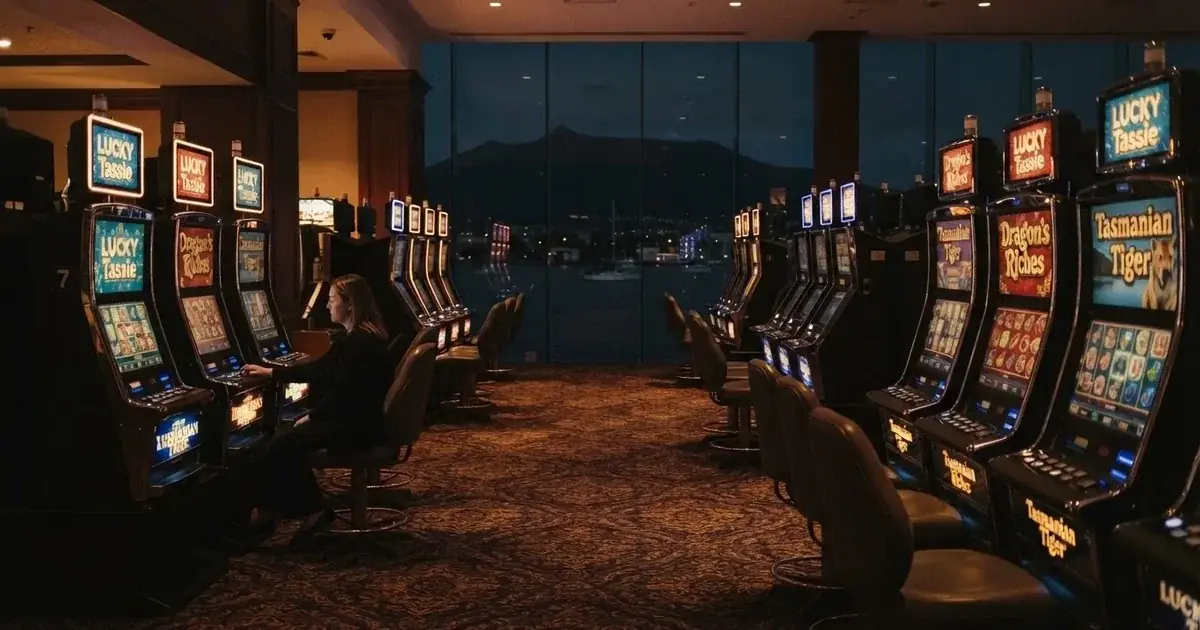
Currency and licensing data current as of 29 October 2026, cross-checked against the Australian Communications and Media Authority’s published register and the Tasmanian Liquor and Gaming Commission’s public materials.
Table of Contents
- How Money Moves Through a Tasmania Pokies Venue — Payouts, Limits, and What “Cashless” Actually Means
- Spirit of Tasmania, Hotel Floors, and the Mechanics Worth Knowing
- Tasmania’s Licensed Pokies Venues Ranked Against What Matters
- The Legal Framework Around Pokies in Tasmania
- Responsible Gambling on Tasmanian Pokies
- Land-Based Pokies in Tasmania
- How the Blocking Rate Has Stacked Up
- What the Page Concludes
- Frequently Asked Questions
How Money Moves Through a Tasmania Pokies Venue — Payouts, Limits, and What “Cashless” Actually Means
Tasmania took a different path from the rest of the country in late 2025. Hotel and club poker machines moved to mandatory carded play from December 2025, and every player now sits behind a system run by the Tasmanian Liquor and Gaming Commission. The default loss limits are A$100 a day, A$500 a month and A$5,000 a year, and each of those ceilings can only be raised after the player waits at least 24 hours. The reform did not yet extend to the two casinos at the time the framework was set, and no casino rollout date had been announced by September 2024.

That changes the picture a returning Tasmanian punter walks into. The era of feeding a A$50 note into a machine and walking away with whatever it printed is over in every pub and club venue. Players load funds onto a card, the machine reads the card, the limit applies in real time, and the venue keeps a record of every session the player runs. It is, in plain terms, a loss limit with teeth, and the 24-hour cooling-off before any raise is the part designed to stop a frustrated session turning into a limit bump.
The return-to-player side of the ledger sits in a narrower band than the marketing suggests. South Australia sets a minimum gaming-machine return-to-player rate of 87.5% outside its casino; Tasmania’s machine settings run inside the same envelope of state-set minimums, with the casino floors running on their own house rules. Where a venue claims a “payout percentage” higher than that minimum, the figure is a venue-specific published number rather than a regulatory floor, and it usually excludes the casino product.
On the cash side, no venue in Tasmania pays out in any form a player cannot take through the door. The big-ticket machine wins inside the two casinos are paid by cheque or by bank transfer rather than in cash, and clubs honour winnings over the local payout threshold through the same route. Cards are not a payout channel at a pokies machine; they are an input channel, and a player who hits a significant prize sits down with a venue cashier rather than at the ATM. Maximum cash payouts are set per venue and published at the cashier.
That whole structure — carded play, loss limits, regulated venue cashiers — is what the Tasmanian scheme is built around, and it is also what the offshore brands the rest of this page names do not offer. They take deposits by credit card or crypto, both of which have been banned as funding for any Australian-licensed online wagering service since 11 June 2024, and they pay out to a method of their choosing on a timeline they set. The contrast is the page’s point.
Spirit of Tasmania, Hotel Floors, and the Mechanics Worth Knowing
A few mechanics deserve a mention because they shape what a player actually sees on the floor. Tasmania’s pubs and clubs run “X” and “Y” line games under the same Australian regulatory pattern as the rest of the country — preset credit-denomination games with a fixed paytable and a small number of feature modes. The casino floors at Wrest Point and the Country Club run a wider mix of multi-line video slots and electronic table products, alongside the traditional reel-spinner banks.
There is a small folklore around pokies on the Spirit of Tasmania ferry. The vessel’s gaming facilities are licensed by the Tasmanian Liquor and Gaming Commission and operate under the same carded-play regime as the mainland venues, with the same default loss limits applying across the sailing. Whether the machines are open during a particular sailing depends on the operator’s published schedule; the limit regime does not pause when the ship leaves port.
Around-the-clock play is rarer in Tasmania than the search suggests. Most pubs and clubs shut their gaming floor outside trading hours, and what remains open overnight tends to be the two casinos — Wrest Point in Hobart and the Country Club in Launceston — rather than the pub-and-club network. A player looking for late-night machines in Hobart or Launceston is, in practice, looking at the casino floors and at the few hotels that keep a gaming room open past midnight.
Cashless carded play is the structural change worth following on the mechanics side. Players used to dropping a note into a machine now load funds onto a card at a kiosk, the machine draws against the card balance, and any winnings return to the card rather than printing out as ticket stock. The result is a paper trail that did not exist before — every spin funded, every win returned, every loss counted against the daily limit — and a venue manager who can see, in real time, where the session is heading.
Tasmania’s Licensed Pokies Venues Ranked Against What Matters
There are not eleven licensed pokies venues in Tasmania. There are two casinos and a long tail of pubs and clubs. The “ranking” for this island is a comparison of how those venues serve different kinds of players — and a separate accounting of which offshore sites the ACMA has formally warned over the last four years, which is the list the rest of the country also has to live with.
Wrest Point and the Country Club are the only two venues in Tasmania licensed to run a full casino floor under the state’s casino framework. Wrest Point, in Hobart’s Sandy Bay, opened on 10 February 1973 and was Australia’s first legal casino. The Country Club, on the rural edge of Launceston, opened in 1982 under a Georgian design that the operators modelled on the stately homes of the American South. Federal Group holds both licences and held, until August 2017, the exclusive right to operate electronic gaming machines outside those two casinos, before the state allowed individual pubs and clubs to hold their own machine licences. The change opened the door to the pub-and-club network that now sits underneath the casino pair.
Adelaide Casino and Treasury Brisbane are not Tasmanian venues, but they sit close enough to the page’s subject — by virtue of being the other two Australian capitals whose casino markets the reader is likely comparing Tasmania against — to warrant a mention. Adelaide Casino (SkyCity Adelaide until 2009) operates under South Australia’s Casino Act 1997 as the state’s sole licensed casino, sitting in the heritage railway station building with 90 gaming tables and 950 gaming machines. Treasury Casino closed in Brisbane on 25 August 2024 to make way for The Star Brisbane at Queen’s Wharf, which opened on 29 August 2024. They are outside Tasmania’s licensing frame and are included here only as comparison points.
South Australia’s published minimum return-to-player rate of 87.5% outside the casino, and Queensland’s 21,122 gaming machines across 351 venues as of October 2023, are the figures a Tasmanian player comparing other states should weigh against what Wrest Point and the Country Club publish on their own floors.
RocketPlay — ACMA action over the same brand twice
Rocketplay has been on the ACMA’s published list twice under two different operator names — Dama N.V. in May 2022 and Pulsup Ltd in March 2026. The site presents itself to Australian players as an online casino, runs a “pokies” section, and accepts the deposit methods the IGA explicitly bans Australian licensees from using. No detail about the site’s underlying RTP, wagering terms, or withdrawal timeline can be relied on; the ACMA’s formal warning under the Interactive Gambling Act 2001 puts the brand outside the Australian licensing frame, and the only consumer-protection regime an Australian player can reach is the ACMA itself.
Level Up Casino — one of six brands in the same 2022 warning
Level Up Casino was one of six brands the ACMA named in a single May 2022 warning to Dama N.V., alongside Bambet, Dazard, Rocketplay, Wild Tornado and Cobra Casinos. That single warning letter is the regulator’s clearest statement that an offshore operator running a cluster of brands under one corporate umbrella is treated as one enforcement target rather than six. The site’s published details match the same offshore template as the rest of that cluster.
Woo Casino — separate ACMA warning in March 2025
Woo Casino picked up its own ACMA formal warning in March 2025, again under Dama N.V. as the named operator, distinct from the 2022 cluster. The site uses the standard offshore product mix, the same bonus structure as the rest of the cluster, and the same payment methods. An Australian who lands on the Woo Casino page sees a “pokies” lobby branded to read like a local venue; the ACMA’s view, recorded in writing, is that it is not.
Spirit Casino — May 2025 warning, also Dama N.V.
Spirit Casino was the subject of a separate ACMA formal warning to Dama N.V. in May 2025. The brand is part of the same corporate family as Woo Casino and the 2022 cluster, and the warning letter tracks the same pattern: a brand offering prohibited interactive gambling services to people in Australia under a Curaçao-incorporated parent. The “Spirit” name in the brand does not relate to the Spirit of Tasmania ferry; the two are unrelated entities with no operating connection.
National Casino — July 2025 warning to Consolutetish S.R.L.
National Casino was named alongside Bizzo Casino in a single July 2025 ACMA warning to Consolutetish S.R.L. National Casino’s Australian-facing site runs the standard offshore template and has been the subject of media coverage that flagged its targeting of Australian players. The ACMA’s formal warning puts the brand on the same legal footing as every other entry in this list: prohibited interactive gambling service, no Australian consumer protection regime, and an enforcement direction already on the record.
Bizzo Casino — two warnings, two operators
Bizzo Casino is the rare entry on this list that has been the subject of two ACMA warnings under two different operator names. The first, in 2022, was issued to TechSolutions (CY) Group Limited and TechSolutions Group N.V.; the second, in July 2025, was issued to Consolutetish S.R.L. Two warnings under two different parents over four years is the cleanest evidence the ACMA has that corporate restructuring does not move a brand out of the warning frame. The site’s Australian-facing product did not change between the two warnings.
Ignition Casino — July 2025 warning to Bamboo Media
Ignition Casino was the subject of an ACMA formal warning to Bamboo Media in July 2025. The brand has historically targeted Australian players through a poker-and-casino product mix, and the warning letter is one of the more recent in a long line the ACMA has issued over the same offshore product template.
Instant Casino — February 2025 warning to EOD Code SRL
Instant Casino picked up an ACMA formal warning in February 2025, addressed to EOD Code SRL. The brand sits at the more aggressive end of the offshore product mix — heavy bonus-led marketing, the standard “pokies” lobby, and a payment-method set that includes the channels Australian-licensed wagering operators have been banned from accepting since June 2024. The ACMA’s warning is the regulator’s recorded position that the brand’s offering to Australians falls inside the Interactive Gambling Act 2001’s prohibited category.
Jackbit — April 2026 warning to Ryker B.V.
Jackbit was the subject of an ACMA formal warning in April 2026, addressed to Ryker B.V. alongside the related CasinOK brand. The April 2026 warning is among the most recent published ACMA actions against an offshore operator and lands squarely inside the period in which the regulator has been steadily extending its enforcement reach. The brand’s Australian-facing product is the standard offshore mix; the ACMA’s view is recorded in writing.
Casino Intense — April 2025 warning to Sterplay Holding Ltd
Casino Intense was the subject of an ACMA formal warning in April 2025, addressed to Sterplay Holding Ltd. The brand sits inside the same cluster of European-incorporated parents the rest of the warning list draws from, and the formal warning puts it on the same footing as every other entry. No Australian consumer protection regime applies, and an Australian player using the site has no complaints body in country to escalate to.
Sky Crown — September 2022 warning to Hollycorn N.V.
Sky Crown was the subject of an ACMA formal warning to Hollycorn N.V. alongside its sibling Blue Leo brand, published in September 2022. Sky Crown sits at the earlier end of the ACMA’s enforcement timeline; the same warning letter is one of the documents that established the regulator’s pattern of naming both the brand and the parent operator, which has held across every warning issued since.
The Licensed Set — Wrest Point, Country Club, and the Pub-and-Club Network
The two casinos at Wrest Point and the Country Club, plus the licensed pub and club network underneath, are the only lawful way to play pokies in Tasmania. Wrest Point is the larger of the two by footprint and the longest-established Australian casino on the island. The Country Club runs a smaller floor inside a heritage-listed resort on Launceston’s rural edge. Both venues sit inside Federal Group’s Tasmanian gambling licence structure; the same corporate group reported profits rising from A$13.9 million to A$24.4 million in the year to 30 June 2018 on revenue of A$543 million, paying about A$75 million in gaming taxes and licence fees to the Tasmanian government. Federal Group itself originated as the Federal Coffee Palace Company Limited in Melbourne in June 1885 and has been Tasmanian family-owned since the Farrell family took control in 1989 and privatised the group the following year.
The pub-and-club network, opened to individual machine licences in August 2017, is where most Tasmanian machine play actually happens. A player who walks into a Hobart pub, a Launceston club, or a Devonport hotel gaming room now sits behind the cashless gaming card regime that took effect across the state’s hotel and club poker machines from December 2025. The default loss limits — A$100 a day, A$500 a month, A$5,000 a year — apply across every machine in the network, and any raise has to wait at least 24 hours. The pub-and-club network is, in plain terms, the day-to-day face of Tasmanian pokies for most players; the two casinos are the destination for the larger-floor experience.
The Legal Framework Around Pokies in Tasmania
Online casino is prohibited in Australia, and Tasmania is not an exception to that rule. The Interactive Gambling Act 2001, as tightened by the Interactive Gambling Amendment Act 2017, makes it an offence to provide online casino games, online pokies or in-play betting to a person physically in Australia, and no state or territory issues a licence to do so. What is licensable is wagering on races and sports placed before the event, lotteries and keno — in practice licensed by the Northern Territory Racing and Wagering Commission, which regulates 52 of Australia’s online bookmakers including Sportsbet, Bet365 and Ladbrokes from a part-time office in Darwin that meets once a month.
The ACMA is the regulator that enforces the prohibition. It investigates complaints, issues formal warnings to operators, and directs Australian internet service providers to block illegal sites. The blocking is the part with the cumulative weight: as of June 2026 the regulator had asked ISPs to block 1,751 illegal gambling and affiliate marketing websites since the first blocking request in November 2019, and more than 230 unlicensed gambling services had left the Australian market since the 2017 enforcement strengthening. The 26 June 2026 blocking round alone added 12 sites: 7Signs, ChromaBet, Donbet, Duospin, Freshbet, Slots Gem, Jacks Club, Lucky Start, Pointsbetz, Spinrise, Vinyl Casino and Wildsino. The pace has not slowed.
The individual player is not prosecuted under the IGA — the law targets the provider, not the customer — but an offshore site gives no Australian consumer protection, no complaints body and no recourse if a withdrawal is refused. A site can also be blocked with a balance still on the account, because the ACMA’s blocking direction operates at the ISP level rather than at the wallet level. H2 Gambling Capital’s 2025 report estimates that Australians lose about A$3.9 billion a year to illegal gambling sites, and that the share of gambling going through legal channels fell from 74% in 2021 to 64%.
Player protection sits inside the same frame. BetStop, the National Self-Exclusion Register, has been live since August 2023 and binds Australian-licensed online and phone wagering services — it does not bind an offshore casino, because no offshore casino is connected to it. The National Gambling Helpline on 1800 858 858 is free, 24-hour and reachable by chat through Gambling Help Online. Gambling Helpline Tasmania, run by Anglicare Tasmania’s Gamblers Help Service, is the state-level point of contact for anyone affected by gambling in Tasmania; it can arrange venue self-exclusion across the two casinos and the pub-and-club network, with in-person counsellors based in Hobart, Launceston, Devonport and Burnie.
On the payments side, credit cards, credit-related products and digital currency have been banned as funding for any Australian-licensed online wagering service since 11 June 2024, with penalties for the operator up to A$247,500. The legal deposit routes for a licensed wagering service are debit card, bank transfer, PayID/Osko and BPAY. A site asking an Australian for a credit card or a crypto deposit is operating outside the Australian rules.
The 2026 reform sits on top of all of it. The Interactive Gambling Amendment (Gambling Reform) Bill 2026 passed Parliament on 19 August 2026, and its advertising and inducement measures commence on 1 January 2027. It is law with a start date, not law in force — and the start date is a year after the bill’s passage, which leaves a defined window where the existing rules continue to apply.
On tax, gambling winnings of a recreational player are not assessable income under section 6-5 of the ITAA 1997, and losses are not deductible, unless the person carries on a business of gambling. That is the standard model — it is worth checking with the ATO if a player’s situation is unusual.
Responsible Gambling on Tasmanian Pokies
The cashless gaming card is the structural answer, and the support lines are the human answer. Both run in parallel.
On the structural side, the Tasmanian Liquor and Gaming Commission oversees the carded-play regime, the loss limits and the venue-by-venue compliance. The default ceilings — A$100 a day, A$500 a month, A$5,000 a year — apply at every machine in the pub-and-club network, and the 24-hour wait before any raise is the design choice meant to interrupt the impulse that drives a limit raise in the first place. The Commission has not announced a casino rollout date for the same regime at the time of writing.
On the support side, the National Gambling Helpline on 1800 858 858 is free, 24-hour and reachable through Gambling Help Online’s chat service. The Helpline is the entry point for anyone in Australia, and Gambling Helpline Tasmania is the state-specific contact for venue-level self-exclusion arrangements, with in-person counsellors based in Hobart, Launceston, Devonport and Burnie. Anglicare Tasmania’s Gamblers Help Service runs the state line.
BetStop, the National Self-Exclusion Register, binds Australian-licensed online and phone wagering services — it is the most comprehensive self-exclusion tool available, and it operates across every state and territory. An offshore casino is not connected to it, which is the line that matters for any reader who has used BetStop in the past and is now being steered toward an offshore site by an advertisement.
The high-limit-end of the Tasmanian pokies market is, structurally, the place where the regime does the most work. A player who would previously have sat at a machine for a long session with a large cash float now sits behind a card with a daily ceiling enforced by the system. The 24-hour raise delay is the part that gives the player a chance to walk away from the raise and back to the default. Whether that is enough depends on the player.
The same support lines cover family members and friends who are worried about someone else’s gambling. The Helpline takes calls on behalf of a third party and can put a caller in touch with the local counselling service. Venue-level self-exclusion is an arrangement a player makes with a specific casino, pub or club; it does not extend automatically to other venues, but it is a real exclusion and a venue breaches its own exclusion at risk to its licence.
Land-Based Pokies in Tasmania
The licensed real estate behind “pokies in Tasmania” is small and well-defined. Two casinos. A pub-and-club network of venues that took over their own machine licences in August 2017. And a cashless gaming card regime that, from December 2025, governs every machine in the hotel and club network.
Wrest Point, on the waterfront in Hobart’s Sandy Bay, is the senior of the two casinos and the oldest in Australia — it opened on 10 February 1973 as the country’s first legal casino. The Country Club Casino and Resort, on the rural fringe of Launceston, opened in 1982 under Federal Group, in a Georgian design the operator modelled on the stately homes of the American South. The two sit roughly 200 kilometres apart, and a Tasmanian punter’s choice between them is a choice between Hobart’s waterfront and Launceston’s resort country.
The pub-and-club network sits underneath. Hobart, Launceston, Devonport and Burnie carry most of the density; smaller towns run one or two venues each, typically inside a hotel or a Returned Services League club. The cashless gaming card regime applies across all of them from December 2025 — the same loss limits, the same 24-hour raise delay, the same Commission oversight. Federal Group, which held the exclusive machine licence outside its two casinos until 2017, remains the operator of the casino pair; the pub-and-club network sits under individual licence holders.
The Spirit of Tasmania ferry carries the cashless regime across the Bass Strait sailing. The vessel’s gaming facilities are licensed by the Tasmanian Liquor and Gaming Commission, and the same default loss limits apply across the sailing. A punter stepping off the ferry in Geelong or Devonport steps into the same regulatory regime they left at the dock.
A reader searching “pokies in Tasmania airport” is looking for gaming facilities at Hobart Airport or Launceston Airport — both airports run gaming rooms under separate licences, with hours set by the venue rather than by the regulator. A reader searching “pokies in Tasmania CBD” is looking for the central Hobart and Launceston venues, most of which are pubs and clubs rather than dedicated gaming rooms.
How the Blocking Rate Has Stacked Up
The ACMA’s blocking programme has run for six and a half years at this point. The first blocking request went out in November 2019, and the regulator’s published total reached 1,751 illegal gambling and affiliate marketing websites by June 2026. The implied rate is somewhere in the order of 250 to 280 new blocking requests a year, with a steady pattern of monthly blocking rounds throughout that period.
Worked out against the cumulative total, the blocking rate runs at roughly 2.5 new sites per working day across the lifetime of the programme — a low headline figure that hides the clustering. The 26 June 2026 round alone added 12 sites; earlier rounds have added comparable numbers in single announcements. The pace is not constant — some months see one blocking request and others see a dozen — but the underlying direction is steady: every month adds to the cumulative total, and no month has subtracted from it.
The blocking rate is also the rate at which the regulator is willing to put its enforcement weight on the record. A blocking request is a public action, named at the ACMA and reported in trade press; a site that gets blocked is a site that has been through an investigation, a formal warning in most cases, and a final ISP-level direction. The cumulative total is therefore a lower bound on the regulator’s enforcement activity, not an upper one — many more sites have been warned than have been blocked, and many more have left the Australian market than have been warned.
The 230-plus unlicensed services that left the Australian market since 2017 are the parallel data point. A site that “leaves the Australian market” is typically a site that has geo-blocked Australian IP addresses after a formal warning — a softer outcome than a blocking request, but a real one, and one the ACMA counts. The blocking programme is the harder edge; the voluntary exits are the softer edge; together they make up the regulator’s enforcement footprint.
Landmarks on the ACMA Enforcement Record
| Brand | ACMA action and date | Operator named by the ACMA | Subject support |
|---|---|---|---|
| Rocketplay | Formal warning — March 2026 | Pulsup Ltd | no-data |
| Rocketplay (earlier) | Formal warning — May 2022 | Dama N.V. | no-data |
| Level Up Casino | Formal warning — May 2022 | Dama N.V. | listings-only |
| Woo Casino | Formal warning — March 2025 | Dama N.V. | no-data |
| Spirit Casino | Formal warning — May 2025 | Dama N.V. | no-data |
| National Casino | Formal warning — July 2025 | Consolutetish S.R.L. | listings-only |
| Bizzo Casino | Formal warning — July 2025 | Consolutetish S.R.L. | no-data |
| Bizzo Casino (earlier) | Formal warning — 2022 | TechSolutions Group N.V. | no-data |
| Ignition Casino | Formal warning — July 2025 | Bamboo Media | no-data |
| Instant Casino | Formal warning — February 2025 | EOD Code SRL | no-data |
| Jackbit | Formal warning — April 2026 | Ryker B.V. | no-data |
| Casino Intense | Formal warning — April 2025 | Sterplay Holding Ltd | listings-only |
| Sky Crown | Formal warning — September 2022 | Hollycorn N.V. | listings-only |
Two patterns sit behind the table. First, the same corporate operator recurs across multiple brands: Dama N.V. has been the named target in warnings to Rocketplay, Level Up, Woo Casino and Spirit Casino; Consolutetish S.R.L. has been the named target for National Casino and Bizzo Casino; TechSolutions Group N.V. was the named target for an earlier round on Bizzo Casino. A formal warning to a parent operator does not stop the parent opening new brands, and the ACMA’s response is to warn the new brand under the same parent again. Second, the warnings have come at a steady cadence — one to three per quarter across the last four years — without the regulator showing any sign of letting the programme slow.
What the Page Concludes
The page’s working conclusion is short. Tasmania has two casinos — Wrest Point and the Country Club — plus a pub-and-club network that has run on its own machine licences since August 2017 and on the cashless gaming card regime since December 2025. The default loss limits are A$100 a day, A$500 a month, A$5,000 a year, and every raise has to wait at least 24 hours. The pub-and-club network is where most Tasmanian machine play actually happens; the two casinos are the destination for a fuller floor experience.
The offshore list is a separate matter. Eleven brands, with several appearing twice under different parent operators, sit on the ACMA’s published warning register. Every one of them presents to Australian players as an online casino with a “pokies” lobby; every one of them is offering a product that the Interactive Gambling Act 2001 makes it an offence to provide to a person in Australia; and every one of them is outside the Tasmanian — and Australian — consumer protection regime that a player at Wrest Point or the Country Club sits inside by default.
The blocking rate is the regulator’s working answer to the offshore list. 1,751 sites blocked since November 2019, 230-plus voluntary exits since 2017, and a steady monthly cadence of new blocking rounds — the regulator is not letting up, and the cumulative total is going up.
For a Tasmanian player reading this page, the practical choice is between Wrest Point, the Country Club and the pub-and-club network on one side, and the ACMA’s warning list on the other. The two sides are not equivalent. The first is licensed, regulated and protected; the second is none of those things, regardless of the licence the site displays in its footer.
Frequently Asked Questions
Which venues in Tasmania are licensed to operate pokies?
Tasmania has two licensed casinos — Wrest Point in Hobart and the Country Club in Launceston — plus a pub-and-club network that has run its own machine licences since August 2017. Hotel and club machines moved to mandatory cashless carded play from December 2025, with default loss limits of A$100 a day, A$500 a month and A$5,000 a year, each raisable only after a 24-hour wait. Both casinos are operated by Federal Group under the state’s casino framework.
Are pokies in Tasmania available around the clock?
Most pubs and clubs shut their gaming floors outside trading hours, so round-the-clock play is rare across the pub-and-club network. The two casinos — Wrest Point and the Country Club — run the longest hours and are the practical answer for a player looking for overnight machines in Hobart or Launceston. Hours at any specific venue are set by the operator, not by the regulator, and are published at the venue.
What identification do venues in Tasmania require before letting someone play pokies?
Every venue in Tasmania requires proof of age — minimum age is 18 — before entry to the gaming floor. Under the cashless carded-play regime that took effect in December 2025, the card registration process links a player’s identity to a machine-readable card, and a venue can apply its own identification checks before issuing or topping up a card. The Tasmanian Liquor and Gaming Commission sets the framework, and individual venues set their own internal controls within it.
Can visitors to Tasmania use self-exclusion schemes at local pokies venues?
Visitors can use the same self-exclusion arrangements that residents use, because the arrangements sit at the venue level rather than the residency level. A player can arrange venue self-exclusion at either of the two casinos or any pub or club in the network through Gambling Helpline Tasmania (1800 858 858). The National Self-Exclusion Register, BetStop, binds Australian-licensed online and phone wagering services and is not connected to offshore casino sites.
How does the payout percentage on Tasmania pokies compare with other Australian cities?
South Australia sets a minimum gaming-machine return-to-player rate of 87.5% outside its casino; Tasmania’s pub-and-club machines run inside the same envelope of state-set minimums, with the casino floors running on their own house rules. Queensland had 21,122 gaming machines across 351 venues in October 2023, and South Australia had 11,672 machines outside Adelaide Casino across 471 venues in September 2023. A venue that claims a payout percentage higher than the regulatory minimum is publishing a venue-specific number, not a regulatory floor.
Is it legal for an online casino to advertise ‘pokies’ in Tasmania the same way a pub or club does?
No. The Interactive Gambling Act 2001 makes it an offence to provide online casino games — including “pokies” — to a person in Australia, and no state or territory issues a licence to do so. The ACMA has issued formal warnings to eleven offshore brands that have marketed to Australian players, and as of June 2026 had directed Australian ISPs to block 1,751 illegal gambling and affiliate marketing websites since November 2019. An offshore site can display a Curaçao or other offshore licence, but that licence does not authorise service to an Australian player.