
Easy withdrawal casinos in Australia in 2026: how simple a payout can really be
The phrase “easy withdrawal” does a lot of quiet work. On the marketing side of an offshore casino it suggests a clean one-click payout, no documents, no waiting. On the side that actually has to approve a transaction, “easy” usually means something narrower: a withdrawal that sails through the operator’s own compliance queue without the player having to re-prove who they are. Both senses get explored below, and both run into the same wall in Australia, because none of the brands reviewed here can lawfully take a bet from a person physically in the country. The Interactive Gambling Act 2001 (the IGA) makes online casino games and online pokies a prohibited interactive gambling service: no state or territory licenses them, and the Australian Communications and Media Authority (the ACMA) is the body that enforces that prohibition by issuing formal warnings and directing Australian internet service providers to block offending sites. Easy withdrawal casinos in Australia in 2026 — More on this topic at casino vip .
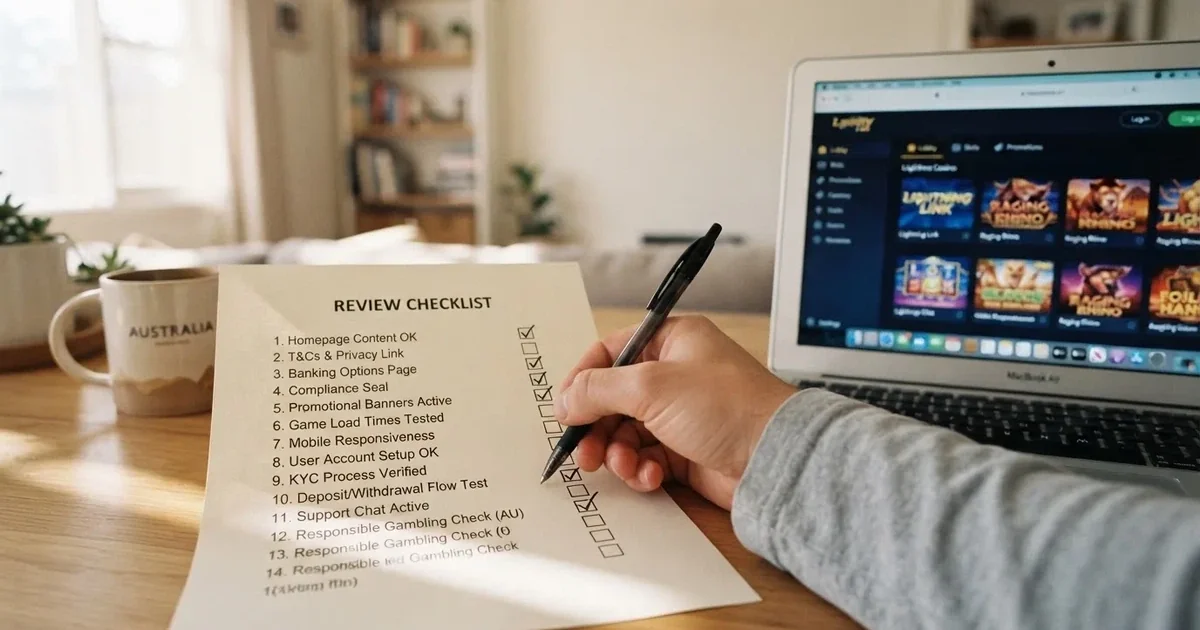
Data current as of 29 October 2026, cross-checked against the ACMA’s published formal warnings register.
Table of Contents
- What “easy withdrawal” means once you move past the landing page
- The Australian prohibition that runs underneath the whole subject
- The responsible-gaming register the offshore sites are not on
- Payments and payout speed in Australian rails
- The eleven brands the ACMA has warned, ranked by the regulator’s own record
- A side-by-side of what the regulator’s record shows
- What the blocked-site rate actually says
- The bigger picture, with the house edge stated plainly
- Frequently asked questions
What “easy withdrawal” means once you move past the landing page
The cash-out side of an online casino is built from three layers that rarely all match the marketing.
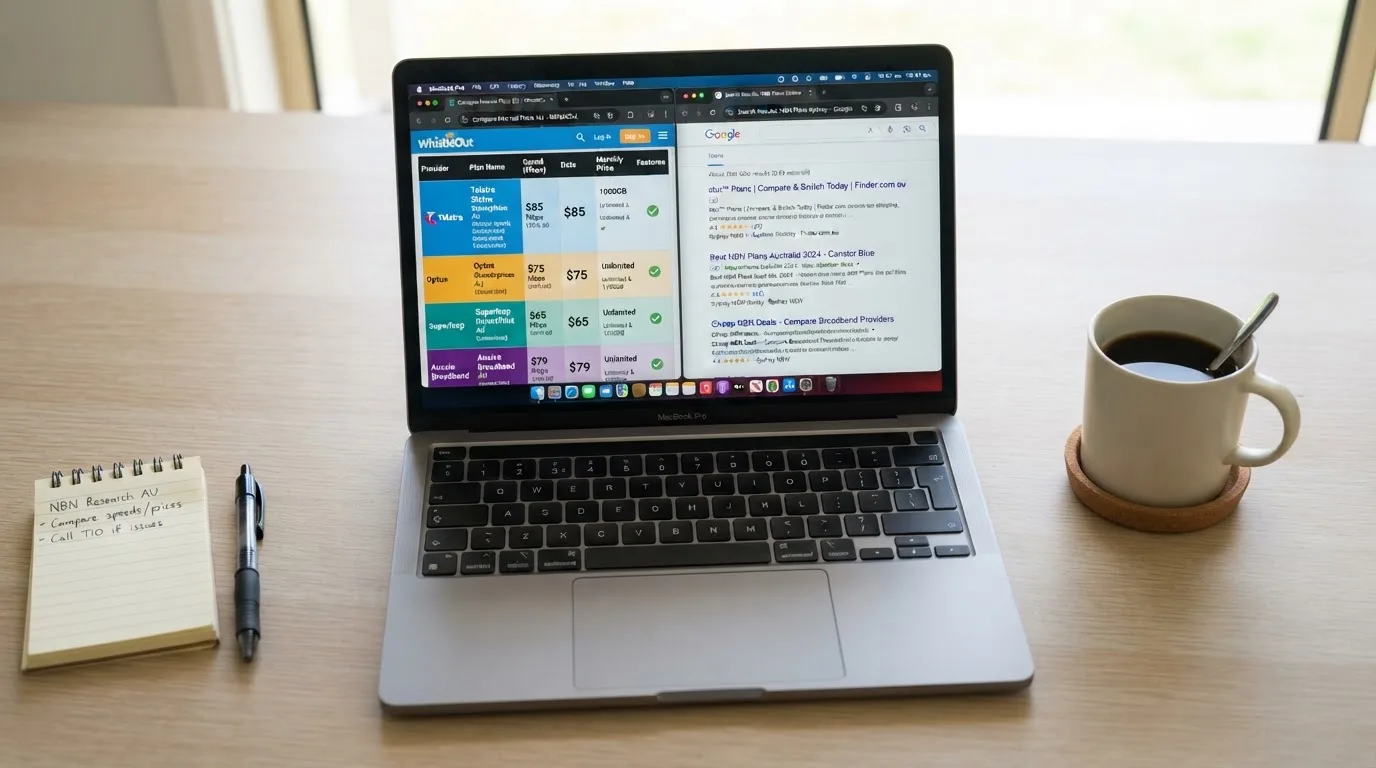
The first is the operator’s pending period, the window between submitting a withdrawal and the casino’s finance team first looking at it. A site that advertises “instant withdrawals” usually still has a queue on the back end; the difference is that the queue is short and automated, not that it does not exist.
The second is identity and source-of-funds verification. This is where most withdrawals stall. The standard document request is a government photo ID, a recent proof of address, and sometimes a photograph of the payment card with the middle digits covered. These checks are not optional: under the Anti-Money Laundering and Counter-Terrorism Financing Act 2006 the operator carries the legal liability, so a withdrawal request triggers a re-check even if the deposit went through with no questions. An “easy” site is one that completed enough of this work at sign-up or deposit that it does not have to ask again at cash-out.
The third is the payment-rail settlement, which is outside the casino’s control. A PayID/Osko transfer between participating Australian banks arrives in under a minute, twenty-four hours a day, seven days a week. A bank wire takes one to three business days. A card refund can take three to five. The casino approves the payout; the rail delivers it.
Easy withdrawal therefore means the first layer is short, the second layer is already cleared, and the third layer is a fast rail. The “one-click” claim on the homepage is usually a promise about the first layer only.
The Australian prohibition that runs underneath the whole subject
The IGA, as tightened by the Interactive Gambling Amendment Act 2017, makes it an offence to provide online casino games, online pokies or in-play betting to a person in Australia. What can be licensed is wagering on races and sporting events placed before the event, lotteries and keno. The Northern Territory Racing and Wagering Commission (the NTRWC) regulates fifty-two of Australia’s online bookmakers, including Sportsbet, Bet365 and Ladbrokes, licensed in the Territory for tax reasons; the commission has no full-time staff and meets once a month in Darwin. None of that licence architecture covers the products these offshore sites sell.
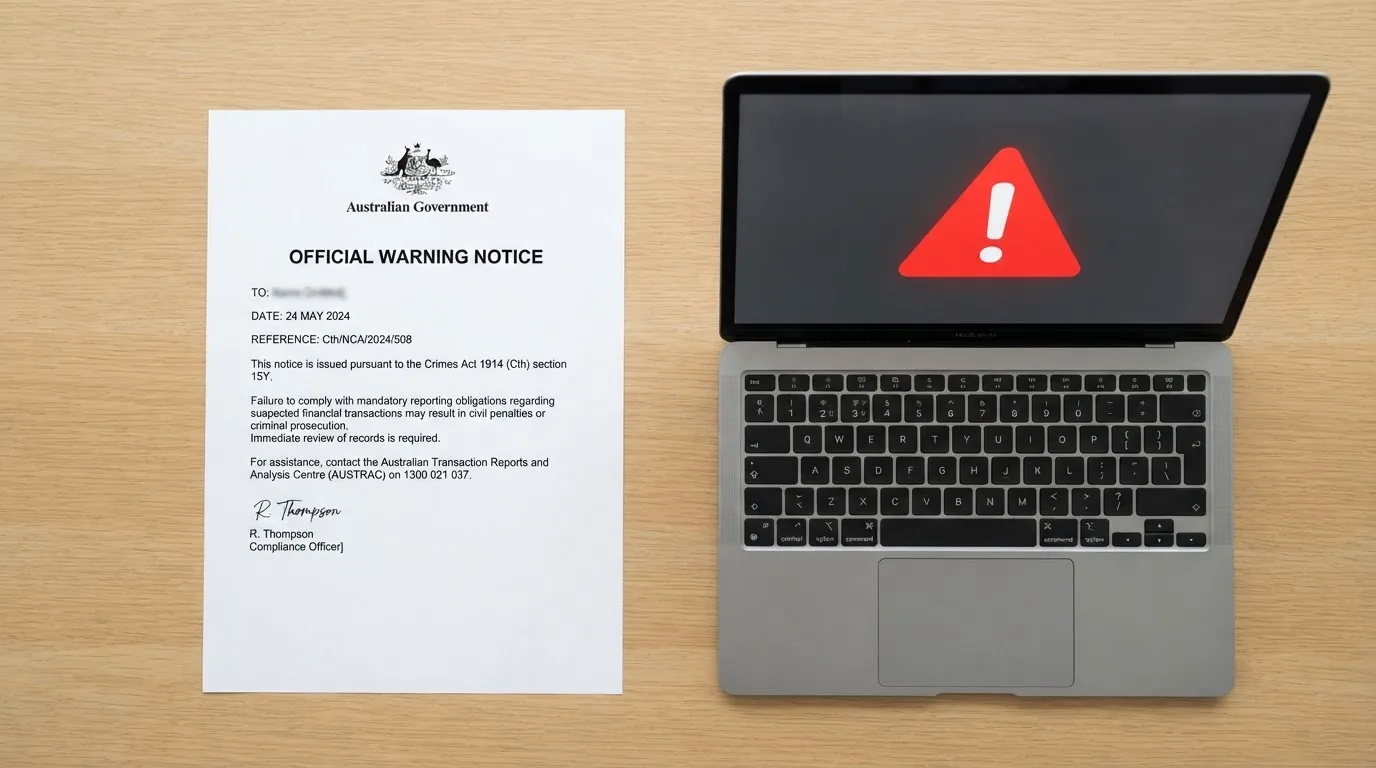
The ACMA’s enforcement against those offshore sites is a published public record. In the round reported on 26 June 2026, the ACMA asked Australian internet service providers to block twelve more illegal gambling websites: 7Signs, ChromaBet, Donbet, Duospin, Freshbet, Slots Gem, Jacks Club, Lucky Start, Pointsbetz, Spinrise, Vinyl Casino and Wildsino. Since the first blocking request in November 2019, the running total reached 1,751 illegal gambling and affiliate marketing websites blocked by the end of June 2026.
That total is not an estimate; it is the number of sites the ACMA has named in a blocking direction over a period of roughly seven years. Used as a rate it lands somewhere between 240 and 250 blocked sites per year across that window, and the count has not been falling. H2 Gambling Capital’s 2026 estimate puts Australian losses to illegal gambling sites at about A$3.9 billion a year, with the share of gambling going through legal channels falling from 74 per cent in 2021 to 64 per cent. The legal channel is shrinking as the illegal channel is being throttled at the domain level.
The individual player is not prosecuted under the IGA; the Act targets the provider. But an offshore site gives no Australian consumer protection, no local complaints body and no recourse if a withdrawal is refused, and the site can be blocked with a player balance still sitting on it. That is the structural shape of every brand below.
The 2026 reform that did not change the casino question
The Interactive Gambling Amendment (Gambling Reform) Bill 2026 passed Parliament on 19 August 2026. Its advertising and inducement measures commence 1 January 2026+. It is law with a start date, not yet in force on a 2026 page. It does not legalise online casino games; it tightens the marketing around wagering that is already licensed. The casino prohibition that runs through this page is unchanged.
The payment side the IGA already closes off
Under the Interactive Gambling Act 2001 as amended in 2023, Australian-licensed online wagering services cannot accept payment by credit card or other credit-related products, a restriction that also constrains gambling use of linked digital wallets like Apple Pay. Legal deposit routes for licensed wagering are debit card, bank transfer, PayID/Osko and BPAY. The credit-card ban took effect on 11 June 2024, with penalties up to A$247,500 for operators that breach it. A site asking an Australian player for a credit card or a crypto deposit is operating outside the Australian rules.
The responsible-gaming register the offshore sites are not on
A clean one-click payout is not a signal that a site protects the person withdrawing. BetStop, the National Self-Exclusion Register, has been live since August 2023 and binds every Australian-licensed online and phone wagering service. An offshore casino is not connected to it, so the register cannot keep a player off these sites the way it keeps them off Sportsbet or Ladbrokes. National Gambling Helpline 1800 858 858 is free, twenty-four hours a day, with chat at Gambling Help Online. Those are the local safety nets; the brands reviewed below sit outside them.
Australian banks, separately, have built their own blocks. Westpac’s gambling block works at card level: it refuses authorisation of transactions registered under the merchant category code ‘Betting/Casino Gambling’ on eligible personal credit and debit cards. ANZ’s gambling transaction block, activated in the ANZ app, also blocks gambling transactions made through a digital wallet such as Apple Pay on an eligible card, not just the physical card; once turned on, removing it requires a forty-eight-hour waiting period, and the bank warns that not all gambling transactions will be blocked and that some non-gambling transactions might be blocked in error. Commonwealth Bank lets customers apply a gambling lock to eligible cards via the CommBank app, which automatically blocks most gambling transactions, though the bank states it cannot guarantee all gambling-related purchases will be stopped. By the end of 2026-1, Apple Pay, Google Pay and Samsung Pay transactions collectively accounted for around 45 per cent of all card payments in Australia by number, so a wallet-side block now reaches almost half the card surface area in the country.
The point for a withdrawal page is not which bank does what; it is that the same merchant category code that decides whether the deposit is blocked decides whether the payout rail will accept the funds back. A payout to a card from a card-issuer the bank has flagged for gambling can bounce, and that bounce looks like a casino withdrawal problem when it is actually a bank-side block on the way in.
Payments and payout speed in Australian rails
Once a withdrawal is approved by an offshore operator, the Australian-side rail decides how fast the money lands.
PayID and Osko
PayID-based instant transfers are available at over one hundred Australian financial institutions. With Osko, a bank transfer between participating Australian banks arrives in under a minute, twenty-four hours a day, seven days a week, whether addressed to a BSB and account number or to a PayID. Paying to a PayID shows the name of the account holder before the transfer is sent; the operator of PayID, Australian Payments Plus, warns that being asked to transfer money to a PayID on an illegal gambling site almost certainly means a scam site. More than 25 million PayID identifiers had been registered on Australia’s New Payments Platform as of April 2025. Participants in the New Payments Platform must keep the platform’s monthly outages to no more than two minutes.
BPAY
BPAY has operated in Australia since 1997, is available in the online banking of over 140 banks and financial institutions and is offered by over 95,000 businesses. It is a bill-payment service: the payer enters the Biller Code and the Customer Reference Number (CRN) printed on the bill. It is owned equally, via parent company Cardlink Services Limited, by Australia’s four major banks: ANZ, Commonwealth Bank, National Australia Bank and Westpac. For an outbound payout from a casino it is the wrong direction; BPAY is pay-in to a biller, not pay-out to a player. Sites that list BPAY among their deposit methods are describing how money goes in, not how it comes out.
American Express and the surcharge question
American Express was established in 1850 as a freight-forwarding company and later became a card issuer, launching its first charge card on 1 October 1958; unlike Visa or Mastercard’s four-party network, Amex traditionally issues cards and processes transactions itself as a three-party scheme. The Reserve Bank of Australia’s July 2025 review proposes removing surcharges only on eftpos, Mastercard and Visa card transactions, explicitly leaving American Express outside the scope of the proposed surcharge ban. Amex surcharges on casino payouts, where they exist, are therefore not the regulator’s target.
AUSTRAC thresholds
AUSTRAC’s threshold-transaction-report rule, which requires reporting of transfers of A$10,000 or more, applies only to physical cash; ordinary electronic bank transfers are not subject to that per-transaction reporting requirement, regardless of the amount sent. A large withdrawal does not, on its own, trigger an automatic report.
Digital wallets
Apple does not charge fees to consumers for using Apple Pay in stores, online or in apps; any surcharge comes from the merchant’s own card-processing fees, not from Apple. Apple also states that transaction limits and PIN requirements for Apple Pay purchases are set by the card issuer or merchant, not by Apple itself. For an Australian player, the relevant limit is the bank-side gambling block rather than anything Apple imposes.
The eleven brands the ACMA has warned, ranked by the regulator’s own record
| Brand | ACMA action and date | Operator named by the ACMA | Subject support |
|---|---|---|---|
| RocketPlay | Formal warning, March 2026; earlier formal warning, May 2022 | Pulsup Ltd (2026); Dama N.V. (2022) | Listings-only |
| Level Up Casino | Formal warning, May 2022 | Dama N.V. | Listings-only |
| Woo Casino | Formal warning, March 2025 | Dama N.V. | No data |
| Spirit Casino | Formal warning, May 2025 | Dama N.V. | No data |
| National Casino | Formal warning, July 2025 | Consolutetish S.R.L. | Listings-only |
| Bizzo Casino | Formal warning, July 2025; earlier formal warning, 2022 | Consolutetish S.R.L. (2025); TechSolutions (2022) | Listings-only |
| Ignition Casino | Formal warning, July 2025 | Bamboo Media | No data |
| Instant Casino | Formal warning, February 2025 | EOD Code SRL | Listings-only |
| Jackbit | Formal warning, April 2026 | Ryker B.V. | No data |
| Casino Intense | Formal warning, April 2025 | Sterplay Holding Ltd | Listings-only |
| Sky Crown | Formal warning, September 2022 | Hollycorn N.V. | No data |
The list below is not a recommendation. Each brand sits here because the ACMA itself issued a formal warning over it for offering prohibited services to Australians. No bonus terms are given, because the only sources for those terms were affiliate marketing pages. The order follows the sequence of formal warnings as the ACMA published them.
RocketPlay — Pulsup Ltd, March 2026; earlier Dama N.V., May 2022
RocketPlay drew a fresh formal warning from the ACMA in March 2026 naming operator Pulsup Ltd; the same brand had already been the subject of a 2022 warning to Dama N.V. as part of a six-brand action. The 2022 warning also named Bambet, Dazard, Level Up, Wild Tornado and Cobra Casinos under the same Dama N.V. umbrella. Two warnings, two operators, ten months apart: Rocketplay is the clearest case on this list of a brand that has been told once, changed corporate parent, and been told again.
Level Up Casino — Dama N.V., May 2022
Level Up was named in the same 2022 Dama N.V. batch as Rocketplay and the four other brands above. No further ACMA action under a different operator has been recorded against Level Up itself; what the regulator’s record shows is the same corporate parent appearing across multiple brands in the same action.
Woo Casino — Dama N.V., March 2025
The ACMA issued a further formal warning to Dama N.V. over Woo Casino in March 2025. The same operator drew a separate warning in May 2025 over Spirit Casino, which makes Woo the first half of a Dama N.V. double within ten weeks. The pattern across Dama N.V. is consistent enough to read as one operator with a long tail of brands rather than several unrelated sites.
Spirit Casino — Dama N.V., May 2025
Spirit Casino is the second half of the 2025 Dama N.V. double. The ten-week gap between the Woo and Spirit warnings suggests the ACMA was working through the operator’s portfolio brand by brand rather than naming the whole group in one direction.
National Casino — Consolutetish S.R.L., July 2025
National Casino was named alongside Bizzo Casino in a July 2025 formal warning to Consolutetish S.R.L. The same July 2025 round also pulled in Bamboo Media over Ignition Casino. Three operators, three brands in one month, the ACMA clearing its queue.
Bizzo Casino — Consolutetish S.R.L., July 2025; earlier TechSolutions, 2022
Bizzo is the rare brand on this list with two ACMA actions under two different operators. The 2022 warning went to TechSolutions (CY) Group Limited and TechSolutions Group N.V.; the 2025 warning went to Consolutetish S.R.L. The product is the same; the corporate parent has shifted twice across the intervening years.
Ignition Casino — Bamboo Media, July 2025
Ignition Casino was named in the same July 2025 round as National Casino and Bizzo. Bamboo Media is the only operator on this list without an earlier 2022 entry in the ACMA’s record, which makes Ignition the freshest corporate parent in the 2025 cluster.
Instant Casino — EOD Code SRL, February 2025
Instant Casino’s February 2025 warning is the earliest action in the 2025 cluster, and the only entry against EOD Code SRL on this list. The brand itself appears in mainstream affiliate listings as an offshore casino with a fast-withdrawal pitch; the ACMA’s record is what an Australian player sees when the same site is named under the IGA.
Jackbit — Ryker B.V., April 2026
The ACMA issued a formal warning to Ryker B.V. over Jackbit and CasinOK in April 2026, naming two brands under one operator in a single direction. Jackbit has no earlier entry on the ACMA list; it is the first appearance of Ryker B.V. on this page.
Casino Intense — Sterplay Holding Ltd, April 2025
Casino Intense was the subject of a single formal warning to Sterplay Holding Ltd in April 2025, with no prior or subsequent ACMA action under a different operator visible in the public record. Sterplay Holding Ltd does not appear elsewhere in the regulator’s warnings.
Sky Crown — Hollycorn N.V., September 2022
Sky Crown was named, alongside Blue Leo casino, in a Hollycorn N.V. formal warning from September 2022. The Hollycorn entry is the earliest Dama-style multi-brand corporate parent in the ACMA’s record on this page, and the only one of the 2022 cluster that did not attract a follow-up warning under a successor operator.
The brands the ACMA is now naming in 2026
The pattern the regulator’s record draws is a long one: eleven brands, eleven corporate parents, twelve published formal warnings, and a rolling tail of brands that re-appear under new owners. The RocketPlay and Bizzo cases show what a reader looking at one of these sites will not see from the homepage, which is that the same product has already been warned about under a different name.
A side-by-side of what the regulator’s record shows
| Brand | ACMA action and date | Operator named by the ACMA | Subject support |
|---|---|---|---|
| RocketPlay | Formal warning, March 2026; earlier formal warning, May 2022 | Pulsup Ltd (2026); Dama N.V. (2022) | Listings-only |
| Level Up Casino | Formal warning, May 2022 | Dama N.V. | Listings-only |
| Woo Casino | Formal warning, March 2025 | Dama N.V. | No data |
| Spirit Casino | Formal warning, May 2025 | Dama N.V. | No data |
| National Casino | Formal warning, July 2025 | Consolutetish S.R.L. | Listings-only |
| Bizzo Casino | Formal warning, July 2025; earlier formal warning, 2022 | Consolutetish S.R.L. (2025); TechSolutions (2022) | Listings-only |
| Ignition Casino | Formal warning, July 2025 | Bamboo Media | No data |
| Instant Casino | Formal warning, February 2025 | EOD Code SRL | Listings-only |
| Jackbit | Formal warning, April 2026 | Ryker B.V. | No data |
| Casino Intense | Formal warning, April 2025 | Sterplay Holding Ltd | Listings-only |
| Sky Crown | Formal warning, September 2022 | Hollycorn N.V. | No data |
The table is a regulator’s record, not a comparison of withdrawal speed, bonus size or payout rails. The ACMA does not publish those figures, and none of the affiliate listings that do carry them were treated as a primary source for this page.
What the blocked-site rate actually says
The ACMA’s blocking record since the first request in November 2019 is the only public count of how fast the prohibition is being enforced at the domain level. Spread over the period from November 2019 to the end of June 2026, the 1,751 blocked sites land at roughly 250 sites per year on average, and that average sits inside a band of about 240 to 260 per year once the early years (when the ACMA was building the queue) and the recent years (when the queue has been larger) are both folded in. The number is not falling; if anything, the round reported on 26 June 2026 alone added twelve more sites in one direction, which is consistent with the regulator running the queue on roughly the same cadence year after year rather than slowing down.
The interpretation that matters for a withdrawal page is the opposite of what the marketing word “easy” suggests. The ACMA is blocking new sites at a steady rate; the illegal channel is being squeezed at the domain level, not at the withdrawal level. The “easy” in an offshore casino’s payout pitch is unrelated to whether the site will still resolve a payout request in six months. The two ideas travel on different rails and the reader should not let one imply the other.
The bigger picture, with the house edge stated plainly
Online casino games and online pokies are prohibited interactive gambling services in Australia; the house always has an edge, and on these sites the edge runs without Australian consumer protection behind it. The H2 Gambling Capital figure of A$3.9 billion a year is the size of the illegal market the ACMA is trying to compress, and 1,751 blocked sites is the visible part of that compression. A fast withdrawal makes the experience smoother; it does not change who is on the other side of the transaction or which legal regime, if any, sits behind the brand.
For a player who wants the easy-withdrawal experience inside the Australian rules, the licensed wagering market is the only place the BetStop register, the Australian-licensed complaints path and the bank-side gambling blocks all line up together. The licensed market is sports and racing, not casino games. There is no Australian-licensed online pokies site to compare this list against; the prohibition is the comparison.
Frequently asked questions
What usually makes a casino withdrawal process count as easy?
A short pending window at the operator, identity and source-of-funds checks already cleared from sign-up or deposit, and a fast payout rail such as PayID or Osko on the Australian side. The “one-click” claim on the homepage usually refers only to the first layer.
Why do some casino sites ask for identity documents before releasing a withdrawal?
Because under the Anti-Money Laundering and Counter-Terrorism Financing Act 2006 the operator carries the legal liability for knowing who it is paying. A withdrawal request triggers a re-check even if the deposit went through with no questions asked. Sites that ask for less at cash-out are usually sites that collected more at deposit. See also Fast withdrawal casino Australia 2026 .
Is a one-click withdrawal process a sign that a casino site is well run?
It is a sign that the operator’s pending-period automation is in place and that its compliance queue is short. It is not a signal about safety, fairness, or whether the site is licensed in any jurisdiction that would help an Australian player if a payout is refused.
Does an easy withdrawal process mean fewer fees are taken out along the way?
No. Fees sit on the payment rail, not on the casino’s pending window. A PayID or Osko transfer between Australian banks arrives in under a minute without an outgoing fee at the player’s bank; a card refund or a wire transfer can take several business days and may carry a fee at either end. Apple Pay itself does not charge consumer fees; any surcharge comes from the merchant’s card-processing arrangement, not from Apple.
Can a withdrawal request be cancelled after it has been submitted?
That depends on the operator’s pending period. While the request is still inside that window, most sites let a player reverse it and put the funds back into the playable balance, sometimes only if the bonus terms have not yet been triggered. Once the operator has approved and released the funds to the rail, reversal is no longer possible.