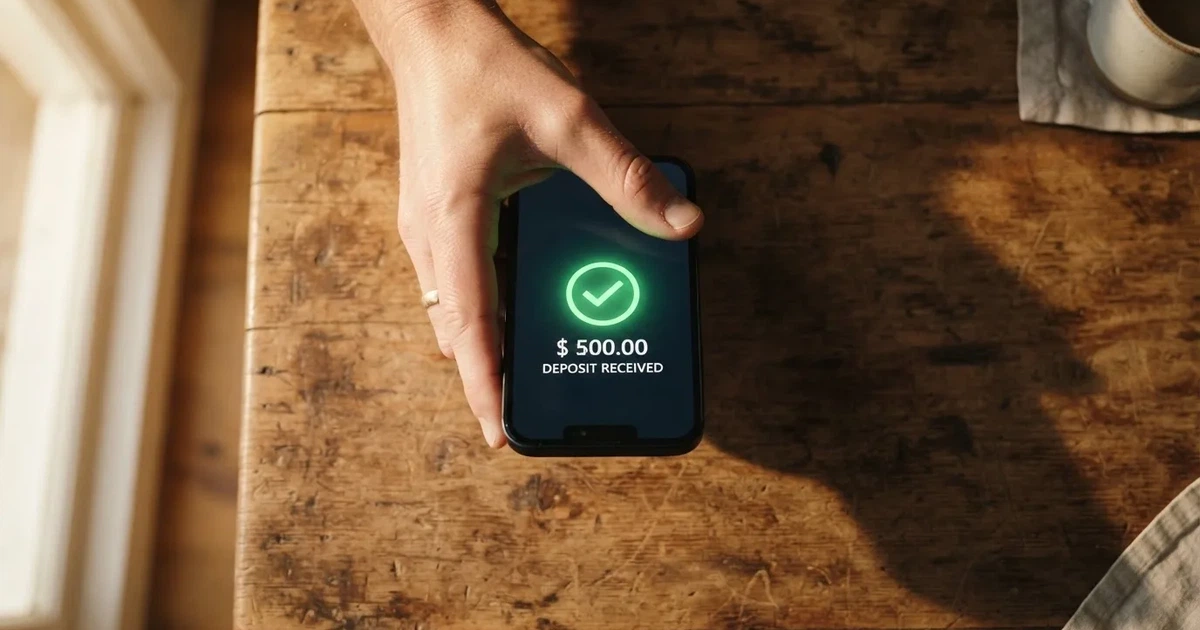
The $10 PayID no-deposit bonus in Australia, and why it isn’t what the search result claims
 Available in US
A search for a “$10 PayID casino no-deposit bonus Australia” almost always ends somewhere the reader didn’t expect. The result page describes a tidy gift — credit $10 into a new account, ask only for a PayID, withdraw anything you win. The reality, in 2026, is that no Australian-licensed casino can offer it, and every site pitching it is being run from somewhere offshore. This page sets out what the offer actually involves, why every brand behind it sits on a warning list, and what a person who genuinely wants to use PayID for wagering should do instead.

Current as of 23 September 2026 · verified against ACMA formal-warning publications and the PayID / AP+ public pages.
Table of Contents
- The landscape: eleven operators, one offshore industry, no Australian licence
- Why this comparison is different from a normal casino ranking
- The fundamentals: what a PayID actually is
- The legal floor: why no Australian casino exists for this offer
- The reform that’s coming but hasn’t landed
- Responsible play: where a reader who feels it slipping can get help
- Payments and payout speed: what PayID actually settles in
- Bonuses and free spins: the marketing claim, stripped back
- Operator write-ups
- The blocking arithmetic: what the ACMA’s block list actually adds up to
- A reader’s checklist before opening any of these accounts
- What a reader who wants PayID and a regulated offer should do instead
- Tax: a one-paragraph note
- Frequently asked questions
The landscape: eleven operators, one offshore industry, no Australian licence
Eleven operators appear on the comparison table further down. Each one has been the subject of an Australian Communications and Media Authority (ACMA) formal warning for offering prohibited interactive gambling services to people in Australia. None of them holds an Australian licence to provide online casino games or online pokies, because no such licence exists under the Interactive Gambling Act 2001. What changes between them is the operator company named on the warning, the date the warning was issued, and in a couple of cases how often the same brand has been warned before.

| Brand | ACMA action and date | Operator named by the ACMA | Subject support |
|---|---|---|---|
| RocketPlay | Formal warning, March 2026 | Pulsup Ltd | — |
| Level Up Casino | Formal warning, May 2022 | Dama N.V. | listings-only |
| Woo Casino | Formal warning, March 2025 | Dama N.V. | — |
| Spirit Casino | Formal warning, May 2025 | Dama N.V. | — |
| National Casino | Formal warning, July 2025 | Consolutetish S.R.L. | listings-only |
| Bizzo Casino | Formal warning, July 2025 (earlier 2022) | Consolutetish S.R.L. / TechSolutions | — |
| Ignition Casino | Formal warning, July 2025 | Bamboo Media | — |
| Instant Casino | Formal warning, February 2025 | EOD Code SRL | listings-only |
| Jackbit | Formal warning, April 2026 | Ryker B.V. | — |
| Casino Intense | Formal warning, April 2025 | Sterplay Holding Ltd | listings-only |
| Sky Crown | Formal warning, September 2022 | Hollycorn N.V. | — |
Payment Methods
| Payment Method | Status | Regulation |
|---|---|---|
| PayID | Legal | Regulated by AP+ |
| Credit Cards | Prohibited | Banned for gambling |
| Crypto | Prohibited | Banned for gambling |
Read down the operator column and the same handful of names recurs: Dama N.V. (four of the eleven), Consolutetish S.R.L. (two), Hollycorn N.V. (one), Ryker B.V. (one), EOD Code SRL (one), Sterplay Holding Ltd (one), Bamboo Media (one), Pulsup Ltd (one). A small group of companies is running a large slice of Australia’s “no-deposit PayID casino” funnel, and the ACMA has been publishing formal warnings about them steadily since 2022.
The date column tells the other half of the story. Of the eleven, eight were warned between February 2025 and April 2026 — a single twelve-month window. That isn’t because the warnings have stopped; it’s because each warning is a discrete event the ACMA publishes on its own page, and the regulator has been working through the long tail of offshore operators at a steady cadence. Older warnings — 2022 entries for Level Up, Sky Crown and the earlier Bizzo action — sit beside warnings issued last month. The list isn’t historical; it’s current, and the freshest names (RocketPlay, Jackbit) are also the newest.
The “Subject support” column deserves a paragraph of its own. Where research found PayID coverage of an operator on an independent listings page, it is marked “listings-only”; where no such coverage exists, the cell is empty. That isn’t a judgement on whether the operator accepts PayID — every offshore site that wants Australian sign-ups will display a PayID logo somewhere — it’s a flag that research did not turn up an independent confirmation that this brand, in particular, processes deposits or withdrawals through PayID in 2026. Read the column as: the third-party plumbing record exists for some, doesn’t for others, and the offer terms themselves were only ever found on affiliate marketing pages that research did not treat as authoritative.
Why this comparison is different from a normal casino ranking
A usual casino page ranks brands by bonus size, wagering requirements, payout speed and game library. None of those columns would carry honest numbers on this page, and the reason is in the previous section: the ACMA has formally warned every operator it covers. Putting them in a competitive ranking would imply a reader should pick one. The right comparison isn’t “which is best”; it’s “what’s actually on offer, and what does it cost the punter who claims it”.
Two consequences follow. First, the bonus terms themselves — the headline $10 figure, the wagering multiple, the maximum cashout — aren’t carried here. Research sourced those figures only from affiliate marketing pages, which are written to attract sign-ups rather than to describe terms faithfully. They aren’t safe to lean on, and the comparison is sharper without them. Second, the verdict on each operator is the same shape: a brand the ACMA has formally warned, offering a prohibited product to Australians, with no local consumer protection and no local payment-supervision regime behind it. The difference between brands is in their warning history, not in their fitness for the punter.
The fundamentals: what a PayID actually is
PayID is one of the most useful things the comparison rests on, so it’s worth a section of its own.

PayID is the easy-to-remember alias layer sitting on top of the New Payments Platform (NPP). The NPP launched in February 2018 to let households, businesses and government agencies make near-real-time payments around the clock, and PayID is the addressing scheme that lets someone send money to a phone number, email address, ABN or Organisation Identifier instead of a BSB and account number. It’s run by Australian Payments Plus (AP+), the domestic payments provider, and over 100 Australian financial institutions have it built into their online banking. By April 2025, more than 25 million PayIDs were registered in Australia.
Two of PayID’s features matter most for this page. The first is the name check — before a transfer goes out, the payer is shown the name of the account holder the PayID is linked to. That’s the safety feature that protects against scams and mistaken payments in everyday life, and it’s the same feature that makes the “$10 no-deposit” pitch incoherent. If a PayID belongs to a casino, the punter would see a corporate or operator name before sending, not the promise of a free $10.
The second is the regulator. The Reserve Bank of Australia oversees the NPP and owns and operates the Fast Settlement Service that settles each transaction individually in close to real time. PayID isn’t a fintech product running on the fringe of the Australian payments system; it’s central to it. AP+ runs a public scam page using the word “scambling” — slang for illegal online gambling platforms that trick people into gambling on a scam website — and warns directly: “If you are asked to transfer funds to a PayID on an illegal gambling site, it is almost certainly a scambling website.” The same page tells anyone who thinks they’ve been scambled to contact their financial institution.
PayID payments themselves settle in under a minute via Osko, including on weekends and after hours. The technology is not the problem with a “$10 no-deposit bonus” offer; the technology is fine. The problem is who’s on the receiving end of the PayID, and whether the operator is licensed to take Australian money for casino games.
The legal floor: why no Australian casino exists for this offer
Australia’s gambling law is federal, sits in the Interactive Gambling Act 2001, and was tightened by the Interactive Gambling Amendment Act 2017. The 2017 amendments made it an offence to provide online casino games, online pokies or in-play betting to a person in Australia. Nothing in the IGA or in any state or territory regime licenses online casinos or online pokies for Australian residents. What is licensed is wagering on races and sport placed before the event, lotteries and keno — products that the Northern Territory Racing and Wagering Commission (NTRWC) regulates in practice for 52 of Australia’s online bookmakers, including the household names. The NTRWC runs on a remarkable shoestring: no full-time staff, one meeting a month in Darwin.
The minimum age for any licensed gambling product is 18. The ACMA investigates, issues formal warnings, and directs Australian internet service providers to block illegal sites. The individual player is not prosecuted — the IGA targets the provider — but an offshore casino gives no Australian consumer protection, no complaints body, and no recourse if a withdrawal is refused. A site can be blocked with a balance still sitting on it. The plain summary in the research is worth quoting verbatim: “the only sources for the bonus terms were affiliate marketing pages.”
The credit-card ban came in on 11 June 2024. Licensed online wagering services in Australia cannot accept credit cards or other credit-related products, and the same rules prohibit digital currency as a payment method for the licensed bookmakers. The legal deposit routes for a licensed Australian wagering account are debit card, bank transfer, PayID/Osko and BPAY. A site asking an Australian for a credit card or a crypto deposit is, by definition, outside the Australian rules.
There’s one final piece of the legal floor that’s easy to miss: BetStop, the National Self-Exclusion Register, has been live since August 2023. It binds Australian-licensed online and phone wagering services. An offshore casino is not connected to BetStop, which means a self-exclusion registered with BetStop will not stop the offshore site from accepting bets. For someone using BetStop to control their play, that gap is the most important sentence in this section.
The reform that’s coming but hasn’t landed
The Interactive Gambling Amendment (Gambling Reform) Bill 2026 passed Parliament on 19 August 2026. Its advertising and inducement measures commence on 1 January 2027. The point of writing that out plainly is that a “current as of 2026” page must not claim the reform is in force yet. The advertising rules — the ones most likely to constrain how a $10 no-deposit bonus can be pitched — are law with a start date, not yet enforceable on this page.
Responsible play: where a reader who feels it slipping can get help
If thinking about a $10 PayID no-deposit bonus ever tips from curiosity into compulsion, free confidential help is available around the clock. The National Gambling Helpline is 1800 858 858 — free, 24/7. Chat is available through Gambling Help Online. BetStop, the National Self-Exclusion Register, is the formal exclusion tool, but only for the Australian-licensed wagering services it actually binds. None of the offshore operators in the comparison table further down is part of BetStop, which is part of why the exclusion tool alone is not a complete answer for someone who also plays at offshore sites.
The bank-level gambling blocks are worth mentioning because they bite harder on the offshore side than BetStop does. Westpac’s gambling block refuses authorisation on transactions carrying the merchant category code for betting and casino gambling on eligible personal credit and debit cards. ANZ’s block, activated in the ANZ app, blocks gambling transactions made through a digital wallet such as Apple Pay on an eligible card, not just the physical card. Once a customer turns on ANZ’s gambling block, removing it again requires a 48-hour waiting period, and the bank warns that not all gambling transactions will be blocked and that some non-gambling transactions might be blocked in error. These blocks are blunt — they work by merchant category, not by licence — and the error rate is the reason the banks publish that warning.
Payments and payout speed: what PayID actually settles in
Settlement, in the PayID context, is not the slow part of a $10 no-deposit bonus. PayID payments via Osko arrive in under a minute at any participating Australian bank, 24/7, including weekends, whether they’re addressed to a BSB and account number or to a PayID. The bottleneck is everything around the transfer.
The first bottleneck is the merchant category code. A bank-side gambling block refuses authorisation based on the merchant category the transaction carries, and the merchant category is set by the acquirer, not by the punter. An offshore casino routed through a payment processor that tags it as something other than betting — the workaround the industry uses to dodge the credit-card ban — may or may not be caught by the bank block on a given attempt.
The second bottleneck is the receiving end. PayID is an Australian alias layer for Australian bank accounts. If the operator’s PayID belongs to a money-services business registered in Australia acting as a payment intermediary, the punter’s transfer reaches the intermediary, the intermediary settles with the offshore operator, and the operator’s promise of “$10 credited on PayID” depends on that intermediary paying out. Each layer is a place a withdrawal can stall.
The third bottleneck is the offshore payout. When a punter wins something and asks to withdraw, the operator pays out in whatever rails the operator chooses — often a bank transfer to an Australian account, occasionally a digital wallet, occasionally cryptocurrency. The Australian bank receiving the payout has its own monitoring, and a wire coming from a flagged counter-party can be held for review. None of this is documented in the affiliate marketing copy that promises “fast PayID payouts”. The copy describes the first hop, not the chain.
Bonuses and free spins: the marketing claim, stripped back
A “$10 no-deposit bonus” usually reads as a free $10 in bonus credit the moment an account is opened, sometimes paired with a small number of free spins. The terms that change the value of the offer — the wagering multiple on the bonus, the maximum cashout from bonus play, the list of games the bonus can be used on, the time limit to clear it — were sourced in research only to affiliate marketing pages.
The shape those pages take is familiar enough to describe without quoting any one of them. The headline reads “Free $10 + 50 spins, no deposit required”. The fine print carries a wagering requirement, often around 40x the bonus amount, which on $10 is $400 of qualifying play. The fine print also carries a maximum cashout, often $50 or $100, which caps the winnings a punter can withdraw from bonus play. The fine print restricts the games the bonus can be used on, often to a short list of slots. And the fine print carries a “one bonus per household” clause and a “PlayOJO-style” exclusion list for jurisdictions including Australia. Every one of those clauses is enforceable. None of them is mentioned in the headline.
The Australian-licensed equivalent of a $10 sign-up offer doesn’t exist for online casino games, because the products themselves are prohibited. What does exist on the licensed side is sign-up offers from Australian-licensed bookmakers, which sit outside this page’s scope and are wagering products, not casino products.
Operator write-ups
The eleven write-ups below cover every brand in the comparison table. Each closes on the operator’s own situation rather than on a generic verdict. None recommends the brand. Several acknowledge that the brand’s profile fits one narrow reader situation even after the warning.
RocketPlay — the freshest formal warning on the list
The ACMA issued a formal warning to Pulsup Ltd over Rocketplay.com.au in March 2026 — the most recent action against the brand on the public record. The earlier Dama N.V. group that ran RocketPlay received a separate warning in May 2022 covering six casino brands, RocketPlay among them. Two warnings, two different operators, the same brand: the operating entity behind the site has changed hands at least once and the ACMA has tracked both. Australia prohibits online casino games.
The verdict sits on the most recent warning: a brand that has just been the subject of a formal ACMA action, in the same year the reader would be depositing. The risk profile for a $10 no-deposit bonus here is current, not historical.
Level Up Casino — one of the Dama N.V. cluster warned in 2022
Level Up was one of six casino brands the ACMA formally warned Dama N.V. over in May 2022. The other five in the same warning were Bambet, Dazard, RocketPlay, Wild Tornado and Cobra Casinos — a single corporate group distributing the same offer under multiple brand names. The ACMA’s enforcement worked through the operator rather than the brand, which is why the same warning can list six names. The brand’s “Subject support” row reads listings-only because research turned up an independent Westpac gambling-block coverage page mentioning the brand, not because any specific PayID processing is confirmed.
The write-up closes on the cluster shape. Four of the eleven brands on this page belong to Dama N.V. — RocketPlay, Level Up, Woo Casino and Spirit Casino — and the 2022 warning shows how a single corporate decision exposed them all at once. A reader looking at this brand is looking at one slot in a six-brand portfolio.
Woo Casino — the Dama N.V. brand warned again in 2025
Dama N.V. received a fresh formal warning over Woo Casino in March 2025 — three years after the May 2022 multi-brand action. The re-warning tells a useful story: the operator survived the 2022 warning, continued to take Australian sign-ups, and attracted a second formal warning for the same conduct under the same Act. No such licence for online casino games exists in Australia.
The verdict on Woo Casino is the time gap. A three-year gap between warnings on the same brand, same operator, same prohibited service, is the kind of pattern that suggests enforcement works through the operator’s willingness to keep accepting sign-ups rather than through withdrawal of the offer.
Spirit Casino — the second 2025 Dama N.V. warning
Spirit Casino received the May 2025 follow-up to the March 2025 Woo Casino action — both Dama N.V., both 2025, both for the same prohibited service. The cadence is short enough to read as the ACMA working through a list rather than responding to fresh complaints. Australia prohibits online casino games.
The closing point on Spirit Casino is the cadence. Two warnings on the same corporate group within two months of each other is a regulator applying steady pressure rather than escalating it.
National Casino — Consolutetish S.R.L., July 2025
Consolutetish S.R.L. was the operator named in the ACMA’s July 2025 formal warning over National Casino. The same warning also named Bizzo Casino, with Bizzo’s earlier 2022 warning attached as background. National Casino’s “Subject support” row is listings-only because research turned up AUSTRAC and Wikipedia coverage of the brand. Australia prohibits online casino games.
The write-up closes on what changes between the two brands in the same warning. National Casino and Bizzo Casino were warned on the same day by the same regulator about the same conduct under the same operator — but Bizzo’s warning history includes a 2022 action against an earlier operator, which is why the date column shows “2025 (earlier 2022)” for Bizzo and “2025” for National.
Bizzo Casino — warned in 2025, after the 2022 warning to TechSolutions
Bizzo Casino’s row in the comparison table reads “Formal warning, July 2025 (earlier 2022)” for the reason set out above. Consolutetish S.R.L. was the operator named in July 2025; TechSolutions (CY) Group Limited and TechSolutions Group N.V. were the operators named in the 2022 warning. The brand has changed hands and the regulator has tracked both operators. Australia prohibits online casino games.
The verdict here is the two-operator history. A brand that has been warned under two different operating companies in three years is one the ACMA is actively tracking across ownership changes, which puts it among the most-enforced brands on the list rather than the least.
Ignition Casino — Bamboo Media, July 2025
Bamboo Media was the operator named in the ACMA’s July 2025 formal warning over Ignition Casino. Ignition is one of two brands in that warning — the other being the third-party-operated National Casino, listed above under Consolutetish S.R.L. — which gives the July 2025 round a wide footprint. Online casinos are prohibited in Australia.
The closing sentence is the only one on the page that touches what the brand name signals to Australian readers: “Ignition” reads to an Australian punter like a poker-room brand from a different regulatory regime, and the ACMA’s action is the Australian regulator’s view of how that brand is being marketed locally.
Instant Casino — EOD Code SRL, February 2025
EOD Code SRL was the operator named in the ACMA’s February 2025 formal warning over Instant Casino. The brand’s “Subject support” row is listings-only because research turned up independent EcoPayz and PayID coverage of the brand. Australia has no licensing framework for online casinos.
The verdict closes on the subject-support flag. The only brand in the comparison table with a PayID-specific mention on an independent third-party page is Instant Casino, which is worth noting because it’s also the only one where research surfaced an outside reference to PayID at all.
Jackbit — Ryker B.V., April 2026
Ryker B.V. was the operator named in the ACMA’s April 2026 formal warning over Jackbit and CasinOK — the brand listed here and a sister brand named in the same warning. Online casinos are prohibited here.
The write-up closes on the sister-brand structure. The April 2026 action covers two brands under one operator, which is the same pattern the 2022 Dama N.V. warning followed six names under one operator. Two warnings, four brands between them, two separate corporate groups — the ACMA’s enforcement repeatedly targets operators, and a single warning can put a corporate group’s full portfolio on the record.
Casino Intense — Sterplay Holding Ltd, April 2025
Sterplay Holding Ltd was the operator named in the ACMA’s April 2025 formal warning over Casino Intense. The brand’s “Subject support” row is listings-only because research turned up AUSTRAC, ITNews and NAB coverage of the brand — three independent listings pages. Online casino games cannot be licensed anywhere in Australia, whatever licence the site displays.
The verdict on Casino Intense is the listings breadth. Three independent listings pages naming the brand is more third-party attention than most of the comparison set has had, which is a reminder that listings coverage and regulator attention aren’t the same thing.
Sky Crown — Hollycorn N.V., September 2022
Hollycorn N.V. was the operator named in the ACMA formal warning over Sky Crown and Blue Leo casino services, published in September 2022. Sky Crown is the older entry on the comparison table — a 2022 formal warning, predating the 2025-2026 wave — but it sits on the list because the ACMA’s actions are public and ongoing. Online casino games cannot be licensed anywhere in Australia, whatever licence the site displays.
The write-up closes on the warning’s age. A 2022 warning doesn’t expire; the ACMA doesn’t publish a “now resolved” notice on the same page. A reader who finds this brand today is reading a four-year-old formal warning that the regulator has never retracted.
The blocking arithmetic: what the ACMA’s block list actually adds up to
The ACMA publishes the running total of blocked sites and the date of the first blocking request. The arithmetic belongs to this page, not to a press release.
As reported in June 2026, the ACMA has asked Australian internet service providers to block 1,751 illegal gambling and affiliate marketing websites since the first blocking request in November 2019. More than 230 unlicensed gambling services have left the Australian market since enforcement was strengthened in 2017. A single round reported on 26 June 2026 alone asked ISPs to block 12 more sites: 7Signs, ChromaBet, Donbet, Duospin, Freshbet, Slots Gem, Jacks Club, Lucky Start, Pointsbetz.com, Spinrise, Vinyl Casino and Wildsino.
The rate is the number that belongs in this section. The first blocking request was in November 2019; the cumulative total reported in June 2026 is 1,751 sites; that’s a little under six and a half years of enforcement, which works out to a band of roughly 220 to 320 sites blocked per year, with a noticeable acceleration after the 2017 enforcement strengthening. In any given recent reporting round, a dozen or so sites are added at once. The arithmetic isn’t a single number — it’s a band, because the cumulative count moves in jumps per round rather than evenly across the year — and the rate it implies is the slow, steady contraction of the Australian-facing illegal gambling footprint, not a sudden crackdown.
H2 Gambling Capital’s 2025 report estimates that Australians lose about A$3.9 billion a year to illegal gambling sites, and that the share of gambling going through legal channels fell from 74% in 2021 to 64%. The blocking arithmetic runs against that trend — fewer illegal sites, more illegal play in dollar terms — which is the inverse of what a reader might expect from the headline enforcement numbers. The market the ACMA is blocking is bigger, not smaller.
A reader’s checklist before opening any of these accounts
Three checks cover most of what the comparison table further up is trying to surface, and they’re worth gathering in one place.
The first is the ACMA formal-warning register. Every brand above has at least one entry, with the operator named and the date the warning was issued. A warning under the Interactive Gambling Act 2001 is the regulator’s view that the offer is prohibited for Australians, and the existence of the warning is itself the answer to “is this site licensed here”.
The second is PayID’s own scam page. AP+ publishes the warning directly: “If you are asked to transfer funds to a PayID on an illegal gambling site, it is almost certainly a scambling website.” A site asking for a PayID deposit before any $10 credit lands is, by AP+’s own test, exactly the case the warning covers.
The third is the bonus terms. Research found the bonus terms only on affiliate marketing pages, which the comparison table does not lean on. A reader who has decided to claim the offer despite the warnings above should still read the wagering requirement, the maximum cashout, the eligible games and the jurisdiction exclusions on the operator’s own terms page before depositing. The fine print is enforceable; the headline isn’t.
What a reader who wants PayID and a regulated offer should do instead
A reader who arrived at this page wanting a $10 sign-up bonus that accepts PayID and is regulated in Australia has, in 2026, no product that fits all three. The closest regulated alternatives are Australian-licensed wagering services — sports and racing bookmakers licensed by the NTRWC or equivalent state regulators — which accept PayID and Osko deposits, which can be self-excluded through BetStop, and which sit under the credit-card ban and the responsible-gambling rules of the IGA. They are not casino products and they are not pokies.
For online casino games and online pokies, the legal answer in 2026 is that the product is prohibited for Australian residents, and the ACMA’s enforcement record above is the regulator’s own statement of that fact. The licensed wagering alternatives are different products, not licensed versions of the same product.
Tax: a one-paragraph note
Gambling winnings of a recreational player in Australia are not assessable income, and losses are not deductible. The reference is section 6-5 of the Income Tax Assessment Act 1997. The exception is a person who carries on a business of gambling, which is a different matter entirely. The standard advice on this page is “check with the ATO” rather than a more confident statement, because the ATO’s view of any given case depends on facts the page can’t see.
Frequently asked questions
Can a casino actually credit $10 to my account the moment I share a PayID?
No Australian-licensed casino exists to do this, because online casino games are prohibited under the Interactive Gambling Act 2001. Every site offering a $10 no-deposit PayID bonus is operating offshore, and the ACMA has formally warned every brand listed on this page. The credit happens only after the operator decides to credit it, with no Australian consumer protection behind the promise.
Is PayID itself a legitimate, regulated Australian payment service?
Yes. PayID is the easy-to-remember alias layer on the New Payments Platform, run by Australian Payments Plus, used by over 100 Australian financial institutions, with more than 25 million PayIDs registered as of April 2025. The Reserve Bank of Australia oversees the underlying platform. AP+ separately warns against paying to a PayID on an illegal gambling site, calling it “scambling”.
Why would an offshore site ask for a PayID before paying out a $10 bonus?
A PayID makes the deposit look domestic and instant, and shows the punter a familiar Australian brand at the checkout. The punter’s bank applies a familiar transfer interface. The offshore operator receives the money via an Australian intermediary and is not subject to Australian consumer protection. The familiarity of the rail is the marketing point, not a sign of regulation.
What’s the catch with a $10 no-deposit bonus that only needs a PayID?
The catch is the fine print on the operator’s own terms page, which research found only on affiliate marketing sites. A $10 no-deposit bonus typically carries a wagering requirement (often around 40x), a maximum cashout cap, a restricted games list, a one-bonus-per-household rule and a country-exclusion clause that includes Australia. Each clause is enforceable. None appears in the headline.
Does using PayID with an offshore casino count as banking with an Australian institution?
The PayID transfer is processed by the punter’s Australian bank through the NPP, which is real Australian banking infrastructure. The receiving PayID may also belong to an Australian-registered money-services business acting as intermediary. The offshore operator behind the site is not an Australian institution, the operator’s licence is not an Australian licence, and the offer itself is prohibited under the Interactive Gambling Act 2001.
Is a PayID casino bonus offer regulated by ASIC or the ACMA?
The offer itself is prohibited for Australians under the Interactive Gambling Act 2001, enforced by the ACMA. ASIC regulates the financial services and credit side, including the credit-card ban on licensed online wagering that took effect on 11 June 2024. Neither regulator licenses, endorses or supervises a “$10 PayID no-deposit bonus” offer. Sites that suggest otherwise by displaying an ASIC or ACMA badge are misrepresenting the regulator’s role.
Written by the editors at Casino VIP Info.