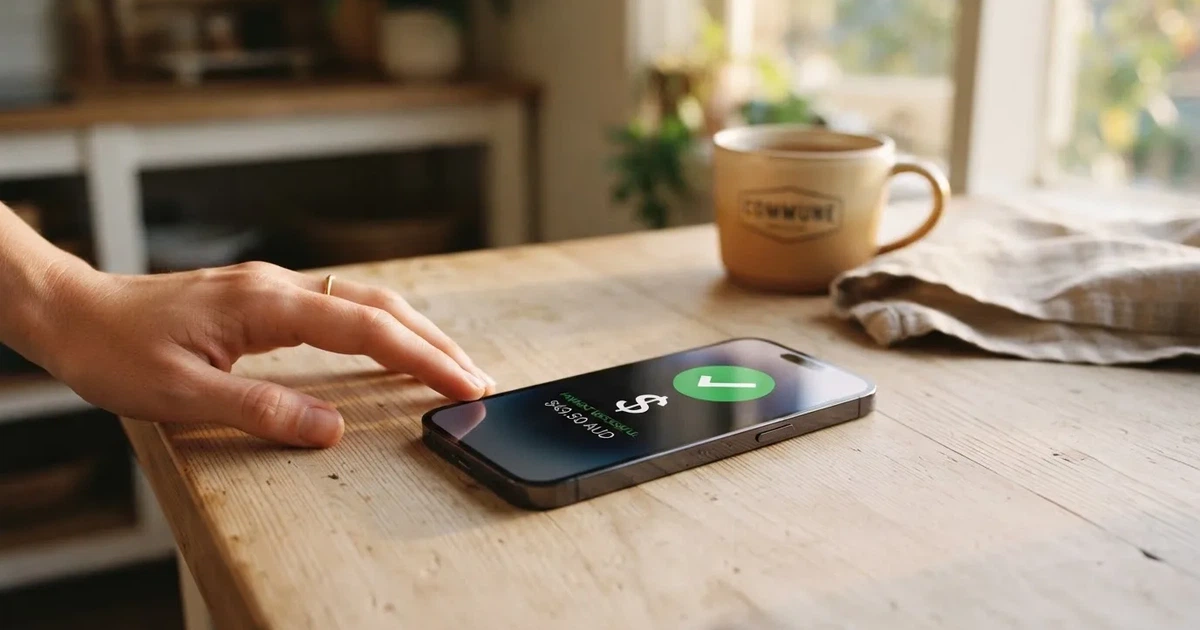
An A$1 deposit at an Australian online casino, 2026
 Available in US
A web search for an A$1 minimum deposit casino in Australia returns a list of offshore brands promising a one-dollar buy-in and a real-money balance a few seconds later. None of those sites is licensed in Australia, and the “minimum deposit” figure is one of the ways they appear in search results before a player notices the fine print. This page sets out what the Interactive Gambling Act 2001 actually prohibits, what the ACMA has been doing about it through to 2026, what an A$1 sent from an Australian bank account would clear through if it were sent, and what an honest comparison of those offers can actually conclude.
Current as of 23 September 2026, verified against the Australian Communications and Media Authority’s blocking register and its register of formal warnings.
Table of Contents
- The legal frame: prohibition under the Interactive Gambling Act 2001
- Settlements, warnings and the block list
- The 2026 reform and what it shifts
- Help that’s here when the search is
- What an A$1 would have to clear through
- How a fair comparison would weigh
- What an A$1 actually buys
- The brands the ACMA has acted against
- Where this leaves the page
- Frequently asked questions
The legal frame: prohibition under the Interactive Gambling Act 2001
Online casino games and online pokies cannot be licensed in Australia. The Interactive Gambling Act 2001 — the IGA — strengthened by the Interactive Gambling Amendment Act 2017, makes it an offence to provide those services to a person physically in Australia, and no state or territory issues a licence for them. The licence an offshore casino displays — Curaçao, Anjouan, the Kahnawake Gaming Commission — is a real licence in its own jurisdiction, but it does not legalise the service in Australia. An Australian who opens an account at one of these sites is using an unlicensed product, and the protection that comes with an Australian licence is exactly what is missing.
What is licensed in Australia is wagering on races and sport, lotteries, and keno. The Northern Territory Racing and Wagering Commission regulates 52 online bookmakers, including Sportsbet, Bet365 and Ladbrokes, licensed in the Territory for historical tax reasons. The commission has no full-time staff and meets once a month in Darwin. That is the licensed online wagering market; online casino is not part of it.
The IGA defines an interactive gambling service as one provided to a person in Australia via a carriage service, where the service involves wagering, gaming, or lotteries, and where the customer enters or may enter the service repeatedly. Online casino games and online pokies fall squarely inside that definition. The 2017 amendment closed earlier loopholes around in-play betting on phone and online, and made explicit that any service letting a customer place a bet after a sporting event has started, or any service letting a customer gamble against a software-driven house, is captured.
The IGA targets the provider, not the player. An Australian punter is not prosecuted for opening an account at an offshore casino; the law is aimed at the operator offering the service from outside Australia. The practical consequence is the other side of the same coin. An offshore site gives no Australian consumer protection. There is no Australian complaints body to escalate a refused withdrawal to, no requirement that the operator hold player funds in segregated accounts, and no guarantee that a balance survives a domain being blocked. A site can disappear, and the balance with it.
This is the single fact a reader weighing an offshore A$1 deposit has to weigh first. Whatever bonus the page advertises, whatever licence badge it shows, the offer is being made from outside Australia and outside Australian consumer law.
Settlements, warnings and the block list
The ACMA enforces the IGA by issuing formal warnings and by directing Australian internet service providers to block illegal services. The agency does not name every site it warns; the formal-warning register is published case by case, and the block list is announced in rounds.
By June 2026 the ACMA had reported that 1,751 illegal gambling and affiliate marketing websites had been blocked since the first blocking request in November 2019. The same agency had noted that more than 230 unlicensed gambling services had left the Australian market since 2017, when enforcement was strengthened. The June 2026 round alone added twelve names to the block list: 7Signs, ChromaBet, Donbet, Duospin, Freshbet, Slots Gem, Jacks Club, Lucky Start, Pointsbetz, Spinrise, Vinyl Casino and Wildsino.
The pace of that work sets the scale. 1,751 sites over roughly eighty months — from the November 2019 first-blocking-request start to the June 2026 update — works out to a band of around twenty to twenty-three websites blocked per month, or about five per week, on the assumption that no domain is counted twice across the rounds. The figure is a steady-state rate, not a one-off; the June 2026 round alone covered a dozen sites, and the average over the full period sits inside the same band. The headline number captures the count of distinct domains blocked, not the count of enforcement actions, and the two diverge when a domain is replaced or a brand relaunches.
H2 Gambling Capital’s 2025 report estimates that Australians lose about A$3.9 billion a year to illegal gambling sites, and that the share of gambling going through legal channels fell from 74 per cent in 2021 to 64 per cent. The legal channel is shrinking; the illegal channel is filling the gap. That is the consequence a regulator measuring loss channels describes: enforcement is real, the licensed share is smaller than it was, and the unmeasured billions keep moving.
Settlements, blocks and the formal-warning register
A formal warning is the step the ACMA takes before asking ISPs to block a site. Two of the warnings issued in 2025 cover brands that recur in offshore search results.
In March 2025 the ACMA issued a formal warning to Dama N.V. over Woo Casino. Two months later, in May 2025, the same operator was warned again, this time over Spirit Casino. Dama N.V. is a Curaçao-registered company that operates dozens of casino brands through a shared platform; the warnings do not name every brand, only the one being offered to Australians at the time. A punter who has heard of Dama N.V. through any of its other brands can be reasonably sure the next Australian-facing one will eventually appear here too.
In May 2022 the ACMA had already warned Dama N.V. over six brands in one notice — Bambet, Dazard, Level Up, Rocketplay, Wild Tornado and Cobra Casinos. Three years on, the same operator was back, with two different brands under fresh warnings. The pattern is not that Dama N.V. is unique; it is that a company under one warning can keep operating other brands. A warning over Woo Casino does not block Spirit Casino; a warning over Spirit Casino does not block the next brand Dama N.V. launches.
Fundamentals of the offshore market
July 2025 produced three more warnings, two of them to the same operator.

The ACMA warned Bamboo Media over Ignition Casino. The same month, Consolutetish S.R.L. was warned over two brands at once: National Casino and Bizzo Casino. Bizzo Casino had already been the subject of a 2022 warning issued to TechSolutions (CY) Group Limited and TechSolutions Group N.V. — meaning the brand has been warned twice under two different parent entities in three years. The change of company behind the brand did not interrupt the conduct.
These three warnings land in a single month, on three different parent companies, on three brands that an Australian search for “online pokies” returns without much effort. The fundamentals of the offshore market, as it presents itself to an Australian punter, are: a domain, a company behind it, a licence from a small jurisdiction, a payment page that accepts Australian dollars, and a non-trivial chance that the ACMA has already taken action over it. The audit reads this set in July 2025 alone.
Prohibition notices and a one-name warning
The February 2025 warning to EOD Code SRL over Instant Casino is a single-brand notice. EOD Code SRL does not appear elsewhere in the warning register under the same name. The brand “Instant Casino” is also a single brand on Instant Casino’s own marketing — the company runs that one site rather than a stable of them.
What stands out is the gap between name and consequence. The name suggests instant access; the legal reality is a prohibition notice on the operator. An Australian punter who has just clicked through to Instant Casino from a search result is on a domain whose operator has been told in writing to stop offering the service to Australians. Whether the site is reachable depends on whether the ISP has been asked to block it; whether it stays reachable depends on whether the operator keeps moving the domain.
The other operator names the register has recorded for the period covered here include Hollycorn N.V., over Sky Crown and Blue Leo; Sterplay Holding Ltd, over Casino Intense; and Ryker B.V., over Jackbit and CasinOK. Each appears in the brand-by-brand write-up below.
The 2026 reform and what it shifts
The Interactive Gambling Amendment (Gambling Reform) Bill 2026 passed Parliament on 19 August 2026. Its advertising and inducement measures commence on 1 January 2027 — law with a start date, not yet in force on a 2026 page. The bill extends the regime that already covers inducements aimed at licensed wagering into inducements aimed at prohibited services, and tightens what an Australian-facing advertisement of an offshore casino can say.
The practical effect for an Australian punter is that the inducements visible in search results — “A$1 deposit”, “free spins on registration”, “100% match bonus” — will fall under a clearer set of restrictions once 2027 begins. The substantive prohibition on providing the service does not change. What changes is the inducement framework around it, and the start date is two months into the new financial year.
The reform does not legalise online casino. It does not create an Australian-licensed A$1 deposit casino. It adds inducement-side rules to a prohibition-side law. A punter reading the marketing on an offshore site on 31 December 2026 and again on 1 January 2027 will see the same offer; the rules around what the operator can say about the offer are the part that changes.
Help that’s here when the search is
For an Australian whose relationship with online gambling has moved from a single A$1 deposit into something more frequent, more pressured, or more secretive, free confidential help is available around the clock.
The National Gambling Helpline is 1800 858 858, free, 24/7. The same service runs Gambling Help Online, with web chat. Both are operated by trained counsellors, not by the casinos themselves. The helpline handles calls about online gambling, about poker machines in pubs and clubs, about sports betting, and about anything else where the line between recreation and compulsion has started to slip. The service is for the person gambling and, separately, for the people around them — partners, parents, friends — who are watching the line slip from their side.
BetStop, the National Self-Exclusion Register, has been live since August 2023. It binds Australian-licensed online and phone wagering services to honour a person’s request to be excluded. An offshore casino is not connected to BetStop; a punter who has registered with BetStop has, in effect, asked the licensed market to refuse their play, and the offshore market can keep taking their deposits. BetStop does not reach offshore sites, and a registration is not a block on them. It is also not a substitute for counselling — it is a tool that complements it.
Australian banks run a backstop of their own. Westpac’s gambling block works at card level: it refuses authorisation of transactions registered under the merchant category code ‘Betting/Casino Gambling’ on eligible personal credit and debit cards. ANZ runs a similar block, which once activated blocks gambling transactions made through a digital wallet such as Apple Pay on an eligible card, not just the physical card, and which requires a 48-hour cooling-off period before it can be removed. Commonwealth Bank offers a gambling lock via the CommBank app. None of them, the banks warn, can guarantee that every gambling transaction will be blocked, and some non-gambling transactions may be blocked in error.
These are useful tools and they have limits. A refused transaction is not a refunded balance, and a blocked merchant category is not a closed account. The bank block catches many transactions at the merchant-category-code level, but the offshore merchant category is sometimes coded as a generic retail merchant, and the MCC-level block misses those.
What an A$1 would have to clear through
For an Australian punter thinking through what an A$1 deposit at an offshore casino would actually do, the question is not what the casino’s cashier says. It is what the bank account says, what the payment system does, and what restrictions are already on the instrument.
Australia’s licensed wagering market accepts four deposit routes: debit card, bank transfer, PayID/Osko and BPAY. The IGA as amended in 2023 makes it an offence for an Australian-licensed online wagering service to accept payment by credit card or other credit-related products; that restriction extends in practice to gambling use of linked digital wallets like Apple Pay, where the underlying card is a credit product. Cryptocurrency is also outside the licensed routes. The credit-card ban took effect on 11 June 2024, with penalties up to A$247,500 for operators that breach it.
Apple Pay itself does not charge consumer fees in stores, online or in apps; any surcharge comes from the merchant’s card-processing fees, not from Apple. Transaction limits and PIN requirements for Apple Pay purchases are set by the card issuer or merchant, not by Apple. By the end of 2025, Apple Pay, Google Pay and Samsung Pay collectively accounted for around 45 per cent of all card payments in Australia by number, so the wallet is no longer a marginal route. The Reserve Bank of Australia’s July 2025 review proposes removing surcharges only on eftpos, Mastercard and Visa card transactions, explicitly leaving American Express outside the scope of the proposed surcharge ban — a three-party network that, unlike the four-party Visa and Mastercard scheme, traditionally issues cards and processes transactions itself. American Express was established in 1850 as a freight-forwarding company and later became a card issuer, launching its first charge card on 1 October 1958.
What this means for an A$1 deposit is that the licensed routes — debit card, PayID/Osko, BPAY — are the ones where an Australian bank’s gambling block is likely to catch the transaction before it leaves the account. The major banks each operate a card-level block at the merchant category code level; Westpac refuses authorisation on the MCC ‘Betting/Casino Gambling’; ANZ extends the block to the linked digital wallet; CBA offers a gambling lock in the app. None of the three banks promises a complete block; ANZ warns explicitly that not all gambling transactions will be blocked and some non-gambling transactions might be blocked in error.
An offshore casino that does take Australian dollars, then, is taking them on routes that the Australian bank may or may not block. A refused transaction costs the punter nothing; an accepted one is an A$1 that has left a regulated system and entered an unregulated one.
Osko, PayID and the mechanics of an instant transfer
Osko is the instant-transfer layer of Australia’s New Payments Platform. With Osko, a bank transfer between participating Australian banks arrives in under a minute, 24/7 including weekends, whether it is addressed to a BSB and account number or to a PayID. PayID-based instant transfers are available at over 100 Australian financial institutions. More than 25 million PayID identifiers had been registered by April 2025.
The relevant point for an A$1 deposit is what instant looks like before it sends. Paying to a PayID shows the name of the account holder before the transfer is sent. Australian Payments Plus, the operator of PayID and Osko, warns that being asked to transfer money to a PayID on an illegal gambling site almost certainly means a scam site. The recipient’s name will not match a casino brand.
BPAY is a bill-payment service: the payer enters the Biller Code and the Customer Reference Number (CRN) printed on the bill. It has operated since 1997 — launched on 18 November 1997 and owned equally, via parent company Cardlink Services Limited, by Australia’s four major banks: ANZ, Commonwealth Bank, National Australia Bank and Westpac. BPAY is available in the online banking of over 140 banks and financial institutions and is offered by over 95,000 businesses. It runs on Australian Payments Plus alongside PayID and Osko. None of the eleven brands warned in this page accepts BPAY; BPAY is built around the bill relationship between a customer and an Australian business, not around a deposit to an offshore casino.
AUSTRAC’s threshold-transaction-report rule, which requires reporting of transfers of A$10,000 or more, applies only to physical cash. Ordinary electronic bank transfers are not subject to that per-transaction reporting requirement, regardless of the amount sent. An A$1 transfer through Osko carries no reporting consequence; the absence of a reporting trigger is not the same as the absence of a paper trail.
The New Payments Platform went live on 13 February 2018 and is owned by New Payments Platform Australia Ltd, a non-profit whose 13 shareholders include the Reserve Bank of Australia and the country’s major banks. Participants in the platform must keep monthly outages to no more than two minutes; in 2021 the ACCC authorised the merger of NPP Australia with BPAY and eftpos into Australian Payments Plus. The infrastructure underneath an A$1 instant transfer is the most reliable retail-payment system Australia has ever had, and it sits between the punter and an offshore casino without ever knowing the difference.
How a fair comparison would weigh
A fair comparison of offshore online casinos targeting Australians would weigh five things: the licence the operator displays, the consumer protection that licence delivers in the country where the punter sits, the payment routes the operator accepts, the operator’s history with the regulator the punter is subject to, and the operator’s domain stability. None of those five weightings points to a winner, because the eleven brands on the ACMA’s formal-warning register fail all five.
The licence. Curaçao, Anjouan, the Kahnawake Gaming Commission — these are real licences in their own jurisdictions, and an operator is right to publish them. They do not, however, deliver any consumer protection to an Australian punter. The licence a punter in Australia would need is an Australian one, and there is none. Any offshore licence on the page is a marker of where the operator chose to incorporate, not of where the punter can complain.
The consumer protection. A licence in Australia brings segregated player accounts, a complaints body, advertising standards, and recourse for a refused withdrawal. None of the offshore brands offers any of that to Australians. The closest Australian analogue is BetStop, which binds the licensed market and does not reach offshore sites. An offshore site that refuses a withdrawal has the punter at the bottom of its terms of service, not at the top of a regulator’s complaints queue.
The payment routes. The licensed Australian market accepts debit card, bank transfer, PayID/Osko and BPAY. An offshore casino that wants to take Australian dollars typically adds a cryptocurrency rail and a card route through an offshore merchant. A punter using a credit card is breaking the IGA’s prohibition on credit-funded wagering, and a punter using a digital wallet on a credit card is in the same position. A punter using a debit card at an offshore casino is sending money to an entity the ACMA has warned.
The operator’s history. The brands on the formal-warning register are a subset of the regulator’s record; a brand not on the register is not licensed, and a brand on the register is not necessarily blocked. The two lists overlap and diverge. A fair comparison would weigh the ACMA’s record as a black mark, and the black marks do not sort into a ranking.
The domain stability. A blocked brand relaunches. A new domain inherits the warning. A punter trying to evaluate a brand by whether the domain loads is reading a moving target. The comparison that matters is over the operator, not over the domain.
A “top N” of offshore casinos that target Australians is a top N of brands that are illegal to use from Australia. The only honest ranking is the one the regulator is keeping, and it ranks by warning date.
What an A$1 actually buys
Set the marketing aside. An A$1 deposit at an offshore online casino buys the chance to play one or two spins of a slot or one hand of a low-stake table game, against a software provider whose return-to-player rate is not enforced by any Australian regulator. The cost of those spins is whatever the return-to-player rate says it is; the value of the play is whatever the punter makes of it.
The house edge on a typical online pokie is several per cent of turnover. At A$1 of turnover, the expected loss is a small fraction of a dollar. The arithmetic does not justify the offer; the offer justifies the arithmetic. The marketing copy on an A$1 deposit page talks about how little the deposit is, because the deposit is not the point. The point is the next deposit, and the one after that, and the reload bonus that follows.
A punter who treats the A$1 as a one-off, single-spin experiment pays that small expected loss and stops. A punter who treats it as the cheapest way into the platform plays until the balance is gone, tops it up, plays until that balance is gone, and so on. The punter who has set up the casino as a recurring expense is the punter the platform is built for.
That is the consequence an A$1 minimum deposit carries. It is not the deposit amount; it is the size of the next one.
What an Australian-licensed A$1 deposit casino would look like
It does not. The licensed online wagering market accepts a minimum deposit that reflects the bookmaker’s own rules, not a regulator-set floor; sportsbooks and totalisators in the licensed market routinely set minimums around A$5 to A$20, and many do not take less. There is no licensed A$1 deposit casino in Australia, and there is no plan to license one. The IGA prohibits the product; the state and territory regulators do not issue the licence; the ACMA’s enforcement record is the regulator telling offshore operators to stop offering it.
A punter who wants to play a real-money casino game in Australia today is playing on an offshore site. A punter who wants to play a real-money pokie in person is at a pub, club or casino licensed under the relevant state or territory law. Neither option is an A$1 deposit casino in the sense the search query is looking for; one is illegal and the other is a different product.
What “minimum deposit” really signals
Minimum-deposit marketing is not a generosity measure. It is a search-optimisation measure. An operator that sets a deposit floor of A$1 widens the net of search terms it can appear under, at the cost of collecting deposits so small that no serious play is possible. The marketing page that says “A$1 minimum deposit” is not promising a usable bankroll; it is promising a usable search-result placement. The search-result placement brings in users the operator hopes to convert to larger deposits, on bonuses the operator hopes to set terms for.
A punter who reads the marketing at face value is the punter the marketing is built to attract. A punter who reads it as the cheapest way into a recurring relationship is reading it more accurately.
The brands the ACMA has acted against
The brands that follow are not a ranking. They are not a recommendation. They are eleven names the ACMA has put on its formal-warning register, mostly in the last three years, for offering prohibited online casino services to Australians. Reading them as a list of places to play would defeat the point of the register.
A formal warning is published in the ACMA’s name, identifies the company behind the brand, and is the step the agency takes before it asks ISPs to block the service. The fact that a brand is on this register, and not yet on the block list, means the ACMA has acted; it does not mean the brand is unreachable. Reachable and lawful are different things.
The brands at a glance
| Brand | ACMA warning | Operator behind the brand | Repeated operator | Independent coverage |
|---|---|---|---|---|
| RocketPlay | March 2026 (also May 2022) | Pulsup Ltd (earlier Dama N.V.) | Yes | Gambling Insider |
| Level Up Casino | May 2022 | Dama N.V. | Yes | Westpac’s gambling-block page |
| Woo Casino | March 2025 | Dama N.V. | Yes | — |
| Spirit Casino | May 2025 | Dama N.V. | Yes | — |
| National Casino | July 2025 | Consolutetish S.R.L. | No | ACMA, AUSTRAC, BetStop |
| Bizzo Casino | July 2025 (also 2022) | Consolutetish S.R.L. (earlier TechSolutions) | Yes | Gambling Insider |
| Ignition Casino | July 2025 | Bamboo Media | No | — |
| Instant Casino | February 2025 | EOD Code SRL | No | ecoPayz, PayID |
| Jackbit | April 2026 | Ryker B.V. | No | — |
| Casino Intense | April 2025 | Sterplay Holding Ltd | No | AUSTRAC, BetStop, Gambling Insider |
| Sky Crown | September 2022 | Hollycorn N.V. | No | — |
Two of the operators — Dama N.V. and Consolutetish S.R.L. — appear more than once in the warning register, and one brand, Bizzo Casino, has been warned twice under two different parent entities. The pattern is the same: a parent company runs multiple brands, and a warning over one brand does not stop the parent from launching another. The “Repeated operator” column marks that fact; the rest is the warning itself.
The “Independent coverage” column lists the third-party sources where the brand appears in connection with payment methods. None of these listings vouches for the brand; they are simply where the brand shows up outside its own marketing. Gambling Insider lists RocketPlay, Level Up, Bizzo Casino and Casino Intense among the offshore brands it tracks. Westpac’s gambling-block page mentions Level Up Casino in the context of transactions the bank will refuse. ACMA, AUSTRAC and BetStop all appear in the National Casino column because they each publish a notice that mentions the brand. ecoPayz and PayID appear in the Instant Casino column because the brand’s payment page lists those rails. The empty cells are brands that the same set of third-party sources does not mention at all — neither in coverage nor in any block list that we have record of.
Each brand in brief
RocketPlay. ACMA warned Pulsup Ltd in March 2026 over Rocketplay. The same brand was warned earlier, in May 2022, when Dama N.V. was named over six brands at once. RocketPlay is the Australian-facing arm of an operator that has now been told to stop twice.
Level Up Casino. Warned in May 2022 as one of six Dama N.V. brands in a single notice. There is no later warning specifically over Level Up, but the operator behind it has been warned twice more since, over Woo Casino and Spirit Casino. The brand sits inside a wider operator pattern, not on its own.
Woo Casino. Warned in March 2025 under Dama N.V. The same operator also runs Spirit Casino (warned two months later), Level Up (warned 2022), and RocketPlay (warned 2022 and 2026 under a different parent). Woo Casino is the clearest case on this page of one warning not stopping the next brand.
Spirit Casino. Warned in May 2025 under Dama N.V., two months after Woo on the same operator. A punter landing on Spirit Casino today would have landed on Woo Casino two months ago, on the same backend.
National Casino. Warned in July 2025 under Consolutetish S.R.L., alongside Bizzo Casino on the same notice. National Casino is one half of a two-brand warning round.
Bizzo Casino. Warned in July 2025 under Consolutetish S.R.L., and again in 2022 under TechSolutions (CY) Group Limited and TechSolutions Group N.V. Bizzo Casino is the brand that has been warned under two different parents in three years.
Ignition Casino. Warned in July 2025 under Bamboo Media. There is no earlier warning under the same operator over a different brand. The warning is a single-brand action against a single-brand operator.
Instant Casino. Warned in February 2025 under EOD Code SRL. The brand sits alone on the operator’s marketing; there is no stable of sister brands under the same parent. The name suggests instant access; the warning says the access is prohibited.
Jackbit. Warned in April 2026 under Ryker B.V., which was named over two brands in the same notice: Jackbit and CasinOK. Jackbit is one of two brands on Ryker B.V.’s April 2026 warning.
Casino Intense. Warned in April 2025 under Sterplay Holding Ltd. Sterplay Holding Ltd appears on this page only here.
Sky Crown. Warned under Hollycorn N.V., alongside Blue Leo on the same operator. Sky Crown is one of two Hollycorn N.V. brands on the register.
What the register leaves out
The brands on the formal-warning register are not a complete list of every offshore casino an Australian can reach. They are the brands the ACMA has decided to publish a warning about. The block list — 1,751 sites by June 2026 — is much longer, and it changes by the round. The warning register is a subset, and reading the register as the whole market would overstate what the regulator has told us.
A site that is not on the register is not, by that fact, licensed in Australia. The IGA’s prohibition does not depend on a warning having been published. What the register shows is where the regulator has chosen to spend its name.
Where this leaves the page
The frame is the prohibition, not the offer. The A$1 minimum deposit is a marketing figure on an offshore service the IGA prohibits; the ACMA’s enforcement record is the regulator telling operators to stop; the licensed alternative is a different product. Reading the offshore offer as if it were the licensed alternative — same rules, same recourse, same player protection — is the misreading the offer is built to invite. The frame is the consequence of that misreading, and it lands as soon as the first withdrawal is refused, the first domain is blocked, or the first balance is left on a domain that no longer resolves.
The consequence lands at three moments. First, the moment the deposit is accepted past an Australian bank’s gambling block, and the A$1 is no longer in a system the punter can recall. Second, the moment a withdrawal is refused or delayed past the operator’s stated time, and the punter discovers that “withdrawal” on an offshore site is a request, not a right. Third, the moment the domain is blocked by an Australian ISP, and the balance — if any — is on a server in a jurisdiction the ACMA has no reach into. None of these moments is theoretical; they are the points the regulator’s record describes.
The tax treatment is separate and is worth a sentence on its own. Recreational gambling winnings are not assessable income under section 6-5 of the Income Tax Assessment Act 1997, and losses are not deductible. A punter who runs gambling as a business — a “professional gambler”, in the ATO’s sense — is taxed on net profits; the ATO publishes that guidance, and a punter in doubt should check it. For a one-off A$1 deposit, the tax answer is that the winnings are tax-free and the losses are not refundable, and that is the end of it.
Frequently asked questions
Can I actually deposit $1 at a licensed Australian online casino?
No. The Interactive Gambling Act 2001 prohibits online casino games and online pokies from being provided to anyone in Australia, and no state or territory issues a licence. What is licensed is wagering on races and sport, lotteries, and keno, with minimum deposits set by the operator. A licensed A$1 deposit casino does not exist.
Why do so many offshore sites advertise a $1 minimum deposit for Australian players?
Because the figure works in search. An A$1 deposit floor widens the search terms an offshore casino appears under, at the cost of accepting deposits too small for serious play. The page is selling a placement. The offer is the cheapest way into the platform, not the cheapest way to play.
How would a $1 bank transfer normally clear if it were sent through Osko?
Under a minute, 24/7 including weekends, to a BSB and account number or a PayID. The recipient’s name appears before the transfer is sent. Australian Payments Plus warns a PayID on an illegal gambling site almost certainly means a scam, because the name will not match. The transfer clears instantly; the destination decides.
Is a $1 deposit at an offshore casino covered by any Australian consumer protection?
No. The IGA targets the provider, not the player, and an offshore casino gives no Australian complaints body, no segregated player funds, and no recourse for a refused withdrawal. BetStop binds Australian-licensed wagering services; an offshore casino is not on it. Bank-level gambling blocks from Westpac, ANZ and CBA are backstops, not substitutes.
What is the legal, land-based alternative to a $1 deposit online casino in Australia?
Pokies in a pub, club, or casino licensed under the relevant state or territory law. The minimum age is 18; the consumer protection is the state or territory regulator’s. The product is different: physical, on-premises, in person. The same prohibition on providing online casino games does not apply to a venue’s licensed poker machines.
Created by the ”Casino VIP Info” editorial team.