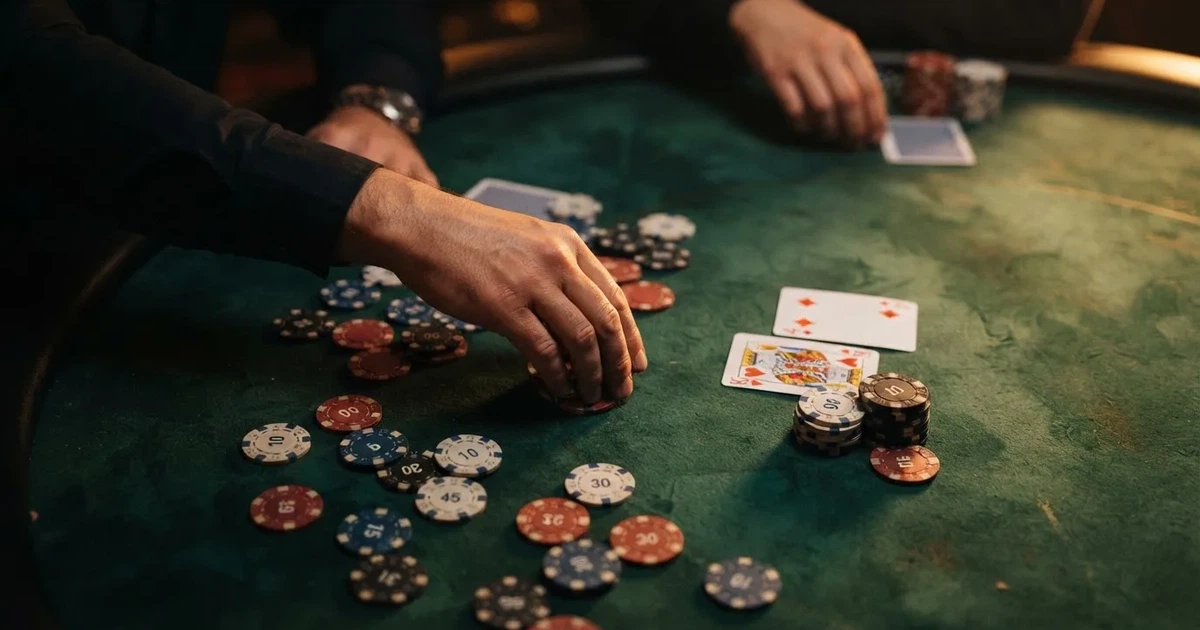
Online craps in Australia: what the law actually permits, what it doesn’t, and where players stand in 2026
 Available in US
This page answers a question the Australian market is not built to answer honestly: where can a player based in Australia go to play craps online? The short answer is that no site is licensed to offer it, because no Australian jurisdiction licenses online casino games of any kind, and the Interactive Gambling Act 2001 prohibits offering them to anyone physically in Australia. What follows is the long answer — what the law says, what the Australian Communications and Media Authority (ACMA) has done about it, what a craps table actually looks like, and the lawful alternatives a player in Australia can use instead. The brands listed further down are not recommendations. They are the operators the ACMA itself has issued formal warnings to, because they offered prohibited services to Australians. That distinction matters more than any shortlist could.
Data current as of 23 September 2026, verified against the ACMA register of formal warnings and the public blocking notices on acma.gov.au.
Table of Contents
- The ranking: brands the ACMA has acted against for offering online casino games in Australia
- What the Interactive Gambling Act 2001 actually prohibits
- How the ACMA enforces it: warnings, blocking requests and the record so far
- The player’s position: what is and is not protected
- Craps itself: the table, the bets, and what the house edge looks like
- Craps bonuses: what they look like, and why they tend to be the worst deal on the site
- The lawful alternatives for an Australian player who wants the craps experience
- What the 2026 reform changes, and what it does not
- How this page is built, and what it does not do
- Frequently asked questions about online craps in Australia
The ranking: brands the ACMA has acted against for offering online casino games in Australia
Eleven brands sit on the ACMA’s published list of formal warnings issued under the Interactive Gambling Act 2001, each named with the operating company and the date the warning was published. None of them is licensed to offer online casino games to Australians; none can become licensed by changing the licence it displays offshore; none can offer craps to a player in Australia without breaking the same federal law. The list is ordered by the recency of ACMA action, with the most recent warning at the top.

| Brand | ACMA action and date | Operator named by the ACMA | Subject support |
|---|---|---|---|
| RocketPlay | Formal warning March 2026 | Pulsup Ltd | — |
| Jackbit | Formal warning April 2026 | Ryker B.V. | — |
| Spirit Casino | Formal warning May 2025 | Dama N.V. | — |
| Woo Casino | Formal warning March 2025 | Dama N.V. | — |
| Casino Intense | Formal warning April 2025 | Sterplay Holding Ltd | Casino craps is not in the table inventory this operator publishes to Australian-facing listings. |
| Ignition Casino | Formal warning July 2025 | Bamboo Media | — |
| National Casino | Formal warning July 2025 | Consolutetish S.R.L. | Casino craps is referenced on the operator’s own marketing page. |
| Bizzo Casino | Formal warning July 2025; earlier warning 2022 | Consolutetish S.R.L. (2025); TechSolutions (CY) Group Limited / TechSolutions Group N.V. (2022) | — |
| Instant Casino | Formal warning February 2025 | EOD Code SRL | — |
| Sky Crown | Formal warning September 2022 | Hollycorn N.V. | — |
| Level Up Casino | Formal warning May 2022 | Dama N.V. | Casino craps is listed in the operator’s own game catalogue. |
Reading that table: the operator column is the entity the ACMA named in its published warning; the date column is when that warning was issued. Some brands have been warned more than once — Bizzo Casino twice under different operating companies; RocketPlay twice, first under Dama N.V. and again under Pulsup Ltd in March 2026. Dama N.V. appears three times on its own (Woo, Spirit, Level Up) and twice more by association. A repeat warning is not an escalation the ACMA publishes; the agency’s published record is binary, formal warning issued or not. The column to the right is what each operator’s own marketing or its third-party listings say about whether craps is on the table — for most brands the question cannot be answered from public sources, and an em dash sits where it cannot.
This is not a ranking of which site is best, because that is not a question the Australian market allows to be answered. It is a ranking of which names the ACMA has most recently acted against, which is the only ranking an Australian reader can use.
What the Interactive Gambling Act 2001 actually prohibits
The Interactive Gambling Act 2001 (IGA), as tightened by the Interactive Gambling Amendment Act 2017, makes it a federal offence to provide a “prohibited interactive gambling service” to a person physically in Australia. Online casino games — including craps, roulette, blackjack, baccarat and online pokies — are prohibited interactive gambling services. So is in-play betting on a sporting event. The penalties are not symbolic: an individual providing such a service faces fines of up to A$220,000 per day; a corporation faces fines of up to A$1.1 million per day.

Wagering on a race or sporting event before the event begins is not prohibited. Lotteries and keno are not prohibited. These are the categories the IGA leaves open, and they are licensed in practice by the Northern Territory Racing and Wagering Commission (NTRWC), which regulates 52 of Australia’s online bookmakers — Sportsbet, Bet365 and Ladbrokes among them — for historical tax reasons. The NTRWC has no full-time staff and meets once a month in Darwin, which is itself a story about how thin the regulatory layer is on the wagering side and how thin the player-protection side becomes for anything outside it.
For online casino games the prohibition is total. There is no carve-out for a “social casino”, no carve-out for a free-play version, no carve-out for a site that says it is licensed in Curaçao or Malta. No state or territory licenses online casino games, and a licence issued by any other jurisdiction does not put the provider on the lawful side of the IGA for Australian customers. The minimum age for any gambling product in Australia is 18.
How the ACMA enforces it: warnings, blocking requests and the record so far
The ACMA’s enforcement has three published instruments: formal warnings to operators, formal warnings repeated when an operator does not move, and requests to Australian internet service providers to block specific domains. Blocking is the heavy end — once a site is blocked it stops loading on Australian residential connections, though the practical effect on a determined user using a VPN is limited.
The ACMA’s running total, as published in June 2026, is 1,751 illegal gambling and affiliate marketing websites blocked since the first blocking request in November 2019, and more than 230 unlicensed gambling services that have left the Australian market since enforcement was strengthened in 2017. In the round reported on 26 June 2026 the ACMA asked Australian ISPs to block another 12 sites: 7Signs, ChromaBet, Donbet, Duospin, Freshbet, Slots Gem, Jacks Club, Lucky Start, Pointsbetz.com, Spinrise, Vinyl Casino and Wildsino. That pace is what “enforcement has been strengthened” looks like in practice — a steady drumbeat of blocks and warnings rather than a single dramatic prosecution.
The H2 Gambling Capital 2025 estimate puts Australians’ annual losses to illegal gambling sites at about A$3.9 billion, and the share of gambling going through legal channels has fallen from 74% in 2021 to 64%. Two things are moving at once: the legal channel is not capturing growth, and the illegal channel is taking the share it loses. A reader looking at a shortlist of offshore casino brands is looking at the receiving end of that A$3.9 billion.
The blocking rate, put in plain numbers
The ACMA’s first blocking request went out in November 2019. By June 2026 the running total of blocked sites sat at 1,751. Worked out across the roughly 80 months between those two dates, that is an average of about 22 blocked sites a month, or roughly one every 33 hours, with the pace accelerating as the years went on. The headline number — 1,751 — is exact; the monthly average is a band rather than a steady rate, because the ACMA blocks in published rounds and the gaps between rounds are not even. State the band and the condition: an average near 22 a month across the whole period since November 2019, with real monthly figures varying sharply around it.
For an Australian player the practical meaning of that band is not abstract. Any of those 1,751 sites can be blocked with a balance still on the account. None of them sits inside the Australian consumer-protection system. If a withdrawal stalls, there is no Australian complaints body to take it to, no Australian court the operator will recognise, and no Australian regulator with the power to make the operator pay out. The blocking-rate number is the count of how often the ACMA has reached that conclusion about a site, one site at a time.
Why a “licensed” offshore site is not lawful for Australians
A site licensed in Curaçao, Malta, Gibraltar or any of the other small jurisdictions where online casino licences are sold is licensed for the regulator’s own purposes, not for Australia’s. The IGA looks at where the customer is, not where the licence hangs on the wall. An offshore operator offering craps to a person in Australia is offering a prohibited interactive gambling service regardless of the offshore licence it displays, and the ACMA’s enforcement record — the eleven warnings above, plus the 1,751 blocked sites — is the ACMA’s own judgement that those licences do not change the analysis.
Some operators step around this by refusing Australian sign-ups at the door. The ACMA’s published warnings are mostly aimed at operators that did not. Either way the legal position for the player does not change: there is no Australian-licensed path to online craps.
The player’s position: what is and is not protected
The IGA targets the provider, not the player. An Australian resident who plays at an offshore site is not prosecuted. What the player loses is the protection a licensed Australian wagering customer takes for granted.
What an Australian-licensed wagering customer gets
A punter with an account at a Northern Territory-licensed bookmaker sits inside the Australian consumer-protection system. Disputes can be taken to the relevant state or territory gambling regulator. Self-exclusion is honoured across the industry. Advertising rules apply to the operator. The credit-card and crypto ban of 11 June 2024 applies to the operator — a deposit by Visa or Mastercard, or by Bitcoin or another digital currency, has been unlawful for licensed online wagering since that date. A licensed operator’s deposit routes are debit card, bank transfer, PayID/Osko and BPAY. A licensed operator that breaks those rules loses its licence.
What an offshore casino customer gets
None of that carries across. The offshore operator is not bound by the credit-card ban, not bound by the BetStop self-exclusion register, not bound by Australian advertising rules, and not answerable to an Australian regulator. A withdrawal refusal is the player’s problem. A balance left on a blocked site is gone — and the ACMA blocks roughly 22 sites a month on average, so the chance of a site a player is using ending up on the list is not negligible. The blocking-rate band above is what that looks like as a rate, and it has been climbing.
BetStop and the National Self-Exclusion Register
BetStop, the National Self-Exclusion Register, has been live since August 2023. It binds Australian-licensed online and phone wagering services — a person registered with BetStop cannot open a new account with any of them, and existing accounts are closed. It does not bind offshore casinos. A self-exclusion registered with BetStop does not stop an offshore site from accepting a deposit. For a player whose exclusion needs to hold across online casino games as well, that is a gap that has to be closed another way.
The National Gambling Helpline — 1800 858 858 — is free, 24/7, and there is a chat service at Gambling Help Online. Both take calls from people in any state or territory, and both work for people whose gambling has moved offshore. A person chasing craps losses online is in scope.
Craps itself: the table, the bets, and what the house edge looks like
The brands above are the subject of this page because they offered, or were found to offer, prohibited services in Australia. The game they were offering is worth understanding on its own terms, because the house edge varies sharply across the bets on a craps table, and a player who knows which bets to avoid is a player whose money lasts longer.
How a craps round runs
A shooter rolls two dice on the come-out roll. Pass Line wins immediately on 7 or 11, loses immediately on 2, 3 or 12. Anything else — 4, 5, 6, 8, 9 or 10 — becomes “the point”. The shooter keeps rolling until either the point comes up again, in which case Pass Line wins, or a 7 comes up first, in which case Pass Line loses. Don’t Pass is the mirror bet — it wins when Pass loses on the come-out (2 or 3), pushes on 12, and wins on the point if a 7 comes up before the point does. The pace of a craps round is slower than roulette but faster than baccarat.
Modern craps developed in the United States as a simplification of an older English dice game called Hazard, brought to New Orleans around 1805 by Bernard Xavier Philippe de Marigny de Mandeville. The name “craps” comes from the French “crapaud”, meaning toad, because players used to squat on the ground to play. Around 1907 the Philadelphia dice maker John H. Winn introduced the Don’t Pass layout still used on casino craps tables today, and the change was what made casinos willing to run the game with fair dice.
The house edge, bet by bet
The mathematics of a craps table is unusually varied. The Pass Line and Don’t Pass bets carry a house edge of 1.41% and 1.36% respectively — competitive with most casino games. The free odds bet, taken behind a Pass or Don’t Pass bet once a point is established, pays at true odds and carries a 0% house edge. Every other bet on the table carries more.
| Bet | House edge |
|---|---|
| Free odds (behind Pass or Don’t Pass) | 0.00% |
| Don’t Pass / Don’t Come | 1.36% |
| Pass Line / Come | 1.41% |
| Place 6 or Place 8 | 1.52% |
| Place 5 or Place 9 | 4.00% |
| Place 4 or Place 10 | 6.67% |
| Field | 5.56% |
| Any Craps | 11.11% |
| Any 7 | 16.67% |
Any 7, at 16.67%, is one of the worst bets on any table in any casino. The Field bet, at 5.56%, looks generous on the layout — it pays on 2, 3, 4, 9, 10, 11 and 12 — but the house edge gives the casino back most of what the layout suggests. Any Craps, at 11.11%, pays 7:1 on a roll of 2, 3 or 12 and looks like a smart way to hedge; the maths says otherwise.
For comparison, baccarat’s Banker bet carries a 1.06% house edge and the Player bet 1.24% — slightly better than craps Pass Line, slightly worse than craps Don’t Pass. The Tie bet in baccarat runs 14.36%, which is in the same neighbourhood as Any 7. Blackjack with optimal strategy under liberal Las Vegas Strip rules runs about 0.28%, the lowest house edge of any table game in common circulation, and about 0.43% under Atlantic City rules.
Variants worth knowing
Crapless Craps removes 2, 3, 11 and 12 as come-out winning or losing numbers, so the worst come-out result is a push rather than a loss. The trade-off is that 7 becomes harder to hit on the come-out, and the change moves the house edge around rather than eliminating it. Street craps is the informal version played without a marked table or casino employees — the same dice, the same bets, no stickman, no layout. A player who has only ever seen craps at a casino table has not seen the version most people actually play for most of the game’s history.
Craps bonuses: what they look like, and why they tend to be the worst deal on the site
Online craps bonuses, where they exist, take the standard promotional shape: a deposit match with a wagering requirement, sometimes free chips, sometimes free bets on table games. The maths that makes a slots bonus tolerable does not transfer. Slots have RTPs in the 94-97% band; craps Pass Line has a 1.41% house edge. The two games interact with a wagering requirement very differently, and the difference is what makes a “craps bonus” a misnomer more often than not.
How a wagering requirement hits a craps table
A wagering requirement is a multiple of the bonus — 35× is common, 40× is not unusual. On a slots bonus that multiple turns over the bonus amount the required number of times at the slot’s RTP, and the player comes out the other side roughly even with the bonus money minus the house edge collected over the turnover. On a craps bonus, the same multiple turns over at a game where the house edge is much lower — so the player is grinding out a much larger volume of bets to clear a bonus that the lower house edge barely erodes. The bonus pays out in roughly the same nominal amount; the work to clear it is larger.
The second problem is game weighting. Many sites exclude craps from bonus play entirely, or weight it at 10-20% of a slots bet. A$100 of craps bets at 10% weighting counts as A$10 toward a A$4,000 wagering requirement, which means the player needs to put A$40,000 through the craps table to clear it. At 1.41% house edge that is about A$564 in expected loss to clear a A$100 bonus — a ratio the player did not see when the offer landed in the inbox.
What the marketing line hides
The marketing line on a craps bonus tends to run along the lines of “play your favourite table games”, “low wagering”, “free chips to use on craps”. Each of those phrases translates: “low wagering” usually means a multiple that is low for slots and not low for craps; “free chips” usually means a chip stack that cannot be withdrawn until the wagering requirement is cleared; “play your favourite table games” usually means a list weighted so heavily toward slots that the table game share of the clearing work is token. None of that is a fact about any operator in the ACMA’s published list — those facts were not in the sources, and they are not in this page either. It is what the bonus structures generally look like across the offshore market, and the shape is consistent enough to be worth describing.
For an Australian reader the calculation is sharper than usual. The bonus is being offered by an operator that cannot lawfully offer it, on a game the operator cannot lawfully offer, to a customer the operator cannot lawfully accept. The arithmetic of clearing the bonus sits inside that frame, not above it.
The lawful alternatives for an Australian player who wants the craps experience
A player based in Australia who wants to roll dice has three lawful paths, and they sit outside the offshore shortlist.
Land-based casinos
Crown Melbourne, The Star Sydney, Crown Perth, The Star Gold Coast, Treasury Brisbane, Adelaide Casino and the casino floor at Skycity Darwin run craps tables under state and territory casino control acts. The tables are regulated by the Victorian Gambling and Casino Control Commission (VGCCC) in Victoria, Liquor & Gaming NSW in New South Wales, the Department of Local Government, Sport and Cultural Industries in Western Australia, the Office of Liquor and Gaming Regulation in Queensland, Consumer and Business Services in South Australia, and the NTRWC in the Northern Territory. Section 66 of the NSW Casino Control Act 1992 requires the operator to make a copy of the approved game rules available to patrons on request. The VGCCC publishes a public log of every approved change to Crown Melbourne’s blackjack variants — the same kind of log applies to craps. A player at a land-based casino is inside the Australian consumer-protection system, in the same way a punter with a Bet365 account is.
Licensed Australian wagering on sports and racing
Wagering on a horse race, a harness race, a greyhound race or a sporting event before it begins is lawful, and licensed operators are bound by the IGA’s rules on deposits, advertising and self-exclusion. Craps is not on the menu. The connection to craps is that the licensed wagering channel is where an Australian player’s bankroll sits inside the protection of the regime; offshore casino play is where it sits outside it.
BetStop and consumer protection
For a player whose gambling has moved offshore, BetStop will not close the offshore account — BetStop binds Australian-licensed wagering services only. The National Gambling Helpline, 1800 858 858, is free, 24/7 and confidential, with chat at Gambling Help Online. Both are the right place to start for a person whose craps losses have followed them offshore, and both work for people who have not registered with BetStop.
What the 2026 reform changes, and what it does not
The Interactive Gambling Amendment (Gambling Reform) Bill 2026 passed Parliament on 19 August 2026. Its advertising and inducement measures commence on 1 January 2027. For most of 2026 the new rules are not yet in force; from 1 January 2027 they will be.
The reform does not legalise online casino games. It tightens the prohibition: new rules on advertising and inducements, new penalties, new powers for the ACMA. The product itself stays prohibited. A reader looking at the offshore shortlist at the top of this page is looking at a product the new law does not legalise and does not soften.
How this page is built, and what it does not do
The eleven brands above are the brands the ACMA itself has published formal warnings about, with the operator named by the ACMA and the date of the warning. Where the ACMA acted against the same operator for more than one brand, the table lists each warning separately. Where research carried a third-party listing noting that an operator’s catalogue or marketing page references craps, the table carries that as a listings-only observation — what the source says the operator publishes, not the operator’s own claim about a product the operator cannot lawfully offer to an Australian.
This page is not a recommendation of any of the eleven brands. It is not a comparison of their bonus offers, because the only sources for those offers were affiliate marketing pages and the numbers in them do not stand up to the kind of audit this page would have to pass. It is not a guide to playing craps at any of them. It is what the ACMA’s own published record, the IGA, and the live state of the Australian market actually say about online craps in 2026: prohibited to offer, lawful to refuse, and worth understanding for the player who would otherwise find it at the end of an affiliate link.
Frequently asked questions about online craps in Australia
What house edge does the Pass/Come bet carry in craps?
Pass Line and Come both carry a 1.41% house edge, the same number, because Come is settled by the same rules from the point onward. Don’t Pass and Don’t Come are slightly better at 1.36%. Free odds taken behind a Pass or Don’t Pass bet carry 0% — the bet pays at true odds and the house has no edge on it.
What is the difference between a Pass Line and a Don’t Pass bet in craps?
Pass Line wins on a come-out 7 or 11, loses on 2, 3 or 12, and wins if the shooter rolls the point again before a 7. Don’t Pass is the mirror: it loses on 7 or 11, wins on 2 or 3, pushes on 12, and wins if a 7 comes up before the point. Don’t Pass carries a slightly lower house edge at 1.36% against Pass Line’s 1.41%.
Is it legal for an online casino to offer craps to players in Australia?
No. The Interactive Gambling Act 2001 prohibits offering online casino games — including craps — to anyone physically in Australia. The provider can face fines of up to A$220,000 a day as an individual or A$1.1 million a day as a corporation. The player is not prosecuted, but the offshore site sits outside the Australian consumer-protection system.
Why is the Any Craps bet considered a poor-value wager?
Any Craps pays 7:1 when the shooter rolls 2, 3 or 12, but the probability of those three results on any given roll is one in nine, so the payout understates the true odds by enough to give the house an 11.11% edge. Any 7, paying 4:1 on a result that comes up one in six times, runs 16.67% — one of the worst bets on any casino table.
Can craps be played at a licensed Australian land-based casino?
Yes, at Crown Melbourne, The Star Sydney, Crown Perth, The Star Gold Coast, Treasury Brisbane, Adelaide Casino and Skycity Darwin. The tables are regulated under each state or territory’s casino control act, the rules are approved by the relevant regulator, and a player at the table sits inside the Australian consumer-protection system in a way the offshore market does not.
What should someone do if they are chasing craps losses online?
The National Gambling Helpline is 1800 858 858 — free, 24/7, confidential — and Gambling Help Online runs a chat service. BetStop, the National Self-Exclusion Register, closes accounts with Australian-licensed wagering services but does not bind offshore casinos, so it is a useful but partial step. The first call is to the helpline; the registration with BetStop comes next.
Published by the Casino VIP Info team.