
High cashback casino bonuses in Australia: what the market actually looks like
A “high cashback” offer sounds like the rare deal where the house hands money back on a losing streak. For an Australian reader, the first thing that has to be said is blunt: the product those bonuses attach to is not lawfully available here. The Interactive Gambling Act 2001 prohibits offering online casino games — pokies, roulette, blackjack, live dealer tables — to anyone physically in Australia. No state or territory issues a licence for it. Every brand that takes Australian play does so from offshore, outside the Australian regime, and the ACMA’s enforcement record shows exactly how that ends. This page works through that landscape honestly, names the operators the ACMA has acted against, and points to what is actually open to a reader sitting in Australia who wants to play within the law. High cashback casino bonuses in Australia — More on this topic at casino vip .

Currency and licence claims were checked against the ACMA’s register and Australian Payments Plus material as of 29 October 2026.
Table of Contents
- The cashback idea, in plain terms
- The shortlist: where the ACMA has already drawn the line
- Why no Australian licence exists for this product
- What an Australian reader can actually use
- Payment methods that tell you what kind of site you’re on
- Crypto and the cashback question
- How the bonus machinery actually works
- Each brand in detail
- Reading the ACMA’s enforcement record as a whole
- The 2026 reform that is on the books but not yet in force
- What a reader sitting in Australia should take from this
- Frequently asked questions
The cashback idea, in plain terms
Cashback at an online casino is a rebate on net losses over a period — usually a week, sometimes a day. A 20% weekly cashback means that for every A$100 lost across the seven days, A$20 comes back. It differs from a deposit match in one structural way: the match boosts what a player has to play with upfront, while the cashback softens what has already been lost. A deposit match rewards depositing; a cashback rewards losing.

Three mechanics decide what a cashback number is actually worth:
- The percentage advertised. Anything from 5% to 25% appears in this market; the higher figures cluster around VIP tiers rather than the default sign-up offer.
- The wagering requirement on the returned funds. Some sites return cashback as real money, withdrawable on receipt. Most return it as bonus funds that must be turned over — typically once, sometimes up to five times — before withdrawal.
- The cap on what’s returned. A weekly ceiling of A$200 on a 20% cashback means a player can lose A$1,000 and still only see A$200 come back. Above that, the percentage stops mattering.
A high cashback percentage next to a low cap is not the bargain it reads as. A 25% cashback with a tight cap and a 5x wagering requirement can be worth less than a flat 10% paid as real money. The label is the easy part of the offer; the terms are the offer itself.
The shortlist: where the ACMA has already drawn the line
The Interactive Gambling Act 2001 makes it an offence to provide online casino games to a person in Australia. The Australian Communications and Media Authority investigates, issues formal warnings to operators, and asks Australian internet service providers to block sites that keep serving Australian customers after a warning. The list below is built from the ACMA’s own formal-warning publications. It is not a recommendation. Every brand here has been the subject of an ACMA action, and the page subject — “best online casino with high cashback bonus” — sits against that reality square-on.
Eleven brands make up the set the ACMA has acted against on casino-style products:
| Brand | ACMA action and date | Operator named by the ACMA | High cashback support |
|---|---|---|---|
| RocketPlay | Formal warning, March 2026 | Pulsup Ltd | Reported by listings as offering cashback |
| Level Up Casino | Formal warning, May 2022 | Dama N.V. | Reported by listings |
| Woo Casino | Formal warning, March 2025 | Dama N.V. | — |
| Spirit Casino | Formal warning, May 2025 | Dama N.V. | — |
| National Casino | Formal warning, July 2025 | Consolutetish S.R.L. | Reported by listings |
| Bizzo Casino | Formal warning, July 2025 (earlier 2022) | Consolutetish S.R.L. / TechSolutions | Reported by listings |
| Ignition Casino | Formal warning, July 2025 | Bamboo Media | — |
| Instant Casino | Formal warning, February 2025 | EOD Code SRL | Reported by listings |
| Jackbit | Formal warning, April 2026 | Ryker B.V. | — |
| Casino Intense | Formal warning, April 2025 | Sterplay Holding Ltd | Reported by listings |
| Sky Crown | Formal warning, September 2022 | Hollycorn N.V. | — |
The “High cashback support” column reflects what gambling-industry listings report about the brand’s promotional structure; for several brands no such listing carries the relevant detail. The ACMA action column is what the regulator has published, and that is the authoritative line on each brand.
A pattern jumps out of the table without needing to be argued: many of these warnings name the same operator company behind several brands. Dama N.V. sits behind RocketPlay, Level Up, Woo Casino and Spirit Casino across separate actions spanning 2022 to 2025. Consolutetish S.R.L. sits behind both National Casino and Bizzo Casino in the same July 2025 round. TechSolutions was warned over Bizzo Casino in 2022 — three years before the second warning over the same brand under a different corporate name. The ACMA’s record is a record of operators, not just of sites.
How the block rate works out
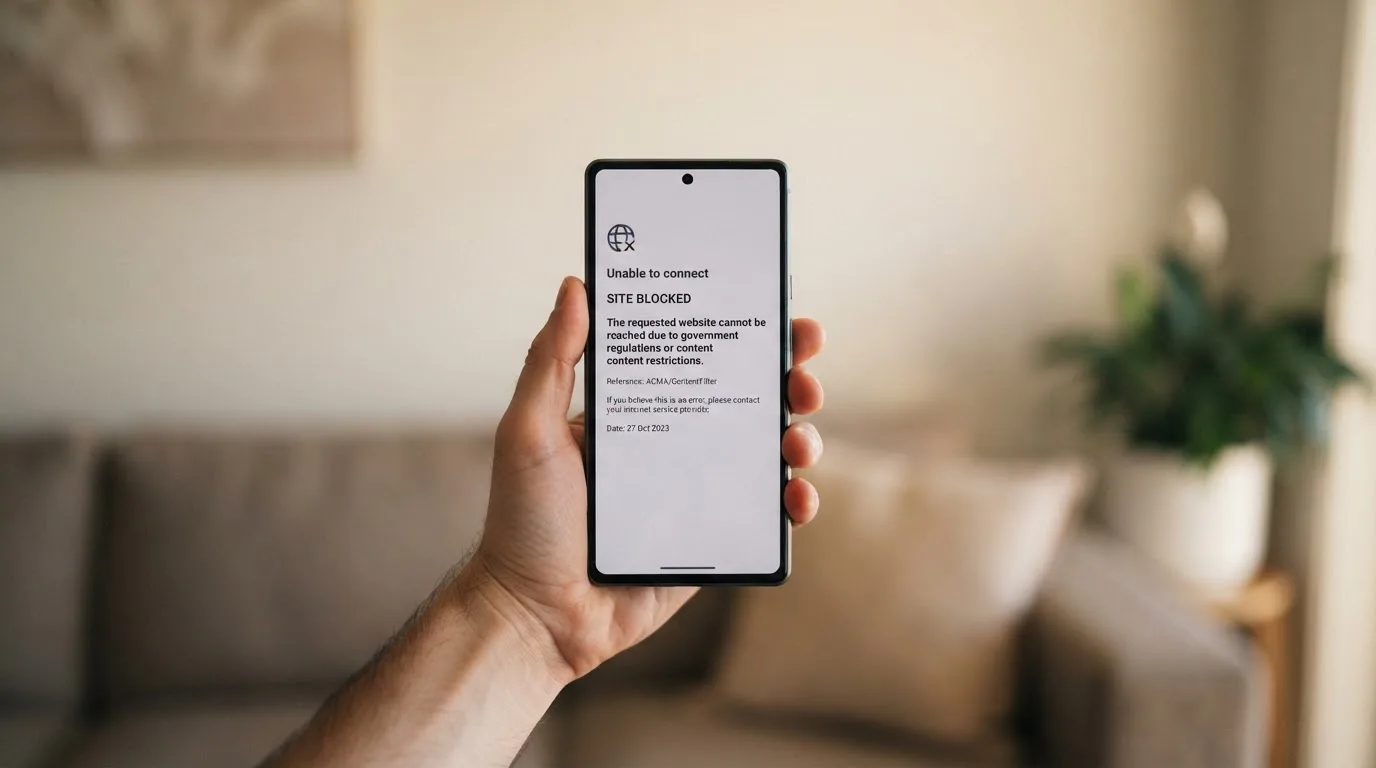
The ACMA reported in June 2026 that 1,751 illegal gambling and affiliate marketing websites had been blocked since the first blocking request in November 2019. That is roughly six and a half years of enforcement, beginning with the first formal blocking round in late 2019 after the 2017 amendments to the IGA gave the regulator that power. Spread across the months since the first request, the running total lands somewhere between 20 and 25 sites blocked per month on average — a pace that reflects the regulator’s stated approach of warning first, then directing ISPs to block sites that continue to serve Australian customers after a warning.
The June 2026 round alone asked ISPs to block 12 more sites: 7Signs, ChromaBet, Donbet, Duospin, Freshbet, Slots Gem, Jacks Club, Lucky Start, Pointsbetz.com, Spinrise, Vinyl Casino and Wildsino. That single round is more than half the monthly average on its own. The ACMA’s pace is not flat — it bunches when the same operator runs several brands, because one warning often covers a network.
The arithmetic matters because it sets the scale of the problem an Australian reader sits inside. A 20-to-25-sites-per-month blocking pace, sustained for six and a half years, is the regulator’s response to an offshore industry that keeps relaunching under new names. New brands replace blocked ones. The block is a tool, not a solution.
Why no Australian licence exists for this product
The Interactive Gambling Act 2001 — strengthened by the Interactive Gambling Amendment Act 2017 — makes the provision of online casino games, online pokies and in-play betting to a person in Australia a criminal offence, directed at the provider rather than the player. State and territory regulators do not licence online casino games because the Commonwealth Act prohibits them from doing so. What is licensable is wagering on races and sporting events placed before the event, lotteries and keno — products whose licensing falls in practice to the Northern Territory Racing and Wagering Commission, which regulates 52 of Australia’s online bookmakers including Sportsbet, Bet365 and Ladbrokes from a small office that meets once a month in Darwin.
The Northern Territory regulator’s footprint is unusual and worth naming plainly. It is the de facto wagering regulator for most of the country, runs with no full-time staff, and exists because the major bookmakers incorporate there for tax reasons. The 7 April 2026 ABC report on NT reform bills described an arrangement that has drawn repeated criticism for its thin resourcing. Online casino games are not part of that arrangement at all — no Australian jurisdiction issues a licence for them, and none can.
What an offshore licence actually means
A brand displaying a Curaçao or Anjouan licence is licensed in that jurisdiction, not in Australia. The licence permits the operator to run the site from those jurisdictions; it does not authorise the operator to take Australian customers. The IGA prohibits that activity on Australian soil regardless of what any other regulator has authorised. A player at such a site has no Australian consumer protection, no Australian complaints body, and no recourse if the operator refuses a withdrawal. The site can also be blocked at ISP level while a balance is still on the account.
The Hollycorn N.V. warning over Sky Crown — published as a PDF by the ACMA in September 2022 — is a worked example. Hollycorn held an offshore licence. The ACMA’s warning told the operator that providing casino services to Australians was an offence under the IGA. The warning did not require the licence to be revoked; the licence sat with the offshore regulator. What it changed was the operator’s exposure to Australian enforcement: continued service after the warning meant blocking.
What an Australian reader can actually use
For readers in Australia, the lawful paths to gambling sit in three places: licensed wagering on sport and racing, licensed lotteries and keno, and land-based venues — pubs and clubs with poker machines, and the casinos in each state and territory. None of these is the product a high-cashback casino bonus attaches to. The closest analogue a licensed Australian product offers is a bookmaker’s “money-back” promotion on a losing multi-leg bet, which works on the same principle as cashback — a rebate on a settled loss — but against a racing or sporting outcome rather than a session at a blackjack table.
BetStop and the National Self-Exclusion Register
BetStop went live in August 2023 and binds Australian-licensed online and phone wagering services. A person registering with BetStop is excluded from opening new accounts and from marketing offers at every Australian-licensed operator. The register is run by the ACMA. It is the strongest self-exclusion tool available to an Australian reader and the only one that operates across multiple licensed operators at once.
BetStop’s reach stops at the Australian border. An offshore casino is not connected to it, so registration does not prevent an offshore site from accepting deposits or sending bonus offers. That asymmetry is the single most important thing to know about the register: it covers the lawful market fully and the unlawful market not at all.
Help lines and counselling
The National Gambling Helpline is 1800 858 858 — free, 24/7, with web chat available through Gambling Help Online. Financial Counselling Australia and state-based problem-gambling services offer free sessions. These services are independent of any operator, Australian-licensed or offshore, and they sit alongside BetStop rather than replacing it.
Payment methods that tell you what kind of site you’re on
The way a casino takes payment says a lot about which rules it is running under. The Interactive Gambling Act’s 2023 amendments, in force from 11 June 2024, ban credit cards and credit-related products as payment for any Australian-licensed online wagering. The prohibition extends to digital currency. Legal deposit routes for licensed wagering are debit card, bank transfer, PayID/Osko and BPAY. A site asking an Australian customer for a credit card or a crypto deposit is, by the payment method alone, signalling that it is operating outside the Australian regime.
Bank-side gambling blocks
Australian banks have added their own layer. Westpac’s gambling block works at card level: it refuses authorisation of transactions registered under the merchant category code “Betting/Casino Gambling” on eligible personal credit and debit cards. ANZ’s gambling transaction block, set in the ANZ app, also blocks gambling transactions made through a digital wallet such as Apple Pay on an eligible card — not just the physical card. Removing the ANZ block requires a 48-hour waiting period. Commonwealth Bank’s gambling lock, applied through the CommBank app, automatically blocks most gambling transactions, though the bank states it cannot guarantee all gambling-related purchases will be stopped.
These blocks operate on the merchant category code assigned to the recipient. An offshore casino’s MCC may not always be classified as gambling by every issuer, which is why the banks stop short of guaranteeing full coverage. Where the MCC is registered correctly, the block fires; where it is not, the transaction goes through. The gap is small in practice but real.
Digital wallets and the credit-card prohibition
The credit-card ban extends to linked digital wallets. A deposit made through Apple Pay on a credit card falls within the prohibition. By the end of 2025, Apple Pay, Google Pay and Samsung Pay transactions collectively accounted for around 45% of all card payments in Australia by number — so the prohibition’s reach through wallet rails is wide. Apple Pay itself does not charge consumer fees for in-store, online or in-app use; any surcharge comes from the merchant’s own processing fees. Transaction limits and PIN requirements for Apple Pay purchases are set by the card issuer or merchant, not by Apple. The wallet is a rail; the underlying funding source is what determines whether the transaction is lawful.
PayID, Osko and BPAY — the Australian instant-payment stack
Osko by Australian Payments Plus delivers a bank transfer between participating Australian banks in under a minute, 24/7 including weekends, whether addressed to a BSB and account number or to a PayID. Paying to a PayID shows the name of the account holder before the transfer is sent — Australian Payments Plus warns that being asked to transfer money to a PayID on an illegal gambling site almost certainly means a scam site. PayID-based instant transfers are available at over 100 Australian financial institutions, and more than 25 million PayID identifiers had been registered on Australia’s New Payments Platform as of April 2025.
BPAY is the bill-payment service most Australians meet through their bank’s online portal — a Biller Code and a Customer Reference Number printed on the bill. It has operated in Australia since 1997, sits in the online banking of over 140 banks and financial institutions and is offered by over 95,000 businesses. Both Osko/PayID and BPAY are run by Australian Payments Plus, the merged entity the ACCC authorised in September 2021, which combines NPP Australia, BPAY Group and eftpos under one holding company. Participants in the New Payments Platform must keep monthly outages to no more than two minutes.
AUSTRAC’s threshold-transaction-report rule, requiring reporting of transfers of A$10,000 or more, applies only to physical cash. Ordinary electronic bank transfers are not subject to that per-transaction reporting requirement regardless of amount. A reader sending A$500 to an offshore casino through Osko is not triggering a report.
American Express outside the surcharge review
American Express operates differently from Visa and Mastercard. Founded in 1850 as a freight-forwarding company and issuing its first charge card on 1 October 1958, Amex runs as a three-party scheme — issuer, processor and network under one roof — rather than Visa or Mastercard’s four-party model. The Reserve Bank of Australia’s July 2025 review of merchant card payment costs and surcharging proposes removing surcharges on eftpos, Mastercard and Visa card transactions; American Express is explicitly outside the scope of that proposed ban. The treatment reflects Amex’s different commercial structure and its higher merchant fee in Australia.
Crypto and the cashback question
Crypto casino cashback follows the same mechanics as fiat cashback at the same operators — a percentage rebate on net losses over a defined period. The structural difference sits upstream: a crypto deposit bypasses the Australian bank-side gambling blocks entirely, because no Australian issuer is in the transaction chain. A Bitcoin or USDT deposit moves from the player’s wallet to the casino’s wallet without crossing Westpac’s, ANZ’s or Commonwealth Bank’s merchant category filters.
That same bypass is what makes crypto the payment method of choice for sites operating outside the Australian regime. The Interactive Gambling Act’s prohibition on digital currency as a funding source for licensed wagering sits precisely because the regulator recognises the gap. An Australian reader using Bitcoin to deposit at an offshore casino is using the only rail the Australian prohibition cannot reach through the banking system. The privacy is structural, not granted.
The cashback terms at crypto casinos follow the same pattern as their fiat counterparts: percentage, wagering requirement, cap. Bitcoin casino cashback and crypto casino cashback are not separate products from regular casino cashback; they are the same offer denominated in a different funding currency. Whether the rebate itself is paid in crypto or in fiat varies by site — some return Bitcoin, some return USD, some return bonus funds in the player’s account currency regardless of how the loss was funded.
The crypto angle also removes the named-account-holder check PayID provides. A PayID transfer to an illegal gambling site shows the recipient’s name before the transaction is sent; a crypto transfer does not. The audit trail disappears with the bank. AP+’s warning — that being asked to transfer money to a PayID on an illegal gambling site almost certainly means a scam — has no crypto equivalent because the rail has no name display. The risk moves rather than shrinks.
How the bonus machinery actually works
A cashback offer arrives with three numbers attached: percentage, period, cap. Read the percentage first; it is the headline. Read the cap second; it is the ceiling. Read the period third; it is the clock. A 20% weekly cashback with a A$200 cap over a Monday-to-Sunday window is one product; a 20% daily cashback with the same cap is a different product because the period sets the rhythm of loss the rebate sits against.
The wagering requirement on the returned funds is the fourth number and the most expensive. Cashback returned as bonus funds with a 5x turnover means A$100 of cashback must be turned into A$500 of wagered bets before withdrawal. At a typical pokie with a house edge of around 4-5%, the expected loss during that A$500 of wagering is roughly A$20-A$25. A A$100 cashback rebate that costs A$20-A$25 to clear is worth A$75-A$80 in real terms — not the A$100 the headline read.
That is the math behind every “high” cashback number in this market. A higher percentage with a heavier wagering requirement can be worth less than a lower percentage paid as real money. The percentage is what the marketing copy puts in bold; the wagering requirement is what the offer costs. Both are part of the same terms page.
A worked example with the prescribed arithmetic
Take a 20% weekly cashback on A$1,000 of net losses, capped at A$200, returned as bonus funds with a 3x wagering requirement. The expected loss over the turnover is the wagering volume times the house edge. Required turnover is A$200 × 3 = A$600. At a house edge of 4%, expected loss during the clearing is A$600 × 0.04 = A$24. The rebate is worth A$200 minus A$24 — A$176 in real terms, not the A$200 the percentage implied.
The same rebate paid as real money with no wagering requirement is worth A$200. The 3x turnover cost the player A$24 — about 12% of the headline value. A 5x turnover at the same house edge would cost roughly A$40, or 20% of the headline. The percentage stops mattering once the wagering sits beside it, and a reader comparing two offers on percentage alone is comparing the wrong number.
Each brand in detail
Eleven brands sit on the ACMA’s formal-warning list for casino-style products offered to Australians. Each entry below carries the regulator’s record and the page’s own read of what an Australian customer meets on signing up. No bonus terms are quoted — the only sources for those are affiliate marketing pages, and quoting them would reproduce an unregulated sales pitch.
RocketPlay
Pulsup Ltd was the operator named in the ACMA’s March 2026 formal warning over Rocketplay.com.au. The same brand had already appeared in the May 2022 round under Dama N.V., which was warned over six brands including Rocketplay at that time. The brand is reported by industry listings as running a cashback-style rebate structure, though the specifics sit only on affiliate pages and were not independently confirmed. Two ACMA actions across four years on the same brand name is the clearest signal that warnings alone did not change the operator’s posture. For an Australian reader the relevant facts are that the regulator has named this brand twice and that the IGA does not authorise the service.
Level Up Casino
Dama N.V. was warned by the ACMA in May 2022 over six casino brands, of which Level Up was one. The brand is reported by listings as offering cashback; the detail is not independently sourced. Dama N.V. is the most frequently named operator in the ACMA’s record — Rocketplay, Level Up, Woo Casino and Spirit Casino all sit under the same corporate roof across separate actions from 2022 to 2025. A reader mapping the warnings should read Dama N.V. as a single enforcement target rather than four separate problems.
Woo Casino
Dama N.V., March 2025. The earlier Dama round in 2022 did not name Woo Casino specifically, so this is the first action over the brand. No data confirms a cashback structure here. Woo Casino sits inside the Dama network and inherits the same enforcement exposure as its sister brands.
Spirit Casino
Dama N.V., May 2025. Same operator as Woo Casino, two months apart. The close timing suggests the ACMA pursued a network rather than two unrelated sites. Available data offers no cashback details for this brand either.
National Casino
Consolutetish S.R.L., July 2025. The same operator was named in the same round over Bizzo Casino, which the ACMA had already warned in 2022 under TechSolutions (CY) Group Limited and TechSolutions Group N.V. Two corporate names on one brand over three years is the pattern that the regulator’s blocking power is designed to address. Industry listings report a cashback-style rebate structure on National Casino. The repeated warnings under different parent names point to the limits of formal-warning enforcement: the brand resurfaces, the corporate shell changes, the cycle continues.
Bizzo Casino
Consolutetish S.R.L., July 2025; earlier TechSolutions, 2022. Three years between warnings, two different operating companies, the same brand. Industry listings report a cashback-style rebate structure. The 2022 action was over the same brand under the TechSolutions umbrella; the 2025 action is the second time the ACMA has named the brand in a formal warning. Repeated action under different parents is the regulator’s clearest evidence that warnings alone do not move an operator off the Australian market.
Ignition Casino
Bamboo Media, July 2025. Industry listings do not independently confirm a cashback structure. Ignition Casino is a brand more familiar from the US market; the Australian-facing operation sits under Bamboo Media, an operator the ACMA has not previously named in this set. The July 2025 action is the first formal warning over the brand for Australian customers.
Instant Casino
EOD Code SRL, February 2025. Industry listings report a cashback-style rebate structure. The ACMA’s February 2025 action is the regulator’s earliest formal warning in the set of casino brands, and it came before most of the 2025-2026 round.
Jackbit
Ryker B.V., April 2026. Industry listings do not independently confirm a cashback structure. Jackbit is a crypto-first brand — the player wallet sits in cryptocurrency, which the Interactive Gambling Act’s 2023 amendments prohibit as a funding source for Australian-licensed wagering. An Australian reader using Bitcoin at Jackbit is using the rail the banking-side blocks cannot reach.
Casino Intense
Sterplay Holding Ltd, April 2025. Industry listings report a cashback-style rebate structure. Sterplay Holding Ltd had not appeared in earlier ACMA actions, which makes the April 2025 warning a first contact rather than a repeat.
Sky Crown
Hollycorn N.V., September 2022. The earliest formal warning in this set. Industry listings do not independently confirm a cashback structure. The September 2022 date matters: it sits before the 2023 credit-card ban and before BetStop’s August 2023 launch, which means the warning was issued in a different enforcement environment than the later ones. The brand has continued to appear in the market since.
Reading the ACMA’s enforcement record as a whole
The eleven brands break into two groups by operator. Five of the eleven sit under Dama N.V. — RocketPlay, Level Up, Woo Casino, Spirit Casino and Bambet — across separate actions in 2022, 2025 and 2026. Two sit under Consolutetish S.R.L., one of which also sat under TechSolutions three years earlier. The other four are spread across Bamboo Media, EOD Code SRL, Ryker B.V., Sterplay Holding Ltd and Hollycorn N.V. — five operators for four brands.
The concentration matters because the regulator’s enforcement pace is bounded by the number of operators it can pursue, not the number of brands. Blocking a brand does not block an operator; the operator’s next brand arrives under a different name. The ACMA’s June 2026 round blocking 12 sites at once suggests the regulator has shifted toward network-level action, but the formal-warning record over 2022-2026 still shows brand-by-brand pursuit as the dominant pattern.
More than 230 unlicensed gambling services have left the Australian market since enforcement was strengthened in 2017 — a separate statistic from the 1,751 blocked websites. The first number counts operators who chose to withdraw; the second counts sites the regulator asked ISPs to block. Some operators do both: they withdraw Australian-facing operations while keeping the brand live in other markets. H2 Gambling Capital’s 2025 estimate put Australians’ losses to illegal gambling sites at about A$3.9 billion a year, and the share of gambling going through legal channels fell from 74% in 2021 to 64%. Enforcement has not closed the gap; it has narrowed the legal share.
The 2026 reform that is on the books but not yet in force
The Interactive Gambling Amendment (Gambling Reform) Bill 2026 passed Parliament on 19 August 2026. Its advertising and inducement measures commence on 1 January 2027. A reader on this page in the months between August 2026 and the end of that year is reading about law with a start date, not law in force. The bill adds penalties and expands the ACMA’s tools; it does not change the underlying prohibition, which has been in place since 2017.
Cashback offers sit squarely within the inducement category the bill addresses. A 20% weekly cashback rebate is an inducement to gamble. From 1 January 2027, Australian-licensed operators face new constraints on how those offers are structured and advertised. Offshore operators, already operating outside the Australian regime, are not directly subject to the new measures — the ACMA’s existing blocking and warning powers remain the available tools against them.
What a reader sitting in Australia should take from this
Three things follow from the picture above. The first is that the product a “high cashback casino bonus” attaches to is not lawfully available to an Australian customer, and the ACMA’s enforcement record shows what happens to brands that serve Australian customers regardless. The second is that the cashback mechanism itself — a percentage rebate on net losses with a wagering requirement and a cap — is a marketing construction whose real value depends on three numbers that the headline rarely names, and a player comparing offers on percentage alone is comparing the wrong figure. The third is that the lawful alternatives — licensed wagering, lotteries and keno, land-based pokies and casinos — are the only paths that sit inside the Australian consumer-protection regime, with BetStop as the cross-operator self-exclusion tool and 1800 858 858 as the 24/7 help line.
A reader who chooses to play anyway is choosing an offshore site with no Australian consumer protection, no Australian complaints body, no BetStop coverage and a withdrawal that the operator can refuse without recourse. The cashback percentage is the easy part of that choice; the rest of the terms page is the rest of it.
Frequently asked questions
What makes a cashback bonus different from a deposit match?
A deposit match adds to the player’s bankroll upfront — a 100% match on a A$100 deposit gives A$200 to play with. A cashback rebate applies to net losses after the fact, so it rewards losing rather than depositing. The two are paid out of different pools of operator money at different points in the player’s session.
Is cashback usually paid as real money or as bonus funds?
It varies by site. Some operators return cashback as real money that can be withdrawn on receipt. More commonly the rebate is paid as bonus funds subject to a wagering requirement — typically 1x to 5x the cashback amount — before withdrawal is permitted. The wagering multiple is the number that decides how much the cashback is really worth.
Is it legal for an online casino to offer cashback to players in Australia?
No. The Interactive Gambling Act 2001 prohibits the provision of online casino games to anyone in Australia, and no Australian state or territory issues a licence for them. The ACMA’s enforcement record — formal warnings, ISP blocking requests and the June 2026 round blocking 12 more sites — shows how that prohibition is applied. The individual player is not prosecuted; the operator is the target. A site offering cashback to Australian customers is operating outside the Australian regime regardless of any offshore licence it displays.
Can a crypto casino offer cashback in the same way as a fiat one?
Yes. The cashback mechanism — percentage, period, cap, wagering requirement — is the same. What changes is the funding rail. A crypto deposit bypasses the bank-side gambling blocks Australian banks run on card transactions, because no Australian issuer sits in the chain. The Interactive Gambling Act’s 2023 amendments banned digital currency as a funding source for Australian-licensed wagering precisely because that rail cannot be reached through the banking system. An Australian reader using Bitcoin at an offshore casino is using the gap the prohibition was written to close.
What terms typically cap how much cashback can be earned?
Two caps dominate. The first is a percentage ceiling on the rebate itself — a 20% cashback on A$1,000 of losses returns A$200, not A$200.01. The second is a maximum cashback amount per period — A$200 per week is common, so the rebate stops at A$200 regardless of how much was lost. A third constraint, often overlooked, is the wagering requirement on the returned funds, which can cost a meaningful share of the rebate’s headline value at a typical pokie house edge. See also Welcome bonuses at offshore casinos aimed at Australian players .
Does a high cashback percentage make up for other unfavourable bonus terms?
Not always. A 25% cashback with a A$100 weekly cap and 5x wagering on the rebate can be worth less than a flat 10% paid as real money with no wagering requirement. The percentage is the easy comparison; the cap and the wagering are the comparison that decides real value. Reading the terms page once and putting the percentage beside the cap and the turnover is the only way to compare two cashback offers honestly.