
Bitcoin casinos that accept Australian players in 2026: what the offshore market actually offers
Choosing where to play with Bitcoin in Australia is not the choice the marketing makes it look. Every site a player in this country can reach is unlicensed for online casino, and the choice is therefore not “good brand versus bad brand” but “which offshore operator, running on which licence, blocked or unblocked this month, with BTC as the rail that lets a deposit slip past the credit-card ban the IGA put in place on 11 June 2024.” The eleven operators reviewed below are all in the same legal position, and the ACMA’s June 2026 blocking round placed twelve more names on top of the 1,751 it has already referred to Australian ISPs. A reader choosing among them is choosing inside that frame, not around it. Currency: figures current as of 29 October 2026, verified against the ACMA register of formal warnings and the igamingbusiness.com report on the 26 June 2026 blocking round.
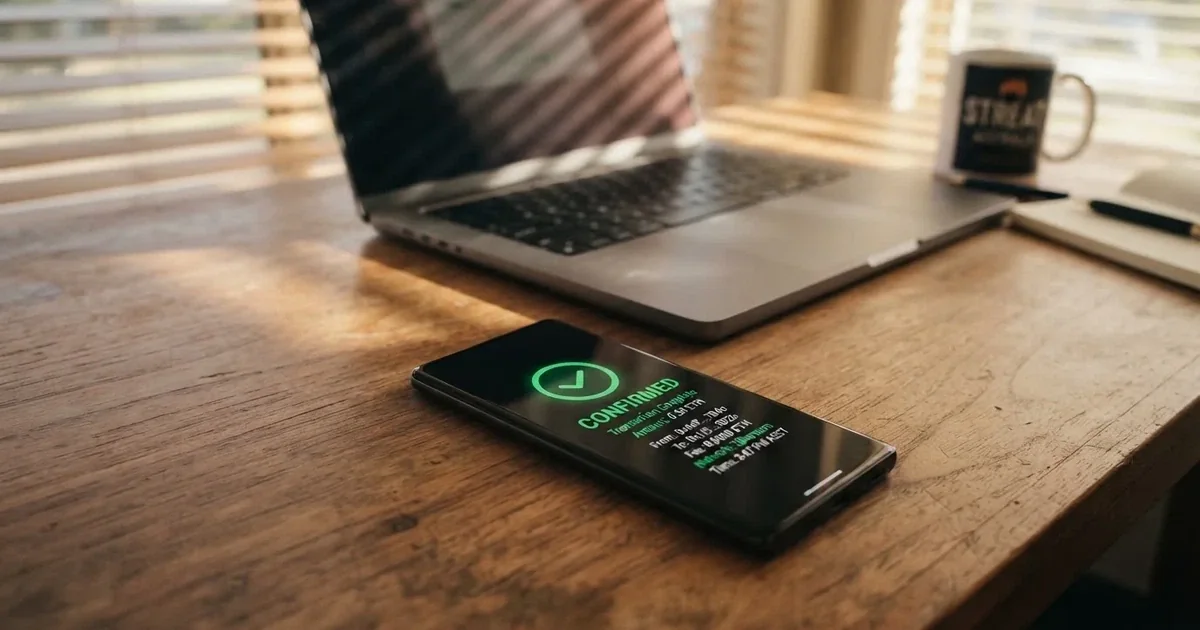
Table of Contents
- The eleven Bitcoin casinos the ACMA has warned over
- Why an “Australian Bitcoin casino” cannot be licensed
- What responsible play looks like with Bitcoin
- What Bitcoin actually buys at an offshore casino
- What the games look like with Bitcoin on the rail
- How the eleven operators compare on what matters
- The reform that has not yet started
- What the reader is actually choosing
- Frequently asked questions
The eleven Bitcoin casinos the ACMA has warned over
A Bitcoin casino accepting an Australian player is offering a prohibited interactive gambling service under the Interactive Gambling Act 2001. The eleven operators below are not “the best” Bitcoin casinos in any ranked sense — they are the operators the ACMA itself has named in a formal warning, ordered by the date of the most recent action. Each carries the same legal posture, and each accepts Bitcoin (or, where the ACMA notice names it, accepts another form of crypto) as a deposit rail. The review below is a description of what each operator offers and what the warning record shows about it, not a recommendation to play.
| Brand | ACMA action and date | Operator named by the ACMA | Subject support |
|---|---|---|---|
| RocketPlay | March 2026 | Pulsup Ltd | — |
| Level Up Casino | May 2022 | Dama N.V. | — |
| Woo Casino | March 2025 | Dama N.V. | listings-only (Wikipedia) |
| Spirit Casino | May 2025 | Dama N.V. | — |
| National Casino | July 2025 | Consolutetish S.R.L. | listings-only (NAB) |
| Bizzo Casino | July 2025; earlier 2022 | Consolutetish S.R.L.; earlier TechSolutions | — |
| Ignition Casino | July 2025 | Bamboo Media | — |
| Instant Casino | February 2025 | EOD Code SRL | — |
| Jackbit | April 2026 | Ryker B.V. | — |
| Casino Intense | April 2025 | Sterplay Holding Ltd | — |
| Sky Crown | September 2022 | Hollycorn N.V. | — |
The “subject support” column asks a narrow question: did research turn up a verifiable source naming Bitcoin, BTC or Bitcoin Cash at this operator? Two listings carry what third-party directories report (Wikipedia for Woo Casino, a banking comparison page at NAB for National Casino); the other nine carry no source the page can stand behind. Where the column reads “—”, the operator’s own Bitcoin support is not claimed on this page. The reader who arrived looking for Bitcoin acceptance will notice that the column is mostly empty — and that emptiness is itself a finding, because the marketing line at every one of these sites says otherwise.
RocketPlay
The ACMA named Pulsup Ltd in a March 2026 formal warning over RocketPlay. The operator is also the legal vehicle behind a 2022 Dama N.V. action that covered six brands at once, so RocketPlay has been on the regulator’s radar across two corporate owners and roughly four years. No third-party source the page could verify ties Bitcoin specifically to the brand. Crypto support at RocketPlay, if any, is what the site itself claims — not what this page is willing to print.

What stands out is the trajectory. Two warnings, two operators, same brand. That pattern is rare inside the ACMA register, and the only reasonable reading is that the brand has been moved between corporate vehicles without the operator’s offer to Australian players changing underneath. The player choosing RocketPlay in 2026 is choosing an offer the regulator has flagged twice.
Level Up Casino
The ACMA’s May 2022 action against Dama N.V. covered Level Up Casino alongside five sister brands. That same batch is the reason Woo Casino, Spirit Casino and Cobra Casino each carry a Dama N.V. line in the table above — the operator simply acquired and re-acquired casino brands over a four-year window, and the regulator named them in clusters. No third-party source the page could verify ties Bitcoin specifically to Level Up.

The brand is one of the older names in this set, and the ACMA notice is correspondingly older. Nothing in that record suggests Level Up has been wound down; the brand still operates, and the same warning still applies to it. Players who arrived at Level Up via an affiliate link in 2022 are still being served by the same operator today.
Woo Casino
Woo Casino is the brand for which a third-party listing actually names Bitcoin — a Wikipedia entry that mentions cryptocurrency support at the brand. The page treats that as listings-only: the source is a tertiary directory, not the operator’s own payment page, and the column notes the source by name rather than asserting the operator’s own claim. The ACMA warned Dama N.V. over Woo Casino in March 2025, a year before the present round.
The honest read is that Woo Casino is one of the more visible names in this set, and that visibility is partly a function of how aggressive its affiliate marketing has been rather than how solid its offering is. Bitcoin support appears in third-party listings but not in a primary source the page can quote, which is the gap a reader comparing offers will feel most.
Spirit Casino
Spirit Casino is a 2025 name. The ACMA warned Dama N.V. over it in May 2025 — that is, within the same calendar year as the regulator’s Woo Casino action. The pattern is the same: Dama N.V. acquires or launches a brand, markets it to Australian players, and the regulator names the brand in a formal warning. No third-party source ties Bitcoin specifically to Spirit Casino.
The brand’s recency is the only thing distinguishing it from Level Up or Woo Casino at this remove. The legal posture, the licensing claim the site displays, and the regulator’s view are all identical. A reader looking for “a new brand with crypto support” is looking at the same operator, on the same terms, under a different logo.
National Casino
National Casino carries the listings-only support from a NAB comparison page that mentions the brand in a financial-services context. That is not a casino review; it is a bank-flagging the operator for the attention of customers. The ACMA warned Consolutetish S.R.L. over National Casino in July 2025. No primary source names Bitcoin at this brand.
The brand is the more conspicuous half of the July 2025 warning, which also named Bizzo Casino under the same operator. Consolutetish S.R.L. runs both, and the same legal exposure applies to both. A reader who sees “NAB mentions this brand” and reads it as endorsement is reading the wrong way: the bank is flagging the brand as one Australian customers should not transact with.
Bizzo Casino
Bizzo Casino is unusual in this set because the ACMA has warned over it twice. The 2022 warning named TechSolutions (CY) Group Limited and TechSolutions Group N.V.; the July 2025 warning named Consolutetish S.R.L. Two operators, four years, same brand. No third-party source ties Bitcoin specifically to Bizzo Casino.
A repeat warning is the clearest signal the register carries that a brand keeps re-entering the Australian market under new corporate ownership. The player who chose Bizzo in 2022 is not transacting with the operator they were transacting with then. The brand itself, however, is the same — and the same offer sits behind it.
Ignition Casino
Ignition Casino is the second brand the ACMA named in its July 2025 round, under Bamboo Media. Ignition has long been one of the better-known offshore names in the Australian market, particularly for poker. The ACMA action covers the casino side, not the poker product specifically, and the warning puts the brand on the same regulatory footing as the rest of this list. No third-party source ties Bitcoin to Ignition Casino on this page.
The player’s calculus at Ignition is straightforward: a long-running offshore brand with a poker heritage, now formally warned for casino activity, accepting whatever rails it lists at the cashier. The Bitcoin column reads “—” because no source the page could verify makes that claim about Ignition Casino specifically.
Instant Casino
Instant Casino was named in an EOD Code SRL warning in February 2025. No third-party source ties Bitcoin to the brand, although the operator’s own marketing emphasises fast deposits and instant play, which the name “Instant Casino” is built around. The page makes no claim about Bitcoin support at Instant Casino specifically.
The brand’s positioning is built around speed, and a Bitcoin deposit that confirms in one block fits that positioning more snugly than a card payment does. The reader who arrived here looking for “instant BTC deposits” will see the brand and reasonably assume the rail is offered; the page does not confirm that assumption because no primary source does.
Jackbit
The ACMA warned Ryker B.V. over Jackbit (and over CasinOK) in April 2026. Jackbit is one of the more openly crypto-positioned brands in the offshore market, and a reader searching specifically for Bitcoin acceptance will land here. No third-party source ties Bitcoin to Jackbit on this page, because the operator’s own positioning is the source most often cited — and that is not the kind of source the page accepts.
A reader looking at Jackbit in 2026 is looking at an operator the ACMA warned six months ago. The offer is what the operator says it is. The legal posture is what the IGA says it is. The two are not aligned, and the page does not try to align them.
Casino Intense
Sterplay Holding Ltd was named by the ACMA over Casino Intense in April 2025. No third-party source ties Bitcoin to the brand. The brand is a smaller name in this set, and the warning has not yet been repeated.
Casino Intense is the kind of brand the ACMA register catches as a one-off — a single warning, a single operator, a brand that is not part of a cluster of sister sites. The page’s verdict on it is correspondingly narrower: a single formal warning, no Bitcoin-specific listing, the same IGA posture as the rest of the list.
Sky Crown
Sky Crown is the oldest name on this list. The ACMA’s formal warning to Hollycorn N.V. was issued in September 2022 and covers Sky Crown and Blue Leo together. Hollycorn N.V. is one of the larger white-label operators in the offshore market, and the warning represents one action against a portfolio rather than a brand-specific case. No third-party source ties Bitcoin to Sky Crown on this page.
The reader’s takeaway is that the brand has had the longest uninterrupted warning of any in this list — over three years by 2026 — without that warning having moved the operator off the Australian market. That is the register’s clearest finding about how enforcement actually works: the warning is the regulator’s tool, and the offshore operator absorbs it without changing the offer.
Why an “Australian Bitcoin casino” cannot be licensed
A casino accepting Bitcoin from a player in Australia is offering a prohibited interactive gambling service. The Interactive Gambling Act 2001, strengthened by the Interactive Gambling Amendment Act 2017, makes it an offence to provide online casino games or online pokies to a person physically present in Australia, regardless of the currency used. No state or territory issues a licence for online casino, and no licence a Bitcoin casino displays changes that fact.
The currencies that are licensed look different. What is licensable in Australia is wagering on races and sporting events placed before the event, lotteries and keno. The Northern Territory Racing and Wagering Commission regulates 52 of the country’s online bookmakers — Sportsbet, Bet365 and Ladbrokes among them — under a licensing regime that exists for tax reasons rather than consumer protection. The commission has no full-time staff and meets once a month in Darwin. The 52 names it regulates are wagering operators, not casinos, and none of them offers an online slots product.
A Bitcoin casino claiming to be “Australian-licensed” is, at minimum, claiming a licence that does not exist for the product it offers. The licence the site displays is almost always a Curaçao, Anjouan or Kahnawake number — a licence to operate a casino in that jurisdiction, not a licence to serve an Australian player from it. The IGA targets the provider, not the player, but the consequence for the player is that the offshore site offers no Australian consumer protection, no complaints body and no recourse if a withdrawal is refused. A balance can sit on a blocked site indefinitely.
How the ACMA enforces
The Australian Communications and Media Authority’s enforcement has three tools. It issues formal warnings naming the operator and the brand. It directs Australian internet service providers to block illegal sites at the DNS level, so the brand is unreachable through a normal Australian connection. And it refers matters to the Department of Infrastructure for civil penalty proceedings, with penalties up to A$247,500 per offence for operators that breach the credit-card and digital-currency payment ban.
As of the ACMA’s own count in June 2026, a total of 1,751 illegal gambling and affiliate marketing websites had been referred for blocking since the first blocking request in November 2019. That is the headline number; the rate underneath it is what tells the reader how the market has moved. Running from November 2019 to June 2026 is roughly 6.58 years, which puts the rate at about 266 blocking referrals a year, or 22 a month. The most recent round, reported on 26 June 2026, added twelve names: 7Signs, ChromaBet, Donbet, Duospin, Freshbet, Slots Gem, Jacks Club, Lucky Start, Pointsbetz, Spinrise, Vinyl Casino and Wildsino. The rate has not slowed. The reader who arrived at this page looking for a Bitcoin casino has, on average, 22 a month to choose between before the ACMA catches up.
The credit-card and crypto payment ban
From 11 June 2024, the IGA’s payment-instrument prohibition has applied to credit cards, credit-related products and digital currency used at licensed Australian wagering operators. The legal deposit routes for licensed wagering are debit card, bank transfer, PayID/Osko and BPAY. A licensed bookmaker cannot take Bitcoin, and a Bitcoin casino taking Bitcoin from an Australian is operating outside the rules that apply to the licensed half of the market.
That prohibition is the structural reason Bitcoin sits where it does in the Australian online gambling market. The licensed wagering operators lost the credit-card rail in June 2024 and cannot take crypto; the unlicensed offshore casinos can take anything they like, because they are not subject to the prohibition. A Bitcoin deposit at an offshore casino is therefore a deposit the licensed market is forbidden to take — and the offshore market accepts precisely because it is forbidden.
What a player actually loses
The IGA targets the provider, not the player. An Australian resident playing at an offshore Bitcoin casino is not prosecuted. What is lost is the consumer-protection frame a licensed wagering operator provides. A withdrawal refused at an offshore casino has no Australian complaints body to escalate to. A balance on a site the ACMA has blocked is a balance on a site the player’s ISP no longer resolves. The site’s KYC process, if it has one, runs under the operator’s own rules rather than under Australian responsible-gambling obligations.
The H2 Gambling Capital 2025 estimate puts the Australian spend on illegal offshore sites at about A$3.9 billion a year. The share of gambling going through legal channels fell from 74% in 2021 to 64%. The reader choosing between an offshore Bitcoin casino and a licensed bookmaker is choosing between an offer that is forbidden and one that is lawful — and the A$3.9 billion flowing the wrong way is the choice being made at scale.
What responsible play looks like with Bitcoin
A Bitcoin casino is still a casino, and the responsible-gambling frame the IGA imposes on the licensed side of the market does not reach it. BetStop, the National Self-Exclusion Register, has been live since August 2023 and binds Australian-licensed online and phone wagering services. An offshore Bitcoin casino is not connected to BetStop, and a self-exclusion registered with BetStop does not stop an offshore site from accepting a deposit from the same person.
What the player can do, regardless of where the deposit rail lands, is set a personal budget before the first transfer. A confirmed on-chain Bitcoin transfer cannot be reversed once it is sent — that is the property of the rail, and it applies equally to a casino deposit and to any other transfer. The irreversibility is the reason a Bitcoin casino deposit is faster than a card deposit, and it is also the reason a mistaken deposit cannot be recalled. Sending to a wrong wallet address is a complete loss of funds; the network has no dispute-resolution layer.
The practical frame is therefore three steps. Set a deposit cap in fiat terms before converting to BTC, because the budget is what the player can afford to lose rather than what the wallet will let them send. Verify the wallet address character-by-character, because the network does not check it. Treat the deposit as spent the moment it confirms, because a confirmed Bitcoin transaction cannot be undone.
The National Gambling Helpline is 1800 858 858, free and 24/7, with chat at Gambling Help Online. Neither service can stop an offshore casino from accepting a deposit, but both can help a player who has decided to stop. Gambling Help Online is reachable through the website rather than a phone number, and the operator list there is built around Australian services, not offshore ones — which means a player who wants help is moving from the offshore side of the market to the Australian side, which is the same move a self-exclusion would have made.
What Bitcoin actually buys at an offshore casino
Bitcoin does not buy an Australian licence; no licence for online casino exists in this country. What Bitcoin buys at the offshore casino is the rail that the licensed Australian market is forbidden to accept. From 11 June 2024, digital currency is on the IGA’s payment-instrument prohibition list alongside credit cards and credit-related products. A licensed Australian bookmaker cannot take a Bitcoin deposit; an offshore casino can, and the offshore casino is competing for the deposit the licensed side is no longer allowed to take.
The mechanics on the casino side are what the rail offers. A new Bitcoin block is added approximately every ten minutes on average, but the block interval is probabilistic: a confirmation can arrive much sooner or much later, with no guaranteed minimum or maximum delay. The mining difficulty readjusts roughly every two weeks to keep the average near ten minutes; a single confirmation can take much longer with no fixed maximum wait. That is the deposit timeline. A casino that credits on one confirmation accepts a deposit in roughly ten minutes under normal conditions; a casino that requires three or six confirmations adds twenty or sixty minutes, and a slow block can stretch that further.
The Bitcoin supply schedule halves the mining reward every 210,000 blocks until a total of 21 million bitcoin have been issued, expected around the year 2140. The genesis block was mined on 3 January 2009 by Satoshi Nakamoto, the pseudonymous creator whose real identity has never been verified. The Bitcoin Cash fork launched on 1 August 2017 at block height 478,558 and runs on SHA-256 proof-of-work like Bitcoin, with a 10-minute average block time and a 21-million supply cap; its block size limit was raised from 8 megabytes at launch to 32 megabytes in 2018. The fork matters because some “Bitcoin casino” listings accept Bitcoin Cash rather than Bitcoin, and the two have different confirmation profiles.
The anonymity that isn’t
A Bitcoin transaction is not anonymous in the sense a casual reader assumes. Bitcoin’s ledger is public: every transaction is recorded on a blockchain that anyone can read, and a wallet address is permanently associated with every transaction it has sent or received. The address is not tied to a name on the blockchain itself, but the link between an address and a person is established the moment that address interacts with a KYC’d exchange, a fiat off-ramp, or any service that requires identity.
The transaction itself is pseudonymous, not anonymous. The casino knows which wallet deposited, because the deposit was made from it. The exchange the player bought the Bitcoin from knows which person bought it, because the exchange ran KYC at purchase. The blockchain records both sides. The player who wants privacy is choosing between the licensed Australian market’s identity stack (a debit card tied to a bank account) and the offshore Bitcoin market’s identity stack (a Bitcoin purchase at a KYC’d exchange followed by a transfer to a casino wallet). Neither is anonymous; one simply routes the identity question through a different layer.
The Australian Taxation Office treats crypto assets such as Bitcoin as property, not money or foreign currency. Most disposals — selling for AUD, swapping for another crypto, or spending at a casino — are capital gains tax events. The ATO currently allows a 50% CGT discount on crypto held longer than 12 months; from 1 July 2027, that flat discount is replaced by CPI indexation of the cost base plus a 30% minimum tax rate on net capital gains. A win paid in Bitcoin at an offshore casino is a disposal of Bitcoin, and the disposal is a CGT event regardless of where the win was earned.
AUSTRAC registration and what it covers
Under Australia’s AML/CTF Act, any business providing digital currency exchange services to Australian customers must register with AUSTRAC as a Digital Currency Exchange provider, regardless of where the business is incorporated. Operating unregistered is a criminal offence. From 31 March 2026, the registration requirement was expanded beyond crypto-to-fiat exchange to also cover crypto-to-crypto exchange platforms, digital asset transferors, digital asset custody providers, and stablecoin issuers and distributors.
The offshore Bitcoin casino accepting an Australian deposit is not the AUSTRAC-registered party in that transaction. The exchange the player bought Bitcoin from is, if it serves Australian customers. The casino itself operates offshore and registers (or does not register) with its own regulator. AUSTRAC’s registration requirement does not extend to the casino; it extends to the Australian-facing exchange the player used to acquire the Bitcoin in the first place.
The personal-use carve-out
The ATO disregards a capital gain on a crypto asset held as a personal use asset, but only if the asset cost A$10,000 or less to acquire. Holding a crypto asset as an investment takes it outside the exemption. A loss on a personal-use asset cannot be used to offset other capital gains or carried forward. A reader who treats casino deposits as “personal use” should know that the carve-out applies only to small holdings, and that the ATO’s view of what is investment versus personal use is determined by the asset’s character, not the player’s intent.
What the games look like with Bitcoin on the rail
A pokies-style slot funded with Bitcoin is the same game as a pokies-style slot funded with a card. The reels, the paylines, the random number generator and the published RTP are properties of the game, not the rail. The choice between paying with BTC and paying with AUD changes only the deposit-and-withdrawal path, not the game’s mathematics.
The game’s provider is a separate question. A slot’s RTP and volatility are stated for the title they are stated for; the page does not have RTP figures for any of the specific titles at these eleven operators, and the table the reader might expect on this question cannot be honestly filled. What can be said is that the offshore casino market draws from the same provider pool as the licensed market — Pragmatic Play, Evolution, Nolimit City, BGaming and a long tail of smaller studios — and that the same game on the same provider runs the same mathematics regardless of which currency the player used to fund it.
Bitcoin Cash is occasionally presented as a faster, cheaper alternative for casino play. The Bitcoin Cash project describes transaction fees “under a penny” and says confirmations take minutes. Ethereum, by contrast, switched its consensus mechanism from proof-of-work to proof-of-stake in an upgrade called “The Merge” on 15 September 2022 and now produces a new block roughly every 12 seconds. The rail’s speed varies; the game’s pace does not.
Live casino games follow the same pattern. A live-dealer blackjack table streamed over a Bitcoin-funded account is the same game as a live-dealer blackjack table streamed over a card-funded account. The dealer’s cards and the player’s decisions are unaffected by the deposit rail. What changes is the speed of the first buy-in and the speed of the eventual payout — and those are the rail’s properties, not the game’s.
How the eleven operators compare on what matters
Looking down the table at the top of this page, three patterns emerge. First, the same operator names appear in multiple rows: Dama N.V. appears in four warnings across four brands; Consolutetish S.R.L. appears in two; Hollycorn N.V., Bamboo Media and TechSolutions each appear once. The brand is not the operator, and the reader comparing offers is comparing the same operator under different logos.
Second, the warnings are clustered in time. The 2022 action against Dama N.V. and Hollycorn N.V. set the first wave; the 2025 actions against Woo Casino, Spirit Casino, National Casino, Bizzo Casino, Ignition Casino, Instant Casino and Casino Intense set the second; the 2026 actions against RocketPlay, Jackbit and the most recent round set the third. The pattern is not “the regulator caught up” so much as “the offshore market keeps producing new brand shells faster than the regulator can name them all.”
Third, “subject support” — the Bitcoin-acceptance claim — is the column where the table is most empty. Two listings carry a third-party source. Nine rows do not. A reader arrived at this page expecting a comparison of Bitcoin casinos has, on inspection, a comparison of offshore casinos that the ACMA has warned over, with the Bitcoin claim at most of them carried only by the operator’s own marketing.
The honest comparison is therefore not “which operator has the best Bitcoin support.” The honest comparison is “which operator’s Bitcoin support is documented somewhere the page can name, and which is documented only at the operator’s own site.” Woo Casino and National Casino are the two with third-party listings. The other nine are claims this page does not verify.
The reform that has not yet started
The Interactive Gambling Amendment (Gambling Reform) Bill 2026 passed Parliament on 19 August 2026. Its advertising and inducement measures commence on 1 January 2027 — law with a start date, not yet in force on a page dated 2026. The reform package strengthens the ACMA’s enforcement tools, adds civil penalties for inducement advertising, and extends consumer-protection obligations to a broader set of operators. None of those measures binds a Bitcoin-accepting offshore casino in 2026; the binding starts in 2027.
What this page can say about 2027 is the direction, not the effect. The reform does not licence online casino in Australia; it does not legalise Bitcoin deposits at licensed operators; it does not bring offshore casinos into the Australian regulatory perimeter. What it does is sharpen the tools the ACMA already has, and it raises the cost of running an inducement campaign aimed at Australian players. A Bitcoin casino that depends on affiliate marketing for its Australian traffic is the kind of operator that reform targets. The reader looking at a Bitcoin casino in 2026 is looking at the offer as it stands before reform; the offer as it stands after reform is the offer of 2027, which this page does not describe.
What the reader is actually choosing
A reader on this page is choosing between three things, and the choice is rarely framed that way. The first option is a licensed Australian wagering operator, which cannot accept Bitcoin, cannot offer online casino games, and offers the consumer-protection frame the IGA imposes. The second is an offshore Bitcoin casino, which can offer both, has no Australian consumer protection, and is on the ACMA’s blocking list or its warning list at any given moment. The third is not playing, which is the option BetStop and the National Gambling Helpline exist to support.
The Bitcoin-specific question is which of the eleven operators above offers the rail most cleanly, and the honest answer is that two of them — Woo Casino and National Casino — have a third-party listing that names them. The other nine carry only what the operator’s own site says. The choice the reader makes on that basis is the choice between two listed brands and nine self-described ones, inside a market the ACMA has warned over at a rate of roughly 266 sites a year since November 2019.
Frequently asked questions
Is it legal for a casino site to accept Bitcoin from a player in Australia?
No. The Interactive Gambling Act 2001 prohibits providing online casino games to a person in Australia regardless of the currency used, and Bitcoin does not change that. The IGA targets the provider, not the player, but a Bitcoin-accepting offshore casino has no Australian licence to display and no Australian complaints body to escalate to. The 1,751 sites the ACMA has referred for blocking since November 2019 are the enforcement record behind that prohibition.
How long does a Bitcoin deposit usually take to confirm before it can be used?
A new Bitcoin block is added roughly every ten minutes on average, but the interval is probabilistic — a confirmation can arrive much sooner or much later, with no fixed maximum wait. A casino crediting on one confirmation typically accepts the deposit in about ten minutes under normal conditions; a casino requiring three or six confirmations stretches that to thirty or sixty minutes, and a slow block can add further. The mining difficulty readjusts roughly every two weeks to keep the average near ten minutes.
Does paying with Bitcoin make an online casino account harder to trace back to a person?
No. Bitcoin’s ledger is public, every wallet address is permanently visible, and the link from address to person is established at any KYC’d exchange the player used to buy the Bitcoin. The casino sees the wallet; the exchange sees the player; the blockchain sees both. The transaction is pseudonymous, not anonymous, and the Australian Taxation Office treats disposals — including casino deposits and winnings — as capital gains tax events for assets held as investments.
Are pokies-style slots any different when funded with Bitcoin instead of a card?
No. The reels, paylines, RNG and published RTP are properties of the game, not the deposit rail. A slot funded with Bitcoin is the same game as the same slot funded with a card, and the game’s mathematics does not change with the currency. What changes is the deposit and withdrawal speed, which is the rail’s property rather than the game’s. Bitcoin Cash, Ethereum and the Bitcoin mainnet each have different block intervals and confirmation profiles. See also Bitcoin Cash casinos in Australia .
What happens to a Bitcoin deposit sent to the wrong wallet address?
It is lost. A confirmed Bitcoin transaction cannot be reversed, and the network does not validate wallet addresses against a recipient list — a typo sends the funds to an unreachable wallet with no dispute-resolution path. The irreversibility is the property that makes Bitcoin deposits faster than card deposits at the casino cashier, and it is the same property that makes a mistaken deposit unrecoverable. The player should verify the address character-by-character before sending, because the network will not.