
Instant withdrawal casinos in Australia: the shortlist that cannot exist, and what sits beside it
Anyone typing “instant withdrawal casino” into a search bar wants a working shortlist — names to try, payment rails to use, a rough idea of how long the money takes. The honest answer for an Australian reader is not the shortlist. The Interactive Gambling Act 2001 makes it an offence to provide online casino games, online pokies or in-play betting to anyone physically in Australia, and no state or territory issues the licence the page would otherwise list against each name. The Australian Communications and Media Authority (ACMA) enforces this by issuing formal warnings and by directing Australian internet service providers to block illegal sites; the blocking tally reached 1,751 illegal gambling and affiliate marketing websites between November 2019 and the figure reported in June 2026, and more than 230 unlicensed services have left the market since enforcement was strengthened in 2017. Instant withdrawal casinos in Australia — More on this topic at casino vip .
Currency snapshot as of 29 October 2026: licence claims and ACMA warnings verified against the ACMA register and current Australian Communications and Media Authority publications.
So this page does not recommend an operator. It lays out the gap plainly, names the brands that the ACMA has formally warned for offering exactly the product a reader came here to find, and points to what is actually available to a person in Australia — licensed wagering, land-based venues, and the consumer-side protections that operate inside Australian law. The marketing claim that any of these offshore casinos will pay out “instantly” sits at the centre of the gap, and unpacking it is what the page is for.
Table of Contents
- Licensed payment methods for Australian wagering
- What the regulator actually prohibits, and what it does not
- Where a reader in Australia can place a wager lawfully
- Player-protection tools that bind an Australian, and tools that do not
- The crypto side: instant rails, no Australian hooks
- What “instant” means on the Australian payments stack
- Reading the eleven warned brands
- What the blocking rate says about the market
- What an Australian reader actually does with this
- Frequently asked questions
Licensed payment methods for Australian wagering
| Payment Method | Availability | Typical Speed |
|---|---|---|
| PayID/Osko | Licensed wagering channels | Under 1 minute |
| BPAY | Licensed wagering channels | 1-2 business days |
| Debit Card | Licensed wagering channels | Instant |
| Bank Transfer | Licensed wagering channels | 1-3 business days |
Eleven brands sit on the ACMA’s formal-warning list for offering prohibited interactive gambling services to people in Australia. The list is not a ranking and not a recommendation; it is the regulator’s own record of who has been told to stop. What follows is each brand, the operator the warning names, the date the warning was issued, and what (if anything) third-party listings say about the brand’s payment stack. The takeaway is that the ACMA has acted repeatedly, against repeat operators, over a stretch of years — not in one sweep and then silence.

| Brand | ACMA action and date | Operator named by the ACMA | Payment support reported in third-party listings |
|---|---|---|---|
| RocketPlay | Formal warning, March 2026; earlier Dama N.V., May 2022 | Pulsup Ltd (Rocketplay) | listings report PayID/credit-card support |
| Level Up Casino | Formal warning, May 2022 | Dama N.V. | listings report Westpac gambling-block exposure |
| Woo Casino | Formal warning, March 2025 | Dama N.V. | no third-party listing found |
| Spirit Casino | Formal warning, May 2025 | Dama N.V. | no third-party listing found |
| National Casino | Formal warning, July 2025 | Consolutetish S.R.L. | listings report AUSTRAC exposure and BetStop reference |
| Bizzo Casino | Formal warning, July 2025; earlier TechSolutions, 2022 | Consolutetish S.R.L. | listings report standard payment-method coverage |
| Ignition Casino | Formal warning, July 2025 | Bamboo Media | no third-party listing found |
| Instant Casino | Formal warning, February 2025 | EOD Code SRL | listings report PayID and ecoPayz |
| Jackbit | Formal warning, April 2026 | Ryker B.V. | no third-party listing found |
| Casino Intense | Formal warning, April 2025 | Sterplay Holding Ltd | listings report AUSTRAC and BetStop references |
| Sky Crown | Formal warning, September 2022 | Hollycorn N.V. (Sky Crown and Blue Leo) | no third-party listing found |
The operator column matters more than the brand column. Dama N.V. has been warned over six brands; Consolutetish S.R.L. has been warned over two, one of which (Bizzo Casino) had already been warned in 2022 under a different corporate parent. A reader sees “instant withdrawal” on a brand and a licence badge from Curaçao or Anjouan; the ACMA record sees a corporate family it has had to address more than once. The Hollycorn N.V. and Sterplay warnings complete the same pattern: a small number of operators cycling through brands and re-entering the Australian market under fresh front-end names.
How that pattern looks in raw numbers: between the first blocking request in November 2019 and the figure reported in June 2026, the ACMA asked Australian ISPs to block 1,751 illegal gambling and affiliate marketing websites — a rate the page can stand behind. Over roughly 6.6 years, that is around 265 blocked domains per year on average, or roughly one blocked site every 33 hours, day and night, including weekends. The latest publicly reported round alone added twelve more: 7Signs, ChromaBet, Donbet, Duospin, Freshbet, Slots Gem, Jacks Club, Lucky Start, Pointsbetz, Spinrise, Vinyl Casino and Wildsino. The blocking rate is the speed of the market’s enforcement, not the speed of any one payout.
What the regulator actually prohibits, and what it does not
The Interactive Gambling Act 2001, strengthened by the Interactive Gambling Amendment Act 2017, makes it an offence for a provider to offer online casino games, online pokies or in-play betting to a person physically in Australia. None of Australia’s eight states and territories license online casino products; the licences a player sees on an offshore brand’s footer are issued elsewhere (Curaçao, Anjouan, the Kahnawake territory) and carry no Australian enforcement. What is licensable in Australia is wagering on races and sport placed before the event, lotteries and keno. The Northern Territory Racing and Wagering Commission regulates 52 of Australia’s online bookmakers — Sportsbet, Bet365 and Ladbrokes among them — licensed in the Territory for tax reasons, with no full-time staff and a once-a-month meeting in Darwin.
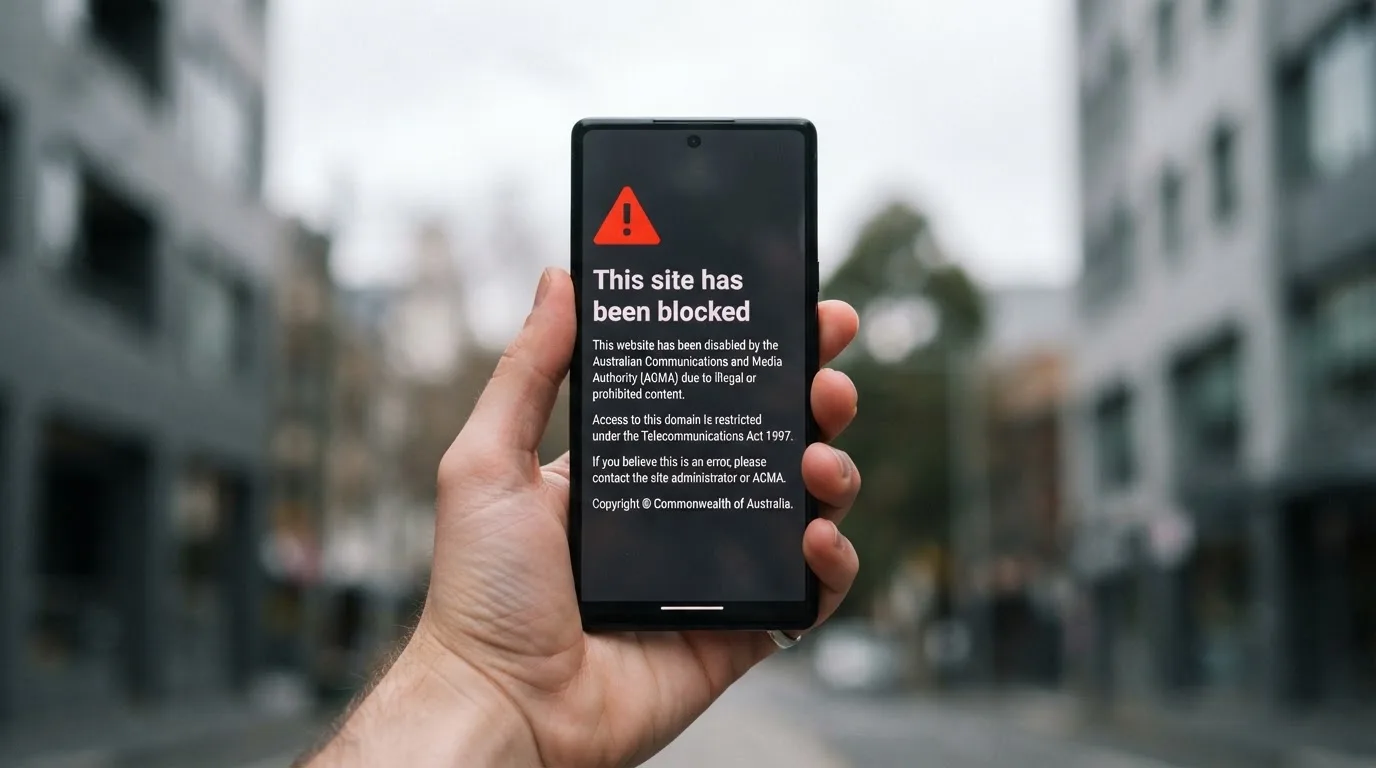
The IGA targets the provider, not the player. The individual punter is not prosecuted for placing a bet; the offshore operator is the one the ACMA writes to. What the player loses, instead, is the entire consumer-protection layer that a domestic licence attaches: no Australian complaints body, no Australian recourse if a withdrawal is refused, and a real chance that the site is blocked while a balance is still on it. An offshore brand’s promise of “instant withdrawal” sits inside exactly that vacuum.
The reform trajectory is moving in the same direction. The Interactive Gambling Amendment (Gambling Reform) Bill 2026 passed Parliament on 19 August 2026; its advertising and inducement measures commence on 1 January 2027 — law with a start date, not yet in force on a 2026 page. The current rule on credit cards is already biting: under the 2023 amendments, Australian-licensed online wagering services cannot accept credit cards or other credit-related products, and the same logic reaches digital wallets such as Apple Pay when they ride a credit line. The minimum age across the country is 18.
Where a reader in Australia can place a wager lawfully
If a person in Australia wants to bet on a horse race, a sporting event, a lottery draw or a keno round, the licensed channels exist and they are familiar ones: Sportsbet, Bet365, Ladbrokes, the state TABs, and the licensed lotteries. The deposit routes the law permits for those channels are debit card, bank transfer, PayID/Osko and BPAY. Credit cards, credit-related products and digital currency are banned as payment for licensed online wagering from 11 June 2024; penalties reach A$247,500 for an operator that takes one. A wagering site that asks an Australian for a credit card or a crypto deposit is, on that single fact, operating outside the Australian rules.
Land-based play sits outside the IGA. Australia’s licensed casinos — Crown Melbourne, Crown Perth, The Star Sydney, The Star Gold Coast, SkyCity Adelaide and the Lasseters and Alice Springs venues in the Northern Territory — run table games and pokies under state and territory licences, with on-site responsible-gambling staff and the same BetStop obligations that bind their online wagering peers. The two routes (online wagering on licensed bookmakers, and on-site play at licensed venues) are the routes the IGA leaves open.
The scale of what the IGA closes is large. H2 Gambling Capital’s 2025 report estimates Australians lose about A$3.9 billion a year to illegal gambling sites, and the share of gambling going through legal channels fell from 74% in 2021 to 64%. The gap between “legal channel” and “actual spend” is roughly where offshore instant-withdrawal brands draw their customers.
Player-protection tools that bind an Australian, and tools that do not
BetStop, the National Self-Exclusion Register, has been live since August 2023. The catch is that BetStop binds only Australian-licensed online and phone wagering services. An offshore casino is not connected to it, which means the self-exclusion a person registers for on BetStop does not extend to the very brands a search for “instant withdrawal casino” returns. The other consumer-side tools do, however, reach part of the payment layer: Westpac’s gambling block works at the card level and refuses authorisation of transactions registered under the merchant category code ‘Betting/Casino Gambling’ on eligible personal credit and debit cards; ANZ’s gambling transaction block, activated in the ANZ app, also blocks gambling transactions made through a digital wallet such as Apple Pay on an eligible card, with a 48-hour waiting period to remove it once set, and a caveat that not all gambling transactions will be blocked and some non-gambling transactions may be blocked in error. Commonwealth Bank’s gambling lock, applied via the CommBank app, blocks most gambling transactions on eligible cards, with the same caveat that the bank cannot guarantee all gambling-related purchases will be stopped. The four major banks cover most Australians between them, so a person who turns on every block has removed a meaningful share of the deposit-side friction that an offshore site would otherwise rely on.
The National Gambling Helpline is 1800 858 858 — free, 24/7 — with chat at Gambling Help Online. For readers whose problem is gambling rather than the choice between two brands, that is the right number. The phrase “instant withdrawal” is not, by itself, a marker of problem play, but the gap between a market that promises it and a regulator that blocks it is the kind of friction that drives a person towards the offshore brands and away from the protections they have already signed up for.
The crypto side: instant rails, no Australian hooks
Searches that add “crypto” or “no verification” to the phrase change the framing but not the legal one. The IGA does not care what currency a deposit arrives in; it cares whether a prohibited interactive gambling service is being provided to a person in Australia. A bitcoin casino offering “instant withdrawal” still sits on the wrong side of that line for an Australian reader, and the ACMA’s blocking list has included crypto-native brands (RocketPlay.au, Jackbit, CasinOK) alongside the fiat ones.
The crypto rails themselves, however, are genuinely fast. A bitcoin transaction confirms in minutes; an Ethereum transfer in seconds once gas is set; a stablecoin transfer on a low-fee chain settles faster than a card refund. The “no verification” promise the same brands make is narrower than the marketing implies: most reputable crypto casinos still run KYC for fiat conversion or for withdrawals above a threshold, and the absence of KYC is itself a marker of low operator quality — not a feature. A reader choosing a crypto route should treat “no verification” as “no consumer protection”, and the offshore operator’s instant rail as fast on the way in and indifferent on the way out.
AUSTRAC’s threshold-transaction-report rule, which requires reporting of transfers of A$10,000 or more, applies only to physical cash; ordinary electronic bank transfers are not subject to that per-transaction reporting requirement, regardless of amount. Crypto transfers fall outside AUSTRAC’s threshold-reporting regime in the same way, but inside AUSTRAC’s wider reporting and record-keeping obligations for digital-currency exchanges — which is the part of the regime that an offshore casino does not trigger, because it is not an Australian exchange.
What “instant” means on the Australian payments stack
The Australian retail payments system can be genuinely instant for the licensed bookmakers. Osko by Australian Payments Plus (AP+) settles a bank transfer between participating Australian banks in under a minute, 24/7 including weekends, whether the transfer is addressed to a BSB and account number or to a PayID. PayID-based instant transfers are available at more than 100 Australian financial institutions, and more than 25 million PayID identifiers had been registered on Australia’s New Payments Platform as of April 2025. The platform went live on 13 February 2018, is owned by New Payments Platform Australia Ltd (a non-profit whose 13 shareholders include the Reserve Bank of Australia and the country’s major banks), and participants must keep the platform’s monthly outages to no more than two minutes. The ACCC authorised the merger of NPP Australia with BPAY and eftpos into Australian Payments Plus in 2021.
PayID adds a safety feature that the offshore rails do not: paying to a PayID shows the name of the account holder before the transfer is sent, and AP+ warns that being asked to transfer money to a PayID on an illegal gambling site almost certainly means a scam site. The licensed wagering brands support PayID; the offshore instant-withdrawal brands tend not to, and the moment a reader is asked to send funds to a PayID they did not recognise, the right move is to walk away.
The credit-card picture is the reverse. Apple Pay, Google Pay and Samsung Pay collectively accounted for around 45% of all card payments in Australia by number at the end of 2025; the same wallets route through whatever underlying card the user has loaded, so a credit-card-loaded wallet falls under the credit-card ban for licensed wagering, and ANZ’s gambling block extends to wallet-initiated transactions on eligible cards. The Reserve Bank of Australia’s July 2025 review proposes removing surcharges on eftpos, Mastercard and Visa transactions, leaving American Express explicitly outside the proposed surcharge ban — a separate scheme (Amex is a three-party network, not a four-party one like Visa and Mastercard), with its own fee structure. None of this changes the underlying rule: a credit card, whether carried in a wallet or in a pocket, is not a legal deposit route for a licensed Australian wagering service.
BPAY, by contrast, is the slow but boring route. It has operated in Australia since 18 November 1997, is available in the online banking of more than 140 banks and financial institutions, and is offered by more than 95,000 businesses; it is run by AP+ (the same operator as PayID and Osko), and is owned equally by ANZ, Commonwealth Bank, National Australia Bank and Westpac through Cardlink Services Limited. A BPAY payment takes longer than an Osko transfer, but it is the option that integrates with every Australian bank’s bill-payment screen, and the licensed wagering brands support it because that is the path the law leaves open.
Reading the eleven warned brands
Each brand below is the ACMA’s own entry in its register, not an editorial pick. The single thing the page can honestly say about a brand on this list is that the regulator has formally warned the operator named, on the date stated, for offering a prohibited interactive gambling service to people in Australia. What “instant withdrawal” looks like on that brand, and whether the brand is still reachable from an Australian IP, are facts the page does not have; the ACMA blocking list is what determines the second, and the operator’s own payment page (which is offshore and not under Australian jurisdiction) is the only source for the first.
RocketPlay
RocketPlay sits on the ACMA’s list twice: Dama N.V. in May 2022, and Pulsup Ltd in March 2026. Two warnings, four years apart, against the same brand under two different corporate parents. Third-party listings report PayID and credit-card support, which on its own is a marker: a brand claiming to accept credit cards from an Australian reader is operating outside the 2023 IGA amendments on credit as a payment method. The RocketPlay verdict is straightforward — a brand the regulator has had to warn twice, whose payment page is built on rails the law has ruled out for licensed Australian wagering.
Level Up Casino
Level Up was warned as part of the May 2022 Dama N.V. round, which also covered Bambet, Dazard, Rocketplay, Wild Tornado and Cobra Casinos. Five of those six brands are still trading under the same names. Level Up’s third-party listing reports exposure to Westpac’s gambling block — meaning a Westpac customer who has turned the block on will see their Level Up deposit refused at the card level. For that reader, the block does what the regulator cannot: it stops the deposit before the offshore site can ask for it.
Woo Casino
Woo Casino received a formal warning to Dama N.V. in March 2025. There is no third-party listing for Woo’s payment stack in the inputs the page was built from; that absence is itself information, because the brands that get listed tend to be the brands that maintain a marketing presence in Australia. The Woo verdict: a Dama N.V. brand the regulator had to warn in 2025, with no independent confirmation of its payment story in the record.
Spirit Casino
Spirit Casino was warned as Dama N.V. in May 2025 — two months after Woo, same operator, different brand. The pattern repeats: a single corporate family cycling through front-end names, with the ACMA catching up to each in turn. Without a third-party listing, the Spirit verdict is the same shape as Woo’s — a fresh front on the same operator’s stable.
National Casino
National Casino was warned as Consolutetish S.R.L. in July 2025. Third-party listings place National inside the AUSTRAC and BetStop reference frameworks, which is a mixed signal: a brand the regulator warned while consumers were being directed to it through Australian self-exclusion and reporting channels. For a reader who has registered on BetStop, the National Casino promise of “instant withdrawal” carries no Australian hook.
Bizzo Casino
Bizzo sits on the ACMA’s list twice — Consolutetish S.R.L. in July 2025, and earlier TechSolutions (CY) Group Limited and TechSolutions Group N.V. in 2022. The same brand, two operators, three years. Third-party listings report standard payment-method coverage, which here means the same fiat and crypto rails as every other Curaçao-licensed brand. The Bizzo verdict: a brand that has cycled through two corporate parents and kept the same front end, and is still showing up in payment-method listings.
Ignition Casino
Ignition was warned as Bamboo Media in July 2025. The Bamboo Media operator is not the same operator that warned as Dama N.V. or Consolutetish S.R.L. — a third corporate family on the list, with its own front end and its own customer base. The Ignition verdict: a brand with a third-party operator behind it and no independent confirmation of its payment stack from the inputs the page was built from.
Instant Casino
Instant Casino was warned as EOD Code SRL in February 2025. Third-party listings report PayID and ecoPayz — PayID being the AP+ instant-rail identifier that Australian banks use, and ecoPayz being an offshore e-wallet. A brand claiming PayID support from an Australian-facing page is asking an Australian reader to send funds to a PayID on what is by definition an illegal gambling site; AP+ warns that this almost certainly means a scam. The Instant verdict: a brand whose own payment page is the warning.
Jackbit
Jackbit was warned as Ryker B.V. in April 2026, alongside CasinOK. Two brands, one warning — the same operator cycling through front ends, with the ACMA catching up to the second one within a year of the first. No third-party listing is in the inputs. The Jackbit verdict: a fresh operator on the warn list, with no independent payment story on file.
Casino Intense
Casino Intense was warned as Sterplay Holding Ltd in April 2025. Third-party listings report AUSTRAC and BetStop references, placing Casino Intense inside the same mixed-signal framework as National Casino — a brand the regulator has warned while consumer-protection channels were pointing Australian readers at it. The Casino Intense verdict: a brand the regulator has had to formally warn, with Australian consumer-protection listings in the same period.
Sky Crown
Sky Crown was warned as Hollycorn N.V. in September 2022, alongside Blue Leo. The Hollycorn warning predates the 2023 IGA amendments on credit-card payments and the 2024 ban commencement; a brand that was on the ACMA’s radar in 2022 is, four years later, still trading on the same Curaçao-style licence, with no third-party listing in the inputs the page was built from. The Sky Crown verdict: the oldest warning on this list, against a brand still operating under the same corporate parent.
What the blocking rate says about the market
The arithmetic the page owes the reader is the speed at which the ACMA has been moving. From the first blocking request in November 2019 to the running total reported in June 2026 is roughly 6.6 years; the figure reported is 1,751 illegal gambling and affiliate marketing websites blocked, and more than 230 unlicensed gambling services have left the Australian market since enforcement was strengthened in 2017. Two figures, two periods: 1,751 in 6.6 years is an average of around 265 blocked sites per year, or about one every 33 hours; 230 in roughly 9 years (2017 to the 2026 reporting date) is about 26 services a year leaving the market, or roughly one every two weeks.
The two figures measure different things. The blocking figure counts domains, including affiliate marketing pages and re-entries of the same brand under a new address; the leaving-market figure counts services, which is a slower-moving and more meaningful unit. Both run higher than the typical reader assumes, and both are the regulator’s own data, not an estimate. The reader looking for “instant withdrawal” is looking for the fastest rail in the slowest enforcement regime — and the rail is fast in both directions.
What an Australian reader actually does with this
The honest version of “best instant withdrawal casinos Australia 2026” is not a list of offshore brands. It is a short list of decisions a person in Australia can make, each of which is lawful and each of which carries its own consumer-protection profile. A licensed bookmaker (Sportsbet, Bet365, Ladbrokes, the state TABs) settles deposits and withdrawals through PayID/Osko and BPAY, all of which the licensed bookmaker must support under Australian law; withdrawals are processed inside Australian banking hours and arrive in minutes on PayID/Osko when the bank is a participant. A land-based casino (Crown Melbourne, Crown Perth, The Star Sydney, The Star Gold Coast, SkyCity Adelaide) takes cash at the cashier and pays out cash on request, subject to standard identity checks and on-site responsible-gambling staff. A person who wants to stop gambling entirely can register on BetStop and ask their bank to turn on the gambling block, and both moves bind the licensed bookmakers; neither will reach the offshore brand, but both cut the path to it.
The phrase “instant withdrawal” has, in the Australian context, one lawful answer (PayID/Osko on a licensed bookmaker) and one unlawful answer (every offshore brand the ACMA has warned). The page exists to draw that line and to name the brands the regulator has already drawn it around.
Frequently asked questions
What is the difference between a payout and a withdrawal request?
A withdrawal request is what the player submits at the casino’s cashier — a button click, a form filled, an amount chosen. A payout is what happens after the request is approved by the operator and the funds are sent through the underlying payment rail. On a licensed Australian bookmaker, the request is reviewed almost immediately and the payout is sent via PayID or Osko, which settles in under a minute. On an offshore casino, the request sits in a manual approval queue, the operator may ask for further identity documents, and the payout is then sent through whatever rail the operator chose — a bank transfer that can take days, a crypto transfer that can take minutes, or a refusal with no consumer-protection recourse.
Why might a casino require identity verification before an instant withdrawal?
A casino that is licensed under a regime with anti-money-laundering rules (most reputable Curaçao and Malta-licensed brands, all Australian-licensed brands) is required to verify a player’s identity before processing a withdrawal, regardless of how the deposit was made. The verification covers a government-issued ID, proof of address and a payment-method check, and is intended to prevent fraud and to meet the licensing regime’s reporting rules. An offshore brand that markets “no verification” is marketing an absence of consumer protection, not a feature — the same brand will not be reachable through any Australian complaints body if the withdrawal is refused after the deposit has been taken.
Is it legal for an online casino to process withdrawals for players in Australia?
No. The Interactive Gambling Act 2001 makes it an offence to provide online casino games, online pokies or in-play betting to a person physically in Australia, and no state or territory licenses that activity. The penalty sits with the provider, not the player, but the player has no Australian recourse if the site refuses the withdrawal, and the ACMA can direct Australian ISPs to block the site while a balance is still on it. What is licensable in Australia is wagering on races and sport placed before the event, lotteries and keno — processed by Australian-licensed bookmakers and lotteries under their own rules.
Can a bank transfer withdrawal arrive within minutes in Australia?
Yes — on a licensed Australian bookmaker using PayID or Osko, a withdrawal can settle in under a minute, 24/7 including weekends, between participating banks. PayID is supported by more than 100 Australian financial institutions and more than 25 million PayIDs had been registered on the New Payments Platform as of April 2025. On an offshore casino, the same withdrawal is not an Osko transfer — it is a cross-border bank transfer that can take several business days, with the operator’s manual approval queue sitting in front of it.
Does a crypto withdrawal skip identity checks entirely?
Mostly not. A reputable crypto casino still runs KYC for fiat conversion, for withdrawals above a threshold, or for any withdrawal at all on a regulated licence. A brand that markets “no verification” is usually an unregulated brand, which means no consumer protection and no Australian recourse if the withdrawal is refused. The crypto rail itself is fast on the way in (a few minutes for bitcoin, seconds for a low-fee stablecoin), and the absence of identity checks is the marker of an unregulated operator rather than the marker of a quality one. See also Best paying online pokies in Australia .
What red flags suggest an instant withdrawal claim is not genuine?
The clearest markers are a request to deposit by credit card or crypto (both banned for licensed Australian wagering), a request to send funds to a PayID that does not match the operator’s name (AP+ warns this is a scam marker), an offshore licence only (no Australian complaints body, no recourse), and a brand on the ACMA’s formal-warning list. A “withdrawal pending” status that stays pending for more than 48 hours is the operational marker that the operator’s manual approval queue is the actual gate, not the rail.