
No minimum deposit casino Australia 2026: what the offshore claim really means for a player
Every so often an ad pops up that promises an online casino with “no minimum deposit.” For an Australian player weighing whether to put any money at all into a site they have never used, that wording sounds like the answer. It is not the answer. It is a marketing line attached to a product the Australian Communications and Media Authority has been moving against for years. What follows is a working look at what that claim means, where it sits in Australian law, who has been warned for making it, and how a player should read the rest of the picture before acting on it. No minimum deposit casino Australia 2026 — More on this topic at casino vip .
Data current as of 29 October 2026 and cross-checked against the Australian Communications and Media Authority’s published register of formal warnings and blocking requests.
Table of Contents
- How this page is set up
- What “no minimum deposit” usually means at an offshore casino
- What no minimum looks like across the offshore brands the ACMA has acted against
- The legal frame, in plain words
- What consumer protection looks like in Australia
- Crypto and anonymity: what changes, and what does not
- Payments, payout speed and the rails an offshore site does not use
- Why ACMA enforcement looks the way it does
- How to read the comparison table
- What the same set of warnings looks like to the ACMA
- What to do if you have already deposited
- Reading the brand write-ups as a single picture
- The brands at a glance
- Closing the picture
- Frequently asked questions
How this page is set up
The page works in five passes. It opens with what “no minimum deposit” usually means in the offshore-casino marketing language, and how low a deposit can realistically go once payment-rail costs enter the picture. From there it sets out the legal position: the Interactive Gambling Act 2001, what the ACMA has done about it, and what an Australian player loses by sitting outside the licensed system. The third pass pulls crypto and anonymity claims into the same frame, because paying with bitcoin does not turn an unlicensed site into a licensed one. The fourth walks through payment rails — PayID, Osko, BPAY, Apple Pay, the credit-card ban — because that is where the marketing claim and the local reality either line up or stop lining up. The fifth and last is the comparison table of the eleven brands the ACMA itself has acted against, in the order the regulator published those warnings.

What “no minimum deposit” usually means at an offshore casino
The phrase is doing a particular job. It is meant to lower the entry cost to nothing, so the player who is curious but cautious does not have to commit a fixed amount just to see what the site looks like. In practice the offshore sites that use the wording still set per-method minimums. A bank transfer might be advertised as “no minimum” while the credit-card route still asks for ten dollars, or a crypto deposit might be unconstrained while the fiat rails keep a twenty-dollar floor. The figure that ends up binding the player is whichever is the highest of the rails they actually want to use.
The arithmetic behind the “no minimum” claim is also a clue about its limits. Card processing costs the merchant a percentage of the transaction. A genuine one-cent deposit would cost the operator more in card fees than the deposit itself, so the rails that carry fixed per-transaction fees (Osko, BPAY, PayID) tend to be the ones the marketing copy is built around. The free-to-send rails are the ones that are honest about small deposits. The ones that charge a percentage floor are the ones quietly bumping the minimum back up.
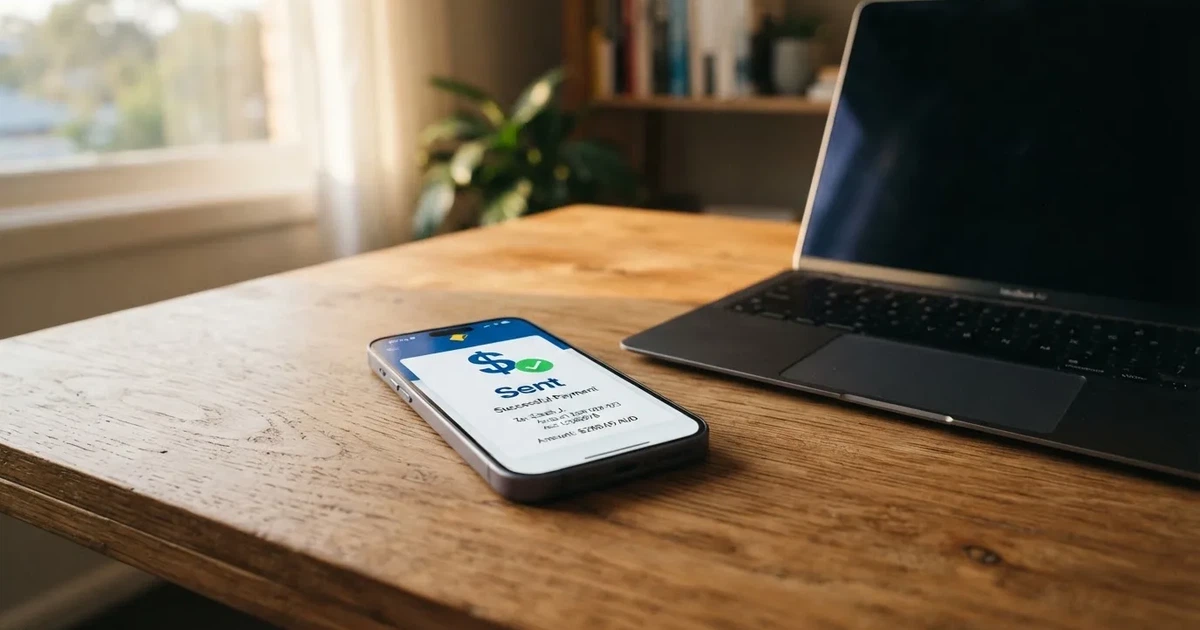
That is why the question of how small a deposit can realistically be comes down to which rail is being asked to carry it. On PayID and Osko, between participating Australian banks, transfers arrive in under a minute around the clock, and there is no percentage fee to chase a small amount. On a card rail, the processing fee alone can be more than the deposit. The “no minimum” line is a statement about a specific rail, not about the site as a whole — and the player only finds out which rail it referred to by reading past the headline.
What no minimum looks like across the offshore brands the ACMA has acted against
The eleven brands below are not ranked for play. They are presented in the order the Australian Communications and Media Authority published formal warnings against them, and because the IGA prohibits online casino games in Australia, every site on this list is offering a service that is not licensed here. A brand may still display a Curaçao or Anjouan licence number in its footer — that licence is for the jurisdiction that issued it, not for Australia. The ACMA’s view is that no foreign licence covers offering casino games or pokies to a person physically in Australia.
RocketPlay
The ACMA’s most recent formal warning over RocketPlay was issued to Pulsup Ltd in March 2026, covering RocketPlay. Dama N.V. was the recipient of an earlier warning over the same brand in May 2022, when the ACMA moved against six Dama brands at once. The site advertises itself with offshore-style welcome packages and accepts Australian dollar accounts. Whatever the dollar figure on the offer, the service is the same: an offshore casino, with no Australian consumer protection if a withdrawal stalls or a bonus term is applied after the fact.
For a reader comparing across the table: this is the entry to watch for changes in operating entity, because the same brand has surfaced under two different owners within four years. That pattern tends to come with similar gaps between the marketing surface and the complaints path.
Level Up Casino
Dama N.V., May 2022 — one of the six brands in that single ACMA letter. The site carries a Curaçao registration and markets itself aggressively on affiliate lists aimed at Australian traffic. As with every brand in this set, the game is not a licensed Australian offering. Any dispute over a delayed withdrawal or a voided bonus is outside any Australian regulator’s reach, because no Australian regulator has jurisdiction over the operator.
Woo Casino
Dama N.V., March 2025. A separate ACMA letter from the 2022 batch, indicating the same operator group continued offering into Australia after the first warning. That sequence is the part most worth sitting with: a warning is the regulator’s recorded action, and a follow-up warning some years later says the first one did not stop the conduct. The brand name lives on under what looks, on the page, like the same offer as the brands that have only ever been warned once.
Spirit Casino
Dama N.V., May 2025. Two months after the Woo Casino warning, on the same operator group. Spirit Casino is the kind of brand an Australian player tends to find through a search for low-deposit entry rather than through any reputation that has built up over time. It is also the kind of brand where the marketing language and the regulator’s record sit on opposite sides of the same page.
National Casino
Consolutetish S.R.L., July 2025. The site also appears on the Australian Transaction Reports and Analysis Centre (AUSTRAC) material reviewed for this page and on the BetStop, the National Self-Exclusion Register’s public listings, both of which are markers of how the brand is being treated by Australian authorities. The name “National” is a marketing choice — it carries no Australian licensing and no Australian endorsement, despite reading like a homegrown brand.
Bizzo Casino
Consolutetish S.R.L., July 2025, with a separate 2022 warning to TechSolutions (CY) Group Limited and TechSolutions Group N.V. on file. Two distinct operator entities have carried the brand into Australia across four years. For a player scanning for trust signals, that is two separate IGA warnings, two separate corporate vehicles, and the same marketing surface. The only constant is the offer to an Australian player.
Ignition Casino
Bamboo Media, July 2025. One of the better-known offshore brands in Australian search traffic, in part because of its long-running poker product. The relevant point for a player comparing across the set is that the same warning was issued in the same month as the Consolutetish letters above — a wave of formal warnings issued together over distinct operator groups all offering into the same market.
Instant Casino
EOD Code SRL, February 2025. The earliest of the 2025 warnings in this set. The brand surfaces in connection with PayID-themed payment pages on some listings, which is worth noting because the PayID system is a domestic Australian rail that lets a payer see the recipient’s name before sending. If the name does not look like a legitimate Australian business, the Australian Payments Plus guidance is to treat that as a near-certain sign of a scam site. An offshore casino using a PayID-themed page is not a PayID transfer to a domestic account — it is an offshore site dressing up its deposit page in a familiar rail.
Jackbit
Ryker B.V., April 2026. The most recent formal warning in this set, issued alongside a warning over CasinOK. Both are operated by the same group. Jackbit’s pitch leans on cryptocurrency deposits, which is the case where the next shelf on this page bites hardest: paying with bitcoin does not add a layer of Australian consumer protection on top of an unlicensed offshore operator, because there is no Australian consumer protection in the first place.
Casino Intense
Sterplay Holding Ltd, April 2025. The site appears on listings reviewed by AUSTRAC, on the BetStop public material, and on affiliate listings aimed at Australian traffic. Three independent listings, all in agreement that the brand is being treated as an offshore operator offering into a market where it has no licence. For a player who has been weighing whether the regulator’s “formal warning” wording amounts to anything more than a letter, the answer is that it sits alongside the same brand being tracked on money-laundering and self-exclusion registers.
Sky Crown
Hollycorn N.V., September 2022. The oldest formal warning in the present set and the only one whose original PDF is still linked on the ACMA site. The site has stayed available across affiliate listings for the years since, in a pattern that recurs across the table: a formal warning from the ACMA is not a takedown, and a brand can keep offering into Australia for years after the regulator has recorded its position.
The legal frame, in plain words
The Interactive Gambling Act 2001, strengthened by the Interactive Gambling Amendment Act 2017, makes it an offence to provide online casino games, online pokies or in-play betting to a person in Australia. The Interactive Gambling Amendment Act 2017 is the one that put real teeth into the prohibition, after the original 2001 text left more room for interpretation. What is licensable in any Australian state or territory is wagering on races and sporting events placed before the event, lotteries and keno. Online casino games — slots, roulette, blackjack, baccarat, live-dealer casino, “pokies” — are not in that list, and no state or territory licence covers them.
The Northern Territory Racing and Wagering Commission, which sits within the Northern Territory’s regulatory structure, regulates fifty-two of Australia’s online bookmakers — the corporate registrations for Sportsbet, Bet365 and Ladbrokes among them. The commission exists for tax reasons around wagering; the operator behind this is a Northern Territory-licensed wagering business, not an Australian-licensed casino. The commission has no full-time staff and meets once a month in Darwin, which is a fact about the regulatory footprint, not a judgment about its effectiveness.
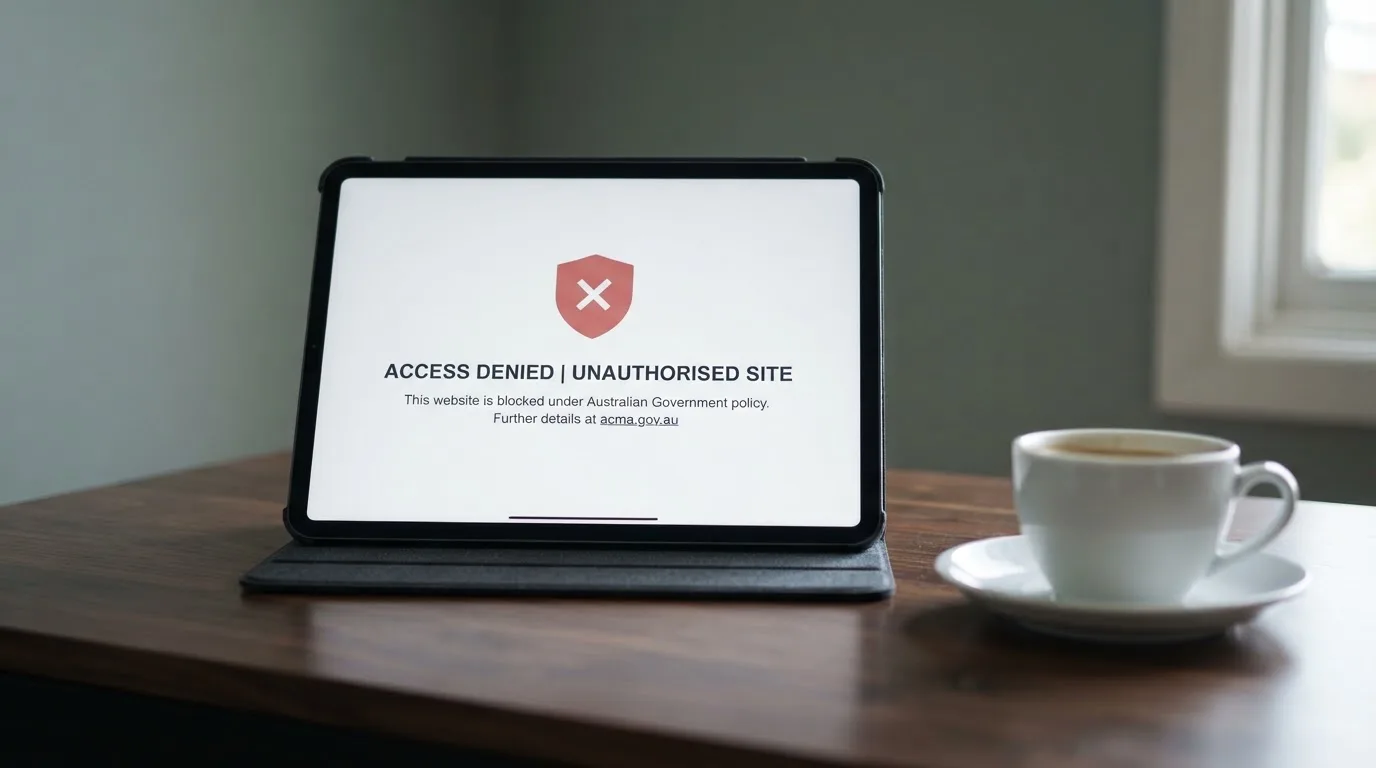
The body that does the work against offshore operators is the Australian Communications and Media Authority. The ACMA investigates complaints, issues formal warnings, and directs Australian internet service providers to block illegal sites. The Act targets the provider of the prohibited service, not the individual player — no Australian is going to be prosecuted for opening an offshore casino site. The cost is on the player side in another shape: an offshore site gives no Australian consumer protection, no Australian complaints body, and no path to a refund if a withdrawal is refused or a bonus is voided after the event. A site can be blocked while a balance is still sitting on it, and that balance is then effectively unreachable from inside Australia.
The numbers behind this are not small. According to the ACMA, a total of 1,751 illegal gambling and affiliate marketing websites had been blocked since the first blocking request in November 2019, with more than 230 unlicensed gambling services leaving the Australian market since enforcement was strengthened in 2017. In a single round reported on 26 June 2026, the ACMA asked Australian internet service providers to block twelve more sites: 7Signs, ChromaBet, Donbet, Duospin, Freshbet, Slots Gem, Jacks Club, Lucky Start, Pointsbetz, Spinrise, Vinyl Casino and Wildsino. None of those are casino brands in the table below; they are the next wave, and the brand name changes faster than the operator identity.
The estimated loss to illegal sites, drawn from H2 Gambling Capital’s 2025 report, runs to about A$3.9 billion a year, with the share of gambling going through legal channels falling from 74 per cent in 2021 to 64 per cent in the most recent figure. That downward drift is the macro point the regulator’s enforcement record sits inside.
The reform path is on the books. The Interactive Gambling Amendment (Gambling Reform) Bill 2026 passed Parliament on 19 August 2026; its advertising and inducement measures commence on 1 January 2027, which means it is law with a start date, not law in force on a 2026 page. The practical effect for a player reading this in the back half of 2026 is that the inducements the offshore sites are running right now are operating under the rules that pre-date the new law, and that will change in the new year.
On the player’s tax side: gambling winnings of a recreational player are not assessable income under section 6-5 of the Income Tax Assessment Act 1997, and losses are not deductible, unless the person is carrying on a business of gambling. That is the model answer — “check with the ATO” — for the player who wonders whether the winnings on an offshore site have a tax implication. The honest answer is also that the practical tax question rarely matters compared to the practical question of whether the offshore site will pay out at all.
What consumer protection looks like in Australia
The Australian side of the player-protection system is built around licensed wagering services, and that is the ceiling of what it covers.
BetStop, the National Self-Exclusion Register, has been live since August 2023. A player registers, and every Australian-licensed online and phone wagering service has to refuse to take their bets. That is a real, working exclusion. What it does not cover is an offshore casino, because the offshore casino is not connected to BetStop. The exclusion only binds the licensed system. A self-excluded Australian player who opens an offshore casino account has self-excluded from a system that never had them.
Gambling Help Online and the National Gambling Helpline on 1800 858 858 are the free, 24/7 supports available regardless of which side of the licensed/offshore line the player sits on. The helpline is free from any Australian phone, the chat at Gambling Help Online is staffed around the clock, and both services work with players who want to step away from offshore sites as readily as from licensed ones.
The point of stating this in full once is so that the rest of the page can refer back to it. None of the operator write-ups below repeats the BetStop caveat — it is the same caveat in every case, and stating it eleven times is the way a useful distinction starts to read like filler.
Crypto and anonymity: what changes, and what does not
A bitcoin casino with no minimum deposit looks like it sidesteps the bank-side problem. There is no merchant category code, no card-issuer gambling block, no PayID name check, no AUSTRAC threshold-transaction-report rule on the wire transfer side. There is also no Australian regulator with anything to enforce against the operator, no BetStop exclusion that covers it, and no consumer law that applies to the service. The anonymity the player gains is from the player’s own bank, not from the operator; the operator’s anonymity from the player runs the same way it always has.
The blockchain side adds its own costs. Network fees on bitcoin and ethereum can run into tens of dollars during congested periods, which pushes the floor of any “no minimum” deposit above the marketing figure for the duration of the congestion. On a stablecoin rail, fees can be lower but the volatility story is replaced by a stablecoin-de-peg story that surfaced in the wider market in 2022 and 2023 and that has not gone away. Either way, the deposit that the marketing copy calls “no minimum” can carry a meaningful fixed cost that the player eats.
The question of whether a crypto casino with no minimum deposit behaves differently from a fiat one with the same claim comes down to a single word: jurisdiction. The deposit rail does not change who the operator is, who regulates them, or what recourse the player has if the withdrawal stalls. The rail only changes how the player gets money in and out. Once the deposit clears, the player is in exactly the same position they would have been in after a card deposit — outside Australian consumer law, sitting on an offshore service that has been formally warned by the ACMA, and unable to recover the balance through any Australian body if the site goes down or refuses to pay out.
For the player considering crypto specifically because the marketing copy markets anonymity: the player-side anonymity is real in the sense that the bank does not see the merchant, but the chain is a public ledger, the address can be linked to the player through any number of on-chain analytics services, and the operator-side anonymity (who actually runs the site) is unchanged. The anonymity runs in one direction, and it is the player’s direction.
Payments, payout speed and the rails an offshore site does not use
The local Australian payment system is a useful map of what an offshore casino cannot offer a player through a domestic rail, because the rails themselves sit inside Australian consumer law.
PayID and Osko are the two pieces of the New Payments Platform that show up in any conversation about Australian instant payments. PayID lets a payer send to something more memorable than a BSB-and-account-number — a phone number, an email, an ABN — and shows the name of the account holder before the transfer is sent. Australian Payments Plus, which runs both PayID and Osko, warns that being asked to transfer to a PayID on an illegal gambling site is almost certainly a scam site. Osko carries the same transfers in under a minute around the clock, including weekends, whether addressed to a BSB and account number or to a PayID.
The New Payments Platform has been accessible to the public since 13 February 2018 and is owned by New Payments Platform Australia Ltd, a non-profit whose thirteen shareholders include the Reserve Bank of Australia and the country’s major banks. More than 25 million PayID identifiers had been registered on the platform as of April 2025, and participants have to keep monthly outages to no more than two minutes. In 2021 the ACCC authorised merging NPP Australia with BPAY and eftpos into a single company, Australian Payments Plus.
PayID-based instant transfers are now available at over 100 Australian financial institutions, which is what makes a PayID-themed page on an offshore casino site look as familiar as it does. Familiar is not the same as licensed: a domestic Australian business can take a PayID transfer under Australian rules; an offshore casino cannot, because the offering of casino games to Australians is the offence, not the rail.
BPAY is the older bill-payment rail, run by Australian Payments Plus and accessible through the online banking of over 140 Australian banks and financial institutions, with over 95,000 businesses accepting it. BPAY launched on 18 November 1997 and is owned equally, through parent company Cardlink Services Limited, by Australia’s four major banks. The payer enters a Biller Code and a Customer Reference Number printed on the bill. As with PayID, an offshore casino using a BPAY-themed payment page is not a domestic bill payment — it is a foreign site dressed up in a familiar rail.
Apple Pay, Google Pay and Samsung Pay together account for around 45 per cent of all card payments in Australia by number as of the end of 2025. Apple does not charge the consumer for using Apple Pay; any surcharge on a card transaction comes from the merchant’s processing fees, not from Apple. Transaction limits and PIN requirements are set by the card issuer or the merchant, not by Apple. ANZ’s gambling transaction block, activated in the ANZ app, also blocks gambling transactions made through a digital wallet such as Apple Pay on an eligible card — not only the physical card — and removing the block requires a 48-hour waiting period.
The credit-card ban is the part that sits across all of the above. Under the Interactive Gambling Act 2001 as amended in 2023, Australian-licensed online wagering services cannot accept payment by credit card or other credit-related products. The ban also constrains the use of linked digital wallets such as Apple Pay when the underlying funding source is a credit card. The practical effect is that a domestic, licensed wagering service can only take debit card, bank transfer, PayID/Osko or BPAY. An offshore casino asking for a credit card or a crypto deposit is operating outside the Australian rules entirely, regardless of how the deposit page is dressed up.
AUSTRAC’s threshold-transaction-report rule requires reporting of transfers of A$10,000 or more, but it applies only to physical cash; ordinary electronic bank transfers are not subject to that per-transaction reporting requirement, regardless of the amount. That removes one possible reason a player might have chosen crypto — the belief that a large bank transfer triggers reporting. A large transfer can still trigger reporting on the bank’s own suspicion under the AML/CTF Act, but the AUSTRAC per-transaction threshold rule is not, and never has been, the relevant rule for electronic transfers.
Westpac’s gambling block works at card level: it refuses authorisation of transactions registered under the merchant category code “Betting/Casino Gambling” on eligible personal credit and debit cards. Commonwealth Bank lets customers apply a gambling lock to eligible cards through the CommBank app, which automatically blocks most gambling transactions, with the same caveat that the bank cannot guarantee every gambling-related purchase is stopped. ANZ’s gambling block covers both the physical card and a digital wallet on the eligible card, with the 48-hour removal period.
The Reserve Bank of Australia’s July 2025 review proposes removing surcharges only on eftpos, Mastercard and Visa card transactions, explicitly leaving American Express outside the scope of the proposed surcharge ban. Amex’s history goes back to 1850 as a freight-forwarding company and a card issuer; it launched its first charge card on 1 October 1958 and operates as a three-party scheme (issuing cards and processing transactions itself), rather than the four-party model Visa and Mastercard use. That is why Amex carries on charging surcharges where the others may not.
Why ACMA enforcement looks the way it does
The arithmetic the ACMA’s blocking record implies is what this page works through. The ACMA first asked Australian internet service providers to block illegal gambling sites in November 2019. By the ACMA’s own reporting in June 2026, 1,751 illegal gambling and affiliate-marketing websites had been blocked across that period. The rate implied is in the high hundreds per year, and it has been holding. The figure is not one number, and the page does not pretend it is — the rate at which the ACMA adds sites to the blocking list is a band, not a single figure, and the band is built on a denominator (the elapsed time since November 2019) that includes a ramp-up in the first years of enforcement.
What the band shows is that the regulator’s blocking program is operating continuously, that new sites are being added faster than they can be individually reviewed, and that any single brand on the table above is one warning letter away from joining the blocking list. The brand may still be reachable via mirror sites or via a domain the regulator has not yet reached; the warning is recorded on the ACMA’s site regardless. For a player reading the comparison table, that is the practical shape of “the regulator has issued a formal warning”: the brand is on the regulator’s record, the regulator has asked ISPs to act against it, and the site can be blocked from inside Australia with little further notice.
How to read the comparison table
The table below is built from four columns. The brand column carries the name as it appears on the ACMA’s formal warning. The ACMA action and date column carries the operator entity the ACMA named in the warning, and the date that warning was issued. The third column repeats the operator entity named by the ACMA, broken out so the player can see at a glance how often a brand has surfaced under different operator groups. The fourth column carries what the listings reviewed for this page had to say about the brand, on the subject of “no minimum deposit” support specifically — without making any of those listings a source on the offer itself.
A dash in a cell means the listings reviewed for this page did not cover that field for that brand. The dash is not a claim that the brand does not support the rail, and it is not a claim that it does — it is what it says it is, which is a gap in the reviewed sources.
The whole table is below the prose it sits inside, so the reader can come back to the write-ups and forward to the table without losing the thread. None of the brands in the table is recommended as a place to play; every entry exists because the ACMA has taken a recorded action against it.
| Brand | ACMA action and date | Operator named by the ACMA | Subject support |
|---|---|---|---|
| RocketPlay | Formal warning, March 2026 (Pulsup Ltd); earlier May 2022 (Dama N.V.) | Pulsup Ltd / Dama N.V. | Listings-only — Gambling Insider |
| Level Up Casino | Formal warning, May 2022 | Dama N.V. | Listings-only — Westpac |
| Woo Casino | Formal warning, March 2025 | Dama N.V. | — |
| Spirit Casino | Formal warning, May 2025 | Dama N.V. | — |
| National Casino | Formal warning, July 2025 | Consolutetish S.R.L. | Listings-only — acma.gov.au, austrac.gov.au, betstop.gov.au |
| Bizzo Casino | Formal warning, July 2025 (Consolutetish S.R.L.); earlier 2022 (TechSolutions) | Consolutetish S.R.L. / TechSolutions | Listings-only — Gambling Insider |
| Ignition Casino | Formal warning, July 2025 | Bamboo Media | — |
| Instant Casino | Formal warning, February 2025 | EOD Code SRL | Listings-only — EcoPayz, PayID |
| Jackbit | Formal warning, April 2026 | Ryker B.V. | — |
| Casino Intense | Formal warning, April 2025 | Sterplay Holding Ltd | Listings-only — austrac.gov.au, betstop.gov.au, Gambling Insider |
| Sky Crown | Formal warning, September 2022 | Hollycorn N.V. | — |
The pattern the table is built around: five of the eleven brands carry a listings-only note that names the registry, regulator or aggregator where the brand has surfaced. The other six carry a dash because the listings reviewed for this page did not cover that brand on the subject of low-deposit support. None of the dashes is a finding about the brand; they are findings about what the sources the page drew on did and did not contain.
The other pattern, less obvious from the table and more obvious from the write-ups, is the operator-entity drift. Three of the eleven brands have surfaced under two distinct operator groups across separate ACMA warnings: RocketPlay (Dama N.V., then Pulsup Ltd), Bizzo Casino (TechSolutions, then Consolutetish S.R.L.), and the formal-warning list as a whole shows Dama N.V. carrying four of the eleven brands (Level Up, Woo, Spirit, RocketPlay originally). The brand on the page can change hands; the ACMA’s record of formal warnings is per-operator-entity, not per-brand.
What the same set of warnings looks like to the ACMA
The ACMA’s own list of formal warnings is published on acma.gov.au. It is not framed as a “do not play here” register; it is framed as a record of the regulator’s actions. A formal warning is the regulator’s recorded position that the named operator is providing a prohibited interactive gambling service to Australians. It does not remove the brand from the internet, but it is the step before a blocking request, and the warning is a public document.
The eleven brands in this set span from September 2022 to April 2026. The oldest is still listed on affiliate pages; the most recent is fresh from this year. The set does not include every brand the ACMA has warned, only the ones that carry a “no minimum deposit” claim into the Australian market as best the listings reviewed for this page could identify. The full list is longer, and the ACMA publishes it on its own site.
What to do if you have already deposited
The BetStop register, the gambling blocks at Westpac, ANZ and Commonwealth Bank, and the National Gambling Helpline on 1800 858 858 are the practical first steps for an Australian player who has realised that the offshore site they have been playing at is not licensed here. Closing the account on the offshore side is a reasonable step; closing it does not get the balance back, because there is no Australian body to compel a refund. The licensed Australian side of the system is what BetStop binds; the offshore side is outside it.
If the player is using a credit card or a credit-funded wallet for any of these deposits, the credit-card ban on licensed wagering does not protect them at an offshore site. The ban stops a licensed Australian wagering service from taking the credit-card payment; it does not stop the offshore site from asking for one. The result is that the player is exposed twice — to an unlicensed operator and to a credit-funded deposit that Australian rules would not have allowed on the licensed side.
Reading the brand write-ups as a single picture
The eleven write-ups above are most useful when read in sequence, because the shape that emerges is not a ranking but a pattern. The pattern is that the ACMA’s enforcement is operating at the operator-entity level, that the same operator group can carry multiple brands simultaneously, and that the marketing surface (the brand, the offer, the “no minimum deposit” wording) is the most visible part of the operation and the part least covered by any enforcement action.
The player who came to this page looking for “the cheapest way to try an online casino” should leave with a different picture. The cheapest legal entry to licensed wagering in Australia is a one-cent PayID or Osko transfer — the rails in the New Payments Platform carry no percentage fee and no fixed minimum beyond what the receiving institution chooses to set. The “no minimum deposit” claim on an offshore casino is a marketing line attached to a product no Australian regulator covers; the same line on a licensed Australian wagering service is the rail itself. The difference between those two is what the rest of the page is about.
The brands at a glance
For the reader scanning rather than reading in full, the eleven brands and the ACMA’s recorded position are: RocketPlay (Pulsup Ltd, March 2026; Dama N.V., May 2022), Level Up Casino (Dama N.V., May 2022), Woo Casino (Dama N.V., March 2025), Spirit Casino (Dama N.V., May 2025), National Casino (Consolutetish S.R.L., July 2025), Bizzo Casino (Consolutetish S.R.L., July 2025; TechSolutions, 2022), Ignition Casino (Bamboo Media, July 2025), Instant Casino (EOD Code SRL, February 2025), Jackbit (Ryker B.V., April 2026), Casino Intense (Sterplay Holding Ltd, April 2025), and Sky Crown (Hollycorn N.V., September 2022).
Every one of these is offering a service the Interactive Gambling Act 2001 prohibits from being offered to a person in Australia. None of them is recommended as a place to play. The page is a record of what the regulator has done and what the listings reviewed for this page could and could not confirm.
Closing the picture
A “no minimum deposit” claim from an offshore casino is best read as three things at once: a marketing line aimed at the cautious player, a statement about a specific rail rather than the site as a whole, and the front of a product no Australian regulator covers. The local payment system — PayID, Osko, BPAY — has the genuine “no minimum” rails built into it, and those rails work with licensed Australian wagering services rather than against them. The credit-card ban, the gambling blocks at the major banks, the AUSTRAC framework and the ACMA’s blocking program are the rest of the Australian system.
The figure to keep is the one from H2 Gambling Capital’s 2025 report: A$3.9 billion a year going to illegal gambling sites, with the legal share falling from 74 per cent in 2021 to 64 per cent. That is the macro context the offshore “no minimum deposit” offer sits inside. The micro context is the eleven brands the ACMA has acted against, the rails the local system offers instead, and the player-protection system that only covers the licensed side.
Frequently asked questions
How small can a deposit realistically go before processing fees make it pointless?
On card rails, the merchant’s processing fee is a percentage of the transaction, so a one-cent deposit costs the operator more than the deposit itself — which is the practical reason a “no minimum” claim on a card rail usually turns out to carry a higher floor once the player reads the cashier page. On PayID and Osko between participating Australian banks, transfers arrive in under a minute, the receiving bank charges no percentage fee on a small transfer, and the player can send as little as a single dollar to a PayID that resolves to a legitimate Australian account. The card-rail floor and the PayID floor are different floors, and the operator’s marketing line collapses to whichever rail the player ends up choosing.
Does a crypto casino with no minimum deposit behave any differently to a fiat one with the same claim?
The deposit rail changes who carries the money, not who operates the site. An offshore casino accepting bitcoin is still operating outside the Interactive Gambling Act 2001, still outside the ACMA’s enforcement reach, still outside BetStop and any Australian consumer law. The volatility and the network fees are added costs the marketing line does not name, and the player’s anonymity runs only against their own bank — the chain is public, the operator’s identity is unchanged, and any dispute over a withdrawal still has no Australian body to escalate to.
Is any casino advertising no minimum deposit actually licensed to accept Australian players?
No. The Interactive Gambling Act 2001 prohibits providing online casino games, online pokies or in-play betting to a person in Australia, and no state or territory licence covers those products. Any licence number displayed in a casino’s footer is a licence from another jurisdiction — Curaçao, Anjouan, the Kahnawake Gaming Commission, Malta — and it does not authorise the operator to take bets from a person physically in Australia. The ACMA’s enforcement record against the brands in this set is the practical evidence.
How does a bitcoin casino’s “no minimum deposit” claim interact with blockchain network fees?
The marketing line sets the operator’s minimum, which can be effectively zero. The blockchain network fees are set by the chain and the congestion at the moment of transfer, and they are not under the operator’s control. On bitcoin and ethereum during congested periods the network fee can be in the tens of dollars, which is the point at which the “no minimum” claim becomes academic. On a stablecoin rail the network fee can be lower but the cost reappears as a de-peg risk. Either way, the floor the player ends up paying is higher than the marketing figure once fees are included.
Why do so many low-deposit casino ads specifically mention “no minimum” rather than a dollar figure?
Two reasons that work together. First, “no minimum” reads better than “minimum $1” or “minimum $5” because the comparison the player makes is to zero rather than to a small number, and the framing does most of the work. Second, the operator can pick whichever rail is cheapest to claim against and run the headline on that rail, while keeping higher floors on the rails the player actually has to use. The number version of the claim is more honest because it pins the figure; the wording version gives the operator more room. See also Where “instant withdrawal” actually starts and ends for Australians in… .
What should someone compare before trusting a “no minimum deposit” claim across several sites?
The four checks worth making before any deposit, even a small one, are: which rail the “no minimum” claim is actually attached to (a card rail or a crypto rail is a higher practical floor than PayID or Osko); whether the brand appears on the ACMA’s formal warning list (every brand in the table above does); whether the brand’s listed operating entity has surfaced under other brands carrying warnings of its own (the operator-entity drift pattern); and whether the offer is being made to a person physically in Australia at all, because the IGA prohibition runs on the player’s physical location rather than the player’s stated address. The local payment system — PayID, Osko, BPAY — already has the genuine “no minimum” rails, and only the licensed Australian wagering services use them.