
What “Same Day Payout” Really Means for Australians in 2026
A “same day payout casino Australia” search leads somewhere specific this year: a wall of offshore brands promising instant withdrawals, set against the quiet fact that none of those brands can lawfully take a bet from a person in this country. The promise and the prohibition are the page. The settlement speed that Australian banks actually deliver sits between them, and the comparison is what a player here needs to read before deciding whether the marketing belongs to the casino or to the rail underneath it.
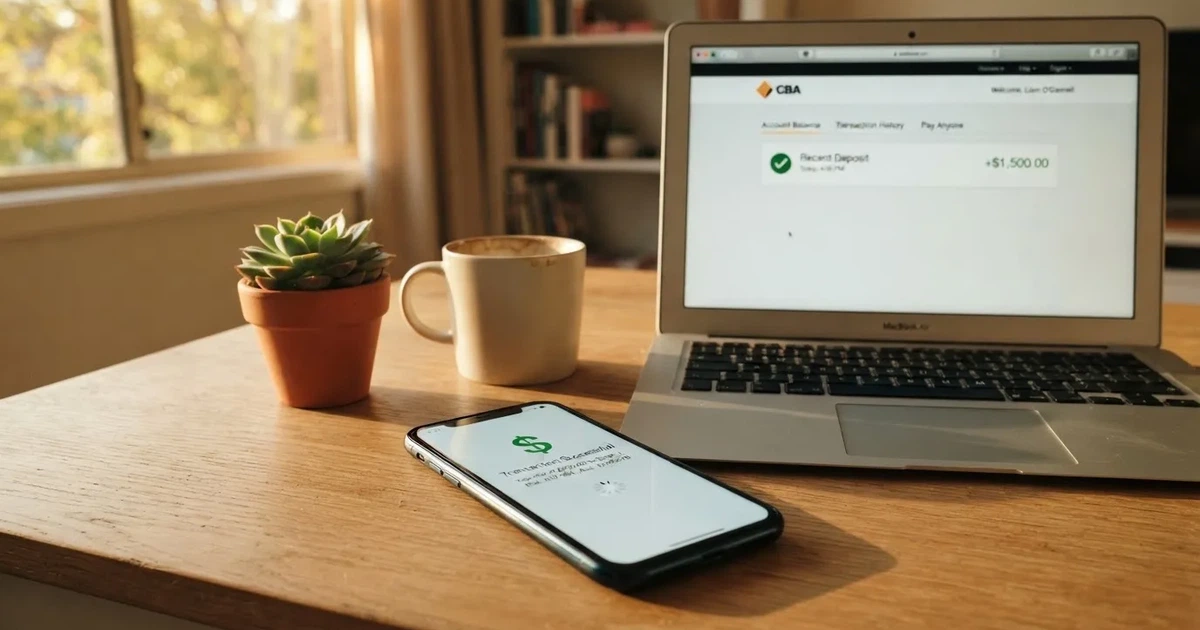
Verified against the ACMA’s published formal-warning register and the operator terms cited below, current as of 29 October 2026.
Table of Contents
Settlements and the Settlement Promise
“Same day” is the marketing floor, not the technical ceiling. Australian retail banking runs a real-time retail payment platform — the New Payments Platform — that has been live since 13 February 2018 and now sits under the holding entity Australian Payments Plus alongside BPAY and eftpos. The platform’s flagship retail product is Osko, a 24/7 overlay that delivers a transfer between participating banks in under a minute, including weekends and public holidays, whether the recipient is identified by a BSB and account number or by a PayID. Over 100 Australian financial institutions expose PayID-based instant transfers, and more than 25 million PayID identifiers had been registered on the platform by April 2025. Participants in the platform are held to a service-level ceiling of two minutes of monthly downtime.

That is what the underlying rail does. It moves money between Australian bank accounts quickly because it was built for that. A casino that promises same-day payout but ultimately pays back to an Australian bank account through a domestic processing partner is leaning on the same rail, with the operator’s own processing time added in front of it. The “instant” claim collapses to: how fast the operator releases the funds, then how fast the rail carries them.
The distinction is the one that matters. A transfer that arrives in under a minute inside the NPP is not in itself a same-day payout from a casino; it is what happens after the casino releases it. The casino’s release window is the variable. A site that advertises same-day payouts but takes 48 to 72 hours to approve a withdrawal is using the word “same day” to describe the rail, not the casino’s own behaviour.
Prohibition and the Law That Shapes the Market
Online casino games and online pokies cannot be licensed anywhere in Australia. The Interactive Gambling Act 2001, strengthened by the Interactive Gambling Amendment Act 2017, makes it an offence to provide those products to a person physically in Australia. What the states and territories do license is wagering on races and sport placed before the event, lotteries and keno — products that are, in practice, regulated by the Northern Territory Racing and Wagering Commission. The NTRWC itself, on a recent ABC report, has no full-time staff and meets once a month in Darwin, which is part of why so much of the Australian-licensed online wagering stack runs through 52 bookmakers the NT regulator administers for tax reasons — Sportsbet, Bet365 and Ladbrokes among them. None of that licences an online casino game.
The Interactive Gambling Amendment (Gambling Reform) Bill 2026 passed Parliament on 19 August 2026, with its advertising and inducement measures commencing on 1 January 2027. The law is on the books with a future start date; it is not yet in force on a 2026 page, and its bite for offshore operators is the bite the ACMA already has under the existing Act.
The ACMA investigates, issues formal warnings and can direct Australian internet service providers to block illegal sites. The cumulative effect, reported in June 2026, is that 1,751 illegal gambling and affiliate-marketing websites have been blocked since the first blocking request went to ISPs in November 2019. The June 2026 round alone asked ISPs to block 12 more: 7Signs, ChromaBet, Donbet, Duospin, Freshbet, Slots Gem, Jacks Club, Lucky Start, Pointsbetz, Spinrise, Vinyl Casino and Wildsino. Since enforcement was strengthened in 2017, more than 230 unlicensed gambling services have left the Australian market. H2 Gambling Capital’s 2025 estimate is that Australians lose about A$3.9 billion a year to illegal gambling sites, and that the share of gambling moving through legal channels fell from 74 per cent in 2021 to 64 per cent.
For a player, the consequence runs in a clean line. The individual is not prosecuted; the Interactive Gambling Act targets the provider. An offshore site gives no Australian consumer protection, no complaints body and no recourse if a withdrawal is refused — and it can be blocked with a balance still sitting on it. A “same-day payout” promise from such a site is a promise the operator can break without consequence in Australia, and one that the ACMA can render physically unreachable before the player sees the funds.
Responsible Play Around Fast-Settlement Marketing
Same-day settlement language is built to feel like a service. It is also built to feel like a reason to keep playing — to chase, to redeposit, to “get out clean” before anything goes wrong. The mechanics are designed to keep a player in motion, and that is the part a careful reader needs to see before reading any brand’s marketing copy.
What works regardless of which casino is in front of the reader is the practical layer that does not depend on the operator. Australian-licensed wagering services are bound to BetStop, the National Self-Exclusion Register, which has been live since August 2023; an offshore casino is not connected to it, so a self-exclusion through BetStop does not touch an offshore account. The National Gambling Helpline on 1800 858 858 is free, 24/7, with chat at Gambling Help Online. Both routes are worth knowing about before any decision on a brand.
The banks themselves now expose gambling controls that act upstream of the casino. ANZ’s gambling transaction block, activated in the ANZ app, blocks gambling transactions made through a digital wallet such as Apple Pay on an eligible card, not just the physical card; once turned on, the block requires a 48-hour waiting period to remove. ANZ warns the block is not absolute — not all gambling transactions will be blocked, and some non-gambling transactions might be blocked in error. Westpac’s gambling block refuses authorisation of transactions registered under the merchant category code “Betting/Casino Gambling” on eligible personal credit and debit cards. Commonwealth Bank lets customers apply a gambling lock to eligible cards via the CommBank app, automatically blocking most gambling transactions, with the same caveat that not all gambling-related purchases will be stopped. These three controls together are the closest thing an Australian has to a circuit breaker that sits in front of the casino, not behind it.
A reader who is concerned about their play has these tools before they need any of them, and the tools work whether the casino in question is licensed or not.
How the Rail Actually Settles
The technical picture behind “same day payout” is short. A player requests a withdrawal. The operator’s internal processing window opens: account review, bonus-check, identity verification if anything has changed, anti-fraud screening. Only after the operator releases the funds does the rail take over. The rail then has its own speed, and that speed is the part an Australian reader can verify for themselves.
Osko, the 24/7 retail overlay on the New Payments Platform, settles a transfer between participating banks in under a minute. Paying to a PayID shows the name of the registered account holder before the transfer is sent; Australian Payments Plus warns that being asked to transfer money to a PayID on an illegal gambling site almost certainly means the destination is a scam site. The underlying platform is owned by New Payments Platform Australia Ltd, a non-profit whose 13 shareholders include the Reserve Bank of Australia and the country’s major banks. The infrastructure is Australian, the rules are Australian, and the speed is verifiable at any retail bank.
BPAY sits on a different track. BPAY is a bill-payment service inside online banking: the payer enters the Biller Code and the Customer Reference Number printed on the bill. It has operated since 18 November 1997, is available in the online banking of more than 140 Australian banks and financial institutions and is offered by over 95,000 businesses. It is owned equally, via parent company Cardlink Services Limited, by ANZ, Commonwealth Bank, National Australia Bank and Westpac. The ACCC authorised the 2021 merger that brought BPAY, eftpos and NPP Australia together under Australian Payments Plus.
The card rails are slower. Apple Pay, Google Pay and Samsung Pay transactions collectively accounted for around 45 per cent of all card payments in Australia by number by the end of 2025. Apple does not charge consumers any fee for using Apple Pay in stores, online or in apps; any surcharge comes from the merchant’s own card-processing fees, not from Apple. Apple also states that transaction limits and PIN requirements for Apple Pay purchases are set by the card issuer or merchant, not by Apple itself. Credit cards and credit-related products are banned as payment for licensed online wagering in Australia since 11 June 2024, with penalties up to A$247,500 for operators; the ban also constrains the gambling use of linked digital wallets such as Apple Pay.
AUSTRAC’s threshold-transaction-report rule, which requires reporting of transfers of A$10,000 or more, applies only to physical cash. Ordinary electronic bank transfers are not subject to that per-transaction reporting requirement, regardless of the amount sent — a fact that matters at higher withdrawal sizes, where the reader might otherwise wonder whether a large transfer triggers anything.
American Express sits outside the main surcharge conversation. Amex was established in 1850 as a freight-forwarding company and launched its first charge card on 1 October 1958; unlike Visa or Mastercard’s four-party network, Amex traditionally issues cards and processes transactions itself as a three-party scheme. The Reserve Bank of Australia’s July 2025 review proposes removing surcharges only on eftpos, Mastercard and Visa card transactions, explicitly leaving American Express outside the scope of the proposed surcharge ban. For an Australian reader comparing payout rails, the practical point is that the rails differ — and that the difference is in who sets the rules on each one.
What “Same Day” Is Worth Against the Rail
The marketing line is that the casino pays out the same day. The reality, for any operator that ultimately returns funds to an Australian bank account, is that the casino’s processing window is the variable and the Australian rail is constant. A withdrawal released by the operator in time to clear the NPP overnight cut-off will arrive inside the day; a withdrawal the operator holds for verification or bonus-checking will not, whatever the rail does.
That is why “instant withdrawal” is a different claim from “same day cash out.” “Same day” promises a calendar boundary: by the close of the day the funds are released. “Instant” promises the next minute, on the rail. A site that uses “same day cash out” rather than “instant withdrawal” is, at minimum, admitting that its own release window is the rate-limiting step and that “instant” would be inaccurate.
The same logic bounds the dollar amount the claim still applies to. Most operators cap “instant” or “same-day” release at a tier below the maximum withdrawal amount, often with a daily or per-transaction ceiling that is tighter than the headline figure. Above that tier the operator steps back into manual processing: a request gets queued for review, identity checks reopen, bonus clawbacks run, and the calendar boundary stops being the day the withdrawal was requested.
The verification steps that still delay a same-day payout in practice are well known and worth stating flatly. First-time withdrawals reopen identity verification regardless of deposit method — the operator has to satisfy itself about the source of funds and the person behind the account. A change of payment method, a change of bank details, a change of address or a flagged anti-money-laundering check will all push a withdrawal back into manual review. Bonuses, especially those with a maximum cashout cap, will hold a withdrawal until the wagering requirement is checked and the cap is applied. None of these are surprises; all of them are delays that “same day” usually does not mention.
The Brands Listed Below
The brand list that follows is not a recommendation and not a ranking. Every brand on it has been the subject of a formal ACMA warning under the Interactive Gambling Act 2001 for offering prohibited online casino services to Australians. The table that closes this section is built so a reader can see, on one screen, which operator and which date the regulator has recorded — because the regulator’s record is the only public-source fact about these brands that holds up.
| Brand | ACMA action and date | Operator named by the ACMA | Subject support |
|---|---|---|---|
| RocketPlay | Formal warning, March 2026; earlier Dama N.V. warning, May 2022 | Pulsup Ltd | Listed only — Gambling Insider |
| Level Up Casino | Formal warning, May 2022 | Dama N.V. | Listed only — Westpac |
| Woo Casino | Formal warning, March 2025 | Dama N.V. | — |
| Spirit Casino | Formal warning, May 2025 | Dama N.V. | — |
| National Casino | Formal warning, July 2025 | Consolutetish S.R.L. | Listed only — acma.gov.au, austrac.gov.au, betstop.gov.au |
| Bizzo Casino | Formal warning, July 2025; earlier TechSolutions warning, 2022 | Consolutetish S.R.L. | Listed only — Gambling Insider |
| Ignition Casino | Formal warning, July 2025 | Bamboo Media | — |
| Instant Casino | Formal warning, February 2025 | EOD Code SRL | Listed only — EcoPayz, PayID |
| Jackbit | Formal warning, April 2026 | Ryker B.V. | — |
| Casino Intense | Formal warning, April 2025 | Sterplay Holding Ltd | Listed only — austrac.gov.au, betstop.gov.au, Gambling Insider |
| Sky Crown | Formal warning, September 2022 | Hollycorn N.V. | — |
The “Subject support” column carries what those listings report — nothing more. Where the listings are silent, the column carries the article-language no-data marker. An em dash in that column does not mean the operator is better or worse than a neighbour; it means the consulted set did not name the brand in connection with this subject. The regulator’s own warnings are a separate row and are the row that matters for an Australian reader.
The arithmetic behind this page comes from the same record. Since the first blocking request in November 2019, the ACMA has asked Australian ISPs to block 1,751 illegal gambling and affiliate-marketing websites as of June 2026 — a span of roughly six and a half years. Spread across that window, the working rate is in the band of roughly 260 to 275 sites blocked per year, with the obvious caveat that the pace has not been constant and that earlier years are not directly comparable to enforcement rounds in the most recent reporting period. The number a reader should hold onto is the cumulative total and the regulator’s continuing willingness to add to it.
RocketPlay
The ACMA’s March 2026 formal warning to Pulsup Ltd over RocketPlay sits on top of an older warning — Dama N.V., May 2022 — covering Rocketplay alongside Bambet, Dazard, Level Up, Wild Tornado and Cobra Casinos. The brand is listed only in the third-party listing consulted; the regulator’s record is the source. RocketPlay is one of two brands in this set whose operator history reads as a chain of formal warnings over successive corporate vehicles, which is the kind of detail that tells a careful reader the brand has continued to surface in the Australian market under more than one corporate wrapper. The brand’s claim to a same-day payout sits inside that pattern, and the pattern is the part the ACMA’s record actually carries.
Level Up Casino
The ACMA’s May 2022 warning to Dama N.V. named Level Up alongside Bambet, Dazard, Rocketplay, Wild Tornado and Cobra Casinos in a single formal warning; Level Up is listed only as a Westpac-blocked merchant in the consulted set. There is no separate, more recent ACMA action over Level Up in this record, and the brand’s withdrawal claims are not verifiable through any source in the consulted set. What a reader can verify is the regulator’s 2022 warning, the date it carries, and the prohibition that has not changed since.
Woo Casino
The ACMA’s March 2025 formal warning to Dama N.V. covered Woo Casino specifically; the consulted set does not name the brand in connection with same-day-payout subjects. Dama N.V. has been named by the ACMA across multiple warnings in this record — May 2022, March 2025, May 2025 — which is the kind of repetition that turns a regulator warning into a track record. The brand is one of the operator’s repeat subjects, and the regulator’s record is the public source that carries the dates and the named operator.
Spirit Casino
The ACMA’s May 2025 formal warning to Dama N.V. covered Spirit Casino; the consulted set does not name the brand in connection with same-day-payout subjects. Spirit Casino is the most recent Dama N.V. warning in this record, after Rocketplay in March 2026 and Woo Casino in March 2025. The pattern across the Dama N.V. warnings is the part that matters for an Australian reader; the brand-level detail is the date and the operator on each warning.
National Casino
The ACMA’s July 2025 formal warning to Consolutetish S.R.L. covered National Casino; the consulted set names the brand alongside ACMA, AUSTRAC and BetStop — which is a more populated subject footprint than most of the other brands on this list carry. National Casino is one of three brands in the July 2025 warning round, alongside Bizzo Casino and Ignition Casino, and it is the one whose listings touch the Australian regulator and self-exclusion register by name.
Bizzo Casino
The ACMA’s July 2025 formal warning to Consolutetish S.R.L. covered Bizzo Casino; the brand had already been the subject of a 2022 formal warning to TechSolutions (CY) Group Limited and TechSolutions Group N.V. The July 2025 warning is a second bite, and a second bite under a new operator name is the kind of repetition that the regulator’s record treats as significant. Bizzo is listed in the third-party listing consulted, and the regulator’s record on this brand is the longest of any on this list.
Ignition Casino
The ACMA’s July 2025 formal warning to Bamboo Media covered Ignition Casino; the consulted set does not name the brand in connection with same-day-payout subjects. Ignition is one of three brands named in the July 2025 warning round, alongside National Casino and Bizzo Casino, all from different operators. The brand sits inside a wider warning round rather than a single-operator warning, which makes the regulator’s warning on this brand a comparative baseline.
Instant Casino
The ACMA’s February 2025 formal warning to EOD Code SRL covered Instant Casino; the consulted set names the brand alongside EcoPayz and PayID, which gives Instant Casino a wider subject footprint than most of the other brands on this list. The brand is one of two warnings on this list whose listings touch a payment-rail subject specifically — the other being National Casino, whose listings touch Australian regulatory bodies. The combination of an EcoPayz listing and a PayID listing is the kind of detail a reader comparing payout rails would want to see, and it is also the kind of detail the regulator’s warning sits on top of.
Jackbit
The ACMA’s April 2026 formal warning to Ryker B.V. covered Jackbit and CasinOK in a single warning; the consulted set does not name Jackbit in connection with same-day-payout subjects. Jackbit appears on the most recent warning on this list, and this warning specifically links it to its operator, Ryker B.V.
Casino Intense
The ACMA’s April 2025 formal warning to Sterplay Holding Ltd covered Casino Intense; the consulted set names the brand alongside AUSTRAC, BetStop and the third-party listing consulted. The footprint is wider than most — three listings touch the brand — and the regulator’s record on the brand is the April 2025 warning specifically. Casino Intense is the only brand on this list whose listings touch both AUSTRAC and BetStop, which is a more populated Australian-regulator footprint than most of the other brands carry.
Sky Crown
The ACMA’s formal warning to Hollycorn N.V. covered Sky Crown and Blue Leo casino services; the consulted set does not name Sky Crown in connection with same-day-payout subjects. Sky Crown is the earliest warning in the listed set that is also the only Hollycorn N.V. record on this list, which is the shape of the regulator’s record on this brand.
The Marketing Word and the Audit
“Same day” sits next to “instant” in casino marketing copy the way “free” sits next to “bonus” — as a word that does work the page can deflate. A casino cannot make the NPP any faster; it can only release funds faster. The marketing claim is true when the operator’s processing window is short enough to clear the calendar boundary, and false when it is not, and the only honest read of the claim in the Australian market is that it is a promise the operator can make and break without consequence.
That is the test the rest of the page has run against. The rail underneath the marketing delivers in under a minute. The casinos that advertise it cannot lawfully accept the bet. The regulator’s record, on this page, is the only public-source fact about the brands listed that does not depend on the operator’s own copy.
Frequently Asked Questions
What does a casino actually mean by “same day payout” — same calendar day, or within 24 hours?
“Same day” in casino marketing means within the calendar day the withdrawal was requested, usually as a release promise from the operator rather than a rail guarantee. “Within 24 hours” would be a longer and more conservative promise — and operators that can only guarantee 24 hours tend to advertise that figure rather than “same day”. The distinction matters at the boundary: a withdrawal requested at 11 p.m. is unlikely to clear the calendar day the request was made even on a fast rail.
How does a same-day cash-out claim compare with the real Osko transfer times Australian banks describe?
Osko, the 24/7 retail overlay on the New Payments Platform, settles a transfer between participating banks in under a minute, including weekends and public holidays, addressed either to a BSB and account number or to a PayID. A casino’s “same day” promise sits in front of that rail; the rail itself is faster than the marketing suggests. What “same day” actually means is that the operator releases the funds within the day, after which the rail takes over.
Is a same-day payout promise from an offshore casino something Australians can hold the operator to?
No. Online casino games and online pokies cannot be licensed anywhere in Australia under the Interactive Gambling Act 2001, so an offshore casino offering them to a person in Australia is offering a prohibited service. An Australian player has no Australian consumer protection, no complaints body and no recourse if a withdrawal is refused. The ACMA can direct Australian ISPs to block the site before any of the marketing settles; 1,751 such blocks have been ordered since November 2019 as of June 2026.
What is the largest withdrawal amount that a “same day” payout claim usually still applies to?
The published tier is usually well below the headline maximum withdrawal amount, and the operator often imposes a daily or per-transaction ceiling on fast-track release that is tighter than the headline figure. Above that tier the withdrawal steps back into manual processing: identity checks reopen, bonus clawbacks run and the calendar boundary stops being the day the withdrawal was requested.
Why do some sites specifically say “same day cash out” rather than “instant withdrawal”?
“Same day” promises a calendar boundary; “instant” promises the next minute. A site that uses “same day” rather than “instant” is, at minimum, admitting that its own release window is the rate-limiting step and that “instant” would be inaccurate. The marketing language is the language the operator can defend if challenged, and “same day” is the more conservative version of the claim.
What verification steps might still delay a same-day payout claim in practice?
First-time withdrawals reopen identity verification regardless of deposit method. A change of payment method, a change of bank details, a change of address or a flagged anti-money-laundering check will push a withdrawal back into manual review. Bonuses with a maximum cashout cap will hold a withdrawal until the wagering requirement is checked and the cap is applied. None of these are surprises; all of them are delays that “same day” usually does not mention.