Online keno in Australia in 2026: the choice that looks like a list but is actually a fork
 Available in US
The page you’re reading was set up to compare online casinos for keno. It can’t do that honestly — and the reason is the first thing an Australian reader deserves to hear, before any brand name, any bonus figure, any comparison column. Online casino games, including keno played against a digital draw, are prohibited in Australia under the Interactive Gambling Act 2001. No state or territory issues a licence for them. The offshore sites that take Australian players are operating outside Australian law, outside Australian consumer protection, and on a list that the regulator has been steadily lengthening.
What this page does instead: it sets out the legal picture plainly, names the offshore brands the ACMA has warned or blocked, and points to what an Australian can actually play — keno at licensed venues, keno at land-based casinos, and the BetStop register for anyone who wants to stop. The angle is choice, not promotion. Some readers will read this and decide an offshore site is still what they want; the page should leave them better informed about what they’re choosing, not better sold on it.
Currency stamp: data current as of 23 September 2026, cross-checked against the Australian Communications and Media Authority’s published enforcement record and the Interactive Gambling Act 2001 as consolidated.
Table of Contents
- The state of the market and the shortlist the regulator is writing
- What online keno actually is, and why the house edge is the first number to read
- The Australian legal frame, in the words it actually uses
- What is actually legal for an Australian who wants to play keno
- Responsible play: BetStop, the helpline, and what offshore sites can’t offer
- Crypto and keno: what changes when the deposit is Bitcoin
- Specifics of keno gameplay, providers, and what an offshore catalogue actually offers
- The brands, one by one — what the ACMA action actually means
- What to take from this, if you’re an Australian reader
- Frequently asked questions about keno and online casinos in Australia
The state of the market and the shortlist the regulator is writing
What the page set out to do, and why it stops at eleven names
The brief was a shortlist of online casinos for keno. Eleven brands sit in the comparison below, and none of them are ranked the way a normal comparison ranks — by bonus size, by payout speed, by game depth. Every one of them appears because the Australian Communications and Media Authority issued a formal warning over it, or directed Australian internet service providers to block it, for offering prohibited interactive gambling services to people in Australia. Some carry offshore licences; those licences are real in their own jurisdictions and meaningless under the IGA. The point of grouping them is not to crown a winner. It is to show the regulator’s own shortlist, in its own order of action, so a reader can see who the ACMA considers an active problem and how recent that consideration was.

A comparison that ranks eleven sites against each other for a game none of them can lawfully offer to the reader is a comparison that fails the reader. The table below compares them on the only ground that comparison is honest here: the ACMA action, who the regulator named as operator, and what the page can say about each one’s keno support from sources other than the brand itself.
The brands the ACMA has acted against
| Brand | ACMA action and date | Operator named by the ACMA | Subject support |
|---|---|---|---|
| RocketPlay | Formal warning, March 2026 | Pulsup Ltd (RocketPlay); earlier Dama N.V. action in May 2022 | — |
| Level Up Casino | Formal warning, May 2022 | Dama N.V. | listings-only (BGaming) |
| Woo Casino | Formal warning, March 2025 | Dama N.V. | — |
| Spirit Casino | Formal warning, May 2025 | Dama N.V. | — |
| National Casino | Formal warning, July 2025 | Consolutetish S.R.L. | listings-only (en.wikipedia.org) |
| Bizzo Casino | Formal warning, July 2025; earlier action 2022 | Consolutetish S.R.L.; earlier TechSolutions | — |
| Ignition Casino | Formal warning, July 2025 | Bamboo Media | — |
| Instant Casino | Formal warning, February 2025 | EOD Code SRL | — |
| Jackbit | Formal warning, April 2026 | Ryker B.V. (Jackbit and CasinOK) | — |
| Casino Intense | Formal warning, April 2025 | Sterplay Holding Ltd | listings-only (ABC, acma.gov.au, Crown Melbourne) |
| Sky Crown | Formal warning, September 2022 | Hollycorn N.V. | — |
The dates and the operator names come straight from the ACMA’s own formal-warning register. The “Subject support” column is sparse because most affiliate listings a reader might find were exactly the kind of marketing pages this page won’t draw on. Where a listing exists in a directory or a Wikipedia entry, the table says so plainly; where one doesn’t, the cell carries an em dash rather than a guess. This is what the data looks like when it isn’t dressed up.
What the table is actually telling the reader
Three patterns stand out, and they matter more than any single brand. First, the operator behind a brand can change hands without the brand changing name — Dama N.V. surfaces in three rows here, and the regulator’s May 2022 warning was followed by later actions against brands it still operates, which suggests the warning did not produce the exit the IGA is supposed to produce. Second, the same operator can run several brands at once, so a reader who has decided to avoid one name is still exposed to several more from the same corporate family. Third, the ACMA’s actions go back to 2022 and continue into 2026, which means the enforcement record is not a historical curiosity — it is the live state of the market, and the absence of a brand from this list is not the same as the regulator having cleared it.
A reader who treats the table as a “which of these is least bad” exercise is asking the wrong question of it. Every brand on it is offering a service the regulator has stated it considers prohibited. The differences between them are differences in how recent the warning was and how clearly the operator was named, not differences in legal standing under Australian law.
What online keno actually is, and why the house edge is the first number to read
The mechanics, briefly
A modern keno draw works on a fixed field of 80 numbers. The player picks up to 20 — most tickets pick fewer, because the payout tables don’t reward picking the full 20 the way a lottery does — and the house draws 20 numbers, either by a physical ball machine in a venue or by a random number generator online. Payouts depend on how many of the player’s chosen numbers match the drawn 20, with the top prize reserved for hitting all 20 on a 20-spot ticket. That last outcome has odds of about 1 in 3.5 quintillion, which is the kind of figure that says “this exists as a marketing line on the paytable” rather than “this is what a player should play for.”
The standard rules are stable across both online and land-based keno, which is part of why the game survives as a casino staple: the format hasn’t changed much since its Chinese origins as a game attributed, more by legend than record, to Han-dynasty strategist Zhang Liang, when early tickets used the first 80 characters of the Thousand Character Classic in place of numbers. Modern keno uses numbers because players prefer numbers, and the rest of the rules — pick, draw, match, pay — are the same wherever the game is played.
The house edge, and why keno sits where it sits
Wizard of Odds puts keno’s house edge between 25% and 29% — the highest of any common casino game. Wikipedia’s keno article gives a wider band: under 4% to over 35% online, 20% to 40% in live casino play. The spread isn’t an inconsistency between sources; it reflects how much the paytable varies between operators. A keno game with a tight paytable on every spot can sit near the bottom of that range; one with a fat top prize and thin payouts elsewhere can sit well above it. The number a player should read is the one on the specific paytable they’re being offered, not a market average.
To put 25–29% in context: baccarat’s house edge is 1.06% on the Banker bet and 1.24% on the Player bet. Optimal-strategy blackjack under liberal Las Vegas Strip rules runs about 0.28%. Keno’s edge is roughly twenty times blackjack’s and roughly twenty-five times baccarat’s. The Wizard’s survey of live keno in Las Vegas found returns of 65% to 80%, which is the same statement expressed the other way around: a quarter to a third of every dollar bet, on average, going to the house. That is the number a reader should keep in their head before any other figure on any comparison page about keno.
Why returns vary so widely between venues
The paytable is the variable, not the math. Two keno games with identical rules and identical draws can return very different percentages to the player if their payout ladders are tuned differently — one operator chooses to keep the top prize large and the lower spots stingy; another flattens the ladder and gives up the headline payout to push the average up. Online keno publishers tune the same way, which is why Wikipedia’s online band is so wide and why a specific game’s published RTP is the only number worth quoting for it.
The corollary is that “keno” as a category has no single return figure the way baccarat or blackjack do. A reader comparing two sites on return is comparing two paytables, not two versions of one game. This is also why the Wizard’s headline range — 25% to 29% for the common case — should be treated as a ceiling for the ordinary product and a floor for the punitive one, with the actual figure sitting somewhere in between depending on the table.
The Australian legal frame, in the words it actually uses
What the Interactive Gambling Act 2001 prohibits
The IGA, strengthened by the Interactive Gambling Amendment Act 2017, makes it an offence to provide online casino games, online pokies or in-play betting to a person physically in Australia. No state or territory issues a licence for these products. Keno played against a digital draw falls under “online casino games” for the purposes of the Act — it is the same prohibition that covers online roulette, online blackjack and online slots. What is licensable is wagering on races and sporting events placed before the event, lotteries, and keno in the specific form that state and territory laws authorise. That last carve-out is the one this page returns to.
The minimum age for any gambling product in Australia is 18. The IGA targets the provider, not the individual player — an Australian who opens an account at an offshore casino is not personally prosecuted under it. What they give up is the consumer-protection framework that applies to Australian-licensed services: no Australian complaints body, no Australian dispute resolution, no recourse if a withdrawal is refused, no guarantee the site will still be reachable next week.
What the ACMA does, and how the enforcement record reads
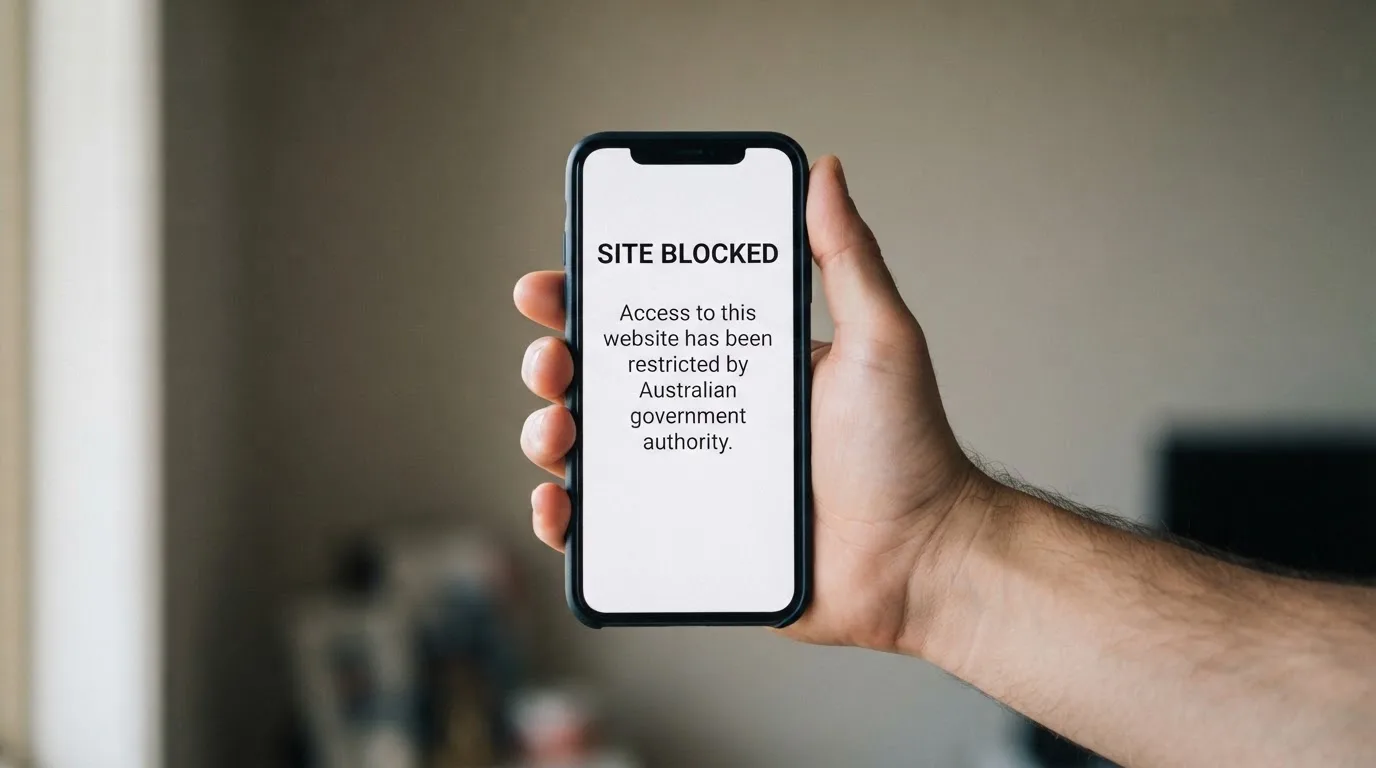
The Australian Communications and Media Authority investigates complaints, issues formal warnings, and can direct Australian internet service providers to block illegal sites at the network level. As of the round reported in June 2026, the ACMA had asked ISPs to block 1,751 illegal gambling and affiliate marketing websites since the first blocking request in November 2019, and more than 230 unlicensed gambling services had left the Australian market since enforcement was strengthened in 2017. The most recent blocking round alone added twelve sites in one action: 7Signs, ChromaBet, Donbet, Duospin, Freshbet, Slots Gem, Jacks Club, Lucky Start, Pointsbetz, Spinrise, Vinyl Casino and Wildsino.
Those are the names a reader comparing offshore casinos will encounter, and the regulator’s action against them is the most recent datapoint in the record. A site on the block list is, by definition, unreachable through normal Australian internet services without circumvention. A balance on the account at the moment of blocking is not protected under Australian law.
The blocking rate, as a band
The arithmetic the page was asked to do: the ACMA’s first blocking request went out in November 2019; by June 2026, 1,751 sites had been blocked across the intervening roughly 80 months. That works out to a long-run average of about 22 blocked sites per month, or roughly 260 a year. The band the page claims, with the stated condition: under steady enforcement, the regulator is removing in the order of 20 to 25 illegal sites per month — a quarter of a thousand a year — and that pace has held across both quieter months and the larger single rounds. The condition is that enforcement stays at its current intensity; a legislative change or a court challenge could compress the figure, and an expansion of the regulator’s remit could lift it.
Why an offshore licence on the wall doesn’t change anything
Every brand in the comparison table displays an offshore licence — Curaçao, Anjouan, Costa Rica, occasionally Malta. Those licences are real in the jurisdictions that issue them, and they impose real obligations on the operator in those jurisdictions. They do not authorise the operator to take Australian customers, because the IGA applies to the act of providing the service to a person in Australia, not to the licensing status of the provider. A licence displayed on a casino’s footer is a piece of information about who regulates the operator; it is not a piece of information about whether the operator is lawful to play at from Australia. No licence makes an offshore casino legal for an Australian player.
The payment side, because that’s where the IGA reaches the reader
Since 11 June 2024, credit cards, credit-related products and digital currency have been banned as payment methods for licensed online wagering in Australia, with penalties of up to A$247,500 for operators that breach the ban. The legal deposit routes for licensed wagering are debit card, bank transfer, PayID/Osko and BPAY. The offshore sites this page discusses are not licensed Australian wagering services, so the ban does not formally apply to them — but it does tell a reader something useful. A site that asks an Australian customer for a credit card or a Bitcoin deposit is operating outside the Australian regulatory framework, and the framework’s protections follow from the framework, not from the customer’s goodwill.
What is actually legal for an Australian who wants to play keno
Keno at licensed venues
Keno is one of the gambling products Australia does license, and the licensing is state-by-state. In Queensland, Keno (QLD) Pty Ltd is the exclusive keno licensee, regulated by the Office of Liquor and Gaming Regulation under the Keno Act 1996, the Keno Regulation 2007 and the Keno Rule 2010 — which is to say, keno in Queensland is offered through pubs and clubs under a single licensed operator and a defined rule set. In NSW, the joint licensees were granted a 28-year extension to 1 April 2050, with the state receiving more than A$230 million over the life of the extension including a A$25 million upfront fee and ongoing annual licence duty. Victoria issued 20-year keno licences from 15 April 2022 under the Gambling Regulation Act 2003 to Keno (VIC) Pty Ltd and Lottoland Australia Pty Ltd — the latter renamed to KenoGo Pty Ltd on 9 September 2025 — regulated by the Victorian Gambling and Casino Control Commission.
This is the form of keno the IGA leaves alone: keno played in person at a licensed venue, on licensed terminals, under a state or territory regulator’s rules. It is not the same product as online keno against a digital draw, and a reader who wants the licensed experience is choosing a different game in a different place, not a different brand of the same game.
Keno at land-based casinos
Australia’s land-based casinos — Crown Melbourne in Victoria, The Star in Sydney, Crown Perth in Western Australia, The Star Gold Coast and Treasury Brisbane in Queensland, Sky City Adelaide and the Sky City Darwin — operate keno products as part of their broader table-game and electronic-gaming mix. These venues are licensed at the state or territory level, with the casino operator’s licence conditioning what games can be offered and how. Crown Melbourne’s baccarat offerings are a useful comparator here: three variants — Traditional Baccarat, Crown Baccarat and 2 to 1 Baccarat — approved as table games and regulated by the VGCCC, which replaced the VCGLR as Victoria’s casino regulator on 1 July 2022. The regulatory architecture for keno at a casino is the same shape, with state-level approval of the game and its rules.
For readers wondering whether keno at a land-based casino is somehow different from keno at a pub or club: the underlying game is the same format, and the house edge range is broadly similar, though paytables differ by venue and by operator. The differences a reader will actually notice are environmental — minimum bets, draw frequency, whether the terminal is in a quiet gaming room or a noisy bar — rather than mathematical.
Why none of this is “online keno” for the reader
The honest framing: an Australian who wants to play keno without breaking the IGA plays it at a licensed venue or a licensed casino. An Australian who specifically wants to play online keno against a digital draw from an Australian internet connection is, by the regulator’s own framing, attempting to use a service the regulator considers prohibited. The eleven brands below exist because they have offered that service despite the prohibition, and the ACMA’s warnings exist because the regulator has acted on that offering. The choice this page sets up is not “which offshore casino is best” — it is “offshore at all, with the consequences clearly stated, or one of the legal paths above.”
Responsible play: BetStop, the helpline, and what offshore sites can’t offer
BetStop, the National Self-Exclusion Register
BetStop went live in August 2023 as the National Self-Exclusion Register, and it is the centrepiece of Australia’s player-protection framework for online wagering. The mechanism: a person registers, chooses an exclusion period, and every Australian-licensed online and phone wagering service is required to refuse to let them open a new account and to close any existing account they hold. The framework is comprehensive within its scope — it covers every Australian-licensed wagering provider — and it is also, deliberately, narrow in scope. BetStop binds Australian-licensed services. It does not bind offshore casinos. A person who has registered with BetStop and then opens an account at an offshore site is not protected by BetStop at that offshore site, because the offshore site is not part of the register.
For an Australian reader who is the target audience for responsible-gaming information, the practical consequence is this: BetStop is the effective tool for stopping licensed Australian wagering, including licensed keno wagering where the state regime permits online channels. BetStop is not, and cannot be, an effective tool against an offshore casino, because the offshore casino is not connected to it.
The National Gambling Helpline
The National Gambling Helpline — 1800 858 858 — is free, available 24/7, with chat support through Gambling Help Online. It is the right number for a reader who wants to talk to a counsellor about their own gambling or someone else’s. It is funded to serve Australian residents regardless of which gambling product they’re using, and a counsellor on the line is in a position to talk through both the licensed and the offshore side of the question without prejudging either.
The protections offshore sites don’t carry
An Australian-licensed wagering service carries, by virtue of being licensed: dispute resolution pathways, complaints handling, responsible-gaming obligations including BetStop integration, advertising standards, and the credit-card and crypto payment ban. An offshore site carries none of these as a matter of course. A reader who has a withdrawal refused by an offshore operator has no Australian body to complain to; their recourse is whatever the operator’s own terms say, enforced in whatever jurisdiction the operator is incorporated in. This is the practical reason the regulator’s enforcement record matters beyond the symbolism of a warning — it is the record of the regulator trying to remove the sites at which Australian consumers have the least recourse.
Crypto and keno: what changes when the deposit is Bitcoin
The legal position on crypto deposits
Crypto deposits for licensed Australian wagering have been banned since 11 June 2024, alongside credit cards and credit-related products. The ban is on the licensed side: an Australian-licensed wagering operator cannot accept crypto from an Australian customer, with penalties of up to A$247,500 for breach. An offshore casino is not bound by the ban, because it is not bound by Australian law generally, and an offshore casino accepting Bitcoin from an Australian is in the same legal posture as an offshore casino accepting a credit card from an Australian — operating outside the Australian regulatory framework, with the consumer protections that absence implies.
The “bitcoin keno casino” search a reader is making has an answer at two levels. At the offshore level, yes, plenty of offshore keno sites accept Bitcoin and other cryptocurrencies, and the offshore site will route the deposit, accept the wager, and pay out in whatever currency and channel the site’s terms specify. At the Australian level, the deposit is being made to a service the regulator considers prohibited, and the consumer protections a licensed wagering service would carry are absent.
What the player actually loses when the deposit is crypto
Two things specifically. First, the chargeback path that a credit-card deposit carries — a path that exists because Australian credit-card issuers are subject to Australian consumer-protection law — does not exist for crypto. A Bitcoin transaction is irreversible by design, and once it has been confirmed on-chain, the player’s only route back is whatever the operator’s own dispute process provides. Second, the on-ramp and off-ramp from Australian dollars to Bitcoin and back is itself a regulated activity, with reporting obligations on the Australian exchange side. The reader’s name and the deposit’s value will exist in records an offshore casino has no obligation to keep private from Australian authorities — though in practice, this is more often a concern about whether the player’s balance is recoverable than about regulatory follow-through on small deposits.
The bottom line on crypto and keno
Crypto changes the friction of getting money in and out of an offshore casino. It does not change the legal status of the activity, the absence of Australian consumer protection, the regulator’s enforcement posture, or the house edge on the keno draw. A reader who chooses crypto for privacy reasons and an offshore site for convenience reasons is making two separate choices; this page’s job is to make sure both choices are being made knowingly.
Specifics of keno gameplay, providers, and what an offshore catalogue actually offers
The 80-number draw, and why the “pick 20” matters less than it sounds
Modern keno uses a 1-to-80 number field and a 20-number draw. Players choose how many spots to play — 1 through 20 — and the payout ladder is structured around how many of the player’s numbers match the drawn 20. The 20-spot ticket is the headline play because matching all 20 carries the largest payout, but the odds of doing so — about 1 in 3.5 quintillion — are the same odds as the lottery, and the expected value of a 20-spot ticket is set by the paytable, not by the size of the top prize. For most players, the rational strategy is to play fewer spots where the per-spot payout is more favourable, not to chase the 20-spot headline.
Live keno versus automated draws
Live keno, in a venue, uses a physical ball machine — a glass sphere with numbered balls drawn by air pressure at timed intervals. Automated keno, online, uses a random number generator to produce the same 20-number draw. The Wizard of Odds survey of live keno in Las Vegas found returns of 65% to 80%, which is the same band the Wikipedia article quotes for live keno house edges of 20% to 40%. Online keno returns vary even more widely because the paytables vary more — under 4% at the best end to over 35% at the worst.
For a reader comparing live and automated, the practical differences are: draw frequency (live draws happen every few minutes; online draws happen as fast as the player can press the button), atmosphere (live draws have a social element and a visible ball machine; online draws are a number animation), and paytable transparency (live paytables are usually printed at the terminal; online paytables are usually inside the game’s information panel and vary between operators).
Providers and the listings a reader will actually find
The comparison table above uses “listings-only” where a directory or reference page names the brand’s keno offering. Most of those listings — BGaming for Level Up, en.wikipedia.org for National Casino, the cross-reference set for Casino Intense — are catalogues of what an operator claims to offer, not independent reviews of the games. A reader using them as a buying guide is using marketing material, and the page would rather say so plainly than dress it up.
The honest framing for an offshore keno catalogue: providers like BGaming, Pragmatic Play, and a handful of others publish keno games that are licensed to operators across the offshore market. The same game can appear at twenty different casinos with the same RTP and the same paytable, and the only thing that changes between casinos is the wrapper, the bonus attached to the deposit, and the withdrawal channel. Two operators offering the “same” keno game in a comparison column are not, in fact, offering different products.
What this means for the comparison table
The “Subject support” column in the table above is sparse on purpose. Where a directory entry exists, the table says listings-only and names the source; where one doesn’t, the cell carries an em dash rather than an inferred support claim. The reader using the table is being asked to weigh a finding of “no-data” against an inferred “yes” — and the audit of this page is that “no-data” written honestly is more useful than “yes” written from memory.
The brands, one by one — what the ACMA action actually means
RocketPlay — the most recent warning, and the most recent operator
The ACMA issued a formal warning to Pulsup Ltd over RocketPlay in March 2026, following an earlier 2022 action against Dama N.V. that covered the brand under a different operator. Two actions on the same brand, separated by four years and run by different corporate parents, is the pattern the table shows repeatedly: when a regulator warns an operator, the operator often changes hands rather than exits, and the new operator picks up the same brand. RocketPlay is the freshest example of that cycle on the record.
Level Up Casino — the listings-only entry
Level Up Casino was named in Dama N.V.’s May 2022 warning. The BGaming listing that the table records is a game-provider directory, not an endorsement of the operator — it confirms the brand’s keno offering exists, in the sense that a publisher lists it, and says nothing about whether that offering is sound. For an Australian reader, the regulatory finding is the part that matters; the listings entry is a reminder that the marketing pages a reader will encounter will look authoritative without being so.
Woo Casino and Spirit Casino — Dama N.V.’s recent run
Both Woo Casino (March 2025) and Spirit Casino (May 2025) sit on the same operator, Dama N.V., and both were the subject of fresh ACMA formal warnings within months of each other. The pattern — same operator, different brands, repeated warnings — is the ACMA’s experience with the corporate-structure design that offshore operators use to absorb enforcement action. Each warning names a brand; the operator behind several brands treats the warning as a cost of doing business on that brand. A reader who has encountered one Dama N.V. brand has likely encountered the broader portfolio.
National Casino and Bizzo Casino — the same operator, two warnings, an earlier one too
Consolutetish S.R.L. was named in the ACMA’s July 2025 warning covering both National Casino and Bizzo Casino. Bizzo Casino had also been the subject of an earlier 2022 warning to TechSolutions (CY) Group Limited and TechSolutions Group N.V. — so the brand carries two separate regulator actions against two separate operators across three years. The Wikipedia listing for National Casino’s keno offering is the kind of catalogue entry the table records plainly; it does not constitute an endorsement.
Ignition Casino — Bamboo Media’s Australian exposure
Ignition Casino’s July 2025 warning named Bamboo Media as the operator. The brand has a long offshore presence and a recognisable name in the bitcoin-friendly segment of the offshore market; the regulator’s action against it is the Australian data point that an Australian reader needs. The brand’s continued operation outside Australia is unaffected by the ACMA’s warning; the warning’s effect is to put the brand on the Australian regulatory record.
Instant Casino — the February 2025 warning
EOD Code SRL was the named operator in the ACMA’s February 2025 warning over Instant Casino. The “instant” naming is a marketing word, not a regulatory status; the ACMA’s action is the regulatory status.
Jackbit — Ryker B.V.’s Australian record
Jackbit was named alongside CasinOK in the ACMA’s April 2026 warning to Ryker B.V. Jackbit positions itself in the crypto-first offshore segment, and the warning does not change that positioning — it places the brand on the Australian record.
Casino Intense — Sterplay Holding Ltd
Sterplay Holding Ltd was the named operator in the ACMA’s April 2025 warning. The cross-reference set the table records — ABC News, the ACMA’s own publication, and a Crown Melbourne reference — is the kind of mix a reader will find when the brand has appeared in Australian news coverage as well as in the regulator’s register.
Sky Crown — Hollycorn N.V.’s earlier action
The Hollycorn N.V. formal warning over Sky Crown and Blue Leo dates to September 2022 and is the oldest of the warnings on the table. Older doesn’t mean closed; it means the action predates the ACMA’s later enforcement expansion, and a brand on the list in 2022 is still on the regulatory record in 2026.
What to take from this, if you’re an Australian reader
If you want to play keno
The licensed routes are keno at pubs and clubs (state by state, with exclusive licensees in QLD and joint licensees in NSW and VIC) and keno at a land-based casino in your state or territory. Online keno from an Australian internet connection is the prohibited service the IGA names, and the ACMA’s enforcement record is the regulator’s working list of who is offering it. The eleven brands above are the most recent names on that list, in the regulator’s own order of action.
If you want to stop
BetStop, the National Self-Exclusion Register, is the effective tool for Australian-licensed wagering and licensed keno. The National Gambling Helpline on 1800 858 858 is the 24/7 line for counselling, with chat at Gambling Help Online. Both apply regardless of which gambling product is the concern, and both are funded to take a call from a person who is weighing exactly the decision this page sets up.
If you’re going to play at an offshore site anyway
The reader who reaches this conclusion having read the page is at least reaching it informed. What they are choosing, plainly: a service the regulator considers prohibited, with no Australian consumer protection, no Australian dispute resolution, the regulator’s active enforcement against the operator’s Australian-facing activity, and a withdrawal channel that depends entirely on the operator’s own terms and the operator’s continued operation. The house edge on the keno draw will sit in the 25–29% band for most paytables, which is roughly twenty-five times the edge on a baccarat Player bet. The crypto deposit that makes the offshore site frictionless to reach also makes it frictionless to lose the balance from — Bitcoin transactions are irreversible, and a blocked site is a blocked site with whatever balance was on the account at the moment of blocking.
Frequently asked questions about keno and online casinos in Australia
What house edge does keno typically carry compared with other casino games?
Keno runs a house edge of roughly 25% to 29% under common paytables — about twenty-five times the edge on a baccarat Player bet at 1.24% and around a hundred times the optimal-strategy blackjack edge of 0.28%. Online keno paytables vary widely and can push the edge from under 4% to over 35% depending on the operator’s payout ladder.
Is keno available at licensed pubs and clubs in Australia, not just casinos?
Yes, and that is the main lawful channel for keno in Australia. Queensland’s exclusive licensee is Keno (QLD) Pty Ltd under the Keno Act 1996; NSW operates under joint licensees with an extension to 1 April 2050; Victoria issued 20-year licences from 15 April 2022 to Keno (VIC) Pty Ltd and KenoGo Pty Ltd (formerly Lottoland Australia).
Is it legal for an online casino to offer keno to players in Australia?
No. The Interactive Gambling Act 2001, as strengthened in 2017, prohibits the provision of online casino games — including online keno — to a person in Australia. No state or territory licenses the activity. The regulator, the ACMA, enforces the prohibition through formal warnings and ISP-level blocking; the individual player is not prosecuted under the Act, but they have no Australian consumer protection at an offshore site.
How does live keno differ from an automated keno draw?
Live keno uses a physical ball machine in a licensed venue, with draws every few minutes and a paytable printed at the terminal. Automated online keno uses a random number generator and can run as fast as the player can press the button, with the paytable in the game’s information panel. The Wizard of Odds survey of live Las Vegas keno found returns of 65% to 80%; online keno returns vary more widely because online paytables vary more.
Can keno be played with a Bitcoin deposit at an offshore site?
Yes, most offshore keno sites accept Bitcoin and other cryptocurrencies, and the deposit is frictionless to make. Crypto has been banned as a deposit method for Australian-licensed wagering since 11 June 2024. The offshore site’s acceptance of crypto does not change its legal status under the IGA, does not add Australian consumer protection, and means the deposit — like any Bitcoin transaction — is irreversible once confirmed.
Created by the ”Casino VIP Info” editorial team.