
Casino dice games in Australia: what an Australian punter walks into in 2026
Data current as of 29 October 2026 and checked against the ACMA’s published register of formal warnings and blocking requests.
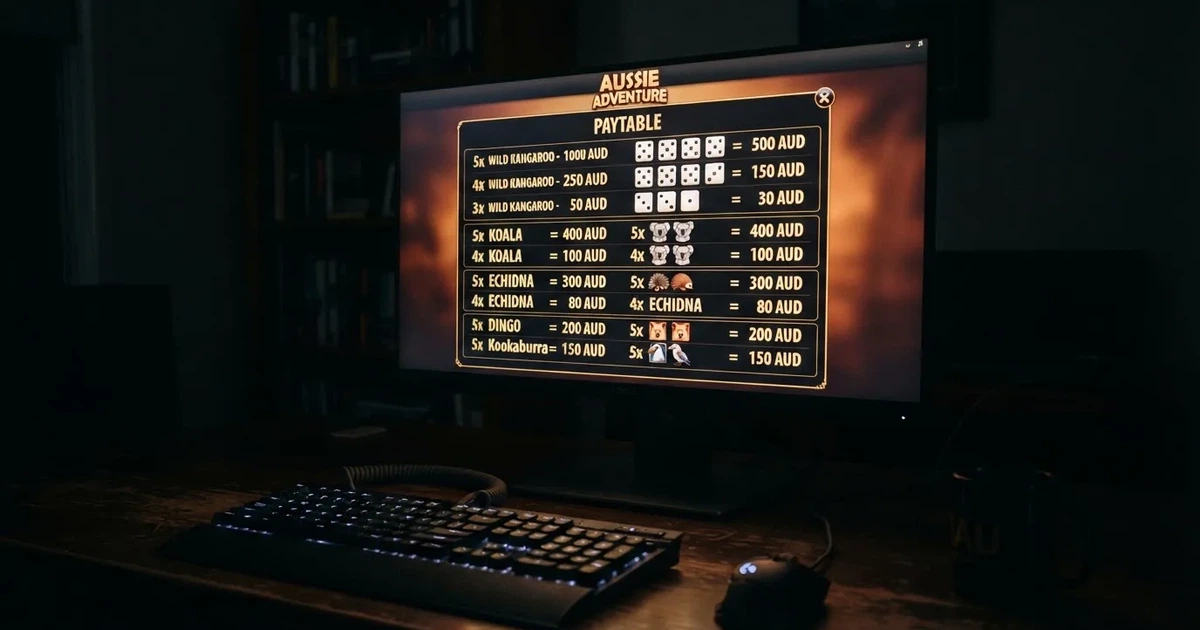
The short version: dice games like craps and sic bo sit in Australian casinos under state law, and the maths behind them is well known — Pass Line at 1.41%, Big/Small at 2.78%, Any Craps at 11.11%. Online, the Interactive Gambling Act 2001 makes a prohibited interactive gambling service of any online casino game offered to a person physically in Australia, and the ACMA has spent the last several years telling offshore operators to stop and, when they don’t, asking ISPs to block them at the network edge. The offshore sites still take deposits; the regulator’s enforcement record is what an Australian player sits on, not a consumer-protection regime.
That last point is what this page is built around. The arithmetic of the bets is settled, the legal frame is settled, and what changes between one site and the next is the regulatory history of the brand sitting on the other side of the deposit button. Read this as a sequence: first what a dice game is, then why online is closed, then what an Australian actually sees when a site advertises anyway, then what support exists if it goes wrong.
Table of Contents
- What a casino dice game is, and where the house edge lives
- Why online dice games are not on the table in Australia
- The two Crown floors and what the state regulators actually approve
- What the ACMA has actually done, brand by brand
- The ACMA blocking record: how often it lands
- Responsible gambling: what works in Australia, and what doesn’t reach offshore
- Payments: what an Australian-licensed site takes, and what an offshore site asks for
- What a comparison across offshore brands cannot tell you
- The arithmetic the reader can run for themselves
- How the page treats the offshore brands, by the subject they cut against
- How this page is current, and what an outdated read would miss
- The page’s view, in one paragraph
- FAQ
What a casino dice game is, and where the house edge lives
A casino dice game is any game where the casino’s edge is built into a bet on the outcome of one or more thrown dice. The maths differs sharply across bets on the same table, which is why the Wizard of Odds house-edge reference page treats craps as a buffet of edges rather than one number: Pass Line and Come at 1.41%, Don’t Pass and Don’t Come at 1.36%, the one-roll Any Craps at 11.11%. A bettor who walks onto a craps table and picks the wrong proposition is paying the casino almost eight times the rate of the bettor next to them, on the same dice, in the same minute. The game didn’t change. The choice of bet did.

Craps uses two six-sided dice and a table of proposition bets that resolve across one roll or several. The Pass Line bet wins on a 7 or 11 on the come-out roll, loses on 2, 3 or 12, and “establishes a point” on anything else, then resolves when that point is rolled again or a 7 ends the round. Don’t Pass is the mirror, with 2 and 3 winning, 12 pushing, and the round resolving the same way from the other side. That 1.41% versus 1.36% gap is small in absolute terms, but it is the headline gap on the table.
Sic bo is a different beast: three dice, 216 equally likely combinations, 56 distinguishable results, and a paytable that ranges from the Big/Small bet at 2.78% house edge up to Specific Triples that run from 11.6% to 30.09% depending on the rulebook the casino is using. The game came out of ancient China and entered the United States with Chinese immigrants in the early 20th century, but the Australian story for sic bo is that the game is offered on some licensed casino floors and not online.
Blackjack is not strictly a dice game but it is the most-played table game in Australian casinos, and its house edge of about 0.28% under liberal Las Vegas Strip rules is the benchmark every other table game is measured against. The game counts cards with face value, 10/J/Q/K at ten, ace at one or eleven, and the dealer has to keep drawing to 17. The reason it sits beside craps in any Australian discussion is that licensed casinos run them in the same room and the same punter often has both on the same night.
Baccarat is the other table game that draws serious action in Australian casinos, with a Banker bet at 1.06%, Player at 1.24% and Tie at 14.36%. Punto banco, the modern form, was developed in Havana in the 1940s and has the casino banking both hands under fixed drawing rules. The cards count face value, 10/J/Q/K as zero and ace as one, with totals taken modulo ten, and the shoe holds six or eight decks. Chemin de fer, the older two-player variant, came out of baccarat banque in the late 19th century but is rarely the variant an Australian punter sits down to.
Two-up sits in this same category by accident rather than by design. The game is played by tossing two coins, and the coins are not dice; but the Australian state of New South Wales treats two-up as a gambling game under the Gambling (Two-Up) Act 1998, and the game is offered at Crown Perth and Crown Melbourne under state casino control, having been legalised in Australian casinos from 1973 onward at Hobart’s casino. Outside that narrow frame — Anzac Day in NSW, Kalgoorlie’s year-round school in Western Australia, and the two Crown floors — two-up is illegal in Australia. That legal narrowness is a useful comparison to the legal narrowness of the offshore dice sites: the licensed frame is real and small, and the rest of the activity sits outside it.
Why online dice games are not on the table in Australia
The Interactive Gambling Act 2001, as tightened by the Interactive Gambling Amendment Act 2017, makes it an offence to provide online casino games or online pokies to a person physically in Australia. No state or territory licenses them. What is licensable is wagering on racing and sporting events placed before the event, lotteries and keno — and in practice that licensed wagering is concentrated in the Northern Territory, where the Northern Territory Racing and Wagering Commission regulates 52 online bookmakers including Sportsbet, Bet365 and Ladbrokes. The NTRWC has no full-time staff and meets once a month in Darwin, which is a structural detail worth holding onto: the regulator in this story is small.
The ACMA, the Australian Communications and Media Authority, is the body that investigates, issues formal warnings and asks ISPs to block sites. As reported in June 2026, the ACMA’s running total of blocked sites stood at 1,751 since the first blocking request in November 2019, and more than 230 unlicensed gambling services had left the Australian market since enforcement was strengthened in 2017. The single round reported on 26 June 2026 alone asked ISPs to block 12 more: 7Signs, ChromaBet, Donbet, Duospin, Freshbet, Slots Gem, Jacks Club, Lucky Start, Pointsbetz.com, Spinrise, Vinyl Casino and Wildsino. The mechanism is regulatory, not prosecutorial: the IGA targets the provider, not the punter.
Two consequences flow from that. The first is that an offshore site advertising to an Australian player is not prosecuted in this country for taking that player’s deposit. The second is that the same site gives no Australian consumer protection, no complaints body, and no recourse if a withdrawal is refused — and it can be blocked with a balance still on it. The estimated loss to illegal sites is around A$3.9 billion a year, and the share of gambling going through legal channels fell from 74% in 2021 to 64%, according to H2 Gambling Capital’s 2025 figures. That is the macro of the offshore market the ACMA is regulating into.
What an Australian player is looking at, then, is not a market with two tiers of online casinos — one offshore and one regulated — but a market with one tier, the licensed floor, and an advertising layer over the top of it that the regulator chases site by site. The bets and the maths are settled; the legal frame around who can offer them online is closed.
The two Crown floors and what the state regulators actually approve
Dice games on Australian casino floors run under state law, and the rulebook each casino plays by is approved by its own state regulator, not by any national body. Under section 66 of the NSW Casino Control Act 1992, a casino operator must not permit a game to be played unless the game and its rules are approved by the regulator, and the operator must make a copy of the approved rules available to patrons on request. The Victorian equivalent, the Casino Control Act 1991, requires the Victorian Gambling and Casino Control Commission (VGCCC) to approve any rules for table games and any change to those rules before they are introduced at Crown Melbourne.
The VGCCC took over from the Victorian Commission for Gambling and Liquor Regulation (VCGLR) on 1 July 2022 as Victoria’s casino regulator, and its public log of approved changes includes renaming the “Perfect Pairs” blackjack side bet to “Crown Pairs” on 23 December 2024 and introducing a “Free Bet” option with a new “Pot of Gold” side bet on 25 March 2024. Those changes are how an Australian punter sees a familiar game quietly shift on the floor — the same nominal game, with new options that have their own edge.
Crown Melbourne offers three baccarat variants — Traditional Baccarat, Crown Baccarat and 2 to 1 Baccarat — as approved table games. The two Crown properties together with Hobart’s casino are the licensed venues where two-up can be played legally. The point is not that the licensed floor is large — it is not — but that the rulebook that runs on it is published, approved, and changeable only with the regulator’s sign-off.
What the ACMA has actually done, brand by brand
The 11 brands below are not a ranking and not a recommendation. Each one is listed because the ACMA issued a formal warning over it for offering prohibited interactive gambling services to Australians. The point of putting them on the same page is to show, side by side, the regulatory history an offshore site carries when it advertises an Australian-facing craps or sic bo product. No bonus terms are given because the only sources for them are affiliate marketing pages, and an affiliate page is not the regulator.
| Brand | ACMA action and date | Operator named by the ACMA | Subject support |
|---|---|---|---|
| RocketPlay | Formal warning March 2026; earlier Dama N.V. warning May 2022 | Pulsup Ltd; Dama N.V. | — |
| Level Up Casino | Formal warning May 2022 | Dama N.V. | Bgaming.com listings |
| Woo Casino | Formal warning March 2025 | Dama N.V. | — |
| Spirit Casino | Formal warning May 2025 | Dama N.V. | — |
| National Casino | Formal warning July 2025 | Consolutetish S.R.L. | en.wikipedia.org listings |
| Bizzo Casino | Formal warning July 2025; earlier TechSolutions warning 2022 | Consolutetish S.R.L.; TechSolutions (CY) Group Limited and TechSolutions Group N.V. | — |
| Ignition Casino | Formal warning July 2025 | Bamboo Media | — |
| Instant Casino | Formal warning February 2025 | EOD Code SRL | — |
| Jackbit | Formal warning April 2026 | Ryker B.V. | — |
| Casino Intense | Formal warning April 2025 | Sterplay Holding Ltd | Abc.net.au, acma.gov.au, Crownmelbourne.com.au listings |
| Sky Crown | Formal warning (PDF September 2022) | Hollycorn N.V. | — |
What the table does is compress the ACMA’s published register of formal warnings into one comparison. Where the same operator name appears under more than one brand — Dama N.V. across RocketPlay, Level Up, Woo Casino and Spirit Casino; Consolutetish S.R.L. across National Casino and Bizzo Casino — the audit record on those two operators is broader than any single row suggests. The page closes each row below.
RocketPlay
The ACMA issued a formal warning to Pulsup Ltd over Rocketplay.com.au in March 2026, and an earlier Dama N.V. warning from May 2022 covered the RocketPlay brand alongside five others. The site carries no data on dice-game support; what an Australian sees is the same brand name attached to two separate enforcement actions by the same regulator, almost four years apart.
Level Up Casino
Dama N.V. received a May 2022 formal warning covering Level Up Casino alongside Bambet, Dazard, Rocketplay, Wild Tornado and Cobra Casinos. The brand shows up in third-party listings of operators running BGaming content; what it does not show is any Australian-facing compliance record. The licensed Australian casino floors are the only venues where dice games can be offered lawfully to an Australian.
Woo Casino
A formal warning was issued to Dama N.V. over Woo Casino in March 2025, a follow-on from the 2022 batch rather than a first contact. No published data ties the brand specifically to a dice-game product; the warning attaches to the operator’s wider offering.
Spirit Casino
Spirit Casino received a Dama N.V. formal warning in May 2025, the second of the 2025 Dama N.V. actions. The audit trail is recent; the brand’s dice-game offering is not separately documented.
National Casino
Consolutetish S.R.L. received a formal warning in July 2025 over National Casino, with the brand surfacing in published listings. National Casino sits in the same operator-level envelope as Bizzo Casino, and the two warnings went out in the same month.
Bizzo Casino
Bizzo Casino received a Consolutetish S.R.L. warning in July 2025 on top of an earlier 2022 formal warning to TechSolutions (CY) Group Limited and TechSolutions Group N.V. over the same brand. Two separate operators, two separate enforcement actions, four years apart, on the same product to the same market.
Ignition Casino
Bamboo Media received a formal warning in July 2025 over Ignition Casino. No dice-game-specific data is published for the brand.
Instant Casino
EOD Code SRL received a formal warning in February 2025 over Instant Casino. The brand’s product offering is not separately documented in the ACMA material.
Jackbit
Ryker B.V. received a formal warning in April 2026 over Jackbit (and CasinOK). The April 2026 action is recent enough that consumer-side signals are still thin.
Casino Intense
Sterplay Holding Ltd received a formal warning in April 2025 over Casino Intense. The brand appears in third-party listings alongside Australian and state-regulator material but not as an Australian-licensed operator.
Sky Crown
Hollycorn N.V. received a formal warning (PDF September 2022) covering Sky Crown and Blue Leo. Like most of the brands above, the audit trail is the regulator’s, not the brand’s own.
The pattern these eleven rows form is a clear picture of the market: the offshore brands an Australian sees advertised for casino dice games in 2026 have, with no exception, an ACMA file open on them, and several of them have more than one. What that file means in practice is that the brand sits on a regulator’s list and not on a consumer-protection regime, and that any balance still on the account when a blocking request lands is exposed.
The ACMA blocking record: how often it lands
The blocking round reported on 26 June 2026 added 12 sites to the ACMA’s running total of 1,751 blocked sites since November 2019. The blocking-rate calculation the page makes of that record is straightforward in shape: 1,751 sites blocked over roughly 79 months between November 2019 and June 2026, which works out to roughly 22 sites blocked per month on average across that window. The rate has not been constant; it has accelerated as the ACMA has built its enforcement pipeline and as more operators have moved into and out of the Australian-facing market.
A more useful way to read the rate is to bracket it. Early enforcement, immediately after the 2017 strengthening of the IGA and the first blocking requests in late 2019, was slower. The recent pace — the June 2026 round of 12 sites is one of several quarterly rounds reported in 2026 — is closer to one round every few months, with 10 to 15 sites in each. That puts the realistic current pace in the band of roughly 30 to 50 sites blocked per year, against a market where more than 230 unlicensed services have already left voluntarily since 2017. The site’s withdrawal from the market is, in many cases, faster than the regulator’s blocking pipeline.
What that rate means for an Australian punter is that a site can sit in an Australian-facing campaign for months before it lands on a blocking request. The ACMA does not publish how long an individual site was active before being added to a blocking request, so the band is the page’s best reading of the published data, not a per-site figure. The reader sits on that band.
Responsible gambling: what works in Australia, and what doesn’t reach offshore
The Australian responsible-gambling frame is built around licensed wagering services, not around offshore casinos. BetStop, the National Self-Exclusion Register, has been live since August 2023 and binds Australian-licensed online and phone wagering services. An offshore casino is not connected to it, and a self-exclusion through BetStop does not extend to a brand the regulator has warned against. The frame and the offshore market are parallel, not stacked.
The National Gambling Helpline, 1800 858 858, is free, runs 24/7 and offers web chat through Gambling Help Online. State-level self-exclusion registers sit underneath BetStop for the casino floors themselves. Victoria, New South Wales, Western Australia, Queensland, South Australia, Tasmania, the Northern Territory and the ACT each run their own arrangements for the casino floors and, where applicable, for hotels and clubs. None of those registers reach an offshore site that has not signed up to them, and the offshore brands in the table above have not.
Two practical consequences. First, a punter who has self-excluded through BetStop and then opened an account with one of the brands in the table has not been stopped — the offshore site does not query the register. Second, a complaint about a refused withdrawal from one of those brands has no Australian body to take it to. The regulator’s remedies are aimed at the provider, not the consumer. The page’s view is that the responsible-gambling frame and the offshore dice market do not intersect, and the reader should not assume they do.
Payments: what an Australian-licensed site takes, and what an offshore site asks for
The credit-card ban took effect for licensed online wagering on 11 June 2024, and it covers credit cards, credit-related products and digital currency, with penalties up to A$247,500 for an operator that breaks it. The legal deposit routes for licensed wagering are debit card, bank transfer, PayID/Osko and BPAY. PayID in particular is the standard fast deposit route for Australian-licensed bookmakers.
An offshore site asking an Australian punter for a credit card or a crypto deposit is, on that basis, outside the Australian rules as well as outside the Australian regulator. The page does not dwell on it: the credit-card ban is a clean rule with a clean enforcement record, and the payment-method request an offshore site makes is itself a signal that the site is not playing to the Australian frame. A punter who finds an offshore dice site asking for credit card or crypto has, in the regulator’s own terms, already been told where that site sits.
What a comparison across offshore brands cannot tell you
A shortlist comparing offshore casino dice sites would, on the published data, run along a small number of axes: house edge on the bets the site actually offers, whether the brand is on the ACMA’s register of formal warnings, and how recently the ACMA acted on it. The first axis is settled — Pass Line at 1.41%, Big/Small at 2.78%, Any Craps at 11.11% — and applies to craps and sic bo wherever they are offered, because the dice don’t change. The second axis is the ACMA’s published register, and the table above is its compressed form. The third axis is the recency of the action.
What that comparison cannot tell you is whether a withdrawal will be paid, what the consumer-protection regime is, or where to complain if it isn’t. Those are the axes that would matter most, and they are the axes the offshore market does not publish. The page’s view is that a comparison across offshore brands on the axes that ARE published gives a reader a regulatory audit trail but not a basis for choosing where to play, and that the choice, for an Australian punter, is between the licensed floor and the offshore frame, not between one offshore brand and another.
The arithmetic the reader can run for themselves
The numbers on this page are not page inventions. They are settled by the dice and the paytable, and they have been published in the same form on the Wizard of Odds house-edge reference and the Wikipedia entries for the games in question. What changes between one bet and another on the same table is the resolution rule, not the dice. A craps Pass Line bet resolves across multiple rolls in roughly 244 ways out of a 1,080-roll universe; an Any Craps bet resolves on one roll in four of 36. The dice count is the same; the resolution count is what moves the edge.
A punter who reads the table of edges and picks the lowest-edge bet is not “beating the house” — the 1.36% on Don’t Pass still costs the punter A$1.36 on every A$100 staked, on average, across a session long enough for the maths to settle. What the punter is doing is choosing the slowest drain on the bankroll. The arithmetic does not promise a win, a payout or a return; it is a long-run average over many rolls, and the short run can swing hard against it. That is the same caveat the Wizard of Odds reference page carries, and it is the one this page carries too.
How the page treats the offshore brands, by the subject they cut against
The page is about casino dice games in Australia. The offshore brands in the table are about that subject in one way and against it in another. They are about it because they advertise dice products to Australian players; they are against it because the IGA makes offering those products to Australians a prohibited interactive gambling service, and the ACMA has acted against every one of them. The page names them because the regulator named them, and the reader comparing what they see on the advertising layer to what the regulator has done needs both views at once.
What the page does not do is recommend one as a place to play. The page’s view is that the choice is structural: an Australian punter either plays on a licensed casino floor under state law, with a regulator-approved rulebook and a state-level complaints path, or plays with an offshore site that the regulator has warned, on a rulebook the regulator has not approved, with no Australian complaints path. The brands in the table are a description of the second option, not an endorsement of it. The reader’s call is which option suits their situation, and the page closes by leaving the call where it belongs.
How this page is current, and what an outdated read would miss
Data current as of 29 October 2026 and checked against the ACMA’s published register of formal warnings and blocking requests. The headline figure — 1,751 blocked sites since November 2019, with the June 2026 round of 12 — was reported in the same week. The most recent operator-level warnings, Ryker B.V. over Jackbit and CasinOK in April 2026 and Pulsup Ltd over Rocketplay.com.au in March 2026, are both within the current year.
The 2026 reform track sits slightly outside the page’s window. The Interactive Gambling Amendment (Gambling Reform) Bill 2026 passed Parliament on 19 August 2026, with its advertising and inducement measures commencing on 1 January 2027. As of 2026 the bill is law with a start date, not yet in force, and the ACMA’s enforcement record above is the record as it stood before those measures commenced. A reader looking at this page in 2027 or later will see different enforcement traffic on the advertising and inducement side.
The licensed floor’s rulebook is the slower-moving part of the picture. The VGCCC’s approved changes to Crown Melbourne — the 2024 Crown Pairs renaming and the Free Bet / Pot of Gold introduction — are recent enough that a Crown punter will have seen them on the floor, but the underlying structure (section 66 of the NSW Casino Control Act 1992 and the Victorian Casino Control Act 1991 ) is unchanged. The two Crown floors and Hobart’s casino remain the licensed venues where two-up is offered legally.
The page’s view, in one paragraph
The maths behind a dice bet is settled and the same wherever the dice are thrown. The legal frame around who can throw them at an Australian is closed, and the ACMA has spent the years since 2017 building an enforcement record that names the brands breaking it. The brands an Australian sees advertising dice games in 2026 have, across the eleven the regulator has acted on most recently, an ACMA file open and, in several cases, more than one. The licensed casino floors are where the games can be offered lawfully to an Australian; everything else sits outside that frame, and the support systems Australian responsible-gambling policy has built — BetStop, the 1800 helpline, the state registers — do not reach into the offshore market. The page’s view is that the choice is between those two frames, and that the comparison within the offshore frame is, on the published data, a comparison of regulatory history rather than a basis for play.
FAQ
What is the house edge on a Pass Line bet in craps?
Pass Line and Come bets in craps carry a house edge of 1.41%, meaning the casino expects to keep about A$1.41 of every A$100 staked on that bet across a long session. The math sits on the multi-roll resolution of the point, not on a single throw, and it is one of the lowest edges on the craps table. The Don’t Pass and Don’t Come mirror sits at 1.36%, the lowest published craps edge for a multi-roll bet.
Why does the Any Craps one-roll bet carry a much higher house edge than Pass Line?
Any Craps pays 7:1 if the next roll is a 2, 3 or 12 and loses on everything else, so it resolves on a single throw across four winning combinations out of 36 — a much narrower resolution than Pass Line’s multi-roll structure. That narrower resolution is what drives the house edge up to 11.11%, almost eight times the Pass Line rate on the same dice. The bet is one roll, the bet pays well when it wins, and the bet wins far less often than it loses.
Are dice games like craps offered on licensed Australian casino floors?
Craps, sic bo and two-up are offered on the licensed Australian casino floors under state regulation, with the rulebook approved by the state regulator — section 66 of the NSW Casino Control Act 1992 for NSW, the Victorian Casino Control Act 1991 and the VGCCC for Victoria. Two-up is narrower: it is offered at Crown Perth and Crown Melbourne, with Hobart’s casino running it since 1973, plus NSW’s Anzac Day exception and Kalgoorlie’s year-round school. Online, the same products are a prohibited interactive gambling service under the Interactive Gambling Act 2001.
What’s the difference between a ‘right’ bettor and a ‘wrong’ bettor in craps?
A right bettor backs the Pass Line, betting that the shooter will either roll a 7 or 11 on the come-out or establish a point and roll it again before a 7. A wrong bettor backs Don’t Pass, betting that the shooter will roll a 2 or 3 on the come-out or seven-out before making the point, with a 12 pushing. The dice are the same; the bet direction is what changes, and Don’t Pass carries a marginally lower house edge at 1.36% versus 1.41% on Pass Line.
Can an online dice game legally be offered to someone based in Australia?
No. The Interactive Gambling Act 2001, as tightened by the 2017 amendments, makes it an offence to provide online casino games — including dice games — to a person physically in Australia, and no state or territory licenses them. The ACMA investigates, issues formal warnings and asks ISPs to block sites, with 1,751 sites blocked since November 2019 as of June 2026. The individual player is not prosecuted under the IGA, but an offshore site carries no Australian consumer protection, no complaints body and no recourse on a refused withdrawal.
Do all casino dice games use the same house-edge structure as craps?
No. Craps Pass Line is 1.41%, sic bo Big/Small is 2.78%, and sic bo Specific Triple bets run from 11.6% up to 30.09% depending on the rulebook the casino uses. The house edge is a property of the bet’s resolution rule and the paytable, not a property of the dice themselves, and a punter moving from one game to another is moving across a range of edges that spans more than an order of magnitude. The dice are a small part of the maths; the rulebook is the rest.