
What an Australian player faces at a live dealer roulette table with English-speaking croupiers
Verified against the ACMA’s published formal warnings and blocking requests as of 29 October 2026.
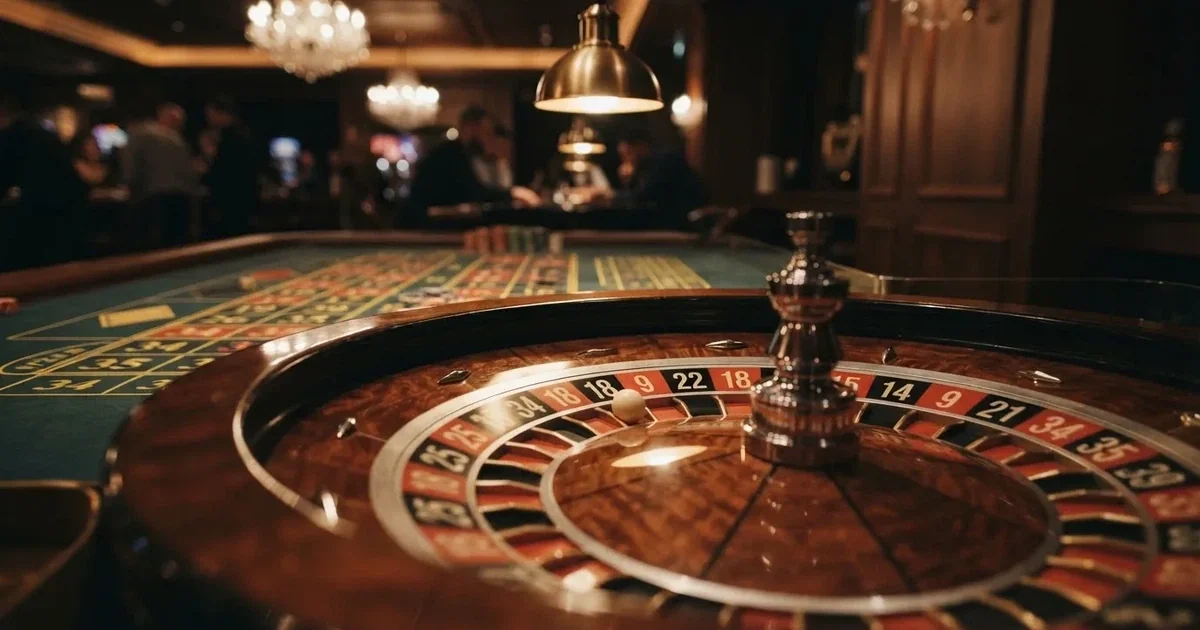
A live roulette table with an English-speaking croupier streams a real wheel and a real dealer to your screen. In Australia, no such table can be hosted legally for residents — the Interactive Gambling Act 2001 prohibits online casino games entirely. What follows is how the wheel works, what the offshore brands that run them look like from the ACMA’s register, and the choice an Australian player is actually making.
Table of Contents
- PayID, debit cards and the queue behind a live roulette payout
- The wheels on a live paytable: single-zero, double-zero and the third zero nobody wanted
- The offshore brands the ACMA has warned over live roulette and similar casino games
- What a live dealer roulette table actually is, and what the English-speaking label adds
- The fundamentals of legality: IGA, ACMA and what changes in 2026
- Pattern-chasing at the wheel, and the limit that actually matters
- Bitcoin at the wheel: same wheel, different deposit rail
- Frequently asked questions about live roulette with English-speaking dealers in Australia
PayID, debit cards and the queue behind a live roulette payout
The payment rail a player chooses for a live roulette table decides how fast the bankroll moves and what happens if anything goes wrong. In Australia, those rails look very different at a licensed wagering service than they do at an offshore casino, because the offshore casino is operating outside the Australian rules.
For licensed Australian wagering — sports, racing, lotteries, keno — the legal deposit routes are debit card, bank transfer, PayID/Osko and BPAY. PayID in particular has become the standard. It links a bank account to a phone number, email or ABN and settles through the New Payments Platform, so a deposit usually clears in seconds rather than the day or two a direct bank transfer can take. BPAY is the older option and is accepted almost everywhere a bank account is; it is slower.
What is not allowed at a licensed Australian wagering service, and has not been since 11 June 2024, is credit. The credit card ban covers credit cards and any credit-related product, with penalties of up to A$247,500 for the operator per breach. Digital currency is covered by the same instrument — no licensed Australian wagering service can take a bitcoin or other crypto deposit. A site asking an Australian player for a credit card or a crypto deposit is, by that fact, operating outside the Australian regime.
None of that applies to a live roulette table. Live roulette is not a licensed product in Australia. No operator licensed here offers it. The legal deposit rails just listed exist for the wagering services Australia does license; they are not available at a live roulette table because no live roulette table is being lawfully provided to Australians in the first place.
What this means at an offshore site is straightforward. The site accepts whatever it accepts, and that typically includes credit cards (which the Australian ban cannot reach from outside the country), crypto (where the volatility, the irreversibility and the absence of a chargeback right replace the protections a debit card would have given), and an e-wallet or two. PayID as a deposit rail is essentially an Australian phenomenon; an offshore live roulette site does not run on it.
E-wallets — Skrill, Neteller, MuchBetter — sit between the player’s bank and the casino. They move money quickly, are widely accepted at offshore sites, and add a layer of separation between the bank statement and the casino. The trade-off is that the e-wallet’s own terms apply to disputes, not the player’s bank’s, and recovering funds through an e-wallet is harder than a chargeback.
The withdrawal side is where the choice of payment rail meets the operator’s review process. A withdrawal request at any licensed Australian wagering service triggers identity and source-of-funds checks; those are routine and the turnaround is published — usually within 24 to 48 hours for PayID, three to five business days for BPAY. At an offshore casino, the same review process runs, but without an Australian complaints body behind it. Stalled withdrawals, refused payouts and unclear bonus terms are recurring patterns in offshore complaints — and the operator has no incentive to resolve them quickly when the player has no escalation route.
A live roulette payout waits on the same review process as any other casino withdrawal. The game’s identity does not change the queue.
An offer described as not requiring a deposit is a different shape of bonus. It is small in dollar terms — usually a handful of free spins or a tiny cash credit — and almost always carries a wagering multiple on any winnings and a cap on how much can be withdrawn from the bonus balance. The headline “no deposit” obscures the conditions; the conditions are the offer. An Australian player considering one should read the maximum cashout, the wagering multiple and the game-weighting list before clicking.
That is the seam the rest of the comparison runs along. A live roulette table at an offshore site accepts your deposit through whatever rail the operator runs; the table itself runs on the same physics as any other roulette wheel; the protection you would have at a licensed Australian wagering service is absent on every count.
The wheels on a live paytable: single-zero, double-zero and the third zero nobody wanted
The wheel that spins under a live dealer’s hand comes in three layouts, and the layout decides the price.
A single-zero wheel has 37 pockets: the numbers 1 to 36 and a single zero. The house edge on every bet, except where a specific table rule softens it, is 2.70%. A double-zero wheel has 38 pockets: 1 to 36, a single zero and a double zero. The house edge on every bet is 5.26%. A triple-zero wheel — rarer, but visible at some lower-end venues and online tables — has 39 pockets (0, 00, 000 and 1-36) and a house edge of 7.69%. The difference between the three is not subtle: a single-zero edge of 2.70% is less than half a double-zero edge of 5.26%, and both are dwarfed by a triple-zero layout where the house takes nearly eight cents of every ten wagered, on average, across many spins.
Some single-zero tables add a rule called en prison or la partage. On an even-money outside bet — red, black, odd, even, high, low — that loses to a single zero, la partage returns half the stake immediately; en prison holds the stake on the table for one more spin. Both rules cut the effective house edge on those particular bets to roughly 1.35%, well below the 2.70% baseline. Look for the rule printed on the table felt before you sit down. If it is not printed, assume it is not in effect.
The wheel’s history is older than most players assume. Roulette likely developed from an Italian game called Biribi; Blaise Pascal may have built a primitive form in the 17th century while researching perpetual motion. The modern game took shape in 18th-century France and was documented in Paris from 1796. The double-zero layout that gives American roulette its worse odds is a 19th-century American addition — a deliberate house edge expansion, not an organic development.
For comparison with the other games that share a casino floor: baccarat’s house edge is 1.06% on the Banker bet, 1.24% on the Player bet and 14.36% on the Tie bet. Blackjack, played with optimal strategy under liberal Las Vegas Strip rules (dealer stands on soft 17, double on any two, double after split, resplit aces, late surrender), runs at about 0.28%; Atlantic City rules push that to about 0.43%. Craps, with the Pass line, runs at 1.41%; Don’t Pass at 1.36%; the Any Craps bet at 11.11%. Roulette’s 2.70% single-zero edge sits squarely in the middle of this spread — better than American roulette’s 5.26%, worse than a played-correctly blackjack hand.
A live dealer table differs from a computer-generated one in that the outcome is determined by a physical ball on a physical wheel rather than by a random number generator. The dealer still runs the game: calls “no more bets”, announces the winning number, collects losing bets and pays winners. Multiple camera angles — wheel-level, overhead, sometimes a dealer’s-eye view — are streamed to the player’s screen. Chat windows let players type to the dealer, who usually responds aloud; this is where the “English-speaking dealer” label earns its keep, because the dealer’s spoken calls are easier to follow in a first language than in a second one.
The same live studios often run several tables in parallel with different minimum bets, different side-bet availability and different dealers. The English-speaking label is a real, marketable feature, but it does not change the wheel under the camera.
Baccarat sits close to roulette in table-game culture but plays very differently. Punto banco, the variant most played today, was developed in Havana during the 1940s and is banked by the house at all times, with both hands played by fixed drawing rules. Cards 2-9 count at face value, 10/J/Q/K count as zero, aces count as one, and totals are taken modulo 10. Punto banco is dealt from a shoe of six or eight decks. Chemin de fer — French for “railway” — is the older two-player variant that emerged from baccarat banque in the late 19th century and is named for being faster than the original. Neither version has a meaningful strategy choice for the player, which is why baccarat edges are quoted per bet rather than per optimal-play figure.
Craps has its own comparison to make. The come-out roll in craps wins immediately on 7 or 11, loses immediately on 2, 3 or 12, and any other number becomes “the point” which the shooter must roll again before rolling a 7 to win the Pass Line bet. Modern craps developed in the United States as a simplification of the European dice game Hazard; Bernard Xavier Philippe de Marigny de Mandeville brought Hazard to New Orleans around 1805, where the simplified game became known as “Pass”, from the French “pas”.
Blackjack’s lineage is older than craps’. The English game vingt-un is the immediate predecessor; a related Spanish game called veintiuno appeared in Miguel de Cervantes’ Rinconete y Cortadillo, written around 1601-1602. Formal rules were published in Britain in 1800, and the name “blackjack” dates from around 1899, with prospectors during the Klondike Gold Rush of 1896-99 credited with giving it its modern name. The cards count simply: number cards at face value, J/Q/K at 10, ace at 1 or 11, and a starting two-card total of 21 — a “blackjack” or “natural” — is the strongest hand.
None of those games changes the wheel. A live roulette table is a live roulette table. The mathematics of the bet is the same at every dealer.
The offshore brands the ACMA has warned over live roulette and similar casino games
This is not a ranking. Online casino games cannot be licensed anywhere in Australia — the Interactive Gambling Act 2001 prohibits the provision of an online casino game, including live dealer roulette, to a person in this country. The eleven brands below are listed because the ACMA itself issued a formal warning over each of them for offering prohibited services to Australians. No bonus terms are quoted: the only sources for those are affiliate marketing pages, and the marketing is not what these eleven entries are about.
| Brand | ACMA action and date | Operator named by the ACMA | Other brands covered by the same ACMA action | Subject support |
|---|---|---|---|---|
| RocketPlay | Formal warning, March 2026 | Pulsup Ltd | — | — |
| Level Up Casino | Formal warning, May 2022 | Dama N.V. | Bambet, Dazard, Rocketplay, Wild Tornado, Cobra Casinos | Bgaming partner listings |
| Woo Casino | Formal warning, March 2025 | Dama N.V. | Spirit Casino | — |
| Spirit Casino | Formal warning, May 2025 | Dama N.V. | Woo Casino | — |
| National Casino | Formal warning, July 2025 | Consolutetish S.R.L. | Bizzo Casino | Wikipedia entry |
| Bizzo Casino | Formal warning, July 2025 (earlier 2022 to TechSolutions) | Consolutetish S.R.L. | National Casino | — |
| Ignition Casino | Formal warning, July 2025 | Bamboo Media | — | — |
| Instant Casino | Formal warning, February 2025 | EOD Code SRL | — | — |
| Jackbit | Formal warning, April 2026 | Ryker B.V. | CasinOK | — |
| Casino Intense | Formal warning, April 2025 | Sterplay Holding Ltd | — | ABC News coverage, ACMA register, Crown Melbourne disclosures |
| Sky Crown | Formal warning, September 2022 | Hollycorn N.V. | Blue Leo | — |
The five brands in this list where the ACMA action named a single brand — RocketPlay, Ignition Casino, Instant Casino, Casino Intense and Sky Crown (in its Hollycorn N.V. pairing with Blue Leo) — give a partial view. The six brands where one operator fronts two or more names in this set — Level Up Casino, Woo Casino, Spirit Casino, National Casino, Bizzo Casino and Jackbit — show that the warnings tend to land at the operator level, not the brand level, and that an operator warning usually covers more than one URL.
A note on the table’s “Subject support” column. The subject here is live roulette with English-speaking dealers, and the column records only what third-party listings say about the brand. Bgaming’s studio listings mention Level Up; a Wikipedia entry lists National Casino; background references name Casino Intense. Brands with no such source carry an em dash.
RocketPlay — two ACMA warnings, two different operators
Dama N.V. took a formal warning over RocketPlay in May 2022; Pulsup Ltd took a second formal warning over RocketPlay in March 2026. Two different operators behind the same brand, in four years, with the same regulator’s letter on each occasion. The brand name has not changed in between, and the prohibited service it offered Australians has not changed either — online casino games, which the IGA 2001 does not license.
What the second warning adds is procedural rather than novel. The ACMA’s grounds were the same: offering online casino games to a person in Australia. The operator behind the URL changed, which suggests the operation has changed hands at least once since 2022. A reader who sees the RocketPlay name still being used at an .com.au domain after that history has their answer: the brand outlasted any single operator’s compliance effort.
Level Up Casino — a partner studio listing alongside a 2022 ACMA warning
Bgaming’s own listings include Level Up Casino among the studios the game distributor works with. The ACMA’s formal warning over Level Up went to Dama N.V. in May 2022 and was one of six brand-level warnings issued to that operator in the same round — Bambet, Dazard, Rocketplay, Wild Tornado and Cobra Casinos were named alongside Level Up in that publication.
Two affiliations that do not quite line up. A studio-distribution listing describes the games the brand offers on its platform; an ACMA warning describes the legal status of the operation offering them to Australians. Both can be true at once, and both are. The regulator’s view is the one that determines the legal position; the studio listing is the commercial context.
Woo Casino — the first Dama N.V. warning in 2025
Dama N.V. took a formal warning over Woo Casino in March 2025. Two months later, the same operator took a second warning over Spirit Casino. Two brands, two warnings, one operator — the ACMA’s action did not cover both in one go, and the gap between them was a quarter.
The pace of warnings is itself information. The regulator’s first formal letter is rarely the last; a second letter from the same regulator, to the same operator, naming a different brand, suggests the operator’s Australian-facing operation continued after the first letter.
Spirit Casino — the second Dama N.V. warning in 2025
Dama N.V. took a formal warning over Spirit Casino in May 2025, the second of its two warnings that year after Woo Casino in March. The ACMA’s published letters named each brand separately.
Spirit Casino and Woo Casino sit close to each other in the Dama N.V. cluster. Both warnings followed the same template; the operator-level pattern is the regulator’s actual target.
National Casino — a two-brand action in July 2025
The ACMA’s formal warning over National Casino went to Consolutetish S.R.L. in July 2025 and covered Bizzo Casino as well, in the same published action. A Wikipedia entry lists National Casino among the brands associated with the operator group.
Two brand names in one regulator’s letter is an efficient way to read the ACMA’s view: the warning is at the operator level, not the brand level. A reader looking at either name is looking at the same underlying operation.
Bizzo Casino — two ACMA actions, two different operators
Consolutetish S.R.L. took the most recent formal warning over Bizzo Casino in July 2025. The brand had already been the subject of a 2022 formal warning to TechSolutions (CY) Group Limited and TechSolutions Group N.V.
A second operator behind the same brand, with the same regulator’s letter on each occasion, is the pattern RocketPlay shares. Bizzo has changed hands at least once under ACMA scrutiny, and the new operator has also been warned. The lesson is at the brand level: a new operator’s name does not change the underlying legal position.
Ignition Casino — Bamboo Media’s lone Australian entry
The ACMA’s formal warning over Ignition Casino went to Bamboo Media in July 2025. No other Bamboo Media brand appears in this set.
A smaller footprint, in this regulator’s view at least. The action was published; the operation’s other brands have not produced a separate Australian-facing warning in the period this comparison covers.
Instant Casino — EOD Code SRL’s lone entry, February 2025
EOD Code SRL took a formal warning over Instant Casino in February 2025, early in the 2025 enforcement push. No other EOD Code SRL brand appears in this set.
The action is on the regulator’s published register; the operator has no second brand in this list to compare it with. The early-in-the-year timing tells a reader only that the warning landed before most of 2025’s other actions; it does not say anything about the operator’s larger Australian reach.
Jackbit — Ryker B.V.’s two-brand action in April 2026
Ryker B.V. took a formal warning over Jackbit and CasinOK in April 2026, both covered in the same published action. CasinOK is not in this list because the ACMA action came in the same letter rather than as a separate brand entry.
Two brands, one operator letter. The pattern repeats: the regulator’s unit of action is the operator, and the operator usually fronts more than one brand.
Casino Intense — a prohibition that surfaces across three independent references
The ACMA’s formal warning over Casino Intense went to Sterplay Holding Ltd in April 2025. The brand appears across ABC News’s coverage of the enforcement landscape, the ACMA’s own register, and Crown Melbourne’s regulatory disclosures — three references to the same warning. No other Sterplay Holding brand is in this set.

A warning whose reach into the public record is broader than most. ABC News, the regulator and a major Australian casino operator all name it in their respective contexts. The convergence is not independent confirmation of the underlying facts; it is the same single warning appearing in three different listings.
Sky Crown — Hollycorn N.V.’s two-brand action from 2022
Hollycorn N.V. took a formal warning over Sky Crown and Blue Leo Casino in September 2022, the ACMA’s published letter covering both brands in one action. This is the oldest warning in the set, and it is still on the regulator’s public register without retraction.
The action has not been quietly dropped. The brands continue to be named together in the ACMA’s record of formal warnings.
What a live dealer roulette table actually is, and what the English-speaking label adds
A live dealer roulette table is not a software rendering. The stream carries a physical wheel — usually a tilted-precision model with the numbers 0 to 36 laid out around the rim — and a real ball spun by a real person. The dealer stands behind the wheel, calls the open and close of betting, drops the ball, reads the winning pocket, and pays out losing and winning bets in chips placed on the table layout. The player, watching the stream, clicks on the betting grid to place chips; the system transmits the bets to the table; the dealer sees them on a screen beside the wheel.
The contrast with a computer-generated (RNG) roulette game is the contrast between physics and code. An RNG table uses a random number generator to pick a winning number on each “spin” — there is no spin, only an animation of one. A live table’s outcome is determined by gravity and the wheel’s imperfections, which is closer to what a casino-floor player would experience and slightly farther from a precise mathematical model. The house edge is the same for both at 2.70% on a single-zero layout, because the edge is in the paytable, not in the physics.
Multiple camera angles are standard. Wheel-level captures the ball’s bounce; overhead shows the whole layout; a dealer’s-eye view is sometimes added for the chat window. Players choose their camera and chat from the interface. Slow-motion replays of the spin’s final bounce are a common feature on the bigger live products, useful for confirming the winning pocket on close calls.
The dealer is the live product’s centre of gravity. A studio hires croupiers who can run the game in several languages, and the games are scheduled so that English-speaking tables are running most hours of the day. The dealer’s spoken calls — “no more bets”, “eleven red”, “make your plays” — are not subtitled on every table. Following a French or Spanish dealer’s calls on a tight betting window is doable but harder than following an English-speaking one.
That is the feature the “English-speaking dealers” label describes, and it is a real one. Studios market it because players who do not speak the studio’s other languages lose time at the betting window waiting for a translation. English covers a large share of the global online player base, so English-speaking tables are well-staffed and easy to find. None of that changes the legal position: a live dealer roulette table streamed to an Australian resident is the same prohibited interactive gambling service whether the dealer speaks English or not.
The mobile experience mirrors the desktop one on the same stream. The studio’s output is the same; the player’s interface wraps it for a smaller screen. A stable connection matters — a live stream tolerates less buffering than an RNG animation — and most studios offer a lower-bandwidth option for mobile networks. Casino apps on iOS and Android typically embed the same live lobby in their native shell; the underlying stream is the same.
Minimum bets on a live table vary widely. Some tables accept a one-dollar chip on an outside bet; high-roller tables start at A$50 or A$100 a spin. The table minimum is visible on the lobby screen before the player sits, and a click on the betting interface rejects a stake below the minimum. Side bets — typically racetrack bets on number neighbourhoods, or pairs of numbers like “red snake” — are available at some tables and absent at others; their edges are higher than the standard layout’s, and the offer varies by studio.
Licensed Australian casinos do offer roulette, in person. Crown Melbourne’s table games are regulated by the Victorian Gambling and Casino Control Commission, which took over from the Victorian Commission for Gambling and Liquor Regulation on 1 July 2022 and operates under the Casino Control Act 1991. Crown’s published table game list includes three baccarat variants — Traditional Baccarat, Crown Baccarat and 2 to 1 Baccarat — alongside its blackjack and roulette offerings. The commission approves any rule change to a table game before it is introduced; an example is the renaming of Crown’s “Perfect Pairs” blackjack side bet to “Crown Pairs” on 23 December 2024, with a “Free Bet” option and a “Pot of Gold” side bet introduced on 25 March 2024. This is what a licensed Australian roulette table looks like: physical, on the floor, under the regulator’s eye.
The choice in front of an Australian player is, at root, a constrained one. The legal options are: do not play online; or play at a licensed land-based casino in Australia (Crown Melbourne in Victoria, The Star Sydney in New South Wales, and other licensed venues), where a real wheel and a real dealer do exist but the player has to be on the floor. The illegal option, in the regulatory sense, is to play live online at an offshore site: the operator is the target of the IGA 2001, the player is not prosecuted, and the player has no Australian consumer protection if anything goes wrong. Comparing the eleven brands named by the ACMA does not change that. The brand might run an English-speaking live table; the law does not care which language the dealer speaks.
The fundamentals of legality: IGA, ACMA and what changes in 2026
The Interactive Gambling Act 2001 is the statute that decides the legal position of a live roulette table in Australia. It was amended in 2017 by the Interactive Gambling Amendment Act 2017, which strengthened the regulator’s powers and added the offence of providing a prohibited interactive gambling service to a person in Australia. The 2001 Act, as amended, makes it an offence for an overseas operator to offer online casino games — including live dealer roulette — to a person physically in this country. No state or territory licences online casino games. Lotteries, keno, and pre-event wagering on sports and racing are licensed; live dealer roulette is not.

The regulator is the Australian Communications and Media Authority (ACMA). The ACMA investigates complaints, issues formal warnings, and — under the 2017 amendments — can direct Australian internet service providers to block illegal sites at the network level. The player who bets at an offshore casino is not the regulator’s target; the operator is. But the player has no Australian complaints body to escalate to, no recourse if a withdrawal is refused, and a real chance the site is blocked while a balance is still on it.
The enforcement record is the second thing the ACMA’s published numbers show. As of June 2026, the ACMA had asked Australian ISPs to block 1,751 illegal gambling and affiliate marketing websites since the first blocking request in November 2019, and more than 230 unlicensed gambling services had left the Australian market since enforcement was strengthened in 2017. A single round in June 2026 covered 12 sites: 7Signs, ChromaBet, Donbet, Duospin, Freshbet, Slots Gem, Jacks Club, Lucky Start, Pointsbetz, Spinrise, Vinyl Casino and Wildsino.
The pace is uneven. Averaged over the roughly six and a half years from November 2019 to mid-2026, the 1,751 blocked sites work out to between roughly 250 and 270 a year, or about 22 a month on the long-run average. Individual rounds have been both heavier — the June 2026 round alone covered 12 sites, and earlier rounds in the program have covered more — and lighter, with quiet months where no new blocks were directed. The 230-or-so services that left the market without being blocked run alongside the blocking figure; together they describe an enforcement programme that is steady rather than dramatic, and that does not need a single large action to keep adding to the totals.
The scale of the market on the other side of these numbers is large. H2 Gambling Capital’s 2025 report estimates that Australians lose about A$3.9 billion a year to illegal gambling sites, and that the share of gambling going through legal channels fell from 74% in 2021 to 64%. The illegal share has grown. The block list is the regulator’s response, and the response has not bent the trend.
What the block looks like at network level is worth knowing. Once an ACMA direction is in force, Australian ISPs typically implement DNS blocking and IP blocking; the player’s browser is stopped before the page loads. Mirror domains and VPN workarounds exist, but the ACMA can direct blocks against new mirror domains as they appear, and the operator’s incentive to keep generating mirrors is reduced by the cost. A player who registered with the operator before a block and still has a balance on the account will usually find the account unreachable from an Australian IP — without recourse to the ACMA or an Australian court to recover the balance.
The Northern Territory Racing and Wagering Commission (NTRWC) regulates 52 of Australia’s online bookmakers — including Sportsbet, Bet365 and Ladbrokes — for tax reasons. These are wagering services, not casino games, and the commission has no full-time staff and meets once a month in Darwin. Its existence does not imply that an Australian licence covers live dealer roulette; the licences it issues do not.
The interactive gambling reform for 2026 passed Parliament on 19 August 2026. The Interactive Gambling Amendment (Gambling Reform) Bill 2026 introduces new advertising and inducement measures that commence on 1 January 2027 — law with a start date, not in force on a 2026 page. The implication for an offshore live roulette operator marketing to Australians is that the inducement side of their operation (sign-up offers, affiliate bonuses, “free spin” promotions) will face Australian rules from that date.
The credit card and digital currency ban that took effect on 11 June 2024 covers all licensed online and phone wagering services. Penalties for operators run up to A$247,500 per breach. The ban does not extend to offshore casinos outside Australia’s enforcement reach, which is why credit card deposits at an offshore live roulette site remain a feature of those sites rather than a violation the regulator can stop.
Player protection at licensed Australian services includes BetStop, the National Self-Exclusion Register, which has been live since August 2023. BetStop binds every Australian-licensed online and phone wagering service; an Australian who has self-excluded cannot open a new account with any of them until the exclusion period ends. The register does not bind offshore casinos. Self-excluding via BetStop excludes the player from licensed Australian wagering, not from offshore sites that have no connection to the register. Gambling Help Online and the National Gambling Helpline on 1800 858 858 are free, 24/7 and available to anyone in Australia regardless of where they have been playing.
The tax treatment of recreational winnings is set by section 6-5 of the Income Tax Assessment Act 1997. Gambling winnings of a recreational player are not assessable income and losses are not deductible — the player pays no tax on a win and gets no deduction for a loss. A person who carries on a business of gambling is taxed differently, but that is a different question the comparison does not address.
Pattern-chasing at the wheel, and the limit that actually matters
A live roulette table is a study in independent events. The wheel has no memory. A run of reds does not make black “due” on the next spin; a number that has not appeared in fifty spins is no more or less likely than a number that appeared in the last five. The gambler’s fallacy — the belief that past outcomes change future probabilities — is the single most expensive misperception a roulette player carries to the table.
Strategies that ask the player to raise bets after losses — the Martingale and its variants — do not change the odds. They change the size of the bets and the volatility of the bankroll. A player running a Martingale on red at a single-zero table with a A$1 base unit and a A$500 ceiling is exposed to the same 2.70% house edge on every spin; the difference is that a long enough losing streak wipes out the ceiling in one spin rather than slowly eroding the bankroll. The expected loss over many spins is the same. The distribution of outcomes is not.
Watching the stream helps fuel the fallacy. The dealer announces each spin in real time; previous results display on a side panel; a chat window fills with players reading the same data. The visual record makes a pattern feel like information. It is not. Each spin is its own event, and the wheel does not know what came before.
A fixed loss limit is the single most effective tool a player has. Decide before sitting down what the bankroll can lose; stop when it is gone; leave the table. The limit works because the player sets it when no spin has happened yet, before the run of reds or the near-miss on the number bet has pulled the bankroll toward a chase. Defence is a number chosen before the session started.
The licensed Australian wagering services are required to offer deposit limits, time-outs, session reminders and self-exclusion. A player at a licensed venue can set a daily deposit cap and have the system enforce it. The offshore casino has no such requirement. A player at an offshore site is relying on the site’s own responsible-gambling tools, which range from comprehensive to absent. BetStop, as noted in the section on legality, does not cover them.
The warning signs of a session that has slipped out of the player’s control are not subtle. Chasing losses, betting more than planned, lying about play, borrowing to play — each is a step past a fixed loss limit that has already been forgotten. The National Gambling Helpline on 1800 858 858 takes calls 24 hours a day, free, with a chat option at Gambling Help Online. The line is for anyone affected by their own or someone else’s gambling, regardless of the channel they have been playing through.
For the Australian punter the calculus is layered. Offshore roulette is illegal for the provider, the offshore site offers no AU protection, and BetStop does not reach it. The responsible-gambling safety net that an Australian-licensed venue must provide is absent. The pattern-chasing player is the player the wheel was built for. The wheel’s edge is small per spin and relentless across many. The defence is not a system; it is a number the player chose before the session started.
Bitcoin at the wheel: same wheel, different deposit rail
A bitcoin-funded live roulette table spins the same physical wheel as a card-funded one. The dealer is the same; the betting interface is the same; the house edge is the same. What bitcoin changes is the deposit and withdrawal rail, not the odds of any individual spin.
Crypto’s legal position at a licensed Australian wagering service is closed. Digital currency has been a banned payment method for all licensed online and phone wagering services since 11 June 2024. A licensed Australian sportsbook or racing book cannot take a bitcoin deposit; the credit card and crypto bans were issued under the same instrument, with the same penalties of up to A$247,500 per breach. The ban does not extend to offshore casinos outside Australia’s enforcement reach, which is why crypto deposit options remain a feature of offshore live roulette sites rather than a violation the regulator can stop.
For a player at an offshore site, a crypto deposit means three concrete things. First, no bank intermediation: the deposit clears on the blockchain, usually within minutes, without going through the player’s card network or bank. Second, no chargeback right: a credit card deposit can be reversed in a dispute; a bitcoin transaction cannot. Third, no Australian consumer protection: a withdrawal stall or refusal at an offshore crypto casino has no Australian escalation route — the same gap that exists at any offshore site, regardless of the rail.
The “anonymity” of crypto is more limited than the marketing suggests. Blockchain transactions are pseudonymous — the address is public, the real-world identity behind it is not. Most licensed and many unlicensed operators run Know Your Customer checks at withdrawal, requiring ID, address and source-of-funds documentation before a payout is processed. The crypto deposit is anonymous in transit; the withdrawal is not.
Why crypto is popular for offshore gambling has less to do with anonymity and more to do with speed, lower fees and jurisdictional arbitrage. The player can fund an offshore account without going through a card network that might block gambling transactions; the operator can receive funds from a country whose regulator cannot reach the operator’s bank. Both sides benefit from a rail that is fast and hard to reverse.
Specific crypto assets behave differently at the cashier. Bitcoin’s confirmation time runs around ten minutes for a single confirmation; some operators wait for three or six before crediting, which can stretch the deposit time beyond an hour. Ethereum’s confirmation is faster, but the network fees can spike during congested periods. Tether (USDT) and other stablecoins remove the volatility risk that comes with holding bitcoin or ethereum while the bet is in play — the player is not exposed to a price swing between deposit and withdrawal. The choice of asset is a choice of trade-off: speed, fee, stability.
The honest assessment is plain. A bitcoin deposit does not give an Australian player any legal cover for an activity that is prohibited under the IGA 2001. The provider is the one the regulator targets; the player’s position does not change because the rail is crypto rather than card. The protection a player gives up — chargeback rights, Australian consumer law, an Australian complaints body — is the same protection a player gives up at any offshore casino, and the crypto rail does not bring it back.
Frequently asked questions about live roulette with English-speaking dealers in Australia
Is it legal to play live roulette for real money at an online casino in Australia?
No. The Interactive Gambling Act 2001, strengthened in 2017, prohibits the provision of online casino games — including live dealer roulette — to a person in Australia. No state or territory licences online casino games. Licensed products are limited to pre-event sports and racing bets, lotteries and keno.
What is the practical difference between a single-zero and a double-zero roulette wheel?
A single-zero (European) wheel has 37 pockets and a 2.70% house edge; a double-zero (American) wheel has 38 pockets and a 5.26% edge. Some European tables add en prison or la partage on even-money bets, which lowers the effective edge on those to roughly 1.35%.
Why might a live roulette table specifically advertise English-speaking dealers?
Studios market croupiers by language because the dealer’s spoken calls — results, prompts, chat — are easier to follow in the player’s first language. English-speaking dealers are among the most common because English covers a large share of the global online player base.
Does a bitcoin-funded live roulette table use a different wheel to a card-funded one?
No. The deposit method is independent of the game. A live roulette table streams a physical wheel and a real ball; bitcoin and card deposits sit on the same wheel with the same paytable and the same house edge. Only the rail changes.
Can betting patterns based on previous spins improve the odds on a live roulette table?
No. Each spin is independent of the previous one. The wheel has no memory. Strategies that raise bets after losses — Martingale and similar — do not change the odds, only the size of the bets and the bankroll’s volatility. The house edge stays the same.