
Best online casino payment methods for Aussies: what the ACMA record actually shows about how money moves at offshore casinos
 Available in US
Current as of 23 September 2026; licence claims and ACMA actions cross-checked against the Australian Communications and Media Authority’s published enforcement register.

Anyone searching for the best online casino payment methods for Aussies is, in practice, asking one of three questions. How do deposits reach an offshore casino from an Australian bank account, why do withdrawals stall when they do, and which of these routes can the player actually control. The honest answer runs through a quieter fact first: the product those payments buy is prohibited under Australian law. Every brand this page names sits on the Australian Communications and Media Authority’s published list of formal warnings, and none of them holds an Australian licence, because none can.
The angle of this page is choice. What routes exist, who each one suits, and what the Australian legal frame does to each. That frame decides the meaning of every figure that follows.
Table of Contents
- The landscape at a glance: eleven operators on the ACMA register
- The fundamentals of how money moves to and from these sites
- The legal frame: what the Interactive Gambling Act 2001 does to a deposit
- Player protection: what is and is not connected to BetStop
- Cryptocurrency and the question of traceability
- Settlement, payout speed and the gap between marketing and the bank statement
- The blocking-rate calculation: what the ACMA’s pace of enforcement actually looks like
- Closing on what this leaves the Australian reader
- Frequently asked questions about online casino payment methods in Australia
The landscape at a glance: eleven operators on the ACMA register
The Interactive Gambling Act 2001 prohibits offering online casino games, online pokies and in-play wagering to anyone in Australia. No state or territory issues a licence for those products. What is licensable is wagering on races and sport placed before the event, lotteries and keno. The ACMA’s job is to investigate breaches and direct internet service providers to block offending sites. Between November 2019 and the latest round reported on 26 June 2026, the agency asked Australian ISPs to block 1,751 illegal gambling and affiliate marketing websites, and more than 230 unlicensed services left the Australian market after enforcement was strengthened in 2017.
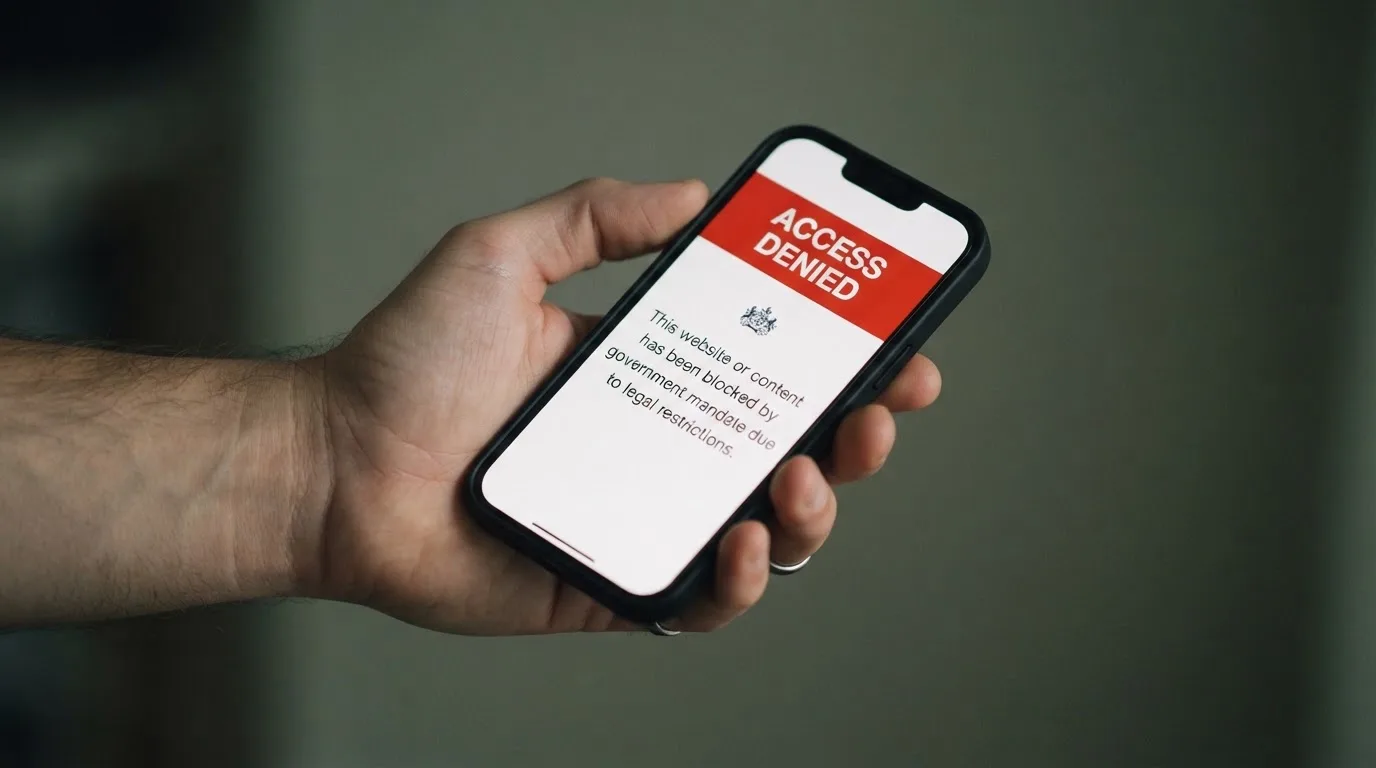
The eleven brands below appear on this page for one reason each: the ACMA itself issued a formal warning over them for offering prohibited services to Australians. None is a recommended place to play. Each carries the date of the warning and the operator entity the ACMA named. The order follows the date of the most recent ACMA action, with the oldest at the foot of the list.
| Brand | ACMA action and date | Operator named by the ACMA | Subject support |
|---|---|---|---|
| RocketPlay | Formal warning, March 2026; earlier action against Dama N.V., May 2022 | Pulsup Ltd | Listings mention payment methods only |
| Jackbit | Formal warning, April 2026 | Ryker B.V. | — |
| Instant Casino | Formal warning, February 2025 | EOD Code SRL | Listings reference ecoPayz and PayID |
| Casino Intense | Formal warning, April 2025 | Sterplay Holding Ltd | Listings mention AUSTRAC and BetStop |
| Ignition Casino | Formal warning, July 2025 | Bamboo Media | — |
| National Casino | Formal warning, July 2025 | Consolutetish S.R.L. | Listings reference the ACMA, AUSTRAC and BetStop |
| Bizzo Casino | Formal warning, July 2025; earlier action against TechSolutions, 2022 | Consolutetish S.R.L. | Listings mention payment methods only |
| Woo Casino | Formal warning, March 2025 | Dama N.V. | — |
| Spirit Casino | Formal warning, May 2025 | Dama N.V. | — |
| Sky Crown | Formal warning, published 2022 | Hollycorn N.V. | — |
| Level Up Casino | Formal warning, May 2022 | Dama N.V. | Listings mention Westpac gambling block |
Three observations carry the rest of the table’s weight. The Dama N.V. cluster alone covers four of the eleven brands here, and the ACMA has had to re-warn it twice in eighteen months. Consolutetish S.R.L. is a single corporate name behind two separate brands on this list, and a third (Bizzo Casino) had already been warned in 2022 under a different operator entity. The “subject support” column is sparse on purpose: where research could not confirm what each site actually uses at the cashier, this page does not invent a deposit rail. The empty cells are not gaps in the analysis; they are the analysis.
| Method | Speed | Availability |
|---|---|---|
| Osko / PayID | Under 1 minute | 24/7 at all major banks |
| Debit Card | Seconds | Widely available |
| BPAY | Business days | Standard biller list |
The fundamentals of how money moves to and from these sites
Every payment that crosses an Australian bank account toward an offshore casino sits on top of the same plumbing. A debit card payment runs through Visa or Mastercard and lands at the casino in seconds. A bank transfer routed through Osko reaches the recipient in under a minute, around the clock, including weekends. PayID sits on the same rail but adds an extra layer: the account-holder name appears before the payer confirms, which is the only verification step a player ever gets to see.

Two structural points decide everything downstream.
First, the New Payments Platform, the infrastructure that powers Osko and PayID, became accessible to the public on 13 February 2018. It is owned by a non-profit whose thirteen shareholders include the Reserve Bank of Australia and the major banks. Over 25 million PayID identifiers were registered on it by April 2025, and more than 100 Australian financial institutions offer PayID-based instant transfers through it. That is the rail an offshore casino receives funds on, the same rail an Australian pays a tradie with, and the same rail a scammer impersonates. The speed is identical in each case.
Second, the merchant category code. Australian banks that run a gambling block, including Westpac, ANZ and Commonwealth Bank, refuse authorisation on transactions tagged with the merchant category code “Betting/Casino Gambling” on eligible personal credit and debit cards. Westpac’s block works at card level; ANZ’s block, once switched on in the ANZ app, blocks gambling transactions made through a linked digital wallet such as Apple Pay on the eligible card, not just the physical card; Commonwealth Bank’s “gambling lock” sits inside the CommBank app with the same intent. Each bank publishes the same caveat: not every gambling transaction will be blocked, and some non-gambling transactions might be blocked in error. The point of those blocks is not to make spending impossible. It is to put a deliberate friction step between the player and the merchant.
A figure that matters more than it looks: by the end of 2025, Apple Pay, Google Pay and Samsung Pay transactions together made up around 45 per cent of all card payments in Australia by number. The wallet is no longer a niche rail. Whether the bank block fires on the underlying card is the question, and the answer varies.
The legal frame: what the Interactive Gambling Act 2001 does to a deposit
Offering prohibited interactive gambling services to a person physically in Australia is the offence the Interactive Gambling Act 2001 names. The 2017 amendments gave the ACMA its enforcement teeth, and a further 2023 amendment took aim at the payment side of the trade: under it, Australian-licensed online wagering services cannot accept payment by credit card or any other credit-related product, and digital currency is also out of bounds as a payment method for licensed wagering. Legal deposit routes for licensed Australian wagering are debit card, bank transfer, PayID/Osko and BPAY.
The provision is deliberately asymmetric. It restricts the licensed half of the market heavily, and the offshore half operates outside the regime entirely. An Australian punter who uses a debit card at a locally licensed sportsbook is using the same instrument an Australian punter uses at an offshore casino; the difference is who is bound by what rule. A licensed operator must refuse the credit card. An offshore operator can take whatever routes its payment aggregator has wired up, including cards the player’s own bank has flagged as gambling-tagged at the merchant level.
Two dates matter for a 2026 reader. On 11 June 2024 the credit-card and digital-currency ban on licensed wagering services came into force, with penalties for operators up to A$247,500. On 19 August 2026 the Interactive Gambling Amendment (Gambling Reform) Bill 2026 passed Parliament; its advertising and inducement measures commence on 1 January 2027. It is law with a start date, not yet in force on this page.
A separate piece of plumbing runs through the Northern Territory. The Northern Territory Racing and Wagering Commission regulates 52 of Australia’s online bookmakers, including Sportsbet, Bet365 and Ladbrokes, which are licensed in the Territory for tax reasons. The commission has no full-time staff and meets once a month in Darwin. That is the entire standing regulatory capacity for the licensed half of the Australian online wagering market. The offshore half has no Australian regulator at all.
Player protection: what is and is not connected to BetStop
BetStop, the National Self-Exclusion Register, has been live since August 2023. A player can register once and be excluded from every Australian-licensed online and phone wagering service that takes bets from Australians. It does not cover offshore casinos. The exclusion runs for a chosen minimum period, and the registration is the single most powerful step a person can take against a licensed operator.
For the offshore segment, the protection that does exist sits one rail upstream: at the bank. A player who turns on ANZ’s gambling block in the ANZ app faces a 48-hour cooling-off period before the block can be removed. The block covers eligible cards, including digital-wallet transactions on those cards, and again the same caveat applies: not all gambling transactions will be blocked, and some non-gambling transactions might be blocked in error. Westpac’s card-level block fires on merchant category codes without the cooling-off step. Commonwealth Bank’s lock sits inside the CommBank app with comparable intent.
The self-exclusion tool an Australian punter can actually enforce is therefore the bank block, not the offshore site’s own self-exclusion toggle. A site that has been warned by the ACMA and continues to operate from outside the regime has no obligation to honour a self-exclusion request, and no Australian complaints body a player can approach if it does not. BetStop binds the operator it covers, not the one a reader is searching for.
The National Gambling Helpline on 1800 858 858 is free, operates around the clock, and is reachable by chat at Gambling Help Online. It is the one number that works whatever the operator does.
Cryptocurrency and the question of traceability
Cryptocurrency does not, on its own, make an offshore casino transaction private. Bitcoin is a public ledger; every transaction sits on it permanently and is visible to anyone who holds the receiving address. What crypto changes is the friction a bank can apply. A debit card routed through an Australian issuer carries the merchant category code the bank blocks on, which is why a casino asking an Australian player to deposit by crypto is usually doing so because its card processing has been cut off, not because it has anything to hide from a chain analyst.
Two regulatory facts sharpen the picture. Cryptocurrency is banned as a payment method for Australian-licensed wagering services as of 11 June 2024. AUSTRAC’s threshold-transaction-report rule, which requires reporting of transfers of A$10,000 or more, applies only to physical cash. Ordinary electronic bank transfers are not subject to that per-transaction reporting requirement, regardless of the amount sent. A crypto transfer does not surface through the AUSTRAC threshold-report mechanism at all, which is the structural reason an offshore operator routes Australian deposits this way once cards start failing.
The traceability question cuts the other way too. A blockchain transaction is permanent; a bank statement can be closed. Once a wallet address is linked to a casino withdrawal, that link does not age out of any database. For an Australian punter, the practical answer is that crypto is faster and harder for the bank to block, and easier for a future counterparty to trace. Neither property matches what “anonymous” usually means in the marketing.
Settlement, payout speed and the gap between marketing and the bank statement
Osko settles in under a minute between participating Australian banks, 24/7, regardless of whether the transfer is addressed to a BSB and account number or to a PayID. The casino end of the same transfer is a different system entirely. The casino’s payment processor receives the funds, runs its own checks, queues the deposit, and only then credits the player’s account. The minute is real; the gap that follows it can stretch from minutes to days, and an offshore operator that has been warned by the ACMA has every commercial reason to slow withdrawals once a player asks.
PayID adds one genuine protection. Paying to a PayID displays the name of the account holder before the transfer is sent, and Australian Payments Plus warns that being asked to transfer money to a PayID on an illegal gambling site is almost certainly a scam. The screen is not a licence check, but it is a check. It tells the payer whose name sits on the destination account, which is more than a BSB and account number offers.
BPAY is a different product. It is a bill-payment service that has run in Australian online banking since 18 November 1997, available at more than 140 banks and financial institutions and accepted by over 95,000 businesses. The payer enters the Biller Code and the Customer Reference Number printed on the bill. BPAY sits inside the licensed half of the market; an offshore casino does not typically offer it. Its relevance here is structural: it shows how the same Australian banking rails can be used to pay a licensed bill quickly and to settle at a casino slowly, depending on whose hands the rails end in.
The marketing word to deflate is “instant withdrawal”. The fastest an Australian punter can send money into an offshore casino is roughly a minute. The fastest the same punter can get money back out is a chain of three actors: the casino’s own payments team, the casino’s payment processor, and the player’s bank. Each step adds time. Each step also adds a place for a transaction to stall.
American Express sits inside the same card rail but with one structural twist. Unlike Visa or Mastercard’s four-party network, Amex traditionally issues cards and processes transactions itself as a three-party scheme. That history shows up in the Reserve Bank’s July 2025 review, which proposes removing surcharges only on eftpos, Mastercard and Visa transactions, explicitly leaving American Express outside the proposed ban. The implication for an offshore casino that accepts Amex is that the surcharge stays, and the operator’s per-transaction margin on an Amex deposit is higher than on a Visa or Mastercard deposit. None of that protects the player.
The blocking-rate calculation: what the ACMA’s pace of enforcement actually looks like
The arithmetic this page earns is the speed of the ACMA’s blocking pipeline. From the first blocking request in November 2019 to the round reported on 26 June 2026, the ACMA asked Australian internet service providers to block 1,751 illegal gambling and affiliate marketing websites. That is the running total.
The period from November 2019 to the end of June 2026 spans six years and roughly eight months. Dividing 1,751 sites by that interval gives a long-run average of roughly 265 sites blocked per year, or around 22 per month, over the life of the regime. The rate has not been flat. The earlier years of the regime were slower; recent reporting rounds have been larger. A reader should treat the headline number as a band, not a calendar: somewhere between a low double-digit number of sites blocked per month and an annual run-rate of around 265, depending on the slice of time taken.
What the arithmetic says, plainly, is that an operator warned in one round and not blocked in that round can find itself blocked in the next. The pipeline is not symmetric: warnings precede blocks, and the gap between warning and blocking request is what gives the regime its deterrent bite.
Closing on what this leaves the Australian reader
For an Australian punter the practical question is not which offshore casino pays fastest. The Australian legal frame makes that question moot. Every brand on the list above has been warned by the ACMA for offering prohibited services to Australians. Every one of them can be blocked with a balance still on it. None of them sits inside BetStop, and none of them sits inside the National Consumer Protection Framework.
The lawful routes for Australians are licensed sports and race wagering, licensed pokies at a physical venue, lotteries and keno. For anyone finding the offshore comparison pages because they are losing more than they meant to, the National Gambling Helpline on 1800 858 858 and Gambling Help Online are free and 24/7, and BetStop is the self-exclusion tool that actually binds the licensed half of the market. The legal frame is not a footnote on this page; it is the page.
Frequently asked questions about online casino payment methods in Australia
What payment methods are commonly advertised by offshore casinos targeting Australians?
The cashier at an ACMA-warned operator typically lists Visa, Mastercard, American Express, bank transfer routed through Osko or a PayID, ecoPayz and various cryptocurrencies. Australian banks run gambling blocks that fire on the merchant category code “Betting/Casino Gambling”, which is why the same casinos frequently route around the cards by asking for a bank transfer or a crypto deposit.
How does an Osko transfer compare with a card payment for speed?
Osko settles between participating Australian banks in under a minute, 24/7 including weekends, whether addressed to a BSB and account number or to a PayID. The card rail is also fast at the front end, but the bank gambling block fires on the merchant category code before the deposit is processed, which is where the card fails where Osko sometimes succeeds.
Is it legal for an online casino to process payments from players in Australia?
Offering prohibited interactive gambling services to a person in Australia is an offence under the Interactive Gambling Act 2001, and the ACMA investigates and issues formal warnings and blocking requests against offenders. The individual player is not prosecuted; the target is the provider. An offshore casino gives no Australian consumer protection, no complaints body and no recourse if a withdrawal is refused, and can be blocked with a balance still on it.
Are cryptocurrency payments harder to trace than a bank transfer?
Bitcoin is a public ledger; every transaction is visible permanently to anyone with the receiving address. Crypto is harder for an Australian bank to block at the merchant category code level, and easier for a future counterparty to trace. The marketing word “anonymous” overstates both directions.
What makes a casino payment method secure rather than just fast?
The only verification a player ever sees on these rails is the PayID name check before an Osko transfer is sent. Everything else, including credit-card tokenisation, ecoPayz account identifiers and crypto wallet addresses, is a payment-processor convenience rather than a player protection. The structural protections, BetStop, bank gambling blocks and the ACMA’s blocking regime, sit outside the payment itself.
Does PayID offer any extra protection compared with a BSB and account number?
PayID shows the account-holder name before the transfer is confirmed, which is a check a BSB and account number does not offer. Australian Payments Plus warns that being asked to transfer to a PayID on an illegal gambling site is almost certainly a scam. The name on screen is not a licence check, but it is the only one an Australian punter gets to see at the moment of payment.
Published by the Casino VIP Info team.