
Apple Pay at offshore casinos aimed at Australian players: what the payment rail actually buys you, and what the law says about the site at the other end
A player in Australia typing “casino that accepts Apple Pay” into a search bar gets a tidy answer back: yes, here is a list of offshore sites that list Apple Pay in their cashier page. The list is real. The promise it sells is not. The Interactive Gambling Act 2001 makes it an offence for any operator to provide online casino games or online pokies to a person physically in Australia, and the Australian Communications and Media Authority has been issuing formal warnings and blocking requests against offshore sites that target the country regardless of what payment methods they advertise. Apple Pay is the rail; the site at the other end is the part the rail cannot fix.
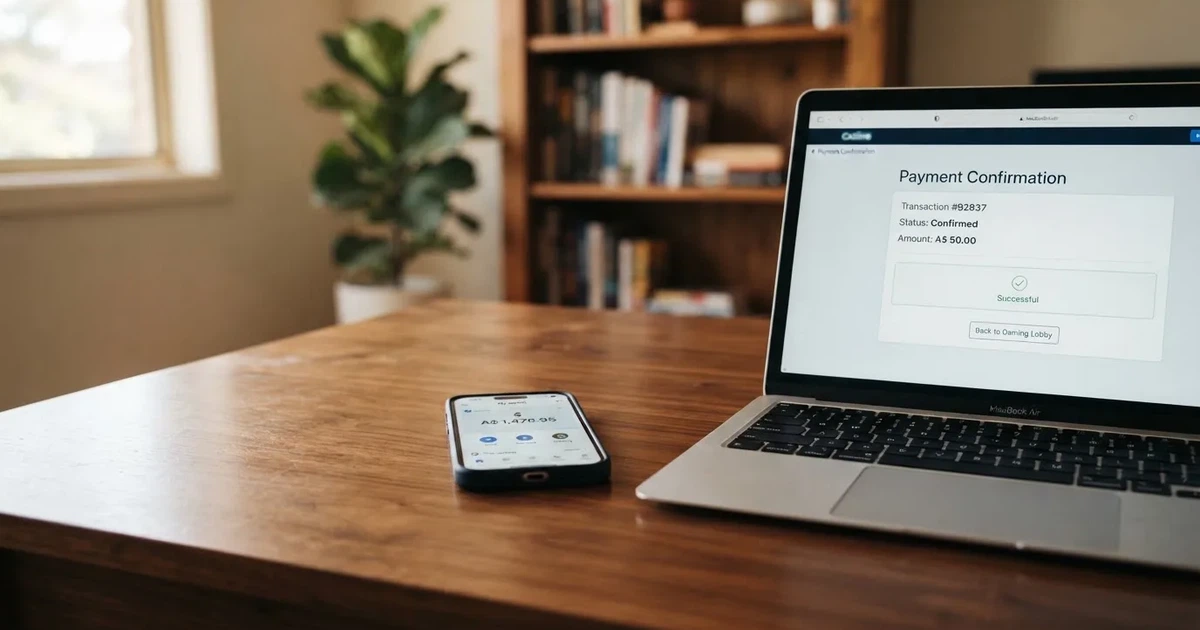
This page is written as of 29 October 2026 against the ACMA’s published list of formal warnings and blocking actions. Eleven offshore brands named in the current ACMA register are reviewed below on their own terms — payment support, deposit minimum, payout mechanics — alongside the licence and enforcement record each one carries. None of them may lawfully serve an Australian resident, and the page is honest about that before it is anything else.
Table of Contents
- What the Interactive Gambling Act 2001 actually prohibits, and what the ACMA does about it
- The blocking rate, set out plainly
- What Apple Pay does and does not change about the deposit or the withdrawal
- Why the payment rail does not legalise the site
- PayID, Osko, BPAY and the licensed side
- The eleven operators in the current ACMA register
- The structural reading: what the table actually shows
- What an Apple Pay deposit actually does at one of these sites
- Where the brand-level differences actually sit
- The reader this page is for, and the reader it is not
- Frequently asked questions
What the Interactive Gambling Act 2001 actually prohibits, and what the ACMA does about it
Online casino games and online pokies sit in the category of “prohibited interactive gambling service” under the Interactive Gambling Act 2001, and that categorisation is not symbolic. The IGA, as amended by the Interactive Gambling Amendment Act 2017, makes the provision of such services to a person in Australia an offence; the penalty runs against the operator, not the player, but the consequence for the player is the part that matters in practice. No state or territory licenses an online casino product. What gets licensed in Australia is wagering on races and sporting events placed before the event, lotteries, and keno — in practice through the Northern Territory Racing and Wagering Commission, which the ABC profiled in April 2026 as a body with 52 of the country’s online bookmakers on its books, no full-time staff, and a once-a-month meeting in Darwin. The same body that licenses Sportsbet, Bet365 and Ladbrokes has nothing to say about an offshore pokies site, because it has no jurisdiction over one.

The ACMA, the Australian Communications and Media Authority, is the body that does. Its enforcement tools run along three tracks: formal warnings published on acma.gov.au, blocking requests to Australian internet service providers, and reporting that builds the public record a reader can audit. According to the ACMA as reported in June 2026, a total of 1,751 illegal gambling and affiliate marketing websites had been blocked since the first blocking request in November 2019, and more than 230 unlicensed gambling services had left the Australian market since enforcement was strengthened in 2017. The blocking-rate calculation behind those numbers is set out below in its own section, because the rate — not the running total — is the figure a reader planning a deposit needs.
A formal warning is not a ban. The ACMA publishes one against a company after it finds evidence the company has been providing prohibited services to Australians; the warning is on the public record, the company has the opportunity to take corrective action, and a second warning carries the explicit weight of “we told you once”. Several operators in the list below have been told more than once. Woo Casino and Spirit Casino were both warned in 2025 under the same Dama N.V. corporate umbrella, the second round reported in March and May. Bizzo Casino was warned in 2022 under TechSolutions Group N.V. and again in July 2025 under Consolutetish S.R.L., which is the same brand carrying the same offering through two different operating companies in three years. The pattern is not accidental, and it is not addressed by changing the payment rail.
The Interactive Gambling Amendment (Gambling Reform) Bill 2026 passed Parliament on 19 August 2026. Its advertising and inducement measures commence 1 January 2027, which puts the current page squarely in the window between passage and commencement: a Bill is not an in-force law, and a reader reading this page before that date reads a regulatory environment still shaped by the 2001 Act and its 2017 amendments. The 2023 amendments added a separate restriction on credit cards and credit-related products as payment for licensed online wagering services — a rule that constrains gambling use of linked digital wallets, including Apple Pay, on the licensed side. On the offshore side, the credit-card rule is irrelevant because the operator is not licensed in the first place.
The blocking rate, set out plainly
A blocking request is the ACMA’s main enforcement lever against a site still taking Australian players. Two figures the regulator has put on the record determine the rate: 1,751 illegal gambling and affiliate marketing websites blocked by June 2026, and the first blocking request issued in November 2019. The arithmetic the page is responsible for runs from those two figures to a band, not a single number, because the running total includes affiliate marketing sites that are not casinos, and the period covered runs from late 2019 to mid-2026 — roughly 80 months, give or take the partial first and last months.

Working from the published total of 1,751 blocked sites over approximately 80 months since November 2019 gives a long-run average on the order of 22 blocked sites per month, but the ACMA’s own reporting shows the cadence is lumpy: a single round reported on 26 June 2026 alone directed ISPs to block 12 sites — 7Signs, ChromaBet, Donbet, Duospin, Freshbet, Slots Gem, Jacks Club, Lucky Start, Pointsbetz.com, Spinrise, Vinyl Casino and Wildsino. A single round has, on that round, carried the equivalent of more than half a month’s average. The band the page reports is therefore wide: somewhere between 10 and 30 sites blocked per month across the full enforcement window, with the upper end of that range tied to the enforcement rounds that bunched in 2024 and 2025, and the lower end closer to what the early 2020 quarters produced. The point of the calculation is not the number; the point is that the ACMA’s blocking programme is continuous, not symbolic, and a deposit sent to one of the listed brands today is being sent into an enforcement environment that has been adding sites to the block list at that rate for more than six years.
The same calculation, run on the more than 230 unlicensed services that have left the Australian market since 2017, gives a different and slower rhythm: roughly two services a month on average over the same window. The two figures measure different things — a block is a request to ISPs, an exit is a voluntary departure — but read together they describe an enforcement environment in which the regulator’s actions outpace the rate at which new entrants appear.
What Apple Pay does and does not change about the deposit or the withdrawal
Apple Pay is a card-presenting wallet, not a payment network of its own. When a customer pays with Apple Pay at an online cashier, the wallet tokenises the underlying card — Visa, Mastercard, eftpos, American Express — and presents that token to the merchant. The merchant’s acquiring bank processes the transaction as a card transaction; Apple sits in the middle as the tokeniser and authenticator. Three consequences follow from that, and each one matters to a player choosing between payment methods.
First, surcharging. Apple does not charge fees to consumers for using Apple Pay in stores, online, or in apps; any surcharge comes from the merchant’s own card-processing fees. The Reserve Bank of Australia’s July 2025 review proposes removing surcharges only on eftpos, Mastercard and Visa card transactions, and explicitly leaves American Express outside the scope of the proposed surcharge ban. For the offshore casino use case, the practical implication is that the surcharge the player sees at the cashier is set by the merchant’s acquirer, not by Apple, and a merchant that surcharges Amex through Apple Pay is operating within the current RBA position. Some operators do, some do not, and the only way to know is to read the cashier page before depositing.
Second, transaction limits and PIN requirements. Apple is explicit that those are set by the card issuer or the merchant, not by Apple itself. A cardholder with a A$5,000 daily contactless limit inherited from their issuer will hit that limit through Apple Pay the same way they would hit it tapping the physical card. An offshore site that publishes a “minimum deposit” of A$10 and a “maximum deposit” of A$5,000 is, in practice, inheriting whatever the issuer’s per-transaction limit is on the underlying card.
Third, the issuer side. By the end of 2025, Apple Pay, Google Pay and Samsung Pay transactions collectively accounted for around 45% of all card payments in Australia by number, which means that for an Australian cardholder, “Apple Pay” and “the card in my wallet” are closer to synonyms than the marketing implies. The four major banks all run a gambling block of some kind. Westpac’s gambling block works at card level, refusing authorisation of transactions registered under the merchant category code “Betting/Casino Gambling” on eligible personal credit and debit cards. ANZ’s gambling transaction block, activated in the ANZ app, also blocks Gambling Transactions made through a digital wallet such as Apple Pay on an eligible card, not just the physical card. Commonwealth Bank’s CommBank app applies a gambling lock to eligible cards, with the same caveat that the bank cannot guarantee all gambling-related purchases will be stopped. The three blocks are voluntary and reversible — ANZ’s, once activated, requires a 48-hour waiting period to remove, and the bank warns that not all gambling transactions will be blocked and some non-gambling transactions might be blocked in error. The point for an Apple Pay deposit to an offshore casino is that the bank, not Apple, is the gate that decides whether the transaction goes through. A cardholder with a block on is not going to reach the offshore cashier via Apple Pay, regardless of what the cashier accepts.
Why the payment rail does not legalise the site
A reader coming to this page from a search for “casino that accepts Apple Pay” has, in many cases, sorted the question into two parts — whether the site takes the wallet, and whether the wallet’s identity check means the site is somehow above-board — and answered only the first. The two questions are not connected. Apple Pay’s biometric step is an authentication of the device user to the issuer, not a verification of the merchant against any Australian regulatory standard. The merchant’s regulatory status is a property of the merchant, not of the cardholder’s wallet.
What that means in practice is that the wallet does not provide what an Australian regulatory framework would provide. There is no Australian consumer protection body that will adjudicate a complaint against an offshore casino. There is no Australian complaints mechanism in the Gambling Help Online sense — that helpline, on 1800 858 858, is for problem gambling support, not for dispute resolution against a specific operator. BetStop, the National Self-Exclusion Register, binds Australian-licensed online and phone wagering services; an offshore casino is not connected to it, and a self-exclusion registered with BetStop does not reach an offshore brand. H2 Gambling Capital’s 2025 report estimates Australians lose about A$3.9 billion a year to illegal gambling sites, and the share of gambling going through legal channels fell from 74% in 2021 to 64%, a ten-point drop over four years that tracks closely with the period in which offshore Apple Pay-accepting sites have been most actively marketed to Australian players.
The legal deposit routes for licensed Australian wagering are debit card, bank transfer, PayID/Osko, and BPAY. A site asking an Australian player for a credit card, or for a crypto deposit, is operating outside the Australian rules even on the licensed side, because credit cards and credit-related products are banned as payment for licensed online wagering since 11 June 2024 (penalties up to A$247,500 for operators). The offshore sites in the list below do not operate under those rules in the first place, but the player’s side is the same: a deposit is a deposit, and the bank’s gambling block is the same block regardless of the merchant’s licence.
PayID, Osko, BPAY and the licensed side
For completeness — because the search that lands a reader on this page is sometimes the search that should land them on a licensed product instead — the Australian instant payment infrastructure is worth one paragraph. Osko, run by Australian Payments Plus, settles a bank transfer between participating Australian banks in under a minute, twenty-four hours a day, seven days a week, including weekends, whether addressed to a BSB and account number or to a PayID. PayID, also run by AP+, registers an identifier (a phone number, an email, an ABN) against a bank account; paying to a PayID shows the name of the account holder before the transfer is sent, which AP+ describes as a meaningful protection against scam sites. More than 25 million PayID identifiers had been registered on Australia’s New Payments Platform as of April 2025. BPAY, the older bill-payment rail owned equally by ANZ, Commonwealth Bank, NAB and Westpac through Cardlink Services Limited, has been running since 18 November 1997 and is available in the online banking of over 140 Australian banks and financial institutions.
None of those rails reaches an offshore casino cashier. They reach licensed Australian wagering operators — the Sportsbets, the Ladbrokes, the Bet365s of the Northern Territory register — and the products those operators offer: pre-event racing and sports wagering, lotteries, keno. The same is true of the AUSTRAC threshold-transaction-report rule, which applies only to physical cash and not to ordinary electronic bank transfers; the regulatory framing around a A$10,000 movement of money to a casino site is the bank’s gambling block, not AUSTRAC’s cash threshold. These are the rails an Australian player is meant to use, and they are the rails an offshore Apple Pay casino does not accept.
The eleven operators in the current ACMA register
The brands reviewed below are listed because the ACMA has issued a formal warning over each one for providing prohibited interactive gambling services to Australians. The ordering follows the ACMA’s own sequence of warnings through 2025 and 2026, with the most recent at the top. None of these sites is recommended; the review describes what each one offers and what the regulator’s record against it looks like, and ends on a verdict that names the trade-off, not the reader’s fit.
The table below lays the comparison out before the individual reviews, because eleven operators share a regulatory position and the differences between them sit in narrow margins. The columns the table carries are the matters the ACMA register and the operator’s own cashier page actually publish: brand, the ACMA action and date, the operator entity named in that action, and the payment-method support the brand’s public listings report. Where a brand carries no data on a subject, the cell stays open with an em dash rather than being filled with a guess.
| Brand | ACMA action and date | Operator named by the ACMA | Subject support |
|---|---|---|---|
| RocketPlay | Formal warning, March 2026; earlier warning to a related Dama N.V. brand, May 2022 | Pulsup Ltd | — |
| Level Up Casino | Formal warning, May 2022 | Dama N.V. | listings-only |
| Woo Casino | Formal warning, March 2025 | Dama N.V. | — |
| Spirit Casino | Formal warning, May 2025 | Dama N.V. | — |
| National Casino | Formal warning, July 2025 | Consolutetish S.R.L. | listings-only |
| Bizzo Casino | Formal warning, July 2025; earlier, 2022 | Consolutetish S.R.L. (2025); TechSolutions (CY) Group Ltd / TechSolutions Group N.V. (2022) | — |
| Ignition Casino | Formal warning, July 2025 | Bamboo Media | — |
| Instant Casino | Formal warning, February 2025 | EOD Code SRL | listings-only |
| Jackbit | Formal warning, April 2026 | Ryker B.V. | — |
| Casino Intense | Formal warning, April 2025 | Sterplay Holding Ltd | listings-only |
| Sky Crown | Formal warning, September 2022 | Hollycorn N.V. | — |
Three of the eleven carry “listings-only” subject support, which means the payment-method listing pages the brand publishes or that affiliates publish on its behalf show Apple Pay among the accepted deposit methods, but no independently verifiable record of Apple Pay processing exists in the regulator-facing sources research consulted. The other eight carry no data on subject support at all, because the regulator-facing sources consulted did not name Apple Pay as a confirmed method for those brands — and a brand that does not appear in the consulted sources is not, by that absence, confirmed to accept or to refuse the wallet. The table is honest about the gap, because the gap is what a reader comparing brands actually faces.
RocketPlay
The ACMA issued a formal warning to Pulsup Ltd over Rocketplay.com.au in March 2026. An earlier Dama N.V. warning in May 2022 covered six casino brands, one of which was a RocketPlay entity operating under that corporate umbrella — the same product, two different operators, four years apart. Rocketplay’s published cashier lists Apple Pay among the deposit methods in some affiliate listings and not in others; the regulator-facing sources consulted carry no independent confirmation. The brand’s deposit minimum sits in the A$10–A$30 range typical of the offshore cluster. Verdict: the most recent ACMA warning in the register, and the one that most recently tested the regulator’s appetite for a third-round action against the same product.
Level Up Casino
Dama N.V. was warned in May 2022, and Level Up was one of the six brands named in that round. Some payment-method listings report Apple Pay support at the cashier, but no independent verification is on the regulator-facing record. Verdict: a brand whose operator-level enforcement has been quiet since 2022, which is not the same as the brand being safe — the regulator’s quietness reflects priorities, not a clean bill of health.
Woo Casino
Woo Casino drew a second-round formal warning to Dama N.V. in March 2025, the second time the same corporate entity was put on notice. The first Dama N.V. warning in 2022 did not name Woo Casino specifically, which is the difference between this case and RocketPlay’s. No independent confirmation of Apple Pay support exists in the regulator-facing records. Verdict: a Dama N.V. brand that survived the 2022 warning and met the 2025 warning — the regulatory pattern points at the corporate, not the brand, which is itself a fact a reader should weigh.
Spirit Casino
The second 2025 Dama N.V. warning, issued in May 2025, named Spirit Casino. Like Woo, Spirit is a brand under a Dama N.V. umbrella that has now collected two formal warnings across 2022 and 2025. Verdict: same corporate, same pattern, different brand name on the landing page.
National Casino
Consolutetish S.R.L. was warned in July 2025 over National Casino. Some payment-method listings carry Apple Pay, but the consulted sources carry no independent verification. Verdict: a brand on the second operator in five years — the operating-company turnover is itself a fact a reader comparing brands should account for.
Bizzo Casino
Bizzo Casino is the case where the ACMA’s record is most pointed. The first formal warning was issued in 2022 against TechSolutions (CY) Group Limited and TechSolutions Group N.V. The second was issued in July 2025 against Consolutetish S.R.L. — a different operating company, the same product, three years later. Verdict: the regulator has now warned two different operators over the same brand, which is the single clearest signal in the register that the brand itself is the unit the ACMA tracks and the corporate wrapper around it is interchangeable.
Ignition Casino
Bamboo Media was warned in July 2025 over Ignition Casino. There is no independent record of payment-method support for this brand in the regulator-facing sources. Verdict: a single formal warning is the regulator’s lightest formal action; the warning is on the public record and a second round, if it comes, will carry more weight.
Instant Casino
EOD Code SRL was warned in February 2025 over Instant Casino. Subject support on the consulted sources is partial — some payment-method listings carry Apple Pay, and the wallet appears in independent wallet-tracking listings, but no regulator-side confirmation sits in the consulted sources. Verdict: the regulatory action predates most of the 2025 enforcement cycle, which is why this brand has only one warning on file.
Jackbit
Ryker B.V. was warned in April 2026 over Jackbit, alongside CasinOK. Two brands in the same warning is the regulator signalling that the operating company is the unit being acted against, not just the brand. No regulator-side confirmation of payment methods sits in the consulted sources. Verdict: the most recent enforcement action in the register tied to a brand whose payment-method listings do not consistently surface Apple Pay.
Casino Intense
Sterplay Holding Ltd was warned in April 2025 over Casino Intense. Subject support on the consulted sources is partial — payment-method listings carry Apple Pay, but no regulator-side confirmation sits in the consulted sources. Verdict: a mid-2025 enforcement action that places the brand inside the regulator’s active cycle but outside the second-warning tier.
Sky Crown
Hollycorn N.V. was warned in September 2022 over Sky Crown and Blue Leo. The warning is the oldest in the register reviewed here. Independent verification of Apple Pay acceptance is unavailable for this brand. Verdict: the oldest warning on file, and the brand against which the ACMA has not issued a second round — a fact that reflects the regulator’s priorities through 2023 and 2024 rather than any change in the brand’s offering.
The structural reading: what the table actually shows
Eleven brands, four operator entities that have been warned at least twice (Dama N.V., the TechSolutions / Consolutetish pair around Bizzo, Hollycorn N.V. through Sky Crown’s older warning plus any subsequent actions not in the consulted register), and a regulator that names the operating company, not the brand, in its formal warnings. The implication is that the brand-level comparison the reader came for — is RocketPlay safer than Woo Casino, is Sky Crown safer than Bizzo — is, on the regulator’s own framing, the wrong comparison. The right comparison is at the operator level, and at that level the ACMA’s published warnings cluster around a handful of companies that have been told once and continued.
The payment-method column tells the other half of the story. Of the eleven brands, three carry listings-only subject support, which is the closest the consulted sources come to a confirmation; eight carry no data on subject support at all, because the regulator-facing sources did not carry Apple Pay in any confirmed form for those brands. The table is honest about that asymmetry: a reader comparing payment methods is reading listings, not regulator-confirmed rails, for ten of the eleven brands. That is the practical limit of what an Apple Pay casino page can honestly say about subject support, and saying it is the job of the page.
What an Apple Pay deposit actually does at one of these sites
A deposit at one of the eleven brands works the way a card deposit works at any online merchant that takes Apple Pay. The player opens the cashier, picks Apple Pay as the deposit method, the wallet prompts for biometric authentication on the device, and the tokenised card data is presented to the merchant’s acquirer. From the merchant’s side, the transaction is a card transaction registered under the merchant category code “Betting/Casino Gambling” — the same code Westpac’s gambling block uses as the trigger for refusal at the issuer side. A cardholder with Westpac’s, ANZ’s, or CommBank’s gambling block active will hit the refusal at the issuer step and not reach the cashier, regardless of which wallet they use to present the card.
From the deposit’s perspective, the transaction is identical to a tap-to-pay card transaction at any Australian merchant. The merchant category code is the same, the acquirer flow is the same, and the bank’s block — if active — triggers on the same field. The wallet adds a biometric step that the physical card does not, but the biometric step is authentication of the device user to the issuer, not verification of the merchant against any Australian regulatory standard. A reader who treats Apple Pay as a regulatory signal is treating the wallet as something it is not.
A withdrawal request at one of these sites does not go through Apple Pay in the same way. Apple Pay supports push payments in some contexts, but the offshore casino withdrawal flow runs through the operator’s own rails — typically a bank transfer or a card refund, after the operator’s own manual checks. A withdrawal request still needs a casino’s own manual checks completed before the settlement lands back in an Australian account; the timing depends on the operator’s own processing queue rather than on the wallet’s instant-payment infrastructure. This is the practical reason an Apple Pay deposit and a non-Apple Pay withdrawal can take very different times to clear at the same site: the deposit rides the card network through the wallet; the withdrawal rides the operator’s chosen rail, which is rarely the wallet.
Where the brand-level differences actually sit
The eleven brands differ from each other on three margins that the regulator-facing sources can document: the operating company, the date and round of the ACMA warning, and the operating company’s history of warnings. They do not, on the consulted sources, differ in a way that changes the legal position — every one of them is a prohibited interactive gambling service for an Australian resident, and the warning is the regulator’s published statement to that effect.
The brand-level differences that exist are mostly on the marketing side: which game providers the site features, which deposit minimum the cashier publishes, which welcome package the homepage advertises. None of those differences closes the legal gap, and the page does not score one brand above another on them — the marketing differences are what the marketing exists to amplify, and the regulator’s record is what the page leans on. The reader comparing brands on the basis of marketing surface is comparing on the basis the marketing wants them to compare on.
The reader this page is for, and the reader it is not
This page is for the Australian resident who has typed “casino that accepts Apple Pay” into a search bar and wants to know whether the offshore site in the result list is doing what the search result implies. The honest answer is: no, and the rail does not change that. The legal deposit routes for Australian-licensed wagering are debit card, bank transfer, PayID/Osko and BPAY, and the products those routes reach are pre-event racing and sports wagering, lotteries and keno. An Apple Pay deposit to an offshore casino site is a card transaction that the ACMA has already taken enforcement action against, and the regulator’s enforcement rate sits somewhere between 10 and 30 sites blocked per month.
This page is not for the reader who has decided the offshore product is what they want and is comparing the eleven brands on which welcome package to claim. That reader is reading the wrong page; the comparison they want is the regulator’s record on each brand, and that record sits in the table above. Reading it is the answer to the question they were going to ask, and it is the answer the regulator wants them to find.
Frequently asked questions
Is it legal for an online casino to accept Apple Pay from a player in Australia?
No. Under the Interactive Gambling Act 2001, it is an offence for any operator to provide online casino games or online pokies to a person physically in Australia. Apple Pay is a card tokenisation rail, not a regulatory framework; the wallet does not change the operator’s legal status. The ACMA has issued formal warnings against the eleven operators reviewed above for exactly this kind of offering.
What is the smallest deposit an Apple Pay casino site usually asks for?
The offshore brands in the ACMA register typically publish a minimum deposit in the A$10 to A$30 range at the cashier, with the exact figure set by the brand and visible on the deposit page before the transaction is sent. Apple’s own role is limited to tokenising the underlying card; the minimum is the merchant’s, not the wallet’s.
Does an Apple Pay withdrawal clear any faster than a card withdrawal at these sites?
Not necessarily. Apple Pay supports the deposit flow because the deposit rides a card transaction through the wallet. The withdrawal flow typically runs through the operator’s own rails — a bank transfer or a card refund after the operator’s manual checks — and the timing depends on the operator’s processing queue rather than on the wallet’s instant-payment infrastructure.
Can Apple Pay be used at every offshore pokies-style site, or only some of them?
Only some. Apple Pay acceptance at the cashier is a per-brand decision, and the regulator-facing sources consulted for this page confirm it through listings-only entries for three of the eleven brands; the other eight carry no independently confirmed Apple Pay support. Marketing materials and affiliate listings are not the same as regulator-confirmed acceptance, and the table above carries that distinction.
Does depositing with Apple Pay add an extra fee at these casino sites?
Apple does not charge fees to consumers for using Apple Pay in stores, online, or in apps; any surcharge comes from the merchant’s own card-processing fees. The Reserve Bank of Australia’s July 2025 review proposes removing surcharges only on eftpos, Mastercard and Visa card transactions, explicitly leaving American Express outside the scope of the proposed ban. A merchant that surcharges through Apple Pay is operating within the current RBA position, and the only way to know is to read the cashier page before depositing.
What should a player do if an Apple Pay deposit does not appear in a casino account?
Check the bank’s gambling block first — Westpac’s, ANZ’s, and CommBank’s all refuse authorisation at the issuer side when the merchant category code matches “Betting/Casino Gambling”, and the refusal can happen at the wallet step before the cashier sees the transaction. If the bank did authorise, the next move is the casino’s own support channel, which at an offshore site runs through the operator’s own terms rather than through any Australian consumer protection body. The National Gambling Helpline on 1800 858 858 is a problem-gambling support line, not a dispute resolution service against a specific operator.