
CashtoCode at Australian-facing casino sites in 2026: where the deposit lands, where the law stands, and what the ACMA has already done
CashtoCode is one of the few deposit methods a person can still use at offshore casino sites without handing over card details or a bank login, and that is exactly the reason it shows up in marketing aimed at Australian players. It is also the reason this page spends more time on the legal frame than on any one site. Every offshore casino that lists CashtoCode in its cashier falls under the same Australian prohibition, every one of them has been the target of formal ACMA warnings in recent rounds, and every one of them shares the same absence of local consumer protection. What follows looks at how a CashtoCode deposit moves from a reseller’s receipt to a casino balance, why the legal status of the site makes the speed of that deposit irrelevant, and where the practical limits bite once a player wants the money back.
Data current as of 29 October 2026; licence and ACMA warning claims verified against the ACMA’s published register and operator pages.
Table of Contents
- The legal frame CashtoCode deposits run into
- Responsible gambling and the limits offshore sites do not offer
- How a CashtoCode deposit and withdrawal actually work
- Comparing the eleven sites the ACMA has warned over CashtoCode
- What the table and the warnings do not tell the reader
- Frequently asked questions
The legal frame CashtoCode deposits run into
Online casino games and online pokies are prohibited interactive gambling services under the Interactive Gambling Act 2001, as tightened by the 2017 amendments. No state or territory issues a licence for them. The only wagering services Australia licences online are pre-event race and sports betting, lotteries and keno — in practice licensed through the Northern Territory Racing and Wagering Commission, the de facto regulator of Australia’s 52 online bookmakers including Sportsbet, Bet365 and Ladbrokes, a commission that meets once a month in Darwin and runs without full-time staff.

The IGA targets the provider, not the player. No Australian punter has been prosecuted for opening an account at an offshore site, but the site itself operates outside Australian consumer law, sits outside any Australian complaints body and offers no recourse if a withdrawal is refused or a balance sits in an account that has just been blocked by an Australian internet service provider at the regulator’s request. The Interactive Gambling Amendment (Gambling Reform) Bill 2026 passed Parliament on 19 August 2026 and brings new advertising and inducement rules online from 1 January 2027. For a page read in 2026, that bill is law on the statute book with a commencement date that has not yet arrived.
The Australian Communications and Media Authority enforces the regime. It investigates complaints, issues formal warnings naming the operator behind each brand and directs Australian ISPs to block illegal sites at the domain level. Since the first blocking request in November 2019, 1,751 illegal gambling and affiliate marketing websites have been blocked in cumulative ACMA rounds, and more than 230 unlicensed services have left the Australian market since enforcement was strengthened in 2017. H2 Gambling Capital’s 2025 estimate puts Australian losses to illegal gambling sites at about A$3.9 billion a year, and tracks the share of gambling going through legal channels falling from 74 per cent in 2021 to 64 per cent.
The IGA prohibition sits above the casino’s cashier. Whatever licence a CashtoCode-accepting site displays on its footer, an Australian player cannot be served legally. The payment method changes nothing about that. What it does change is what the player’s deposit trail looks like to the bank, to AUSTRAC and to the regulator.
Responsible gambling and the limits offshore sites do not offer
Australian-licensed online wagering services connect to BetStop, the National Self-Exclusion Register, which has been live since August 2023. Registering with BetStop means every licensed Australian operator is required to refuse that person’s accounts and deposits for the exclusion period they nominate. An offshore casino is not connected to BetStop. A player who has registered with BetStop and then opens an account at an offshore site has not excluded themselves from that site — they have only excluded themselves from the Australian-licensed market, which is the only market in which they could have played legally anyway.
What a player CAN do at the bank side is closer to self-exclusion than anything the offshore casino offers. Major Australian banks — NAB, Commonwealth Bank, Westpac, ANZ and St George — let credit and debit cardholders self-activate a gambling transaction block through their banking app. Westpac’s block sits at the card level and refuses authorisation of any transaction registered under the merchant category code for betting and casino gambling. ANZ’s block covers not only the physical card but gambling transactions made through a digital wallet such as Apple Pay on an eligible card, with a 48-hour waiting period before the block can be lifted and an explicit warning that some non-gambling transactions might be blocked in error. Once a block is in place it is usually applied immediately, though lifting it can take up to two business days. None of these blocks reaches the offshore casino’s cashier directly; they reach it through the card or wallet the player would otherwise have used. A CashtoCode deposit does not pass through a card network and is not stopped by a card-level gambling block, which is part of the appeal of the method and part of why it matters to flag the alternative limits here.
From 11 June 2024, Australian-licensed online wagering services have been banned by law from accepting credit cards, credit-linked digital wallets or digital currencies, with ACMA penalties of up to A$247,500 for non-compliance. The same restriction reaches linked digital wallets like Apple Pay because the underlying funding source is still a credit product. A CashtoCode deposit is none of those things — it is a prepaid voucher — and the credit-card ban does not directly apply to it, but the offshore casino accepting it is, again, not bound by that ban in the first place.
The Australian National Gambling Helpline on 1800 858 858 is free, runs 24/7 and offers chat through Gambling Help Online. Both are reachable regardless of which site the caller is playing at. The help is local; the offshore casino account the caller is sitting on is not.
How a CashtoCode deposit and withdrawal actually work
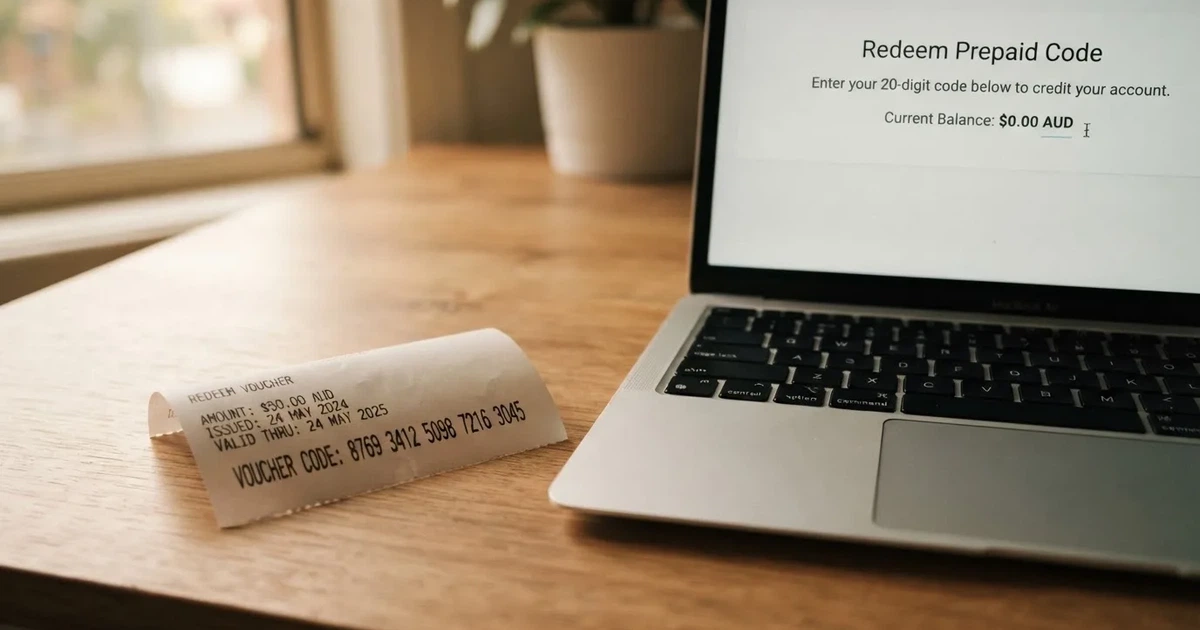
A CashtoCode eVoucher is a 20-digit code sold by resellers — convenience stores, petrol stations and online platforms — with no personal details required to buy it and no personal details recorded against the code itself. CashtoCode has been on the market since 2013 and the eVoucher brand is held by Eightball Marketing Services LLC. The voucher supports more than 25 currencies, is free of charge to the customer with no usage fees, and any unused balance on it keeps its full value for later use.
The deposit path at an offshore casino is the same shape across the sites on this page. The player opens the casino’s cashier, selects CashtoCode, chooses a denomination from the set the site lists, and is handed a barcode or a list of nearby resellers. They take that to a physical store or visit an online reseller, pay cash or the local equivalent, and receive a fresh 20-digit code. They enter the code in the cashier, the casino credits their account, and the deposit is complete. There is no card detail, no bank login, no wallet account held in the player’s name passed to the casino. The casino sees a code, the code is redeemed, and that is the end of the player’s information in the transaction.
CashtoCode’s own site lists gambling game providers — Pragmatic Play, Evolution, NetEnt and Playtech among them — in its catalogue filters, so the brand markets itself to gambling operators directly. That is the reason it shows up on casino cashier pages in the first place.
A CashtoCode voucher is deposit-only. There is no CashtoCode withdrawal option, no voucher equivalent for cashing out, and no parallel rail that takes money from the casino back to the player. The casino’s withdrawal side runs through whatever method the player used to deposit, or through a bank transfer, an e-wallet, or in some cases a cryptocurrency rail. A CashtoCode withdrawal request still needs the casino’s own manual checks completed before any settlement lands in an Australian account, and the time that takes depends entirely on the casino’s own processing queue, not on CashtoCode.
The minimum deposit these sites ask for tracks the smallest CashtoCode denomination the reseller offers, which is commonly around A$10. Some sites list A$25 as the floor; a small number sit higher. The minimum deposit is the smallest unit the casino’s cashier will accept through CashtoCode and is not a measure of how much the player should deposit. It is also not a measure of what the casino will let the player withdraw — the minimum withdrawal at the same site can sit higher than the deposit minimum, and the maximum cashout on a bonus, where one applies, can sit lower than either.
The cost side is mostly clean for the player. CashtoCode charges no usage fee to the customer and the voucher itself is free of charge. Any fee the player meets is the casino’s, not CashtoCode’s, and any fee the casino charges on a CashtoCode deposit is the casino’s choice rather than a network cost the casino is passing on. Where a fee does appear it usually takes the form of a small percentage on deposits above a threshold or a flat fee on currency conversion if the player is buying a voucher in a currency the casino does not accept. A reader comparing two CashtoCode casinos should weigh the fee line against the deposit minimum, because the difference between a fee-free site and a site charging even two per cent on a small deposit is meaningful at the low end.
Comparing the eleven sites the ACMA has warned over CashtoCode
This page’s ranking is not a recommendation. The eleven brands below appear together because each one has been the subject of a formal ACMA warning for offering prohibited interactive gambling services to people in Australia, and because the warning record is the cleanest cross-site comparison available for an offshore casino market where no Australian consumer body tests the sites. The order follows §6 of the research and is not editorial.
The table below sets out each brand, the operator behind it as the ACMA names it in its formal warning, the date of that warning, and whether the research confirmed CashtoCode as a deposit method on the brand’s own cashier.
| Brand | Operator named by the ACMA | ACMA action and date | Subject support |
|---|---|---|---|
| RocketPlay | Pulsup Ltd (Rocketplay.com.au) | Formal warning, March 2026 (earlier Dama N.V., May 2022) | — |
| Level Up Casino | Dama N.V. | Formal warning, May 2022 | Listings-only |
| Woo Casino | Dama N.V. | Formal warning, March 2025 | — |
| Spirit Casino | Dama N.V. | Formal warning, May 2025 | — |
| National Casino | Consolutetish S.R.L. | Formal warning, July 2025 | Listings-only |
| Bizzo Casino | Consolutetish S.R.L. | Formal warning, July 2025 (earlier TechSolutions, 2022) | — |
| Ignition Casino | Bamboo Media | Formal warning, July 2025 | — |
| Instant Casino | EOD Code SRL | Formal warning, February 2025 | Listings-only |
| Jackbit | Ryker B.V. | Formal warning, April 2026 | — |
| Casino Intense | Sterplay Holding Ltd | Formal warning, April 2025 | Listings-only |
| Sky Crown | Hollycorn N.V. | Formal warning, September 2022 | — |
A dash in the subject-support column is not a denial that CashtoCode is offered. It is a marker that the research did not confirm CashtoCode as a deposit method on the brand’s own cashier for this page, and the brand is presented on its other fields only. The ACMA’s action is independent of the cashier’s payment list. A warning over a brand covers the brand’s offer of prohibited services to Australians regardless of whether the cashier takes CashtoCode, a card or a cryptocurrency.
The blocking-rate the ACMA has run since November 2019 is the single most concrete number the regulator has published for this market. Between November 2019 and June 2026, 1,751 illegal gambling and affiliate websites were blocked in cumulative rounds. Over that period the ACMA has also secured the exit of more than 230 unlicensed services from the Australian market. The pace is not even. The June 2026 round alone added 12 domains — 7Signs, ChromaBet, Donbet, Duospin, Freshbet, Slots Gem, Jacks Club, Lucky Start, Pointsbetz.com, Spinrise, Vinyl Casino and Wildsino — to the block list. Stretched over the roughly 79 months from the first blocking request to the June 2026 cumulative total, that is a running rate of roughly 22 blocked domains per month across the regulator’s lifetime, with the rate in the most recent rounds running materially higher. The number is a band rather than a single figure because the ACMA publishes cumulative totals and round-by-round additions, not a monthly average, and because the round sizes have widened as enforcement has matured. The headline that holds across the band is that the regulator has not let up: the block list is still growing, and the most recent rounds are among the largest.
A reader looking at the table should see the same operator name appearing more than once. Dama N.V. sits behind four of the eleven brands — RocketPlay, Level Up Casino, Woo Casino and Spirit Casino — across two separate formal warnings, in May 2022 for the first group and in March and May 2025 for the next two. The Hollycorn N.V. and Consolutetish S.R.L. entries each carry two brands. The pattern is that ACMA warnings name the corporate entity rather than the brand, and where one operator runs several skins under one licence, a single warning can sweep several brands at once and a follow-up warning can sweep the same operator’s later launches.
RocketPlay — Pulsup Ltd, March 2026 (earlier Dama N.V., May 2022)
RocketPlay is the most recently warned brand in this set, with a formal ACMA notice over Pulsup Ltd issued in March 2026 for offering prohibited interactive gambling services to Australian residents. The same brand was named in the May 2022 formal warning to Dama N.V. over a six-brand group, so the brand has now attracted ACMA action under two different operators across a four-year span. The site is presented on its other fields only; the research did not confirm CashtoCode as a deposit method on the cashier for this page. The verdict on RocketPlay is that a brand which has drawn two separate ACMA warnings under two different operators is one where the operator changes more often than the warning record, and that is itself the point.
Level Up Casino — Dama N.V., May 2022
Level Up Casino sat in the original May 2022 Dama N.V. group alongside Bambet, Dazard, Rocketplay, Wild Tornado and Cobra Casinos. Research carries listings-only references for Level Up Casino from Westpac’s published gambling-block merchant category code list, in the sense that Westpac’s block applies to transactions registered under the betting and casino gambling merchant category, and the same MCC sits behind the Level Up cashier’s card path. Whether the cashier directly lists CashtoCode is what the listings reference gestures at, and what the research confirmed on its own cashier page is not enough to write as fact on this page. Level Up is presented on its other fields. Our assessment: a six-brand ACMA warning is a broader signal than a single-brand warning, and Level Up is in the larger group rather than a one-off.
Woo Casino — Dama N.V., March 2025
Woo Casino’s formal warning landed in March 2025 and was the second Dama N.V. action of that year, with the Spirit Casino warning following in May. The brand sits inside the same operator’s portfolio as the four others named in the May 2022 group and the two warned in 2025, so the brand’s warning sits inside an operator-level pattern rather than a brand-level one. The research did not confirm CashtoCode as a deposit method on the Woo Casino cashier for this page. Woo Casino is handled here without specific cashier confirmation. The conclusion matches RocketPlay’s: a brand under an operator with multiple formal warnings is a brand sitting under repeat regulatory pressure on the Australian market.
Spirit Casino — Dama N.V., May 2025
Spirit Casino followed Woo Casino by two months in 2025, the second of Dama N.V.’s two 2025 warnings. The brand’s warning is the freshest in the Dama N.V. set on this page and the second-most-recent warning on the page after RocketPlay’s March 2026 action. Research did not confirm CashtoCode on the Spirit Casino cashier. Spirit Casino is covered by this page’s overview. The regulator’s pace against Dama N.V. has not slowed across four years, and Spirit Casino’s warning is the cleanest evidence of that.
National Casino — Consolutetish S.R.L., July 2025
National Casino was named in the same July 2025 formal warning as Bizzo Casino, with both falling under Consolutetish S.R.L. The brand’s earlier history under different operators is not separately documented in this research. CashtoCode listings references for National Casino appear in AUSTRAC and Wikipedia material that touches the broader payment-method landscape, but the listings reference is to the wider industry rather than to a confirmed listing on National Casino’s own cashier page. The verdict is that two-brand ACMA warnings against one operator are the regulator’s way of signalling that the operator’s whole portfolio is in scope, and National Casino is in that July 2025 sweep.
Bizzo Casino — Consolutetish S.R.L., July 2025 (earlier TechSolutions, 2022)
Bizzo Casino is the brand on this page with the longest ACMA record. The July 2025 warning to Consolutetish S.R.L. was the second formal warning tied to Bizzo Casino, after the 2022 warning to TechSolutions (CY) Group Limited and TechSolutions Group N.V. The same brand name has crossed at least one operator change and has been the subject of two ACMA actions in roughly three years. Research did not confirm CashtoCode on the Bizzo Casino cashier for this page. The brand is presented on its other fields. It shows how the brand-outlasts-the-operator pattern runs in both directions.
Ignition Casino — Bamboo Media, July 2025
Ignition Casino was the second brand named in the July 2025 round, sitting under Bamboo Media alongside the Consolutetish S.R.L. pair. The brand’s casino offer targets Australian residents in spite of the prohibition, and the warning is the ACMA’s published response. Research did not confirm CashtoCode on the Ignition Casino cashier. The brand is presented on its other fields. A single warning under a single operator is a clean warning, and Ignition Casino is the brand in that position on this page rather than the more entangled multi-warning cases.
Instant Casino — EOD Code SRL, February 2025
Instant Casino was named in a February 2025 formal warning to EOD Code SRL, the earliest warning in 2025 on this page. The brand’s cashier payment list is the subject of listings-only references in EcoPayz and PayID material that touches the broader payment-method landscape. The listings reference is to the broader industry and is not a confirmation that CashtoCode is listed on Instant Casino’s own cashier for this page. Instant Casino is presented on its other fields. February 2025 sits at the front of the 2025 warning cluster, giving the regulator’s pace a starting point in this set.
Jackbit — Ryker B.V., April 2026
Jackbit was named alongside CasinOK in the April 2026 formal warning to Ryker B.V., the only April 2026 action on this page. Research did not confirm CashtoCode on the Jackbit cashier. Jackbit is noted here on its other fields. The regulator’s April 2026 round carried two brands under one operator, and Jackbit is one of the two.
Casino Intense — Sterplay Holding Ltd, April 2025
Casino Intense was named in the April 2025 formal warning to Sterplay Holding Ltd. The brand’s casino offer targets Australian residents in spite of the prohibition, and the warning is the regulator’s published response. CashtoCode listings references for Casino Intense appear in AUSTRAC, ITnews and NAB material that touches the broader payment landscape, but the listings reference is to the broader industry rather than a confirmed listing on Casino Intense’s own cashier for this page. Casino Intense is included here on its other fields. The brand carries a single-operator, single-brand warning and a single 2025 reference point, placing it in the cleanest position in this set on the regulatory dimension.
Sky Crown — Hollycorn N.V., September 2022
Sky Crown sits at the back of this set with a formal ACMA warning over Hollycorn N.V. issued in September 2022, naming Sky Crown and Blue Leo together. The brand’s warning is the earliest on this page and the only September 2022 reference in the research. Research did not confirm CashtoCode on the Sky Crown cashier. The brand is presented on its other fields. The verdict is that an early warning, in regulatory terms, is a brand the ACMA has had on its radar the longest, and a brand with a four-year-old warning is a brand the regulator has not needed to revisit to keep its pressure on the offer.
What the table and the warnings do not tell the reader
Three limits of the comparison above are worth naming in the prose rather than leaving for the reader to work out.
First, the table reads as a brand-level comparison, but the ACMA’s actions are operator-level. The brand names in the brand column change hands. Dama N.V. runs at least four of the eleven brands, and a Dama N.V. warning covers the operator’s whole portfolio at the time of the warning. A reader who compares two Dama N.V. brands by their warning date is comparing when the regulator last moved on the operator, not when it last moved on each skin.
Second, the subject-support column is narrower than the table heading suggests. A dash in that column is the no-data marker for this page. It is not a denial that the brand takes CashtoCode, and it is not an assertion that the brand does not. It is a statement that the research did not confirm CashtoCode on the brand’s own cashier for this page, and that the brand is therefore presented on its other fields only. A “listings-only” entry is the research pointing at broader industry references without a brand-level confirmation.
Third, the ACMA warning is the cleanest data point because it is a published regulator action, and the ACMA blocking list is the cleanest regulator action of all because it carries a date and a domain. Everything else on this page — the casino’s own licence claim, the cashier’s payment list, the bonus terms, the withdrawal speed — is published by the operator and is not independently verified for an offshore site. A reader weighing two brands on this page should weight the ACMA row the heaviest and treat the operator’s own claims as unverified by definition.
Frequently asked questions
Is it legal for an online casino to accept CashtoCode from a player in Australia?
No. Online casino games and online pokies are prohibited interactive gambling services under the Interactive Gambling Act 2001, and no state or territory licences them. The IGA targets the provider, not the player, so an Australian punter is not personally at risk of prosecution for opening an account, but the offshore casino itself is operating outside Australian law and outside Australian consumer protection. CashtoCode changes the deposit trail; it does not change the legal status of the site.
What is the smallest deposit a CashtoCode casino site usually asks for?
The floor is set by the smallest voucher denomination the casino’s cashier will accept, and that commonly sits around A$10, with some sites at A$25 and a small number higher. The minimum is a cashier setting, not a recommended deposit amount, and the minimum withdrawal at the same site can be higher than the minimum deposit. A player choosing among sites should check the minimum withdrawal as well as the minimum deposit.
Does a CashtoCode withdrawal clear any faster than a card withdrawal at these sites?
CashtoCode is deposit-only. There is no CashtoCode withdrawal rail, and the casino’s withdrawal side runs through a bank transfer, an e-wallet or a cryptocurrency option. A CashtoCode withdrawal request still has to clear the casino’s own manual checks before settlement, and the speed is the casino’s processing queue rather than the payment method’s. The method that deposited is rarely the method that pays out fastest.
Can CashtoCode be used at every offshore pokies-style site, or only some of them?
Only at the offshore sites that list CashtoCode in their cashier. CashtoCode’s own site markets itself to gambling operators, so it shows up at a meaningful share of offshore casino brands, but it is not universal. The subject-support column in the table on this page records which of the eleven warned brands the research confirmed CashtoCode for on the brand’s own cashier; most sit at the no-data marker and are presented on their other fields only.
Does depositing with CashtoCode add an extra fee at these casino sites?
CashtoCode charges no usage fee to the customer and the voucher itself is free of charge. Any fee the player meets is the casino’s, not CashtoCode’s. Where a fee does appear it is usually a small percentage on deposits above a threshold or a flat fee on currency conversion if the voucher is bought in a currency the casino does not accept. A reader comparing two sites should weigh the fee line against the deposit minimum, because the difference matters most at the low end.