
Google Pay casinos in Australia: a working picture of a prohibited product
A wallet button at a casino cashier is the easiest thing in the world to tap. But what happens when the button connects to an offshore site aimed at Australians? Google Pay works. The deposit lands. The game opens. What does not work, and has not worked since the Interactive Gambling Act 2001 was strengthened in 2017, is the legal frame around it. Every offshore pokies-style site appearing in these results is providing a service that cannot be licensed in Australia, no matter which Curacao or Kahnawake seal it puts in its footer.
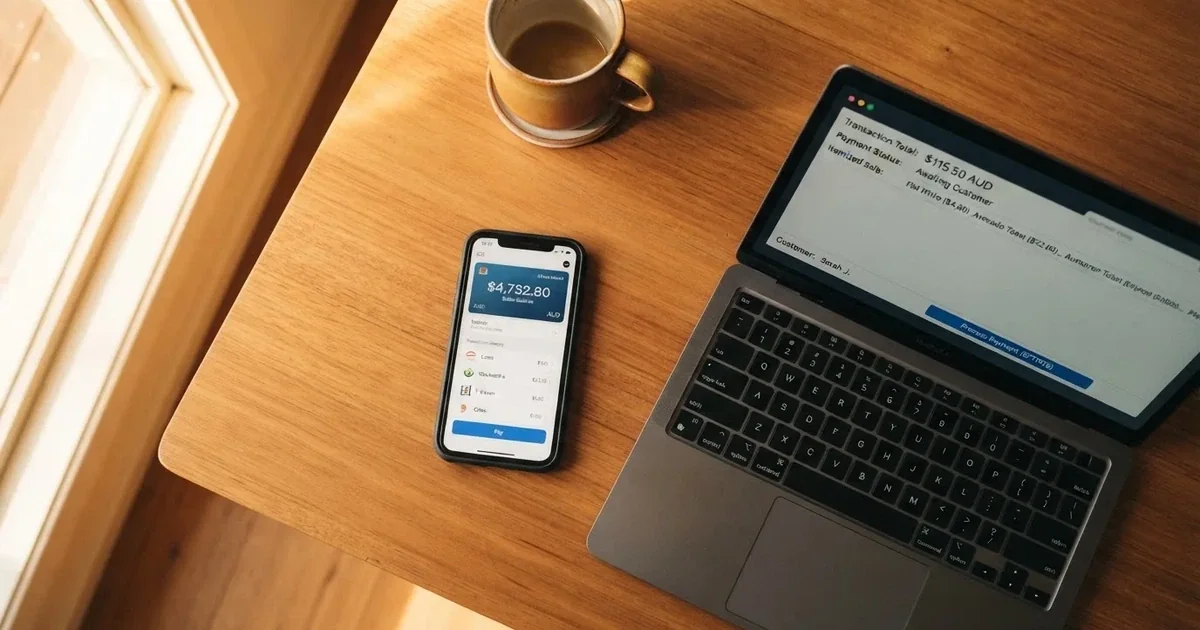
This page walks through that contradiction honestly. It explains how a Google Pay deposit and withdrawal actually move at these operators, what the minimum deposit looks like across the featured set, and how the wallet interacts with the card-level gambling blocks the major Australian banks now offer. It then walks through the eleven brands the ACMA has acted against under the IGA — the only honest basis on which to rank offshore sites accepting Australians, since every one of them breaks the same Australian law by existing. The verdict on each is the same in its shape: a player can sign up, can deposit, can play, and has no Australian consumer protection if a withdrawal stalls. The verdict differs in the details — how recent the warning, how often the operator has been warned, what the listings say about Google Pay on the cashier page.
The data on this page is current as of 29 October 2026, with ACMA action dates cross-checked against the regulator’s own formal-warning publications.
Table of Contents
- The legal frame: why a Google Pay button at an offshore casino is a contradiction
- Bank-level gambling blocks: where Google Pay meets the wall
- How Google Pay itself works, and why that matters at a casino cashier
- What a Google Pay deposit and withdrawal actually look like at these sites
- The blocking rate: how fast the ACMA has been removing sites
- The featured brands: what each listing and each warning actually says
- What a player should take from this picture
- Frequently asked questions
The legal frame: why a Google Pay button at an offshore casino is a contradiction
The Interactive Gambling Act 2001 makes it an offence for an operator to provide online casino games, online pokies or in-play betting to a person physically in Australia. The 2017 amendments gave the ACMA the power to issue formal warnings, refer matters for civil penalty proceedings, and ask Australian ISPs to block illegal sites. No state or territory licenses online casino games or pokies — what is licensable is pre-event wagering on sport and racing, lotteries and keno. The Northern Territory Racing and Wagering Commission oversees 52 licensed online bookmakers — Sportsbet, Bet365, Ladbrokes among them — licensed in the Territory for tax reasons, with no full-time staff and a once-a-month meeting in Darwin.

A casino offering pokies to an Australian player is, by definition, unlicensed in Australia. The seal it shows in its footer — Curacao, Kahnawake, the Malta Gaming Authority — is a commercial licence issued by another jurisdiction. It does not authorise the service in this one. The ACMA has spent the years since enforcement was strengthened in 2017 issuing formal warnings to dozens of operators and, since November 2019, asking ISPs to block their domains. The cumulative count, as reported in June 2026, is 1,751 illegal gambling and affiliate marketing websites blocked since the first blocking request, with more than 230 unlicensed gambling services having left the Australian market over the same period.
The legal frame is also a payments frame. Since 11 June 2024, Australian-licensed online wagering services cannot accept credit cards, credit-related products or digital currency as a deposit method — civil penalties up to A$247,500 for operators who do. The legal deposit routes for a licensed wagering account are debit card, bank transfer, PayID/Osko and BPAY. A site that asks for a credit card or a crypto deposit is, by that single fact, operating outside the Australian framework. Google Pay sits in an interesting middle: in technical terms, it is a wallet over a card. Under the IGA, the credit-card ban applies to credit-related products — so a Google Pay wallet funded by a debit card sits in the legal-method set, but the same wallet funded by a credit card does not. The major Australian banks now offer card-level gambling blocks that catch both, which is the next shelf.
Bank-level gambling blocks: where Google Pay meets the wall
A Google Pay deposit at an offshore casino is, at the cashier, a card transaction. The wallet tokenises the card and sends the card-issuing bank a Device Account Number; the merchant sees that token, not the real card number, and the bank authorises the transaction against the underlying card. From the bank’s perspective, the merchant is whichever casino the token settles to, and the transaction lands in the merchant category code that the casino’s acquirer has set — almost always the “Betting/Casino Gambling” code that the bank recognises.

NAB, ANZ and Westpac all let a customer apply a gambling transaction block to eligible personal credit and debit cards through their banking app, without calling the bank or visiting a branch. ANZ’s block, once turned on, also catches gambling transactions made through a digital wallet on an eligible card — Apple Pay, Google Pay, Samsung Pay — not just the physical card. The block works at the merchant category level rather than at the named merchant: it refuses authorisation of any transaction that carries the betting/casino code, which is the code every offshore casino in the featured set carries. Westpac’s block works the same way, against the same code. NAB’s does the same.
A gambling block has a quirk worth knowing. ANZ warns, in the support page that documents the feature, that not all gambling transactions will be blocked, and that some non-gambling transactions might be blocked in error. Removing the block again requires a 48-hour waiting period — designed, in part, to interrupt the impulse that asked for it. A card-level block is the single most effective tool an Australian player has against an offshore deposit, because it works upstream of any wallet, any device, and any name the casino uses at the cashier. It also reaches further than the ACMA’s site-blocking regime, because the wallet on the card does not need to be named — the merchant code does the work.
The National Self-Exclusion Register, BetStop, has been live since August 2023 and binds Australian-licensed online and phone wagering services. An offshore casino is not on BetStop. Self-excluding at BetStop will not stop a Google Pay deposit to a site the ACMA has warned. The two systems — site blocking at the ISP, self-exclusion at the operator — meet at licensed wagering, and the offshore space sits outside both. For anyone who has signed up to BetStop and is looking for a way around it through an offshore wallet deposit, the bank-level card block is the next layer down and the most reliable one.
How Google Pay itself works, and why that matters at a casino cashier
Google Pay launched in Australia in 2016 (then under the Android Pay name) and runs on any NFC-enabled Android phone with Android 5.0 or later. The wallet holds one or more payment cards — debit, credit, prepaid — and at the point of sale, the phone’s NFC chip connects to the terminal the same way a physical contactless card would. For an in-app or in-browser payment — which is what a casino cashier is — the wallet passes the tokenised card details to the merchant’s payment page; the merchant never sees the real card number.
The tokenisation is the security story Google Pay sells, and at a casino cashier it has an extra effect. The merchant sees a token, not a card number; the casino’s payment processor sees a card-issuing bank’s authorisation; the bank sees a transaction in the betting/casino merchant code. None of those three parties sees the same thing, and none of them sees what the wallet shows the customer. That is fine for a contactless coffee. For a gambling deposit, it means the casino’s records show the token, not the card the player thinks they used — which can complicate a chargeback if the bank later disputes the transaction, and which is one of the reasons a Google Pay deposit at an offshore site is harder to reverse than a Visa debit deposit at a licensed bookmaker.
A second consequence is geographic. Google Pay is not a payment method in the way Visa is: it is a front-end for cards. The casino’s cashier lists Google Pay because the casino’s payment processor supports wallet payments, not because Google Pay itself approves or disapproves of gambling transactions. The wallet has no merchant whitelist, no category-based allow/deny, no equivalent of the bank’s MCC-level block. The decision on whether a Google Pay deposit to a casino site is authorised lives entirely with the bank that issued the underlying card. That is why a bank-level gambling block is the single useful intervention: it works against the underlying card, which is what the wallet fronts, regardless of which wallet the player uses on top.
A third consequence, less often discussed, is the merchant data. When the casino’s cashier accepts Google Pay, the casino receives less cardholder data than it would from a card-form deposit — and less than it would from a PayID/Osko deposit, where the receiving account shows the account-holder name before the transfer is sent. Osko, the instant-transfer layer of Australia’s New Payments Platform, settles in under a minute between participating banks, 24/7 including weekends, by BSB and account number or by PayID. PayID at the receiving end shows the name of the account holder before the money is sent, and AP+ warns that being asked to transfer money to a PayID on an illegal gambling site almost certainly means a scam site. The wallet token sits between the player and that check. It is not a scam protection in its own right.
What a Google Pay deposit and withdrawal actually look like at these sites
A Google Pay deposit at an offshore casino follows the same shape across the eleven brands in the featured set, because the cashier layer is supplied by a small number of payment processors that handle wallet fronting. The player opens the cashier, picks Google Pay from the deposit-method list, enters the deposit amount, and confirms on the Android phone. The wallet pushes the tokenised card to the payment processor; the processor asks the card-issuing bank to authorise; the bank either authorises or declines. If authorised, the deposit lands in the casino account within seconds. If declined, the decline reason comes back as a generic processor message rather than as a clear “this is a gambling block” reason.
The minimum deposit at these sites tends to sit at A$10 to A$30, which matches the typical minimum at offshore pokies sites regardless of payment method. Google Pay, because it fronts a card, does not change the minimum. A handful of sites allow smaller minimums on specific methods; Google Pay is not usually one of them, because the underlying card authorisation carries the standard floor. The maximum deposit is bounded by the underlying card’s transaction limit, set by the card issuer rather than by Google or the casino. ANZ’s documentation makes the point explicitly for Apple Pay, and the same issuer-side logic applies to Google Pay.
A Google Pay withdrawal is a different animal. The wallet is, by design, a push mechanism: it sends money to a merchant. It does not, in its standard form, accept incoming payments. A casino that lists Google Pay as a withdrawal method is in practice asking the player for a card number to send the withdrawal back to, and then tokenising it through the wallet — which is not the same as a Google Pay tap-to-pay flow. The withdrawal still needs the casino’s own manual checks to complete before the settlement lands in an Australian account. Those checks are the friction: identity re-verification, source-of-funds confirmation, anti-money-laundering holds. They take the same time regardless of which wallet fronts the receiving card.
Fees are the one area where a Google Pay deposit has a clean advantage. Google does not charge the consumer for using Google Pay. Any surcharge on a Google Pay deposit at an offshore casino comes from the merchant’s own card-processing fees, not from Google — the same arrangement Apple Pay publishes. The Reserve Bank’s July 2025 review of card payment costs proposes removing surcharges on eftpos, Mastercard and Visa transactions, and explicitly leaves American Express outside the proposed ban, which means Amex-funded Google Pay deposits at these sites sit outside the proposed surcharge reform. In practice, offshore casinos in this market do not surcharge deposits; they build the cost into a lower RTP on the games.
The blocking rate: how fast the ACMA has been removing sites
A useful number for a reader deciding how much weight to put on a casino’s continued existence is the speed at which the ACMA has been removing similar sites from the Australian market. The arithmetic is simple in shape: 1,751 illegal gambling and affiliate marketing websites blocked since November 2019, against the months elapsed. That gives a running average of roughly 22 sites blocked per month over the full period. The pace has not been flat: the round reported on 26 June 2026 alone asked ISPs to block 12 sites — 7Signs, ChromaBet, Donbet, Duospin, Freshbet, Slots Gem, Jacks Club, Lucky Start, Pointsbetz.com, Spinrise, Vinyl Casino and Wildsino — which sits well above the long-run average. Earlier rounds were larger still.
A reader should treat the 22-per-month figure as a band, not a number. Enforcement has accelerated since 2017, when the ACMA’s investigative powers were strengthened; the early years of blocking were slower than the recent ones. The point the figure carries is that any offshore casino accepting Australians today sits in a population of several thousand sites that the ACMA has either warned, blocked, or both, and that the population is being thinned at a sustained rate. A site that has been warned once is a known entity to the regulator; a site that has been warned twice is being tracked. The fact that a Google Pay deposit clears at a cashier today says nothing about whether the cashier will exist in three months.
The same logic applies to the H2 Gambling Capital estimate that Australians lose about A$3.9 billion a year to illegal gambling sites, with the share of gambling going through legal channels falling from 74% in 2021 to 64%. The illegal market is not shrinking as enforcement rises; it is re-shaping. Some of that re-shaping has been a migration from desktop to mobile — Google Pay is a mobile-native flow — and some has been a migration between operators as sites are blocked. A Google Pay-friendly cashier is part of that picture, not outside it.
The featured brands: what each listing and each warning actually says
The eleven brands in this section are the operators the ACMA has issued formal warnings against for offering prohibited services to Australians. This is not a ranking in the usual sense — a ranking implies that some are better than others, and the only honest basis on which to compare offshore casinos accepting Australians is how recently and how often the regulator has had to act. It is also not a recommendation. Every one of these brands is operating outside Australian law. The differences are in the regulatory record and in what public listings say about Google Pay at the cashier.
| Brand | ACMA action and date | Operator named by the ACMA | Subject support |
|---|---|---|---|
| RocketPlay | Formal warning, March 2026; earlier Dama N.V. warning, May 2022 | Pulsup Ltd (Rocketplay.com.au) | — |
| Level Up Casino | Formal warning, May 2022 | Dama N.V. | Westpac gambling-block page lists similar Curacao-licensed casino brands as blocked MCC examples |
| Woo Casino | Formal warning, March 2025 | Dama N.V. | — |
| Spirit Casino | Formal warning, May 2025 | Dama N.V. | — |
| National Casino | Formal warning, July 2025 | Consolutetish S.R.L. | AUSTRAC and Wikipedia listings name the brand without stating Google Pay support |
| Bizzo Casino | Formal warning, July 2025; earlier TechSolutions warning, 2022 | Consolutetish S.R.L. | — |
| Ignition Casino | Formal warning, July 2025 | Bamboo Media | — |
| Instant Casino | Formal warning, February 2025 | EOD Code SRL | ecoPayz and PayID listings reference the brand |
| Jackbit | Formal warning, April 2026 | Ryker B.V. | — |
| Casino Intense | Formal warning, April 2025 | Sterplay Holding Ltd | AUSTRAC, iTnews and NAB listings reference the brand |
| Sky Crown | Formal warning, September 2022 | Hollycorn N.V. | — |
Two patterns are visible in the table. The first is the Dama N.V. cluster — RocketPlay, Level Up Casino, Woo Casino, Spirit Casino — which has received multiple warnings across multiple brands over four years. The regulator has tracked the operator across its portfolio and has had to warn it twice in 2025 alone, in March over Woo and in May over Spirit. The second is the Consolutetish S.R.L. cluster — National Casino and Bizzo Casino — warned together in July 2025, with Bizzo carrying an earlier 2022 warning to a different corporate entity. The ACMA’s pattern of warning the operator rather than the brand, and warning it repeatedly, is the regulatory signal that matters. A player who has been warned about one brand under one operator name has not been warned about the same operator’s other brand.
The Subject support column reflects what public listings say about Google Pay at each brand’s cashier. Most cells are empty — that is the honest state. Where a cell carries a note, it is because a non-affiliate source (a bank page, a payments-industry directory, a regulatory register) names the brand in passing. None of those listings confirm that a Google Pay deposit clears at that brand today; they only establish that the brand is known to a listing that covers payment-method coverage. A reader who needs a real answer on whether Google Pay works at a specific cashier needs to test the cashier, which means making a deposit, which means the contradiction at the top of this page.
RocketPlay
Pulsup Ltd was warned by the ACMA in March 2026 for offering prohibited interactive gambling services to Australians through Rocketplay.com.au. The same brand carries an earlier May 2022 warning, issued to Dama N.V., which suggests a corporate migration between the two warnings rather than a clean handover. No public listing the research cross-checked confirms Google Pay support at the cashier; the cashier method list is the only source and is not independent. The verdict for a reader weighing this brand: the most recent ACMA action is six months old at the time of writing, which puts RocketPlay inside the ACMA’s active-enforcement window, and the brand has been on the regulator’s radar across two corporate owners. A Google Pay deposit will land if the underlying card authorises it; what happens to a withdrawal request, if one is made, is governed entirely by the operator’s manual checks, with no Australian complaints body to escalate a refusal.
Level Up Casino
The May 2022 warning to Dama N.V. covered Level Up alongside five other brands in the same portfolio. The brand’s Google Pay status surfaces in Westpac’s gambling-block documentation, which lists similar Curacao-licensed casino brands as the merchant category examples the bank block refuses. That is not a confirmation of Google Pay support at Level Up’s cashier — it is a confirmation that the brand sits in the same regulatory population as the merchants Westpac’s block catches. The verdict: a 2022 warning, four years old at the time of writing, is below the recent-action threshold. The brand is still operating and still aimed at Australians, which is itself the offence. A Google Pay deposit at Level Up’s cashier will be tokenised through the underlying card; the card’s bank will either authorise or refuse. That underlying authorisation is the only barrier that matters.
Woo Casino
The March 2025 warning to Dama N.V. over Woo Casino is the first formal action against this brand. We found no independent sources confirming Google Pay at Woo’s cashier. The verdict: a recent warning, eight months old at the time of writing, inside the ACMA’s active-enforcement window. A player who deposits with Google Pay at Woo’s cashier is depositing at a brand the regulator has named by name in the past year.
Spirit Casino
The May 2025 warning to Dama N.V. over Spirit Casino is the second formal action against the operator within three months, after Woo Casino in March. Two warnings to the same corporate owner in a single quarter is a pattern, not a coincidence. Similarly, there is no third-party verification of payment methods for Spirit Casino. The verdict: the most recent warning in the Dama N.V. cluster, against a brand the ACMA has had to act against twice in the year. A Google Pay deposit here carries the same tokenisation logic as the other Dama N.V. brands, against a bank-side authorisation that may or may not trigger a card-level gambling block.
National Casino
The July 2025 warning to Consolutetish S.R.L. over National Casino is the brand’s first formal action. AUSTRAC and Wikipedia listings name the brand, but neither listing confirms Google Pay support — both reference the brand in broader regulatory or industry contexts. The verdict: a recent warning, with the same Consolutetish S.R.L. corporate owner as Bizzo Casino, warned in the same month. The two-warning cluster is the same Dama N.V.-style pattern, against a different operator. A Google Pay deposit at National Casino’s cashier will tokenise through the underlying card and clear or not clear based on the bank’s MCC handling, with no Australian consumer protection if the operator declines the withdrawal. That risk is a constant for every site the ACMA has acted against.
Bizzo Casino
The July 2025 warning to Consolutetish S.R.L. is the second formal action against Bizzo Casino — the first was a 2022 warning to TechSolutions (CY) Group Limited and TechSolutions Group N.V. Two warnings to two different corporate entities over the same brand is the strongest enforcement signal in the table. Independent payment-method verification for Bizzo Casino is likewise absent. The verdict: a brand the ACMA has tracked across a corporate migration, with a warning in the past year. A Google Pay deposit here lands against a known-to-the-regulator operator, with the same lack of Australian consumer protection that defines every brand in this set.
Ignition Casino
The July 2025 warning to Bamboo Media over Ignition Casino is the brand’s first formal action. Ignition Casino lacks independent confirmation of Google Pay availability. The verdict: a single recent warning, with no prior enforcement record, sitting alongside the Consolutetish S.R.L. cluster in the same ACMA round. The brand is named by the regulator but has not been the subject of repeated action.
Instant Casino
The February 2025 warning to EOD Code SRL over Instant Casino is the brand’s first formal action. ecoPayz and PayID listings reference the brand without confirming Google Pay support at the cashier — both are payments-industry directories that name the brand in the context of method coverage, not as an endorsement of Google Pay availability. The verdict: a recent warning, against a brand that has surfaced in payments-industry listings but not in any Australian regulatory register. A Google Pay deposit at Instant Casino’s cashier tokenises through the underlying card; whether the bank authorises depends on whether the card has a gambling block turned on, not on the wallet in front. The wallet is merely the messenger, not the decision-maker.
Jackbit
The April 2026 warning to Ryker B.V. over Jackbit (alongside CasinOK) is the brand’s first formal action and the most recent warning in the table aside from RocketPlay. The research carries no listing that confirms Google Pay support at Jackbit’s cashier. The verdict: the freshest entry in the table, against a brand the ACMA named for the first time earlier this year. A Google Pay deposit at Jackbit’s cashier lands in a brand inside the regulator’s active-enforcement window, making it a current target of ACMA scrutiny.
Casino Intense
The April 2025 warning to Sterplay Holding Ltd over Casino Intense is the brand’s first formal action. AUSTRAC, iTnews and NAB listings reference the brand, but none confirms Google Pay support — the listings name the brand in broader regulatory, industry-news and bank-context frames. The verdict: a recent warning against a brand that has surfaced in Australian-context listings, which is a stronger signal than a brand known only to the offshore affiliate ecosystem. A Google Pay deposit here clears against the underlying card’s bank, with no Australian protection if the withdrawal stalls.
Sky Crown
The September 2022 warning to Hollycorn N.V. over Sky Crown and Blue Leo is the oldest entry in the table, four years old at the time of writing. We were unable to verify payment method details for Sky Crown from any external, non-casino source. The verdict: a 2022 warning is below the active-enforcement window by every reasonable measure, but the brand is still operating and still aimed at Australians. The same offence that produced the warning is still in train.
What a player should take from this picture
A Google Pay casino in Australia is a wallet on top of a card on top of a transaction that the underlying bank either authorises or refuses. The wallet is the most visible layer and the least consequential one. The bank’s gambling block is the most consequential layer and the least visible one — it refuses the transaction before the wallet, the cashier, or the casino ever sees it. The ACMA’s site blocking is the layer above the bank, removing the cashier from the Australian internet altogether. The offshore operator is the layer above that, deciding whether to honour a withdrawal request from a balance it holds but cannot lawfully take from an Australian player.
A reader choosing where to deposit is choosing how much friction to put between themselves and the cashier. A card with a bank-side gambling block turned on puts the most friction in. A card without one puts the least in. A licensed wagering account — Sportsbet, Bet365, Ladbrokes — sits in a different frame entirely: pre-event betting on sport and racing, lotteries, keno, with credit cards banned since 11 June 2024 and PayID/Osko and BPAY as the standard deposit routes. The Google Pay wallet is not in that frame, because the licensed wagering market does not include pokies or online casino games.
The picture this page draws is the one the ACMA’s own enforcement record draws: a prohibited product, a sustained blocking programme, a small set of corporate owners that the regulator has had to warn repeatedly, and a wallet layer that fronts a card rather than carrying its own decision. A Google Pay deposit at any of the eleven brands in the featured set will land if the card authorises it. What the player gets in return is a balance at an offshore operator that has no Australian consumer protection, no complaints body, and no guarantee the cashier will still be reachable in three months.
Frequently asked questions
Is it legal for an online casino to accept Google Pay from a player in Australia?
No. Under the Interactive Gambling Act 2001, no operator may lawfully provide online casino games or online pokies to a person in Australia, regardless of which payment method the cashier accepts. A Google Pay deposit does not change that — the wallet fronts a card, and the legal status of the underlying service is set by what the casino offers, not by how the deposit is made. The ACMA enforces against the operator; the individual player is not prosecuted.
What is the smallest deposit a Google Pay casino site usually asks for?
The minimum Google Pay deposit at offshore casinos accepting Australians tends to sit at A$10 to A$30. Google Pay, because it fronts a card rather than acting as a standalone method, does not change the minimum the casino sets. A handful of sites allow smaller minimums on specific methods; Google Pay is not usually one of them, because the underlying card authorisation carries the standard floor the payment processor enforces.
Does a Google Pay withdrawal clear any faster than a card withdrawal at these sites?
No. Google Pay is a push mechanism — it sends money to a merchant rather than receiving it. A casino that lists Google Pay as a withdrawal method is in practice asking for a card number to send the withdrawal back to. The withdrawal still has to clear the casino’s own manual checks — identity re-verification, source-of-funds confirmation, anti-money-laundering holds — which take the same time regardless of which wallet fronts the receiving card.
Can Google Pay be used at every offshore pokies-style site, or only some of them?
Only some. Google Pay support depends on the casino’s payment processor and on the processor’s wallet integration; not every offshore cashier lists it. Where it is listed, the deposit tokenises through the underlying card, and the card-issuing bank either authorises or declines. The bank does not see Google Pay as a separate method — it sees a card transaction in the betting/casino merchant category code.
Does depositing with Google Pay add an extra fee at these casino sites?
Google does not charge the consumer for using Google Pay. Any surcharge on a Google Pay deposit comes from the merchant’s card-processing fees, not from Google. In practice, offshore casinos in this market do not surcharge deposits; they absorb the cost into a lower RTP on the games. The fee question is the wrong question — the cost question is what the games pay back.
What should a player do if a Google Pay deposit does not appear in a casino account?
The deposit will not appear if the underlying card was declined. A card-level gambling block at NAB, ANZ or Westpac will refuse the transaction before the wallet or the cashier sees it. The first check is whether a bank-side block is turned on; the second is whether the card used was a credit card (banned for licensed wagering since 11 June 2024 and refused by most offshore casinos’ processors regardless). If neither applies, the casino’s own cashier will hold the deposit pending its internal review, which can take hours.