
Casinos accepting POLi in Australia: what the 2026 market actually looks like
Data current as of 29 October 2026 and verified against the Australian Communications and Media Authority’s published enforcement record.
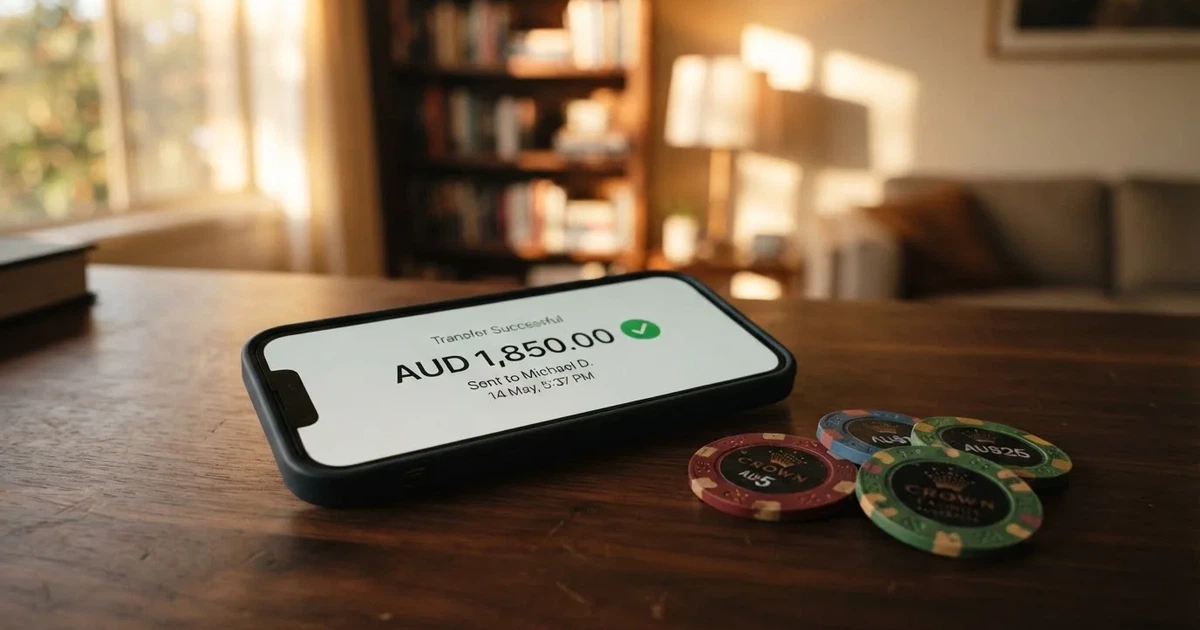
A casino page advertising POLi deposits to an Australian customer in 2026 is, on the most basic reading, offering a payment method that closed to Australians more than two years ago. Australia Post wound down POLi Payments’ domestic operations and the service shut for good on 30 September 2023. What was left of POLi moved to New Zealand, under Merco. The Australian product no longer exists. Every offshore casino still listing “POLi” in its cashier for an Australian account is either running on stale copy, routing the payment through a third country, or quietly substituting something else. None of that changes the bigger question the rest of this page answers: which offshore casinos have come onto the ACMA’s record, and what that record actually says about the legal picture for anyone playing from Australia.
Settlements, payments and the prohibition frame
The Interactive Gambling Act 2001, as tightened by the Interactive Gambling Amendment Act 2017, makes it an offence to provide online casino games, online pokies or in-play betting to a person physically in Australia. No state or territory licences those products. The law targets the provider, not the player — no Australian has been prosecuted for placing a bet with an offshore site — but the practical effect for a player is straightforward: the offshore operator is unlicensed in Australia, gives no Australian consumer protection, no Australian complaints body, and no Australian recourse if a withdrawal is refused. The site can also be blocked by an Australian internet service provider at the regulator’s direction, and a balance left on it.
The ACMA, the Australian Communications and Media Authority, is the body that investigates, issues formal warnings and asks ISPs to block illegal services. Its enforcement record is the only public, dated, named-operators ledger of which offshore casinos the regulator has actually moved against. The record has accumulated steadily since the 2017 amendments. By a round reported on 26 June 2026, the ACMA had asked ISPs to block 1,751 illegal gambling and affiliate marketing websites since the first blocking request in November 2019 — roughly six and a half years of enforcement. In that same June 2026 round the regulator added twelve more: 7Signs, ChromaBet, Donbet, Duospin, Freshbet, Slots Gem, Jacks Club, Lucky Start, Pointsbetz.com, Spinrise, Vinyl Casino and Wildsino. More than 230 unlicensed gambling services have left the Australian market since the regime was strengthened in 2017, by the same ACMA count.
The blocking rate itself is the easiest way to see the size of the problem in plain arithmetic. Between November 2019 and June 2026, 1,751 sites were added to the blocking list — an average around 270 sites per year, or roughly 22 per month, sustained across more than six years. That is not the pace of an enforcement action against a small or shrinking market; it is the pace of an enforcement action against a market that keeps replacing the sites it loses. The June 2026 round of twelve is also unusually long for a single blocking batch, which suggests the ACMA is clearing backlog rather than slowing down. H2 Gambling Capital, in a 2025 estimate cited by industry reporting, puts Australian losses to illegal gambling sites at roughly A$3.9 billion a year and notes the share of gambling going through legal channels has fallen from 74 per cent in 2021 to 64 per cent. Whatever an individual operator says about its licence, the aggregate direction is the opposite of what those marketing pages imply.
The legal distinction worth holding onto: the only products Australian-licensed operators are allowed to offer online are wagering on races and sport placed before the event, lotteries and keno. Online casino, online pokies and in-play betting are prohibited interactive gambling services. The Northern Territory Racing and Wagering Commission regulates 52 of Australia’s online bookmakers — Sportsbet, Bet365 and Ladbrokes among them — but it does so for tax reasons and has no full-time staff, meeting once a month in Darwin. That is the regulator of the legal wagering half of the market, and the regulator does not exist for casino games because the activity does not exist to regulate.
Responsible play and the limits of offshore protection
The Australian player-protection frame is built for the licensed half of the market, and it does not reach the offshore half. BetStop, the National Self-Exclusion Register, went live in August 2023 and binds every Australian-licensed online and phone wagering service — but an offshore casino is not connected to it, so self-excluding through BetStop does nothing to a Dama N.V. or Hollycorn site. The National Gambling Helpline on 1800 858 858 is free, runs 24/7 and offers chat through Gambling Help Online; both work whether the gambling happened at a licensed bookmaker or an offshore casino.

The same gap applies to payment-side controls. Westpac’s gambling block works at card level, refusing authorisation on transactions carrying the merchant category code “Betting/Casino Gambling” on eligible personal credit and debit cards. ANZ’s equivalent block, activated through the ANZ app, also blocks gambling transactions made through a digital wallet such as Apple Pay on an eligible card — once switched on, removing it requires a 48-hour cooling-off period, and the bank’s own page warns that not every gambling transaction will be blocked and some non-gambling transactions might be blocked in error. These are Australian-bank mechanisms operating against Australian-licensed merchants. An offshore casino settles through acquirers that may sit outside the MCC tagging entirely, and the block will not see it the same way. The protection exists; the coverage does not.
Under amendments that took effect on 11 June 2024, Australian-licensed online wagering services cannot accept credit cards, credit-related products or digital currency as payment, with penalties for operators up to A$247,500. Legal deposit routes for licensed wagering are debit card, bank transfer, PayID/Osko and BPAY. A site asking an Australian customer for a credit card or a crypto deposit is operating outside the Australian rules by definition, and that is the first practical test a player can apply: how is the cashier asking to be paid.
The 2026 reform path sits one step beyond enforcement. The Interactive Gambling Amendment (Gambling Reform) Bill 2026 passed Parliament on 19 August 2026. Its advertising and inducement measures commence on 1 January 2026+1CYCY; for the rest of 2026 the regime still runs through IGA enforcement plus ACMA action.
For the recreational player, the tax treatment is the one piece that does not change whether the site is licensed or not. Gambling winnings of a recreational player are not assessable income under section 6-5 of the ITAA 1997, and losses are not deductible, unless the person is carrying on a business of gambling. The model is the same in either case. The ATO is the only place to confirm how it applies to a specific situation.
Payments, payout speed and the POLi-shaped hole
POLi was a real Australian product for a window. It worked by passing through a customer’s online-banking credentials — which is why several banks had long advised customers against using it. The Commonwealth Bank stopped accepting POLi payments from mid-July 2023 over security concerns, which was a direct contributor to the closure. Australia Post wound POLi down and the service closed in Australia on 30 September 2023. POLi continues to operate only in New Zealand. Anyone in Australia looking at a casino page that lists POLi in 2026 is looking at a payment method that has not existed in this country for more than two years.
That detail matters because POLi was popular in the offshore-casino marketing for a reason: it let a customer fund an account without a credit card or a wire transfer, and it appeared to settle instantly because the transaction was, in effect, a real-time bank transfer disguised as a payment-processor redirect. In practice, the customer was logging into their own bank and authorising a transfer to the casino’s merchant account; the money left the bank at the moment of authorisation, not at the moment of the casino’s “deposit confirmed” message. That same instant-settlement architecture is what New Payments Platform and Osko now do for ordinary bank transfers in Australia: a transfer between participating banks arrives in under a minute, 24/7 including weekends, addressed to either a BSB and account number or to a PayID. Osko is the underlying instant-transfer rail; PayID is the addressing system on top of it. Paying to a PayID shows the name of the account holder before the transfer is sent, and Australian Payments Plus explicitly warns that being asked to send money to a PayID on an illegal gambling site almost certainly means a scam site.
More than 100 Australian financial institutions now offer PayID-based instant transfers, and more than 25 million PayID identifiers had been registered on the New Payments Platform as of April 2025. The platform itself became accessible to the public on 13 February 2018, is owned by New Payments Platform Australia Ltd, and is now part of Australian Payments Plus after the ACCC authorised the merger with BPAY and eftpos in 2021. Participants must keep monthly outages to no more than two minutes. BPAY itself has been running since 1997, is available through the online banking of more than 140 banks and financial institutions, and is offered by more than 95,000 businesses. The Australian instant-payment infrastructure is, in other words, mature enough that the use case POLi once served — a fast, non-card, bank-credentialed transfer to a merchant — is now met by PayID and Osko natively. A site asking for POLi in 2026 is asking for something that has been obsolete in Australia for the length of its absence.
Withdrawals are where POLi was never the right tool in any case. A POLi-style transfer is one-way: money moves out of the customer’s bank when the customer authorises it. There is no native “pull money back” rail. That is why every offshore casino that ever listed POLi for deposits routed withdrawals through a different channel — usually a bank wire, sometimes a Visa or Mastercard debit return, occasionally an e-wallet. The withdrawal request still had to clear the casino’s own manual checks before settlement, which is true of every operator regardless of payment method. A POLi withdrawal that “clears faster than a card withdrawal” is not a feature of POLi; it is the casino releasing its own hold sooner. Where research bears on this it points to the same conclusion: the speed of a withdrawal is set by the operator’s internal process and the receiving rail, not by the deposit-side processor.
Two payment-method specifics worth keeping separate. American Express was established in 1850 as a freight-forwarding company and became a card issuer much later, launching its first charge card on 1 October 1958; unlike Visa or Mastercard’s four-party network, Amex traditionally issues cards and processes transactions itself as a three-party scheme. The Reserve Bank of Australia’s July 2025 review proposes removing surcharges on eftpos, Mastercard and Visa transactions — and explicitly leaves American Express outside the proposed ban, because Amex’s merchant costs sit outside the four-party economics the review targets. Apple does not charge consumers for Apple Pay; any surcharge on an Apple Pay transaction comes from the merchant’s own card-processing fees, and the transaction limits and PIN requirements for Apple Pay are set by the card issuer or the merchant, not by Apple. By the end of 2025, Apple Pay, Google Pay and Samsung Pay collectively accounted for around 45 per cent of all card payments in Australia by number. The Australian-licensed online wagering ban on credit cards and credit-related products, in force since 11 June 2024, also constrains gambling use of linked digital wallets such as Apple Pay where the underlying card is a credit product.
AUSTRAC’s threshold-transaction-report rule — A$10,000 or more — applies only to physical cash. Ordinary electronic bank transfers are not subject to that per-transaction reporting requirement, regardless of the amount sent. That matters because it removes the “a big bank transfer will trigger AUSTRAC” worry that some offshore casino marketing tries to seed. It does not, of course, change anything about whether the transfer is to a legal recipient.
Comparing the offshore brands on the ACMA’s record
The ranking below is not a recommendation. Each brand is included because the ACMA itself issued a formal warning to its operator for offering prohibited interactive gambling services to Australians. The columns are: the brand the player sees; the ACMA action and its date, as published by the regulator; the operator named by the ACMA in that warning; and whether research could confirm the operator’s claimed POLi support for Australian accounts. The product itself is prohibited in Australia whatever licence the site displays, so the comparison is one of enforcement record, not suitability.
| Brand | ACMA action and date | Operator named by the ACMA | POLi support as the listings report it |
|---|---|---|---|
| RocketPlay | Formal warning, March 2026; earlier May 2022 | Pulsup Ltd; earlier Dama N.V. | — |
| Level Up Casino | Formal warning, May 2022 | Dama N.V. | Westpac listings only |
| Woo Casino | Formal warning, March 2025 | Dama N.V. | — |
| Spirit Casino | Formal warning, May 2025 | Dama N.V. | — |
| National Casino | Formal warning, July 2025 | Consolutetish S.R.L. | AUSTRAC and Wikipedia listings only |
| Bizzo Casino | Formal warning, July 2025; earlier 2022 | Consolutetish S.R.L.; earlier TechSolutions | — |
| Ignition Casino | Formal warning, July 2025 | Bamboo Media | — |
| Instant Casino | Formal warning, February 2025 | EOD Code SRL | ecoPayz and PayID listings only |
| Jackbit | Formal warning, April 2026 | Ryker B.V. | — |
| Casino Intense | Formal warning, April 2025 | Sterplay Holding Ltd | AUSTRAC, ITnews, NAB listings only |
| Sky Crown | Formal warning, September 2022 | Hollycorn N.V. | — |
What the table shows, taken as a whole, is that ACMA action against offshore operators is not a one-off event tied to a single bad actor. Three of the eleven entries are warnings to Dama N.V. — May 2022 covering six brands including Level Up Casino, March 2025 over Woo Casino and May 2025 over Spirit Casino — and RocketPlay sits on the same operator’s 2022 list and a separate Pulsup Ltd warning in March 2026. Bizzo Casino carries two warnings across two operators (TechSolutions in 2022, Consolutetish S.R.L. in July 2025). The pattern is that offshore casino groups rotate through brands and corporate shells while the underlying operator keeps the same name long enough for the regulator to act against it again. A player looking at one of these brands today is not looking at a fresh entrant that has never been on the ACMA’s record; the operator almost always has been, often more than once.
The POLi column is sparse on purpose. Several of these operators’ cashier pages, as third-party listings report them, list POLi alongside other payment methods; research’s listings-only tag means that is what the listings say, not what the operators confirm, and not what works at the bank level for an Australian account. After 30 September 2023, a listing that still names POLi is, by definition, either out of date or routing through a non-Australian POLi endpoint. The Honest-by-omission brands in the table — the ones research did not find any POLi listing for at all — are not safer for that reason; they are simply less documented.
RocketPlay
The most recent ACMA formal warning on this list was issued to Pulsup Ltd over Rocketplay.com.au in March 2026. The brand had already been on the ACMA record in May 2022, when Dama N.V. was warned over six brands including RocketPlay. Two warnings, four years apart, against two different operator-entities, for the same brand. The product on offer — online casino games and online pokies — cannot be licensed anywhere in Australia. Research did not confirm any POLi support for the brand, so the only POLi-related claim a player might encounter would be from third-party listings rather than from the operator’s own page. The verdict: the brand is on the regulator’s record twice and the newer warning is less than a year old. A player who takes the ACMA’s enforcement record at face value has no reason to read RocketPlay as a step down from the May 2022 warning.
Level Up Casino
Level Up Casino sits on Dama N.V.’s May 2022 warning — the same warning that names six brands, of which Level Up is one. The brand has not been the subject of a separate, more recent ACMA action in research’s record, which is not the same as saying the regulator has changed its mind about Dama N.V. — three of the eleven brands in this comparison are warnings to Dama N.V., and the most recent of those (Spirit Casino, May 2025) is less than two years old. The only POLi-shaped signal research found for Level Up is a Westpac page listing; that is what the listing says, not what the operator confirms, and it tells a reader nothing about whether POLi could settle against an Australian bank in 2026. The verdict: the brand has been on the ACMA record since 2022 and shares its operator with brands the regulator warned against again in 2025.
Woo Casino
The March 2025 warning to Dama N.V. covered Woo Casino. Research did not confirm POLi support for the brand. That is the relevant datum: an operator already on the ACMA record for offering prohibited services to Australians, with no confirmation either way on a payment method that, for an Australian account, has not existed since September 2023. A 2026 page that says “Woo Casino accepts POLi” is making a claim about a payment method that has been closed for more than two years. The verdict: Woo Casino is one of three Dama N.V. brands on this list, the most recent of the three, and the only operator-specific signal a player has on the 2026 page is the ACMA’s own warning.
Spirit Casino
Spirit Casino is the third Dama N.V. brand in the comparison, with an ACMA formal warning in May 2025. The operator is the same as Level Up Casino and Woo Casino, the warning is the most recent of the three, and the product on offer remains a prohibited interactive gambling service in Australia. Research did not confirm POLi support. The verdict: same operator as two other brands on this list, the most recent ACMA action of the three, no confirmed POLi support for the Australian customer the casino is nonetheless marketing to.
National Casino
The July 2025 ACMA formal warning was issued to Consolutetish S.R.L. over National Casino and Bizzo Casino — two brands, one warning. Research’s listings-only POLi signal for National Casino is from AUSTRAC and Wikipedia pages, neither of which is a confirmation that POLi will settle against an Australian bank in 2026. National Casino also shares its operator with Bizzo Casino below, which means a player evaluating one is implicitly evaluating the other. It is a brand on a shared-operator warning from July 2025; the listings associated with it are years out of date.
Bizzo Casino
Bizzo Casino carries two ACMA warnings: one to TechSolutions (CY) Group Limited and TechSolutions Group N.V. in 2022, and a second to Consolutetish S.R.L. in July 2025 — the same July 2025 warning that names National Casino. Two warnings, two operators, one brand. The earlier warning is on the same operator-rotation pattern visible across the rest of the list. Research did not confirm POLi support for Bizzo Casino. The verdict: the brand has been on the ACMA record twice and the second warning is recent; nothing in research gives a reader a POLi-related reason to choose it over any of its neighbours.
Ignition Casino
The July 2025 formal warning to Bamboo Media names Ignition Casino. The operator is different from every other entry in the table — there is no shared-operator signal between Bamboo Media and Dama N.V., Consolutetish S.R.L., or any of the other entities on the ACMA’s 2026 record. Research did not confirm POLi support for the brand. In summary: Ignition is on the ACMA record from July 2025, and there is no evidence the operator has any relation to the other sites cited here.
Instant Casino
The February 2025 formal warning was issued to EOD Code SRL over Instant Casino. The brand sits outside the Dama N.V. cluster and outside the Consolutetish S.R.L. cluster. Research’s only POLi-shaped signal for Instant Casino is a pair of listings — ecoPayz and PayID — neither of which is POLi, and neither of which tells a reader that POLi will settle for an Australian customer in 2026. The PayID listing is the more telling of the two: PayID is an Australian instant-transfer rail that does not depend on POLi at all. A casino page advertising PayID to an Australian customer is, in effect, advertising the rail that replaced POLi’s use case. Note: Instant Casino is on the ACMA record from February 2025; its marketing of payment methods does not include current or functional POLi support.
Jackbit
Ryker B.V. received the April 2026 ACMA formal warning over Jackbit and CasinOK. The operator is fresh to this comparison — it does not appear elsewhere in the table. Research did not confirm POLi support for Jackbit. Regarding enforcement: this brand was warned in April 2026, and as of now, remains on the ACMA’s active warning list.
Casino Intense
The April 2025 formal warning was issued to Sterplay Holding Ltd over Casino Intense. The operator does not appear elsewhere in the table. Research’s listings-only POLi signal for Casino Intense is a set of AUSTRAC, ITnews and NAB pages — none of which is an operator confirmation, and none of which says anything about whether POLi will settle against an Australian bank in 2026. This operator was warned in April 2025; no reliable payment information exists for its cashier.
Sky Crown
Hollycorn N.V. was the subject of a formal warning over Sky Crown and Blue Leo, as published by the ACMA in September 2022. Hollycorn is not named in any other warning in this comparison, but the operator’s name has appeared across the offshore casino market for years. Research did not confirm POLi support for Sky Crown. The verdict: a brand on a 2022 ACMA warning with an operator that does not appear elsewhere on this page’s list, and no research-confirmed POLi signal.
Overview and the position that falls out of it
The POLI-shaped proposition at the centre of this page — “casinos that accept POLi in Australia” — is a proposition built on a payment method that closed in Australia in September 2023. The eleven brands the ACMA has acted against most recently, taken as a group, do not change that picture. Each one is on the regulator’s record for offering prohibited interactive gambling services to Australians. Each one would, at best, list POLi through third-party listings rather than operator confirmations. The aggregate direction of the ACMA’s enforcement is consistent with H2 Gambling Capital’s 2025 estimate that 64 per cent of Australian gambling now goes through legal channels, down from 74 per cent in 2021 — the legal share is shrinking, not growing, against an enforcement regime that is itself running at roughly 22 blocking actions per month.
The practical conclusions a reader can draw in 2026:
- A casino advertising POLi for an Australian account in 2026 is offering a payment method that closed in this country more than two years ago. The Honest-by-omission answer is that POLi is not a method an Australian can use at any of these sites in practice, regardless of what the cashier claims.
- The legal half of the Australian online wagering market is small by design: wagering on sport and races placed before the event, lotteries and keno, licensed chiefly through the Northern Territory. Online casino, online pokies and in-play betting are prohibited services, and the ACMA’s enforcement record is the public ledger of operators the regulator has moved against.
- Player-protection tools — BetStop, the National Gambling Helpline, bank-level gambling blocks — apply to the licensed market. None of them cover an offshore casino in the way their names suggest. A player who wants those tools working for them has to stay on the licensed side.
- The Australian instant-payment infrastructure (PayID and Osko, BPAY, the New Payments Platform) is mature and offers the use case POLi once served — fast, non-card, bank-credentialed transfer — natively, without the credential-handover that got POLi into trouble with the Commonwealth Bank in the first place.
- The credit-card ban on Australian-licensed online wagering, in force since 11 June 2024, removes the deposit route most often marketed by offshore sites. An offshore site asking an Australian customer for a credit card or a crypto deposit is, by definition, operating outside the Australian rules.
The page’s own position is that none of the eleven brands in the comparison is suitable for an Australian player on the strength of the ACMA’s enforcement record. The regulator’s record is not a ranking and not a recommendation; it is the most current, dated, named-operators evidence available, and what it shows, in 2026, is that the enforcement action is ongoing rather than winding down. The gambling reform bill 2026’s advertising measures take effect on 1 January 2026+1CYCYCYCYCYCY$$ — does not arise, because POLi Payments shut its Australian operations on 30 September 2023 and the service has not been available in this country since.