
Instant PayID withdrawal in Australia: how fast the money actually moves, and where the speed runs out
A PayID transfer can land in an Australian bank account in under a minute. An “instant PayID withdrawal casino” advertises that speed as if it were the headline fact, and for the punter chasing the cash-out button it is. But the rail the money travels on is the least contested part of the transaction. The casino, its licence status in Australia, and the settlement review that sits between “approved” and “sent” decide what the speed is actually worth. This page looks at both halves: how a PayID withdrawal clears when a casino releases it, and why the sites that promise the fastest PayID cash-out are the ones the regulator has warned, blocked or named in formal action.
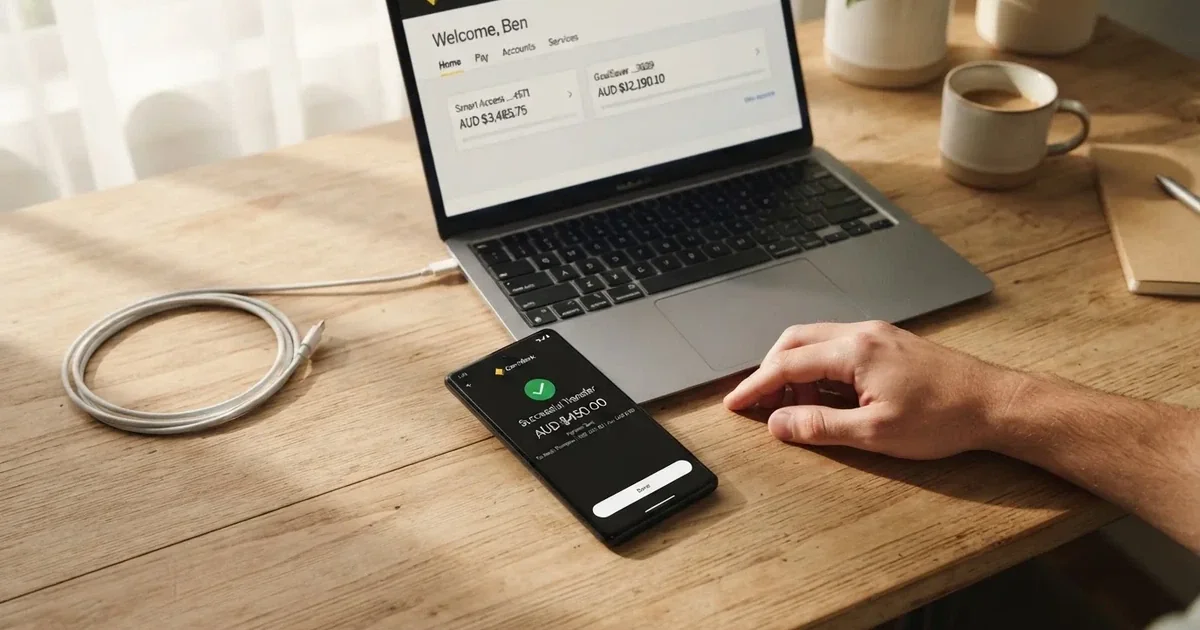
29 October 2026. Licence claims were checked against the Australian Communications and Media Authority register.
Table of Contents
- The PayID rail and the Osko network behind it
- What “instant” means on the operator’s side
- PayID and the Australian credit-card ban
- Bank-side gambling blocks: where the PayID can be refused before the casino sees it
- Offshore sites, Australian consumer protection and the holder-of-record problem
- Enforcement: how the ACMA removes illegal sites
- Responsible play: what a fast withdrawal does not change
- Eleven ACMA-named brands, in the order the regulator has acted
- How fast the regulator has been moving: a working calculation
- What the speed is actually worth
- The legal frame the page sits inside
- Where the data ends
- Frequently asked questions
The PayID rail and the Osko network behind it
A PayID is a simple address — a mobile number, an email address, an ABN or an Organisation Identifier — that points at a bank account held somewhere in Australia. It is operated by Australian Payments Plus, the domestic payments body, and is built into the online banking of more than 100 Australian financial institutions, which means the customer does not install anything new to send or receive through one. As of April 2025, more than 25 million PayIDs were registered across the country.

The rail PayID runs on is the New Payments Platform, the real-time payments backbone the Reserve Bank of Australia oversees. NPP launched in February 2018 so that households, businesses and government agencies could move money 24 hours a day in close to real time. The RBA also operates the Fast Settlement Service that settles NPP transactions individually, around the clock. PayID is therefore not a separate network so much as an addressing scheme for an existing one: it tells NPP which account to credit, and NPP delivers the funds near-instantly when both banks are participants. Osko, the brand most retail customers see on a bank statement, is the consumer-facing product of that network and reaches the same destination whether the sender typed a BSB-and-account-number or a PayID.
A payee name check is built into the sending flow. When a customer pays to a PayID, the bank surfaces the name on the receiving account before the transfer is sent, which is the practical guard against scam payments and mistaken credits. The sender has to confirm the name matches the expected payee; if the receiving name does not match what the sender was expecting, the transfer should not be sent. This matters more in gambling than in most other contexts, because PayID is also one of the rails used by scam operators. Australian Payments Plus has put a plain warning about that on its own page: if someone is asked to transfer funds to a PayID on an illegal gambling site, it is almost certainly what AP+ calls a “scambling” website — slang for an illegal online gambling platform advertised on social media and messaging apps that tricks people into gambling on a scam site. The advice is to contact the financial institution first.
A PayID never contacts a customer. It does not email, does not text, and does not ask anyone to send money to receive money or to “upgrade” an account. Anyone receiving such a message is being targeted by a scam, not contacted by the rail.
What “instant” means on the operator’s side
A casino advertising an instant PayID withdrawal is describing a state of affairs the PayID rail can in principle deliver: the money, once released, reaches the bank account in well under a minute. The qualifier “once released” carries all the weight. The casino itself sits between the player’s request and the rail, and what happens in that gap decides the real-world wait.

The first wait is the settlement review. Every legitimate payment team runs anti-fraud, anti-money-laundering and bonus-abuse checks before a withdrawal is approved, and offshore casinos run them too — sometimes more aggressively than licensed ones because they cannot afford to pay out a chargeback they later cannot recover. A first-time withdrawal almost always triggers identity verification, which is the section the reader will find under that heading further down. Subsequent withdrawals, in the normal case, clear faster because the verification is already on file, but no operator guarantees a fixed window for every request.
The second wait is the operator’s own processing window. Many sites hold withdrawals for a fixed period — often several hours, sometimes a day — to give the player a chance to reverse the request, which is a feature the operator prefers because it reduces the number of chargebacks it has to fight. A “pending” period of any length is the gap most often described as “the withdrawal was approved but I never received it”. The casino is not lying about approving it; the player has not finished the pending window either.
The third wait is queue position. A casino that processes payouts manually will have a queue, and a queue lengthens on weekends even when the bank is open 24/7. PayID and Osko do not stop working at midnight, but the humans who release the funds do.
When those three waits are short — automated approval, no pending hold, weekend coverage — the actual bank-to-bank transfer is the smallest part of the elapsed time, and the operator can fairly call it instant. When any one of them is long, the speed of the rail does the reader no good at all. The honest way to read an “instant withdrawal” promise is to ask what happens before the PayID transfer is initiated, not how long the transfer itself takes.
A PayID withdrawal does not clear any faster outside normal banking hours, in the sense that the speed a player cares about is bounded by the operator’s processing window rather than the bank’s. The rail is 24/7 either way; the queue on the casino side is what the punter actually waits in.
PayID and the Australian credit-card ban
Since 11 June 2024, Australian-licensed online wagering services have not been allowed to accept credit cards or credit-related products as payment, under amendments to the Interactive Gambling Act 2001 that came into force that year. The restriction also shapes how PayID-linked bank transfers can be used for wagering. A licensed Australian wagering operator can accept PayID or Osko, debit card, bank transfer and BPAY; it cannot take a credit card or a digital currency deposit. A site that asks an Australian for a credit card or a crypto deposit is not running inside the Australian rules at all, even if it claims an offshore licence.
The credit-card ban does not, on its own, make PayID a clean payment option. A PayID debit is paid out of the sender’s own transaction account, which is what most retail customers would be using anyway; the relevant restriction is on credit, not on the network. But the underlying test — is the site allowed to be offered to an Australian customer at all — applies whether the payment is PayID, debit card, BPAY or crypto. The payment method does not launder the offering. A site that has been formally warned for offering prohibited casino games to Australians is offering prohibited casino games whether the deposit screen shows PayID, a card, or a coin.
Bank-side gambling blocks: where the PayID can be refused before the casino sees it
The big four Australian banks and several others offer a gambling transaction block that operates at the card level or, increasingly, at the digital wallet level. Westpac’s gambling block refuses authorisation of transactions registered under the merchant category code for Betting/Casino Gambling on eligible personal credit and debit cards. ANZ’s gambling block, activated inside the ANZ app, blocks gambling transactions made through a digital wallet such as Apple Pay on an eligible card, not only the physical card. Once a customer turns ANZ’s block on, removing it requires a 48-hour cooling-off period, and the bank warns that not all gambling transactions will be blocked and that some non-gambling transactions might be blocked in error. These are blunt instruments that work on the merchant code, not on the operator name: a payment to a casino that registers correctly under the gambling code will be refused regardless of the payment method on the front end.
The same logic reaches PayID, in practice, more loosely. A PayID debit from a transaction account does not carry a merchant category code, so a bank gambling block set at the card level will not necessarily see it. That is not an endorsement; it is a description of what the block covers. A PayID debit still shows up on the statement as a transfer to a named recipient, and the recipient name check at sending time is the line of defence that is meant to catch a payment to an illegal site. Whether that defence works depends on the sender reading the name.
Digital wallets add another layer. By the end of 2025, Apple Pay, Google Pay and Samsung Pay transactions accounted for around 45% of all card payments in Australia by number, and Apple’s stated terms are that Apple does not charge consumers for using Apple Pay in stores, online or in apps — any surcharge on a wallet transaction comes from the merchant’s own card-processing fees, not from Apple. Apple is also clear that transaction limits and PIN requirements for Apple Pay purchases are set by the card issuer or the merchant, not by Apple itself. The credit-card ban reaches those wallet payments too: a wagering transaction funded through a credit-card-backed Apple Pay account is still a credit-funded wagering transaction, and the operator is not allowed to take it.
Offshore sites, Australian consumer protection and the holder-of-record problem
The Interactive Gambling Act 2001, as strengthened by the Interactive Gambling Amendment Act 2017, makes it an offence to provide online casino games, online pokies or in-play betting to a person physically in Australia. No state or territory licenses online casino games. What is licensable is wagering on races and sport placed before the event, lotteries and keno — in practice licensed by the Northern Territory Racing and Wagering Commission, which regulates 52 of Australia’s online bookmakers including Sportsbet, Bet365 and Ladbrokes for tax reasons, and which operates with no full-time staff, meeting once a month in Darwin. The minimum age is 18.
The IGA targets the provider, not the individual player. Australian players are not prosecuted for placing a bet with an offshore casino. What the player does lose, by going offshore, is the entire consumer-protection stack that comes with an Australian licence: an Australian complaints body, an Australian dispute resolution process, an enforceable guarantee that a withdrawal will be paid, and access to BetStop, the National Self-Exclusion Register that has been live since August 2023. BetStop binds Australian-licensed online and phone wagering services only; an offshore casino is not connected to it. Self-excluding through BetStop does not stop an offshore site from accepting a deposit. It also does not put a refund on the table for the player whose withdrawal is refused: an offshore operator that simply declines to pay sits outside any Australian recourse, and the ACMA has the power to have the operator’s domain blocked with the player’s balance still inside the account.
A PayID withdrawal that the casino refuses to send is not a bank problem and not a rail problem; it is an operator decision the Australian player has no domestic route to challenge. The PayID part is, again, the fastest part of the pipeline. The part that decides whether the money leaves the casino at all is the part the rail cannot help with.
Enforcement: how the ACMA removes illegal sites
The Australian Communications and Media Authority investigates complaints, issues formal warnings to operators, and directs Australian internet service providers to block illegal gambling websites at the network level. As of June 2026, a total of 1,751 illegal gambling and affiliate marketing websites had been blocked since the first blocking request in November 2019, and more than 230 unlicensed gambling services had left the Australian market since enforcement was strengthened in 2017. A round reported on 26 June 2026 alone asked Australian ISPs to block 12 more sites: 7Signs, ChromaBet, Donbet, Duospin, Freshbet, Slots Gem, Jacks Club, Lucky Start, Pointsbetz.com, Spinrise, Vinyl Casino and Wildsino. Each blocking round is a list of names the regulator has decided should not be reachable from an Australian residential connection.
The financial scale of what the regulator is trying to push back against is large. H2 Gambling Capital’s 2025 report estimated that Australians lose about A$3.9 billion a year to illegal gambling sites, and that the share of gambling going through legal channels fell from 74% in 2021 to 64%. The drop is the headline: more than a third of Australian gambling spend now flows to operators that do not hold an Australian licence, which is exactly the channel the ACMA’s blocking programme is built to drain.
The formal warning track the ACMA runs sits in parallel to the blocking track. A formal warning is a published notice that the named operator has been told, in writing, that its service is prohibited under the Interactive Gambling Act 2001 and that further enforcement action may follow. A warning is not a prosecution and it is not a fine; it is the regulator marking the file. Repeat warnings, especially across separate brands owned by the same operator, are the visible pattern in the warning register, and that pattern is what the table further down this page records.
Responsible play: what a fast withdrawal does not change
A withdrawal that lands in a bank account in under a minute is not a sign that an operator meets any safety standard beyond how it moves money. The speed of the rail tells the player nothing about whether the operator has a meaningful responsible-gambling policy, whether it enforces deposit limits, whether it will let a player self-exclude, or whether it will hand a refund back when a player asks for one. Two of those four questions have a definite answer for an offshore site that has not signed up to Australian standards: in nearly every case, no.
The Australian-licensed routes that do bind operators to those standards are limited. BetStop, the National Self-Exclusion Register, covers every Australian-licensed online and phone wagering service — the bookmakers licensed in the Northern Territory and any equivalent phone or interactive service. A player who registers with BetStop cannot open a new account with any participating operator for the chosen exclusion period (three months, twelve months, or permanently), and existing accounts are closed and balances returned according to the operator’s own terms. Offshore casinos are not participants, so BetStop does not stop a self-excluded Australian from opening an account at one of them; it only stops the licensed operators from accepting that player.
For anyone who feels their gambling is moving faster than they want, the National Gambling Helpline is 1800 858 858, free, 24/7, with chat available at Gambling Help Online. The line is staffed by counsellors, not by a casino, and it has nothing to do with the speed of any withdrawal rail.
Eleven ACMA-named brands, in the order the regulator has acted
The eleven brands below are not a ranking and not a recommendation. Each is included because the Australian Communications and Media Authority has issued a formal warning over it for offering prohibited online casino games to Australians, and the table closes on the question that “instant PayID withdrawal” raises for an Australian resident: which sites are subject to that action, and what was the named operator behind the brand at the time of the warning. An ACMA formal warning is published on the regulator’s own site and is the public, dated record of the regulator’s view; the table reproduces it.
The columns record the brand name as it appears in marketing, the ACMA action and the date of the formal warning, the operator the ACMA named, and a single field on what is known about the brand’s payment set-up from sources other than the brand itself. Where the research found no usable figure on PayID support from any of those sources, the cell carries an em dash rather than a guess. A blank cell on a comparison table is the honest answer; an invented cell would be worse than no answer, because it would tell the reader a fact they might rely on.
| Brand | ACMA action and date | Operator named by the ACMA | Subject support |
|---|---|---|---|
| RocketPlay | Formal warning, March 2026; earlier warning to Dama N.V., May 2022 | Pulsup Ltd (Rocketplay.com.au); earlier Dama N.V. | — |
| Level Up Casino | Formal warning, May 2022 | Dama N.V. | listings-only (Westpac) |
| Woo Casino | Formal warning, March 2025 | Dama N.V. | — |
| Spirit Casino | Formal warning, May 2025 | Dama N.V. | — |
| National Casino | Formal warning, July 2025 | Consolutetish S.R.L. | listings-only (AUSTRAC, Wikipedia) |
| Bizzo Casino | Formal warning, July 2025; earlier warning to TechSolutions, 2022 | Consolutetish S.R.L.; earlier TechSolutions (CY) Group Limited and TechSolutions Group N.V. | — |
| Ignition Casino | Formal warning, July 2025 | Bamboo Media | — |
| Instant Casino | Formal warning, February 2025 | EOD Code SRL | listings-only (ecoPayz, PayID) |
| Jackbit | Formal warning, April 2026 | Ryker B.V. | — |
| Casino Intense | Formal warning, April 2025 | Sterplay Holding Ltd | listings-only (AUSTRAC, iTnews, NAB) |
| Sky Crown | Formal warning, September 2022 | Hollycorn N.V. | — |
The same operator appearing against several brands is the pattern the table makes visible. Dama N.V. is named in three separate rows — RocketPlay (in the earlier 2022 warning), Level Up Casino, Woo Casino and Spirit Casino — and Hollycorn N.V. and Consolutetish S.R.L. each appear more than once. The warning is being issued to a corporate group, not to a one-off brand; a player who closes one account with an operator group and opens another under a different skin is dealing with the same entity on the regulator’s list.
A note on what “Subject support” means in the table. Where the research surfaced a payment-related figure from a source that is not the operator’s own marketing — for example a banking partner’s gambling-block page that lists a brand, a regulator’s financial-crime register, or a payment processor’s merchant directory — the cell is marked “listings-only” and the sources are named. A cell that simply says “—” means the research found no usable third-party source on the brand’s PayID set-up; that is not a claim that the brand does not accept PayID, and it is not a claim that it does. It is the honest answer that no independent record was found. Bonus, promo or voucher codes are not printed anywhere on this page; the only sources for those would have been affiliate marketing pages, and the brand descriptions below describe the offer in qualitative terms where the research gives something to say.
RocketPlay
The Australian Communications and Media Authority issued a formal warning to Pulsup Ltd in March 2026 over Rocketplay.com.au, naming the .com.au marketing name and the corporate owner at that time. RocketPlay had already been caught up in an earlier formal warning in May 2022, when Dama N.V. was named across six casino brands including Rocketplay. The pattern is straightforward: the same brand has now been warned twice, under two different corporate owners, and the second warning did not undo the first. The page the reader is reading is an Australian page, and the rule the IGA makes is that online casino games cannot be licensed in Australia, whatever offshore licence the site displays. The status of this brand under Australian law remains unchanged, regardless of the PayID withdrawal speed it promises.
Level Up Casino
A formal warning was issued to Dama N.V. in May 2022, naming Level Up Casino among six brands covered by the same notice. The brand is part of the Dama cluster of names that the ACMA has acted on repeatedly. Independent information on the brand’s payment set-up is scarce; the only listing-class mention surfaced from a major Australian bank’s gambling-block documentation, which names the brand among the operators registered under the relevant merchant category. There is no Australian licence, no Australian dispute body, and no independent confirmation of PayID figures. The Dama group has been repeatedly named by the regulator, and the brand’s promise of a fast PayID withdrawal does not change the legal status of the offering in Australia.
Woo Casino
Woo Casino received a formal warning from the ACMA in March 2025, again naming Dama N.V. as the operator. The March 2025 warning is the second Dama-focused warning in this list and it sits about three years after the May 2022 action. The ACMA did not need to re-issue the IGA analysis each time; the regulator’s published warnings make clear that offering online casino games to Australians is what is prohibited, and the same prohibition applies to a brand the operator has re-skinned or rebranded. No external data clarifies the brand’s PayID support. The brand is on the ACMA’s list and remains outside the Australian licensing regime, however fast its PayID withdrawal is in practice.
Spirit Casino
Dama N.V. received a third ACMA formal warning in May 2025, this time naming Spirit Casino. Spirit Casino sits two months after the Woo Casino warning, and a few weeks before the July 2025 warning to Consolutetish S.R.L. that also named National Casino and Bizzo Casino. The Dama group has now been warned across at least four of its brands visible in this list — Bambet, Dazard, Level Up, Rocketplay, Wild Tornado and Cobra Casinos in May 2022, Woo Casino in March 2025, Spirit Casino in May 2025. The pattern the regulator has documented is that the warning, once issued, has not stopped the same operator group from offering prohibited services under new names; the natural consequence is that the next Dama warning is most likely a third or fourth brand rather than a final action. No independent source details the brand’s PayID setup; the regulator’s stance is definitive.
National Casino
The ACMA issued a formal warning in July 2025 to Consolutetish S.R.L. naming National Casino and Bizzo Casino on the same notice. National Casino is the first of the two brands named that day. The operator had not appeared in the warning register before July 2025, which makes this the first formal warning the regulator has issued against Consolutetish S.R.L. on the record. Payment information is sparse; the listings-class mentions come from the Australian Transaction Reports and Analysis Centre (AUSTRAC) registry and from Wikipedia, neither of which is the operator’s own marketing. There is no Australian licence. The brand has been named in a formal warning, and readers should be aware that no Australian-licensed equivalent exists within the same offering.
Bizzo Casino
The same July 2025 warning also named Bizzo Casino, the second formal warning tied to the brand since 2022: the earlier warning named TechSolutions (CY) Group Limited and TechSolutions Group N.V. as the operators of record. Two warnings, separated by three years, against the same brand under two different operator names, is the clearest single example on this list of an operator group rotating the corporate front while keeping the same offering. The brand has been warned twice, and it is prudent to view a possible third warning under a third corporate name as a significant risk.
Ignition Casino
Bamboo Media was named in a July 2025 formal warning over Ignition Casino. The brand is one of two named in the same month, with Consolutetish S.R.L.’s warnings also issued in July 2025 over National Casino and Bizzo Casino. The two warnings do not share an operator name, so they should be read as separate actions rather than as a single regulator move. Data on the brand’s payment configuration is unavailable from independent sources. The regulatory warning stands regardless of payment methods.
Instant Casino
In February 2025, the ACMA issued a formal warning to EOD Code SRL over Instant Casino. The brand name and the product are the same thing, which makes this the most direct of the names on the list: a casino whose own marketing name promises instant play has been formally warned for offering prohibited casino games to Australians. Third-party data is minimal: only an e-money issuer’s merchant directory and PayID’s own public pages refer to it. Marketing promises notwithstanding, the regulatory status remains prohibited.
Jackbit
Ryker B.V. received a formal warning in April 2026 naming both Jackbit and CasinOK. Jackbit and CasinOK are sibling brands under the same corporate owner, and the April 2026 warning names both on the same notice, which is the regulator’s way of making clear that the action covers an operator group rather than a single brand. No independent payment data exists for this brand. The brand is part of a combined regulatory notice, and its legal status in Australia remains prohibited regardless of withdrawal speed.
Casino Intense
Sterplay Holding Ltd was named in an April 2025 formal warning over Casino Intense. The brand is part of the second wave of warnings in 2025, with the ACMA’s 2025 action covering Bamboo Media, Consolutetish S.R.L., Dama N.V., EOD Code SRL and Sterplay Holding Ltd in the space of twelve months. The third-party listings-class mentions the research surfaced on Casino Intense are limited: AUSTRAC, an Australian IT-industry publication and a major bank’s own documentation. There is no Australian licence. The verdict for an Australian resident is unchanged.
Sky Crown
Hollycorn N.V. received a formal warning over its Sky Crown and Blue Leo casino services in September 2022, with the ACMA publishing the formal warning notice as a PDF. Sky Crown is the older entry on the list and the one where the warning pre-dates the rest of the 2025–2026 wave, which is useful context for the reader: the ACMA’s published warning register goes back years, and the regulator’s view of a brand is a cumulative file rather than a single notice. No external records clarify payment configurations. The brand has been listed on the ACMA’s warning register for several years, offering no domestic recourse for Australian residents.
How fast the regulator has been moving: a working calculation
The ACMA’s blocking programme started with the first blocking request in November 2019. By June 2026, the regulator had asked Australian internet service providers to block 1,751 illegal gambling and affiliate marketing websites in total. The arithmetic that the page’s research makes available is a rate, not a single figure: it is the number of blocked sites divided by the time between the first blocking request and the most recent published count.
Carrying the calculation through in plain terms: 1,751 blocked sites accumulated over roughly six and a half years, from November 2019 to June 2026, is an average in the order of 270 blocked sites per year, or just over twenty blocked sites per month. That is the long-run average, and it includes the early years when the regulator was building the programme as much as enforcing it. The reader should treat the figure as a band rather than a single number, because the blocking rate has been uneven across years and a single month’s count is not representative of the next month’s count. A round of twelve sites in June 2026, for example, is well below the long-run average, while earlier rounds in the programme were well above it. The figure the arithmetic produces is the long-run band: somewhere in the low hundreds of sites per year, with material month-to-month variation around that band.
What the rate is good for is showing the trend the regulator’s enforcement programme is producing. The ACMA is not issuing one warning and waiting to see what changes; it is naming operators, blocking sites, and naming more operators. A reader who is trying to gauge how exposed an offshore casino is to Australian enforcement is looking at a regime that, in the long run, removes hundreds of sites a year from Australian reach. The PayID withdrawal speed does not change the trajectory.
What the speed is actually worth
The headline speed a PayID transfer delivers is real. Under sixty seconds from the moment the casino releases the funds to the moment the bank account shows the credit is a measurable outcome, and a punter whose casino has a short pending window and a fast settlement review will see exactly that. But the speed is a property of the rail, not a property of the offering, and the offering is what the regulator has acted on.
An Australian-facing casino with a PayID withdrawal is not, in the IGA’s terms, a different product from an Australian-facing casino without one. The bank-side mechanics are the same: a debit from a transaction account, routed through NPP, credited to a bank account held at one of more than 100 Australian financial institutions. The card ban, the digital-wallet ban and the offshore-operator prohibition all apply the same way to a PayID debit as they do to a card debit, because none of those rules discriminate by network; they discriminate by who is offering the product. The fast rail makes a fast casino; it does not make a lawful one.
What that means for the reader is simple. The page the reader is reading is not the place to look for an Australian-licensed instant PayID withdrawal casino, because no such licence exists. Online casino games cannot be licensed in Australia, and any site that is offering them to an Australian customer is doing so in spite of the Interactive Gambling Act 2001, not under it. The PayID part of that transaction is the part the rail can do in under a minute. The legal part is the part the rail cannot do at all.
For an Australian resident who wants to play casino games lawfully, the answer the IGA gives is that no such offering exists under an Australian licence, and the only consumer-protection path the regulator supports is the licensed wagering channel — bookmakers licensed by the Northern Territory Racing and Wagering Commission for racing and sports betting placed before the event, lotteries and keno operators licensed by their state or territory. Anything else, however fast the PayID withdrawal is advertised to be, sits outside the regime.
The legal frame the page sits inside
The Interactive Gambling Act 2001 makes it an offence to provide online casino games, online pokies or in-play betting to a person physically in Australia. The 2017 amendments strengthened the enforcement regime by giving the ACMA the power to direct ISPs to block illegal sites at the network level. The 2023 amendments added the credit-card ban for Australian-licensed wagering services. The Interactive Gambling Amendment (Gambling Reform) Bill 2026 passed Parliament on 19 August 2026 and its advertising and inducement measures commence on 1 January 2027; those measures are law with a start date, not yet in force on a page dated in the current year. The page describes the law as it stands in the year of writing and notes the 2027 commencement date where it applies.
Tax: gambling winnings of a recreational player are not assessable income under section 6-5 of the Income Tax Assessment Act 1997, and losses are not deductible. A player who carries on a business of gambling is taxed on the business result; the ATO is the place to check that case, and the page does not give individual tax advice.
Player protection: the National Gambling Helpline on 1800 858 858 is free, 24/7, with chat at Gambling Help Online. BetStop, the National Self-Exclusion Register, has been live since August 2023 and binds every Australian-licensed online and phone wagering service. Minimum age is 18.
Where the data ends
The research that built this page is current to the date stamp on the lead paragraph, and the ACMA register is the authority whose published actions are reproduced in the table above. The blocking total is the figure the regulator reported in June 2026; the next blocking round may already have changed it. The brand-level table is built from formal warnings the ACMA has issued and published; a warning the regulator has issued but not yet published is not on this page. The bank’s gambling-block documentation, the AUSTRAC registry and PayID’s own pages are the third-party sources the listings-only column names; none of them is the operator’s own marketing. Anything outside those sources is not on this page.
Frequently asked questions
Is it legal for an online casino to process a PayID withdrawal for a player in Australia?
No. The Interactive Gambling Act 2001 prohibits offering online casino games, online pokies and in-play betting to a person in Australia, and no state or territory licenses them. A PayID transfer to an Australian bank account does not change the legal status of the offering. The provider — not the player — is the target of enforcement, and the ACMA can have the operator’s site blocked with any balance still on it.
What steps does a casino usually complete before releasing an instant PayID withdrawal?
The standard sequence is a pending window the player can use to reverse the request, an internal settlement review for fraud, anti-money-laundering and bonus-abuse checks, and finally the PayID transfer itself. A first withdrawal almost always triggers identity verification, which adds time the second withdrawal does not. The PayID leg of the transfer, once released, lands in under a minute.
Does a PayID withdrawal clear any faster outside normal banking hours?
No. PayID and the underlying New Payments Platform run 24/7, including weekends, so the rail does not stop. The wait that matters is the casino’s pending window and settlement review, both of which run on the operator’s own clock. A withdrawal that releases at 2 a.m. on a Sunday clears just as fast as one that releases at 2 p.m. on a Tuesday.
Is there a maximum amount that can be withdrawn instantly through PayID at once?
PayID itself does not impose a single published cap on a one-off transfer, but the casino sets its own per-transaction and per-day withdrawal limits, and the receiving bank may apply its own limits on inbound credits. A first withdrawal is almost always smaller in practice than a later one, because the verification step reduces the operator’s exposure on an account it does not yet know. There is no universal figure; the operator’s own terms page is where the relevant number sits.
What identity checks apply before a first PayID withdrawal is approved?
A first withdrawal at a serious operator triggers standard KYC: a government-issued photo ID, proof of address, and sometimes a source-of-funds check. An offshore casino with weak controls may ask for less, which is the wrong direction to read as a benefit: less verification means less recourse if the operator later refuses to pay. The Australian licensed path, where an Australian licence exists at all, is the consumer-protection path; the offshore path is not.
Can an instant PayID withdrawal be recalled once a casino has sent it?
Once the PayID transfer has been released, the funds settle at the receiving bank in close to real time and the casino cannot pull them back. The recall risk lives on the casino’s side of the line, not the bank’s: a casino that does not approve a withdrawal is not recalling a sent transfer; it is declining to send one in the first place. The pending window exists to let a player cancel the request before the bank leg runs, and that is the only recall point that actually exists.