
Best RTP Slots Australia 2026: the figure, the law, and the brands on the ACMA list
The phrase “best RTP slots” travels between two very different products in Australia. Onshore, it points at electronic gaming machines — pokies — in licensed clubs, hotels and casinos, where each machine’s return-to-player figure sits in the 85-90% range by statute. Offshore, it points at the slot games marketed by international online casinos to Australian customers, where the RTP can climb into the 96-99% range because the operator sets it. The first is legal, regulated and taxed. The second is a prohibited interactive gambling service under the Interactive Gambling Act 2001 — even when the brand carrying the games holds a Curaçao or Anjouan licence, the service itself is unlawful the moment it is offered to a person in Australia. That gap between the offshore marketing and the Australian position is the substance of this page.
29 October 2026 · Checked against the ACMA’s published list of formal warnings and blocking actions.
Table of Contents
- The Interactive Gambling Act and why offshore RTP marketing is not just a tax question
- How slot RTP is actually calculated, and what the figure does and does not promise
- The operators the ACMA has acted against, and what their presence on the page means
- How the ACMA’s enforcement record reads
- Comparing the operators on the ACMA list
- The mechanics of high-RTP slots in more detail
- What an Australian reader comparing this market should know
- Comparing the licensed and offshore products on what each can actually deliver
- Frequently asked questions
The Interactive Gambling Act and why offshore RTP marketing is not just a tax question
The Interactive Gambling Act 2001, tightened by the Interactive Gambling Amendment Act 2017, makes it an offence to provide online casino games — including online pokies and slot games — to a person physically in Australia. No state or territory issues a licence for the activity. The licensed online wagering market that surrounds it is something else: betting on races and sporting events placed before the event, lotteries and keno, all routed through the Northern Territory Racing and Wagering Commission (NTRWC), which regulates 52 of Australia’s online bookmakers including Sportsbet, Bet365 and Ladbrokes from a small office in Darwin that meets once a month. Slot games do not sit inside that frame. The product in question is not licensed for the Australian market, and no offshore operator displaying a foreign licence closes that gap.

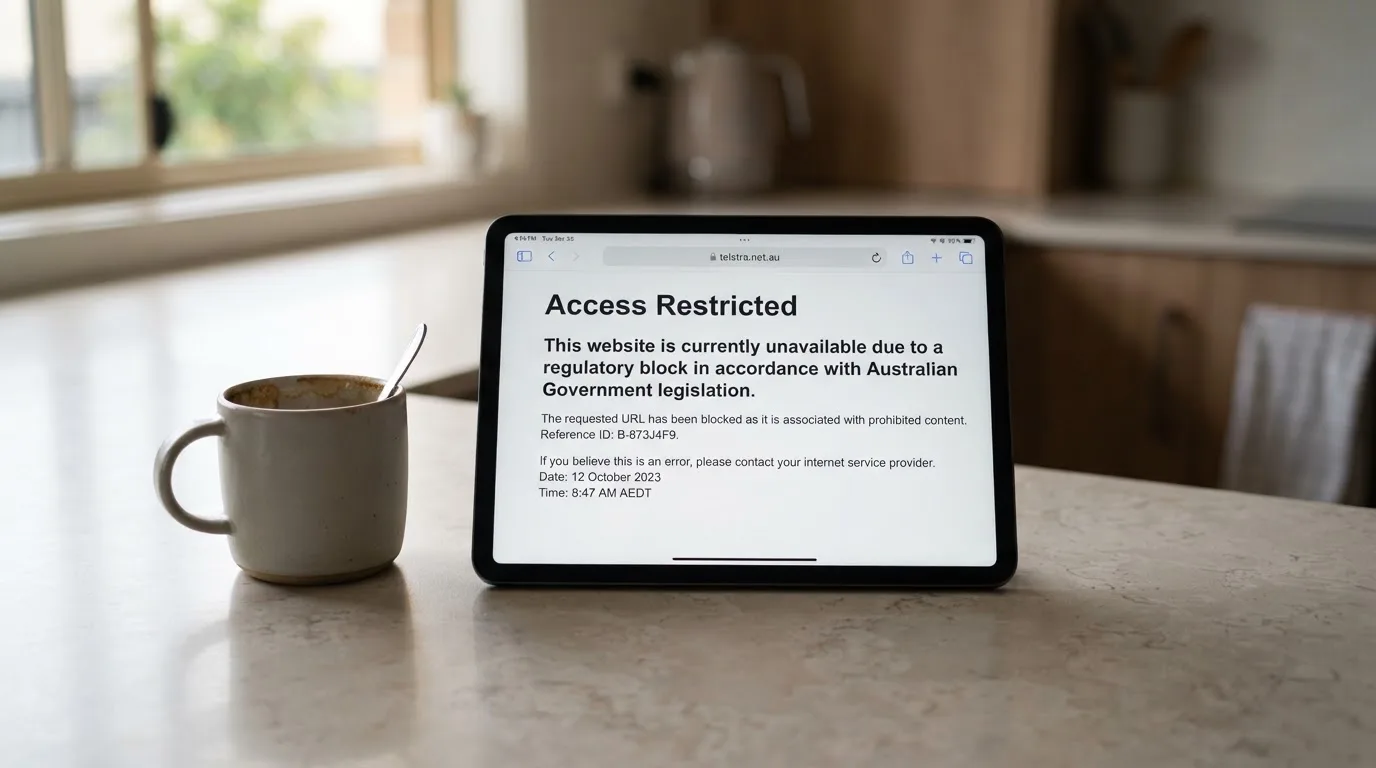
The ACMA — the Australian Communications and Media Authority — is the body charged with enforcement. Its tools are formal warnings, written directions to Australian internet service providers to block domain names, and referrals. As of the round reported in June 2026, the ACMA had directed Australian ISPs to block 1,751 illegal gambling and affiliate marketing websites since the first blocking request was issued in November 2019, and more than 230 unlicensed gambling services had left the Australian market since the 2017 strengthening took effect. The 26 June 2026 round alone added twelve names: 7Signs, ChromaBet, Donbet, Duospin, Freshbet, Slots Gem, Jacks Club, Lucky Start, Pointsbetz, Spinrise, Vinyl Casino and Wildsino.
A useful way to read the count is the rate of blocking against the time the regime has run. From November 2019 to June 2026 is roughly 79 months; 1,751 blocked sites across that window works out at somewhere between twenty and twenty-five sites a month on average, with the pace uneven — large rounds clustered around enforcement drives rather than ticking over steadily. The condition is that this measures only what the ACMA has formally requested ISPs to block. Affiliate marketing pages, mirror domains and brand relaunches can keep a single operator’s footprint growing even after the original site goes dark.
The individual Australian player is not the target of the IGA. The Act is aimed at the provider. But that distinction carries less protection than it sounds: an offshore site sits outside Australian consumer law, outside Australian dispute resolution, and outside any of the self-exclusion or harm-minimisation frameworks that apply to licensed operators. A balance on a blocked site can be frozen. A withdrawal refusal has no Australian complaints body to escalate to. The page covers that ground in more detail below; the legal point worth holding now is that “best RTP” is being marketed from a position the Australian regulator has been moving against since 2017.
Onshore RTP: what the licensed pokies market actually pays
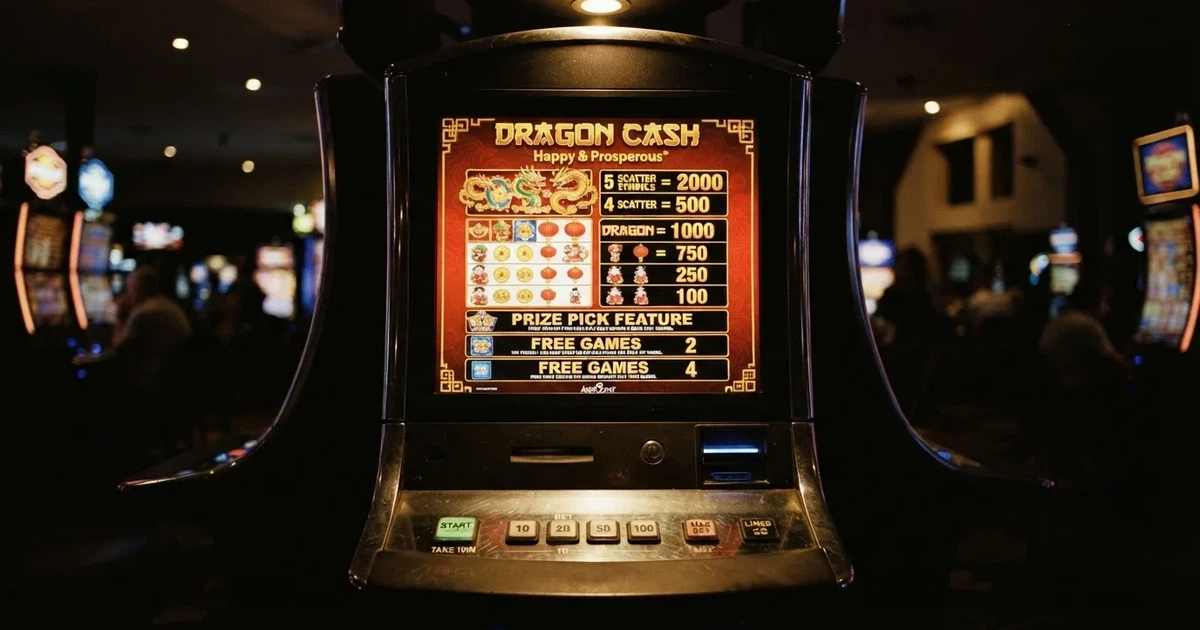
For pokies in Australian clubs, hotels and casinos, the RTP figure is fixed by state and territory regulators and disclosed per machine — usually on the face of the cabinet, sometimes in the help screen. New South Wales publishes a return-to-player range by venue type; Victoria and Queensland publish similar ranges. The published figures cluster between 85% and 90% across most jurisdictions, with the casino floor sitting a little higher than the pub and club floor in most states. Below 85% is unusual on the licensed mainland. Above 92% is also unusual, because the licensed product is taxed and constrained in a way the offshore product is not.
The scale of that licensed estate is the part of the picture most readers do not see in the marketing. Outside casinos, New South Wales operated 87,298 pokies-style machines in June 2023, Victoria 26,380 across 2021-22, Queensland 21,122 in October 2023, South Australia 11,672 in September 2023 and the ACT 3,587 in November 2023. The Northern Territory operates a small number of gaming machines but is the licensing hub for most of Australia’s online bookmakers — a structural quirk that surprises most readers on first encounter.
The RTP band and the scale of the licensed estate sit on opposite sides of the same comparison. Offshore slot marketing pushes the figure higher because the operator can set it; the onshore product sits where it does because the regime, the tax and the harm-minimisation rules have been built around a particular return profile over decades. The Australian player choosing between the two is not choosing between two RTP numbers — they are choosing between a regulated product with a known figure and an unregulated product with a marketed figure, and the choice carries a different legal weight on each side.
Responsible gambling in a market where the offshore product is prohibited
The responsible-gambling support available to an Australian player sits on the licensed side of the line. Gambling Help Online runs the National Gambling Helpline on 1800 858 858 — a free 24/7 service with chat available. State and territory counselling services sit alongside it. BetStop, the National Self-Exclusion Register, has been live since August 2023 and binds every Australian-licensed online and phone wagering service, so a registered punter cannot open a new account or place a new bet with a Sportsbet, a Ladbrokes or a Bet365. BetStop does not reach the offshore casino market. An excluded player can still create an account at an offshore site, deposit via a route the Australian rules do not cover, and play an unregulated slot game at the RTP figure that brand advertises. The exclusion covers what it was built to cover.
The credit-card ban of 11 June 2024 closes another payment route on the licensed side: credit cards, credit-related products and digital currency are prohibited as payment for licensed online wagering, with penalties up to A$247,500 for operators who breach it. The licensed deposit routes that remain are debit card, bank transfer, PayID and Osko, and BPAY. An offshore site asking for a credit card or a crypto deposit is, on the payments question alone, sitting outside the Australian regulatory frame — irrespective of what licence its footer carries.
The comparison between these markets is direct. If the player wants to play slot games at the higher published RTP figures, the licensed Australian venues deliver a narrower band but a regulated product; the offshore sites deliver a wider advertised band and a position outside Australian law. The reform that closes part of the gap is the Interactive Gambling Amendment (Gambling Reform) Bill 2026, which passed Parliament on 19 August 2026 with its advertising and inducement measures commencing on 1 January 2027. The provisions are law with a start date, not in force on a 2026 page, and the market leads to enforcement action already taken rather than reform yet to begin.
How slot RTP is actually calculated, and what the figure does and does not promise
Return to player is the share of every dollar wagered that the slot is programmed, over the long run, to return to the player. A 96% RTP slot is a slot whose mathematics return A$96 for every A$100 staked, averaged across a very large number of spins. The figure is set by the game designer — NetEnt, Pragmatic Play, Microgaming, BGaming and a handful of others — and is published in the paytable or the help screen. It is not a guarantee of any individual session outcome and it is not a cap on the house edge. The 4% margin is the operator’s edge on that particular slot’s mathematics, before the marketing layer and the bonus terms sit on top.
The “long run” is the part of the definition that does most of the work. Modern video slots use five or more reels with fifty or more symbols per reel, producing odds as high as 300 million to one against a top combination — a long way from the classic three-reel mechanical machine of about a thousand possible combinations that Charles Fey of San Francisco developed in the late 19th century, where three Liberty Bells in a row paid the top prize of ten nickels. The modern mathematics need a very large sample of spins to converge on the published RTP, and most player sessions sit far below that convergence point. A session of a few hundred spins at 96% RTP can finish anywhere from deeply negative to deeply positive and still be consistent with the figure.
The house edge on table games is the comparison that makes the slot number readable. Baccarat’s house edge sits at 1.06% on the Banker bet, 1.24% on the Player bet and 14.36% on the Tie — figures close to a slot’s 4% margin only on the best baccarat bets. Blackjack under optimal strategy on liberal Las Vegas Strip rules sits at about 0.28%, lower than the best slot — a useful reference point because blackjack is the game a player will sometimes be told to “switch to” instead of slots. The craps Pass/Come bet sits at 1.41%, Don’t Pass/Don’t Come at 1.36%, Any Craps at 11.11%. Slots are not the worst house edge a casino offers, but they are a long way from the best, and the marketed RTP figure tells the player which slot is at the kinder end of the slot band, not which game in the casino offers the lowest edge.
Independent testing is the other half of the question of how much weight a published RTP carries. Testing laboratories — GLI, eCOGRA, iTech Labs and a few others — run large-scale simulations on new slot releases, sometimes billions of spins, and certify that the observed return sits within a tolerance of the published figure. A slot carrying a current test certificate has been audited against its own mathematics. A slot without one — or with a certificate that has expired — is the publisher’s word, not an auditor’s. For an Australian player accessing an offshore site, this is the level at which the “best RTP” claim gets its weight, and it sits entirely outside any Australian framework.
The mechanics that drive the RTP figure
Three things move a slot’s RTP: the symbol distribution on the reels, the paytable, and the bonus features. The reel distribution sets the probability of each symbol landing; the paytable sets what each combination pays; the bonus features — free spin rounds, multipliers, pick-and-click games — layer additional returns on top. A 96% slot is not built by raising every symbol’s payout; it is built by carrying most symbols at a low return and concentrating the higher returns in the bonus features, which fire infrequently. The base game can sit well below 96% while the bonus rounds lift the overall return to the published figure.
Two slots with the same theme can carry different RTP figures because the designer has chosen different settings. Pragmatic Play and BGaming release most titles in a 96% configuration, but operators in some jurisdictions receive lower-RTP configurations of the same game — 94%, sometimes 91% — under the same paytable and the same branding. The figure a player sees in the help screen is the actual figure for that release; the figure the designer publishes as the headline is one of several configurations. This is the answer to the recurring question of why a “96% slot” sits at 94% on another site: the game is the same, the configuration is not, and the difference sits with the operator rather than the designer.
Volatility is the other axis on which two slots with the same RTP differ. A high-volatility slot at 96% returns its 96% through long quiet stretches and rare large wins; a low-volatility slot at the same figure returns it through many small wins. The bankroll a player needs to ride out the variance is dramatically different between the two. A high-volatility slot at a smaller bankroll can run out before any of the large-win moments arrive; a low-volatility slot at the same bankroll returns more sessions with a result close to zero. Neither experience contradicts the 96% RTP; both are expressions of it.
Where RTP is published, and where it is not
Onshore, in a licensed Australian venue, the RTP sits in the machine’s help screen and in the regulator’s published range. A player who wants to know the figure for a specific licensed pokies machine can ask venue staff, who will pull it up on the cabinet; regulators publish per-machine or per-venue-type figures. This is the easiest place in the Australian market to actually see a real RTP figure on a real product.
Offshore, the RTP sits in the in-game help screen on the operator’s site, sometimes on a separate “game information” page, sometimes in neither. The marketing landing page is the least reliable source — a headline “96% RTP” is the slot designer’s figure, not necessarily the figure on this site’s configuration. A player who wants the real number has to open the game and read the help screen before placing the first bet. That habit separates the published RTP from the configured RTP on most offshore sites.
The operators the ACMA has acted against, and what their presence on the page means
The brands listed below are the operators the ACMA itself has named in formal warnings over the prohibited service. They are not reviewed for playability, not scored for their bonus terms, and not arranged by anything other than the order of the ACMA’s own publications. Each entry carries the date of the warning, the operating company the ACMA named, and the standing of the operator on the page’s central subject — high-RTP slot marketing — as the research carries it. Where the research does not have RTP-specific confirmation for a brand, that fact is simply absent from the page rather than asserted either way.
A note on what this list is not. It is not a shortlist of recommended offshore casinos. It is not a comparison of bonus generosity. It is not an endorsement. The list exists because these are the operators the Australian regulator has named for offering the very product in question. The page’s argument is the same one the regulator’s actions imply: the highest-marketed RTP figures in this market sit on offshore sites that are prohibited from offering the product to Australians at all.
RocketPlay
The ACMA issued a formal warning to Pulsup Ltd over RocketPlay in March 2026, and the same brand was the subject of an earlier warning to Dama N.V. in May 2022 covering six casino brands including Rocketplay. The brand carries a Curaçao-style operator identity under one name and an Australian-facing mirror under another. As far as this page’s central subject goes, research carries no independent RTP configuration for this brand’s slot library, and that absence is reported as an absence rather than filled in from the marketing. The RocketPlay entry is the most useful on the list for the reader who wants to see how often the same brand resurfaces under different operating companies and the same ACMA target.
Level Up Casino
The ACMA’s May 2022 warning to Dama N.V. named Level Up among the six brands covered by that action. The brand is listed in BGaming’s public game-distribution listings as a site carrying BGaming titles, which is the strongest piece of independent confirmation research carries for any operator on this list, but it is a distribution listing rather than an RTP certification — the listing says the games run on the site, not that any specific configuration carries a specific RTP. Level Up is the operator on the list for whom the “site exists and carries recognised slot titles” claim can be made without inventing it; the “best RTP” claim that the marketing puts on the slot library cannot.
Woo Casino
The ACMA issued a further formal warning to Dama N.V. over Woo Casino in March 2025, the second Dama N.V. action to appear on this page after the 2022 batch. Research carries no independent RTP configuration for Woo Casino. The brand sits on the page for the same reason the others do — it is an operator the regulator has named for offering prohibited slot services to Australians — and the page does not assert a figure that the research does not carry.
Spirit Casino
The ACMA issued a further formal warning to Dama N.V. over Spirit Casino in May 2025. Research carries no independent RTP configuration for Spirit Casino. The brand sits alongside Woo Casino as the second half of the 2025 Dama N.V. action; the two together illustrate that the operator-company can stay the same while the brand list changes around it.
National Casino
The ACMA issued a formal warning to Consolutetish S.R.L. over National Casino in July 2025. Research carries a listings-level reference to National Casino on Wikipedia, which is the weakest independent confirmation on this list but not nothing. The brand sits in the same 2025 enforcement batch as Bizzo Casino, also covered by the same warning.
Bizzo Casino
The ACMA issued a formal warning to Consolutetish S.R.L. over Bizzo Casino in July 2025. The brand had already been the subject of a 2022 formal warning to TechSolutions (CY) Group Limited and TechSolutions Group N.V., which is the longest enforcement history of any brand on this page. Research carries no independent RTP configuration for Bizzo Casino. The pattern the brand illustrates is the one RocketPlay shows on a shorter timeline: the same player-facing brand carried under different operating companies, all of them eventually the subject of an ACMA action.
Ignition Casino
The ACMA issued a formal warning to Bamboo Media over Ignition Casino in July 2025. Research carries no independent RTP configuration for Ignition Casino. The brand sits in the same July 2025 batch as National Casino and Bizzo Casino, which was the ACMA’s busiest single warning round for offshore casinos in the period research covers.
Instant Casino
The ACMA issued a formal warning to EOD Code SRL over Instant Casino in February 2025. Research carries no independent RTP configuration for Instant Casino. The brand is the earliest 2025 entry on the page, the round that opened the 2025 enforcement wave before Bamboo Media and Consolutetish S.R.L. followed in July.
Jackbit
The ACMA issued a formal warning to Ryker B.V. over Jackbit and CasinOK in April 2026. Research carries no independent RTP configuration for Jackbit. The brand is the most recent operator-level entry on this page, and the entry that most clearly pairs an offshore brand with a crypto-friendly deposit posture — the sort of payment method that places the site outside the Australian credit-card ban by sitting outside the Australian regime altogether.
Casino Intense
The ACMA issued a formal warning to Sterplay Holding Ltd over Casino Intense in April 2025. Research carries a listings-level reference for Casino Intense on the ABC News coverage of the NT regulator and the ACMA’s own publications, which is more independent sourcing than most operators on this list can show without inventing it. Casino Intense is the brand on the page that gives the reader the most grounded sense of the operator’s wider footprint without that footprint being asserted.
Sky Crown
The ACMA issued a formal warning to Hollycorn N.V. over Sky Crown and Blue Leo as published in September 2022. Research carries no independent RTP configuration for Sky Crown. The brand is the longest-standing entry on this list, sitting at the start of the period research covers, and the brand whose presence shows that the ACMA’s 2022-2026 enforcement pattern is continuous rather than a recent escalation.
How the ACMA’s enforcement record reads
The eleven operators above are not the only offshore sites the ACMA has acted against in the period — they are the eleven the research covers as the most directly relevant to a page on high-RTP slot marketing in Australia. The wider pattern the warnings reveal is one the page is built to make visible. The highest-marketed RTP figures in this market are not on a parallel, lightly-regulated product that the regulator has chosen to leave alone. They are on a product the regulator has been actively moving against since the 2017 amendment took effect, and the rate at which operators have been named in formal warnings has stayed steady through 2022, 2024, 2025 and into 2026. The June 2026 round alone added twelve blocked sites. The enforcement is not winding down.
The position is direct. The higher RTP figures are real — slot mathematics genuinely do return a higher share at 96% than at 92% — but the sites offering them to Australian players are prohibited from doing so. The marketed figure is not a lie; the marketing context is unlawful. The licensed Australian venue product is regulated, taxed, harm-minimised and lower-returning. The offshore product is unregulated, untaxed, mostly outside harm-minimisation frameworks, and higher-returning where the operator has chosen to set it. The reader’s task is to choose which of those two positions they prefer to play from, and the page’s argument is that the choice is the one the inquiry does not name.
The arithmetic that puts a number on the enforcement pace
The blocking-rate calculation that the page’s own analysis adds is short. From November 2019 to June 2026 is roughly 79 months; the ACMA’s reported total of 1,751 blocked sites over that window works out at somewhere between 20 and 25 sites a month on average. The figure is a band, not a single number, because the ACMA’s enforcement is bursty — large blocking rounds cluster around specific drives rather than ticking over steadily, and the early years of the regime carried fewer actions per month than the years after the 2017 strengthening took full effect. The condition attached to the band is straightforward: the count measures only what the ACMA has formally requested ISPs to block, and affiliate pages, mirror domains and brand relaunches keep the operator footprint growing even after the original site goes dark.
The figure is useful for two reasons. It puts a rate on what the ACMA’s enforcement pace has looked like over the regime’s life. It makes the comparison with the marketing pace possible — operators continue to launch new offshore casino brands on a similar cadence, and the page’s honest framing is that the two are running in parallel rather than one having overtaken the other.
Comparing the operators on the ACMA list
The table below is not a recommendation grid. It is a record of what each operator is documented to have carried, and what each entry is documented to be missing on. The columns are the matters that research can support; the gaps are the gaps the page’s argument rests on.
| Brand | ACMA action and date | Operating company named by the ACMA | Independent confirmation on RTP or slot offering |
|---|---|---|---|
| RocketPlay | March 2026 | Pulsup Ltd | — |
| Level Up Casino | May 2022 | Dama N.V. | listed as a BGaming-distribution site; no independent RTP configuration |
| Woo Casino | March 2025 | Dama N.V. | — |
| Spirit Casino | May 2025 | Dama N.V. | — |
| National Casino | July 2025 | Consolutetish S.R.L. | listed on Wikipedia; no independent RTP configuration |
| Bizzo Casino | July 2025 (and 2022) | Consolutetish S.R.L. (and TechSolutions) | — |
| Ignition Casino | July 2025 | Bamboo Media | — |
| Instant Casino | February 2025 | EOD Code SRL | — |
| Jackbit | April 2026 | Ryker B.V. | — |
| Casino Intense | April 2025 | Sterplay Holding Ltd | listed in ABC News and ACMA references; no independent RTP configuration |
| Sky Crown | September 2022 | Hollycorn N.V. | — |
The pattern in the right-hand column is itself the table’s argument. Where independent confirmation exists, it is at the distribution-listing level — a brand is documented as carrying recognised slot titles — rather than at the RTP-configuration level. No operator on the list carries independent confirmation that a specific slot on their site runs at a specific RTP figure. The marketed RTP claims rest on the operators’ own configuration choices, and the page’s position is that those choices are made by parties that the Australian regulator has named for offering the product at all.
The middle two columns also reveal a structural pattern. The operating-company name changes faster than the brand name does. RocketPlay has surfaced under Pulsup Ltd in 2026 and under Dama N.V. in 2022. Bizzo Casino surfaced under TechSolutions in 2022 and under Consolutetish S.R.L. in 2025. The player-facing brand is the continuity; the operating company is the surface the ACMA names. The implication for an enforcement-aware reader is that brand-level recognition does not survive the warning — the next mirror or the next operator shell will carry a different operating-company name and the same marketing.
The mechanics of high-RTP slots in more detail
The marketed difference between a 92% slot and a 96% slot is 4 percentage points of return, which compounds dramatically across volume. A$10,000 staked at 96% returns A$9,600 in the long run; the same A$10,000 at 92% returns A$9,200. The A$400 difference is the operator’s edge before marketing, bonus terms and any promotional overlay sit on top. For a player whose sessions sit at the long-run average, the slot choice is meaningful. For a player whose session is short — and most sessions are — the difference sits inside the variance, and the choice of a 96% slot over a 94% slot does not reliably rescue a single losing session.
The variance is the second axis the player should be reading alongside the RTP. Two slots can both publish 96% RTP and present very different playing experiences: a high-volatility slot will run long quiet stretches and pay its 96% through rare large wins, while a low-volatility slot will pay its 96% through many small wins close to the stake. The bankroll required to ride out the variance is different between them. A small bankroll on a high-volatility slot can be spent before any of the large-win moments arrive; the same bankroll on a low-volatility slot will produce many more rounds of result close to zero. Neither experience is wrong against the published figure. Both are honest expressions of it.
Bonus features complicate the picture further. A free-spin round that pays 96% in the base game can carry a higher RTP in the bonus round, with the overall figure sitting between the two. A multiplier that converts small wins into large ones lifts the contribution of rare events. A pick-and-click bonus with a fixed maximum prize is a different mechanism from a free-spin round with an escalating multiplier, and the two will show up differently on the player’s session-level experience even when the headline RTP matches. Reading the paytable — not the marketing landing page — is the only way to know which mechanism a slot is actually running.
Why two slots with the same theme carry different RTP figures
The short answer is configuration. The long answer is that the designer releases the slot at one or more headline RTPs and the operator chooses which configuration to run. Pragmatic Play’s “Gates of Olympus” is a frequent example: the same paytable appears on different operators at 96.5%, 94.5% and sometimes lower, and the marketing landing page rarely discloses which one the player is looking at. BGaming titles appear similarly. The figure in the help screen is the only figure the player can trust; the figure on the marketing page is the designer’s best-case configuration.
The implication for an Australian player comparing offshore brands on RTP is that the comparison the player can actually make is at the help-screen level, which requires opening each game on each site before staking. The comparison the marketing invites the player to make is at the headline level, which requires nothing. The two comparisons give different answers.
What an Australian reader comparing this market should know
The question of RTP is layered, and the layers do not stack neatly.
The first layer is that high-RTP slot games exist and the mathematics is what the marketing says it is. A 96% RTP slot genuinely does return A$96 over the long run for every A$100 staked. The figure is set by the designer, audited by testing labs on release, and disclosed in the paytable. The mechanism is real.
The second layer is that the sites offering these games to Australians are prohibited from doing so. The Interactive Gambling Act 2001 makes the offering an offence; the ACMA’s enforcement record shows that the regulator has acted consistently across 2022-2026 against the brands running it. The marketing figure is not a lie; the marketing context is unlawful.
The third layer is that the licensed Australian alternative — pokies in clubs, hotels and casinos — delivers a lower RTP band, around 85-90%, but inside a regulated product with consumer protection, harm-minimisation frameworks and a complaints body. The credit-card ban of 11 June 2024 closes the credit and crypto routes on the licensed side; the offshore sites ask for those routes because they sit outside the regime. The two products are not parallel, and the choice between them is not a comparison between two RTP numbers.
For the reader comparing these markets, the third layer is key. The best published RTP figure on an offshore site is real, the site carrying it is operating unlawfully in Australia, and the licensed Australian alternative is regulated and lower-returning. The reader’s task is the choice that is key to the inquiry.
Comparing the licensed and offshore products on what each can actually deliver
The licensed onshore product delivers a known RTP band, a known venue footprint, known harm-minimisation tools (BetStop, the National Gambling Helpline, state counselling services), and a known complaints pathway through the state or territory regulator. The product is taxed and the tax base funds the harm-minimisation infrastructure. The 87,298 machines in NSW alone in June 2023 make the licensed product the dominant slot product in Australia by physical footprint.
The offshore product delivers a higher marketed RTP band, a wider game selection, marketing bonuses that the licensed product cannot match, and a position outside Australian law. The product is untaxed in Australia and the consumer-protection infrastructure does not reach it. A withdrawal refusal at an offshore site has no Australian complaints body to escalate to; a blocked site can hold a balance; an excluded BetStop user can open a new offshore account without restriction.
The clearest answer is to the reader weighing these options. One is lawful and lower-returning. The other is unlawful and higher-returning. The choice is real.
Frequently asked questions
How is a slot’s RTP percentage calculated over the long run?
RTP is the share of every dollar wagered that the slot’s mathematics return to the player across a very large number of spins — typically billions in the testing simulations. A 96% slot returns A$96 for every A$100 staked over the long run, with the remaining A$4 as the house edge. The convergence happens across very large samples; most player sessions are far below that convergence point and can finish anywhere within a wide band consistent with the figure.
Does a slot’s RTP figure guarantee any result over a single session?
No. A 96% RTP figure is a long-run average and says nothing about any individual session. A short session of a few hundred spins can finish deeply negative or strongly positive and still be consistent with the published figure. Variance — driven by volatility — is the second axis the player reads alongside RTP, and high-volatility slots can run through a small bankroll before any large-win moments arrive. The figure is honest about the long run, and silent about the next session.
Are RTP figures independently tested before a slot is released?
Yes, by testing laboratories such as GLI, eCOGRA and iTech Labs, which run billions of simulated spins and certify that the observed return sits within a tolerance of the published figure. A slot carrying a current test certificate has been audited against its own mathematics. The certification sits with the slot release; whether a particular site runs the slot at the designer’s published configuration is a separate question the player can only answer by reading the in-game help screen.
How many licensed gaming machines operate outside casinos in Queensland compared with New South Wales?
In October 2023 Queensland operated 21,122 pokies-style machines outside casinos, against 87,298 in New South Wales as of June 2023. New South Wales runs roughly four times Queensland’s footprint in this category, and both sit well below Victoria’s 26,380 across 2021-22 in raw terms, though Victoria’s population is much smaller than NSW’s. South Australia ran 11,672 in September 2023 and the ACT 3,587 in November 2023, leaving the Northern Territory as the licensing hub for online bookmakers without a comparable pokies footprint outside casinos.
Why do two slots with the same theme sometimes carry different RTP figures?
Because the designer releases the slot at one or more headline configurations and the operator chooses which one to run. Pragmatic Play and BGaming titles frequently appear on different sites at 96%, 94% or lower under the same paytable. The figure in the in-game help screen is the actual configuration on that site; the marketing landing page usually quotes the designer’s best-case headline and not the configuration the player is actually playing.
Can a player request the RTP figure for a specific licensed pokies machine in Australia?
Yes. In a licensed Australian venue, the RTP sits in the machine’s help screen and is also published by the regulator per venue type or per machine. A player who wants the figure for a specific cabinet can ask venue staff, who can pull it up. The licensed product is the easiest place in Australia to actually see a real RTP figure on a real product, and the obligation to disclose sits in the venue’s licensing conditions rather than in the slot’s paytable alone.