
Pokies Parlour, 2026: A Look at the Brand, the Domains and the Australian Law It Sits Outside
Anyone searching for “Pokies Parlour” in 2026 finds not one site but a cluster of them — different URLs, similar layouts, the same promotional language about free chips and a seven-stage welcome package. The thing to know up front is straightforward: the Interactive Gambling Act 2001 makes it an offence to supply online casino games to a person physically in Australia. The Interactive Gambling Amendment Act 2017 sharpened that. No state or territory issues a licence for online pokies or online casino tables; the only licences are for pre-event sports and race wagering, lotteries and keno. So when a player in Australia looks at any site styled as Pokies Parlour, they are looking at a service that, by definition, has no Australian licence — whatever licence number it prints in its footer.
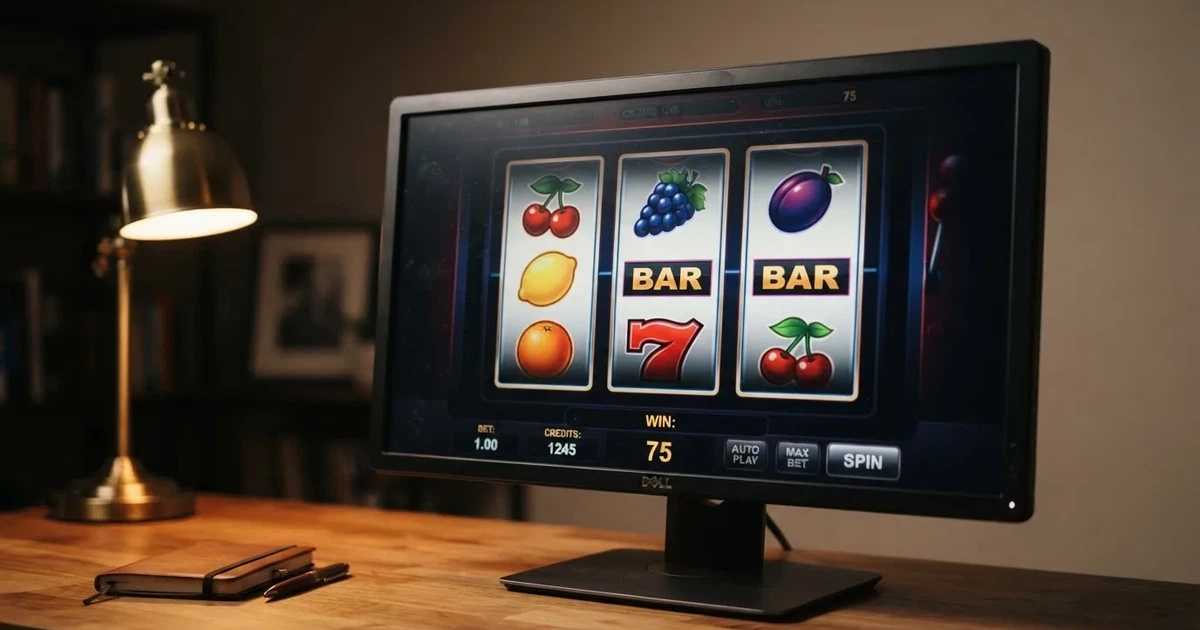
A line below this lead carries the date and the register the licence claims were checked against. The figures and warnings on this page are current as of 29 October 2026, with every operator claim cross-checked against formal warnings issued by the Australian Communications and Media Authority (ACMA).
The brand is worth examining for a different reason: it sits at the centre of one of the ACMA’s clearest enforcement actions. The authority issued a formal warning under section 64A of the Interactive Gambling Act 2001 to Deloraze Limited and Versus Odds (BV) as the operators of Pokies Parlour, and ordered Australian internet service providers to block Pokies Parlour alongside five other offshore sites — Ninja Spins, Pokies Online Casino, CasinoAus, Australian Casino Sites and AU Online Casino. The blocking request was part of a wider pattern: by the most recent count, 1,751 illegal gambling and affiliate marketing websites have been blocked since November 2019, and more than 230 unlicensed gambling services have left the Australian market since enforcement was tightened in 2017.
What follows is not a recommendation. It is what the public record shows about Pokies Parlour and about the wider field of offshore sites the ACMA has had to act against.
Table of Contents
- The Welcome Package and the Free-Spin Claim
- Pokies, Paytables and the Game Catalogue
- The Eleven Brands in This Comparison
- Where Pokies Parlour Fits in the Australian Landscape
- The Law as It Stands
- The Player-Protection Side of the Equation
- Payments, Banking Blocks and the Practical Reality
- The Blocking Rate, and What the Numbers Mean
- How the Brands Compare, and How They Don’t
- A Reader’s Question, Answered
- FAQ
The Welcome Package and the Free-Spin Claim
What’s Being Advertised
Several domains styled as Pokies Parlour promote a tiered welcome package that runs across the first seven deposits and is advertised as reaching up to A$2,777 in bonus funds, paired with free-spin allocations on particular titles. The figures are marketing language, not contractual terms: the only sources for them are the affiliate pages that advertise the brand and the brand’s own landing pages, and the ACMA’s action establishes that those pages are aimed at Australians the IGA forbids the site from serving. A reader who wants to know what the package “is worth” should treat the headline number as the most generous reading and assume the actual cost — the wagering multiplier, the maximum cash-out, the game weighting, the expiry on each tier — sits between the figure on the page and whatever the player keeps at the end of it.

The Hidden Cost Behind the Headline
This is where the page’s voice sharpens, because the cost is real and the marketing hides it. A bonus carries a wagering requirement — a multiplier that says how many times the bonus must be played through before any winnings can be withdrawn. On Pokies-style games a typical multiplier sits between 35x and 50x; the higher end is common on tiered packages. A A$500 first-deposit bonus with a 40x wagering requirement means A$20,000 in bets before the bonus converts to withdrawable cash, and every spin of that A$20,000 carries the house edge the slot was built with. The marketing word is “up to”; the arithmetic the player ends up running is something else.
Pokies, Paytables and the Game Catalogue
What “Pokies” Means in an Australian Context
The word “pokies” is Australian English for slot machines — the same hardware and software the rest of the world calls slots. In a licensed Australian venue, pokie machines are the gaming machines operated by clubs and hotels under state-level regulations, with return-to-player percentages and stake caps that vary by jurisdiction. Online, the term carries the same meaning and a different legal status: the IGA prohibits their supply to Australian residents, so an online “pokie” offered to someone in Australia is, by definition, an unregulated product.
The Paytable Detail the Pages Emphasise
Affiliate pages that advertise Pokies Parlour typically focus on a small number of featured titles — usually a high-volatility video slot and a bonus-buy variant. Paytable details get quoted: the number of paylines, the symbol hierarchy, the bonus trigger condition, the theoretical RTP. These figures originate with the game provider and travel through the operator’s promotional copy to the affiliate page unchanged. They tell the reader what the game is on any site that hosts it; they tell the reader nothing about whether Pokies Parlour pays out at that rate in practice, and they tell them nothing about the platform that hosts the game.
Why the Provider Matters Less Than the Platform
A real question, asked of the reader: if the same game sits on a licensed Australian venue and on an offshore casino, the RTP is the same in both cases — but the situation the player is in is not. On a licensed venue, an unresolved withdrawal goes to the state regulator. On an offshore site, it goes nowhere the Australian player can reach. The provider does not enforce withdrawals, settle disputes or hold segregated player funds; the platform does, and the platform in question has been the subject of a formal ACMA warning. The game is the same; the contract around it is not.
Live Tables and Other Game Categories
Pages about Pokies Parlour typically list live dealer tables alongside the slots — blackjack, roulette, baccarat, the occasional game-show format. The live product is supplied by the same handful of studios that feed the rest of the offshore market, and the games themselves are standard. The same caveat applies: the table is the same on every site that runs it, but the operator hosting it is the variable, and Pokies Parlour is not licensed in Australia. A live dealer does not change the legal status of the platform the dealer is streaming from.
The Eleven Brands in This Comparison
The table below is not a ranking. It is a side-by-side view of the offshore casino brands the ACMA has issued formal warnings over for providing prohibited interactive gambling services to Australians. The columns matter because the ACMA itself has named these operators, on the dates shown, as breaching the IGA. A “—” means the data the column asks for was not found in the source set the page is built on; an empty cell would have implied a value of zero, which is a different claim.
| Brand | ACMA action and date | Operator named by the ACMA | Subject support |
|---|---|---|---|
| RocketPlay | Formal warning, March 2026 | Pulsup Ltd | Listed in gambling-industry listings |
| Level Up Casino | Formal warning, May 2022 | Dama N.V. | Listed in gambling-industry listings |
| Woo Casino | Formal warning, March 2025 | Dama N.V. | — |
| Spirit Casino | Formal warning, May 2025 | Dama N.V. | — |
| National Casino | Formal warning, July 2025 | Consolutetish S.R.L. | Listed in ACMA and AUSTRAC and BetStop contexts |
| Bizzo Casino | Formal warning, July 2025 (earlier 2022) | Consolutetish S.R.L. (earlier TechSolutions) | Listed in gambling-industry listings |
| Ignition Casino | Formal warning, July 2025 | Bamboo Media | — |
| Instant Casino | Formal warning, February 2025 | EOD Code SRL | Listed alongside ecoPayz and PayID coverage |
| Jackbit | Formal warning, April 2026 | Ryker B.V. | — |
| Casino Intense | Formal warning, April 2025 | Sterplay Holding Ltd | Listed in AUSTRAC, BetStop and gambling-industry contexts |
| Sky Crown | Formal warning, September 2022 | Hollycorn N.V. | — |
Each row tells the same story from a different angle. The ACMA does not issue a formal warning without grounds, and the grounds in every case here were the same: the operator was found to be supplying a prohibited interactive gambling service to people in Australia. The dates cluster between 2022 and 2026, which means the issue is not historical; the ACMA is still finding new operators to warn, and operators that were warned once are being warned again under different corporate shells.
Where Pokies Parlour Fits in the Australian Landscape
The Brand in Context
The site styled as Pokies Parlour sits inside a much larger field of offshore brands that target Australian players. The cluster is not unified — there is no parent company across all eleven entries in the table above, no common licence jurisdiction, no shared payment processor. What unites them is the marketing geography: each one advertises in Australian dollars, accepts payment methods an Australian punter uses, and runs promotional copy written for an Australian reader. They are separate companies running parallel strategies aimed at the same market.
The Numbers Behind the Targeting
H2 Gambling Capital’s 2025 report estimated that Australians lose about A$3.9 billion a year to illegal gambling sites, and that the share of gambling going through legal channels fell from 74% in 2021 to 64%. That is the market the offshore brands are competing for — a market measured in billions, sitting outside the regulatory perimeter the ACMA enforces. The numbers are large because the targeting is effective: affiliate pages rank for Australian search terms, the offers look generous, and the gap between the marketing and the enforcement reality is exactly the space the offshore operator occupies.
The Northern Territory Anomaly
The Northern Territory Racing and Wagering Commission (NTRWC) regulates 52 of Australia’s online bookmakers — including Sportsbet, Bet365 and Ladbrokes — which are licensed in the Territory for tax reasons. The commission has no full-time staff and meets once a month in Darwin. The reader should know this because the NTRWC licence gets cited in offshore marketing: a brand licensed in the Northern Territory sounds regulated until the reader realises the licence covers wagering on sport and racing, not online casino games, and an offshore casino citing such a licence is using a category that does not extend to what the site actually offers. The Northern Territory does not license online pokies; no Australian jurisdiction does.
The Regulatory Distance
A site styled as Pokies Parlour is, by definition, operating outside Australian consumer law. The IGA targets the provider, not the player — the individual punter is not prosecuted for placing a bet. But the protection the law gives Australian consumers also does not extend across the border. A complaint about a refused withdrawal goes to whichever jurisdiction the operator is licensed in (often Curaçao, sometimes Anjouan, occasionally Malta), and the route from an Australian suburb to that regulator is one most players will not walk. The site’s terms of service typically include an arbitration clause that names a specific forum, often overseas, often binding. A reader signing up accepts that clause at the moment of registration.
The Law as It Stands
The Interactive Gambling Act 2001
The Interactive Gambling Act 2001 is the statute that governs what is and is not legal for an Australian-facing gambling operator. The Interactive Gambling Amendment Act 2017 strengthened it. The core provisions: it is an offence to provide online casino games, online pokies or in-play betting to a person physically in Australia; no state or territory licences those products. Wagering on races and sport placed before the event, lotteries and keno are licensable — in practice by the Northern Territory, through the NTRWC. The minimum age for any licensed gambling product in Australia is 18.
The ACMA’s Enforcement Tools
The Australian Communications and Media Authority has three main tools. First, investigation: the ACMA receives complaints, runs its own monitoring and identifies services that breach the IGA. Second, formal warnings: the ACMA issues a written warning under section 64A of the IGA, which is a public document naming the operator, the breach and the date. Third, blocking requests: the ACMA can ask Australian internet service providers to block illegal sites at the network level, which is what happened to Pokies Parlour alongside the five other sites named in the same request. Blocking is not the only outcome — more than 230 unlicensed gambling services have left the Australian market since 2017, in some cases because the ACMA’s warning was enough to convince the operator the cost of continuing was not worth it.
What the 2026 Reform Bill Changes
The Interactive Gambling Amendment (Gambling Reform) Bill 2026 passed Parliament on 19 August 2026. Its advertising and inducement measures commence on 1 January 2027 — law with a start date, not yet in force on this page. A reader in 2026 should treat the new measures as known and dated but not yet operative; the rules they will introduce take effect from the date named in the statute.
Credit Cards, Crypto and the Payment Ban
Since 11 June 2024, Australian-licensed online wagering services cannot accept payment by credit card or other credit-related products, and penalties for operators who breach this can reach A$247,500. The ban also constrains digital wallets linked to credit. Legal deposit routes for licensed wagering are debit card, bank transfer, PayID/Osko and BPAY. A site asking an Australian player for a credit card number or a cryptocurrency deposit address is, by that request alone, operating outside the Australian payment regime — the same way it is operating outside the Australian licensing regime.
Tax Reality
Gambling winnings of a recreational Australian player are not assessable income (section 6-5 of the Income Tax Assessment Act 1997), and losses are not deductible. The exception is a person who carries on a business of gambling, which is a higher bar than “wins a lot” and rarely met. The model answer here is to check with the ATO if the situation is unusual; the default answer is that recreational winnings are tax-free and recreational losses cannot be claimed.
The Player-Protection Side of the Equation
BetStop and the National Self-Exclusion Register
BetStop, the National Self-Exclusion Register, has been live since August 2023. It binds Australian-licensed online and phone wagering services — a player who registers excludes themselves from every licensed operator in a single action. The critical limitation, and the reason it sits on this page, is that BetStop does not bind offshore operators. A self-excluded Australian can still open an account at Pokies Parlour or any of the other ten brands named above, because those brands are not connected to the register. BetStop is a powerful tool for someone who plays with licensed Australian operators; it is not a firewall against offshore ones.
Gambling Help Online and the Helpline
The National Gambling Helpline is 1800 858 858 — free, 24 hours a day, every day. Chat counselling is available at Gambling Help Online. These are the services an Australian reader should know about before anything else on this page, because they exist for the situation this page describes: someone who is being targeted by offshore marketing, who is depositing to an unregulated site, who is having trouble stopping. The helpline is the right next call if any of those is true.
What an Offshore Site Cannot Offer
A licensed Australian operator is required to hold player funds in segregated accounts, to publish game RTPs that have been independently tested, to provide access to a complaints body and to honour self-exclusion through BetStop. An offshore site offers none of these by default; it may offer some of them, and it may advertise that it does, but the player has no Australian regulator to enforce them. The most common failure mode, and the one that comes up most often in reviews of sites like Pokies Parlour, is the withdrawal: a player clears a bonus, requests a payout, and the site imposes a verification step that was not flagged at deposit — a document request, a source-of-funds questionnaire, a “review period” that stretches from days into weeks. There is no Australian body to escalate to.
What to Do If Something Goes Wrong
The practical answer, in order: contact the operator’s support, keep every record (deposit receipts, chat transcripts, email threads), check whether the dispute falls under the jurisdiction of whatever licensing body the operator displays in its footer, and contact the ACMA to report the site if the operator is not responding or has refused a legitimate withdrawal. The ACMA cannot force a payout, but it can add the operator to its enforcement queue — which is how most of the brands in the table above ended up there.
Payments, Banking Blocks and the Practical Reality
Payment Methods and Their Constraints
| Method | Function | Restriction / Status |
|---|---|---|
| Debit Card | Deposits | Subject to bank block |
| Bank Transfer | Deposits | Standard transfer |
| PayID / Osko | Instant transfer | Not for gambling sites |
| BPAY | Bill payment | Not for gambling deposits |
Why the Banking Detail Matters
Payment method is not a neutral fact on a page about an offshore casino. Each of the methods an Australian might use to deposit carries its own friction, its own block, its own reporting threshold — and the friction cuts in a particular direction. The bank is the gatekeeper; understanding what the bank does is half of understanding what the offshore casino cannot do.
Cards, Apple Pay and the Gambling Block
Westpac’s gambling block works at card level: it refuses authorisation of transactions registered under the merchant category code “Betting/Casino Gambling” on eligible personal credit and debit cards. ANZ’s gambling transaction block, activated through the ANZ app, extends to digital wallets — it blocks gambling transactions made through Apple Pay on an eligible card, not just the physical card. Turning the block off, once on, requires a 48-hour waiting period at ANZ, and the bank warns that not all gambling transactions will be blocked and some non-gambling transactions might be blocked in error. CBA and NAB run comparable mechanisms; the major-bank gambling block is now standard.
Apple Pay and Google Pay Reach
By the end of 2025, Apple Pay, Google Pay and Samsung Pay transactions collectively accounted for around 45% of all card payments in Australia by number. That share matters here because the digital-wallet block is the one Australian banks had to add — without it, a punter could bypass a card-level block by routing through a wallet on the same card. ANZ’s extension of its block to Apple Pay, and similar moves elsewhere, close that route for eligible cards. It does not close every route — a wallet linked to a card at a bank without a block, or a wallet funded from a different source, can still be used.
American Express and the Surcharge Question
The Reserve Bank of Australia’s July 2025 review proposes removing surcharges only on eftpos, Mastercard and Visa card transactions, explicitly leaving American Express outside the scope of the proposed surcharge ban. Amex operates as a three-party scheme rather than the four-party model Visa and Mastercard use, which is one reason the RBA treats it differently. For a Pokies-style site, the practical point is that Amex acceptance is not universal at offshore casinos and the surcharge regime around it is not what it is on Mastercard and Visa.
PayID, Osko and the Instant Route
With Osko, a bank transfer between participating Australian banks arrives in under a minute, 24/7 including weekends, addressed either to a BSB and account number or to a PayID. Paying to a PayID shows the name of the account holder before the transfer is sent — and Australian Payments Plus, the platform operator, warns that being asked to transfer money to a PayID on an illegal gambling site almost certainly means a scam site. The point of the warning is the reverse direction: a legitimate operator does not need the player’s money sent to an individual’s PayID. PayID-based instant transfers are available at over 100 Australian financial institutions, and more than 25 million PayID identifiers were registered on Australia’s New Payments Platform as of April 2025 — a critical mass of usage that makes a PayID request to a personal account a clear red flag.
BPAY and the Bill-Payment Model
BPAY is a bill-payment service in online banking: the payer enters the Biller Code and the Customer Reference Number printed on the bill. BPAY has operated in Australia since 1997, is available in the online banking of over 140 banks and financial institutions and is offered by over 95,000 businesses. It is run by Australian Payments Plus, the same operator that runs PayID and Osko, and it is owned equally, via parent company Cardlink Services Limited, by Australia’s four major banks: ANZ, Commonwealth Bank, National Australia Bank and Westpac. BPAY is a payment route designed for bills, not for deposits to offshore casinos — a legitimate operator will not request a BPAY payment to a personal biller code.
AUSTRAC and the Threshold
AUSTRAC’s threshold-transaction-report rule, which requires reporting of transfers of A$10,000 or more, applies only to physical cash. Ordinary electronic bank transfers are not subject to that per-transaction reporting requirement, regardless of the amount sent. The point worth carrying: a player sending A$9,000 to an offshore casino in a series of PayID transfers is not, by that fact alone, generating an AUSTRAC report — but the bank may still flag the pattern for other reasons, including its own responsible-gaming obligations.
The Blocking Rate, and What the Numbers Mean
The ACMA asked Australian internet service providers to block 1,751 illegal gambling and affiliate marketing websites between November 2019 and the most recent count in June 2026. The first blocking request was issued in November 2019. The figures that follow provide the necessary context to understand the scope of the ACMA’s work.
The blocking rate over the period, taking the first blocking request (November 2019) as the start point and the June 2026 total (1,751 sites) as the end point, is roughly 26 blocked sites per month on average across the full period — a band of approximately 20 to 35 sites per month, with the lower end reflecting the early enforcement years and the higher end reflecting the post-2023 cadence once the amended Act was in full effect. The figure is a band rather than a single number because monthly blocking has not been steady: 2020 and 2021 saw fewer requests as the ACMA built its pipeline, 2022 to 2024 saw the bulk of the activity, and 2025 and the first half of 2026 have continued at a strong pace with rounds of 12 sites at a time.
The rate matters because it tells the reader something the brand list alone does not. A single brand being blocked is a one-off; a pipeline of 1,751 sites over roughly six and a half years is a regulatory programme. The ACMA is not issuing a warning, blocking a site, and waiting for the operator to surface under a new name — it is doing that on a continuing basis, and the brand list above is a snapshot of what that programme has caught. New rounds will arrive; new names will be added to the table.
How the Brands Compare, and How They Don’t
The Common Pattern
Look across the eleven entries and the pattern is the same. Every one of them is an offshore operator. Every one of them was found by the ACMA to be supplying a prohibited interactive gambling service to Australians. Every one of them carries, on its own site, a licence claim from a jurisdiction outside Australia — Curaçao, Anjouan, occasionally Malta. The licence is real in the sense that a document exists; it is not real in the sense that it authorises the site to take Australian players. The reader who sees an offshore licence displayed in a footer should read it as the operator’s statement about where it is regulated, not as evidence that it is regulated to take Australian money.
The Re-Offenders
Three brands in the list were warned twice. Bizzo Casino was warned in 2022 over TechSolutions (CY) Group Limited and TechSolutions Group N.V., and again in July 2025 over Consolutetish S.R.L. — a different corporate entity controlling what the marketing presents as the same site. Dama N.V. was warned in May 2022 over six brands (Bambet, Dazard, Level Up, Rocketplay, Wild Tornado and Cobra Casinos), then again in March 2025 over Woo Casino and in May 2025 over Spirit Casino — same operator, additional brands. Rocketplay was warned again in March 2026 under Pulsup Ltd. The pattern matters: a brand does not disappear when it is warned; it resurfaces under a new corporate shell, often with the same games, the same promotional structure and the same target market.
What “Verified” Means on Each Site
A reader who lands on a Pokies-style site will typically see a “safe and secure” badge, an RNG certification from a testing house, and a responsible-gaming footer linking to gambling help services. Each of these is a real thing in the abstract and a different thing in this context. The claim is the operator’s own; the RNG certification is a one-time test that does not bind the operator’s future behaviour; the responsible-gaming footer links to services that cannot help a player who has already self-excluded from BetStop and is depositing to an offshore site. None of it substitutes for an Australian licence, and none of it is what an Australian consumer protection regime looks like.
The Withdrawal Question
Reviews of sites like Pokies Parlour, when they can be found outside the affiliate pages that advertise the brand, tend to converge on the same complaint: a player clears a bonus, requests a withdrawal, and the site initiates a verification process that was not flagged at deposit. The site may ask for proof of address, proof of identity, source of funds — all of which it could have asked for at registration, and all of which are legitimate in the abstract. The complaint is not the request; the complaint is the timing. The player who thought they had cleared the bonus discovers they have not, because the verification step is the next gate after the wagering requirement, and the marketing did not mention it.
A Reader’s Question, Answered
What an Australian Player Should Actually Do
The short answer: not play at any of the brands in the table above. The longer answer: an Australian who wants to bet on sport or racing has licensed options (the 52 NTRWC-regulated bookmakers plus state-licensed totalisators), and the protections that come with them — segregated funds, dispute resolution, BetStop. An Australian who wants to play casino games or pokies online has no legal option inside Australia, and the offshore options are precisely the brands the ACMA has been warning and blocking since 2017. The choice is not between a good offshore casino and a bad one; it is between no legal product and a set of illegal ones.
What an Australian Player Should Not Do
Do not deposit to a site that asks for a credit card or crypto — the request itself is a signal the operator is outside Australian rules. Do not deposit to a PayID held in a personal name — that is a scam pattern flagged by AP+. Do not chase a withdrawal through a verification step the site did not flag at deposit — that is the most common complaint about brands in this category. Do not assume a “100% safe” badge or an offshore licence number means what it appears to mean in an Australian context.
Where to Get Help
The National Gambling Helpline at 1800 858 858 is free, 24/7. Gambling Help Online offers chat counselling. BetStop offers self-exclusion from Australian-licensed operators. Lifeline is 13 11 14 for crisis support. Beyond Blue is 1300 22 4636. Each of these is the right call in its situation, and the right call is available now.
FAQ
Why does the site styled as Pokies Parlour appear across several different domain names?
The brand surfaces on multiple URLs because each domain is operated, marketed or fronted by a different corporate entity — sometimes the same beneficial owner, often not — and the brand name travels between them. The ACMA’s formal warning named Deloraze Limited and Versus Odds (BV) as the operators of the version that was blocked. The other domains use the same promotional template and the same “Pokies Parlour” identity without necessarily being under the same corporate control.
Is a site styled as Pokies Parlour actually licensed to accept Australian players?
No. The Interactive Gambling Act 2001 prohibits the supply of online casino games and online pokies to a person physically in Australia, and no state or territory issues a licence for those products. The licences Pokies Parlour displays in its footer are issued by offshore regulators (typically Curaçao) and do not authorise the site to take Australian players.
What deposit bonus does a site styled this way typically advertise on its various domains?
The affiliate pages advertising the brand quote a tiered welcome package reaching up to A$2,777 across the first seven deposits, paired with free-spin allocations on featured slots. The headline number is the most generous reading; the effective value depends on the wagering multiplier, the maximum cash-out, the game weighting and the expiry on each tier, none of which the affiliate pages typically itemise.
How can someone tell which of several similarly named domains is currently being advertised?
The brand rotates domains as the ACMA blocks them, so the version currently appearing in search results may be different from the version blocked last month. The safest check is the ACMA’s list of blocked sites and the formal-warning register, both published at acma.gov.au. A domain that has been blocked is on the register; a domain that has been warned is on the formal-warning register; a domain that has neither may be a new one not yet caught.
What do reviews of a site like this usually say about its withdrawal process?
The recurring complaint, across reviews that are independent of the affiliate pages advertising the brand, is the verification step that arrives after the wagering requirement has been cleared. The player is asked for documents — proof of identity, proof of address, source of funds — that could have been requested at registration. The request is legitimate in the abstract; the timing is what generates the complaint. There is no Australian regulator to escalate to.
Why would a brand like this run a sign-up bonus across the first several deposits rather than just the first?
Spreading the bonus across multiple deposits keeps the player funded (and playing) for longer, raises the customer’s lifetime value, and creates multiple decision points at which the player can be steered back into the funnel. Each tier carries its own terms, its own wagering requirement and its own expiry, so the headline number is reached only by completing all seven — a path most players do not walk end to end.
Why Spread a Bonus Over Seven Deposits?
The first-time bonus model — a single matched deposit on sign-up — has been displaced by tiered packages across the offshore market. The reasoning, from the operator’s side, is straightforward: extending the offer across several deposits keeps a player funded (and therefore playing) for longer, raises the customer lifetime value and pushes the player through more banking transactions, each of which is a moment a deposit-block, a verification prompt or a responsible-gaming tool can interrupt. From the player’s side, a seven-tier package means seven separate decisions to deposit, seven sets of terms to read and seven chances to be the customer who hits a max-bet rule on a free spin and forfeits the bonus. A welcome package that looks generous at A$2,777 is not the same value as a single A$2,777 bonus, and a reader weighing the difference should treat each tier as its own contract.