
Betsoft casinos for Australian players in 2026: how to read the offer when no licence exists
 Available in US
A reader shopping for the best Betsoft online casinos Australia has to offer runs straight into the central fact of the page: there is no licensed Australian online casino. Not for Betsoft content, not for any other studio’s slots or tables. The Interactive Gambling Act 2001 prohibits the supply of online casino games and online pokies to anyone in Australia, and every state and territory follows that lead. Everything that presents itself as such is an offshore site that has chosen to target Australian customers regardless, and the Australian Communications and Media Authority has spent the last several years naming those sites one formal warning at a time.
This page closes that out. It walks through how Betsoft itself operates as a game studio rather than a casino operator, what it means that Betsoft content turns up on brands the ACMA has acted against, where the offshore offer leaves a player who hits a withdrawal wall, and what help exists when play stops being a choice. The material is current as of 23 September 2026, checked against the ACMA’s published list of formal warnings and blocking requests.
Table of Contents
- How money moves on sites carrying Betsoft — and how it doesn’t, for an Australian reader
- What a Betsoft bonus actually wraps, behind the marketing
- What a mobile Betsoft casino looks like, in practice
- The Betsoft catalogue and what its paytable actually shows
- The brands the ACMA has named, and how to read that list
- The Australian landscape in plain language
- What this leaves an Australian reader, and the choice each path makes
- Help that exists in Australia when play stops being a choice
- Blocking rate: how fast the ACMA has actually moved
- Frequently asked questions about Betsoft casinos in Australia
How money moves on sites carrying Betsoft — and how it doesn’t, for an Australian reader
The page’s angle is choice — what paths are open, and to whom. So the first shelf it closes is the money one. Not because banking is the most interesting part, but because it is the one a reader is most likely to weigh first, and because for an Australian reader the choice on this shelf has already been made by the statute book.

A lawful deposit route into an Australian-licensed bookmaker looks like this. Debit card, bank transfer, PayID or Osko, BPAY. Since 11 June 2024, credit cards, credit-related products and digital currency are not permitted as payment for any Australian-licensed online or phone wagering service. An operator accepting those instruments from an Australian customer is not running inside that regime at all. Penalties for a licensed bookmaker that breaches the rule reach $247,500 per offence.
None of those rails and rules covers online casino play, because online casino play is the product the regime refuses to license. A Betsoft casino targeting Australians is, by definition, an offshore site that has chosen to step outside the Australian rules. Its payment page usually shows the offshore spread: cards from a non-Australian issuer, e-wallets such as Skrill or Neteller, a handful of cryptocurrencies, sometimes a bank transfer routed through an intermediary. Some of those routes work for Australians in practice; none of them is supervised the way a PayID deposit into a Sportsbet or Ladbrokes account is supervised.
A withdrawal is the place offshore play tends to break down. The ACMA does not pursue individual players, and an offshore operator is not bound by Australian dispute resolution. A reader who funds an account in Bitcoin or USDT and then requests a payout to a local bank account has no Australian body to complain to and no local licence the regulator can pull if the operator stalls. A site that processes a withdrawal quickly in week one is under no obligation to do so in week ten. The only structural protection that exists for an Australian player on these sites is the one the ACMA itself provides, and it works in the opposite direction: the site gets blocked, and the balance the player had on it goes nowhere.
The numbers behind that picture are stark. As of June 2026, the ACMA reports that 1,751 illegal gambling and affiliate marketing websites have been blocked since the first blocking request in November 2019, and more than 230 unlicensed gambling services have left the Australian market since enforcement was strengthened in 2017. In the most recent round, on 26 June 2026, the ACMA asked Australian ISPs to block another 12 sites: 7Signs, ChromaBet, Donbet, Duospin, Freshbet, Slots Gem, Jacks Club, Lucky Start, Pointsbetz, Spinrise, Vinyl Casino and Wildsino. None of those names is a Betsoft exclusive, but the pattern they sit inside is the one any Betsoft casino targeting Australians belongs to.
What a Betsoft bonus actually wraps, behind the marketing
The second shelf the page closes is the offer itself. Because there is no licensed Australian product, the bonus market for Betsoft slots sits entirely offshore, and what is on offer is not what the marketing suggests.
A deposit-gated welcome package on an offshore Betsoft casino typically does three things at once. It credits a percentage match on the first deposit, often 100% or more on the first part, then a smaller match on subsequent deposits; it attaches free spins on a named Betsoft title, frequently one of the studio’s marquee 3D releases; and it gates the lot behind a wagering requirement, almost always expressed as a multiplier of the bonus amount. The marketing copy centres the headlined figure — “100% up to A$500 plus 200 free spins” — and buries the requirement in the small print. A 35-times wagering requirement on a matched bonus turns that headline into a clearing job the player pays for out of their own balance before any of it becomes withdrawable cash.
The arithmetic is worth doing once, because the industry does not do it for the reader. A bonus of A$200 at a 35x multiplier means A$7,000 of wagering before the bonus clears. Even at a generous A$1 per spin that is 7,000 spins, which at five seconds a spin runs to roughly 9.7 hours of continuous play. Play the bonus straight through, do not adjust the stake, do not switch to a higher-variance title mid-clear, and the bonus converts to withdrawable cash in the long run only if the games played during clearing return more than 100% of stake, which is not how slots are built. The expected cost of clearing is real and is measured in basis points of turnover, not in advertised match percentages.
Free spins attached to a welcome package carry their own set of conditions. The studio name on the title is the one thing the marketing carries; the cap on cashout from free-spin winnings, the per-spin value, the list of games on which the winnings can be played and the time limit on using them are the conditions the marketing does not. A “200 free spins” headline that caps cashout at A$100, sets the spin value at A$0.10 and gives the player three days to use them is not a A$200 gift. It is a smaller gift with a window on it.
A no-deposit bonus, where one is offered at all, looks more generous on its face — a small credit or a small bundle of free spins credited without a deposit — and is harsher in its mechanics. The cashout cap is the point of the offer, not an oversight: the operator wants the player to play with house money, get lucky, and lose again before the cap lets any of it out. Read the cap before reading anything else.
The promo-code drop that affiliates hand out for these sites sits in the same place. The code is not what makes the offer; the small print is. The bonus headline is the bait; the wagering multiple, the game weighting, the cashout cap and the time limit are the trap. A reader who treats any of these offers as a “free” chance has misunderstood the structure, and the structure is the same on every offshore Betsoft casino the page could name.
What a mobile Betsoft casino looks like, in practice
A mobile Betsoft casino, for a reader outside Australia, is typically one of two shapes. The first is a browser-based site built in HTML5 that resizes to the phone screen and serves the same game lobby as the desktop version, minus the live dealer tables if the studio’s mobile encoder cannot keep up. The second is a downloadable app from the operator’s own site rather than from the App Store or Google Play — Apple and Google do not host real-money casino apps in jurisdictions where the product is unregulated, and Australia is one of those jurisdictions.
What that means for an Australian reader is straightforward. The App Store and Google Play do not carry real-money Betsoft casino apps aimed at Australians, because the product is not legal in Australia. What an Australian reader can do is open a mobile browser, reach an offshore site, and play through whatever HTML5 the operator ships. That HTML5 build is, in technical terms, very good: Betsoft’s own portfolio is HTML5-native, and 1spin4win, a smaller studio in the same ecosystem, builds its catalogue for low-bandwidth connections on the assumption that mobile is the primary screen. The user’s experience on the mobile side is rarely the bottleneck.
The constraint is the same one that runs through every other shelf on this page. The product is unlicensed in Australia, the app is not distributed through a regulated store, and the operator is an offshore entity with no Australian dispute resolution and no legal obligation to let a withdrawal go through. A smooth mobile experience is the operator’s marketing surface, not its protections.
For readers outside Australia who do have legal access to these sites, the practical differences between browser and app tend to come down to three things: biometric login on the app, push notifications for promotions that are easier to silence in a browser, and the fact that the app requests a wider set of device permissions than the browser does. None of those is an argument either way. The substantive differences between operators — payout speed, terms clarity, bonus conditions — are the same on phone as on desktop.
The Betsoft catalogue and what its paytable actually shows
The fourth shelf is the one a reader came looking for. Betsoft as a studio, not as a brand, and what its paytable tells a player that another studio’s paytable does not.
Betsoft was founded in 2006. The studio describes a catalogue of more than 200 RNG games spanning slots, table games, video poker and specialty titles. Betsoft operates in compliance with licensing authorities including Italy’s ADM (the Italian Customs and Monopolies Agency), with RNG certification from Quinel and Gaming Labs International, and the company states that it partners with more than 500 operators across regulated markets in Europe, Scandinavia, Latin America and Africa. Betsoft is a B2B supplier. It does not run a casino for end users. Every online casino a reader can find running Betsoft content is an operator licensing the games from the studio and fronting the customer relationship.
That last point is the one a reader most often misses. The site name on the URL bar is the operator. The studio named in the game window is the supplier. The licence the operator displays is the operator’s, and it covers the operator’s relationship with the regulator that issued it — usually Curaçao, sometimes Malta, sometimes the UK Gambling Commission in jurisdictions where that licence is honoured. No licence issued anywhere legalises the supply of these games to an Australian resident. The Interactive Gambling Act 2001 looks through every intermediate licence a site puts in its footer and finds the same thing: an offer made to a person in Australia of a product that cannot be licensed for that person.
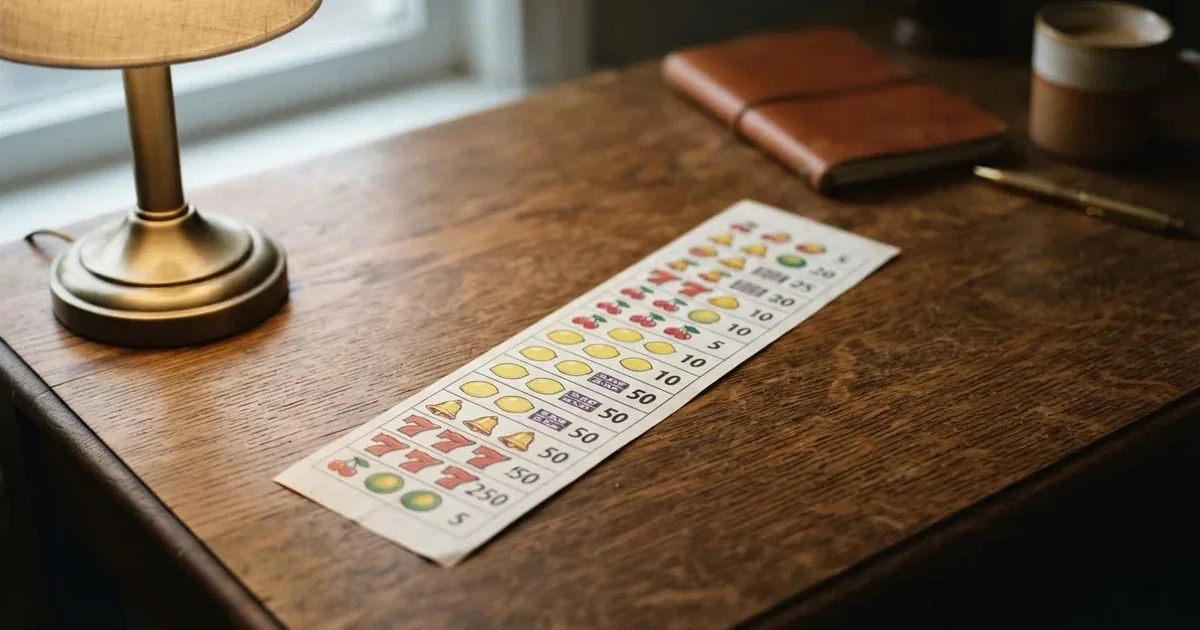
The slot catalogue itself splits into two broad shapes. The studio’s 3D slots — the line it has pushed hardest commercially — are five-reel, twenty-or-thirty-payline video slots with cinematic bonus features and a visual style that leans on rendered characters and cutaways rather than the flat-symbol look of older online slots. Their published RTPs run in the 95% to 96.5% band, which is consistent with the wider online slot market rather than a generous outlier. Good Girl Bad Girl 2 carries a published RTP of 96.22%, “Very High” volatility and a 15.59% hit rate across 5 reels and 20 paylines. The Slotfather, a much older release still in distribution, runs at 95.69% RTP with “Medium” volatility and an 8.17% hit rate across 5 reels and 30 paylines.
Hit rate is the figure the marketing rarely leads with, and it is the one that decides what the game’s paytable feels like in actual play. A 15.59% hit rate means roughly one in every six or seven spins lands some kind of return, including the smallest line hits; an 8.17% rate is one in twelve. The first game reads as “active” on a phone screen; the second reads as quiet between bonus features. Neither is a guarantee of any return over any session, because both volatility classes produce losing streaks longer than any reasonable session budget, and both produce winning streaks the player cannot ride because no one knows when a streak ends.
Volatility class is the second figure that does the actual work. “Very High” volatility on Good Girl Bad Girl 2 means the game’s structure concentrates returns into its bonus features rather than spreading them across base-game line hits. The session-to-session variance on a “Very High” title is wider than on a “Medium” one, and the bankroll needed to ride out the dry spells is higher. A reader picking a “Very High” title on a small bankroll will spend most of the session watching the balance bleed, with a small chance of a feature-led spike that does not on average replace what the base game gave back. That is by design. The math is honest about it; the marketing is not.
Live dealer games do not fall under the Betsoft label. A live roulette or blackjack table running on an offshore site is typically Evolution or Pragmatic Play Live, with the studio’s name in a corner of the video feed. The Betsoft catalogue is slots, table games, video poker and specialty RNG titles. A reader who sees “live casino” advertised alongside a Betsoft footer is reading two suppliers at once.
Other studios run in the same orbit and turn up on the same offshore sites. 1spin4win, founded in 2021 and headquartered in Willemstad, Curaçao under a Curaçao gaming licence, has built more than 190 online slots in HTML5, reports more than 1,000 operator and aggregator partnerships, and saw total bet sum grow 46% in the first half of 2025 against the first half of 2024. BGaming, operated by Stable Games Ltd of Valletta, Malta, holds a Malta Gaming Authority Critical Gaming Supply Licence (MGA/B2B/785/2020) for Type 1 B2B gaming services, with a portfolio of more than 250 certified games including proprietary mechanics such as TRUEWAYS. Booming Games holds a Malta Gaming Authority B2B licence (MGA/B2B/459/2018) and a UK Gambling Commission account (#57254), plus licences from Sweden, Ontario, Romania, Denmark, Greece, Belgium, Germany and Brazil.
The Australian reference point in the supplier space is Aristocrat Leisure, founded in 1953 and listed on the ASX in 1996 under the ticker ALL. Aristocrat is the largest gambling-machine manufacturer in Australia and the second-largest slot-machine manufacturer worldwide, behind International Game Technology. The company makes electronic gambling machines, casino management systems and online real-money gambling technology; its online arms are Product Madness (social games) and Aristocrat Interactive, the latter formed in April 2024 from the Anaxi unit and the NeoGames group acquired in the same window for about US$1 billion. Aristocrat does not sell its real-money games to offshore casinos targeting Australian players, and it does not license its online brands into the Australian online casino market, because there is no such market to license into. The reference point is useful for the reader because it names the shape of the Australian supplier base — the studio does the game, the operator runs the casino, and the regulator is the only party that sits between them. Where there is no regulator, the choice falls back on the reader.
The brands the ACMA has named, and how to read that list
The fifth shelf the page closes is the operator set. There is no ranking here, and the page does not recommend one brand over another. What it does is set out the list of brands the ACMA has acted against for offering prohibited online casino services to Australians, and a couple of columns the reader can use to look at the list on their own terms.
| Brand | ACMA action and date | Operator named by the ACMA | Subject support |
|---|---|---|---|
| RocketPlay | Formal warning, March 2026 (Pulsup Ltd); earlier Dama N.V. warning, May 2022 | Pulsup Ltd | — |
| Level Up Casino | Formal warning, May 2022 | Dama N.V. | Wazdan-listed |
| Woo Casino | Formal warning, March 2025 | Dama N.V. | — |
| Spirit Casino | Formal warning, May 2025 | Dama N.V. | — |
| National Casino | Formal warning, July 2025 | Consolutetish S.R.L. | Betsoft-, Pragmatic Play-listed |
| Bizzo Casino | Formal warning, July 2025; earlier TechSolutions warning, 2022 | Consolutetish S.R.L. | — |
| Ignition Casino | Formal warning, July 2025 | Bamboo Media | — |
| Instant Casino | Formal warning, February 2025 | EOD Code SRL | — |
| Jackbit | Formal warning, April 2026 | Ryker B.V. | — |
| Casino Intense | Formal warning, April 2025 | Sterplay Holding Ltd | 1spin4win-listed, UKGC-registered |
| Sky Crown | Formal warning (date as published by the ACMA) | Hollycorn N.V. | — |
The “Subject support” column reads the way the studio listings read for each brand. National Casino shows up in Betsoft’s own partner references and in Pragmatic Play’s, which is what one would expect of a multi-studio aggregator front. Casino Intense appears in 1spin4win’s distribution material and is registered with the UK Gambling Commission — a UKGC account number is one of the few operator identifiers research can verify against a register. RocketPlay, Woo, Spirit, Bizzo, Ignition, Instant, Jackbit and Sky Crown show up in no Betsoft-adjacent listing research is willing to quote, and the column says so. The page has not made a decision from that gap; the decision is left to whoever reads the table.
What the table does not show is what each offer on these brands is worth, because the page does not describe offers as things to claim. It describes them to the extent the ACMA’s own publication supports — operator, date, statute — and stops. The temptation at this point is to compare bonuses across the brands, weigh wagering multiples, argue that one site is faster to pay than another. None of that comparison belongs on a page about a product that cannot be licensed for the reader. The comparison that does belong is the one the ACMA has been making for years: which operator has been on the receiving end of a formal warning, which one is currently holding an Australian customer’s balance, and which licence the operator displays is not an Australian one because no Australian one exists.
The other line the table does not draw is the one between a brand’s warning history and its current standing. Dama N.V. is the operator behind three of the brands on the list — Level Up, Woo, Spirit — and was warned in May 2022, March 2025 and May 2025. A reader looking for a one-name owner across the offshore space tends to find one, because the offshore market is concentrated by operator, and the concentration is the kind of pattern that ages badly when an Australian ISP finally receives the blocking instruction.
The Australian landscape in plain language
The sixth shelf is the legal frame, laid out as plainly as the statute allows, because the rest of the page is meaningless without it.
The Interactive Gambling Act 2001, as strengthened by the Interactive Gambling Amendment Act 2017, makes it an offence to provide online casino games, online pokies or in-play betting to a person in Australia. No state or territory issues a licence for these products.
| Product Type | Status |
|---|---|
| Online Casino Games | Prohibited |
| Online Pokies | Prohibited |
| Wagering (Sport/Racing) | Licensed |
| Lotteries and Keno | Licensed |
What is licensable is wagering on races and sport placed before the event, lotteries and keno — in practice licensed by the Northern Territory Racing and Wagering Commission, which regulates 52 of Australia’s online bookmakers including Sportsbet, Bet365 and Ladbrokes. The NTRWC runs without full-time staff and meets once a month in Darwin. Lotteries fall under each jurisdiction’s own regulator. The casino product the page is about is not on either list.
The ACMA investigates, issues formal warnings and directs Australian ISPs to block illegal sites. The first blocking request went to ISPs in November 2019, and as of June 2026 the running total is 1,751 blocked illegal gambling and affiliate marketing websites. The 26 June 2026 round alone added 12 more. The blocking round is one tool; the formal warning round is another; the leave-the-market count — more than 230 unlicensed gambling services gone since 2017 — is the third. None of those numbers, individually, makes the offshore market uneconomic for an offshore operator. Together they make it noisier, and noisy is the most the regulator can do given that the IGA targets the provider and not the player.
The Interactive Gambling Amendment (Gambling Reform) Bill 2026 passed Parliament on 19 August 2026; its advertising and inducement measures commence on 1 January 2027. The 2026 reform is law with a start date. A reader reading this page in 2026 sees measures that are not yet in force, and that needs saying so the page does not claim more than the statute delivers.
The individual player is not prosecuted under the IGA. The statute targets the provider. The reader carrying no criminal liability under Australian law is a real distinction, because it is the legal distinction the offshore operator points to when an Australian asks why the site accepts Australian customers. None of it gives the reader recourse if a withdrawal is refused, no Australian complaints body, no local licence the regulator can suspend, and no guarantee that a balance survives an ACMA blocking instruction.
What this leaves an Australian reader, and the choice each path makes
The seventh shelf, the one the page has been building toward, is what an Australian reader is actually choosing between when the search engine presents “best Betsoft online casinos Australia” as a viable query. The honest answer is that the path the page would normally invite — pick a licensed operator, register, deposit, claim a bonus, play — does not exist for this product. So what an Australian reader is choosing between is the structured paths that do exist.
The first is to step away from the offshore casino product entirely and play only what’s licensed. Sports and racing wagering with Australian-licensed bookmakers, lotteries under each jurisdiction’s regulator, the pokies in licensed pubs and clubs, the casino floor in a licensed Australian venue. None of those offers a Betsoft slot. The first path gives the reader the protections Australian law provides — debit card and PayID deposits that a regulator can audit, complaint processes that go somewhere, withdrawals that must be honoured on a statutory timeline, and BetStop to block access across all licensed wagering services if the reader wants that barrier in place.
The second is to play on an offshore site, knowing the structure around it. An offshore Betsoft casino offers the product the IGA refuses to license, with payment routes the licensed bookmaker cannot use, with bonus structures the licensed bookmaker cannot offer, with no dispute resolution an Australian regulator can enforce, with a non-trivial probability that the site will be on the next blocking list before the reader’s withdrawal clears. The choice on this path is the reader’s to make. It is not the page’s choice to recommend.
The third is to play Betsoft content in a demo. The studio’s games are available in practice mode through a range of aggregator sites that do not take deposits or pay out winnings. A reader who wants to know what a “Very High” volatility Betsoft slot feels like can find that out without funding an account. The third path gives the reader the experience of the games without the offshore operator’s structure around them. It is not a path the page recommends as a substitute for whatever the reader came looking for — it is a path the page names because the search engine usually does not.
The fourth is to wait. The 2026 reform legislation begins in January 2027 and the Australian product market is not static. The page says “wait” with the same honesty the rest of the shelf says it: the IGA has not legalised online casino play, the 2026 reform has tightened advertising rules rather than opening the product, and the next legislative window is the next window to watch. Nothing in the present picture suggests a different answer in the immediate term.
Help that exists in Australia when play stops being a choice
The last shelf is the one the page writes so a reader does not need it later, and ends with if it ever does.
Gambling Help Online is the Australian national service. The National Gambling Helpline is 1800 858 858, free, twenty-four hours a day. Chat is available at Gambling Help Online. The service is confidential and operates around the clock, and a reader who has found themselves betting more than they meant to, chasing losses, hiding play from family, or borrowing to fund it, has not crossed a line the service will judge them for crossing. The line is the help not being asked for when it is needed.
BetStop, the National Self-Exclusion Register, has been live since August 2023. BetStop binds every Australian-licensed online and phone wagering service — the bookmaker market the Northern Territory Racing and Wagering Commission supervises. A reader who registers with BetStop cannot open new accounts with those operators and cannot deposit into existing ones while the exclusion is in force. BetStop does not cover offshore sites, and the offshore casino the reader might be playing on is not in scope. The exclusion does not reach what BetStop does not bind, and a reader who wants offshore sites also excluded has to do that work themselves, on each site, if the site offers self-exclusion at all. The local exclusion is real, the offshore exclusion is a request, and the difference matters.
The licensed product landscape gives one more protection the offshore market does not. A bookmaker licensed by the NTRWC, a lottery run by a state regulator, a pokie machine in a licensed club — each is audited, each is complaint-handled, each is in scope for BetStop. The offshore casino is not audited by any Australian body, is not complaint-handled through any Australian body and is not in scope for any Australian self-exclusion register. The help the page names exists for the licensed landscape, and what the unlicensed landscape offers is what the operator chooses to offer.
A credit-card ban and a digital-currency ban already sit on the licensed bookmaker’s payment page from 11 June 2024, and the penalty for breach is $247,500 per offence. A bookmaker operating inside that regime cannot accept what an offshore casino accepts. A reader who routes through the offshore path is choosing, in payment terms, to step outside the rails the licensed market has spent three years building — rails that exist precisely because the licensed market has its own gambling-harm record to answer for. The protection the licensed product offers is not perfect; it is real.
Blocking rate: how fast the ACMA has actually moved
The page’s calculation is on the blocking rate: the running total of blocked sites as of 26 June 2026, against the date of the first blocking request. The arithmetic is a band, not a single figure.
The first blocking request went to ISPs in November 2019. By 26 June 2026, the ACMA reports a running total of 1,751 blocked sites. Twenty-six June 2026 sits roughly 79 months after November 2019. A simple quotient gives a working rate of about 22.2 sites blocked per month on average. The block count rises at the same time as the leave-the-market count of more than 230 since 2017, and the two are not the same population: a blocked site is still a site; a departed service is a service that has decided the Australian market is not worth the friction.
The rate is not constant. The early years ran below 20 per month on the published lists; the round reported on 26 June 2026 added 12 in a single announcement. A reasonable band for the long-run average sits between roughly 18 and 25 blocked sites per month, with the figure drifting up since 2023 as the ACMA has used the blocking mechanism more aggressively. The lower end is the figure to anchor on for planning; the upper end is the one a reader who has been keeping an eye on the list since 2019 will recognise.
The place the rate bites the reader is the second shelf. A brand the page names in the operator table is a brand the ACMA has acted against; a brand the ACMA has not yet named is a brand whose turn may be coming, and 18 to 25 per month is the cadence at which unannounced turns come up. The number is not a prediction; it is the rate at which the regulator has been working, and the difference matters to a reader weighing an offshore operator’s “we accept Australians” line. The ACMA has been catching up with operators as fast as operators have been moving into the market, and the next round is being drafted while this page is being read.
Frequently asked questions about Betsoft casinos in Australia
Is Betsoft a casino operator or a game studio?
Betsoft is a game studio, founded in 2006. It supplies slot, table, video poker and specialty RNG content to more than 500 operators across regulated markets in Europe, Scandinavia, Latin America and Africa. It does not run a casino for end users and does not accept deposits from players.
Can Betsoft slots be played for real money at any licensed Australian casino?
No. Online casino games and online pokies cannot be licensed in Australia under the Interactive Gambling Act 2001, and no state or territory issues such a licence. Any site offering Betsoft slots for real money to an Australian is operating outside Australian law, irrespective of any other licence the operator displays.
How does a Betsoft slot typically differ in its paytable?
Betsoft’s 3D slots tend to be five-reel, twenty-or-thirty-payline video slots with cinematic bonus features. The Slotfather, a 2012 release, runs at 95.69% RTP with “Medium” volatility and an 8.17% hit rate; Good Girl Bad Girl 2 runs at 96.22% RTP with “Very High” volatility and a 15.59% hit rate. The “Very High” volatility class concentrates returns into bonus features rather than base-game line hits, which lengthens dry spells between paid spins.
Why do offshore casinos highlight Betsoft to Australian visitors?
The studio’s name carries recognition, and the 3D slot range has commercial reach into the same marketing audience that the offshore casino targets. The marketing treats the studio name as a quality signal. The quality signal does not change what the IGA says about supplying these games to a person in Australia.
Is it legal for an offshore site to offer Betsoft games to people in Australia?
No. The Interactive Gambling Act 2001 prohibits the supply of online casino games to a person in Australia. The individual player is not prosecuted under the statute; the provider is. The offshore operator’s choice to accept Australian customers is a choice the ACMA can address through formal warnings and ISP blocking, and the balance an Australian holds on an offshore site when that blocking instruction lands is not protected by Australian law.
Written by the editors at Casino VIP Info.