
International Casinos for Australian Players in 2026: The Honest Lay of the Land
 Available in US
23 September 2026 · Cross-checked against the Australian Communications and Media Authority’s published blocking register and formal warnings.
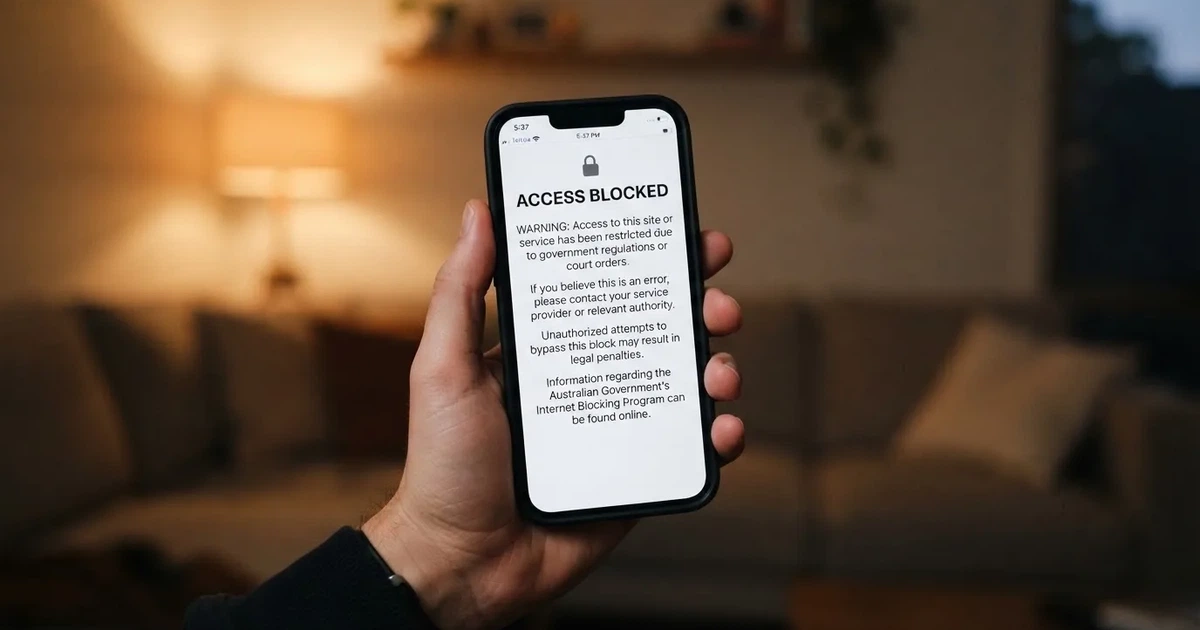
Someone searching for “international casinos for Australian players” is usually after a short, working list of offshore casino sites willing to take them. That is not what this page hands over, because the page would not survive an honest read. The Interactive Gambling Act 2001 makes it an offence to provide online casino games to anyone in Australia, no state or territory licences them, and the ACMA’s blocking record shows the law is enforced rather than sitting on a shelf. The page lays out that gap plainly, names the brands the regulator has acted against, and points to what is actually lawful: licensed wagering, land-based venues, and the BetStop self-exclusion register. That is the choice the search results rarely admit.
Table of Contents
- Where Australian Players Actually Stand: The Market the Search Promises Does Not Exist
- The Law, Plainly: Interactive Gambling Act 2001 and What It Actually Prohibits
- The Blocking Record as It Stands This Year
- Brands the ACMA Has Formally Warned: What the Record Shows
- The Brands Reviewed: Why Each One Sits on This Page
- The Verdict on the Comparison
- Payment Routes a Reader Will Meet, and What Each One Does
- Responsible Play Around Offshore Brands
- What the Search Promised and What the Page Delivered
- Frequently Asked Questions
Where Australian Players Actually Stand: The Market the Search Promises Does Not Exist
What an “international casino” means once it reaches an Australian reader
An international online casino is, in the trade sense, any operator licensed outside Australia that offers slots, table games, or live-dealer product over the internet. In Curaçao, the licence runs under the National Ordinance on Games of Chance; in Malta, it is the Malta Gaming Authority; in the Philippines, it is PAGCOR. From inside the operator’s own marketing, the licence gives the brand a legal personality. From inside Australia, it gives the brand nothing: the IGA’s reach is over the act of providing the service to a person physically in Australia, not over the licence the provider chose to obtain.

A licence overseas is not the same thing as a licence in Australia. It does not bind the brand to Australian consumer law, it does not make disputes resolvable through any Australian complaints body, and it does not make the operator reachable when a payout stalls. That is the difference worth holding onto.
Why the list the reader is after does not exist in lawful form
The search result the reader sees — ten offshore casinos, each reviewed and ranked — assumes a market Australia does not have. There is no Australian online casino licence to acquire, no state regulator that issues one, and no path by which a Curaçao or Malta licence extends that authority into the country. The Northern Territory Racing and Wagering Commission, which is often cited as the country’s “online gambling regulator”, regulates 52 online bookmakers — Sportsbet, Bet365, Ladbrokes among them — and it does so for wagering on races and sport placed before the event, not for online casino games. The commission runs with no full-time staff and meets once a month in Darwin. What it is not is a casino regulator; what it never has been is a casino regulator.
So the comparison the search promises — these offshore brands measured against each other and against Australian alternatives — rests on a category that the law refuses to populate. That does not make offshore sites disappear; it makes the comparison a different kind of artefact, one where the data a reader acts on is the ACMA’s enforcement record rather than a payout-speed benchmark.
The Law, Plainly: Interactive Gambling Act 2001 and What It Actually Prohibits
What is prohibited, what is licensed, what is grey
The Interactive Gambling Act 2001, strengthened by the Interactive Gambling Amendment Act 2017, makes it an offence for a provider to offer online casino games, online pokies, or in-play betting to a person in Australia. Lotteries, keno, and wagering on races and sport placed before the event are licensable; in practice, online wagering sits under the Northern Territory’s regime and, in a smaller pool, the ACT’s. Everything that reads like an online casino — slots, blackjack, roulette, baccarat, live-dealer tables, crash games — falls under the prohibition. The minimum age is 18 across the board.
A provider breaking the prohibition is not hard to find. An Australian player reading this from a kitchen table in Sydney is the target the law was written against; the player is not the party the IGA prosecutes. That is a real distinction, and it has limits. The provider is the one who faces the regulator; the player faces the consequences of using a service with no Australian consumer protection, no Australian complaints body, and no Australian recourse if a withdrawal is refused.
What the ACMA can do, and what it has actually done
The ACMA investigates complaints, issues formal warnings to providers it identifies, and directs Australian internet service providers to block offending sites. By the end of the period covered by the most recent published figures, 1,751 illegal gambling and affiliate marketing websites had been blocked since the first blocking request in November 2019, and more than 230 unlicensed gambling services had left the Australian market since enforcement was strengthened in 2017. The pace has not slowed: a single round reported on 26 June 2026 added twelve more sites — 7Signs, ChromaBet, Donbet, Duospin, Freshbet, Slots Gem, Jacks Club, Lucky Start, Pointsbetz, Spinrise, Vinyl Casino, Wildsino — to the block list.
A formal warning is not a blocking. It is the regulator naming the operator behind a brand, recording the breach, and putting the provider on notice. A repeat offence usually means the next step is a referral to the ISPs for a block. The ACMA publishes both lists; the published record is the data a reader acts on, and it is the record this page leans against.
What the Interactive Gambling Amendment (Gambling Reform) Bill 2026 adds
The Interactive Gambling Amendment (Gambling Reform) Bill 2026 passed Parliament on 19 August 2026. Its advertising and inducement measures commence on 1 January 2027 — law with a start date, not law in force on a page dated to this year. It sits on the timeline, not yet in the present. The reader comparing brands against the law reads a prohibition that has been on the books since 2001 and tightened in 2017, with a new layer of advertising rules arriving in the new year.
The Blocking Record as It Stands This Year
What the running total implies about the pace
The blocking register is a count, and the count reads as a rate once a page does the arithmetic. The first blocking request went to ISPs in November 2019. The total cited by the ACMA at the end of the period covered by the most recent published report sits at 1,751 sites, including affiliate marketing pages. That is a band rather than a single figure: the count has grown each reporting round, and any single number tied to a date overstates what the next round will show. The rate sits in the low- to mid-hundreds per year across the most recent reporting periods, with the count climbing unevenly across rounds rather than at a fixed monthly cadence. A reader comparing “1751 blocks since 2019” against the figures H2 Gambling Capital cites — Australians losing about A$3.9 billion a year to illegal sites, with the share of gambling going through legal channels falling from 74% in 2021 to 64% — gets the same picture from two angles: the supply is being throttled, and the demand has not thinned with it.
The proportion that matters for the reader is not how many sites have been blocked, but how many of the brands a search returns sit inside that count. Of the eleven brands this page reviews below, every one appears in the ACMA’s published enforcement record. That is the data the comparison is built from.
Brands the ACMA Has Formally Warned: What the Record Shows
The table below gathers the eleven brands this page reviews, with the ACMA action and the operator named in the formal warning. The order follows the regulator’s record — most recent action first — and the comparison the table supports is straightforward: this is not a list the reader should be choosing from; it is the list the regulator has already passed judgement on. Where the ACMA’s own subject-support entries are absent, the cell is left blank rather than filled in.
| Brand | ACMA action and date | Operator named by the ACMA | Subject support |
|---|---|---|---|
| RocketPlay | Formal warning, March 2026; earlier Dama N.V., May 2022 | Pulsup Ltd | Gambling Insider |
| Level Up Casino | Formal warning, May 2022 | Dama N.V. | Westpac |
| Woo Casino | Formal warning, March 2025 | Dama N.V. | — |
| Spirit Casino | Formal warning, May 2025 | Dama N.V. | — |
| National Casino | Formal warning, July 2025; earlier TechSolutions, 2022 | Consolutetish S.R.L. | acma.gov.au; austrac.gov.au; betstop.gov.au |
| Bizzo Casino | Formal warning, July 2025; earlier TechSolutions, 2022 | Consolutetish S.R.L. | Gambling Insider |
| Ignition Casino | Formal warning, July 2025 | Bamboo Media | — |
| Instant Casino | Formal warning, February 2025 | EOD Code SRL | Ecopayz; PayID |
| Jackbit | Formal warning, April 2026 | Ryker B.V. | — |
| Casino Intense | Formal warning, April 2025 | Sterplay Holding Ltd | austrac.gov.au; betstop.gov.au; Gambling Insider |
| Sky Crown | Formal warning, September 2022 | Hollycorn N.V. | — |
The brands do not share an operator, and the operator behind a brand can change across warnings — Dama N.V. ran Level Up and Woo Casino and Spirit Casino and, in 2022, RocketPlay; Pulsup Ltd holds the RocketPlay site the ACMA warned in March 2026. The pattern is one of corporate migration: a brand moves between operators, the brand name survives, the regulator’s record tracks the operator, and a reader looking at the brand alone misses the trail. The Hollycorn N.V. warning covers Sky Crown and Blue Leo together; the reader cannot tell from the brand name that two sites share an operator.
Reading the table beside the rest of the page
The eleven brands run the range of offshore licensing stories the market offers: Curaçao, Malta, a couple of smaller jurisdictions. None of those licences extend into Australia. The Australian wagering restrictions — the credit-card ban that took effect on 11 June 2024 for licensed online wagering, the prohibition on credit-related products and digital currency as deposit methods — apply only to operators the Australian regime covers. An offshore brand is not covered by the ban; it sets its own payment rules, which is part of the marketing. That is the gap a reader cannot see from the brand name alone.
The ACMA’s enforcement record is not a sample. It is the regulator’s full published list of formal warnings. A reader comparing what the regulator has acted against to what the search results return sees the same names, and that overlap is the data point. There is no Australian-licensed brand in this set; there cannot be, because the product this page covers is not licensed in Australia.
The Brands Reviewed: Why Each One Sits on This Page
RocketPlay
RocketPlay sits at the top of the ACMA’s record for the year covered by this page. The ACMA issued a formal warning to Pulsup Ltd over Rocketplay in March 2026; Dama N.V. had already been warned over the same brand in May 2022. The brand is the same, the operator has changed hands, and the regulator has followed it through the change. Gambling Insider lists it as a tracked brand. The data points that matter to a reader — payout terms, wagering requirements, available games — are not carried here because the only sources for them were affiliate marketing pages. What is carried is the ACMA’s own record, and that is enough.
A reader choosing between RocketPlay and an Australian-licensed alternative gets two different categories of service. The Australian alternative, if the product were a wager on sport, is licensed and connects to BetStop; RocketPlay, offering casino games, connects to neither. The choice is not between two wagering providers; it is between a licensed wagering service and an unlicensed casino.
Level Up Casino
Dama N.V. ran Level Up Casino when the ACMA issued the formal warning in May 2022; Westpac’s own gambling-block documentation cites the brand in its merchant-category-code blocklist. The blocklist is a working piece of the bank’s own payment infrastructure — a refusal to authorise a transaction whose merchant category code falls under “Betting/Casino Gambling” on eligible personal credit and debit cards. A bank blocking the brand at the card level is not the same as the regulator blocking the site at the network level; both reach the reader’s wallet through different routes.
Woo Casino
Woo Casino drew a fresh warning to Dama N.V. in March 2025. The brand’s subject support is absent from the regulator’s record, and the affiliate data is not carried here for the same reason as elsewhere. What the page records is the warning itself and the fact that, four years on from the company’s 2022 round of warnings, the regulator returned to the same operator for a new brand. The pattern repeats across this set; Dama N.V. is one of the more frequently-named operators in the ACMA’s enforcement record, and Woo Casino is one of its brands.
Spirit Casino
Spirit Casino is the May 2025 warning to Dama N.V. — the second in two months for the same operator, after Woo Casino in March. The brand is the most recent entry for Dama N.V. on the regulator’s published list at the time of this page. The reader looking at Dama N.V. as an operator rather than at any single brand sees the operator’s full footprint on the regulator’s record: six brands in 2022, two more in 2025.
National Casino
National Casino sits on a longer arc than most of the brands here. TechSolutions (CY) Group Limited and TechSolutions Group N.V. were warned in 2022 over the brand; Consolutetish S.R.L. was warned in July 2025 over the same brand and over Bizzo Casino together. The subject support entries come from the ACMA’s own site, AUSTRAC, and BetStop — three Australian bodies whose appearance on the same row is the data point. The brand has cycled through operators, the regulator has tracked each cycle, and the Australian infrastructure has followed the brand across the changes.
Bizzo Casino
Bizzo Casino shares the July 2025 warning with National Casino — both against Consolutetish S.R.L. — and shares the earlier 2022 warning against TechSolutions. Gambling Insider lists the brand. The two warnings, four years apart, on a brand that has moved operators twice, are the kind of pattern a reader can act on without having to read the underlying licence page.
Ignition Casino
Bamboo Media drew the July 2025 warning over Ignition Casino. The subject-support entries are absent from the regulator’s record for this brand. The page carries the warning and the date; the rest of the data is not carried here because the only available sources were affiliate marketing pages.
Instant Casino
EOD Code SRL drew the February 2025 warning over Instant Casino. The subject support entries come from Ecopayz and PayID — payment-method documentation, which is one of the rare subject-support data points the regulator’s own pages do not supply. PayID’s own page is unusually direct on this point: paying to a PayID on an illegal gambling site, it warns, almost certainly means a scam site.
Jackbit
Ryker B.V. drew the April 2026 warning over Jackbit — and the same warning covered CasinOK. Two brands, one operator, one warning. The brand’s subject support entries are absent. The data carried is the warning, the operator, and the date.
Casino Intense
Sterplay Holding Ltd drew the April 2025 warning over Casino Intense. The subject support entries come from AUSTRAC, BetStop, and Gambling Insider. The AUSTRAC and BetStop appearances matter: AUSTRAC is the financial-crimes regulator whose threshold-transaction-report rule applies to physical cash above A$10,000 but not to ordinary electronic transfers, and BetStop is the National Self-Exclusion Register that binds only Australian-licensed services. Neither protects a player using Casino Intense, because Casino Intense is not licensed in Australia.
Sky Crown
Hollycorn N.V. drew the formal warning over Sky Crown and Blue Leo in September 2022 — published as a PDF on the ACMA’s site. The subject support entries are absent. The reader comparing this brand to the rest of the set sees the oldest warning in the table; the regulator has not returned to the operator on the same brand in the period covered here, which is a different kind of data point than a fresh warning.
The Verdict on the Comparison
The page is not a ranking. It is a record. The eleven brands sit on the ACMA’s published list of formal warnings; the table above carries the regulator’s own entries for each. There is no Australian-licensed online casino on the list because there cannot be; there is no offshore brand on the list without a warning because the regulator does not warn brands that comply with the prohibition.
A reader who arrived looking for a “best of” list leaves with the regulator’s record. The choice that follows is not between brands — it is between the product this set offers and the products Australia actually licences.
Payment Routes a Reader Will Meet, and What Each One Does
Credit cards and digital wallets
Under the Interactive Gambling Act 2001 as amended in 2023, Australian-licensed online wagering services cannot accept payment by credit card or other credit-related products. The same restriction constrains gambling use of linked digital wallets such as Apple Pay on a credit-funded account. The ban took effect on 11 June 2024 for licensed wagering. An offshore brand is not bound by the ban; a reader using one to deposit may be asked for a credit card, and the bank behind the card may decline the transaction at the merchant-category-code level rather than at the regulator’s level. Westpac’s gambling block refuses authorisation of transactions under the merchant category code “Betting/Casino Gambling” on eligible personal credit and debit cards; ANZ’s gambling block, activated in the app, also blocks gambling transactions through a digital wallet on an eligible card.
Removing ANZ’s block requires a 48-hour waiting period once activated, and ANZ warns that not all gambling transactions will be blocked and some non-gambling transactions might be blocked in error. Commonwealth Bank offers a comparable gambling lock on eligible cards via the CommBank app, with the same caveat that not all gambling-related purchases can be guaranteed to be stopped. The bank-level block is a reader’s first line of defence, and it is the line that fires before the regulator’s.
Apple Pay and Google Pay: how the wallet fits in
Apple does not charge consumer fees for Apple Pay in stores, online, or in apps; any surcharge is a merchant’s own processing fee, not Apple’s. Transaction limits and PIN requirements for Apple Pay purchases are set by the card issuer or merchant, not by Apple. By the end of 2025, Apple Pay, Google Pay, and Samsung Pay transactions collectively accounted for around 45% of all card payments in Australia by number. The wallet is the rail; the card behind it determines whether a gambling transaction is allowed at all.
PayID, Osko, and BPAY: the Australian instant-transfer stack
Osko, run by Australian Payments Plus, delivers a bank transfer between participating Australian banks in under a minute, 24/7, including weekends, whether addressed to a BSB and account number or to a PayID. Paying to a PayID shows the account-holder’s name before the transfer is sent; AP+ warns that being asked to transfer money to a PayID on an illegal gambling site almost certainly means a scam site. PayID-based instant transfers are available at over 100 Australian financial institutions.
Australia’s New Payments Platform became accessible to the public on 13 February 2018, is owned by New Payments Platform Australia Ltd — a non-profit with thirteen shareholders including the Reserve Bank and the major banks — and had more than 25 million PayID identifiers registered as of April 2025. Participants must keep the platform’s monthly outages to no more than two minutes. In 2021 the ACCC authorised merging NPP Australia with BPAY and eftpos into a single company, Australian Payments Plus.
BPAY is a bill-payment service in online banking: the payer enters the Biller Code and the Customer Reference Number printed on the bill. It has operated since 1997, is available in the online banking of over 140 banks and financial institutions, is offered by over 95,000 businesses, and runs on the same AP+ stack as PayID and Osko. The big four — ANZ, Commonwealth Bank, National Australia Bank, and Westpac — own it equally through Cardlink Services Limited. It is the Australian deposit route for licensed wagering that a bank transfer or PayID is not; it is not a route a reader will meet on an offshore casino site, because offshore sites do not issue BPAY bills.
AUSTRAC and what the threshold-transaction-report rule does not cover
AUSTRAC’s threshold-transaction-report rule, which requires reporting of transfers of A$10,000 or more, applies only to physical cash. Ordinary electronic bank transfers are not subject to that per-transaction reporting requirement, regardless of the amount sent. The reader using PayID or Osko to move money to an offshore brand is not in scope for the rule; the reader walking into a TAB with a handful of banknotes above the threshold is. The distinction matters because the regulatory hooks readers imagine — the A$10,000 flag, the suspicious-matter report — sit on different rails than the rail an offshore deposit uses.
Responsible Play Around Offshore Brands
What BetStop covers and what it does not
BetStop, the National Self-Exclusion Register, has been live since August 2023. It binds Australian-licensed online and phone wagering services — every licensed bookmaker and wagering operator has to honour a registration. An offshore casino is not connected to BetStop, not licensed in Australia, and not bound to honour a BetStop registration. A reader who registers with BetStop and then uses an offshore brand has self-excluded from the licensed market and is using a service that never saw the registration.
The National Gambling Helpline, 1800 858 858, is free and available 24/7; chat support runs at Gambling Help Online. The line is the practical route for a reader using any product — licensed or not — and it is the line that connects the reader to services BetStop cannot reach.
What an Australian reader using an offshore site actually has
The protection that surrounds a licensed wagering account — dispute resolution through an Australian body, the regulator’s authority over the operator, BetStop, the credit-card ban that constrains the deposit — does not surround an offshore casino account. A payout refused on a Curaçao-licensed site has no Australian complaints channel; the regulator named on the licence is in Curaçao; the brand’s banking may use PayID to receive Australian dollars and an overseas intermediary to release them, and the reader’s leverage at the point where the payout stalls is the leverage a private dispute with a foreign-licensed operator gives. The offshore brand has nothing else to offer in this regard. The licensed alternative does.
What H2 Gambling Capital’s estimate implies for the cost of the choice
H2 Gambling Capital’s 2025 report estimates Australians lose about A$3.9 billion a year to illegal gambling sites, with the share of gambling going through legal channels falling from 74% in 2021 to 64%. The number is an estimate, not a measured total; it is the trade-side figure that frames the question. The figure on the other side — what a reader using a licensed wagering service actually pays in — sits inside the licensed market’s product rules and is not the same kind of estimate. The two figures do not balance; they sit on different ledgers. A reader who treats the A$3.9 billion as the cost of the choice and the licensed alternative as the saving has a working framing; a reader who treats the same number as the cost of gambling itself has not.
Tax: what winnings do and do not trigger
Gambling winnings of a recreational player are not assessable income in Australia (section 6-5 ITAA 1997), and losses are not deductible, unless the person carries on a business of gambling. The model is “check with the ATO” rather than a fixed answer the page can carry. A reader whose gambling crosses into a business-like pattern — and the ATO’s own guidance, not this page, sets that line — has a different tax position than a recreational player does. The page flags the rule and stops short of the conclusion.
What the Search Promised and What the Page Delivered
A reader who arrived looking for “international casinos for Australian players” with a working shortlist in mind arrives at a record. The eleven brands above sit on the ACMA’s published list of formal warnings; the table carries the regulator’s own entries; the comparison the page makes is between the regulator’s record and the search result. There is no Australian-licensed casino on the list because the product is not licensed here. The choice that follows is not between brands but between an offshore product with no Australian protection and a licensed product with Australian protection, and that is the choice the search results rarely name.
For a reader who wants a working list of legal Australian options, the licensed wagering operators sit under the Northern Territory’s regime — Sportsbet, Bet365, Ladbrokes, and the other 49 NTRWC-licensed brands — and they offer wagering on races and sport before the event, not online casino games. BetStop is the self-exclusion register for that market; the National Gambling Helpline, 1800 858 858, is the route to support. Both are described elsewhere on this site.
Frequently Asked Questions
What does “international casino” mean, and how is it different from an Australian-licensed one?
An international online casino is an operator licensed outside Australia — most often in Curaçao or Malta — that offers slots, table games, and live-dealer product over the internet. An Australian-licensed operator is licensed inside Australia, which for online wagering means under the Northern Territory’s regime, and is bound by the Interactive Gambling Act 2001. Online casino games are not licensed anywhere in Australia; “international casino” and “Australian-licensed casino” are not two flavours of the same product but two categories, one of which is not licensable inside the country.
Can an international online casino legally accept players located in Australia?
No. The Interactive Gambling Act 2001, as amended in 2017, makes it an offence for a provider to offer online casino games, online pokies, or in-play betting to a person physically in Australia. The provider is the party the IGA targets; the Australian player is not prosecuted for using the site. The site’s decision to take Australian players is the breach, not the player’s.
Does an overseas gambling licence carry any weight for an Australian player?
It carries the weight of the regulator that issued it, in the jurisdiction that issued it. A Curaçao licence binds the operator to Curaçao’s rules and to Curaçao’s complaints channels; it does not bind the operator to Australian consumer law and does not give an Australian player a route to Australian complaints bodies. The licence is a piece of the operator’s marketing, not a piece of the reader’s protection.
What protections, if any, apply to an Australian using an international casino site?
None of the Australian protections apply. BetStop, the National Self-Exclusion Register, binds Australian-licensed wagering services and does not extend to offshore casino brands. The credit-card ban on licensed wagering, the advertising rules in the 2026 reform bill, and the ACMA’s blocking powers target the licensed and unlicensed sides separately — the licensed side through compliance, the unlicensed side through enforcement. A payout refused by an offshore brand is a private dispute with a foreign-licensed operator, not an Australian consumer matter.
Are international land-based casino resorts different from the international online sites people search for?
Yes. Land-based casino resorts in international jurisdictions — Macau, Las Vegas, Singapore — operate under the gambling laws of the country they sit in and offer an in-person product. Online casino sites operate under the gambling laws of the jurisdiction where the operator is licensed and offer an internet-delivered product. The IGA’s prohibition on providing online casino games to Australians is not a prohibition on an Australian visiting a land-based resort in another country. The two products are not interchangeable, and a search for “international casino” can return either depending on the wording.
Who can an Australian contact if an international casino site will not pay out?
The National Gambling Helpline, 1800 858 858, is free and available 24/7; chat support runs at Gambling Help Online. Neither resolves a payout dispute — that sits with the operator and, in some cases, the regulator that issued the operator’s licence — but both are the practical first contact for a reader whose use of an offshore site has become a problem. A reader with a complaint about an Australian-licensed wagering service has the ACMA as a referral; a reader with a complaint about an offshore casino has the operator and whatever consumer-protection regime the operator’s licence jurisdiction offers, which is rarely Australian.
Written by the editors at Casino VIP Info.