
Best new online casino sites in Australia: the legal gap, the ACMA record, and what a reader in Australia can actually use
A reader in Australia typing “best new online casino” is asking for something the law does not provide. The Interactive Gambling Act 2001 prohibits offering online casino games, online pokies and in-play betting to anyone in Australia, and no state or territory issues a licence for it. Offshore sites accept Australian players anyway, the Australian Communications and Media Authority issues formal warnings and asks Australian internet providers to block them, and a reader comparing options is choosing between offshore brands that have been on the receiving end of that record. The honest version of this page treats that as the central fact and lays the rest around it.

Data current as of 29 October 2026 and checked against the ACMA’s published formal-warning record.
Table of Contents
- How Australian law treats a newly launched online casino site
- Landscape
- Responsible gambling tools available to a reader in Australia
- Crypto and anonymity at newly launched online casino sites
- Payments and payout speed
- Bonuses and free spins at newly launched online casino sites
- Mobile and app experience
- Specific games, providers and live tables
- What “new casino” actually means in this market
- New online casino brands the ACMA has acted against
- The legal alternatives for a reader in Australia
- Reading the search results for a “best new” shortlist
- What the page concludes
- Frequently asked questions
How Australian law treats a newly launched online casino site
The Interactive Gambling Act 2001, tightened by the Interactive Gambling Amendment Act 2017, makes it an offence for a provider to offer online casino games or in-play wagering to a person physically in Australia. What is licensable is wagering on races and sport placed before the event, lotteries and keno. In practice, online bookmakers operating in Australia (Sportsbet, Bet365, Ladbrokes among them) hold Northern Territory licences — the Northern Territory Racing and Wagering Commission regulates 52 such operators from Darwin with no full-time staff and a single monthly meeting. The licence covers the bookmaker side, not the casino side; an offshore casino brand showing a Curaçao or Anjouan badge is not covered by it.

Minimum age is 18. The individual player is not the target of the IGA — it targets the provider — but an offshore site gives no Australian consumer protection, no complaints body and no recourse if a withdrawal is refused, and it can be blocked with a balance still on it.
Why the “newly launched” framing does not change anything
A brand’s launch date has no bearing on its legality for an Australian player. A site that went live last month and a site that has run for a decade are both in breach of the IGA if they offer online casino games to a person in Australia. The debut angle in the search query is a marketing frame; the legal frame is the offering, not the launch.
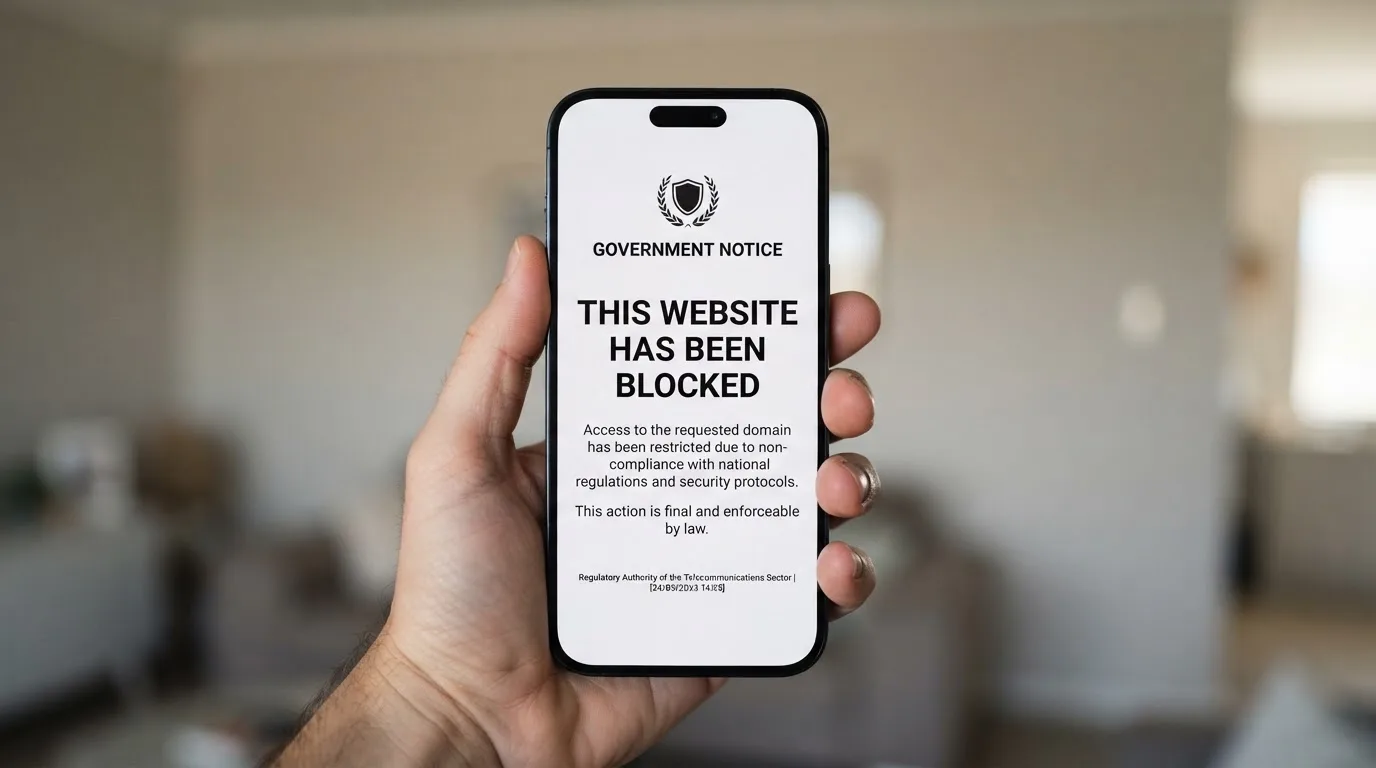
The IGA’s reach is the offering, not the brand: what is prohibited is the supply of a “prohibited interactive gambling service” to a customer in Australia, where that service covers online casino games, online pokies and in-play betting. A new domain, a rebrand, a new payment partner — none of these is the test.
Landscape
The offshore market operates as a shifting set of brands managed by a few holding companies, each appearing on the ACMA’s warning list as the regulator investigates their offerings.
| Brand | ACMA action and date | Operator named by the ACMA | Subject support |
|---|---|---|---|
| RocketPlay | Formal warning, March 2026; May 2022 | Pulsup Ltd; Dama N.V. | Listings-only |
| Level Up Casino | Formal warning, May 2022 | Dama N.V. | Listings-only |
| Woo Casino | Formal warning, March 2025 | Dama N.V. | No-data |
| Spirit Casino | Formal warning, May 2025 | Dama N.V. | No-data |
| National Casino | Formal warning, July 2025 | Consolutetish S.R.L. | Listings-only |
| Bizzo Casino | Formal warning, July 2025; 2022 | Consolutetish S.R.L.; TechSolutions | Listings-only |
| Ignition Casino | Formal warning, July 2025 | Bamboo Media | No-data |
| Instant Casino | Formal warning, February 2025 | EOD Code SRL | Listings-only |
| Jackbit | Formal warning, April 2026 | Ryker B.V. | No-data |
| Casino Intense | Formal warning, April 2025 | Sterplay Holding Ltd | Listings-only |
| Sky Crown | Formal warning, September 2022 | Hollycorn N.V. | No-data |
The ACMA investigates complaints, issues formal warnings and asks Australian internet service providers to block illegal sites. Its published record is the most concrete measure of how the prohibition is applied, and it is where readers comparing options should look first.
The blocking requests
According to the ACMA as reported in June 2026, a total of 1,751 illegal gambling and affiliate marketing websites had been blocked since the first blocking request in November 2019, and more than 230 unlicensed gambling services had left the Australian market since enforcement was strengthened in 2017. In a round reported on 26 June 2026 the ACMA asked Australian ISPs to block 12 more: 7Signs, ChromaBet, Donbet, Duospin, Freshbet, Slots Gem, Jacks Club, Lucky Start, Pointsbetz, Spinrise, Vinyl Casino and Wildsino.
What a blocking rate looks like over the life of the regime
The numbers provide a clear look at the scale of enforcement. The first ACMA blocking request was in November 2019; by the report dated 26 June 2026, 1,751 illegal gambling and affiliate marketing websites had been blocked since that date. That places the running rate somewhere between roughly 26 and 29 blocked sites per month over the 80 months since the first request — a band rather than a single figure, because new rounds are issued in clusters rather than at a steady cadence, and the ACMA’s count includes affiliate marketing sites alongside the operator domains. For a reader weighing how active Australian enforcement actually is, the honest reading is that the regime has produced close to three blocking actions per working week, on average, for six and a half years — and that the rate has not slowed.
Formal warnings issued under the IGA
The blocking record sits alongside formal warnings, which the ACMA publishes when an investigation finds an operator offering prohibited services to Australians. The warnings are issued to corporate entities, not to brands, and the same operator can hold several.
- In May 2022 the ACMA warned Dama N.V. covering six casino brands: Bambet, Dazard, Level Up, Rocketplay, Wild Tornado and Cobra Casinos.
- In March 2025 the ACMA warned Dama N.V. over Woo Casino, and in May 2025 over Spirit Casino.
- In July 2025 the ACMA warned Bamboo Media over Ignition Casino and Consolutetish S.R.L. over National Casino and Bizzo Casino; Bizzo Casino had already been the subject of a 2022 warning to TechSolutions (CY) Group Limited and TechSolutions Group N.V.
- In February 2025 the ACMA warned EOD Code SRL over Instant Casino.
- In April 2025 the ACMA warned Sterplay Holding Ltd over Casino Intense.
- In April 2026 the ACMA warned Ryker B.V. over Jackbit and CasinOK.
- In March 2026 the ACMA warned Pulsup Ltd over Rocketplay, and in May 2022 it warned Dama N.V. covering six casino brands: Bambet, Dazard, Level Up, Rocketplay, Wild Tornado and Cobra Casinos.
- In September 2022 the ACMA warned Hollycorn N.V. over Sky Crown and Blue Leo.
The pattern across this list is the pattern of the offshore sector: a small number of holding companies — Dama N.V., Hollycorn N.V., the TechSolutions pair — running many brand front-ends, each of them appearing on the ACMA’s record separately.
Responsible gambling tools available to a reader in Australia
The gambling-harms shelf for an Australian reader runs through Australian-licensed channels, not offshore casinos. The headline tool is BetStop, the National Self-Exclusion Register, live since August 2023. BetStop binds Australian-licensed online and phone wagering services; an offshore casino is not connected to it. A person who excludes through BetStop is excluded from licensed wagering only, and the same person is still free to deposit at an offshore site — which is one reason the offshore channel exists in the first place.
The National Gambling Helpline is 1800 858 858, free and available 24/7, with chat through Gambling Help Online. The Helpline is the front door to counselling, financial advice and referral; it does not handle payment disputes with offshore operators, which is a separate problem and one that no Australian body can resolve.
A separate layer of harm reduction runs through Australian banks. Westpac’s gambling block works at card level: it refuses authorisation of transactions registered under the merchant category code “Betting/Casino Gambling” on eligible personal credit and debit cards. ANZ’s gambling transaction block, activated in the ANZ app, also blocks gambling transactions made through a digital wallet such as Apple Pay on an eligible card, not just the physical card. Once the ANZ block is on, removing it requires a 48-hour cooling-off period, and the bank itself warns that not all gambling transactions will be blocked and some non-gambling transactions might be blocked in error. Commonwealth Bank offers a comparable lock through the CommBank app. None of these blocks closes the offshore channel — a person can still move money to an offshore site by BPAY, PayID or direct transfer — but each block changes the default for card-based play.
Crypto and anonymity at newly launched online casino sites
A reader searching for “new bitcoin casino” or “new crypto casino” is asking a more specific question than the general search topic. The legal answer does not narrow with it. Under the Interactive Gambling Act 2001 as amended, Australian-licensed online wagering services cannot accept payment by credit card or other credit-related products, a restriction that also constrains gambling use of linked digital wallets like Apple Pay. Crypto is treated as a separate payment class: it is banned as a deposit route at Australian-licensed wagering services, on the same footing as credit. A site asking an Australian customer for a Bitcoin or USDT deposit is, on the payment side, operating outside the Australian rules regardless of any other licence it displays.
Anonymity on the crypto side is partial at best. AUSTRAC’s threshold-transaction-report rule, which requires reporting of transfers of A$10,000 or more, applies only to physical cash; ordinary electronic bank transfers are not subject to that per-transaction reporting requirement, regardless of the amount sent. Crypto on-ramps and off-ramps in Australia are AUSTRAC-regulated digital currency exchanges, and the exchange leg is where identity is established — the casino leg, by contrast, sits offshore and outside that regime.
For a reader weighing the “no identity check” angle that some new-crypto branding leans on: the constraint is at the bank end, not the casino end. Australian banks apply card-level gambling blocks and merchant-category filtering on their own terms; on the crypto side, the Australian exchange is the regulated gateway. An offshore casino’s claim that no ID is required at the cashier desk is true in the way it is true at any offshore cashier desk, and does not place the deposit outside Australian reach.
Payments and payout speed
Money movement at a newly launched online casino site, for an Australian player, runs through familiar rails on the way in and through unfamiliar ones on the way out. The Australian licensed-wagering side (bookmakers, lotteries) is the easier case: deposits by debit card, bank transfer, PayID/Osko and BPAY are the legal channels, and Osko delivers a bank transfer between participating Australian banks in under a minute, 24/7 including weekends, whether it is addressed to a BSB and account number or to a PayID. PayID-based instant transfers are available at over 100 Australian financial institutions; more than 25 million PayID identifiers had been registered on Australia’s New Payments Platform by April 2025. Paying to a PayID shows the name of the account holder before the transfer is sent, and AP+ warns that being asked to transfer money to a PayID on an illegal gambling site almost certainly means a scam site.
The New Payments Platform became accessible to the public on 13 February 2018, is owned by New Payments Platform Australia Ltd, a non-profit whose 13 shareholders include the Reserve Bank of Australia and the country’s major banks, and participants must keep monthly outages to under two minutes. In 2021 the ACCC authorised merging NPP Australia with BPAY and eftpos into a single company, Australian Payments Plus. BPAY itself has operated since 18 November 1997, is available in the online banking of over 140 banks and financial institutions and is offered by over 95,000 businesses; it is run by Australian Payments Plus, the same operator as PayID and Osko, and is owned equally via Cardlink Services Limited by ANZ, Commonwealth Bank, National Australia Bank and Westpac.
Apple Pay, Google Pay and the surcharge question
By the end of 2025, Apple Pay, Google Pay and Samsung Pay transactions collectively accounted for around 45% of all card payments in Australia by number. Apple does not charge fees to consumers for using Apple Pay in stores, online or in apps; any surcharge on the merchant side comes from the merchant’s own card-processing fees, not from Apple. Apple also states that transaction limits and PIN requirements for Apple Pay purchases are set by the card issuer or merchant, not by Apple. The Reserve Bank of Australia’s July 2025 review proposes removing surcharges only on eftpos, Mastercard and Visa card transactions, explicitly leaving American Express outside the scope of the proposed surcharge ban — a separate point because American Express, founded in 1850 as a freight-forwarding company and a card issuer since 1 October 1958, traditionally runs as a three-party scheme that issues cards and processes transactions itself rather than as the four-party network Visa and Mastercard use.
For the gambling question specifically, ANZ’s gambling transaction block also blocks gambling transactions made through a digital wallet such as Apple Pay on an eligible card. The licensed wagering channel cannot accept credit cards and cannot accept Apple Pay backed by credit; an offshore casino can ask for either, and the block depends on the bank and the wallet, not on the merchant.
Payout speed
Payout speed at an offshore casino is governed by the operator’s own stated processing times plus the rail used for the return leg. Crypto payouts are typically advertised as fast but depend on network confirmation and on the exchange leg back into Australian dollars. Bank-transfer returns run through the Australian system once they clear the offshore operator — Osko and PayID make the Australian leg fast once it starts, but the start is what an offshore operator controls. A reader comparing options should weight the operator’s stated processing window over the rail’s headline speed: a casino that holds withdrawals for 72 hours of internal review makes Osko’s under-a-minute arrival a footnote.
Bonuses and free spins at newly launched online casino sites
The promotional shelf for new online casino sites, in the search sense, runs through deposit-match bonuses, free-spin bundles, no-deposit freebies and sign-up packages. The honest reading for an Australian reader is that the market carrying these offers is the offshore market, and every term that comes attached is governed by the operator’s own house rules rather than any Australian consumer law.
What the offers actually carry
A welcome bonus is a deposit match plus a stated wagering multiple; a free-spin bundle attaches the spin winnings to that multiple; a no-deposit offer hands a smaller credit or spin count up front, also with a multiple. The wagering multiple is the figure that decides how much the offer costs the player who claims it: a 100% match to A$500 with a 40× bonus multiple asks the player to wager A$20,000 before any of the bonus credit becomes withdrawable, and that turnover has to clear on the games the operator weights toward the multiple — slots usually at 100%, table games often at 10% or zero. The headline number on the offer is the size of the gift; the multiple is the price.
Free spins carry their own quiet cost: winnings from free spins are usually paid as bonus credit, not as cash, and run through the same wagering multiple. Max-cashout caps sit on top: a “A$100 max withdrawal from free spins” line turns a headline 50 free spins into a small real-money outcome for the player, regardless of what the spin results looked like. None of this is hidden in the small print at most operators, but it is also not on the marketing page — the marketing page leads with the size of the credit.
Why the offer still matters at an offshore site
The offer matters for the same reason at an offshore site as at a licensed one: the player who claims it is the one paying the multiple. The difference is that no Australian body will help recover a disputed balance, and an offshore operator that refuses a withdrawal on a max-cashout or bonus-abuse ground is the final arbiter. A reader comparing options across offshore brands should weight the operator’s record on withdrawals over the size of the bonus — the bonus is the same shape across the sector; the operator’s track record is what varies.
Mobile and app experience
The mobile shelf is the practical experience of the same offshore brands on a phone screen. Most new online casino sites run as mobile-browser sites rather than native apps, because the Apple App Store and Google Play in Australia do not carry real-money casino apps from offshore operators. A reader who searches for a “new mobile casino app” is searching for something the Australian app stores do not host — the apps that do appear for casino-style products are free-to-play social-casino apps, not real-money wagering.
Where the apps do exist is in the licensed wagering channel: Sportsbet, Bet365, Ladbrokes and other Northern Territory-licensed bookmakers ship native apps that handle sports and racing bets. A reader searching “new mobile casino” and finding one of those apps is being shown a wagering product, not a casino product, because the latter is not licensed in Australia and is not carried by the Australian app stores.
On the mobile-web side, the practical question for an offshore brand is whether the site loads cleanly, supports the payment methods an Australian reader actually uses and does not push browser notifications or aggressive full-screen interstitials. The payment side is the constraint: a mobile site that does not support PayID, Osko or BPAY, or that asks only for cards and crypto, is asking the reader to step outside the Australian rails.
Specific games, providers and live tables
A reader looking at “new casino slots,” “new live casino” or “new casino table games” is asking what the catalogue looks like. Offshore brands ship a shared pool of providers — Pragmatic Play, Evolution for live tables, a roster of slot studios that reads the same across the sector — wrapped in the operator’s own lobby and bonus framing. The novelty at a new launch is usually the bonus framing and the visual identity, not the underlying catalogue, because the catalogue is rented from the same providers the established brands use.
The live-casino shelf is where Evolution’s footprint shows: live-dealer blackjack, roulette and game-show products are near-universal across the offshore sector, and the table limits and side-bet offerings vary only marginally between operators. A reader comparing two new offshore casinos on the live-casino side is mostly comparing the welcome bonus and the withdrawal policy, not the catalogue.
What “new casino” actually means in this market
A newly launched online casino site, in the search sense, is a brand that has gone live in recent months, typically carrying the same Curaçao or Anjouan licence as the established sector. The debut is a marketing event — a fresh domain, a new bonus scheme, an early-stage operator behind it — and the legal status for an Australian reader does not change with the launch date. The site’s record has to be built from scratch; the operator behind it often is not new, because the offshore sector runs on a small number of holding companies launching many brand front-ends.
How a reader can tell how new a site is
The honest signals are limited. A WHOIS lookup on the domain gives the registration date; a footer copyright line often states a launch year that does not match the actual go-live; an “About” page usually gives a founding year, not a launch date. Where the brand is a rebrand or a sister site, the launch is a new skin on an established operator, and the operator’s track record is the more relevant figure than the brand’s founding date. For an Australian reader, the launch date is the wrong question — the operator’s record, and the licence it actually holds, are the right ones.
New online casino brands the ACMA has acted against
This is not a ranking and not a recommendation. Each brand below is listed because the ACMA itself issued a formal warning over it for offering prohibited services to Australians. No bonus terms are given — the only sources for them were affiliate marketing pages, and a bonus term printed without a primary-source check reads as marketing rather than as fact. The verdict on each brand is the page’s own judgement of what the published record establishes.
RocketPlay
RocketPlay carries two ACMA warnings: a March 2026 formal warning to Pulsup Ltd, and an earlier May 2022 warning to Dama N.V. covering RocketPlay among six brands. The same holding company turns up in both warnings, which means the operator is the same actor behind a renamed or new front-end over a four-year span. For a reader weighing options, the more useful question than the brand’s launch date is whether the same Dama N.V. group has produced a withdrawal record any Australian body could check — and the answer is no.
Level Up Casino
Level Up was caught in the same May 2022 warning to Dama N.V. as RocketPlay, Bambet, Dazard, Wild Tornado and Cobra Casinos. The shared warning is the point: it shows the regulator treating these brands as a single corporate actor. A reader looking at Level Up is looking at a brand from a holding company the ACMA has acted against repeatedly, not at an independent operator.
Woo Casino
Woo Casino was the subject of a March 2025 formal warning to Dama N.V., the third Dama N.V. warning on the ACMA’s record. The brand sits in the same corporate group as Level Up, Rocketplay, Spirit Casino, Bambet, Dazard, Wild Tornado and Cobra Casinos, all of them warned as a set or as individual brands.
Spirit Casino
Spirit Casino was warned in May 2025, again to Dama N.V. The pattern across Woo and Spirit is the holding company’s serial behaviour: the ACMA warns, the brand continues under the same operator, and a new brand is added to the portfolio. For a reader comparing options, this is the recurring shape of the sector.
National Casino
National Casino was warned in July 2025 to Consolutetish S.R.L., alongside Bizzo Casino in the same warning. Bizzo Casino had already been the subject of a 2022 formal warning to TechSolutions (CY) Group Limited and TechSolutions Group N.V., which means National Casino’s operator has changed corporate name at least once across the warnings.
Bizzo Casino
Bizzo Casino has two warnings on the record: a 2022 warning to TechSolutions (CY) Group Limited and TechSolutions Group N.V., and a July 2025 warning to Consolutetish S.R.L. The rename between operators is the more notable detail than the brand itself — it is the pattern of a holding company moving its licences or front-ends across jurisdictions.
Ignition Casino
Ignition Casino was warned in July 2025 to Bamboo Media. Unlike the Dama N.V. and TechSolutions cases, this brand sits with a less-frequently-named operator on the ACMA’s record, which makes Bamboo Media’s other holdings harder to map without further published action.
Instant Casino
Instant Casino was warned in February 2025 to EOD Code SRL, one of the more recent individual brand warnings rather than a batch warning.
Jackbit
Jackbit was warned in April 2026 to Ryker B.V. alongside CasinOK, the same operator and the same warning. The pair is recent enough that the published record is short.
Casino Intense
Casino Intense was warned in April 2025 to Sterplay Holding Ltd, one of the standalone warnings rather than a multi-brand action.
Sky Crown
Sky Crown was the subject of a September 2022 formal warning to Hollycorn N.V., alongside Blue Leo. The 2022 date makes it one of the older warnings on this list and suggests the ACMA’s enforcement against Hollycorn N.V. has been sustained over multiple years.
What the table shows
| Brand | ACMA action | Operator named by the ACMA | Date |
|---|---|---|---|
| RocketPlay | Formal warning under the IGA | Pulsup Ltd (Rocketplay.com.au); earlier Dama N.V. | March 2026; May 2022 |
| Level Up Casino | Formal warning under the IGA | Dama N.V. | May 2022 |
| Woo Casino | Formal warning under the IGA | Dama N.V. | March 2025 |
| Spirit Casino | Formal warning under the IGA | Dama N.V. | May 2025 |
| National Casino | Formal warning under the IGA | Consolutetish S.R.L. | July 2025 |
| Bizzo Casino | Formal warning under the IGA | Consolutetish S.R.L.; earlier TechSolutions | July 2025; 2022 |
| Ignition Casino | Formal warning under the IGA | Bamboo Media | July 2025 |
| Instant Casino | Formal warning under the IGA | EOD Code SRL | February 2025 |
| Jackbit | Formal warning under the IGA | Ryker B.V. | April 2026 |
| Casino Intense | Formal warning under the IGA | Sterplay Holding Ltd | April 2025 |
| Sky Crown | Formal warning under the IGA | Hollycorn N.V. | September 2022 |
Eleven brands, four holding companies running more than one each, and a single operator (Dama N.V.) accounting for three warnings against this set. The table is the visible shape of what an Australian reader is choosing between when the search returns a “best new” list.
The legal alternatives for a reader in Australia
The lawful substitutes for a new online casino site, for a reader in Australia, are licensed wagering, licensed pokies venues and land-based casinos. None of these is a casino-style product in the offshore sense, but each is the regulated Australian channel.
Licensed wagering covers racing and sport pre-event. The catalogue is Sportsbet, Bet365, Ladbrokes and the rest of the Northern Territory-regulated set, with bets placed before the event and settled by the operator. In-play betting is prohibited under the IGA, so the wagering shelf is narrower than the equivalent in a regulated European market. Lotteries and keno round out the licensed online shelf. The minimum age is 18 across all of these.
Land-based casinos are licensed state by state: Crown Melbourne, Crown Perth, The Star Sydney, The Star Gold Coast, Sky City Adelaide and Treasury Brisbane, plus the country’s roughly 200,000 poker machines in licensed clubs and hotels. The pokies floor is the closest Australian analogue to the offshore slot experience, and the harm-minimisation settings on those machines (mandatory pre-commitment in some states, time and spend reminders, venue-level exclusion) are the regulated Australian version of the responsible-gambling tooling that offshore casinos ship only at their own discretion.
BetStop and the National Gambling Helpline remain available to anyone who has used offshore sites, regardless of whether they now use a licensed channel.
Reading the search results for a “best new” shortlist
A reader who searches for “best new online casino” and finds a list is reading affiliate marketing. The listicle format rewards operators that pay for placement; the criteria are operator-supplied; the bonus terms are paraphrased from marketing copy. For an Australian reader the search itself is the trap: the lists it returns describe offshore brands the ACMA has warned, and the bonus figures come from pages whose only source is the brand.
A grounded reading of the same shelf is the ACMA’s own. The warnings record is searchable, dated and published by an Australian regulator; the blocking record is the same. Neither is a recommendation, but both are the only Australian-side record of the brands the lists promote.
What the page concludes
No Australian-licensed “new online casino” exists because no state or territory licences online casino games. The search query is asking for a product that the law does not provide, and the lists that answer it describe offshore brands — most of them on the ACMA’s published warning record, several of them run by holding companies the ACMA has acted against repeatedly.
For a reader in Australia the realistic shortlist is the lawful one: licensed wagering for sports and racing pre-event, lotteries and keno for the licensed online shelf, licensed pokies venues and land-based casinos for the casino-style product. The harm-minimisation layer is BetStop, the National Gambling Helpline and the bank-side gambling blocks at Westpac, ANZ and Commonwealth Bank. None of these is a “new online casino site.” None of them claims to be.
Frequently asked questions
How can someone tell how new an online casino site actually is?
The launch date on an offshore casino’s “About” page is marketing copy, not a verifiable record. The closest public signal is the domain registration date from a WHOIS lookup, and the operator behind the brand is often more relevant than the brand itself — offshore operators routinely relaunch under new names, and the underlying holding company may have years of warnings on the ACMA’s record.
Do brand-new casino sites carry more risk than established ones?
Yes, on the practical side, because there is no withdrawal history to check. The age of the brand does not change the legal status for an Australian reader — the IGA treats a launch from last month and a launch from a decade ago the same — but a brand that has been running long enough to accumulate a public complaints trail gives a reader more to weigh than one that has not.
Is it legal for a newly launched online casino to accept Australian players?
No. The Interactive Gambling Act 2001 prohibits offering online casino games to a person in Australia; no state or territory issues a licence for it. A newly launched offshore site that accepts Australian players is in breach of the IGA the moment it does so, and the ACMA’s enforcement record shows the shape of that breach in published warnings.
What should someone check before trusting a casino site that only just launched?
The operator behind the brand, the licence it actually holds, the country that issued it, and whether the ACMA has published a formal warning over it. A fresh domain on a Curaçao or Anjouan licence, with no operator history the reader can verify, is a thinner proposition than the same brand under a known holding company — and even the known holding company sits outside Australian consumer law.
Do new casino sites typically offer a welcome bonus to attract players?
Yes, deposit-match and free-spin bundles are standard across the offshore sector. The headline number on the offer is the size of the credit; the wagering multiple is the price. A reader comparing offers should weight the multiple, the games the multiple applies to and any max-cashout cap, because those are the figures that decide what the offer is worth in real money.
Can a new mobile casino app be verified as genuine before downloading it?
The Australian App Store and Google Play do not host real-money casino apps from offshore operators, which means a “new mobile casino app” from this sector is, in practice, a mobile browser site rather than a native app. Any real-money casino app offered through an Australian store is not the product the search is describing, and an app offered through a direct download link from an offshore site sits outside Australian consumer protection.