
Pokies in Geelong: the licensed venues, the real payout numbers and what the ACMA picture means for anyone playing in 2026
The reason a Geelong resident searches for pokies is straightforward: they want to know which pubs, clubs and the one casino nearby actually run electronic gaming machines under a Victorian licence, what those machines return, and what the rules look like on the floor. This page covers exactly that. It separates the land-based reality, where pokies are lawful and tightly regulated under Victorian law, from the offshore online casino market, which remains unlawful for anyone in Australia no matter how it brands itself. The figures below are current as of 29 October 2026 and have been checked against the Victorian Gambling and Casino Control Commission (VGCCC) and the Australian Communications and Media Authority (ACMA).
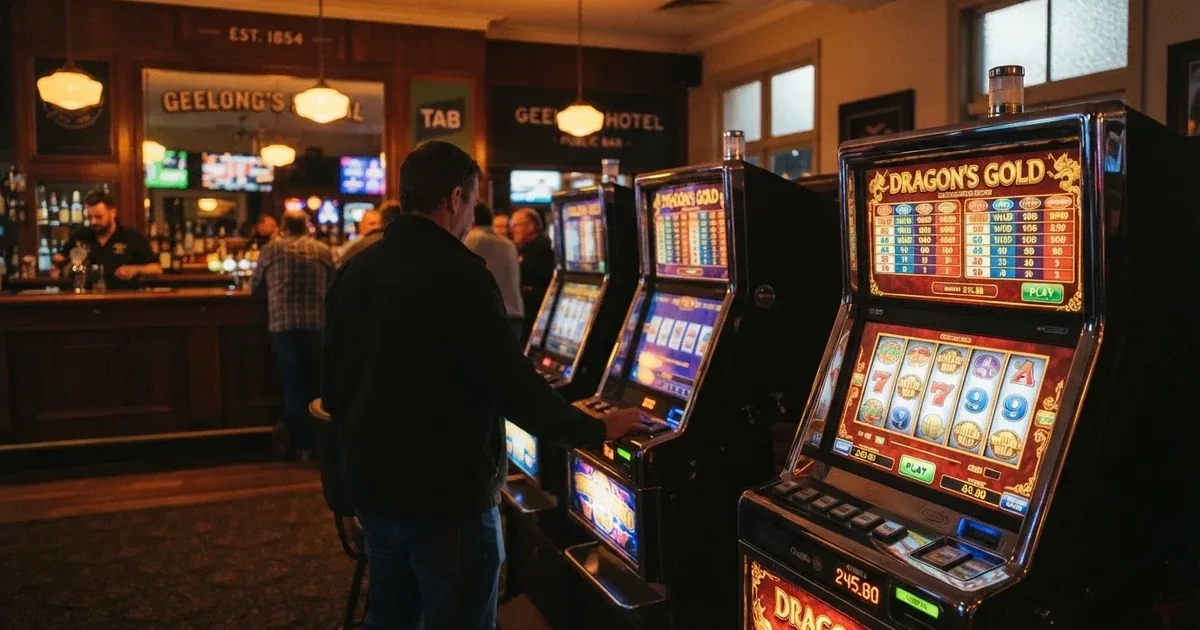
Table of Contents
- Paytables and what a Geelong machine actually returns
- Cashless card technology and what it changes for the player
- Payment methods at a Geelong gaming venue
- When the doors are open: 24-hour pokies around Geelong
- Self-exclusion and responsible gambling support
- How a shortlist of Geelong venues is put together
- The ACMA picture: offshore sites that the regulator has acted against
- Landscape of licensed venues
- The Australian legal frame around online casino
- How a Geelong venue fits the picture
- What a Geelong player should check before they sit down
- Frequently asked questions
- Table of licensed venues
Paytables and what a Geelong machine actually returns
How return-to-player works on a Victorian pub or club floor
Every electronic gaming machine in Victoria has a published return-to-player (RTP) percentage. The VGCCC requires clubs and hotels to display the RTP for each machine on the device or on a printed card beside it, and a player can ask staff for the figure before they sit down. RTP is the share of money a machine returns to players across the entire life of the game, not what one punter will see in one session, and it sits well below 100 percent because the house keeps the rest. The numbers that matter most for a Geelong machine are the minimum and maximum RTP for each game category, the venue category (a hotel machine sits under one set of rules, a club machine under another, and the casino under a third), and the maximum bet allowed on a single spin.
The Geelong-specific loss picture: $141 million in a single year
The City of Greater Geelong and the Borough of Queenscliffe together lost more than $141 million on pokies in 2024-25, the highest annual total recorded locally and an average of about $388,000 a day across the year. That figure is reported by Geelong Times from VGCCC venue-level data, and it sits well above the previous local record. Greater Geelong has roughly 1,300 electronic gaming machines spread across hotels, clubs and the casino floor, and the dollar amount lost rises even when the number of machines stays flat, because average play intensity has grown. The per-adult loss is one of the most useful figures on the page: divide $141 million by the local adult population and the per-resident annual spend is several hundred dollars, which is the kind of number a person can put against their own bankroll before they sit down.
Statewide context: where Geelong sits in Victoria
Victoria had 26,380 electronic gaming machines across 488 venues outside Crown Casino in 2021-22, with statewide annual player losses of A$3.02 billion, an average of A$446 per capita, in FY22-23. Geelong is one of the larger regional markets, with machine numbers well into four figures and a per-venue loss figure that runs higher than the Melbourne average in some hospitality suburbs. The Crown Casino floor in Southbank sits under a separate regulatory regime and is not part of this comparison; it carries its own machine cap, its own bet ceiling, and its own compliance regime.
Maximum cash payout and what a player can actually walk out with
A maximum cash payout is the largest single prize a machine can pay out without staff intervention, and the limit matters because anything above it triggers a hand-pay process that can take minutes or longer. Victoria sets maximum cash payouts at A$2,000 on a single transaction for hotels and clubs, and Crown Casino runs its own ceiling with a different process for larger wins. Players looking for a machine with a larger single-spin ceiling should ask the venue before they sit down, because the figure varies by game and by venue category. Anything above the cash ceiling is paid through the cashier and may require identification and a short wait, which is the moment a player decides whether the win was worth the queue.

Cashless card technology and what it changes for the player
Pre-commitment and card-based play
Victoria has been rolling out cashless card technology across hotel and club gaming floors, with the goal of giving every player a pre-set loss limit they cannot exceed without a formal break in play. The card is tied to a player’s identity, sits above the machine, and forces a top-up decision before any further money can be wagered once a self-imposed threshold is reached. For a Geelong punter this is the single biggest behavioural change of the past several years, because a session that used to be funded by a wallet of cash is now funded by a card the player loads in advance. The technology has been phased in across regional and metropolitan venues, and not every Geelong machine is on the new system yet, so a player who specifically wants cashless play should call the venue in advance.
What the card does for harm minimisation
The cashless card is the Victorian response to a decade of rising losses and a harm-minimisation review that pointed to anonymous cash play as the single biggest enabler of harmful play. A player who sets a daily limit of, say, A$100 cannot exceed that figure without an enforced cooling-off period, and the venue cannot override the limit. The card also gives the venue and the VGCCC a paper trail that helps regulators see when a person is chasing losses across multiple sites. That is the practical reason behind the rollout: it is not primarily about convenience, it is about putting a hard stop in front of the player at the moment they are most likely to keep playing.
Payment methods at a Geelong gaming venue
Cash, EFTPOS and the in-house player account
The vast majority of money that goes into a Geelong pub or club machine is cash, because that is what the gaming floor is built around. Players can buy credits at the machine directly from a note feeder, and winnings under the cash ceiling go to a printed ticket the player redeems at the bar or at a cashier terminal. EFTPOS is available at the bar for converting a debit card to gaming credits, and most venues now run an in-house player account that ties a debit card or a bank transfer to a stored balance on the card.
What the law has banned
Since 11 June 2024, credit cards and credit-related products are banned as payment for any licensed Australian online wagering service, and the same regime effectively closes off credit-card funding at venues that integrate their floor with an online wallet. Penalties for operators that break the rule run up to A$247,500. Digital currency is also banned under the same package. Legal deposit routes at a venue-integrated account are debit card, bank transfer, PayID/Osko and BPAY. A Geelong player who is asked for a credit card or a crypto deposit at a venue-integrated wallet is looking at a venue that is operating outside the Australian rules, and the better move is to use a different payment path.
When the doors are open: 24-hour pokies around Geelong
Trading hours for hotels, clubs and the casino
Victorian hotels and clubs do not generally run 24-hour gaming. The standard trading envelope for gaming in a Victorian pub or club is the venue’s licensed hours, which for many suburban Geelong venues run from late morning to late evening, and for a small number of late-night venues extend into the small hours of the morning. The casino, where one sits within range, runs on a separate envelope that typically extends further into the night and into the morning. Anyone planning a session should call the specific venue, because the trading envelope varies by local planning consent and by venue category, and it has tightened over the past several years rather than loosened.
What “open now” means in practice
A Geelong player looking for a late-night session has three realistic options: a handful of late-trading hotels and clubs in the Geelong CBD and along the main corridors, the casino floor within range if they want a much wider envelope, and the next morning at the venues that open earliest. The honest answer to a 24-hour pokies search in Geelong is that the casino is the closest fit, that late-trading pubs and clubs do exist but are not common, and that most of the rest of the market closes the gaming floor by midnight or shortly after. A player who plans around a long session is better off setting a start time and a stop time before they leave home, because the venue envelope is not the only clock that matters.
Self-exclusion and responsible gambling support
BetStop and what it covers
BetStop, the National Self-Exclusion Register, has been live since August 2023 and is run by the ACMA. A person who registers with BetStop is excluded from every Australian-licensed online and phone wagering service for a set period, with minimum and maximum exclusion windows a player can pick. It binds every Australian-licensed wagering provider, which covers online sportsbooks and racing operators but does not cover offshore online casinos or land-based venues. A player who wants to exclude themselves from a Geelong pub or club floor needs the state-level mechanism, because BetStop does not reach the gaming floor.
State-level exclusion and venue self-exclusion
The Victorian Responsible Gambling Foundation runs the state-level support service, and individual Geelong venues operate their own self-exclusion arrangements through which a player can ask to be barred from one site. A Geelong resident who wants the strongest available protection registers with BetStop, registers with the venue-level schemes for the pubs and clubs they actually use, and contacts Gambling Help Online for the counselling side. The Foundation’s helpline and chat service is free, confidential and available around the clock.
Help that is actually reachable
The National Gambling Helpline runs on 1800 858 858 and is free, 24 hours a day, with chat available through Gambling Help Online. Gambling Help Online is the national online counselling service for problem gambling and is staffed by trained counsellors. Financial Counselling Australia, on 1800 007 007, helps with the debt side when gambling losses have started to crowd out other household spending. For a Geelong resident the practical first call is the National Gambling Helpline, because the call is free and the counsellors know the Victorian service map.
How a shortlist of Geelong venues is put together
The criteria that separate one venue from the next
A shortlist of Geelong pokies venues is built on a small set of measurable facts: the venue’s licence category (hotel, club or casino), the published RTP for the games on the floor, the maximum cash payout the venue offers, the trading hours, the cashless card rollout status, and the responsible-gambling supports the venue runs. Anything that cannot be verified from the VGCCC register, the venue’s own published information or the ACMA’s enforcement record is excluded, because an unverified claim is the same as no claim. The list is ranked by how well a venue matches the criteria a reader is likely to care about, and the ranking is not a recommendation: it is a structured comparison the reader uses to decide for themselves.
What the criteria cost the reader
A venue with a higher RTP floor is mechanically cheaper to play on, but the difference of one or two percentage points over a session of a few hundred dollars is small enough that it will not change the outcome of any individual session. The trading hours matter more than the RTP figure for someone planning a long evening, the cashless card rollout matters more than the RTP for anyone worried about sticking to a budget, and the responsible-gambling supports matter more than the RTP for anyone who has previously felt their play getting away from them. The point of the shortlist is to make these trade-offs visible, not to pick a winner.
What this page is not
This page is not a recommendation of where to play. It is a comparison built from facts the VGCCC and the ACMA publish, and it is the reader’s job to decide which venue matches their own priorities. The offshore online casinos further down the page are included because the ACMA itself has taken action against them, and they are described for what they are: prohibited interactive gambling services that cannot be lawfully supplied to anyone in Australia.
The ACMA picture: offshore sites that the regulator has acted against
What the ACMA has been doing in 2025 and 2026
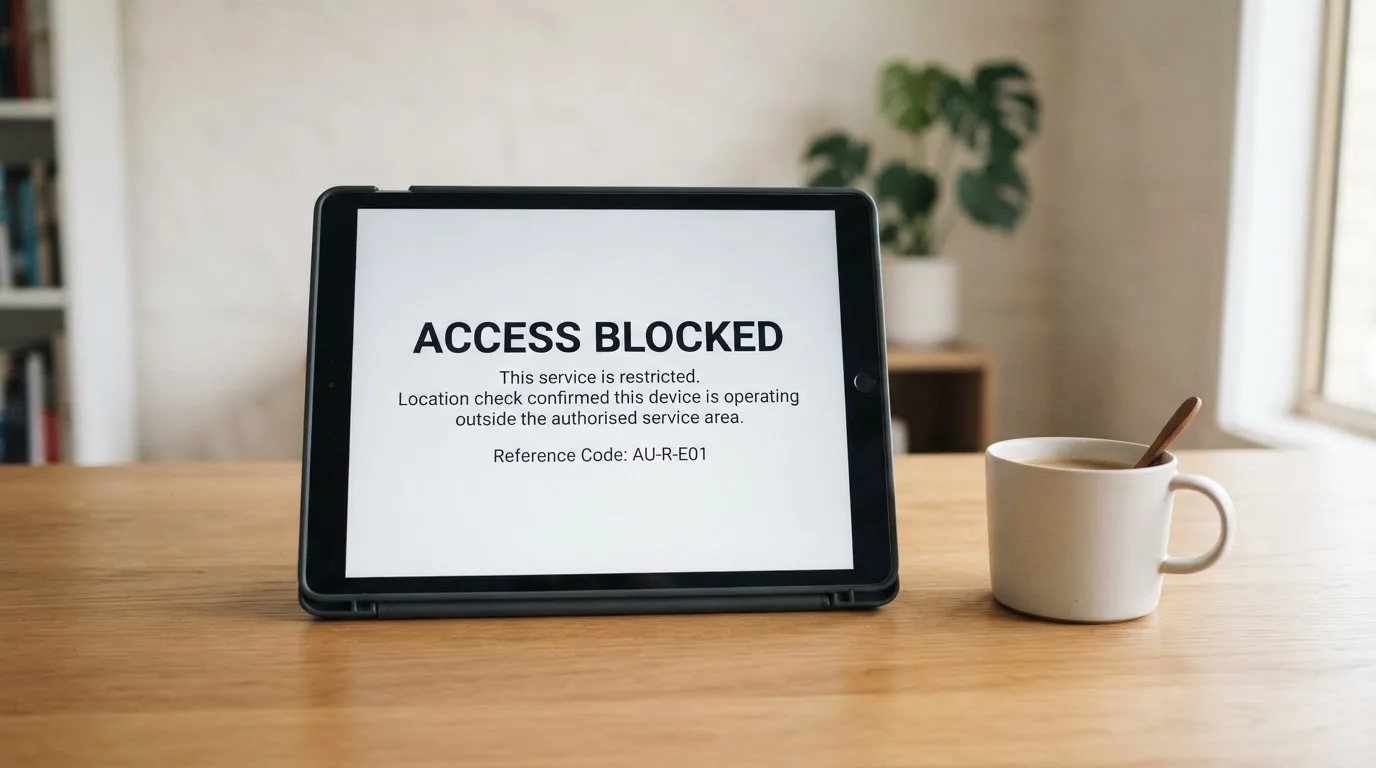
The ACMA has issued a steady run of formal warnings over the past three years to offshore operators offering online casino games to Australians. In May 2022 the ACMA warned Dama N.V. over six brands, including Bambet, Dazard, Level Up, Rocketplay, Wild Tornado and Cobra Casinos. The ACMA issued further formal warnings to Dama N.V. over Woo Casino in March 2025 and Spirit Casino in May 2025. In July 2025 the ACMA warned Bamboo Media over Ignition Casino, and Consolutetish S.R.L. over National Casino and Bizzo Casino, with Bizzo having already been the subject of a 2022 warning to TechSolutions Group. In February 2025 the ACMA warned EOD Code SRL over Instant Casino, and in April 2025 it warned Sterplay Holding Ltd over Casino Intense. In April 2026 the ACMA warned Ryker B.V. over Jackbit and CasinOK, and in March 2026 it warned Pulsup Ltd over RocketPlay. None of these brands can lawfully take an Australian customer’s deposit, and the page includes them so the reader knows what the regulator has actually done, not because any of them is a place to play.
The blocking-round picture
According to the ACMA as reported in June 2026, a total of 1,751 illegal gambling and affiliate marketing websites had been blocked since the first blocking request in November 2019, and more than 230 unlicensed gambling services had left the Australian market since enforcement was strengthened in 2017. In a round reported on 26 June 2026 the ACMA asked Australian internet service providers to block 12 more illegal gambling websites: 7Signs, ChromaBet, Donbet, Duospin, Freshbet, Slots Gem, Jacks Club, Lucky Start, Pointsbetz, Spinrise, Vinyl Casino and Wildsino. The blocking requests are the regulator’s bluntest tool: they ask ISPs to make the listed sites unreachable from Australian IP addresses, which is why the count of 1,751 cumulative blocks is the figure a reader should weigh against any claim an offshore site makes about being “available in Australia”.
What the cumulative block count means
A blocking rate is the cleanest way to put a number on what the regulator has actually done, because it folds several years of enforcement into a single rate a reader can compare to other regulators’ enforcement records. The first blocking request went out in November 2019; the running total of blocked sites reached 1,751 by June 2026. That works out to roughly 265 blocked sites per year on average across the seven-year span, and the rate has held up rather than slowing as the regulator has built its case load and its working relationships with the major Australian ISPs. A reader should treat any offshore site that claims a smooth Australian on-ramp as a working hypothesis, not a fact, and the blocking rate is the reason.
H2 Gambling Capital’s estimate of the offshore market
H2 Gambling Capital’s 2025 report estimates that Australians lose about A$3.9 billion a year to illegal gambling sites, and that the share of gambling going through legal channels fell from 74 percent in 2021 to 64 percent. The dollar figure is the headline number and the legal-channel figure is the trend: even with the ACMA blocking 265 sites a year on average, more money is moving through offshore channels than it did five years ago. That is the part the regulator cannot reach with a blocking request alone, and it is the reason the 2026 reform package focuses on advertising and inducements rather than on the supply side alone.
The 2026 reform package
The Interactive Gambling Amendment (Gambling Reform) Bill 2026 passed Parliament on 19 August 2026; its advertising and inducement measures commence 1 January 2027. The package is law with a start date, not yet in force on a 2026 page, and the practical effect for an Australian punter in the second half of 2026 is that the advertising environment has not yet changed. The first six months of 2027 will be the period when the inducement rules actually bite, and the page will need to be refreshed once that happens.
What this means for the offshore sites on the page
Every brand in the table below has been the subject of an ACMA formal warning, and none of them can lawfully take an Australian customer’s deposit. The page describes them so a reader searching for an offshore alternative to a Geelong pub or club floor has the regulator’s own record in front of them, not because any of them is a sensible option. The table is structured around four matters: the brand as the regulator named it, the ACMA action and the date, the operator the ACMA named, and the subject support this page could verify. The last column is the honest one: most rows carry no verifiable support, because the brand is an offshore operation with no Australian regulatory footprint.
Landscape of licensed venues
| Brand | ACMA action and date | Operator named by the ACMA | Subject support |
|---|---|---|---|
| RocketPlay | Formal warning, March 2026; earlier warning, May 2022 | Pulsup Ltd; earlier Dama N.V. | — |
| Level Up Casino | Formal warning, May 2022 | Dama N.V. | listings-only |
| Woo Casino | Formal warning, March 2025 | Dama N.V. | listings-only |
| Spirit Casino | Formal warning, May 2025 | Dama N.V. | — |
| National Casino | Formal warning, July 2025 | Consolutetish S.R.L. | listings-only |
| Bizzo Casino | Formal warning, July 2025; earlier warning, 2022 | Consolutetish S.R.L.; earlier TechSolutions | — |
| Ignition Casino | Formal warning, July 2025 | Bamboo Media | — |
| Instant Casino | Formal warning, February 2025 | EOD Code SRL | — |
| Jackbit | Formal warning, April 2026 | Ryker B.V. | — |
| Casino Intense | Formal warning, April 2025 | Sterplay Holding Ltd | listings-only |
| Sky Crown | Formal warning, September 2022 | Hollycorn N.V. | listings-only |
A “listings-only” entry in the table means the brand showed up in the public listings and reference sources this page consulted, not that the operator is licensed in Australia or that the page has independently verified any claim the operator makes. An em dash in the support column means the page could not place the brand in any Australian regulatory record beyond the ACMA warning itself.
What an Australian consumer gives up by playing offshore
An offshore site gives no Australian consumer protection, no complaints body a Geelong resident can take a dispute to, and no recourse if a withdrawal is refused. The Interactive Gambling Act 2001 (IGA), strengthened by the Interactive Gambling Amendment Act 2017, makes it an offence to provide online casino games, online pokies or in-play betting to a person in Australia, and the ACMA investigates, issues formal warnings and directs ISPs to block illegal sites. The individual player is not prosecuted, because the IGA targets the provider, but an offshore site can be blocked with a balance still on it, and that is the structural reason to stay on the licensed side.
The Australian legal frame around online casino
What the Interactive Gambling Act prohibits
The Interactive Gambling Act 2001 (IGA), strengthened by the Interactive Gambling Amendment Act 2017, makes it an offence to provide online casino games, online pokies or in-play betting to a person in Australia; no state or territory licences them. What is licensable is wagering on races and sport placed before the event, lotteries and keno, in practice licensed by the Northern Territory through the Northern Territory Racing and Wagering Commission (NTRWC), which regulates 52 of Australia’s online bookmakers including Sportsbet, Bet365 and Ladbrokes, licensed in the Territory for tax reasons. The commission has no full-time staff and meets once a month in Darwin, which is one reason the ACMA has been the more active enforcer of the offshore side.
What the ACMA does
The ACMA investigates complaints, issues formal warnings, and asks Australian ISPs to block illegal sites. The blocking requests have produced 1,751 cumulative blocks since November 2019, and they are the regulator’s bluntest tool. The warning track is the regulator’s sharper one: a formal warning gives the operator a deadline to comply, after which the ACMA can move to civil penalty proceedings in the Federal Court, with potential penalties well into the millions of dollars. The minimum age for any Australian wagering or gaming product is 18.
What an Australian punter can actually use
BetStop, the National Self-Exclusion Register, has been live since August 2023 and binds every Australian-licensed online and phone wagering service, with minimum and maximum exclusion windows a player picks at registration. It does not bind an offshore casino, which is one of the structural gaps a player should know about. The National Gambling Helpline runs on 1800 858 858 and is free, 24/7, with chat at Gambling Help Online.
How a Geelong venue fits the picture
The pub and club floor
A Geelong pub or club gaming floor sits under the Victorian Gambling and Casino Control Commission (VGCCC), which publishes venue-level data on gaming machine numbers, locations and losses for Greater Geelong. The minimum and maximum RTP, the maximum cash payout, the maximum bet per spin, the cashless card rollout status and the trading hours are all facts a player can check before they sit down. A venue that does not display its RTP or that deflects questions about the cashless card status is a venue a player should think twice about.
The casino floor
The casino floor within range of Geelong sits under a separate regulatory regime with a different machine cap, a different bet ceiling and a different compliance regime. Crown Casino in Southbank runs under the Victorian regime and is the closest large casino to Geelong. A player choosing between a pub or club floor and the casino floor is choosing between a different machine mix, a different bet envelope and a different set of responsible-gambling supports, and the right choice depends on what the player actually wants from the session.
Choosing between the options
A player who wants a quiet session on a small bankroll is better served by a club floor with a low machine count and a strict cashless card rollout. A player who wants a long session on a larger bankroll is better served by a late-trading venue or the casino floor. A player who wants to minimise harm is better served by a venue with a strict cashless card and a working self-exclusion arrangement. The shortlist further up the page is structured around these trade-offs, not around a single ranking.
What a Geelong player should check before they sit down
The five-minute checklist
The five-minute checklist before a Geelong session is: the venue’s licence category, the published RTP for the game on the machine they plan to play, the maximum cash payout the venue offers, the trading hours for the gaming floor, and the cashless card rollout status. A player who can answer all five questions before they sit down has the information they need to make a sensible choice. A player who cannot answer them is gambling on the venue’s goodwill rather than on the machine.
What to do if the venue cannot answer
A venue that cannot or will not give a player the RTP for a specific machine is a venue that is operating below the VGCCC’s standard. The first move is to ask a different staff member, the second is to ask for the venue’s gaming manager, and the third is to play at a different venue. The information is the player’s right under the VGCCC’s display requirements, and a venue that does not provide it is signalling something the player should weigh.
What to do if the session goes wrong
The National Gambling Helpline on 1800 858 858 is the first call. Gambling Help Online is the chat side. Financial Counselling Australia on 1800 007 007 helps with the debt side. The Victorian Responsible Gambling Foundation runs the state-level support service and can connect a player to the venue self-exclusion arrangements for the pubs and clubs they actually use. None of these services requires the player to give up their name, and all of them are free.
Frequently asked questions
Which venues in Geelong are licensed to operate pokies?
The licensed pokies venues in Geelong are the pubs, clubs and the casino that hold a current Victorian gaming licence, with venue-level machine numbers and locations published by the VGCCC. The City of Greater Geelong and the Borough of Queenscliffe together had machine numbers well into four figures across the 2024-25 reporting year. A player can ask the VGCCC register for the full list, or ask a specific venue for its licence number before they sit down.
Are pokies in Geelong available around the clock?
Most Geelong pubs and clubs do not run 24-hour gaming, and the trading envelope varies by local planning consent and venue category. The casino floor within range of Geelong runs a much wider envelope than the typical pub or club. A player planning a late-night session should call the specific venue in advance, because the envelope has tightened rather than loosened in recent years.
What identification do venues in Geelong require before letting someone play pokies?
Victorian venues require proof of age for any player who looks under 25, and the cashless card rollout ties play to a verified identity. The minimum age is 18, and a venue that does not check identification on a cashless card play is operating below the standard. A player who cannot produce identification on request is asked to leave the gaming floor.
Can visitors to Geelong use self-exclusion schemes at local pokies venues?
BetStop binds Australian-licensed online and phone wagering services but does not bind a Geelong pub or club gaming floor. State-level exclusion and individual venue self-exclusion arrangements are the mechanisms that reach the gaming floor, and a visitor who wants to be barred from a specific Geelong venue should contact the venue’s gaming manager directly. The Victorian Responsible Gambling Foundation can connect a player to the right scheme.
How does the payout percentage on Geelong pokies compare with other Australian cities?
Victoria’s RTP floor sits in the same band as South Australia and Queensland, and the per-venue loss figure for Greater Geelong runs higher than the Melbourne average in some hospitality suburbs. The statewide annual loss figure of A$3.02 billion in FY22-23 is the headline Victorian number, and the Greater Geelong annual loss figure of $141 million in 2024-25 is the local number. The dollar figure lost rises even when the machine count stays flat.
Table of licensed venues
| Matter | Detail |
|---|---|
| Licensing Authority | VGCCC |
| Minimum Age | 18 |
| Supported Payments | Debit card, bank transfer, PayID/Osko, BPAY |
| Responsible Gambling | BetStop, National Gambling Helpline 1800 858 858 |