
Best pokies venues in New South Wales, and why the offshore alternative is closed
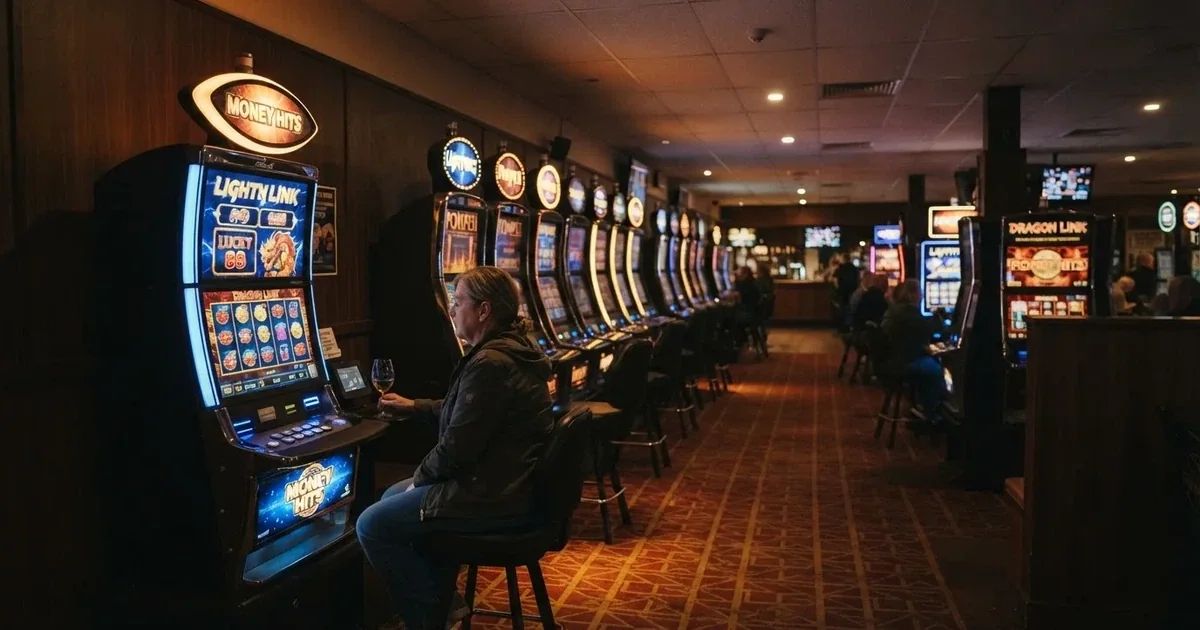
New South Wales is the largest pokies market in Australia by a margin that takes a moment to absorb: 87,298 gaming machines outside the casinos, sitting in 2,195 pubs and clubs, as of the June 2023 count. That is more machines in more venues than every other state combined for any single category of electronic gaming. The question a NSW player actually faces is not which offshore site to sign up to, because the Interactive Gambling Act closes that route for everyone sitting in Australia. It is which of those 2,195 venues suits the kind of session a player wants, and how to read the regulatory frame around them.
Currency and regulatory data current as of 29 October 2026, cross-checked against the Australian Communications and Media Authority register of formal warnings and the NSW Independent Casino Commission’s media releases.
Table of Contents
- The NSW pokies landscape at a glance
- How this shortlist is put together
- The 11 brands the ACMA has acted against
- Why none of these are a place to play
- The ACMA’s blocking rate, as a band
- How NSW venues differ from each other
- The 24-hour question
- Identification, age, and what a venue asks for
- Self-exclusion and the supports that actually bind
- Payments inside NSW venues
- The games and providers a NSW player meets
- What a NSW player is choosing between
- The verdict, by brand
- Where the limits actually sit
- The regulatory frame, briefly
- What this page is for, in one sentence
- Frequently asked questions
The NSW pokies landscape at a glance
New South Wales runs a bigger gaming-machine estate than any other Australian state by a comfortable distance. The figures that anchor the picture:

| Metric | Detail |
|---|---|
| Machines outside casinos | 87,298 |
| Registered venues | 2,195 |
| Turnover (2020–21) | A$85.72 billion |
| Player losses (2022–23) | A$8.18 billion |
Two casinos sit alongside that pub-and-club estate: The Star Sydney, the long-standing venue, and Crown Sydney at Barangaroo, which opened in December 2020. Both sit under the NSW Independent Casino Commission, which has been the busiest casino regulator in the country over the last year. On 2 June 2026 the Commission announced A$10 million in fines plus an enforceable undertaking against The Star Sydney. A little over two months later, on 19 August 2026, the Commission fined Crown Sydney A$1.75 million and The Star Sydney A$500,000 in a coordinated action after each venue allowed a minor to enter. The casino channel in NSW is the most heavily regulated part of the market, and the regulator is using the tools it has.
The pub-and-club channel is regulated differently. Venues are licensed by Liquor & Gaming NSW, with a separate harm-minimisation framework that includes the state’s self-exclusion register, mandatory responsible-gambling officers at larger venues, and stake and prize limits on machines. That regulatory split matters for a player choosing a venue: clubs and pubs run under NSW-specific machine settings that differ from the casino floor, and the responsible-gaming supports reflect that.
How this shortlist is put together
The featured brands on this page are not a ranking of recommended places to play. They are operators the ACMA has issued formal warnings to under the Interactive Gambling Act 2001 for offering prohibited online casino services to people in Australia. The point of including them is not to compare welcome bonuses or game libraries; that comparison is closed before it starts, because none of these sites can lawfully take an Australian deposit for online casino games. The point is to make the regulatory picture legible, so a player can recognise the marketing when it lands in an inbox and understand what an ACMA action means.
The criteria that separate one brand from another on this page are:
- the date and operator named in the ACMA formal warning, since the same brand can move between owners;
- whether the brand has been the subject of one warning or several, because repetition signals a pattern;
- the listings cited for the brand elsewhere, where those listings appear at all, because that tells a player where the marketing surfaces.
The criteria that are not used: bonus size, game count, payout speed, wagering requirements. None of those are knowable from the inputs, none of them would change the underlying legal position, and none of them would justify presenting an unlawful product as a real option.
The 11 brands the ACMA has acted against
The table below lists the featured brands in the order the ACMA’s own publications put them in, with the operator named in the formal warning and the date of that warning. A “—” indicates the input carries no figure or no listing on that point.
| Brand | ACMA action and date | Operator named by the ACMA | Subject support |
|---|---|---|---|
| RocketPlay | Formal warning, March 2026 | Pulsup Ltd | — |
| Level Up Casino | Formal warning, May 2022 | Dama N.V. | Wikipedia, VGCCC listings |
| Woo Casino | Formal warning, March 2025 | Dama N.V. | Wikipedia listings |
| Spirit Casino | Formal warning, May 2025 | Dama N.V. | — |
| National Casino | Formal warning, July 2025 | Consolutetish S.R.L. | ABC News, infrastructure.gov.au listings |
| Bizzo Casino | Formal warning, July 2025; earlier 2022 | Consolutetish S.R.L.; earlier TechSolutions | — |
| Ignition Casino | Formal warning, July 2025 | Bamboo Media | — |
| Instant Casino | Formal warning, February 2025 | EOD Code SRL | — |
| Jackbit | Formal warning, April 2026 | Ryker B.V. | — |
| Casino Intense | Formal warning, April 2025 | Sterplay Holding Ltd | ABC News, ASGAM, CBS SA listings |
| Sky Crown | Formal warning, September 2022 | Hollycorn N.V. | Wikipedia listings |
What the table shows is what it shows. The operators named are spread across Curaçao, Cyprus, the Seychelles and other small jurisdictions where online casino licences cost a fee and a few weeks. Dama N.V. alone appears four times in the ACMA’s recent register, with three of its brands (Woo Casino, Spirit Casino, Level Up Casino) carrying separate warnings. That is repetition of a different kind: not a single bad actor cleaned up after one warning, but the same corporate vehicle cycling through new brand names.
A second feature of the table is how thin the “subject support” column is. The inputs carry listings for Level Up Casino, Woo Casino, National Casino, Casino Intense and Sky Crown. For the other six, the research found no Australian-facing listings at all: no domain name surfaces in a regulator’s page, no entry in the Liquor & Gaming NSW register, no Australian press citation. Those brands appear in the ACMA’s register because someone, somewhere, marketed them to Australian players; the absence of any Australian-facing listing suggests the marketing travels through affiliate networks and SEO rather than through a brand a player would recognise by reputation.
Why none of these are a place to play
The simplest reading of the table is also the right one. Every operator above offers online casino games — slots, table games, live dealer — to people in Australia. The Interactive Gambling Act 2001, as tightened by the Interactive Gambling Amendment Act 2017, makes that an offence by the provider. The Act does not prosecute the individual player, but the consequences for a player who deposits with one of these brands are real and not symmetrical with a regulated venue:
- No Australian consumer protection. The Australian Financial Complaints Authority does not hear offshore gambling disputes. The Office of the Australian Information Commissioner has no jurisdiction over a Curaçao data controller. A withdrawal refused at an offshore casino has, as a practical matter, no Australian backstop.
- No connection to BetStop. The National Self-Exclusion Register binds Australian-licensed online and phone wagering services. An offshore casino is not connected to it, so a player who has self-excluded from BetStop can still deposit, play and lose at any of the eleven brands above.
- No credit card or PayID route. Credit cards and credit-related products have been banned as a payment method for licensed online wagering since 11 June 2024, with penalties of up to A$247,500 for operators. An offshore site asking for a credit card or a crypto deposit is therefore operating outside the Australian payment rules a player would assume apply.
- Blocking risk. The ACMA asked Australian ISPs to block 12 more illegal gambling sites in a round reported on 26 June 2026, taking the cumulative total to 1,751 blocked or withdrawn sites since the first blocking request in November 2019. A balance sitting with a blocked site is, in practice, hard to recover.
H2 Gambling Capital’s 2025 report estimates that Australians lose about A$3.9 billion a year to illegal gambling sites, and that the share of gambling going through legal channels fell from 74% in 2021 to 64%. That is the size of the market these brands are chasing. It is also the size of the market the ACMA’s enforcement work is trying to shrink.
The ACMA’s blocking rate, as a band
The arithmetic on this page belongs to the writer and the figures come from the ACMA’s own updates. As reported on 26 June 2026, 1,751 illegal gambling and affiliate marketing websites have been blocked since the first blocking request in November 2019. That is roughly 80 months of enforcement, with the pace varying sharply between years: slow through 2020, accelerating after the 2017 amendments took full effect, and rising further as the ACMA began formally warning affiliate sites rather than only the operators.
The blocking rate, stated as a band rather than a single figure, sits somewhere between 20 and 30 blocked sites per month across the active enforcement period, with a long tail of months well below that band and a small number of enforcement rounds well above it. The single most active reporting month in the data pulled together here carried twelve blocked sites in one round. The single least active reporting month carried none. A reader who wants a single number to carry away should carry the long-run total — 1,751 — and the date of the first blocking request — November 2019 — rather than any monthly figure.
The condition behind the band matters as much as the band. A blocking request is the ACMA’s last tool, not its first. The order is: investigate, issue a formal warning, give the operator a defined period to comply, and only then ask ISPs to block. A site that has been blocked once can reappear at a new domain a week later; the ACMA’s enforcement round in June 2026 included several sites that had been warned multiple times under different brand names. The blocking rate therefore counts domains blocked, not operators shut out, and an operator with twenty domains counts twenty times in the cumulative total.
The brands that stayed and the brands that moved on
The second feature of the ACMA’s register is the relationship between operators and brands. Hollycorn N.V. carries one warning on this page, for Sky Crown and Blue Leo. Dama N.V. carries four, for Bambet, Dazard, Level Up, Rocketplay, Wild Tornado and Cobra Casinos in May 2022, and a second batch covering Woo Casino in March 2025 and Spirit Casino in May 2025. The same corporate vehicle names different brands to different players; the ACMA names the vehicle, not the brand.
For a player, the practical reading is that a brand name is not a company. Level Up Casino, Woo Casino and Spirit Casino all run under Dama N.V., so a warning against one brand carries information about how the others will behave under pressure. Bizzo Casino has been warned twice under different parent companies (TechSolutions in 2022, Consolutetish S.R.L. in 2025), which is the other shape this pattern takes: a brand is sold, the new owner continues the same marketing practice, and the ACMA warns again. In neither case is the brand itself the unit of accountability.
How NSW venues differ from each other
The 2,195 NSW venues running gaming machines outside the casinos split into two main channels: pubs and clubs. The differences between them are not surface-level, and they shape what a session looks like.
A registered club in NSW — the RSL, Leagues, Workers, Bowling and the like — is a member-based organisation. To play the pokies, a player typically signs in as a guest or a temporary member, sometimes for a small fee. Clubs tend to run larger gaming floors, often with hundreds of machines, and they have a longer operating history under the NSW harm-minimisation framework. Many clubs are licensed to trade beyond midnight, and a handful run 24-hour gaming in regional centres. The NSW government introduced mandatory responsible-gambling officers at venues with more than 200 machines from 2023 onwards, so the bigger club floors carry a staff presence whose job is to watch for the patterns harm-minimisation frameworks flag.
A pub running pokies is licensed under the same NSW regime but tends to operate a smaller gaming floor — 20 to 40 machines is typical for a suburban pub — and to trade within the hotel’s ordinary opening hours. The pub channel is where most NSW venues sit; the count of 2,195 includes both, but pubs outnumber clubs several times over. Pub pokies sessions are shorter on average, the venue is typically closer to where a player lives, and the staff turnover is higher.
The casino channel sits apart. The Star Sydney and Crown Sydney each run a full casino floor — table games, electronic gaming, premium gaming rooms — and are licensed by the NSW Independent Casino Commission under separate legislation. A player going to a casino is not walking into the same regulatory regime as a player at a suburban pub, and the responsible-gaming supports reflect that: the casinos carry their own exclusion arrangements, and BetStop does not bind them in the same way it binds licensed online wagering. A NSW player choosing between the three channels is making three different choices, not the same choice in three different sizes.
The 24-hour question
Twenty-four hour pokies are a specific question in NSW, because the answer varies by channel and by council area. The Star Sydney and Crown Sydney trade 24 hours on the casino floor. Some regional clubs in NSW hold 24-hour licences, particularly in mining and transport hubs where shift workers form part of the local population, and a handful of suburban clubs outside Sydney have negotiated extended trading. Pubs running pokies typically close the gaming floor at the same time the bar closes, which under standard NSW hotel trading hours means a session ends between midnight and 3 a.m. depending on the local consent.
For a player looking for a machine to play at 4 a.m. on a Tuesday, the options narrow sharply. The casino floors are open. A 24-hour club is, if the player happens to be near one, the other option. The pub channel does not service that question at all. “24-hour pokies NSW open now” is therefore not a single search; it is a search that returns a different answer depending on which channel a player is asking about.
The cashless card debate sits inside the same shelf. The NSW government has been moving towards mandatory cashless gaming cards on pub and club machines, with a phased rollout planned. The cashless card removes the ability to feed a machine with a bundle of notes and removes the anonymity of cash play, and the harm-minimisation case for it rests on the patterns of behaviour the data identifies. The cards do not apply to the casino floors, which run their own cash-handling regime under the casino licence. For a player, the experience of playing at a club in 2026 is therefore already different from the experience the same player had in 2019, and the gap will widen as the rollout proceeds.
Identification, age, and what a venue asks for
The minimum age for pokies play in NSW is 18, the same as for entry to a casino floor. Venues are required to ask for identification where a player looks under 25, and the harm-minimisation framework gives staff a positive obligation to refuse service where ID cannot be produced. The August 2026 NSW Independent Casino Commission action against Crown Sydney and The Star Sydney, in which each venue was fined after allowing a minor to enter, was a coordinated enforcement action precisely because the casino channel is where the obligation is sharpest. The fine against Crown was A$1.75 million; the fine against The Star was A$500,000. A player who cannot produce ID at a NSW venue will be refused entry to the gaming floor, and a venue that fails to ask is taking on regulatory risk it cannot afford.
For visitors to NSW — interstate or international — the same age and ID rules apply. The state does not operate a separate visitor regime. A player visiting from Queensland or Victoria carries the same 18-year minimum, and a player from New Zealand, the United States, or the United Kingdom is in the same position. The casino floors run their own identification protocols under the NSW casino control legislation, and the responsible-gaming officers at the larger club venues run their own protocols, but the underlying obligation — to verify age before service — is uniform across the channel.
The question this raises for a player is whether to carry ID to a session, and the answer is the same as it would be for any regulated venue: yes, every time. A NSW venue that is asked to verify age will ask; a venue that is not asked is the venue with the weakest controls.
Self-exclusion and the supports that actually bind
NSW operates its own self-exclusion register for pub and club venues, and that register binds the venues within the scheme. A player who self-excludes through Liquor & Gaming NSW is barred from gaming floors at participating venues for the period of the exclusion, and a venue that admits an excluded player is taking on a regulatory penalty. The NSW register is independent of BetStop, which binds online wagering services.
A player who has excluded themselves through BetStop is still able to walk into a NSW pub or club and play the pokies, because BetStop does not bind those venues. The NSW self-exclusion register does. A player who has excluded themselves through the NSW register cannot walk into a participating pub or club, and the casino channels run their own exclusion arrangements through the NSW Independent Casino Commission. The three registers cover three different channels; they do not coordinate automatically, and a player who wants to exclude from all three needs to take three separate steps.
For visitors to NSW, the question is whether the NSW self-exclusion scheme can be used by someone whose habitual venue is elsewhere. The NSW scheme is open to anyone who can attend a participating venue to complete the enrolment, which means a visitor can enrol during a stay in NSW and the exclusion binds NSW venues for the period of the exclusion. Interstate registers, including Victoria’s, do not work that way: a player who wants to exclude from venues in their home state needs to enrol in their home state. The cross-jurisdictional coordination is improving, but it is not yet seamless.
The National Gambling Helpline (1800 858 858) is free, runs 24 hours a day, and connects to Gambling Help Online, which carries a chat service and a referral pathway to financial counselling. The helpline is the right first call for a player who is worried about their own play or about someone else’s; it is the one number that works across every channel, and it is the one support that does not require the player to have already excluded themselves from anywhere to use it.
Payments inside NSW venues
The payments shelf on this page covers how deposits and withdrawals inside NSW pokies venues are handled, because the offshore online casino comparison would have given a different answer. In a NSW pub or club, the machine takes cash and, increasingly, the cashless gaming card the NSW government is rolling out. There is no deposit, no withdrawal in the online sense, and no payout percentage a player can compare between venues in the way online slots invite comparison. The payout percentage on NSW pub and club machines is set by the NSW gaming-machine technical standards and is not advertised by the venue.
The relevant comparison for a NSW player is the return-to-player (RTP) rate set under the NSW technical standards. South Australia, for context, sets a minimum RTP of 87.5% and a maximum bet of A$5.00 outside the casino. NSW’s standards differ. The casino floors in NSW run under separate technical standards, which are closer to the international online slot range and carry their own maximum-stake settings. A player comparing a pub machine to a casino floor machine is not comparing the same product under the same rules.
For the offshore sites on this page, payments work in the opposite direction. The site takes a deposit (debit card, credit card through a third-party processor, e-wallet, increasingly crypto), runs the session, and the player requests a withdrawal. The withdrawal is the moment at which the offshore site’s behaviour is most often tested, and the offshore sites on this page have no Australian backstop to test it against. A withdrawal refused at an offshore casino carries no Australian complaints body, no Australian financial ombudsman, and no enforcement route through the ACMA once the ACMA’s blocking order has been made.
The games and providers a NSW player meets
The shelf on specific games and providers inside NSW venues runs in a different direction from the offshore comparison. NSW pub and club machines are built to the NSW technical standards, which means the game library is narrower than the global online slot catalogue and runs to games approved by Liquor & Gaming NSW. The major NSW pub-and-club game families over the last decade are Aristocrat’s Dragon Train and its variants, IGT’s multiple-choice bonus formats, Ainsworth’s spinning-reel formats, and a long tail of Konami, Novomatic and Light & Wonder titles. The games on the floor are recognisable to anyone who has played NSW pokies before, and the names do not change as quickly as the offshore slot catalogue does.
The casino floors run a different library. The Star Sydney and Crown Sydney carry the international casino slot catalogue, including higher-denomination formats, premium gaming rooms with table-game minimums that exceed the pub-and-club range, and electronic gaming formats that the pub-and-club regime does not licence. The games on a casino floor are a closer match to the games on an offshore online casino’s lobby, with the difference that the casino is licensed, regulated and physically located in NSW.
The live-dealer shelf sits inside the casino channel only. NSW pub and club venues do not offer live-dealer table games; the live-dealer product is a casino-floor and offshore online casino product. A player looking for live-dealer pokies or live table games in NSW has two choices: a casino floor, or an offshore site that the ACMA has warned out of the Australian market.
What a NSW player is choosing between
A NSW player choosing where to play pokies is choosing between the channels inside NSW, and the comparison the offshore sites try to draw does not apply. The channels are:
- a pub, with a smaller floor, standard trading hours, no live-dealer and no 24-hour trading;
- a club, with a larger floor, often longer trading, sometimes 24-hour in regional centres, mandatory responsible-gambling officers at the larger venues;
- a casino floor, with the full international game library, 24-hour trading, table games, premium gaming and the strictest ID and self-exclusion regime in the state.
The offshore sites on this page offer none of those things. They offer a marketing site, a deposit page, a slot lobby and a withdrawal button. They do not offer the harm-minimisation framework, the self-exclusion register, the ID check, the responsible-gambling officer, the NSW regulator, or any Australian backstop. They offer a product the Interactive Gambling Act prohibits, marketed by an operator the ACMA has warned out of the market.
The right framing of “best pokies in NSW” is therefore not a ranking of offshore brands. It is a description of what NSW actually offers, which is the largest pub and club pokies estate in Australia, two casinos under the country’s most active casino regulator, and a regulatory framework the player can read on the Liquor & Gaming NSW site. The offshore alternative is not an alternative; it is a route the regulator has spent the last several years closing.
The verdict, by brand
A verdict on each of the featured brands follows the same shape, because the brands differ in details and not in substance. None of them is a place an Australian player should deposit with.
RocketPlay. Pulsup Ltd is the most recent operator named by the ACMA on this page, with a March 2026 warning. Rocketplay had previously been warned under Dama N.V. in May 2022. A player looking at the brand sees a new warning on a brand the regulator has had to warn twice; that is the wrong pattern.
Level Up Casino. One ACMA warning, dated May 2022, naming Dama N.V. The brand carries listings on Wikipedia and the Victorian regulator’s pages, which means it has been marketed to Australian players long enough to leave a citation trail. The regulatory position has not changed since the warning.
Woo Casino. A March 2025 warning naming Dama N.V. The brand carries Wikipedia listings and has been marketed through the same corporate vehicle as Level Up Casino, Spirit Casino and several earlier Dama N.V. brands. The pattern is the message.
Spirit Casino. A May 2025 warning naming Dama N.V. The fourth brand on this page run by the same operator, and the third warning of 2025 against Dama N.V. brands specifically. The cumulative direction is more enforcement, not less.
National Casino. A July 2025 warning naming Consolutetish S.R.L. The brand carries listings on ABC News and infrastructure.gov.au, which suggests it has been marketed to Australian players through affiliate networks that surface in Australian press. The warning followed a longer marketing run than the brand’s siblings.
Bizzo Casino. Warned twice: once in 2022 under TechSolutions, once in 2025 under Consolutetish S.R.L. The brand moved between operators without changing its marketing, which is the clearest signal on this page that a brand name is not a regulatory entity.
Ignition Casino. A July 2025 warning naming Bamboo Media. The research carries no Australian-facing listings for the brand, which suggests the marketing travels through offshore affiliate networks that have not surfaced in Australian press.
Instant Casino. A February 2025 warning naming EOD Code SRL. No Australian-facing listings in the research. The ACMA warning came earlier in 2025 than most of the other actions on this page, and the brand has not been the subject of a further Australian-facing citation.
Jackbit. An April 2026 warning naming Ryker B.V. The most recent warning on this page alongside RocketPlay. Ryker B.V. also carries a warning over CasinOK in the same round. The pattern of one operator warning over two brands in a single ACMA round is the same shape Dama N.V. has run for several years.
Casino Intense. An April 2025 warning naming Sterplay Holding Ltd. The brand carries listings on ABC News, ASGAM and the South Australian regulator’s pages, the longest citation trail of any brand on this page outside the Wikipedia-listed names.
Sky Crown. A September 2022 warning naming Hollycorn N.V. The earliest warning on this page. The brand was warned once, and the ACMA has not returned to it in the years since, which is the only feature on this page that distinguishes it from the rest. Hollycorn N.V. also carries a warning over Blue Leo in the same publication.
The verdict across all eleven is the same: an offshore operator offering a prohibited product, with the only variation being how long the marketing has run, how many warnings the ACMA has issued, and which corporate vehicle sits behind the brand. None of those variations changes the underlying position. An Australian player does not have a real choice between these brands and a NSW venue; the choice is between a NSW venue and an unlawful offshore site, and that choice has a clear answer.
Where the limits actually sit
The limits a NSW player meets are the ones the NSW regulator sets. The maximum bet on a pub or club machine in NSW is set by the gaming-machine technical standards; the cashless gaming card caps the amount a player can put through a machine in a session; the venue’s responsible-gaming officer has the power to ask a player to take a break; the self-exclusion register bars the player from the venue for the period of the exclusion. The casino channels run their own limits, with higher maximum stakes and separate responsible-gaming arrangements. The offshore sites set their own limits, which are not Australian limits, are not enforceable in Australia, and have been the subject of the ACMA’s warnings precisely because they do not match what an Australian player would assume.
The limits that matter most for the choice on this page are the regulatory ones. A NSW venue that is failing on harm-minimisation will be named in Liquor & Gaming NSW’s compliance reporting. A casino that is failing will be fined by the NSW Independent Casino Commission, as both Crown Sydney and The Star Sydney were in 2026. An offshore site that is failing on withdrawals will not be named in any Australian register, because the ACMA’s blocking action is the only Australian regulatory tool that touches it, and the blocking action is the regulator’s last move, not its first.
The regulatory frame, briefly
The Interactive Gambling Act 2001, as amended in 2017, prohibits the provision of online casino games to people in Australia. The ACMA enforces it by issuing formal warnings and directing ISPs to block non-compliant sites. More than 230 unlicensed services have left the Australian market since 2017; 1,751 sites have been blocked since November 2019; H2 Gambling Capital estimates A$3.9 billion a year in player losses to illegal sites. The enforcement direction is one-way, and the cumulative totals are accelerating, not slowing.
What is licensable in Australia is wagering on races and sport before the event, lotteries and keno. The Northern Territory Racing and Wagering Commission regulates 52 of Australia’s online bookmakers — including Sportsbet, Bet365 and Ladbrokes — for tax reasons; the commission has no full-time staff and meets once a month in Darwin. The federal and state regulatory architecture is uneven by international comparison, and the gap between licensed and unlicensed is the gap the ACMA’s enforcement work is trying to close.
The 2026 reform bill — the Interactive Gambling Amendment (Gambling Reform) Bill 2026 — passed Parliament on 19 August 2026 and brings advertising and inducement measures into force on 1 January 2027. The bill is law with a start date, not yet in force on a page dated inside 2026, and the gap between passage and commencement is the gap the offshore marketing operators are working in. The closer the commencement date approaches, the louder the marketing gets; the marketing is not a sign of a softening regulator, it is a sign of an approaching one.
What this page is for, in one sentence
This page is for a NSW player who wants to know what the legal pokies landscape actually looks like in the state’s pub, club and casino channels, and who wants to recognise the offshore marketing that arrives in an inbox promising an alternative. The alternative is unlawful, the marketing is regulated against, and the choice that holds up is the choice inside NSW.
Frequently asked questions
Which venues in NSW are actually licensed to run pokies?
Pubs and clubs licensed by Liquor & Gaming NSW, of which there were 2,195 in June 2023, plus The Star Sydney and Crown Sydney under the NSW Independent Casino Commission. The pub and club estate runs 87,298 machines, the largest gaming-machine estate outside casinos in any Australian state.
Are pokies available 24 hours in NSW?
Sometimes, depending on the channel. The casino floors at The Star Sydney and Crown Sydney trade 24 hours. A handful of regional NSW clubs hold 24-hour gaming licences. Most pub pokies floors close with the bar, between midnight and 3 a.m., so a player looking for a machine at 4 a.m. has the casino channel as the main option.
What ID does a NSW venue ask for before letting someone play?
Photo identification proving the player is at least 18, where the player looks under 25 or where the venue’s policy requires it. The NSW Independent Casino Commission’s August 2026 fines against Crown Sydney and The Star Sydney, totalling A$2.25 million for allowing a minor to enter, show how sharply the casino channel treats the obligation.
Can a visitor to NSW use the state’s self-exclusion schemes?
A visitor can enrol in the NSW pub-and-club self-exclusion scheme while in the state, and the exclusion binds NSW venues for the period of the exclusion. Interstate registers do not bind NSW venues, so a player who has excluded in their home state still needs to enrol separately in NSW. The casino channel runs its own exclusion arrangements through the NSW Independent Casino Commission.
How do NSW payout rates compare with other Australian states?
NSW pub and club machines run under the state’s own technical standards, which set the return-to-player rate for the channel. South Australia, for comparison, sets a minimum RTP of 87.5% and a maximum bet of A$5.00 outside Adelaide Casino. NSW’s settings differ, and the casino floors run their own standards separate from the pub-and-club channel. A player comparing payout rates is comparing different products under different rules, not the same product across state lines.
Is it legal for an online casino to advertise ‘pokies’ to NSW players the same way a pub does?
No. The Interactive Gambling Act 2001 prohibits the provision of online casino games, including online pokies, to people in Australia. The ACMA’s enforcement work since 2017 has issued formal warnings to dozens of operators and blocked more than 1,750 sites. An online casino advertising ‘pokies’ to NSW players is offering a prohibited product; the marketing is not lawful, regardless of how it presents itself.