
Best Pokies in Sydney: Licensed Venues, the Numbers Behind the Spin, and the Offshore Sites the ACMA Has Acted Against
29 October 2026 · verified against the ACMA’s formal-warning register and Liquor & Gaming NSW’s venue data.
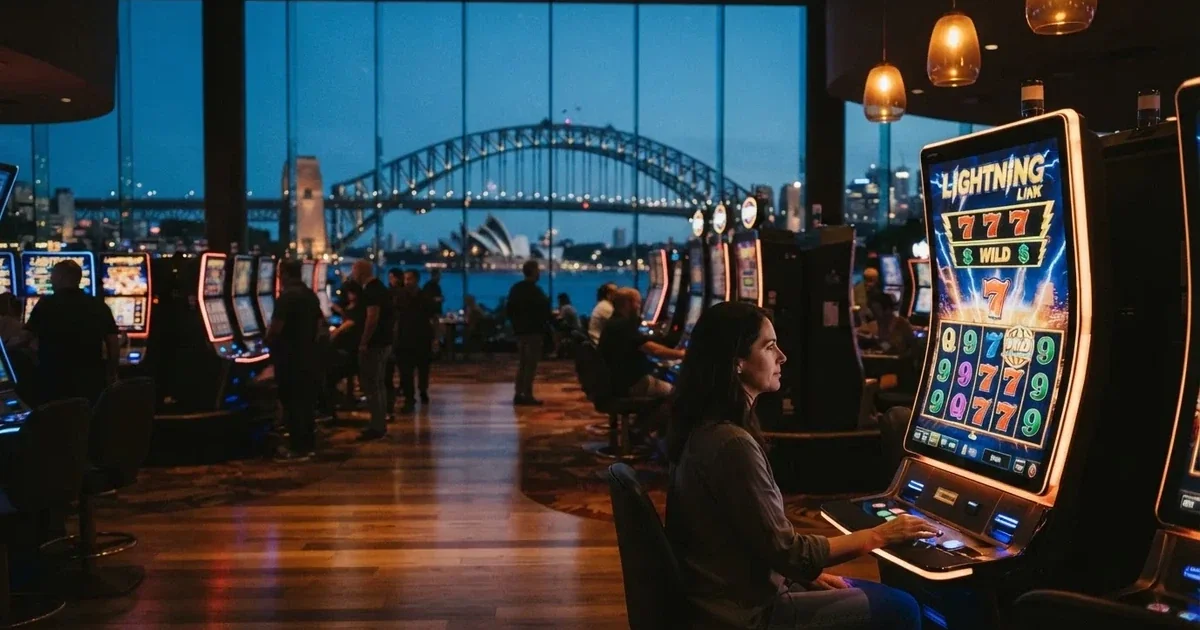
A person who types “best pokies in Sydney” into a search bar in 2026 is, more often than not, asking a question that the internet is poorly set up to answer honestly. The honest answer sits on the ground, inside two licensed casino floors and a network of more than two thousand pubs and clubs across New South Wales. The dishonest one sits offshore, on servers in Curaçao and Cyprus, dressed up in Australian slang, advertising “real money pokies Sydney” to anyone whose IP address lands in the country. This page covers both: where a person in Sydney can lawfully sit at a machine today, what those machines are required to pay back, and what the regulator has been doing about the offshore sites that copy the marketing.
Table of Contents
- Paytables, Return Rates and the Pace of a Spin
- Crown Sydney, The Star and the Casino Floors Next to Them
- How the NSW Pub and Club Network Stacks Up
- What the ACMA Has Done About Offshore Sites Calling Themselves Pokies
- Online Pokies Versus the Real Thing
- The Offshore Brands the ACMA Has Acted Against
- How to Read the ACMA Action Against Each Brand
- The Responsible-Gambling Floor
- What the Costs Actually Look Like Across a Year
- Comparing Sydney to the Other Capital-City Casino Floors
- How to Tell a Reputable Sydney Venue From a Marketing Page
- The 2026 Picture, in Three Numbers
- What the 2026 Page Has Settled
- The Practical Floor for the Player
- Frequently Asked Questions About Pokies in Sydney
Paytables, Return Rates and the Pace of a Spin
What a Pokies Paytable Actually Promises
Every electronic gaming machine in an Australian venue runs off a published return-to-player rate, a percentage figure that says how much of every dollar wagered the machine is programmed to return over the long run. NSW does not impose a single statewide minimum RTP across all venues the way South Australia does with its 87.5% floor for non-casino machines. Instead, individual venues and machine manufacturers sit down with the configuration, and the result is a paytable that the gambler can read on the machine itself, normally tucked into the help menu alongside the rules screen and the volatility rating. Crown Sydney and The Star Sydney publish return-to-player figures in line with the broader Australian casino market, where table games commonly sit between 95% and 99% and electronic gaming machines on the main floor tend to cluster lower. The figure that matters is not the headline number; it is the gap between the published rate and 100%, because that gap is the venue’s edge, and the venue’s edge is what you are paying for the privilege of sitting down.

Why a 90% Rate and a 96% Rate Are Not Just 6 Points Apart
A machine returning 90 cents on the dollar to the player base and a machine returning 96 cents on the dollar look, on a brochure, like a six-point difference. Over an evening, they are not. On a $1 machine played at three spins a minute for two hours, the first machine asks the player base for about $36 in edge; the second asks for about $14.4 in edge. The lower-rate machine does not feel slower on any given spin; it just collects more, on average, over the same time. Punters who treat the paytable as a curiosity are entitled to do so. Punters who want to know what an evening costs them need to do the multiplication themselves, because the venue does not do it for them. The reputable venues on Sydney’s harbourfront, like the clubs in Parramatta and the CBD pubs with their own gaming rooms, will tell you what the rate is on request; the offshore sites advertising the same word in their URLs will not, because their paytables sit on servers that the Australian regulator does not reach.
In April 2026 the ACMA issued a formal warning to Ryker B.V. over Jackbit and CasinOK.
The Settlement Question: When Winnings Actually Hit the Account
Inside an Australian casino floor, the settlement question does not arise. A player cashes out at the cage, the cashier counts the notes, and the transaction ends before the player has crossed the lobby. Online, the settlement question is the one that decides whether a site is safe to use. Australian-licensed online wagering, which is restricted to racing, sport and lotteries, is bound by Australian financial-conduct rules and by the consumer-protection regime that accompanies a local licence. Offshore online casinos are bound by nothing of the kind. The Interactive Gambling Act 2001 does not target the player, but it gives the player no Australian recourse if the operator refuses a withdrawal, drags a KYC check across several weeks, or disappears altogether. The single most informative thing a punter can ask about an offshore “pokies” site is not what its welcome offer is; it is whether anyone has ever successfully withdrawn a large balance, and how long it took, and the answer to that question is almost never findable on the site itself. A person who finds the answer in a third-party review should treat the review as marketing until proven otherwise, because the marketing is what runs the affiliate pages.
Crown Sydney, The Star and the Casino Floors Next to Them
Crown Sydney at Barangaroo
Crown Sydney opened in December 2020 as part of the Barangaroo tower, a 75-floor building that became the tallest in the city once the spire was finished. The casino itself sits inside the integrated resort on the lower floors of the same building, licensed and supervised by Liquor & Gaming NSW under the state’s casino framework. It runs a floor of table games and electronic gaming machines that is smaller than the floors at Crown Melbourne but considerably more visible, set behind glass walls facing the harbour. Crown Sydney’s electronic machines carry the same general Australian-market paytable structure as the rest of the Crown network, and the venue is the only place in the Sydney CBD where a person can sit at a casino-licensed electronic machine without crossing a bridge or catching a train. Visitors who want a harbourfront setting, a hotel on site, and a regulatory framework that the NSW Independent Casino Commission oversees will find it here.
The Star Sydney in Pyrmont
The Star Sydney sits across the harbour from the CBD, in Pyrmont, and has for most of its operating life been the larger of Sydney’s two casino complexes, with two gaming floors, more than 350 hotel rooms and the Sydney Lyric theatre attached. It carries a more complicated recent history than Crown Sydney. In September 2022 the NSW Independent Casino Commission formally found The Star Entertainment Group unsuitable to hold the casino licence, an adverse finding that flowed from conduct the regulator connected to anti-money-laundering and governance failures. The commission fined the operator A$100 million in October 2022, suspended the licence and put the operations under a government-appointed special manager, with that supervision extending through at least September 2025. In February 2025, ASIC sued several former Star directors over the same conduct. The venue has continued to operate under supervision through that period, but the regulatory cloud is not historical: it is the current state of affairs, and a punter weighing up where to play is entitled to know that the casino they are walking into is currently being run on terms set by a special manager appointed by the state, not by the company’s own board.
Adelaide Casino and the South Australian Comparison
Adelaide Casino, operated by SkyCity Entertainment Group, sits inside the heritage-listed railway station on North Terrace and is the only casino licensed in South Australia. It runs 90 gaming tables and 950 gaming machines, and it carries a regulatory framework that is worth comparing to NSW because the figures are published and the contrasts are sharp. South Australia imposes a minimum 87.5% return-to-player rate on non-casino gaming machines and a general maximum bet of A$5.00 outside the casino; Adelaide Casino itself has no maximum-bet limit. The two regimes are designed to do different things, and a Sydney player who looks at Adelaide’s published rates will not find a perfect comparison, because Sydney’s two casino floors are governed by NSW’s casino-specific rules rather than by a single statewide machine floor.
How the NSW Pub and Club Network Stacks Up
The Numbers Behind the Suburb-Level Map
The headline figure for NSW’s non-casino gaming machine footprint sits at 87,298 machines in 2,195 venues as of June 2023, drawn from Liquor & Gaming NSW’s venue data. The A$8.18 billion in annual player losses that the same sources record across poker machines outside NSW casinos in FY22-23, against an adult population that puts per-capita losses at roughly A$986, frames the scale of the activity that sits beneath the two casino floors. A person who lives in Parramatta, Liverpool, Campbelltown, Penrith or anywhere along the rail corridor west of the harbour does not need to catch a train to find a machine. They need to walk into the local pub. The pub will have a dedicated gaming room, often signed at the door with the venue’s responsible-gambling officer’s name and a helpline number, and the machines inside will be running under the same Liquor & Gaming NSW framework that governs every other hotel and club in the state.
Why Two Casinos, Two Thousand Clubs, and One Regulatory Floor
The two casino floors are not licensed because they are more dangerous than the pubs; they are licensed because the Casino Control Act sets a separate regime for what the law calls “the casino product,” with separate anti-money-laundering obligations, separate harm-minimisation requirements and a separate tax take that flows back to the state. The pubs and clubs carry the broader footprint, and the broader footprint carries most of the losses. Pubs and clubs in NSW are not, contrary to a popular impression, free-for-all venues. Each carries a gaming-machine entitlement, an enforceable harm-minimisation plan, a limit on the number of machines relative to the venue’s overall floor space, and the obligation to display responsible-gambling signage in a position the patron cannot miss. A venue that fails these obligations can lose its entitlement. The cost of getting it right is part of what the venue’s edge pays for.
Practical Differences Between a Casino Floor and a Pub
Inside Crown Sydney or The Star, a patron finds the full suite of casino games, higher table limits, EFTPOS cash-advance facilities at the cashier and a self-exclusion regime that the casino operator administers directly. Inside a suburban RSL or leagues club, the patron finds electronic gaming machines and, often, a keno terminal, but no table games; the harm-minimisation regime is the same, the payout structure is broadly comparable on machines of the same denomination, and the responsible-gambling officer is a real person the patron can ask to speak to. Neither is the right venue for someone whose gambling has stopped being fun, and neither venue is staffed to talk a determined problem gambler out of playing. The contact details that matter in that situation sit on the wall and are reproduced in the responsible-gambling section of this page.
What the ACMA Has Done About Offshore Sites Calling Themselves Pokies
The Blocking Round Reported in June 2026
According to the ACMA’s blocking action reported in June 2026, a running total of 1,751 illegal gambling and affiliate marketing websites had been blocked by Australian internet service providers since the first blocking request in November 2019, and more than 230 unlicensed gambling services had left the Australian market since enforcement was strengthened in 2017. The June 2026 round itself asked ISPs to block 12 further sites: 7Signs, ChromaBet, Donbet, Duospin, Freshbet, Slots Gem, Jacks Club, Lucky Start, Pointsbetz.com, Spinrise, Vinyl Casino and Wildsino. None of those names is a venue a Sydney punter can drive to. Each is a website that has, at some point, accepted an Australian deposit for an Australian player to play casino-style games online. The blocking round is the regulator’s answer to that acceptance.
The Broader Picture: 1,751 Sites, 2019 Onwards
The blocking rate provides a clear view of enforcement. Eleven blocking requests a month, give or take, across the period since the first in November 2019, with the cumulative count now past 1,750. That is the rate at which new illegal services appear or reappear, with new domain registrations cycling around the blocks. It is also the rate at which the regulator’s lever is being pulled, and it is a slow lever against a fast-moving market. The numbers are worth sitting with because they show both that enforcement is happening and that the volume it is up against is much larger than any single round suggests.
What the ACMA’s Formal Warnings Actually Cover
The blocking action is the visible end of the regulator’s response. The earlier and quieter end is the formal warning: a published notice that names an operator and a brand, attaches a date, and gives the operator a chance to wind the service back from the Australian market before the ISP block lands. In March 2026 the ACMA warned Pulsup Ltd over Rocketplay.com.au. In July 2025 it warned Bamboo Media over Ignition Casino, and Consolutetish S.R.L. over National Casino and Bizzo Casino; Bizzo had already been the subject of a 2022 formal warning to TechSolutions (CY) Group Limited and TechSolutions Group N.V. In April 2026 the ACMA warned Ryker B.V. over Jackbit and CasinOK. In February 2025 it warned EOD Code SRL over Instant Casino. In April 2025 it warned Sterplay Holding Ltd over Casino Intense. The Hollycorn N.V. formal warning over Sky Crown and Blue Leo dates to September 2022. Each of those brands appears in the operator section of this page, with the ACMA action and date attached, because the page is built around what the regulator has actually done, not what any affiliate review says it can offer.
Online Pokies Versus the Real Thing
The Legal Status of an Offshore “Pokies” Page
Online casino games, including online pokies, cannot be licensed in Australia for supply to a person physically present in the country. The Interactive Gambling Act 2001, as strengthened by the Interactive Gambling Amendment Act 2017, makes the supply of those services an offence, and no state or territory issues a licence that would change that fact. What is licensable, under the Northern Territory’s wagering regime and the corresponding regimes in other states, is wagering on races and sport placed before the event, lotteries and keno. The Northern Territory Racing and Wagering Commission regulates 52 of Australia’s online bookmakers — Sportsbet, Bet365 and Ladbrokes among them — but its remit is wagering, not casino games. The 2017 amendments are the point at which online in-play betting also became prohibited, and the ACMA’s enforcement work since then has been the operational consequence.
What an Australian Player Is and Is Not Protected By
The IGA targets the provider, not the player. An Australian punter who opens an account with an offshore casino, deposits in bitcoin or in fiat, plays for a fortnight and asks for a withdrawal has no Australian regulator to complain to if the operator refuses the payout. There is no local dispute-resolution scheme binding the offshore site. The credit-card ban that took effect on 11 June 2024 — which prohibits credit cards, credit-related products and digital currency as a payment method for any licensed online wagering service — applies to Australian-licensed operators and is a sign of the kind of consumer protection that an Australian-licensed operator is bound by. An offshore site that accepts a credit card, bitcoin, or a debit card from an Australian is operating outside the Australian rules. None of these payment methods grants legitimacy, as the activity itself is unlawful under the IGA, and the fact that the payment went through says nothing about the legality of the supply.
Where the Punisher Stops, and Where the Cost Lands
A player cannot be prosecuted for using an offshore site. The cost lands differently. The balance is held by an entity with no obligation to return it on any particular schedule. The site can be blocked by an ISP while the balance is still on it, with no obligation to refund. The marketing on the site is the most-trusted thing on the site, which is also the worst thing on the site, because the marketing is what an operator uses to keep a player depositing. The fundamental gamble is not the spin; it is the deposit.
The Offshore Brands the ACMA Has Acted Against
RocketPlay
The ACMA issued a formal warning to Pulsup Ltd over Rocketplay.com.au in March 2026, with an earlier formal warning to Dama N.V. covering the same brand in May 2022. The site markets itself with the standard offshore casino vocabulary; what it does not do is hold an Australian licence, because no such licence exists for the product it offers. A punter who lands on Rocketplay.com.au from an Australian IP address is looking at a page the regulator has twice told to stop targeting Australians.
Level Up Casino
Level Up Casino was named in the May 2022 formal warning to Dama N.V., which also covered Bambet, Dazard, Rocketplay, Wild Tornado and Cobra Casinos. The ACMA’s action attaches to the operator and to the brand, not to a URL that may have changed since the warning was issued.
Woo Casino
The ACMA issued a formal warning to Dama N.V. over Woo Casino in March 2025. The brand sits inside the same Dama N.V. portfolio that has drawn multiple warnings over the period from 2022 onwards, which is itself the most informative thing about the brand.
Spirit Casino
Spirit Casino was named in the May 2025 formal warning to Dama N.V. The pattern of repeated warnings to the same operator over different brand names is the page’s point of information here: each brand is a fresh marketing surface for the same underlying activity, and the regulator’s response has been to publish the connection.
National Casino
The ACMA issued a formal warning to Consolutetish S.R.L. over National Casino in July 2025. National Casino has appeared in Australian news and on the regulator’s radar across the same period, with the listings the regulator publishes naming the brand in its marketing register.
Bizzo Casino
The ACMA issued a formal warning to Consolutetish S.R.L. over Bizzo Casino in July 2025, with an earlier 2022 formal warning to TechSolutions (CY) Group Limited and TechSolutions Group N.V. The brand has cycled through two operators and at least one corporate restructure within the ACMA’s enforcement window, and the warning follows the operator rather than the brand.
Ignition Casino
The ACMA issued a formal warning to Bamboo Media over Ignition Casino in July 2025. Ignition has a longer history under different operators; the current action attaches to Bamboo Media as the entity serving Australian customers at the date of the warning.
Instant Casino
In February 2025 the ACMA issued a formal warning to EOD Code SRL over Instant Casino. The brand positions itself with the standard offshore vocabulary; the formal warning is the regulator’s response to that positioning.
Jackbit
The ACMA issued a formal warning to Ryker B.V. over Jackbit in April 2026. The same warning named CasinOK. The two brands share an operator; the regulator’s action attaches to both at once.
Casino Intense
In April 2025 the ACMA issued a formal warning to Sterplay Holding Ltd over Casino Intense. Casino Intense has appeared in Australian state-level discussions around offshore enforcement across the period the warning covers.
Sky Crown
The ACMA issued a formal warning to Hollycorn N.V. over its Sky Crown and Blue Leo casino services, as published by the regulator in September 2022. The warning attaches to the operator, and Sky Crown sits inside an operator portfolio that has drawn regulator attention across multiple brand names.
How to Read the ACMA Action Against Each Brand
| Brand | ACMA action and date | Operator named by the ACMA | Subject support |
|---|---|---|---|
| RocketPlay | Formal warning, March 2026; earlier May 2022 | Pulsup Ltd (March 2026); Dama N.V. (May 2022) | — |
| Level Up Casino | Formal warning, May 2022 | Dama N.V. | Listings only |
| Woo Casino | Formal warning, March 2025 | Dama N.V. | Listings only |
| Spirit Casino | Formal warning, May 2025 | Dama N.V. | — |
| National Casino | Formal warning, July 2025 | Consolutetish S.R.L. | Listings only |
| Bizzo Casino | Formal warning, July 2025; earlier 2022 | Consolutetish S.R.L. (July 2025); TechSolutions (2022) | — |
| Ignition Casino | Formal warning, July 2025 | Bamboo Media | — |
| Instant Casino | Formal warning, February 2025 | EOD Code SRL | — |
| Jackbit | Formal warning, April 2026 | Ryker B.V. | — |
| Casino Intense | Formal warning, April 2025 | Sterplay Holding Ltd | Listings only |
| Sky Crown | Formal warning, September 2022 | Hollycorn N.V. | Listings only |
Every row on this table carries the regulator’s action and date, the operator the regulator named, and what the available listings say about the brand. The “—” entries are brands about which the available listings carry no usable information; they remain on the page because the ACMA’s formal warning is itself the relevant data point. The listings-only entries are brands that show up in Australian news coverage or state-level discussion in a way that confirms they have marketed into Australia, without adding anything the regulator has not already said.
The Responsible-Gambling Floor
BetStop, the National Self-Exclusion Register, has been live since August 2023 and binds every Australian-licensed online and phone wagering service. A punter who registers with BetStop is excluded, by law, from every Australian-licensed wagering account they hold or might open during the exclusion period. The register does not bind offshore online casinos. An Australian player who self-excludes via BetStop and then opens an account with one of the brands in the table above is bound by nothing on the offshore side, because the offshore site is not connected to BetStop at all. The exclusion is real for the licensed wagering market and absent for the unlicensed casino market. That asymmetry is the most important thing to understand about the regime before relying on it.
The Helpline That Does Not Ask Whether the Site Was Legal
The National Gambling Helpline, on 1800 858 858, is free, operates 24/7 and routes callers to Gambling Help Online, which also runs a chat service. The helpline does not ask whether the gambling the caller is concerned about happened at Crown Sydney, at the local RSL or on an offshore site. The harm the caller is experiencing is the harm the helpline responds to, and the helpline is funded to respond regardless of where the harm came from. A punter who finds themselves depositing more than they meant to at any venue, licensed or not, can call the number and reach a counsellor. That is the single most useful number on this page.
What Venue-Level Self-Exclusion Looks Like
Inside Crown Sydney and The Star Sydney, self-exclusion is administered by the venue itself, with the casino operator obliged to take a request, log it and enforce it across the venue’s gaming floors. A punter who excludes from one of the two Sydney casino floors does not exclude from the other, and does not exclude from pubs and clubs; venue-level exclusion is exactly that. The Star’s current period of government supervision, which has run from late 2022 at least through September 2025, has not removed the venue-level exclusion obligation. It has, if anything, made the venue’s compliance regime more strictly enforced, because the special manager is bound to the conditions the NSW Independent Casino Commission sets.
What the Costs Actually Look Like Across a Year
Reading the NSW Losses Number Honestly
NSW recorded A$8.18 billion in annual player losses on poker machines outside casinos in FY22-23, which puts per-capita losses across the adult population at roughly A$986. That figure is not the spend of the average player; it is the total losses divided by the total adult population, including the millions of adults who never sit at a machine. The average player, drawn only from those who actually play, loses several multiples of that per-capita figure. The headline number is a useful denominator because it sets the scale of the activity, and a misleading numerator if read as a benchmark for what an individual punter should expect to lose.
The Venue’s Edge Across an Evening
Working from a 90% return-to-player rate on a $1 denomination machine, played at three spins a minute for two hours, an evening’s expected loss is roughly $36. Working from a 96% rate on the same machine over the same period, the expected loss drops to roughly $14.4. The gap between the two rates, multiplied by the time played, is the gap between the two evenings, and the gap is the venue’s edge translated into the punter’s evening. The exercise is not a forecast of any individual session, which can end well above or below the average; it is a statement of what the average session costs over many sessions.
The H2 Estimate of Offshore Losses
H2 Gambling Capital’s 2025 report estimates that Australians lose about A$3.9 billion a year to illegal gambling sites, and that the share of gambling going through legal channels fell from 74% in 2021 to 64%. The estimate is one consultancy’s model, not a regulator’s audit, but it is the closest the public has to a number for the offshore side. The fall in the legal-channel share is the more telling figure, because it says that the offshore market is growing faster than the legal one is, and that the regulator’s enforcement work has been chasing a moving target rather than closing one down.
Comparing Sydney to the Other Capital-City Casino Floors
Adelaide Casino and the Single-State Monopoly
Adelaide Casino is the only casino licensed in South Australia, a position it has held since the licence was extended on 11 October 2013 to 30 June 2035, with permission to expand up to 200 gaming tables and 1,500 gaming machines subject to redevelopment. The casino sits in the heritage-listed railway station on North Terrace, runs 90 gaming tables and 950 gaming machines, and carries the broader SkyCity Entertainment Group’s regulatory structure on its back. South Australia imposes a minimum 87.5% return-to-player rate on non-casino machines and a maximum A$5.00 bet outside the casino; inside the casino, no maximum-bet limit applies. The contrast with NSW, where the casino regime is set by the Casino Control Act and the pub-and-club regime by Liquor & Gaming NSW, is not a contrast in safety; it is a contrast in architecture.
The Star Brisbane at Queen’s Wharf
Treasury Casino in Brisbane closed on 25 August 2024 to make way for The Star Brisbane at the A$3.6 billion Queen’s Wharf precinct, which began a staged opening on 29 August 2024. The new venue carries the same Star Entertainment Group operator as The Star Sydney and the same Queensland regulatory regime, and it opened against a backdrop of licence concerns about its parent company: in late 2022, following an independent review by former Court of Appeal judge Robert Gotterson, the Queensland Government found Star Entertainment unsuitable to hold its Queensland casino licences, fined the operator $100 million on 9 December 2022 and deferred a 90-day suspension to 1 December 2023 to allow remediation. The Star Brisbane’s opening was a corporate rehabilitation exercise as much as it was a real-estate one, and a punter weighing up a Sydney visit against a Brisbane visit is entitled to know that the parent operator is still working through a regulator-imposed remediation programme on both sides of the border.
What a Same-Operator Footprint Means for the Punter
The Star Entertainment Group’s footprint, with venues in Sydney and on the Gold Coast and now in Brisbane, means that the regulatory status of one venue is not independent of the others. The 2022 Queensland finding and the 2022 NSW finding are different cases under different statutes, but they describe the same underlying conduct and the same operator. A punter who plays at The Star Sydney under the supervision of the NSW-appointed special manager is playing at a venue whose operator has, on the regulator’s case, failed at anti-money-laundering and governance; the special manager is the response, not the cure.
How to Tell a Reputable Sydney Venue From a Marketing Page
The Physical Signs
A licensed Sydney venue publishes its licence on the wall near the entrance, names its responsible-gambling officer, displays the Gambling Help Online contact details, and operates a self-exclusion scheme that the punter can join by asking. The signs are visible. A venue that does not display the licence or the responsible-gambling signage is either not licensed or not following the licensing conditions; either way, it is not the venue a Sydney punter is looking for.
The Marketing Tells
An offshore site that styles itself “real pokies Sydney” or “best pokies Sydney” is, by the IGA’s definition, offering a prohibited interactive gambling service to a person in Australia. The marketing is the tell, because the marketing is the only place the operator can claim an Australian presence without running a server in Australia. A Sydney address in the footer of an offshore site is not an Australian operation; it is a virtual office. A “responsible gambling” link on an offshore page that links to a generic offshore-self-exclusion tool, rather than to BetStop, is a sign the operator is bound by nothing an Australian regulator enforces.
The Test That Matters
The test is the deposit. A punter who can deposit at an Australian-licensed wagering operator via PayID, Osko or BPAY, and who can withdraw to the same channel, is moving money through the Australian payments system with the protections that brings. A punter who deposits at an offshore site via credit card or crypto, and who is told the withdrawal will take up to 14 business days once KYC is complete, is moving money through a channel that the regulator does not reach. The IGA does not prosecute the player. The IGA does not make the deposit safe.
The 2026 Picture, in Three Numbers
1,751 Sites Blocked Since November 2019
The ACMA’s blocking work, reported in June 2026, has reached a running total of 1,751 illegal gambling and affiliate marketing websites blocked by Australian ISPs. That is roughly the entire blocking regime built up across more than six years of enforcement, with new rounds of 12 to 25 sites per month sitting on top of an existing pile that has been growing since 2019. The number is the regulator’s footprint, and the rate at which it grows is the rate at which the offshore market re-skins itself around the blocks.
A$8.18 Billion in NSW Non-Casino Losses in FY22-23
The NSW pub and club gaming machine network recorded A$8.18 billion in player losses in FY22-23, against an adult population that puts per-capita losses at roughly A$986. The number is what the regulator and the state government work with when they set harm-minimisation policy, and it is what an individual punter can use as a denominator when thinking about what an ordinary session contributes to the total.
A$100 Million Fines, Twice, for Star Entertainment
The NSW Independent Casino Commission fined The Star Sydney A$100 million in October 2022 and the Queensland Government fined Star Entertainment $100 million on 9 December 2022, both over anti-money-laundering and governance failures at venues the operator had run for years. The two fines are the cleanest summary of what “unsuitable to hold a casino licence” looks like in dollar terms, and they are what a punter is funding a fraction of every time they sit at a Star-operated machine in Sydney.
What the 2026 Page Has Settled
The Land-Based Reality
A Sydney punter who wants to play pokies lawfully in 2026 has two casino floors in the harbour precinct — Crown Sydney at Barangaroo, The Star Sydney at Pyrmont — and more than 87,000 machines across 2,195 pubs and clubs throughout NSW. The casino floors are governed by separate regimes under the Casino Control Act and supervised by Liquor & Gaming NSW. The pub and club network is governed by Liquor & Gaming NSW’s broader harm-minimisation framework. Both carry responsible-gambling signage, both carry self-exclusion schemes, and both publish their paytables. A punter who walks into either kind of venue is in a regulated environment with consumer-protection backing.
The Offshore Reality
An Australian punter who opens an account with any of the eleven brands in the operator table above is opening an account with a service the ACMA has already warned, blocked, or both. The activity the site offers is prohibited under the Interactive Gambling Act 2001, and the operator cannot hold an Australian licence for it because none exists. The punter is not at risk of prosecution, but the punter is also without recourse if the operator refuses a withdrawal, drags a KYC check, or disappears. The offshore “pokies” page is, structurally, an unregulated deposit-taking service that happens to display slot-machine graphics.
The Choice the Page Is Built Around
A page that lists eleven offshore brands and two casino floors is not neutral between them, and it should not be. Crown Sydney and The Star Sydney are licensed venues where a Sydney punter can walk in, sit down, and play a regulated machine with a published paytable and a self-exclusion scheme that the venue enforces. The eleven offshore brands are services the ACMA has acted against, and the action is itself the information a punter needs. The choice is not between two equivalent experiences; it is between a regulated product and an unregulated one, and the difference is what the rest of this page has been describing.
The Practical Floor for the Player
Before You Sit Down
A punter who has decided to play at a Sydney venue should set a budget before they leave home, leave the bank card in a pocket they will not reach for during the session, and pick a session length they will honour regardless of whether the session is ahead or behind. The two casino floors offer the option to pre-commit a budget via the venue’s player card system; the pub and club network offers the same via the registered player card at the venue’s cashier. The mechanism is the same in principle: tell the venue what you intend to spend, and let the venue hold you to it.
At the Venue
A punter inside a venue should know which machine denomination they are playing and what the published return-to-player rate is, because both are written on the machine. A punter who does not understand a paytable should ask the venue’s responsible-gambling officer, who is paid to answer. The officer is also the person to speak to about a self-exclusion request, which the venue is obliged to take without further question.
After the Session
A punter who finds the session has cost more than they intended should call the National Gambling Helpline on 1800 858 858, free and 24/7, and reach a counsellor who can talk through what happened and what to do next. The helpline does not require the caller to be at a venue, on a particular site, or at a particular stage of harm; the helpline responds to harm at whatever stage the caller has reached.
Frequently Asked Questions About Pokies in Sydney
Which venues in Sydney are licensed to operate pokies?
Two casino floors — Crown Sydney at Barangaroo and The Star Sydney at Pyrmont — are licensed by Liquor & Gaming NSW under the Casino Control Act. A broader network of pubs and clubs, with 87,298 machines across 2,195 venues as of June 2023, runs electronic gaming machines under Liquor & Gaming NSW’s general gaming framework. Both regimes require the venue to display a licence, a responsible-gambling officer and the Gambling Help Online contact details.
Are pokies in Sydney available around the clock?
Hours vary by venue type. The two casino floors in Sydney operate extended hours subject to the conditions on their casino licences, and the pubs and clubs across the state open and close under their own liquor-licence conditions, with the gaming rooms bound by those same hours. A punter who wants to know the hours of a specific venue should check with the venue directly, because the regulator does not set a single statewide opening-and-closing time.
What identification do venues in Sydney require before letting someone play pokies?
Every venue requires the patron to be at least 18 years old, and the casino floors require photo identification on entry. Pubs and clubs require the patron to be a member or a signed-in guest, with photo identification on first sign-in. The minimum age for entry to any gaming floor in NSW is 18; a venue that admits an underage patron is breaching its licence.
Can visitors to Sydney use self-exclusion schemes at local pokies venues?
A visitor can ask for venue-level self-exclusion at Crown Sydney or The Star Sydney, and the casino operator is obliged to take the request. BetStop, the National Self-Exclusion Register, does not bind visiting patrons in the same way it binds Australian residents with Australian-licensed wagering accounts, because the offshore sites are not connected to BetStop at all. A punter who self-excludes at an Australian-licensed venue and then plays at an offshore site has not excluded from the offshore site.
How does the payout percentage on Sydney pokies compare with other Australian cities?
NSW does not impose a single statewide minimum RTP across all venues the way South Australia does with its 87.5% floor. Sydney’s casino floors publish machine-by-machine paytables consistent with the broader Australian casino market, and the pub-and-club network runs individual paytables negotiated between the venue and the manufacturer. A comparison city by city is difficult to draw cleanly because the regulatory regimes and the casino-versus-non-casino machinery sets differ across states.
Is it legal for an online casino to advertise ‘pokies’ in Sydney the same way a pub or club does?
No. The Interactive Gambling Act 2001, as strengthened by the Interactive Gambling Amendment Act 2017, makes the supply of online casino games to a person in Australia an offence, and no state or territory issues a licence for it. The ACMA’s enforcement work, including formal warnings and ISP-level blocking, attaches to that prohibition, and a site that markets itself to Sydney as a “pokies” venue is marketing a service the IGA prohibits. The pub and club operator is licensed to do what it does; the offshore site is not licensed to do what it advertises.